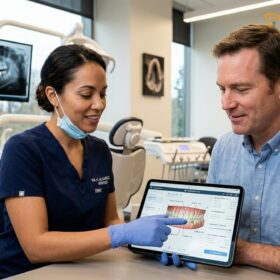
General dentists pursuing orthodontic courses gain the clinical competence to diagnose malocclusions, execute clear aligner therapy, and manage mild-to-moderate fixed appliance cases. Structured training bridges the gap between restorative dentistry and biomechanics, allowing practitioners to safely expand their scope of patient care while maintaining high clinical standards.
Clinical Summary:
The integration of orthodontics into general dental practice requires rigorous, structured education beyond basic dental school curricula. Comprehensive orthodontic courses for general dentists focus on equipping practitioners with a deep understanding of craniofacial growth, cephalometric diagnostics, and the biomechanics of tooth movement. By mastering these foundational principles, general practitioners can confidently incorporate clear aligner therapy, interceptive pediatric treatments, and straightforward fixed appliance mechanics into their clinical offerings. Furthermore, advanced training emphasizes the critical importance of case selection, digital workflow integration, and the establishment of strict referral protocols for complex skeletal anomalies. Ultimately, continuing education in orthodontics enhances a dentist’s ability to provide holistic, multidisciplinary care, aiming to improve both functional occlusion and aesthetic outcomes while minimizing iatrogenic risks.
Key Takeaways:
- Orthodontic training enables general dentists to treat mild-to-moderate malocclusions safely.
- Mastery of biomechanics and cephalometric analysis is foundational before initiating appliance therapy.
- Clear aligner systems require deep clinical oversight, not just reliance on predictive software.
- Strict case selection helps prevent iatrogenic damage such as root resorption and periodontal loss.
- Establishing a strong referral network with specialists is crucial for managing complex skeletal cases.
The Clinical Value of Orthodontic Training for General Practitioners
Integrating orthodontics into general practice enhances comprehensive patient care by allowing dentists to address both functional occlusion and aesthetic alignment simultaneously, often leading to superior restorative outcomes.
The landscape of modern dentistry has evolved significantly, shifting from a purely reactive, restorative model to a comprehensive, multidisciplinary approach. For general practitioners, the ability to understand and manipulate the spatial positioning of teeth is no longer an exclusive domain of specialists. Enrolling in structured orthodontic courses provides general dentists with the clinical acumen required to diagnose malocclusions accurately, understand the etiology of crowding or spacing, and formulate treatment plans that harmonize the dental arches with the patient’s facial aesthetics and temporomandibular joint (TMJ) function[1].
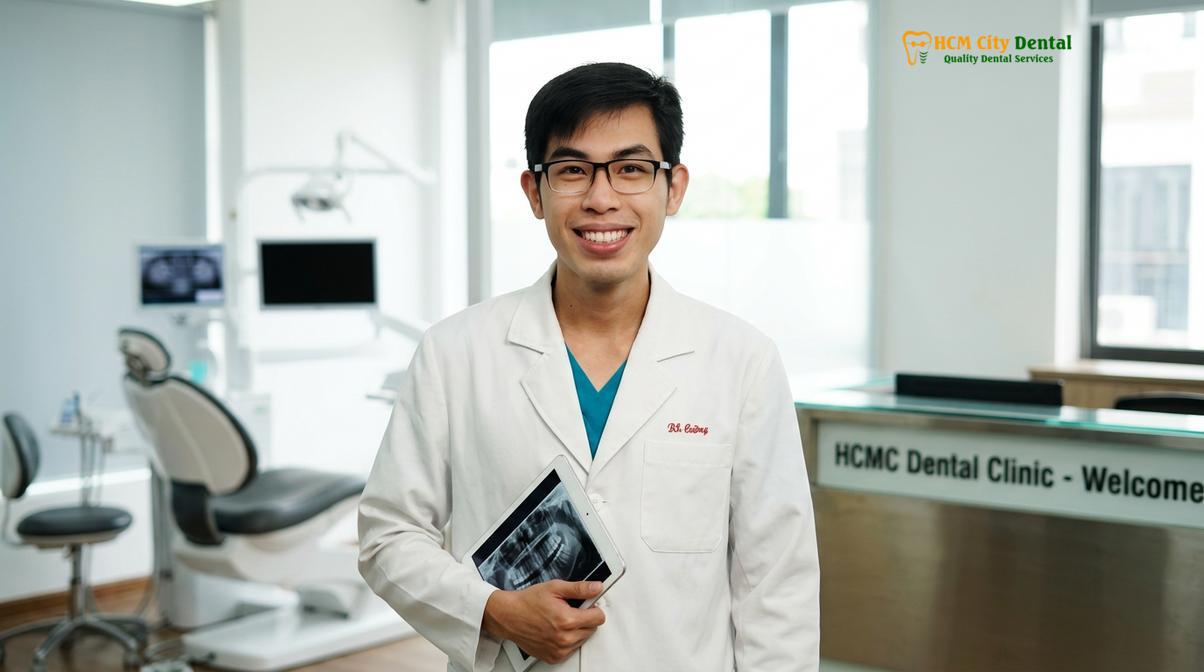
Dr. Nguyen Van Cuong, a dedicated practitioner, emphasizes the importance of foundational knowledge before attempting complex tooth movements. In his clinical experience, understanding the biological limits of the periodontium is just as critical as mastering restorative techniques, a philosophy he frequently shares when discussing comprehensive care and dental caries management. Dr. Cuong advocates for continuous education to help ensure patient safety and predictable outcomes across all dental disciplines.
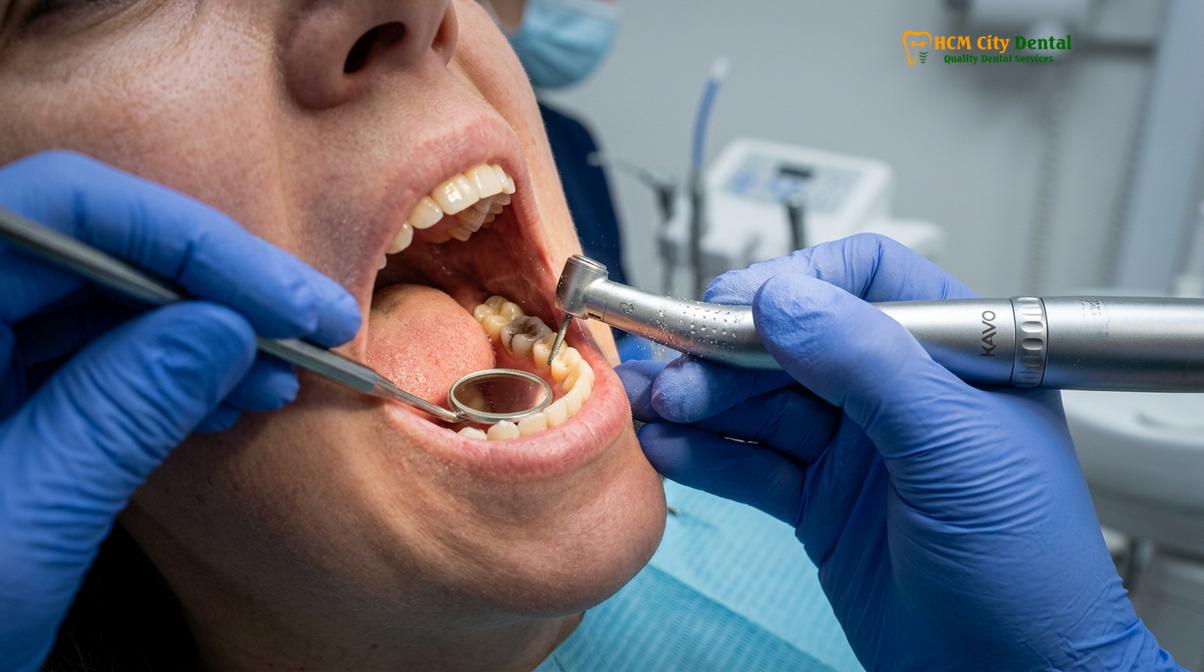
One of the primary clinical values of orthodontic training lies in its synergy with restorative and prosthodontic treatments. Often, general dentists encounter patients with severe wear, abfractions, or inadequate restorative space due to misaligned teeth. Attempting to restore these dentitions without first correcting the underlying malocclusion can lead to compromised aesthetics, structural failures of restorations, and uneven occlusal loading. By applying orthodontic principles, a dentist can upright tipped molars, intrude overerupted teeth, and distribute restorative space optimally.
The biological response to orthodontic forces is complex. When a force is applied to a tooth, it creates areas of compression and tension within the periodontal ligament (PDL). On the compression side, osteoclasts resorb alveolar bone, while on the tension side, osteoblasts deposit new bone. Understanding this cellular mechanism is vital. If forces are too heavy, the blood supply to the PDL is occluded, leading to hyalinization—a sterile necrosis of the tissue that halts tooth movement and increases the risk of root resorption. Orthodontic courses teach general dentists how to calculate and apply optimal, light, continuous forces to facilitate efficient and biologically safe tooth movement[2].
Core Curriculum: What Comprehensive Orthodontic Courses Cover
A robust orthodontic curriculum for non-specialists focuses on biomechanical principles, cephalometric diagnosis, treatment planning, and the safe execution of both fixed and removable appliances.
Not all orthodontic continuing education is created equal. A weekend seminar or a brief manufacturer’s certification is generally insufficient to safely practice comprehensive orthodontics. Robust general dental knowledge programs designed for practitioners are typically structured over several months, encompassing hundreds of hours of didactic lectures, typodont exercises, and live patient mentorship. The curriculum must systematically build a foundation of knowledge before introducing specific appliance systems.
The diagnostic module is arguably the most critical component of any orthodontic course. Practitioners are trained to perform comprehensive extraoral and intraoral examinations, evaluating facial proportions, profile convexity, lip competence, and functional shifts of the mandible. Cephalometric analysis is taught in depth. Dentists learn to trace lateral cephalograms to determine the skeletal relationship of the maxilla and mandible to the cranial base, assess the inclination of the incisors, and evaluate the patient’s growth pattern. This data is crucial for distinguishing between a simple dental malocclusion, which a general dentist can often treat, and a complex skeletal discrepancy that requires surgical or specialist intervention[3].
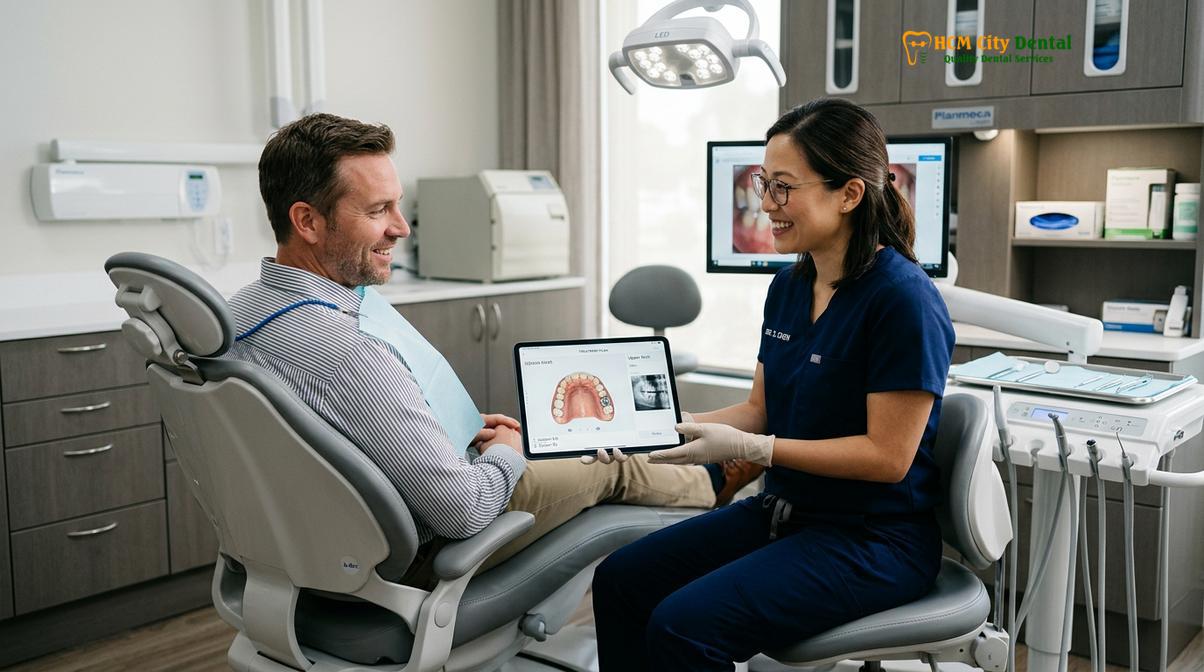
Following diagnosis, the curriculum delves into biomechanics. This involves the physics of tooth movement: understanding the center of resistance, the center of rotation, moments, couples, and the load-deflection rates of various orthodontic wires. General dentists learn how to control anchorage—the resistance to unwanted tooth movement. Without a solid grasp of anchorage, attempting to retract anterior teeth may inadvertently pull the posterior teeth forward, compromising the final occlusion.
To provide a clear overview of the educational pathways available, the following table outlines the typical formats of orthodontic training for general practitioners:
| Course Format | Primary Focus | Clinical Depth | Best Suited For |
|---|---|---|---|
| Introductory Seminars | Basic concepts, case selection, product orientation. | Low. Primarily didactic with minimal hands-on. | Dentists exploring the field before committing to long-term study. |
| Clear Aligner Certifications | Software navigation, attachment placement, IPR protocols. | Moderate. Focused strictly on removable appliance therapy. | Practitioners wanting to integrate digital aligners for mild cases. |
| Comprehensive Mini-Residencies | Biomechanics, cephalometrics, fixed appliances, mixed dentition. | High. Includes typodont exercises and extensive case reviews. | Dentists aiming to treat a wide variety of moderate malocclusions. |
| Clinical Mentorship Programs | Over-the-shoulder guidance on live patients in the clinic. | Very High. Direct application of skills under specialist supervision. | Practitioners seeking confidence in executing complex treatment plans. |
Furthermore, comprehensive courses cover the critical phase of finishing and detailing. Moving teeth into general alignment is only the first step; achieving a mutually protected occlusion with proper canine guidance, anterior coupling, and coincident midlines requires meticulous adjustments. Dentists learn how to place finishing bends in archwires, equilibrate the occlusion, and design appropriate retention protocols to help prevent post-treatment relapse, often utilizing hybrid learning models to reinforce these skills[4].
Navigating Clear Aligner Therapy and Digital Workflows
Modern orthodontic education heavily emphasizes digital workflows, teaching general dentists how to utilize intraoral scanners and predictive software for predictable clear aligner therapy.
The advent of clear aligner therapy has revolutionized the way general dentists approach orthodontics. Patients increasingly demand aesthetic, removable options over traditional metal brackets. However, the apparent simplicity of handing a patient a series of plastic trays is highly deceptive. Orthodontic courses emphasize that clear aligners are merely a delivery system for biomechanical forces; the dentist, not the software algorithm, is the treating clinician.
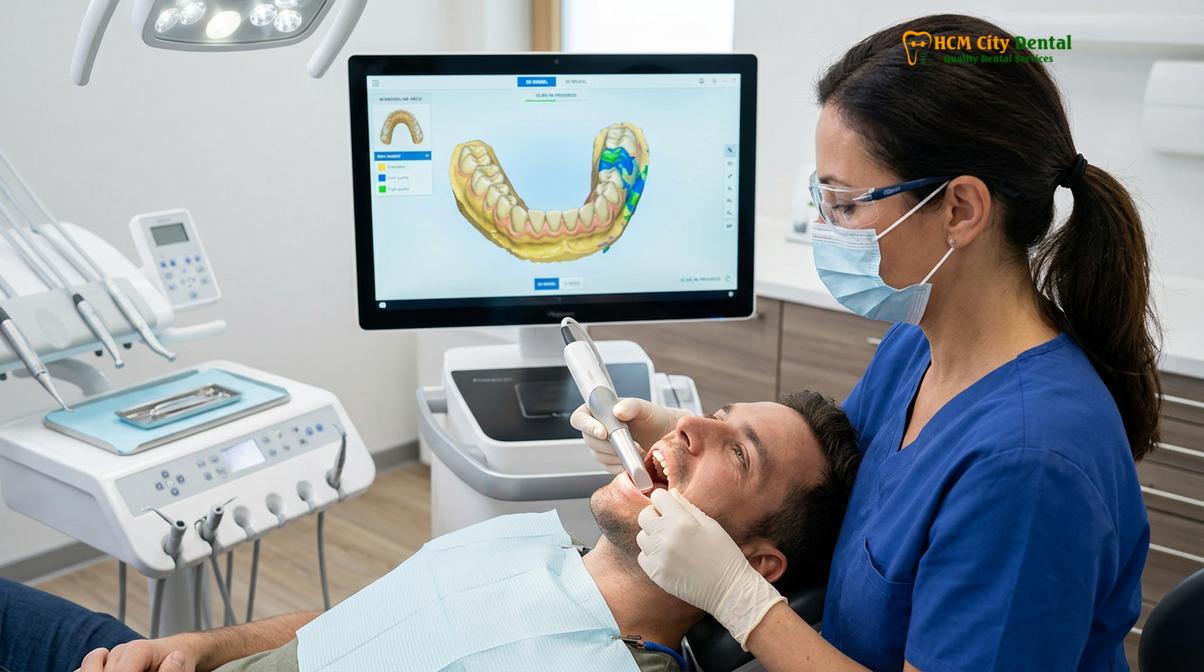
Training in digital workflows begins with data acquisition. Dentists are taught to use intraoral 3D scanners to capture highly accurate digital impressions of the dental arches. These digital models, combined with clinical photographs and radiographs, are uploaded into treatment planning software. The software generates a predictive simulation of tooth movement. A critical skill taught in these courses is how to critically evaluate and modify these digital setups, keeping in mind the biological responses of the periodontium to mechanical forces[5].
“The greatest pitfall in clear aligner therapy is treating the digital simulation as a guaranteed outcome. The software shows you what the plastic will do, not necessarily what the biology will allow. The clinician must engineer the biomechanics into the digital plan.”
To achieve predictable outcomes, dentists learn to design and prescribe composite attachments. These small, tooth-colored geometric shapes are bonded to the teeth to provide the aligner with a surface to grip, facilitating complex movements like rotation and extrusion. Additionally, courses cover the precise execution of Interproximal Reduction (IPR)—the careful removal of microscopic amounts of enamel between teeth to create space for alignment. Proper IPR techniques are essential to avoid damaging the tooth structure or compromising daily oral hygiene due to poor contact contours.
Clinical Case Study: Aligner Therapy in General Practice
A 28-year-old patient presented to HCMC Dental Clinic in Ho Chi Minh City with a chief complaint of anterior crowding and aesthetic dissatisfaction. Following a comprehensive orthodontic assessment, the general dentist, who had completed extensive clear aligner training, diagnosed a Class I malocclusion with moderate mandibular crowding and normal skeletal parameters. Utilizing an intraoral scanner, a digital treatment plan was formulated. The dentist modified the initial software algorithm to include optimized rotation attachments on the canines and planned 0.3mm of IPR across the lower anterior segment to resolve the crowding without excessive proclination. Over a structured treatment period, the patient’s occlusion was successfully aligned, demonstrating the efficacy of clear aligner therapy when guided by sound biomechanical principles and rigorous clinical oversight at HCMC Dental Clinic.
Fixed Appliances and Interceptive Orthodontics
Beyond aligners, foundational training in fixed appliances and interceptive orthodontics equips dentists to manage early pediatric malocclusions and straightforward adult bracket cases.
While clear aligners dominate adult aesthetic orthodontics, traditional fixed appliances (braces) remain the gold standard for precise, three-dimensional control of tooth movement. Comprehensive orthodontic courses for general dentists dedicate significant time to the mechanics of straight-wire appliance systems. Practitioners learn the intricacies of bracket positioning; placing a bracket even a millimeter off-center can result in unwanted rotation, tipping, or torque, complicating the finishing stages of treatment.
The curriculum covers the sequence of archwires used in fixed therapy. Treatment typically begins with highly flexible Nickel-Titanium (NiTi) wires, which exert light, continuous forces to unravel crowding and level the Curve of Spee. As treatment progresses, dentists transition to stiffer Stainless Steel or Beta-Titanium wires to close spaces, correct the bite, and express the built-in torque of the brackets. Understanding wire metallurgy and the specific indications for each alloy is crucial for efficient and safe tooth movement.
“Early interceptive orthodontics is not about achieving perfect alignment in the mixed dentition; it is about modifying growth and eliminating functional interferences to simplify future treatment.”
Interceptive orthodontics, or Phase I treatment, is another critical area of study. This involves identifying and treating developing malocclusions in children during the mixed dentition phase. General dentists are uniquely positioned to screen for these issues during routine recall exams. Courses teach practitioners how to recognize skeletal crossbites, severe overjets that are prone to trauma, and habits like thumb sucking or tongue thrusting that can deform the developing dental arches. Early intervention may involve using palatal expanders to widen a narrow maxilla or space maintainers to preserve arch length after premature loss of primary teeth.
When to Refer to a Specialist: Important Clinical Boundaries
Recognizing clinical limitations and establishing strict referral protocols is a hallmark of a responsible general practitioner integrating orthodontics into their practice.
A vital component of any orthodontic course is teaching general dentists what not to treat. While training expands a practitioner’s capabilities, it also highlights the complexity of severe craniofacial anomalies. General dentists must establish clear clinical boundaries to protect patient safety and maintain a high standard of care. According to guidelines from the Vietnam Association of Orthodontists (VAO) and the Ministry of Health, general practitioners should refer cases involving severe skeletal discrepancies, impacted canines requiring surgical exposure, and patients with significant temporomandibular joint disorders to certified specialists[6].
Building a strong collaborative relationship with local orthodontists and oral surgeons ensures that patients receive the most appropriate care for their specific needs. A well-trained general dentist acts as the primary diagnostician, intercepting early problems, managing straightforward cases, and seamlessly coordinating multidisciplinary care for complex presentations.
Conclusion and Next Steps
Investing in comprehensive orthodontic courses empowers general dentists to elevate their standard of care, offering patients holistic treatment plans that address both function and aesthetics. By mastering biomechanics, digital workflows, and strict case selection, practitioners can safely integrate these highly rewarding procedures into their daily practice. For those looking to explore advanced dental care and specialized treatments, discovering the comprehensive Orthodontics tại HCMC Dental Clinic provides a prime example of how integrated clinical skills benefit patient outcomes. If you are seeking expert dental guidance or wish to learn more about multidisciplinary treatment approaches, contact HCMC Dental Clinic, Ho Chi Minh City today.
References
- American Journal of Orthodontics and Dentofacial Orthopedics. The role of the general practitioner in orthodontic screening and early intervention. (2021).
- Journal of Clinical Orthodontics. Biomechanical principles in clear aligner therapy: A guide for the general dentist. (2020).
- International Journal of Dentistry. Educational pathways and clinical outcomes in general practice orthodontics. (2019).
- Journal of Dental Education. Assessing the efficacy of hybrid learning models in postgraduate orthodontic training. (2022).
- Periodontology 2000. The periodontic-orthodontic interface: Biological responses to mechanical forces. (2018).
- Vietnam Association of Orthodontists (VAO) & Ministry of Health Guidelines. Scope of practice and referral protocols for general dental practitioners in orthodontics. (2022).