Can you wear your retainer after wisdom teeth removal? Yes, but you must temporarily pause wearing the appliance for 24 to 72 hours immediately following the surgery. This brief waiting period allows postoperative swelling to subside and protects the delicate extraction sites from mechanical irritation.
Clinical Summary:
Managing orthodontic retention following third molar (wisdom tooth) extraction requires a careful balance between protecting the surgical healing site and preventing orthodontic relapse. Clinical guidelines generally recommend suspending the use of removable retainers for the first 1 to 3 days post-surgery to accommodate peak gingival swelling and prevent the disruption of the vital blood clot. Once the acute inflammatory phase subsides, patients must resume their retention protocol to counteract the natural mesial drift of the dentition. The specific timeline for reintroducing the appliance depends heavily on the complexity of the surgical extraction, the type of retainer utilized (thermoplastic vs. acrylic/wire), and the individual patient’s healing trajectory. Close coordination between the oral surgeon and the orthodontist ensures that the retention appliance fits correctly without impinging on the healing mucosal tissues.
Key Takeaways:
- Pause retainer wear for 24 to 72 hours post-surgery to allow initial blood clots to stabilize.
- Wisdom teeth do not directly cause anterior teeth crowding; consistent retainer wear is what prevents shifting.
- Clear plastic retainers may require minor distal trimming if they impinge on swollen extraction sites.
- Minor tightness upon resuming retainer wear is normal and indicates slight orthodontic relapse being corrected.
- Always consult your orthodontist if your retainer causes sharp pain or bleeding upon reinsertion.
The Clinical Relationship Between Retainers and Wisdom Teeth
Wisdom teeth eruption does not directly cause anterior crowding, but consistent retainer wear remains the only clinically proven method to prevent natural, age-related orthodontic shifting.
For decades, a pervasive myth in both general dentistry and among patients has been that the eruption of third molars exerts massive forward pressure on the dental arch, leading to the crowding of the lower front teeth. This concept, often referred to as late mandibular incisor crowding, frequently leads patients to believe that once their wisdom teeth are removed, their teeth will naturally remain straight without the need for a wisdom tooth retainer. However, modern orthodontic research and extensive clinical studies have thoroughly debunked this mechanical pressure theory[1].
The reality of dental biomechanics is far more complex. The human dentition undergoes a continuous, lifelong process known as mesial drift—a natural tendency for teeth to migrate slowly toward the front of the mouth as a person ages. This physiological phenomenon occurs independently of the presence or absence of third molars. Furthermore, the periodontal ligament (PDL), which anchors the teeth to the alveolar bone, possesses a form of “elastic memory.” After orthodontic treatment, the stretched gingival and periodontal fibers constantly attempt to pull the teeth back to their original, pre-treatment positions[5]. This is why a retainer after extraction remains an absolute necessity for anyone who has invested in orthodontic correction.
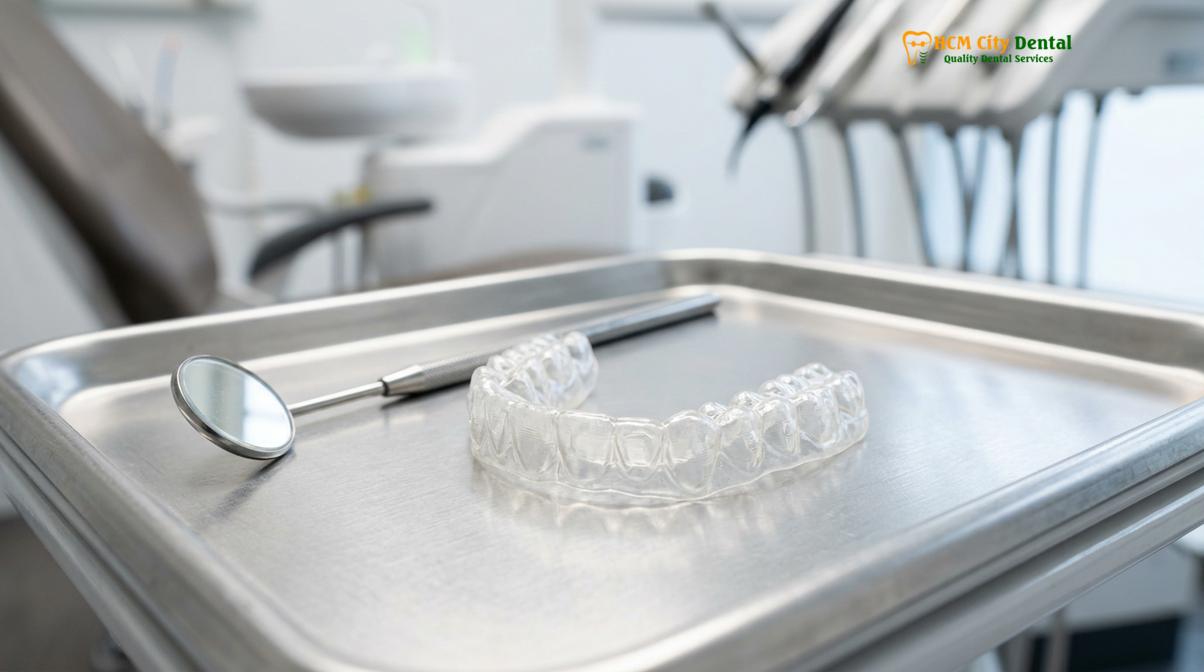
Do Wisdom Teeth Cause Orthodontic Relapse?
When patients experience what they perceive as a third molar orthodontic shift, they are usually observing the natural consequences of poor retainer compliance coinciding with the late-teen or early-adult years—the exact same timeframe when wisdom teeth typically erupt. Because these two events (wisdom teeth eruption and the cessation of strict retainer wear) often overlap chronologically, patients incorrectly assume causation.
“The most common misconception I encounter in clinical practice is the belief that extracting wisdom teeth will magically cure or prevent lower front teeth from crowding. The truth is, the only reliable defense against natural orthodontic relapse is the lifelong, consistent use of a properly fitted retention appliance.”
Therefore, the primary clinical concern when managing a patient undergoing third molar extraction is not whether the extraction itself will alter the orthodontic alignment, but rather how the mandatory postoperative recovery period will temporarily interrupt the patient’s retention schedule. The goal is to minimize the time the patient spends without their appliance while ensuring that the surgical sites heal without complication.
Will My Retainer Still Fit After Surgery?
A frequent concern among patients is whether their existing retainer will still fit once the wisdom teeth are gone. In the vast majority of cases, the answer is yes. Orthodontic retainers—whether they are clear thermoplastic trays or traditional wire-and-acrylic models—are typically designed to encompass only the anterior teeth, the premolars, and the first and second molars. They rarely extend distally enough to cover the third molars, primarily because wisdom teeth are often unpredictable in their eruption patterns and are frequently targeted for future extraction.
Because the physical footprint of the retainer does not usually interact with the third molars, the removal of these teeth does not alter the fit of the appliance on the remaining dentition. However, the soft tissue surrounding the second molars may become highly inflamed and swollen following surgery. This localized edema can temporarily alter the seating of the retainer, making it feel tight or uncomfortable until the inflammation resolves.
Physiological Healing and Wearing Your Retainer After Surgery
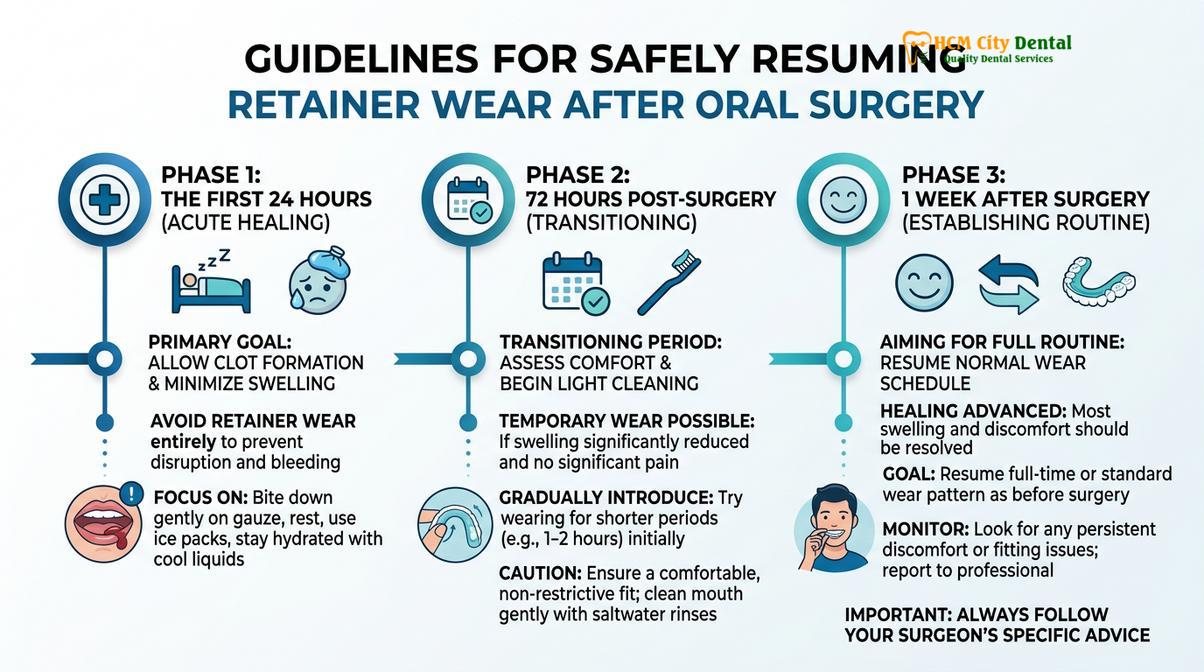
Patients must temporarily pause retainer use during the acute inflammatory phase (0-72 hours) to protect the fragile blood clot and accommodate postoperative gingival swelling.
To understand exactly when to resume wearing your appliance, one must first understand the physiological stages of wound healing that occur within the oral cavity following an extraction. The extraction of a third molar, particularly if it is bony impacted, is a significant surgical event that triggers a robust inflammatory cascade.
The Immediate Post-Operative Phase (0-72 Hours)
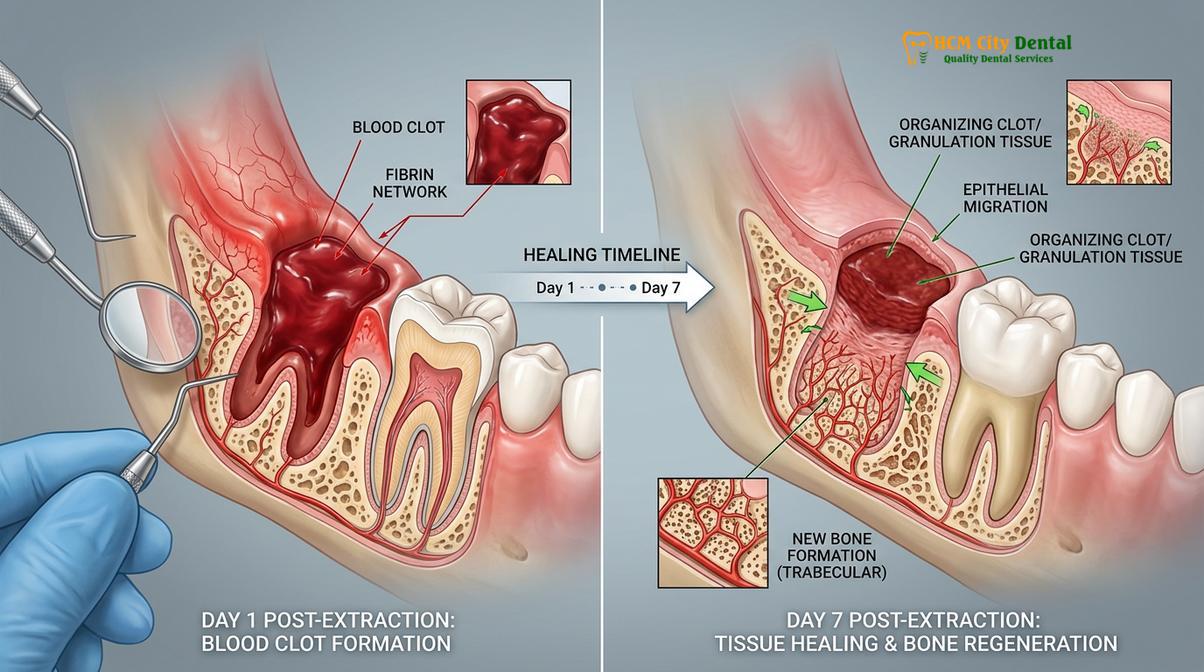
Immediately following the extraction, the body’s primary objective is hemostasis—stopping the bleeding. A critical blood clot forms within the empty alveolar socket. This clot serves as a biological scaffold, protecting the exposed bone and nerve endings while providing a matrix for new tissue to grow. Dislodging this clot leads to a highly painful complication known as alveolar osteitis, or “dry socket.”
During the first 24 to 72 hours, the surgical site experiences peak inflammation. The gingival tissues swell, and the patient may experience limited jaw mobility (trismus) and localized discomfort[2]. Attempting to force a tight-fitting orthodontic appliance over these swollen tissues is strongly contraindicated. The mechanical pressure from the edges of the retainer can easily traumatize the inflamed gums, introduce bacteria into the surgical wound, or inadvertently create a suction effect that dislodges the fragile blood clot.
Clinical Warning: Never attempt to force a retainer into your mouth if you experience severe resistance or sharp pain near the extraction sites. Forcing the appliance can cause mechanical trauma to the healing gingiva, potentially leading to wound dehiscence (reopening of the surgical site) or the loss of the protective blood clot.
Resuming Retainer Wear: The Transition Phase
As the acute swelling begins to subside—typically between days 3 and 5 post-surgery—patients should begin the process of reintroducing their retainer. The longer the teeth are left without retention, the higher the risk of orthodontic relapse during the extraction recovery period. The reintroduction should be gradual and guided by patient comfort, adhering to long-term stability protocols established in orthodontic literature[3].
When inserting the retainer for the first time after surgery, patients should do so gently, using a mirror to ensure that the distal (back) edges of the appliance are not digging into the healing extraction sockets. It is entirely normal for the retainer to feel unusually tight during this initial reinsertion. This tightness is a clinical indicator of minor orthodontic relapse; the teeth have shifted microscopically during the days the appliance was not worn. By wearing the retainer consistently, the appliance will act as an active aligner, gently guiding the teeth back into their correct, pre-surgical positions.
Types of Retainers and Surgical Compatibility
The design and material of your retention appliance—whether clear thermoplastic, traditional wire, or fixed—dictate how soon and how comfortably you can resume wear post-surgery.
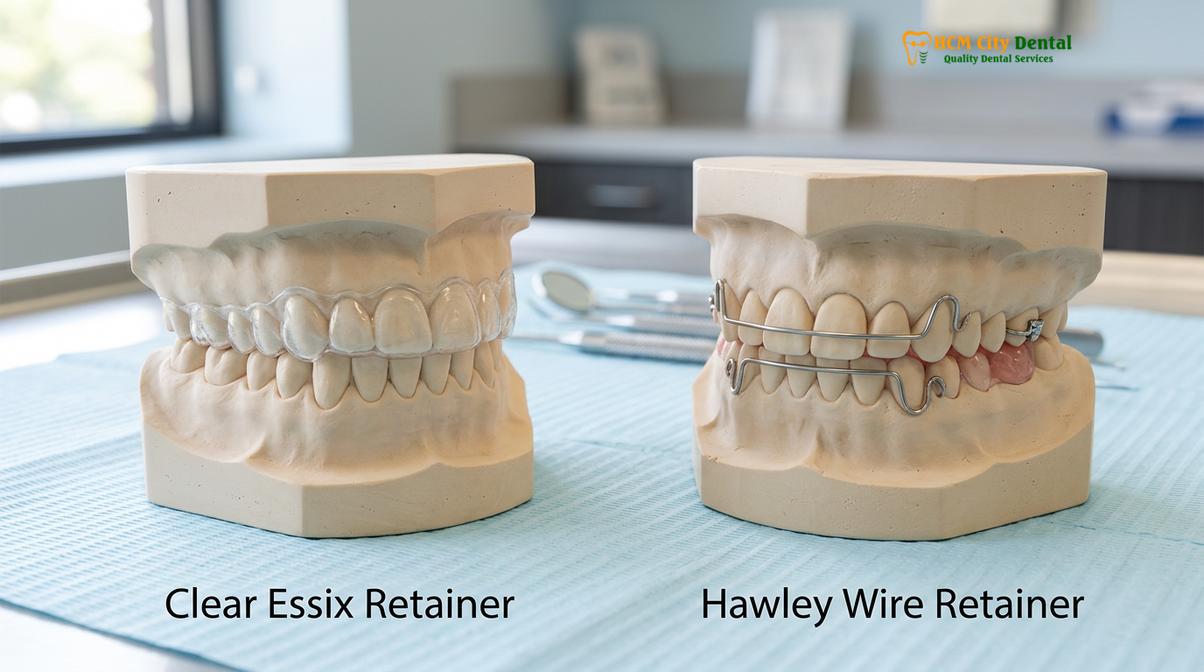
Not all orthodontic retainers interact with the oral tissues in the same way. The specific type of appliance a patient uses will heavily influence their postoperative retention strategy. Orthodontists generally categorize retainers into three main types: clear thermoplastic aligners (Essix), traditional wire-and-acrylic appliances (Hawley), and fixed permanent retainers.
Clear Aligners (Essix Retainers)
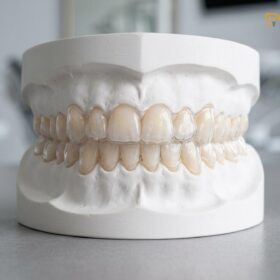
Essix retainers are vacuum-formed, clear plastic trays that intimately hug the entire clinical crown of the teeth and often extend slightly past the gingival margin (the gumline) to ensure maximum retention. Because of this intimate fit, Essix retainers are highly effective at preventing relapse. However, this same design feature can make them challenging to wear immediately following wisdom teeth removal.
The distal edges of an Essix retainer sit very close to the surgical site. If the gingival tissue surrounding the second molar is swollen, the rigid plastic edge of the retainer can impinge on the inflamed tissue, causing significant pain and potentially ulcerating the gums[4]. In some cases, if the swelling is prolonged, the orthodontist may need to use an acrylic bur to carefully trim and polish the distal extensions of the Essix retainer, providing more clearance for the healing socket.
Traditional Hawley Retainers
Hawley retainers consist of a rigid acrylic base that sits against the palate (for the upper arch) or the lingual mucosa (for the lower arch), combined with a stainless steel wire that wraps around the anterior teeth. From a surgical recovery standpoint, Hawley retainers often present fewer complications than clear aligners.
Because the Hawley wire retainer does not encapsulate the entire tooth and typically features a less restrictive footprint around the posterior molars, it is less likely to impinge on swollen extraction sites. Patients with Hawley retainers are often able to resume wear slightly earlier than those with Essix retainers, provided the acrylic base does not extend too far posteriorly into the surgical zone.
Fixed Permanent Retainers
Fixed retainers consist of a multistranded stainless steel or titanium wire that is bonded directly to the lingual (tongue-facing) surfaces of the anterior teeth, usually spanning from canine to canine. Because these appliances are permanently attached and located far away from the posterior third molars, they are completely unaffected by wisdom teeth removal.
Patients with fixed permanent retainers have a distinct advantage during surgical recovery: their anterior teeth remain fully stabilized even while they are recovering from surgery. However, it is important to note that fixed retainers only protect the front teeth. Most orthodontists recommend using a removable overlay retainer (like an Essix) in conjunction with a fixed wire to prevent the posterior teeth from shifting. The removable component will still need to be paused during the acute surgical recovery phase.
| Retainer Type | Interaction with Surgical Site | Post-Surgery Adjustment Needs | Risk of Impinging on Swelling |
|---|---|---|---|
| Essix (Clear Plastic) | High – Edges sit close to the gingival margin near the extraction site. | May require distal trimming by an orthodontist if swelling is severe. | High |
| Hawley (Wire/Acrylic) | Moderate – Wire and acrylic base usually avoid the immediate surgical zone. | Rarely requires adjustment unless the acrylic base extends too far back. | Low to Moderate |
| Fixed (Bonded Wire) | None – Located exclusively on the anterior teeth (canine to canine). | No adjustment needed; remains active throughout surgical recovery. | None |
Clinical Workflows: Adjusting Your Retention Plan
Comprehensive treatment planning requires proactive communication between the oral surgeon and orthodontist to ensure the retention appliance remains effective without compromising surgical healing.
The intersection of oral surgery and orthodontics requires a carefully coordinated clinical workflow. At premier institutions like HCMC Dental Clinic in Ho Chi Minh City, the standard of care involves a comprehensive evaluation of the patient’s third molars long before the active phase of orthodontic treatment is completed. By utilizing advanced 3D Cone Beam Computed Tomography (CBCT) and panoramic radiography, clinicians can accurately predict the eruption path of the wisdom teeth and determine whether prophylactic extraction is warranted.
Orthodontic Assessment Before Extraction
If a patient is currently wearing a retainer and requires wisdom teeth removal, the orthodontist will evaluate the fit and extension of the current appliance. If the retainer extends over the third molars (which is rare but occasionally occurs in older patients), a new intraoral scan or physical impression must be taken prior to surgery. This allows the dental laboratory to fabricate a new custom dental retainer that terminates at the second molars, ensuring it can be worn safely after the extractions.
Clinical Case Study: Managing Retention Post-Extraction
A 19-year-old patient presented to HCMC Dental Clinic in Ho Chi Minh City requiring the surgical extraction of four impacted wisdom teeth. The patient had completed Invisalign treatment two years prior and was highly compliant with nightly Essix retainer wear. The clinical team evaluated the patient’s current retainers and noted that the lower tray extended slightly past the second molars. To prevent postoperative trauma, the distal borders of the lower retainer were preemptively trimmed and polished. The patient was instructed to pause wear for 48 hours post-surgery. Upon resuming wear on day three, the patient reported a snug fit but no pain at the surgical sites. Full orthodontic stability was maintained without compromising the healing of the extraction sockets.
Post-Surgical Retainer Adjustments
In the weeks following the surgery, as the gingival tissues undergo remodeling and the extraction sockets fill with new bone, the patient must remain vigilant about their retainer wear. The initial tightness experienced when resuming wear should dissipate within 3 to 5 days of consistent use. If the retainer continues to feel excessively tight, or if it fails to seat completely onto the teeth, it indicates that a more significant degree of orthodontic relapse has occurred.
“Patients must understand that a retainer is a passive appliance designed to hold teeth in place, not an active aligner meant to move them significantly. If the retainer cannot be fully seated after a surgical pause, forcing it can damage the roots. Professional adjustment is required.”
When to Consult Your Orthodontist
Recognizing the signs of improper retainer fit post-surgery is crucial for preventing tissue damage and ensuring long-term orthodontic stability.
While minor discomfort is expected when reintroducing a retainer after a brief surgical hiatus, certain symptoms warrant immediate professional evaluation. According to clinical guidelines established by organizations such as the Vietnam Odonto-Stomatology Association (VOSA), patients should contact their dental provider if they experience specific warning signs during their recovery[6].
You should schedule an appointment with your orthodontist if you encounter any of the following issues:
- Persistent Bleeding: If inserting the retainer causes the extraction site to bleed profusely, the appliance is likely impinging on the healing tissue.
- Severe Pain: While tightness is normal, sharp or throbbing pain upon insertion indicates that the retainer is traumatizing the gingiva or that an infection may be present.
- Inability to Seat the Appliance: If the retainer will not push down fully onto the teeth, do not force it. The teeth may have shifted too much, or the appliance may be warped.
- Prolonged Swelling: If facial or intraoral swelling does not begin to subside after 72 hours, it may interfere with retainer wear and requires surgical evaluation.
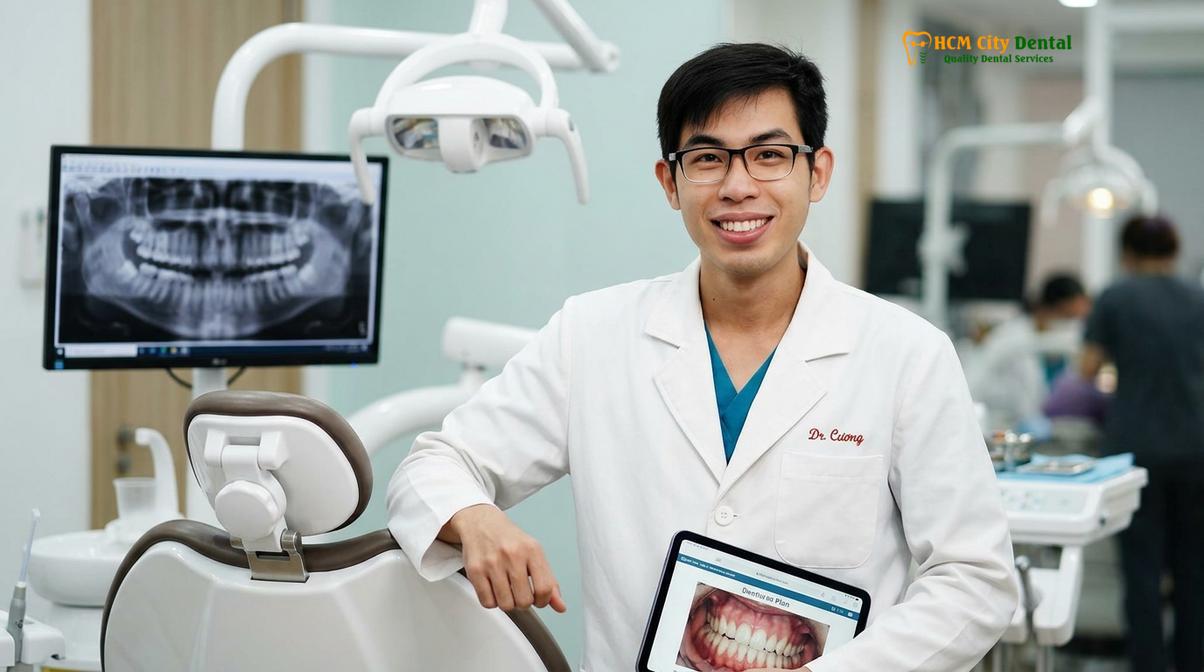
Dr. Nguyen Van Cuong is a leading specialist at HCMC Dental Clinic in Ho Chi Minh City. With extensive experience in complex orthodontic retention and oral surgery recovery, Dr. Cuong ensures that every patient receives a tailored post-extraction plan. His clinical approach prioritizes both the stability of the dental arch and the safe, predictable healing of surgical sites, ensuring patients maintain their perfect smiles without compromising their oral health.
References
- American Journal of Orthodontics and Dentofacial Orthopedics. The effect of third molar extraction on mandibular anterior crowding.
- Journal of Oral and Maxillofacial Surgery. Postoperative swelling and recovery protocols following third molar extractions.
- European Journal of Orthodontics. Long-term stability and retention protocols in adult orthodontics.
- Journal of Clinical Orthodontics. Thermoplastic retainer modifications for post-surgical patients.
- International Journal of Oral Science. Periodontal ligament memory and orthodontic relapse mechanisms.
- Vietnam Odonto-Stomatology Association (VOSA). Guidelines on post-extraction orthodontic retention and recovery.
If you are planning a wisdom tooth extraction and need professional guidance on managing your retention protocol, contact HCMC Dental Clinic in Ho Chi Minh City today. Our experienced specialists can evaluate your current appliance and provide an orthodontic retainer solution tailored to your surgical recovery needs.
Read also: For acute issues related to wisdom teeth or teeth mobility, see wisdom tooth pain for tourists and loose tooth adult emergency.