A night guard smells bad and turns yellow primarily due to the accumulation of anaerobic bacteria, calcified plaque, and salivary minerals trapped within the porous acrylic material. Without proper daily disinfection, these microorganisms release volatile sulfur compounds, causing foul odors and permanent discoloration that can compromise your overall oral health.
Understanding the underlying chemical and biological processes that cause your dental appliance to degrade is the first step in extending its lifespan. By implementing clinical-grade cleaning protocols, you can maintain a hygienic, clear appliance that protects your teeth without introducing harmful bacteria into your oral cavity.
Clinical Summary:
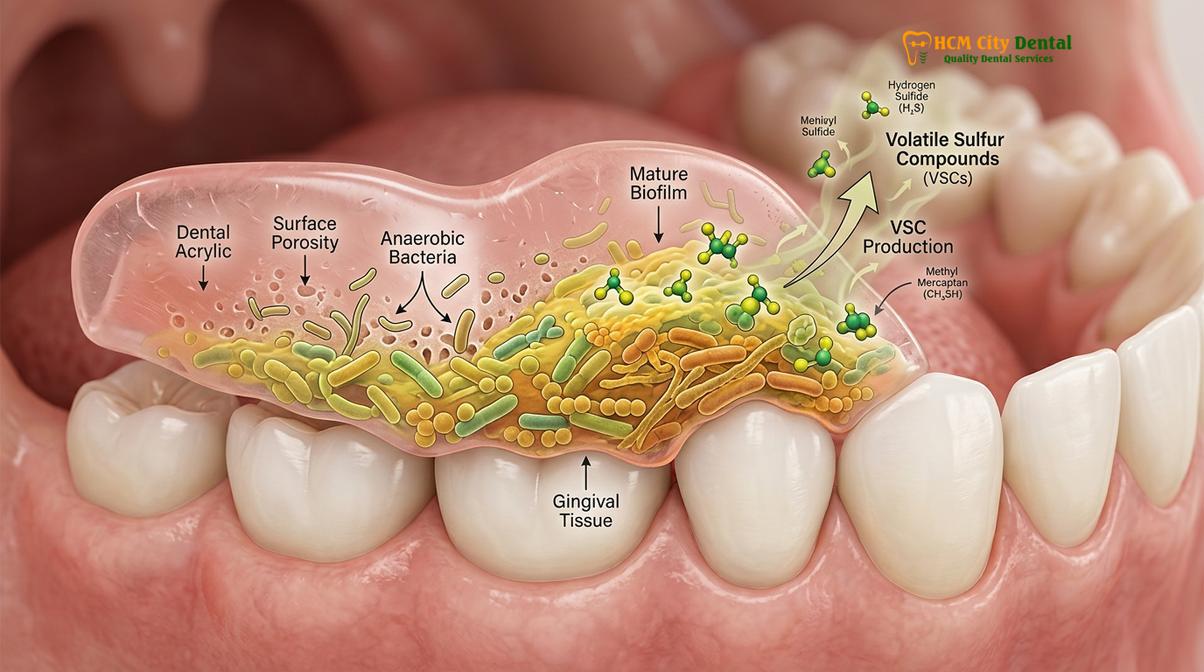
When a patient reports that their night guard smells bad and exhibits a yellow tint, it indicates a breakdown in appliance hygiene and material integrity. Dental acrylics and thermoplastics are inherently microporous. Over time, they absorb mucins, salivary proteins, and bacterial byproducts. In the warm, moist environment of the mouth, anaerobic bacteria proliferate, producing volatile sulfur compounds (VSCs) responsible for halitosis. Furthermore, calcium phosphates from saliva precipitate onto the appliance, creating a rough calculus layer that traps dietary stains and accelerates yellowing. Clinical management involves mechanical brushing with non-abrasive agents, chemical disinfection using hydrogen peroxide or acetic acid, and ensuring a completely dry storage environment. If micro-cracks develop or the material becomes permanently warped, replacement is medically necessary to prevent recurrent gingival inflammation and ensure optimal occlusal protection.
Key Takeaways:
- Yellowing is caused by the absorption of salivary proteins, calcium deposits, and bacterial biofilm into porous acrylic.
- Foul odors stem from volatile sulfur compounds (VSCs) released by anaerobic bacteria trapped in the appliance.
- Abrasive toothpastes create micro-scratches that accelerate bacterial colonization and permanent staining.
- Safe deep cleaning requires non-abrasive, antibacterial solutions like diluted hydrogen peroxide or white vinegar.
- Persistent odors, deep discoloration, and micro-cracks indicate the appliance is compromised and requires replacement.
Why Night Guards Turn Yellow
Night guards turn yellow when porous dental acrylics absorb salivary proteins, calcium deposits, and bacterial byproducts over time. This discoloration is accelerated by dry mouth, improper cleaning routines, and the natural degradation of the polymer material.
The phenomenon of a yellow night guard is a common clinical observation that stems from the fundamental material science of dental appliances. Most custom night guards are fabricated from polymethyl methacrylate (PMMA), dual-laminate materials, or thermoplastic polymers. While these materials are highly durable and excellent at absorbing the extreme occlusal forces generated during bruxism (teeth grinding), they are not entirely impermeable. At a microscopic level, these polymers possess a degree of porosity necessary for their structural flexibility.
When you wear the appliance for six to eight hours during sleep, it is continuously bathed in saliva. Saliva is a complex biofluid containing water, electrolytes, mucus, white blood cells, epithelial cells, and glycoproteins. As the saliva evaporates or rests on the appliance, mucins and glycoproteins adhere to the acrylic surface, forming a sticky layer known as the acquired pellicle. This pellicle acts as a biological adhesive, allowing oral bacteria to attach and multiply[1].
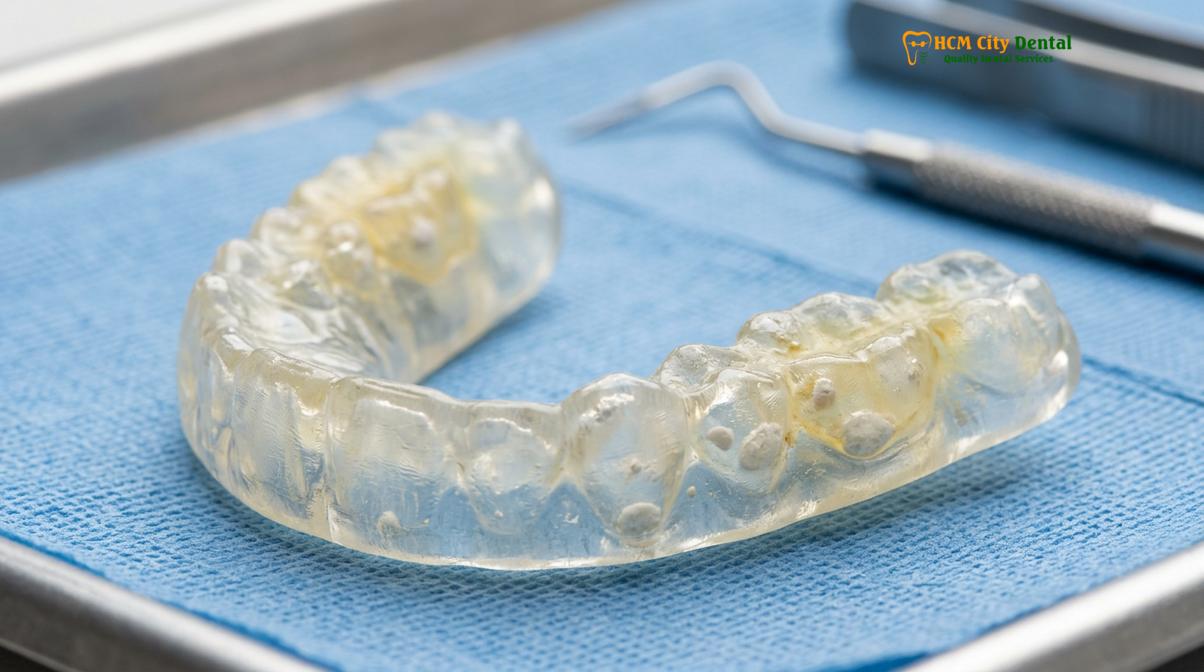
Furthermore, saliva contains high concentrations of calcium and phosphate ions, which are essential for remineralizing tooth enamel. However, these same minerals can precipitate out of the saliva and crystallize onto the surface of the night guard. This process forms dental calculus (tartar) on the appliance, presenting as hard, white, or yellowish crusty deposits. Because calculus has a highly irregular and rough surface, it easily absorbs pigments from any residual food, coffee, or tea left in the mouth, leading to severe night guard discoloration.
Another contributing factor to yellowing is the natural aging and oxidation of the plastic itself. Exposure to UV light, temperature fluctuations, and the enzymatic action of oral bacteria can slowly break down the polymer chains. As the material degrades, it loses its optical clarity and takes on a permanent yellow or brownish hue. This type of intrinsic staining cannot be scrubbed away, as it represents a fundamental change in the chemical structure of the appliance.
Causes of Bad Odor
The foul smell emitting from a night guard is caused by anaerobic bacteria breaking down trapped organic debris, releasing volatile sulfur compounds (VSCs). A damp storage environment without prior cleaning exacerbates this rapid bacterial colonization.
Discovering that your night guard smells bad can be an alarming and unpleasant experience. The root cause of this odor is almost entirely microbiological. The human mouth is home to a vast and diverse microbiome, consisting of over 700 species of bacteria. While many of these bacteria are beneficial, others are opportunistic pathogens. When you place a night guard over your teeth, you create a dark, warm, and low-oxygen (anaerobic) environment between the plastic and your enamel—the perfect incubator for bacterial growth.
“The microporosity of dental acrylics makes them highly susceptible to the ingress of salivary proteins and bacterial colonization. Without daily mechanical disruption, this biofilm calcifies, leading to irreversible material discoloration and compromised appliance hygiene.”
If the teeth are not meticulously brushed and flossed before inserting the appliance, microscopic food particles and plaque remain trapped against the teeth. Anaerobic bacteria thrive in this enclosed space. As these bacteria metabolize the trapped proteins and amino acids, they excrete waste products known as volatile sulfur compounds (VSCs)[2]. The most common VSCs include hydrogen sulfide (which smells like rotten eggs) and methyl mercaptan (which smells like old cabbage). These gases become trapped in the porous matrix of a smelly night guard, resulting in a persistent, deeply embedded odor.
Clinical Warning: Never attempt to eliminate odors by soaking your night guard in household bleach, boiling water, or alcohol-based mouthwashes. Bleach degrades the acrylic polymers, boiling water will permanently warp the custom fit, and alcohol desiccates the material, causing micro-fractures that harbor even more bacteria.
Improper storage is another major catalyst for bad odors. Many patients remove their appliance in the morning, rinse it briefly with water, and immediately place it into a closed, unventilated plastic case. This traps moisture inside the case, creating a humid microclimate that encourages the rapid proliferation of bacteria and even black mold. Fungal organisms can easily colonize a damp appliance, contributing to a musty, yeast-like smell and increasing the risk of oral thrush.
Emergency Deep Cleaning Methods
To safely deep clean a foul-smelling, discolored guard, use a mixture of diluted hydrogen peroxide or white vinegar to dissolve calcium and neutralize bacteria. Avoid abrasive toothpastes that create micro-scratches where bacteria thrive.
When routine brushing is no longer sufficient to remove odors or a stained mouth guard appearance, a targeted chemical deep cleaning is required. It is crucial to use agents that are strong enough to lyse bacterial cell walls and dissolve mineral deposits, yet gentle enough not to degrade the thermoplastic material.
One of the most effective and clinically safe methods involves the use of 3% hydrogen peroxide. Hydrogen peroxide is a powerful oxidizing agent that breaks down the cell membranes of anaerobic bacteria and neutralizes volatile sulfur compounds. To perform this deep clean, place the appliance in a clean glass and pour just enough 3% hydrogen peroxide to submerge it. Allow it to soak for 15 to 20 minutes. You will likely see bubbles forming on the surface; this is the oxygen being released as the peroxide reacts with the bacterial biofilm. After soaking, remove the appliance, brush it gently with a soft toothbrush, and rinse it thoroughly with cool water[3].
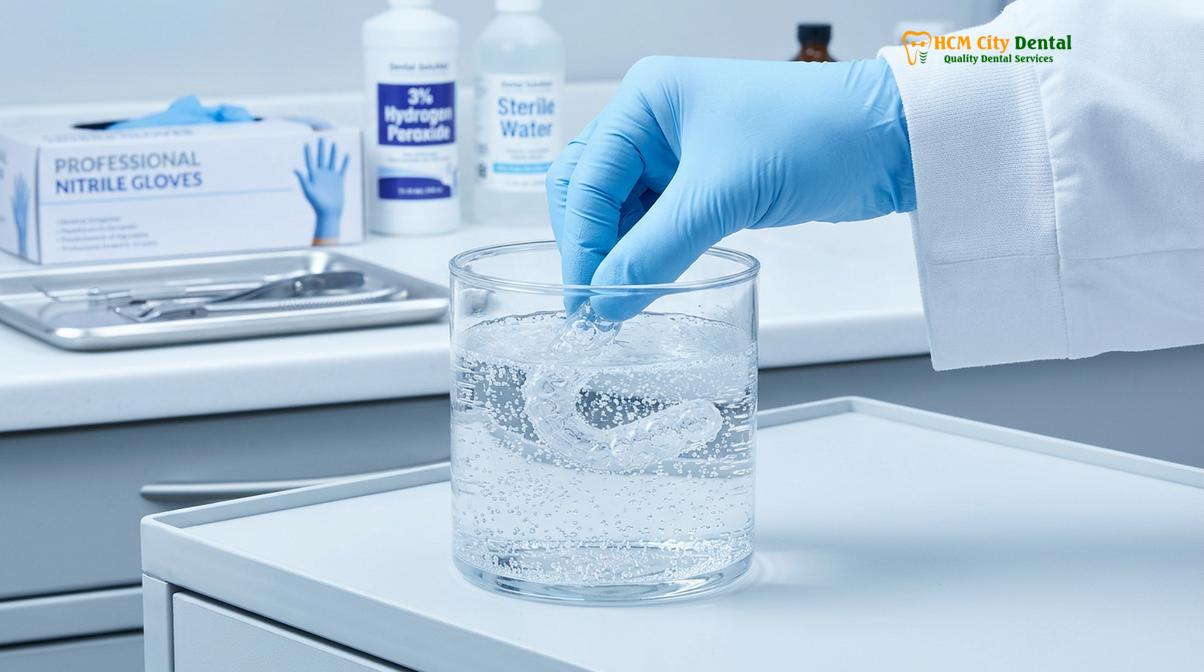
For appliances suffering from heavy calcium buildup (tartar), white vinegar (acetic acid) is the treatment of choice. The mild acid effectively dissolves the calcified bonds of the mineral deposits without harming the acrylic. Mix one part distilled white vinegar with three parts cool water. Submerge the night guard for 30 minutes. Once the calculus has softened, use a dedicated soft-bristled toothbrush to gently scrub away the white spots. Thorough rinsing is essential to remove any lingering vinegar taste.
For patients who struggle with recurrent odors or rapid calculus buildup, incorporating an ultrasonic cleaner into their weekly routine is highly recommended. Ultrasonic cleaners use high-frequency sound waves to create microscopic cavitation bubbles in a cleaning solution. When these bubbles collapse, they generate tiny, powerful shockwaves that safely dislodge bacteria, plaque, and calcium deposits from the deepest microscopic crevices of the appliance without causing any physical abrasion[4].
| Cleaning Agent | Efficacy | Safety for Acrylic | Clinical Recommendation |
|---|---|---|---|
| Diluted Hydrogen Peroxide (3%) | Excellent antibacterial, neutralizes odors | High | Use weekly for 15-20 minutes to disinfect. |
| White Vinegar & Water (1:3) | Excellent for dissolving calcium deposits | High | Use bi-weekly for 30 minutes to remove tartar. |
| Standard Toothpaste | Good mechanical cleaning | Low (Abrasive) | Avoid. Silica abrasives create micro-scratches. |
| Boiling Water | Kills all bacteria | Very Low | Never use. Will permanently warp the appliance. |
| Bleach (Sodium Hypochlorite) | Strong disinfectant | Very Low | Never use. Degrades polymers and is toxic if ingested. |
Preventing Discoloration
Preventing stains requires a strict daily regimen of brushing the appliance with a soft brush and mild soap, followed by complete air-drying. Maintaining high salivary flow and brushing teeth before wear also minimizes bacterial transfer.
Proactive prevention is vastly superior to reactive deep cleaning. The longevity and clarity of your appliance depend heavily on your daily oral hygiene and appliance care routine. The most critical step in preventing night guard discoloration is ensuring that your mouth is immaculately clean before the appliance is inserted. Any residual food particles, sugars, or pigmented beverages left on your teeth will be trapped against the acrylic all night, leading to rapid bacterial fermentation and staining.
Dr. Nguyen Van Cuong, a leading specialist at HCMC Dental Clinic in Ho Chi Minh City, frequently emphasizes the importance of the oral microbiome in appliance maintenance. He notes that patients often focus solely on cleaning the plastic, but if the underlying dentition harbors heavy plaque or gingivitis, the appliance will inevitably become colonized and discolored. Comprehensive oral hygiene, supported by regular Dental Cleaning tại HCMC Dental Clinic, is the foundation of appliance longevity.
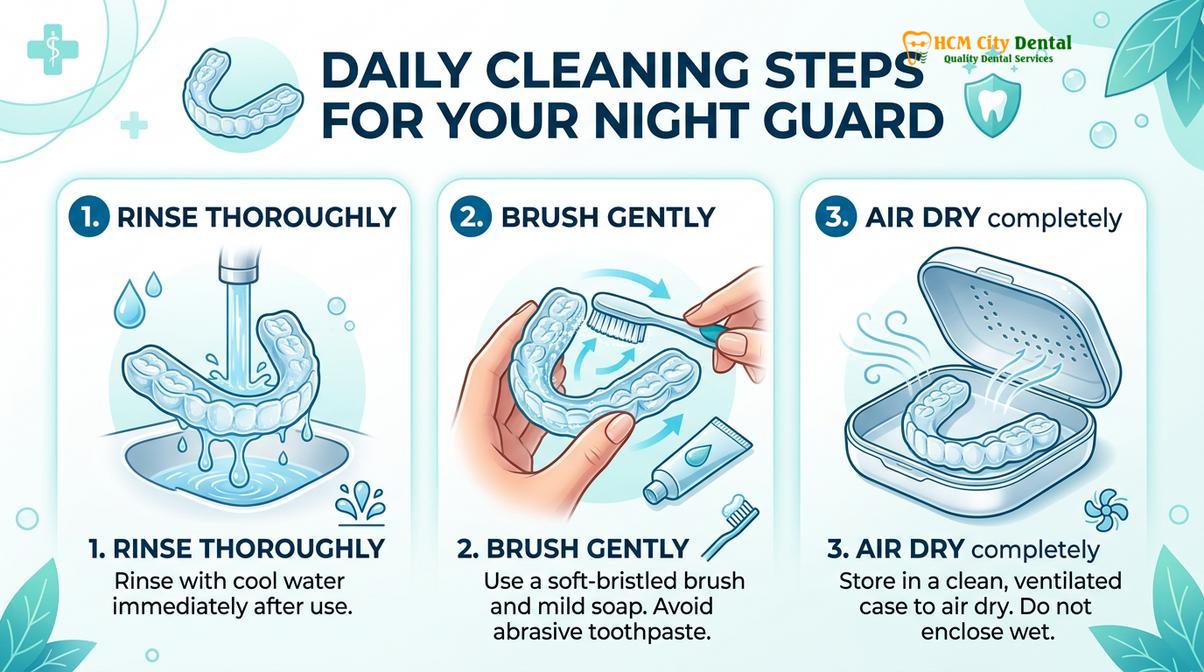
To prevent stains, adopt a dedicated morning cleaning ritual. As soon as you remove the appliance, rinse it immediately under cool water. Saliva is rich in proteins that dry quickly; rinsing prevents these proteins from hardening onto the surface. Next, apply a small drop of mild, clear dish soap or antibacterial hand soap to a soft-bristled toothbrush designated solely for your appliance. Gently brush all surfaces, paying special attention to the deep grooves where the cusps of your teeth rest, as this is where bacteria accumulate most densely.
Storage is equally vital. After washing, shake off excess water and place the appliance in a hard, well-ventilated case. Leave the case open in a safe, dry area until the appliance is completely dry. Storing a damp appliance in a closed container is the primary cause of a smelly night guard. Furthermore, keep the case away from direct sunlight or heat sources, which can accelerate the yellowing of the plastic.
Hygiene Best Practices
Optimal hygiene involves daily mechanical brushing with non-abrasive cleansers, weekly ultrasonic baths, and storing the completely dry appliance in a ventilated case. Regular professional ultrasonic scaling ensures long-term appliance integrity.
Achieving clinical-level hygiene for your dental appliance requires a multi-tiered approach. According to guidelines from the Vietnam Odonto-Stomatology Association (VOSA), removable oral appliances must be subjected to both mechanical disruption and chemical disinfection to prevent opportunistic infections[5]. While daily brushing with mild soap removes the superficial biofilm, microscopic bacteria can still hide within the inherent porosities of the acrylic.
Clinical Case Study: A 34-year-old patient presented to HCMC Dental Clinic in Ho Chi Minh City complaining of persistent bad breath and a heavily yellowed night guard. Clinical examination revealed that the patient was using a highly abrasive whitening toothpaste to clean the appliance, which had created thousands of micro-scratches. These scratches harbored dense colonies of VSC-producing bacteria. The treatment plan involved fabricating a new custom appliance and educating the patient on using mild dish soap and a weekly ultrasonic bath. At the six-month follow-up, the new appliance remained crystal clear and completely odor-free.
Furthermore, your appliance hygiene is intrinsically linked to your professional dental care. During your routine prophylaxis, your dentist or hygienist can place your night guard in a professional-grade ultrasonic scaler and use specialized enzymatic solutions to remove stubborn calculus that cannot be managed at home. They will also inspect the appliance for signs of wear, ensuring it continues to provide adequate protection.
It is also important to differentiate between various types of oral appliances, as their cleaning requirements may vary slightly. For instance, the maintenance of a rigid acrylic night guard differs from the care required for a softer Best Sports Mouthguard Custom: Clinical Guide | HCMC Dental or a specialized Mouthguard with Braces Orthodontics: Clinical Guide | HCMC Dental. Always follow the specific maintenance instructions provided by your dental professional based on the exact material composition of your device.
When Staining Means Replacement
A night guard must be replaced when deep yellowing is accompanied by micro-cracks, a warped fit, or persistent odors that resist deep cleaning. Continuing to wear a degraded appliance risks gingival infection and compromised TMJ protection.
Despite the most meticulous hygiene practices, no dental appliance lasts forever. The constant forces of nocturnal bruxism, combined with the chemical environment of the mouth, eventually lead to material fatigue. Knowing when to retire a stained mouth guard is crucial for protecting your oral health.
“Continuing to wear a structurally compromised or heavily colonized night guard negates its protective benefits and actively introduces pathogenic bacteria into the gingival sulcus, increasing the risk of periodontal inflammation.”
Discoloration alone is not always an immediate cause for replacement, provided the appliance is structurally sound and odor-free. However, if the yellowing is accompanied by a persistent, foul odor that returns immediately after a deep clean, it indicates that bacteria have penetrated deeply into the material. Additionally, if you notice that your Night Guard Not Fitting Properly: Clinical Causes & Fixes | HCMC Dental, or if there are visible micro-cracks and rough edges, the appliance is no longer safe to use. A warped guard can shift your teeth out of alignment and exacerbate temporomandibular joint (TMJ) issues.

Important Clinical Notes & When to See a Dentist
You should schedule an appointment with your dental provider if you experience any of the following warning signs:
- The appliance emits a foul odor even after a 30-minute hydrogen peroxide soak.
- You experience new or worsening jaw pain, indicating the appliance has lost its structural integrity and occlusal balance.
- Your gums appear red, swollen, or bleed easily after wearing the guard, suggesting a bacterial infection transferred from the porous acrylic.
- The material has become brittle, or you can feel sharp, jagged edges with your tongue.
If you are active in martial arts or contact sports, be aware that the degradation signs for a Custom Mouthguard Boxing & Muay Thai Vietnam | HCMC Dental or a Custom Sports Mouthguard Vietnam: Clinical Guide | HCMC Dental are similar. However, sports guards are typically made from softer EVA materials that may degrade faster under heavy bite forces and require more frequent replacement than rigid night guards. Understanding the Mouthguard vs Night Guard Difference: Clinical Guide | HCMC Dental can help you better manage the specific hygiene and replacement schedules for each device.
Frequently Asked Questions
Why does my night guard smell so bad?
Your night guard smells bad because anaerobic bacteria break down trapped saliva, dead cells, and food particles, releasing foul-smelling volatile sulfur compounds. Without daily mechanical cleaning and proper drying, this bacterial biofilm multiplies rapidly in the porous acrylic material.
Can I whiten a yellowed night guard?
You cannot completely reverse deep yellowing once the acrylic material has permanently absorbed stains and degraded. However, soaking the appliance in a diluted hydrogen peroxide or white vinegar solution can remove surface-level calcium deposits and lighten minor discoloration.
Is a discolored guard still safe?
A slightly discolored guard may be safe if it is structurally intact and thoroughly sanitized. However, if the discoloration is accompanied by a foul odor, micro-cracks, or a warped fit, it harbors dangerous bacteria and is no longer safe for oral use.
How to remove calcium buildup?
To remove hard white calcium buildup, soak the night guard in a mixture of one part white vinegar and three parts water for 15 to 30 minutes. Afterward, gently scrub the softened deposits with a soft-bristled toothbrush and rinse thoroughly.
Should I replace a smelly guard?
Yes, you should replace a smelly guard if deep cleaning methods fail to eliminate the odor. Persistent foul smells indicate that bacteria have penetrated deep into the micro-fractures of the material, making the appliance unhygienic and potentially harmful to your gums.
References
- Journal of Prosthetic Dentistry. Microbial colonization and degradation of dental acrylics.
- American Dental Association. Care and maintenance of oral appliances and mouthguards.
- Journal of Clinical Periodontology. Impact of removable oral appliances on gingival health.
- International Journal of Dental Hygiene. Efficacy of chemical cleansers on polymethyl methacrylate.
- Vietnam Odonto-Stomatology Association (VOSA). Guidelines on removable oral appliance hygiene and maintenance.
If your night guard smells bad, turns yellow, or no longer fits comfortably, it may be time for a professional evaluation or replacement. Contact HCMC Dental Clinic in Ho Chi Minh City today to schedule a comprehensive appliance check and ensure your smile remains protected and healthy.
For pricing, booking, and a free clinical assessment, visit our Night Guard & Mouthguard service page at HCMC Dental Clinic in Ho Chi Minh City.