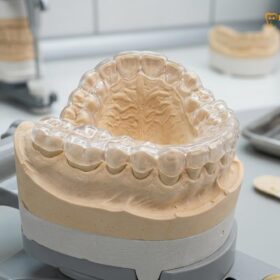
If your night guard is not fitting properly, it may feel excessively tight, loose, or cause jaw pain upon waking. This usually results from material warping, recent dental work, or an inaccurate initial impression. A poorly fitted guard compromises protection and can worsen temporomandibular joint (TMJ) discomfort.
Clinical Summary:
A night guard must fit snugly without placing excessive orthodontic pressure on the teeth or impinging on the gingival tissues. Fit issues often arise from thermal distortion, bruxism-induced wear, or changes in dental anatomy such as new restorations. Addressing night guard fit problems promptly is crucial to prevent tooth shifting, soft tissue trauma, and exacerbated muscle tension. Clinical evaluation is required to determine whether the appliance can be adjusted chairside or if a complete replacement is necessary to maintain optimal occlusal health.
Key Takeaways:
- A properly fitted guard should snap securely into place without requiring forceful biting.
- Pain, gum irritation, or the device falling out during sleep indicate a compromised fit.
- Recent dental work like crowns or fillings will alter your bite and affect the guard’s seating.
- Over-the-counter boil-and-bite guards are significantly more prone to fit issues than custom laboratory-made appliances.
- Minor tight spots can often be adjusted chairside by a dentist, while warped guards require replacement.
Why Your Guard May Not Fit
A night guard may lose its proper fit due to material distortion from improper cleaning, heavy bruxism forces, or inaccurate initial dental impressions.
Understanding the underlying causes of night guard fit problems is the first step in resolving discomfort and ensuring your teeth remain protected. Dental appliances are fabricated to highly specific micron-level tolerances. When these tolerances are compromised, the appliance can quickly become an uncomfortable mouth guard that does more harm than good.
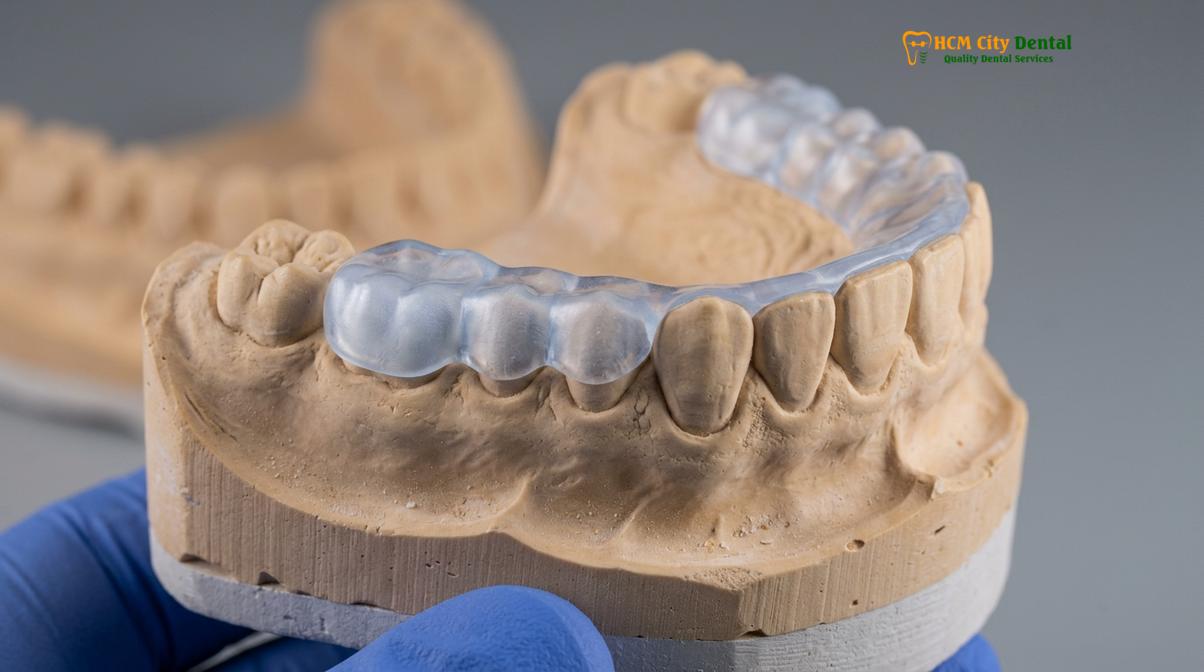
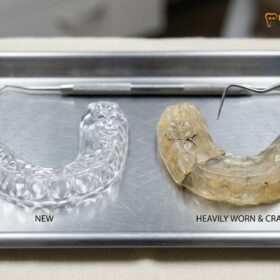
One of the most common reasons for a sudden change in fit is thermal distortion. Many patients mistakenly clean their night guards using hot or boiling water, believing it will sterilize the appliance. However, the polymethyl methacrylate (PMMA) or thermoplastic materials used in these devices are highly sensitive to heat. Exposure to high temperatures causes the polymer chains to relax and warp, permanently altering the shape of the guard[1]. Once warped, the appliance will no longer align with the precise contours of your dental arch.
Another significant factor is the sheer mechanical force exerted during sleep. Patients suffering from severe bruxism teeth grinding can generate immense force per square inch. Over time, this pressure can cause micro-fractures, material fatigue, and thinning of the occlusal surface. As the material degrades, the guard may lose its retentive properties, leading to a loose night guard that fails to stay in place throughout the night. Proper management of sleep bruxism with durable oral appliances is essential to prevent this rapid degradation[4].
Furthermore, an improper fit right out of the box is usually indicative of an inaccurate initial impression. If the physical mold or digital intraoral scan captured by the dental clinic was distorted by saliva, patient movement, or improper tray seating, the resulting laboratory-milled guard will inherit those inaccuracies. This often results in a tight night guard that places uneven, painful pressure on specific teeth, mimicking the sensation of active orthodontic treatment.
Signs of a Poor Fit
Indicators of an ill-fitting guard include morning jaw soreness, the appliance dislodging during sleep, visible gum irritation, and a sensation that your bite has shifted.
Recognizing the clinical signs of an improperly fitting night guard is crucial for preventing secondary dental complications. A well-designed occlusal splint should feel like a natural extension of your dentition—snug, secure, and entirely passive. When the fit is compromised, the body will exhibit several warning signs.
The most immediate symptom is localized tooth pain or generalized jaw soreness upon waking. If the guard is too tight, it places active pressure on the periodontal ligament (PDL) surrounding the teeth. This pressure causes inflammation, leading to teeth that feel tender or sensitive to biting forces in the morning. Conversely, if the occlusal surface (the biting surface) of the guard is uneven, it forces the masseter and temporalis muscles to work overtime to find a stable resting position, resulting in severe morning headaches and TMJ fatigue[2].
Clinical Warning: Do not force a tight guard onto your teeth. Forcing an ill-fitting rigid appliance can act like an unintended orthodontic device, potentially shifting your teeth out of alignment and causing permanent changes to your bite.
Soft tissue irritation is another clear indicator of a poor fit. A night guard should rest securely on the teeth without impinging on the gingival margins (gums). If the acrylic borders are overextended, they can compress the gum tissue, causing ischemia (blanching or turning white) and eventual ulceration. The gingival response to poorly adapted dental appliances can lead to localized recession and chronic inflammation if not addressed promptly[5].
Finally, a lack of retention is a major red flag. If you frequently wake up to find the guard on your pillow or tangled in your bedsheets, you are dealing with a loose night guard. A guard that lacks proper retention provides zero protection against nocturnal grinding and poses a potential choking hazard during deep sleep stages.
Can Dental Changes Affect Fit?
Any structural change to your teeth, including new fillings, dental crowns, extractions, or natural age-related shifting, will directly alter how your night guard seats.
The oral cavity is a dynamic environment, and even microscopic changes to your dental anatomy can drastically impact the fit of a rigid acrylic appliance. Because custom night guards are fabricated to match the exact topography of your teeth at a specific moment in time, any subsequent dental work will likely disrupt the appliance’s path of insertion.
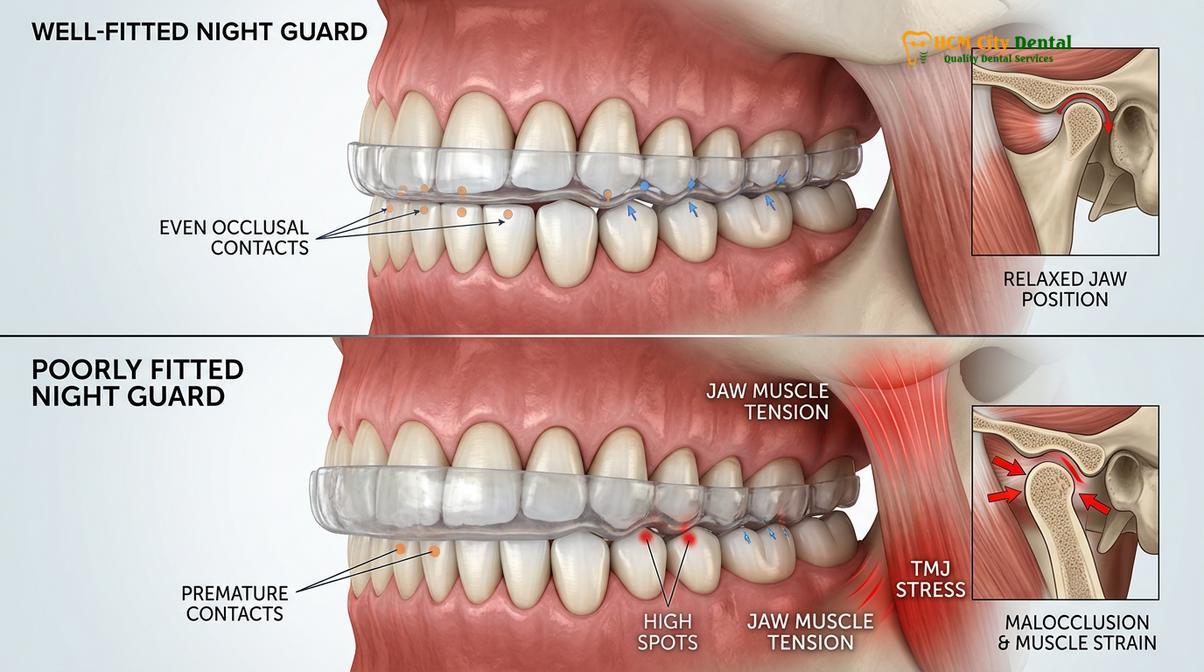
Restorative procedures are the most common culprits. When a dentist places a new composite filling, particularly on the interproximal surfaces (between the teeth) or the occlusal surfaces (biting surfaces), the contour of the tooth is permanently altered. Even a discrepancy of a fraction of a millimeter can prevent a hard night guard from seating fully. Similarly, the placement of a new dental crown or a dental bridge introduces entirely new anatomical shapes that the old guard was never designed to accommodate.
“Patients often overlook how minor restorative work impacts their occlusal appliances. A night guard is fabricated to a highly specific micron-level tolerance; therefore, any new crown or filling necessitates an immediate fit check to prevent unwanted orthodontic forces.”
— Dr. Nguyen Van Cuong, Lead Prosthodontist
Tooth loss or extractions also render an existing night guard obsolete. If a tooth is removed, the guard will have an empty void. While this might not immediately prevent the guard from fitting over the remaining teeth, it alters the distribution of bite forces. The lack of support in the extracted area can cause the guard to flex and eventually fracture under the pressure of heavy clenching.
Furthermore, if a patient stops wearing their night guard for an extended period, natural mesial drift (the tendency of teeth to shift forward over time) or minor orthodontic relapse can occur. When the patient attempts to wear the guard again after several months, they will likely find it excessively tight or completely unwearable. This highlights the importance of consistent wear to mitigate the bruxism effects on teeth and maintain dental alignment.
Adjustment vs Replacement
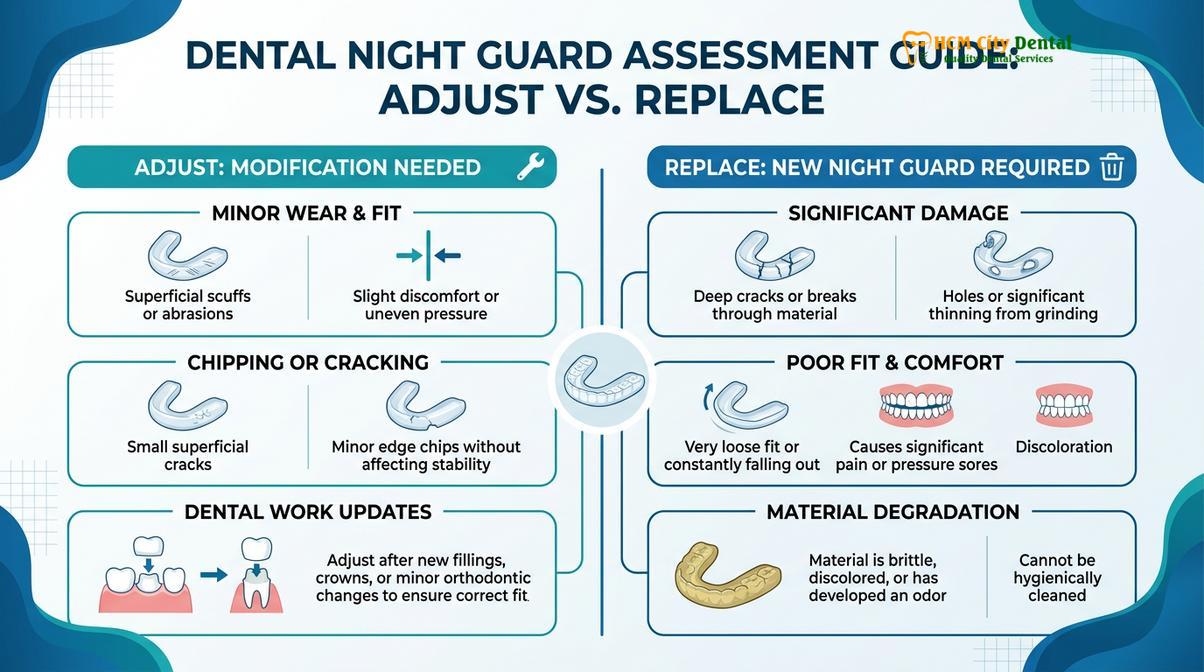
Minor pressure points can be relieved through clinical chairside adjustments, whereas severe warping, cracks, or significant dental anatomical changes require a complete replacement.
When faced with a night guard not fitting properly, patients often wonder if the appliance can be salvaged or if they need to invest in a new one. The decision between adjustment and replacement depends entirely on the severity of the fit issue, the material of the guard, and the underlying cause of the discrepancy.
Clinical adjustments are highly effective for minor issues. If a new guard feels slightly tight on one specific tooth, a dentist can use a specialized acrylic bur and a straight handpiece to carefully relieve the internal surface of the appliance. This process removes microscopic layers of acrylic until the pressure is alleviated. Similarly, if the bite feels uneven, the dentist will use articulating paper (a thin, ink-coated paper) to identify premature occlusal contacts. By selectively grinding down these high spots, the dentist can balance the bite and eliminate muscle strain.
However, adjustments have their limits. If a guard has been thermally warped by hot water, the entire structural integrity of the arch is compromised. It is clinically impossible to “un-warp” acrylic. In these cases, replacement is mandatory. Likewise, if a patient has undergone extensive restorative work—such as multiple new crowns or orthodontic treatment—the internal topography of the guard will be too vastly different from the new dental anatomy to be adjusted safely.
| Clinical Scenario | Recommended Action | Clinical Rationale |
|---|---|---|
| Minor tightness on 1-2 teeth | Chairside Adjustment | Internal acrylic can be selectively relieved to ease pressure. |
| Uneven bite (high spots) | Chairside Adjustment | Occlusal surface can be equilibrated using articulating paper and burs. |
| Thermal warping (washed in hot water) | Complete Replacement | Polymer distortion is irreversible; the arch form is permanently altered. |
| After a single minor filling | Adjustment (Usually) | The dentist can often hollow out the area around the new filling. |
| After new crowns or extractions | Complete Replacement | Major anatomical changes cannot be accommodated by the old appliance. |
| Deep cracks or material perforation | Complete Replacement | Structural integrity is lost; risk of bacterial harboring and breakage. |
Custom vs OTC Fit Issues
Over-the-counter guards rely on imprecise boil-and-bite methods that often lead to bulky, unstable fits, whereas custom guards are precisely milled from digital or physical impressions.
The disparity in fit quality between over-the-counter (OTC) mouthguards and professionally fabricated custom guards is vast. Many patients initially opt for OTC options due to convenience and lower upfront costs, but frequently encounter severe fit issues that render the devices unusable or even harmful.
OTC guards, particularly the “boil-and-bite” variety, are made from ethylene-vinyl acetate (EVA) or similar thermoplastic materials. The patient softens the material in boiling water and bites into it to create a mold. This method is inherently flawed because human bite force during this process is uneven, and the material tends to shrink and distort as it cools. The result is often a bulky, uncomfortable mouth guard that lacks proper retention. Because it does not snap securely into the undercuts of the teeth, patients often have to consciously hold their jaw in a specific position to keep the guard from falling out, which completely defeats the purpose of relaxing the jaw muscles during sleep. Clinical complications of over-the-counter mouthguards frequently include exacerbated muscle tension and bite misalignment[3].
Furthermore, OTC guards rarely provide balanced posterior support. If the material is too soft or unevenly distributed, the back teeth may not make proper contact, leading to a condition known as an anterior open bite, where the front teeth no longer touch when the jaw is closed. This is a severe complication that requires complex orthodontic correction.
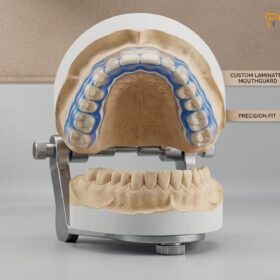
In contrast, a custom vs store bought night guard comparison heavily favors the clinical route. Custom guards are fabricated in a dental laboratory based on highly accurate intraoral scans or polyvinyl siloxane (PVS) impressions. Whether you choose a hard vs soft night guard, the custom fabrication ensures the appliance hugs the exact contours of your teeth, providing maximum retention, minimal bulk, and a perfectly balanced occlusal surface that protects the TMJ.
Getting a Properly Fitted Guard in Vietnam
Securing a precise fit involves comprehensive digital scanning, precise occlusal registration, and professional fabrication at a specialized dental clinic.
For patients experiencing ongoing issues with their dental appliances, seeking professional care is essential. At HCMC Dental Clinic in Ho Chi Minh City, the workflow for fabricating a perfectly fitted night guard relies on advanced digital dentistry to eliminate the errors associated with traditional impression methods. This approach aligns with the clinical guidelines set forth by the Vietnam Odonto-Stomatology Association (VOSA) regarding the management of sleep bruxism and temporomandibular disorders[6].
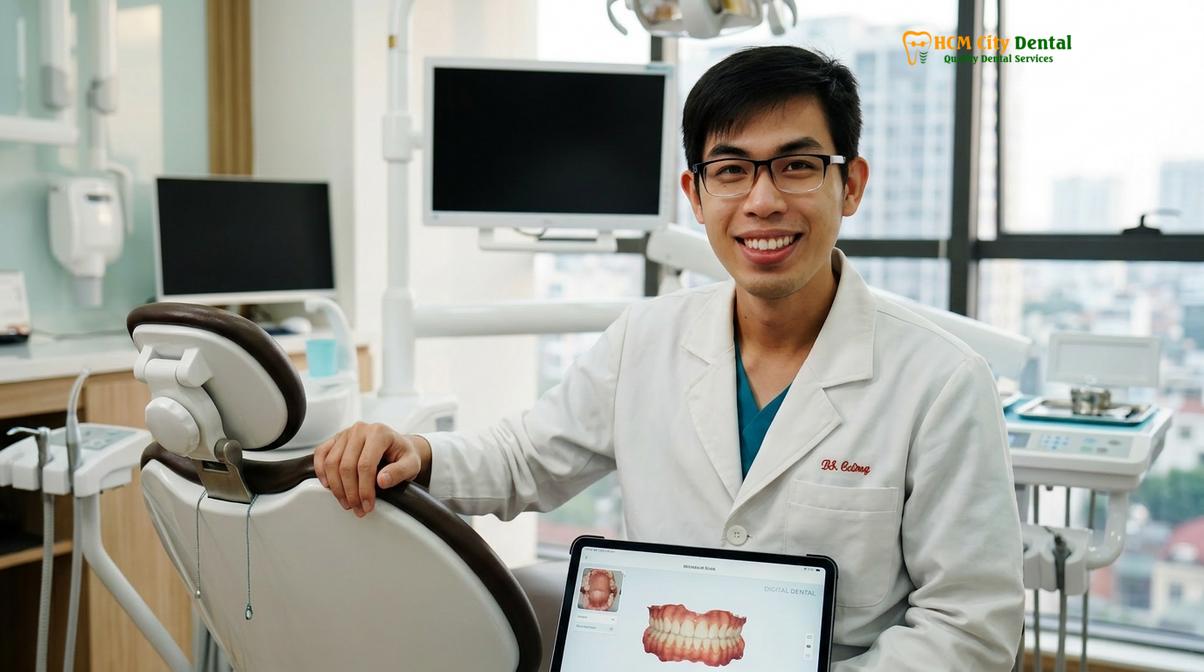
Dr. Nguyen Van Cuong, a leading prosthodontic specialist, emphasizes that a night guard must function in perfect harmony with your neuromuscular system. Dr. Cuong frequently evaluates patients who have experienced severe discomfort from poorly adapted appliances. His clinical approach focuses on precise digital equilibration to ensure that every custom guard provides optimal protection without straining the temporomandibular joint.
The process begins with a comprehensive clinical examination to assess the severity of bruxism, the health of the TMJ, and the current state of the dentition. Instead of using messy putty, the clinical team utilizes high-resolution intraoral scanners to capture a highly accurate 3D model of the patient’s teeth and bite registration. This digital file is then sent to a specialized CAD/CAM laboratory, where the night guard is digitally designed and precision-milled from a solid block of clinical-grade acrylic or dual-laminate material.
Upon delivery, the dentist does not simply hand the guard to the patient. A meticulous fitting appointment is conducted. The dentist will check the path of insertion, ensure there is no impingement on the gingival tissues, and use articulating paper to verify that the bite forces are distributed evenly across the entire arch. This attention to detail ensures a high success rate in patient compliance and comfort.
Clinical Case Study: Resolving OTC Guard Complications
A 34-year-old patient visited HCMC Dental Clinic in Ho Chi Minh City complaining of severe morning headaches and jaw stiffness. The patient had been using a store-bought boil-and-bite guard for three months. Clinical examination revealed that the OTC guard was excessively bulky, causing the jaw to rest in an unnatural, strained position. Furthermore, the soft material had encouraged increased clenching. The clinic fabricated a custom, hard-acrylic, flat-plane occlusal splint using digital scanning. Upon delivery and precise bite equilibration, the patient reported a complete resolution of jaw pain and headaches within days of consistent wear.
When to See a Doctor
While minor tightness during the first few days of wearing a new custom guard is normal as your mouth adapts, persistent pain or specific red flags require immediate clinical evaluation. Do not attempt to modify or adjust a dental appliance yourself using household tools, as this will permanently ruin the device and potentially harm your teeth.
You should schedule an appointment with a dental professional if you experience any of the following symptoms:
- Severe TMJ Pain: If wearing the guard exacerbates jaw pain, causes clicking/popping in the joint, or leads to lockjaw, the occlusal surface is likely unbalanced and requires immediate equilibration.
- Tooth Mobility: If you notice that any teeth feel loose after wearing the guard, the appliance is placing active, destructive orthodontic forces on the periodontium.
- Gingival Bleeding or Ulceration: A guard should never cut into the gums. Blanching, bleeding, or sores indicate overextended acrylic borders that must be trimmed.
- Breathing Obstruction: If the guard is so bulky that it forces your mouth open uncomfortably or interferes with normal nighttime breathing, it must be redesigned.
“An occlusal splint should protect the dentition, not cause secondary trauma. If an appliance induces localized tooth pain or gingival blanching, immediate clinical intervention is mandatory to prevent irreversible periodontal damage.”
— Clinical Prosthodontic Guidelines
References
- Journal of Prosthetic Dentistry. Dimensional stability of occlusal splint materials. (2021).
- American Journal of Orthodontics and Dentofacial Orthopedics. Effects of occlusal appliances on the temporomandibular joint. (2019).
- International Journal of Prosthodontics. Clinical complications of over-the-counter mouthguards. (2020).
- Journal of Clinical Sleep Medicine. Management of sleep bruxism with oral appliances. (2022).
- Journal of Periodontology. Gingival response to poorly adapted dental appliances. (2018).
- Vietnam Odonto-Stomatology Association (VOSA). Clinical guidelines on the management of sleep bruxism and temporomandibular disorders. (2023).
If your night guard is causing discomfort, pain, or simply doesn’t fit right, do not force it. Protect your smile and your jaw joints by seeking professional clinical adjustments or a high-quality replacement. Contact the specialists at HCMC Dental Clinic in Ho Chi Minh City today to schedule a comprehensive bite evaluation and custom night guard fitting.
For pricing, booking, and a free clinical assessment, visit our Night Guard & Mouthguard service page at HCMC Dental Clinic in Ho Chi Minh City.