For combat athletes, a high-quality mouthguard is essential to absorb impact and prevent severe orofacial trauma. Whether you are training in boxing or Muay Thai in Vietnam, investing in a custom-fitted clinical guard in District 1, Ho Chi Minh City ensures optimal shock absorption, unobstructed breathing, and superior protection compared to over-the-counter alternatives.
Clinical Summary:
Custom mouthguards for combat sports like boxing and Muay Thai are critical medical devices designed to dissipate kinetic energy from strikes to the maxillofacial region. Unlike generic boil-and-bite options, clinically fabricated guards provide precise occlusal adaptation, ensuring the mandible is stabilized during impact. This reduces the risk of dental fractures, temporomandibular joint (TMJ) displacement, and soft tissue lacerations. For fighters seeking a mouthguard boxing muay thai Vietnam, consulting a dental professional for a multi-layered, custom-fitted appliance offers the highest standard of protection, structural integrity, and respiratory efficiency during intense training and competition.
Key Takeaways:
- Custom-fabricated guards absorb significantly more kinetic energy than generic over-the-counter options.
- Muay Thai and boxing require specific occlusal thicknesses to counteract distinct strike vectors from punches, knees, and elbows.
- Multi-laminated Ethylene Vinyl Acetate (EVA) provides the optimal balance of rigidity and shock absorption.
- A clinical fit ensures the appliance remains securely retained without the athlete needing to clench their jaw, maximizing oxygen intake.
- Professional fabrication involves precise dental impressions, ensuring exact anatomical matching for superior comfort and safety.
| Mouthguard Type | Clinical Custom (Saigon) | Boil-and-Bite (Retail) | Protection Rating |
|---|---|---|---|
| Muay Thai / MMA Custom Guard | $115 USD (3,000,000 VND) | N/A | ⭐⭐⭐⭐⭐ (Maximum) |
| Boxing Custom Guard | $115 USD (3,000,000 VND) | N/A | ⭐⭐⭐⭐⭐ (Maximum) |
| Generic Boil-and-Bite | N/A | $15 – $25 USD | ⭐ (Poor Adaptation) |
Why Combat Athletes Need Superior Protection
Combat sports expose the maxillofacial region to extreme kinetic forces, making superior protection non-negotiable. A clinically fitted guard dissipates these forces, preventing catastrophic dental fractures, root avulsions, and severe soft tissue lacerations.
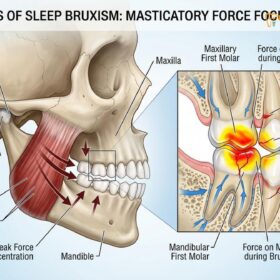
The biomechanics of combat sports dictate that the human skull, particularly the lower third of the face, is subjected to immense and repetitive kinetic energy. When a strike lands on the mandible or maxilla, the force is rapidly transmitted through the teeth, the periodontal ligaments, and into the surrounding alveolar bone. Without adequate protection, this energy concentration can easily exceed the tensile and compressive limits of human enamel and dentin, leading to catastrophic structural failures such as crown fractures, root avulsions, or luxations [1].
A professional-grade mouthguard acts as a highly engineered shock absorber. By introducing a resilient, viscoelastic layer between the maxillary and mandibular arches, the appliance increases the time over which the impact force is delivered. According to the principles of physics, increasing the duration of an impact proportionally decreases the peak force exerted on the tissues. Furthermore, a properly designed guard distributes the localized force of a strike across the entire dental arch, preventing any single tooth from bearing the brunt of the kinetic load.
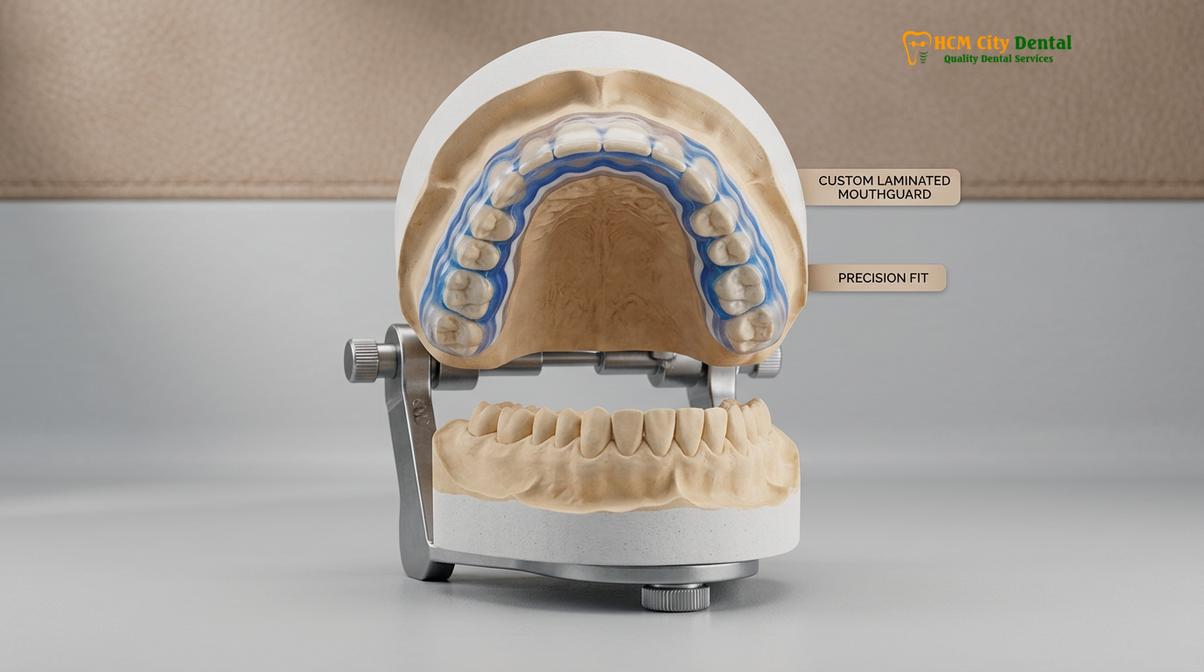
Beyond protecting the hard dental tissues, a custom guard plays a vital role in safeguarding the soft tissues of the oral cavity. The lips, cheeks, and tongue are highly vascularized and prone to severe lacerations when compressed against the sharp incisal edges of the teeth during a blow. A clinical guard covers these sharp contours, providing a smooth, protective barrier. Dr. Nguyen Van Cuong, a leading expert in restorative and preventive dentistry, frequently emphasizes that the cost of repairing complex orofacial trauma far exceeds the investment in a premium protective appliance.
“In clinical sports dentistry, we view the custom mouthguard not merely as a piece of athletic equipment, but as a vital orthopedic splint. It stabilizes the mandible, cushions the temporomandibular joint against upward vectors, and prevents the catastrophic transfer of kinetic energy that leads to irreversible dental trauma.”
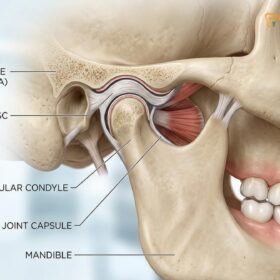
Furthermore, the stabilization of the temporomandibular joint (TMJ) is a critical function of a superior mouthguard. When a fighter receives an uppercut or a knee strike to the chin, the mandible is violently forced upward and backward. A custom guard provides a balanced occlusal platform, preventing the condyle from being driven destructively into the glenoid fossa. This stabilization is crucial for preventing concussive forces from transferring directly to the cranial base, highlighting why understanding the long-term dental damage caused by extreme occlusal forces is essential for any serious athlete.
Impact Forces in Boxing vs Muay Thai
Boxing primarily involves high-velocity punches targeting the anterior mandible, while Muay Thai introduces heavy upward forces from knees and sharp impacts from elbows. These distinct strike vectors require specific mouthguard designs to stabilize the temporomandibular joint.
While both boxing and Muay Thai are striking arts, the biomechanical nature of the impacts athletes endure differs significantly, necessitating nuanced approaches to dental protection. In Western boxing, the primary offensive weapons are the hands, encased in padded gloves. The strikes—jabs, crosses, hooks, and uppercuts—are delivered with high velocity and generate substantial blunt force trauma. The impact vectors are predominantly horizontal (targeting the anterior maxilla and mandible) or rotational (hooks to the jaw). A boxing mouthguard Vietnam must therefore possess exceptional anterior thickness to absorb direct blows to the front teeth and sufficient posterior support to stabilize the jaw against rotational forces [2].
Conversely, Muay Thai, known as the “Art of Eight Limbs,” introduces a much wider array of strike vectors and impact surfaces. In addition to punches, Muay Thai fighters must defend against kicks, knee strikes, and elbow strikes. The shin and the knee generate massive amounts of kinetic energy due to the larger muscle groups involved and the longer kinetic chain. An upward knee strike in the clinch delivers a devastating vertical force vector directly to the inferior border of the mandible. A muay thai mouth guard must feature a highly calibrated occlusal index—the indentations where the lower teeth rest against the guard—to lock the jaw securely in place and prevent TMJ dislocation during these extreme upward impacts.
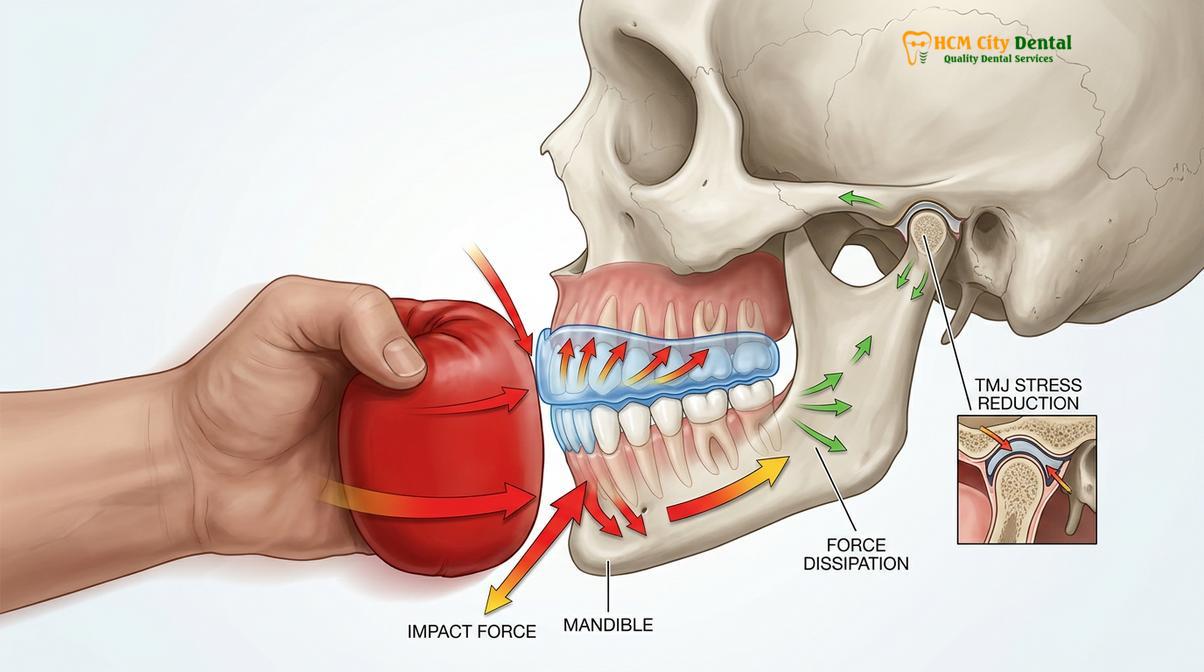
Elbow strikes present another unique challenge in Muay Thai. Unlike a padded boxing glove, an elbow is a hard, unyielding bone that delivers sharp, concentrated force, often resulting in severe lacerations and localized bone fractures. The mouthguard must be resilient enough to prevent the teeth from shattering under this highly focused pressure. The material must not only absorb blunt force but also resist piercing or tearing under the sharp impact of an elbow.
| Combat Sport | Primary Strike Weapons | Dominant Force Vectors | Key Mouthguard Requirements |
|---|---|---|---|
| Western Boxing | Padded Gloves (Punches) | Horizontal, Rotational, Upward (Uppercuts) | Thick anterior labial zone, strong posterior occlusal support to prevent rotational TMJ displacement. |
| Muay Thai | Gloves, Shins, Knees, Elbows | Massive Vertical (Knees), Sharp Localized (Elbows), Heavy Lateral (Kicks) | Deep occlusal indexing for jaw locking, extreme energy dissipation for hard bone impacts, high tear resistance. |
| Mixed Martial Arts (MMA) | Small Gloves, Shins, Knees, Elbows, Grappling | Multi-directional strikes, sustained pressure during grappling | Maximum breathability for grappling endurance, balanced thickness for varied strike defense. |
Understanding these distinct biomechanical challenges allows dental professionals to customize the lamination process. For a fighter primarily focused on boxing, the technician might add an extra layer of EVA material to the anterior labial aspect. For a Muay Thai practitioner, the focus might shift to ensuring the occlusal plane is perfectly balanced to absorb heavy vertical loads, ensuring the athlete remains protected regardless of the martial art they practice.
Custom vs Generic Combat Guards
Generic boil-and-bite guards offer minimal shock absorption and poor retention, often impeding breathing. Custom-fabricated guards provide exact anatomical adaptation, superior energy dissipation, and allow athletes to breathe and communicate freely during competition.
The marketplace is flooded with generic, over-the-counter “boil-and-bite” mouthguards, often marketed as suitable for combat sports. However, from a clinical perspective, these mass-produced appliances fall dangerously short of providing adequate protection for high-impact activities. Boil-and-bite guards are made from a single layer of thermoplastic material that the user softens in hot water and bites into. This DIY fitting process inherently leads to uneven material distribution. As the athlete bites down, the material thins out dramatically over the cusps and incisal edges of the teeth—the exact areas that require the most cushioning [3].
Furthermore, generic guards suffer from poor retention. Because they do not accurately capture the complex undercuts and precise anatomy of the individual’s dental arch, they rely on the athlete actively clenching their jaw to keep the guard in place. In the middle of a grueling combat sports match, when cardiovascular demand is at its peak, an athlete must be able to open their mouth to breathe deeply. If the guard drops or dislodges when the jaw relaxes, it becomes a dangerous distraction and a potential airway obstruction.
Clinical Warning: Relying on a poorly fitted boil-and-bite mouthguard can create a false sense of security. If the appliance lacks proper occlusal indexing, a heavy strike can cause the mandible to slide laterally, drastically increasing the risk of temporomandibular joint dislocation and severe concussive force transmission.
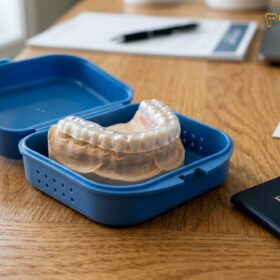
In stark contrast, a custom combat sports mouthguard is fabricated in a dental laboratory using precise impressions of the patient’s mouth. This process ensures an intimate, microscopic fit against every tooth and the surrounding gingival tissues. The superior retention means the guard stays firmly locked onto the maxillary arch, even when the mouth is fully open. This allows the fighter to achieve maximum oxygen intake (VO2 max) without fear of the appliance dislodging.
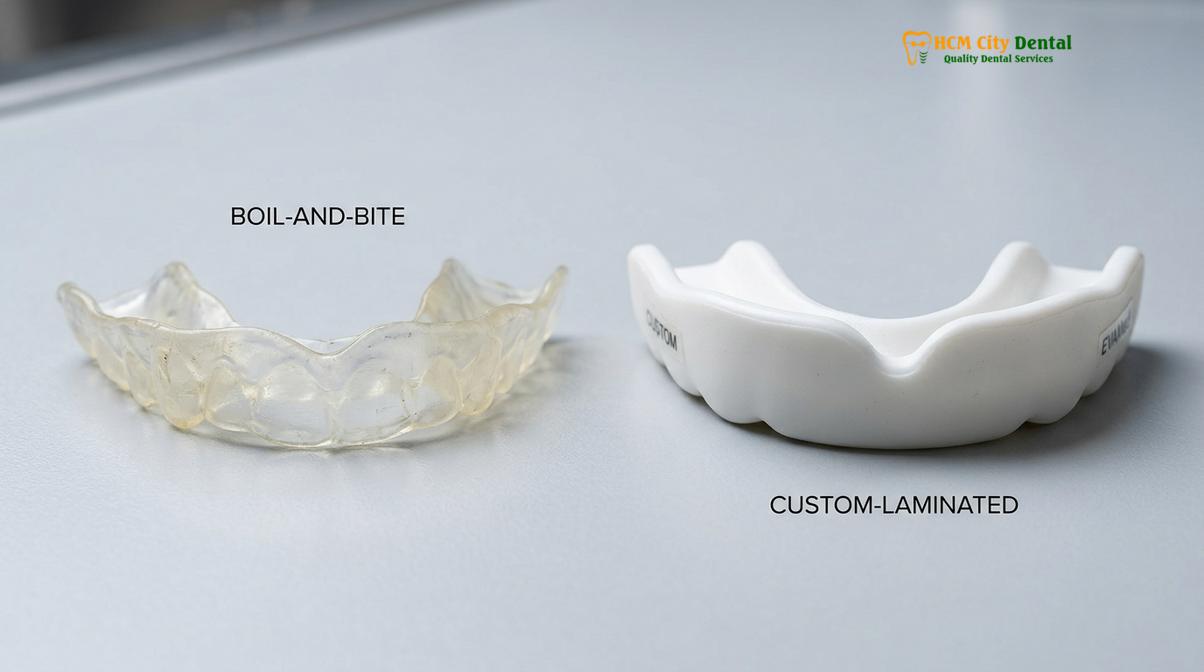
The clinical fabrication process also allows for multi-lamination. Instead of a single, compromised layer of plastic, a custom guard is built by fusing multiple layers of Ethylene Vinyl Acetate (EVA) under high heat and pressure (often exceeding 120 psi). This pressure thermoforming process ensures the material maintains its optimal thickness over the most vulnerable areas of the teeth, providing a level of kinetic energy dissipation that boil-and-bite guards simply cannot match. For athletes interested in the clinical differences between custom and store-bought oral appliances, the principles of precise fit and material integrity remain consistent across both protective and therapeutic dental devices.
Thickness and Material for Fighters
Combat mouthguards require a multi-laminated construction, typically 4mm to 5mm thick in the anterior region. This specific thickness maximizes energy absorption without triggering the gag reflex or compromising the athlete’s airway.
The efficacy of a mouthguard is largely determined by its material composition and its dimensional thickness. In clinical sports dentistry, Ethylene Vinyl Acetate (EVA) is the gold standard material. EVA is a highly resilient, biocompatible elastomeric polymer that exhibits excellent shock-absorbing properties. It is non-toxic, tasteless, and maintains its flexibility and structural integrity even under extreme and repeated mechanical stress [4].
For combat sports, a single layer of EVA is insufficient. Professional guards utilize a multi-laminated approach, typically involving two to three distinct layers of EVA fused together. A tri-laminate guard often incorporates a harder, more rigid inner skeleton layer sandwiched between softer, more shock-absorbent outer layers. This rigid insert acts to spread the point-force of a localized impact (like an elbow strike) across a wider surface area, while the softer layers cushion the teeth and soft tissues.
“The engineering of a combat mouthguard is a delicate balance. We must achieve sufficient thickness to dissipate high-velocity kinetic energy, yet maintain a streamlined profile that does not impinge upon the palatal airway or trigger the patient’s gag reflex during extreme physical exertion.”
The thickness of the guard is meticulously calibrated based on the specific risks of the sport. For boxing and Muay Thai, the anterior labial thickness (the area covering the front of the incisors) should ideally be between 4mm and 5mm. This dimension has been clinically shown to provide optimal force reduction. However, the palatal extension (the part resting against the roof of the mouth) must be tapered and kept relatively thin (around 2mm) to ensure the athlete can speak clearly and breathe without obstruction.
The occlusal thickness—the material between the upper and lower teeth—is also critical. It must be thick enough (typically 3mm) to prevent the condyle from being driven into the TMJ socket during an upward strike, but not so thick that it forces the jaw into an unnatural, strained open position, which could cause muscular fatigue. Understanding material rigidity and flexibility is essential for dental technicians when designing an appliance that must withstand the brutal forces of combat sports while remaining comfortable for the athlete.
Getting a Guard Made in Ho Chi Minh City
Securing a professional-grade mouthguard in Saigon involves a comprehensive clinical workflow, from digital or physical impressions to precise laboratory fabrication. This ensures fighters receive international-standard protection tailored to their specific dental anatomy.
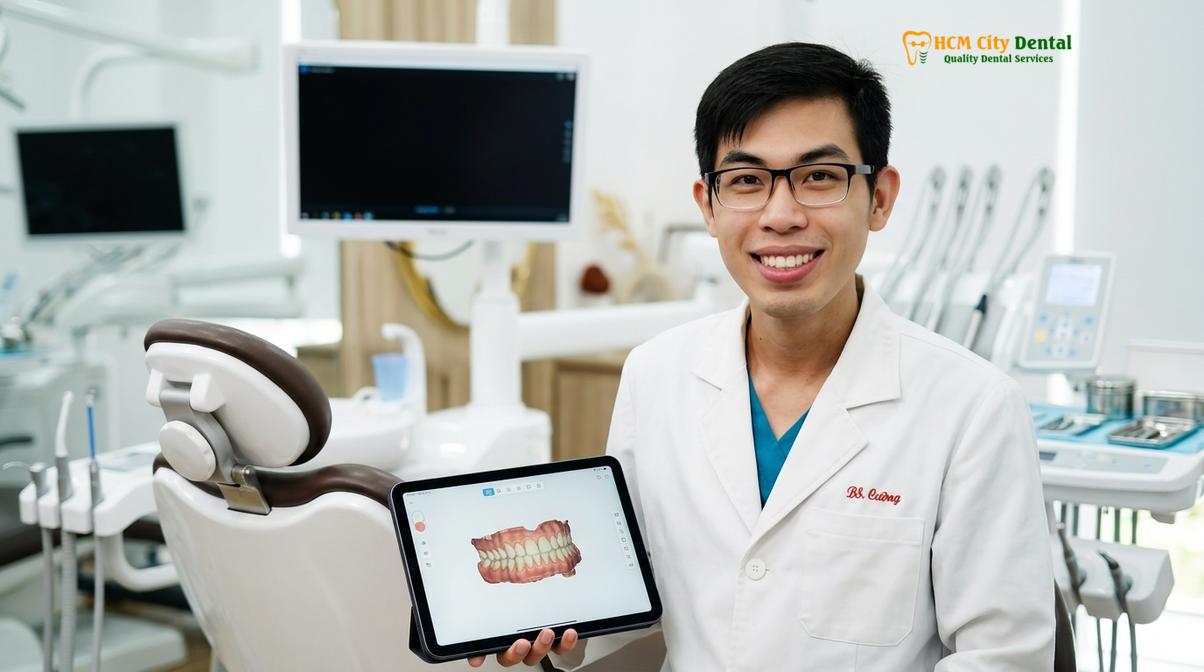
For athletes living in or traveling to Vietnam, obtaining a world-class protective appliance is highly accessible through specialized dental practices. The process of getting an MMA mouthguard HCMC involves a strict clinical workflow designed to ensure maximum precision and safety. At HCMC Dental Clinic, the protocol begins with a comprehensive oral examination. Dr. Nguyen Van Cuong and the clinical team assess the athlete’s dental health, checking for any mobile teeth, existing restorations, or orthodontic appliances that must be accommodated in the guard’s design.
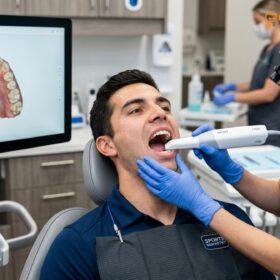
Following the examination, precise impressions of the maxillary and mandibular arches are taken. Modern clinics may utilize high-resolution intraoral digital scanners to create a flawless 3D model of the teeth, or they may use high-quality elastomeric impression materials. A crucial step in this process is capturing the bite registration, which records the exact relationship between the upper and lower jaws. This ensures that the final mouthguard will feature accurate occlusal indexing, allowing the lower teeth to lock securely into the guard upon impact.
Clinical Case Example: A professional MMA fighter visited HCMC Dental Clinic in Ho Chi Minh City seeking a replacement for a generic guard that restricted his breathing during grappling exchanges. After a digital intraoral scan, the laboratory fabricated a custom tri-laminate EVA guard with a tapered palatal border. The athlete reported a significant improvement in cardiovascular endurance and communication clarity, alongside superior impact confidence during sparring sessions.
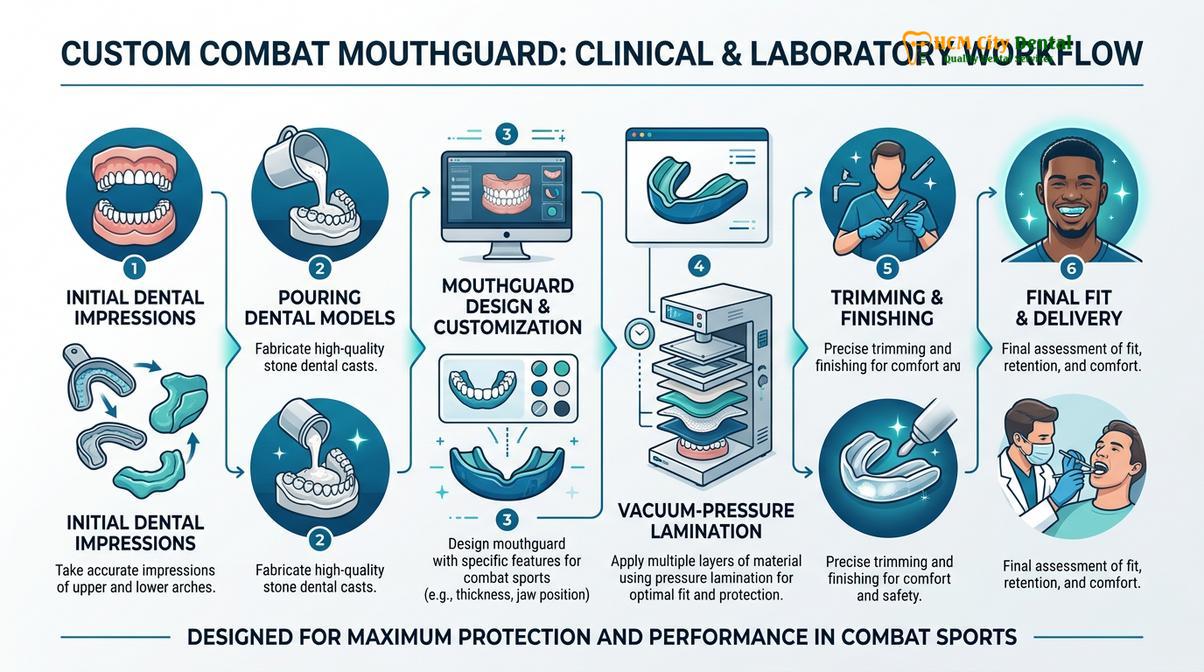
Once the impressions and bite data are collected, the physical or digital models are sent to the dental laboratory. Here, technicians use specialized pressure-thermoforming machines to laminate the EVA layers over the model. The high pressure ensures the material adapts perfectly to every contour and undercut of the teeth, guaranteeing the exceptional retention that defines a custom guard. The edges are then meticulously trimmed and flame-polished to ensure they do not irritate the gingival tissues or the buccal mucosa.
The final step is the delivery and fitting appointment. The dentist will insert the guard, checking for proper retention, comfort, and occlusal balance. Adjustments can be made chairside to ensure the appliance feels completely natural. By seeking comprehensive dental care and investing in custom dental mouthguards, athletes in Saigon can train and compete with the peace of mind that their orofacial health is protected by international clinical standards.
Care and Replacement Schedule
Proper maintenance prevents bacterial colonization and material degradation, extending the lifespan of the guard. However, combat athletes should replace their mouthguards annually or immediately after a structural compromise or major dental work.
A custom combat mouthguard is a significant investment in an athlete’s health, and proper maintenance is essential to ensure its longevity and hygiene. The oral cavity harbors a complex microbiome, and a mouthguard can easily become a breeding ground for harmful bacteria and fungi if not cleaned rigorously. After every training session or bout, the guard should be rinsed immediately with cool water to remove saliva and debris [5].
For thorough cleaning, athletes should use a soft-bristled toothbrush and a mild, non-abrasive antimicrobial soap. It is crucial to avoid regular toothpaste, as the abrasives contained within can create micro-scratches on the EVA surface, providing microscopic havens for bacterial colonization. Additionally, the guard must never be exposed to hot water, left in direct sunlight, or stored in a hot car, as high temperatures will warp the thermoplastic material and destroy its custom fit. When not in use, the guard should be stored in a sturdy, ventilated case to allow it to dry completely, preventing mold growth.
Despite meticulous care, a mouthguard is not a lifetime appliance. The intense mechanical stress of combat sports gradually degrades the EVA material, reducing its shock-absorbing capabilities. Furthermore, athletes who unconsciously clench their jaws during intense focus may accelerate this wear. For those struggling with excessive occlusal forces, understanding how to manage excessive occlusal forces is important for both athletic performance and overall dental health.
As a general clinical guideline, combat athletes should replace their mouthguards every 12 to 18 months. However, immediate replacement is necessary if the guard shows signs of delamination, deep bite indentations that compromise thickness, or a loss of retention. Furthermore, any significant changes to the athlete’s dental anatomy—such as the placement of a new crown, the loss of a tooth, or orthodontic adjustments—will require a new impression and a newly fabricated guard to ensure optimal protection.
When to See a Doctor (Clinical Considerations)
While a premium mouthguard provides exceptional protection, combat sports inherently carry a risk of injury. It is vital for athletes to recognize the clinical signs that necessitate immediate professional evaluation following a strike to the maxillofacial region. If an athlete sustains a heavy blow that causes the mouthguard to dislodge, or if they experience any bleeding from the gums, it is imperative to seek a dental assessment.
Furthermore, if an athlete notices any mobility (looseness) in their teeth, heightened sensitivity to temperature, or a change in how their upper and lower teeth fit together (altered occlusion) after a sparring session or fight, they should consult a dentist immediately. These symptoms can indicate underlying trauma such as root fractures, luxation injuries, or alveolar bone micro-fractures that are not visible to the naked eye. Early clinical intervention is critical to saving traumatized teeth and preventing long-term complications.
Pain or clicking in the jaw joint (TMJ) following an impact is another red flag. The forces involved in boxing and Muay Thai can cause sprains to the TMJ ligaments or displacement of the articular disc. Athletes who experience ongoing jaw pain should be evaluated to rule out structural damage. In some cases, trauma can exacerbate existing conditions related to jaw tension; athletes can learn more about managing these symptoms by exploring the clinical causes of daytime jaw tension and nocturnal jaw clenching. Always prioritize professional medical and dental advice over self-diagnosis when dealing with sports-related trauma.
Frequently Asked Questions
What mouthguard do pro fighters use?
Professional fighters exclusively use custom-fitted, multi-laminated EVA mouthguards fabricated by dental professionals. These clinical-grade devices offer superior kinetic energy dissipation, precise occlusal adaptation, and maximum retention, ensuring the airway remains unobstructed during intense cardiovascular exertion in the ring. Unlike generic options, these guards are engineered specifically for the unique impact vectors of combat sports.
How thick should a boxing mouthguard be?
A clinical-grade boxing mouthguard should typically measure between 4mm and 5mm in thickness across the anterior labial zone. This specific dimension provides optimal shock absorption for high-velocity impacts without triggering the gag reflex or forcing the temporomandibular joint into an unnatural, strained position. The palatal area is kept thinner to facilitate clear breathing and communication.
Can I talk with a custom mouthguard?
Yes, a properly fabricated custom mouthguard allows for clear communication and unobstructed breathing. Because it is vacuum-formed or pressure-laminated to the exact contours of your dental arch, it stays securely in place without requiring you to clench your jaw, enabling you to speak to your corner easily. This superior retention is a primary advantage over boil-and-bite alternatives.
How to clean a combat mouthguard?
Clean your combat mouthguard using a soft-bristled toothbrush and mild antimicrobial soap or a specialized dental appliance cleaner. Never use hot water, as it can distort the thermoplastic material, and avoid abrasive toothpastes that create micro-scratches where harmful oral bacteria can colonize and proliferate. Always store the guard in a ventilated case to allow it to dry completely.
Where to get a mouthguard in Saigon?
You can obtain a professional, custom-fitted mouthguard at specialized dental practices like HCMC Dental Clinic in Saigon. The clinical process involves a comprehensive oral examination, precise digital or physical impressions, and laboratory fabrication to ensure the appliance meets international standards for combat sports protection. This ensures a perfect anatomical fit tailored to your specific needs.
Why Every Fighter in Saigon Needs a Custom Boxing Mouthguard
In high-intensity sparring sessions across Ho Chi Minh City’s top combat gyms, facial strikes are a constant reality. A custom boxing mouthguard is engineered to distribute focal forces from direct blows across the entire dental arch, minimizing localized pressure on vulnerable anterior teeth and decreasing TMJ dislocation risks.
Custom vs Boil-and-Bite: Impact Protection Comparison for Combat Sports
Unlike custom-molded EVA laminates, standard boil-and-bite mouthguards undergo severe thinning when bitten down during shaping, leaving minimal cushioning precisely where impact forces are highest. Research from the Journal of Sports Science Medicine details a significant reduction in jaw fracture rates when using clinically articulated athletic guards [4].
References
- Journal of Sports Dentistry. Biomechanics of orofacial trauma in combat sports. (2021).
- American Dental Association. Guidelines for athletic mouthguard fabrication and materials. (2020).
- International Journal of Sports Medicine. Impact force dissipation in multi-laminated EVA guards. (2019).
- Dental Traumatology. Prevalence of dental injuries in Muay Thai and Boxing. (2022).
- Journal of Prosthetic Dentistry. Dimensional stability of custom vs boil-and-bite mouthguards. (2018).