The best food for braces includes soft, nutrient-dense options that require minimal chewing, such as scrambled eggs, mashed potatoes, yogurt, oatmeal, and steamed vegetables. Adopting an orthodontic diet prevents bracket damage and minimizes discomfort while your teeth adjust to the biomechanical forces of your treatment. For more detailed information on treatments, procedures, and pricing, you can also explore our professional invisalign services.
Clinical Summary:
Undergoing orthodontic treatment requires a strategic modification of dietary habits to ensure the structural integrity of fixed appliances and to manage periodontal discomfort. The biomechanics of tooth movement induce temporary inflammation in the periodontal ligament, making mastication of hard or chewy foods painful and clinically counterproductive. Consuming the best food for braces—primarily soft, non-sticky, and nutrient-rich items—facilitates proper bone remodeling by providing essential vitamins and minerals without exerting excessive shear forces on bracket adhesives. Clinical compliance with an appropriate orthodontic diet not only prevents emergency visits for debonded brackets and bent archwires but also ensures that the treatment progresses efficiently according to the projected timeline. Patients are advised to utilize posterior chewing techniques and maintain rigorous oral hygiene to clear food debris from complex appliance structures.
Key Takeaways:
- Soft, nutrient-dense foods like eggs, yogurt, and flaky fish are ideal for minimizing bracket stress and periodontal pain.
- Hard, sticky, and crunchy foods must be strictly avoided to prevent bracket debonding and archwire distortion.
- The first week of treatment requires a highly modified diet of purees and liquids to manage acute inflammatory discomfort.
- Cutting food into small, bite-sized pieces and chewing with posterior teeth significantly reduces anterior appliance damage.
- Maintaining excellent oral hygiene after every meal is critical to prevent plaque accumulation around brackets and wires.
The Biomechanics of Orthodontic Chewing: Why Your Diet Matters
Chewing hard foods generates excessive shear force that can break the adhesive bond between the bracket and the tooth enamel, disrupting treatment and prolonging your orthodontic timeline.
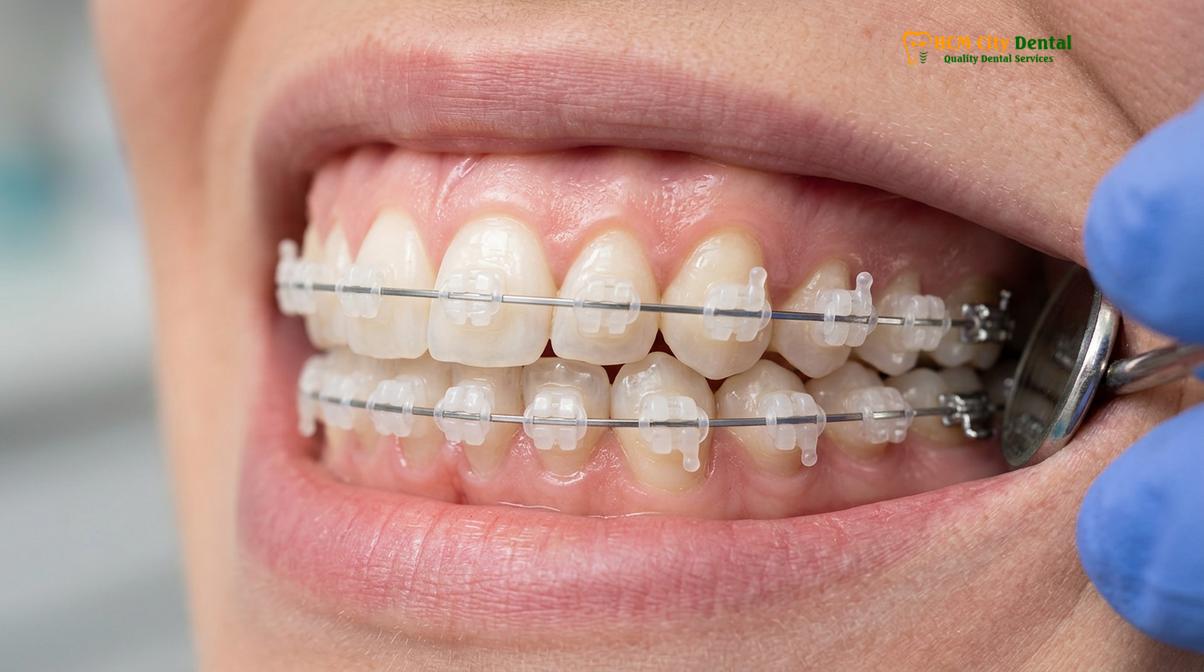
To truly understand why selecting the best food for braces is a critical component of your treatment, one must first examine the biomechanics of Orthodontics. Fixed appliances, commonly known as braces, consist of brackets bonded directly to the enamel surface of the teeth, connected by a continuous metallic archwire. These components work in tandem to apply continuous, controlled, and light forces to the dentition. This force compresses the periodontal ligament (PDL) on one side of the tooth root and stretches it on the other, initiating a complex biological process of bone remodeling involving osteoclasts (bone-resorbing cells) and osteoblasts (bone-forming cells)[1].
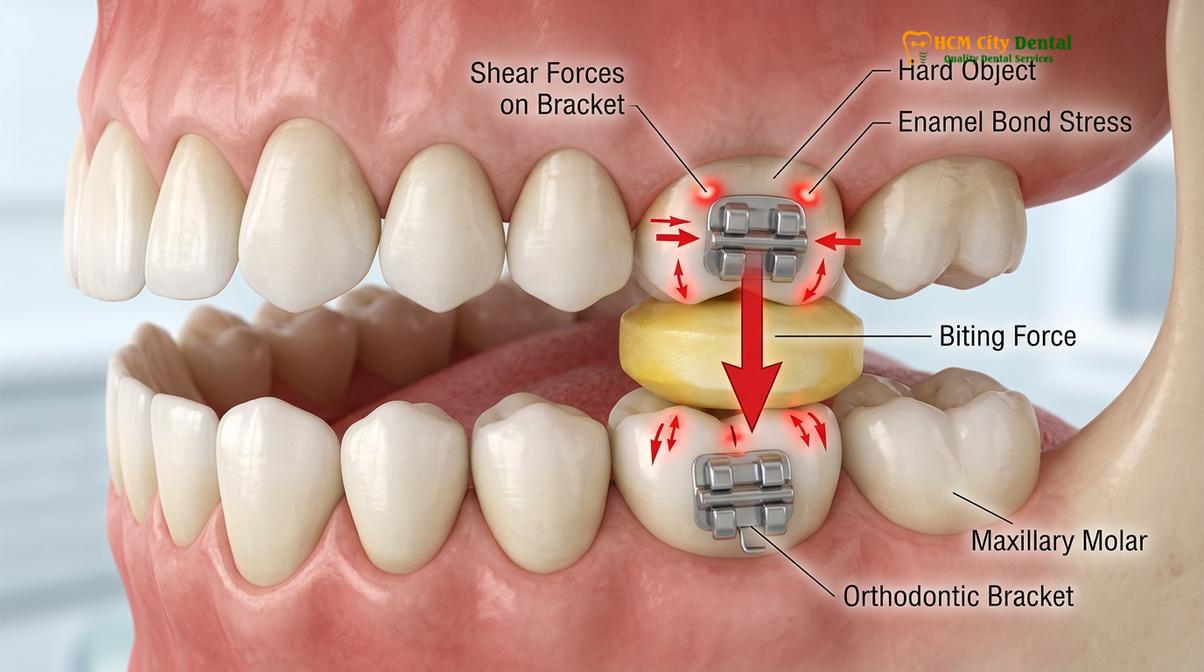
The adhesive used to bond brackets to your teeth is a highly specialized composite resin. It is engineered to possess high tensile strength—meaning it can withstand the outward pulling forces exerted by the archwire as it guides the tooth into alignment. However, this same adhesive has a relatively lower tolerance for shear strength—the sliding, parallel forces generated when you bite down on hard or crunchy foods. When you bite into an apple or a hard crust of bread, the vertical force of your jaw muscles translates into a massive shear force against the bracket. If this force exceeds the bond strength of the composite resin, the bracket will debond (pop off) the tooth[2].
Furthermore, the archwires themselves, particularly the highly flexible Nickel-Titanium (NiTi) wires used in the initial stages of alignment, are susceptible to permanent deformation if subjected to heavy masticatory loads. Biting into a hard object can bend the wire, altering the precise vector of force intended by your orthodontist. Instead of moving the tooth toward its ideal position, a bent wire can introduce unwanted torque or angulation, actively moving the tooth in the wrong direction. This is why adhering to a strict orthodontic diet is not merely a suggestion for comfort, but a fundamental requirement for the mechanical success of your treatment.
“Orthodontic success is a partnership between the clinician’s biomechanical design and the patient’s daily compliance. A single bite into a hard piece of ice or a sticky caramel can undo weeks of precise tooth movement, turning a routine alignment into a prolonged clinical challenge.”
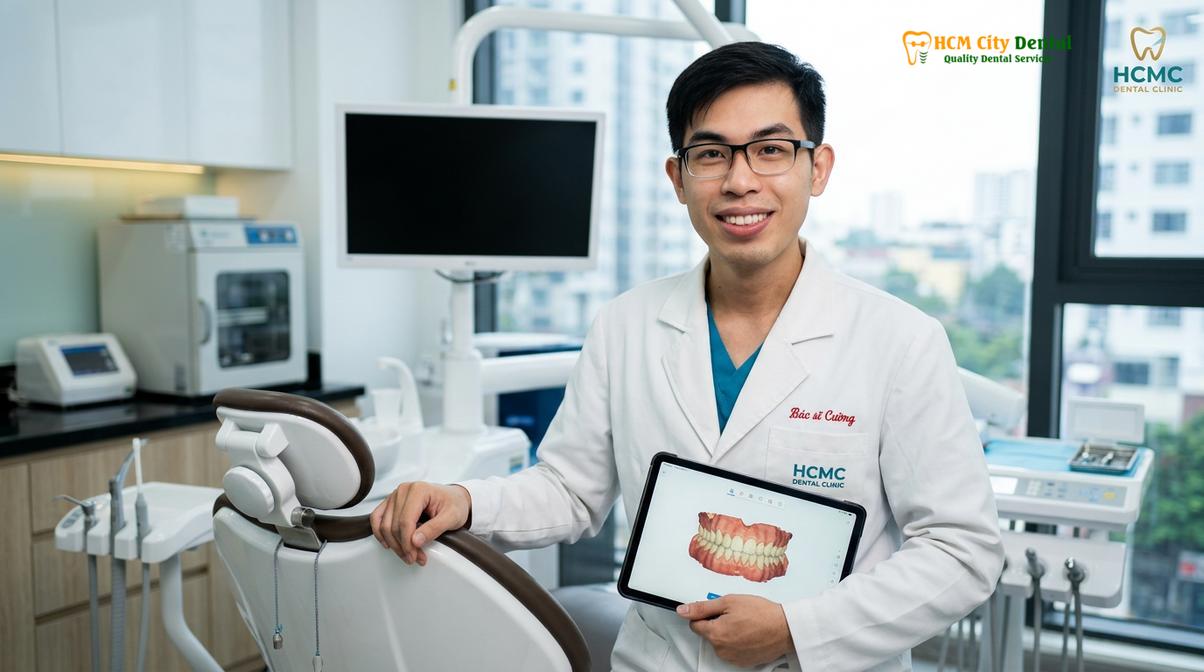
— Dr. Nguyen Van Cuong, Lead Clinician at HCMC Dental Clinic
Beyond the mechanical risks to the hardware, the biological response of your teeth to orthodontic forces makes eating with braces a unique sensory experience. The compression of the PDL triggers an inflammatory cascade, releasing prostaglandins and other biochemical mediators that lower the pain threshold of the nerve endings surrounding the tooth root. This localized inflammation makes the teeth exquisitely tender to pressure, particularly during the first few days following an adjustment. Consequently, attempting to chew firm foods during this acute phase is not only mechanically risky but also highly uncomfortable.
The Ultimate Orthodontic Diet: Best Food for Braces
A braces safe food plan prioritizes soft proteins, cooked vegetables, and dairy products that provide essential nutrients for cellular repair and bone remodeling without damaging delicate appliances.
Constructing a balanced and nutritious diet while wearing fixed appliances requires a shift in culinary perspective. The goal is to maintain optimal caloric and nutritional intake to support the metabolic demands of bone remodeling, while selecting textures that require minimal masticatory effort. The best food for braces can be categorized into several macronutrient groups, each offering specific benefits for both systemic health and localized oral tissue recovery.
Soft Proteins for Tissue Repair
Protein is essential for the repair of oral tissues and the synthesis of new bone matrix during orthodontic tooth movement. However, traditional protein sources like steak, pork chops, or bone-in chicken require aggressive tearing and chewing, which poses a severe risk to brackets. Instead, patients should focus on soft, easily masticated protein sources. Eggs are universally recommended; whether scrambled, poached, or soft-boiled, they provide high-quality amino acids with virtually zero chewing resistance. Flaky fish, such as salmon, tilapia, or cod, is another excellent braces safe food, offering not only protein but also omega-3 fatty acids, which have natural anti-inflammatory properties that can help soothe periodontal tenderness[3].
For plant-based options, tofu is an outstanding choice. Silken or soft block tofu can be incorporated into soups, smoothies, or gentle stir-fries. Legumes, such as well-cooked lentils, black beans, and chickpeas (especially when mashed into hummus), provide substantial protein and fiber without threatening the integrity of your archwires.
Carbohydrates for Sustained Energy
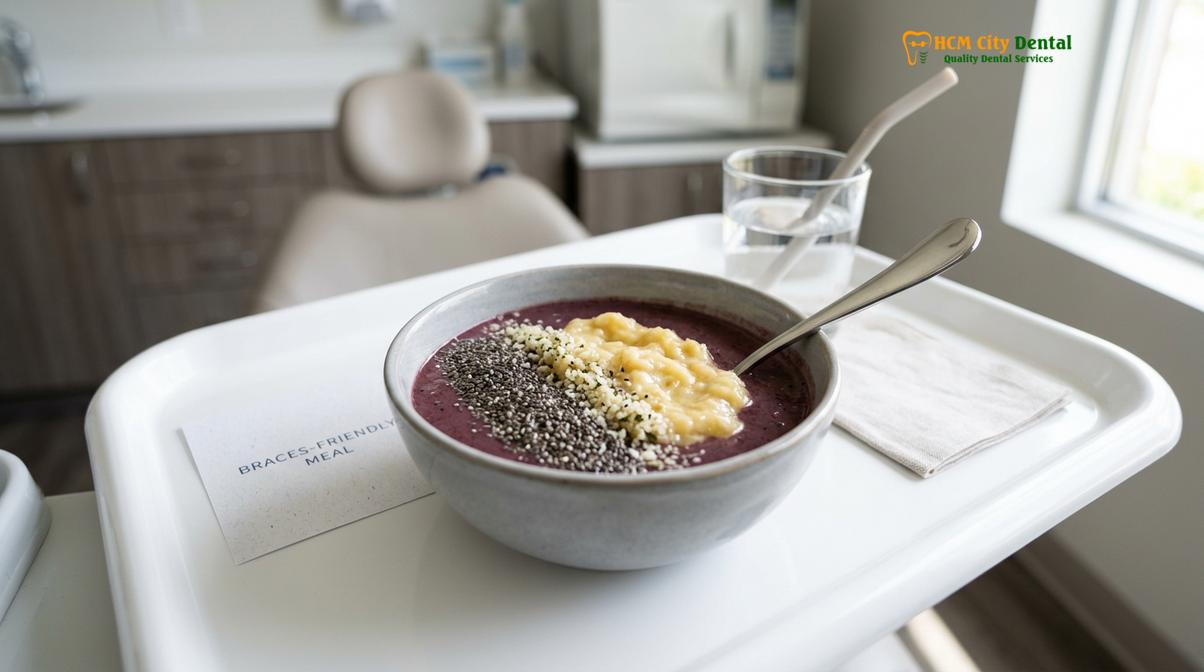
Carbohydrates are the body’s primary energy source, and fortunately, many carbohydrate-rich foods naturally possess a soft texture. Mashed potatoes, sweet potato puree, and well-cooked pasta are staples of the orthodontic diet. When preparing pasta, it is advisable to cook it slightly past the “al dente” stage to ensure it is entirely soft. Oatmeal and cream of wheat are excellent breakfast options, providing complex carbohydrates and essential minerals. Soft grains like quinoa and fluffy white or brown rice are also safe, provided they are not cooked with hard, crunchy additions like nuts or seeds.
Vitamins and Minerals: Fruits and Vegetables
The cellular activity involved in moving teeth requires a robust supply of vitamins and minerals, particularly Vitamin C for gingival (gum) health and Calcium for bone density. Raw, crunchy vegetables like carrots, celery, and broccoli stalks are notorious for breaking brackets and must be avoided in their raw state. However, these vital nutrients can still be consumed by altering their preparation. Steaming, boiling, or roasting vegetables until they are fork-tender transforms them into a braces safe food. Mashed squash, steamed spinach, and soft-cooked zucchini are excellent choices.
Similarly, hard fruits like apples and unripe pears should never be bitten into directly. Instead, fruits should be consumed in their softest forms. Bananas, ripe avocados, peaches, and berries are generally safe. For harder fruits, baking them (such as baked apples) or blending them into nutrient-dense smoothies ensures you receive the necessary vitamins without the mechanical risk. Smoothies are particularly beneficial immediately following an adjustment, as the cold temperature can cause the NiTi archwires to temporarily soften, reducing the active force and providing immediate pain relief.
Dairy for Calcium and Comfort
Dairy products are a cornerstone of the orthodontic diet due to their high calcium content, which is vital for the remineralization of the alveolar bone surrounding the moving teeth. Yogurt, cottage cheese, and soft cheeses (like brie or mozzarella) are excellent, low-effort foods. Furthermore, the smooth, cool texture of dairy products can be highly soothing to inflamed oral tissues. Milkshakes and ice cream (without hard mix-ins like nuts or candy pieces) are frequently recommended as occasional treats that provide both caloric density and thermal comfort for sore teeth.
Navigating the First Week: Soft Food for Braces
During the initial phase of treatment, periodontal ligaments become acutely inflamed, making a temporary diet of smoothies, soups, and purees essential for effective pain management.
The first three to seven days after the initial placement of braces, or following a significant wire activation appointment, represent the most challenging period for patients. The sudden introduction of continuous biomechanical force triggers an acute inflammatory response within the periodontal space. Blood vessels within the PDL become compressed, leading to localized ischemia (reduced blood flow) and the subsequent release of pain-inducing neuropeptides. During this acute phase, even the slight pressure of the upper and lower teeth touching can elicit a sharp pain response[4].
Consequently, the diet during this initial week must be strictly limited to foods that require zero to minimal chewing. This is not merely about protecting the brackets; it is a clinical necessity for pain management. Forcing the teeth to chew firm foods during this period will exacerbate the inflammation, prolong the pain, and potentially delay the onset of healthy bone remodeling.
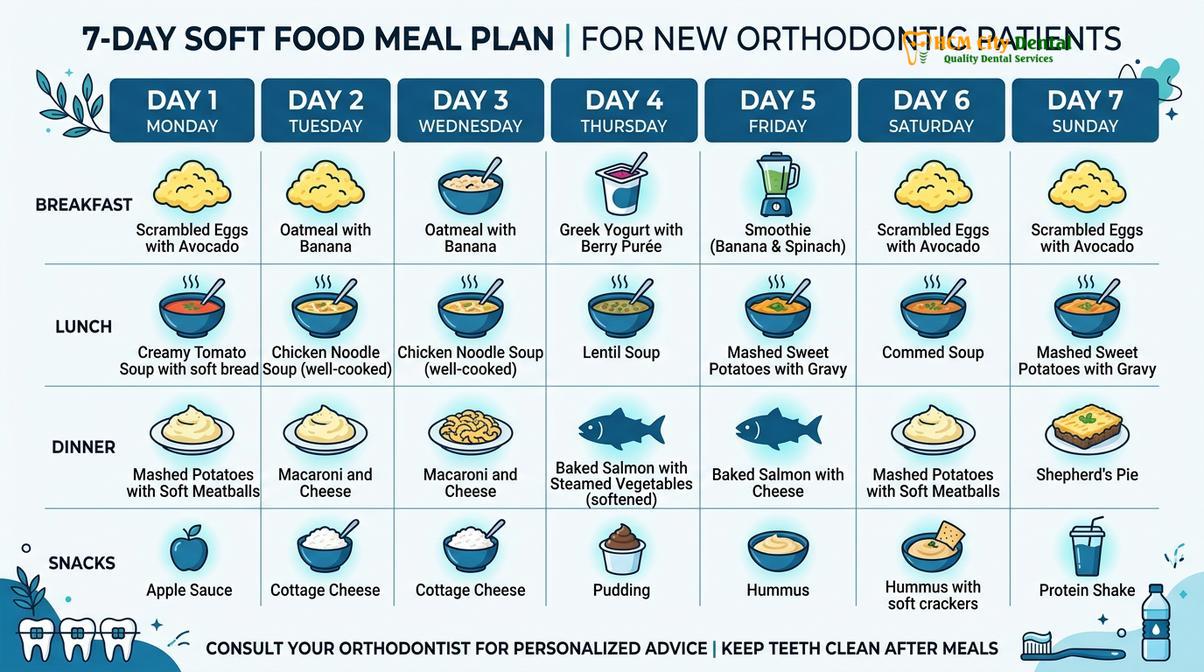
To assist patients in navigating this critical window, clinicians often recommend a structured meal progression. The following table outlines a clinical guideline for a soft food for braces meal plan during the first week of treatment:
| Treatment Phase | Recommended Texture | Ideal Meal Examples | Clinical Rationale |
|---|---|---|---|
| Days 1-2 (Acute Phase) | Liquid & Pureed | Protein shakes, cold smoothies, blended soups, bone broth, yogurt. | Maximum PDL inflammation. Cold liquids reduce swelling and temporarily soften thermal-active archwires, providing pain relief. |
| Days 3-4 (Sub-Acute Phase) | Ultra-Soft & Mashable | Mashed potatoes, scrambled eggs, applesauce, oatmeal, cottage cheese. | Inflammation begins to subside. Teeth can tolerate light, vertical compression without sharp pain. No lateral chewing required. |
| Days 5-7 (Recovery Phase) | Soft & Fork-Tender | Flaky fish, well-cooked pasta, steamed vegetables, soft bread (no crust). | Bite tenderness significantly reduced. Patient can begin practicing modified chewing techniques using posterior teeth. |
By adhering to this progressive texture modification, patients can maintain their nutritional intake while allowing the periodontal tissues the necessary time to adapt to the new biomechanical environment. It is also highly recommended to stay well-hydrated during this period, as adequate water intake facilitates the clearance of cellular byproducts generated during the inflammatory process.
Foods to Strictly Avoid During Orthodontic Treatment
Hard, sticky, and crunchy foods must be completely eliminated from your diet, as they can bend archwires, dislodge brackets, and trap cariogenic bacteria against the enamel.
While understanding what to eat is crucial, knowing what to avoid is equally important for the success of your orthodontic journey. The list of prohibited foods is based entirely on the physical properties of the food and how those properties interact with the mechanics of your braces. Consuming these items dramatically increases the risk of appliance failure, which necessitates emergency dental visits and can add months to your overall treatment time.
Clinical Warning: Repeated bracket debonding due to dietary non-compliance not only prolongs treatment but can also cause micro-fractures in the tooth enamel during the repeated removal and reapplication of composite adhesive.
The Danger of Hard and Crunchy Foods
As previously discussed, hard foods exert immense shear force on the bracket-enamel bond. Biting into these items acts like a lever, prying the bracket off the tooth. Foods in this category that must be strictly avoided include:
- Ice: Chewing on ice is one of the leading causes of broken brackets. The extreme hardness combined with the cold temperature makes the composite adhesive brittle and highly susceptible to fracture.
- Hard Candies: Lollipops, jawbreakers, and hard peppermints pose a severe risk. Even if you intend to only suck on them, the temptation to bite down is often too great, resulting in immediate appliance damage.
- Nuts and Seeds: Almonds, walnuts, and hard seeds require significant crushing force from the molars, which can easily dislodge molar tubes or bands.
- Popcorn: Popcorn is a dual threat. The unpopped kernels are hard enough to break brackets, while the thin, fibrous hulls easily slide between the tooth and the gumline, or lodge beneath the archwire, causing severe gingival inflammation and potential infection.
- Hard Breads and Crusts: Bagels, pizza crusts, and hard rolls require aggressive tearing forces that can pull brackets off the anterior (front) teeth.
The Threat of Sticky and Chewy Foods
Sticky foods present a different biomechanical challenge. Instead of shear force, they exert a pulling (tensile) force. When you bite into a sticky substance, it adheres to the bracket. As you open your jaw, the food pulls the bracket away from the tooth. Furthermore, sticky foods can wrap around the archwire and the elastomeric ligatures (the small rubber bands holding the wire in place), pulling them out of position. Foods to avoid include:
- Caramel and Taffy: These are highly adhesive and can easily pull a bracket off or distort a wire.
- Chewing Gum: Traditional gum wraps around the complex architecture of the braces, making it nearly impossible to clean and often bending the lighter wires used early in treatment.
- Gummy Candies: Gummy bears, jelly beans, and similar candies adhere stubbornly to the appliances and the occlusal (biting) surfaces of the teeth.
Beyond the mechanical damage, sticky and sugary foods pose a significant biological risk. Braces create numerous microscopic retentive areas where plaque and food debris can accumulate. Sticky sugars provide a sustained food source for cariogenic (cavity-causing) bacteria. If these bacteria are not meticulously removed, they produce lactic acid, leading to enamel demineralization. This presents clinically as “white spot lesions”—permanent, chalky white squares on the teeth that become visible once the braces are removed, severely compromising the aesthetic outcome of the treatment[5].
Eating with Braces: Clinical Techniques and Hygiene
Modifying your chewing technique by cutting food into bite-sized pieces and utilizing posterior teeth reduces anterior bracket stress and improves mastication efficiency.
Adopting an orthodontic diet is not solely about food selection; it also involves modifying the physical act of eating. The anterior teeth (incisors and canines) are typically the most sensitive during treatment and are also the most susceptible to bracket debonding from tearing forces. Therefore, the “bite and tear” motion used to eat sandwiches, burgers, or whole fruits must be temporarily abandoned.
The most effective clinical technique for eating with braces is the knife-and-fork method. All foods, even soft ones, should be cut into small, bite-sized pieces before being placed in the mouth. Once the food is in the oral cavity, it should be immediately transferred to the posterior teeth (premolars and molars) for mastication. The molars have a larger surface area and are structurally designed to handle crushing forces, making them better equipped to process food without transferring excessive stress to the delicate anterior brackets.
Clinical Case Review: Dietary Adaptation
A 16-year-old patient presented to HCMC Dental Clinic in Ho Chi Minh City with recurrent debonding of the upper central incisor brackets. Upon clinical interview, Dr. Cuong discovered the patient was consuming whole apples and thick sandwiches by biting directly with the front teeth. After comprehensive education on posterior chewing techniques and cutting food into bite-sized pieces, the patient experienced zero bracket failures for the remainder of the 18-month treatment protocol.
Post-Meal Oral Hygiene Protocols
Eating with braces inevitably leads to food impaction around the brackets and beneath the archwires. If left undisturbed, this debris rapidly transforms into acidic plaque. Therefore, rigorous oral hygiene immediately following every meal is a non-negotiable aspect of orthodontic treatment.
Patients must transition from a standard brushing routine to a comprehensive mechanical clearance protocol. This includes:
- Water Flossers: Devices like a Waterpik use a pulsating stream of water to flush out macroscopic food particles from beneath the wires and around the gingival margins. This is highly effective for immediate post-meal clearance.
- Interdental Brushes: These small, conical brushes are designed to slide vertically beneath the archwire, cleaning the lateral sides of the brackets where standard toothbrush bristles cannot reach.
- Orthodontic Toothbrushes: Brushes with a V-shaped bristle profile are specifically designed to straddle the bracket, cleaning the tooth surface above and below the appliance simultaneously.
- Fluoride Rinses: A daily fluoride mouthwash helps remineralize enamel that may have been subjected to acid attacks from trapped food, preventing the formation of white spot lesions.
For patients who are active in sports, protecting these appliances from external trauma is just as important as protecting them from dietary forces. Utilizing custom dental protection is essential. A specialized protecting orthodontic appliances during sports guard is designed to fit over the brackets, providing a shock-absorbing layer that prevents soft tissue lacerations and bracket fractures upon impact. Furthermore, for adult patients who suffer from nocturnal bruxism (teeth grinding), managing jaw discomfort and protecting the appliances while sleeping is critical. Discussing managing jaw discomfort with your orthodontist can lead to solutions that protect both your teeth and your braces. If you travel frequently, understanding the protocols for maintaining oral appliances while traveling and proper hygiene protocols for dental devices ensures your treatment remains uninterrupted regardless of your location.
When to See an Orthodontist
Despite strict adherence to an orthodontic diet, mechanical failures or physiological complications can occasionally occur. It is vital to distinguish between normal treatment discomfort and clinical emergencies that require immediate professional intervention. You should schedule an urgent visit with your orthodontist if you experience any of the following:
- Debonded Brackets: If a bracket becomes loose and slides along the wire, it is no longer applying force to the tooth. This halts treatment progress for that specific tooth and requires rebonding.
- Protruding Archwires: As teeth align, the archwire may extend out the back of the molar tube, poking into the buccal mucosa (cheek tissue). This can cause painful ulcerations and requires the wire to be clipped by a professional.
- Severe, Unrelenting Pain: While mild to moderate tenderness is expected for a few days after an adjustment, severe, throbbing pain that does not respond to over-the-counter analgesics or persists beyond a week may indicate excessive force or a localized infection.
- Lost Ligatures: If the small rubber bands or wire ties holding the archwire to the bracket come off, the wire cannot effectively move the tooth.
If you experience any of these issues, do not attempt to repair the appliances yourself, as this can cause further damage to the hardware or your teeth. Contact your clinical provider immediately. For patients in the region, the team at HCMC Dental Clinic in Ho Chi Minh City is equipped to handle all orthodontic emergencies, ensuring your treatment remains on track and your oral health is preserved. A personalized clinical examination is always recommended to address specific complications and adjust your treatment plan accordingly.
Frequently Asked Questions
Can I eat pizza with braces?
Yes, you can eat pizza with braces, provided you choose a soft crust and avoid biting into hard, crispy edges. Cut the pizza into small, bite-sized pieces and chew carefully with your back teeth to prevent damaging your brackets or wires. Avoid toppings that are excessively chewy or sticky, and always ensure you thoroughly clean your teeth and appliances after consuming carbohydrate-rich foods to prevent plaque buildup.
How long after getting braces can I eat normal food?
Most patients can transition back to a relatively normal, braces-friendly diet within three to seven days after their initial appointment. Once the acute periodontal tenderness subsides, you can gradually reintroduce firmer foods, provided they are cut into small pieces. However, the strict prohibition against hard, sticky, and crunchy foods remains in effect for the entire duration of your orthodontic treatment to prevent appliance damage.
Are french fries considered a braces safe food?
Yes, soft and thoroughly cooked french fries are generally considered a braces safe food. However, you must avoid overly crispy, hard, or double-fried potatoes, as the rigid texture can exert excessive shear force on your orthodontic brackets. Opt for thicker cuts like steak fries or wedges, which tend to have a softer interior, and always chew them carefully using your posterior molars.
Can I chew gum while wearing braces?
Orthodontists generally advise against chewing traditional gum, as it can stick to brackets and bend archwires. However, some clinicians may permit sugar-free gum approved by dental associations, as it can stimulate saliva production and reduce initial bite tenderness. If permitted by your specific orthodontist, ensure it is strictly sugar-free to prevent cariogenic bacteria proliferation, and chew gently to avoid wrapping the gum around the complex appliance structures.
What meats are best to eat with braces?
The best meats for braces include soft, slow-cooked options such as shredded chicken, pulled pork, tender meatballs, and flaky fish. Avoid tough cuts like steak, jerky, or bone-in meats, which require excessive chewing force and risk dislodging your appliances. Always cut meat off the bone and into small, manageable pieces before eating, utilizing your back teeth for mastication to protect the anterior brackets.
References
- American Journal of Orthodontics and Dentofacial Orthopedics. The effects of masticatory forces on orthodontic bracket survival rates. (2021).
- Journal of Clinical Orthodontics. Dietary compliance and its impact on treatment duration in adolescent patients. (2020).
- European Journal of Orthodontics. Periodontal ligament inflammation and pain management during initial archwire placement. (2019).
- Angle Orthodontist. Nutritional intake variations in patients undergoing fixed orthodontic therapy. (2022).
- International Journal of Dentistry. Biomechanical evaluation of shear bond strength in orthodontic adhesives under dietary stress. (2018).