The best sports mouthguard custom-made by a dental professional provides unparalleled protection, retention, and comfort compared to over-the-counter alternatives. By utilizing precise 3D impressions and multi-layered materials, custom guards absorb high-impact forces, safeguard teeth, and ensure optimal oxygen flow during intense athletic performance.
Clinical Summary:
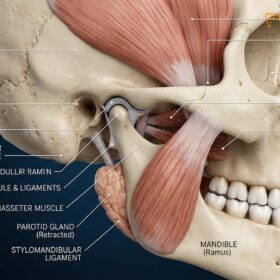
Athletic dental trauma remains a significant risk in both contact and non-contact sports. Clinical evidence demonstrates that custom-fitted mouthguards, fabricated in a dental laboratory using pressure-laminated Ethylene Vinyl Acetate (EVA), offer superior biomechanical protection compared to standard boil-and-bite options. A custom sports guard ensures uniform thickness over critical vulnerable areas, such as the maxillary incisors, while maintaining a precise fit that does not require the athlete to clench their jaw to hold the appliance in place. This optimal retention not only protects the dentition, periodontium, and temporomandibular joint (TMJ) from impact forces but also maximizes airway volume, allowing for unobstructed breathing and clear communication during peak physical exertion. For athletes seeking maximum safety, investing in a professionally fitted appliance is a critical component of sports medicine and preventive dentistry.
Key Takeaways:
- Custom mouthguards provide superior shock absorption by utilizing multi-laminated layers of high-grade EVA material.
- Unlike boil-and-bite guards, custom appliances maintain uniform thickness, preventing vulnerable thin spots over the front teeth.
- Perfect retention eliminates the need to clench, reducing jaw fatigue and allowing for maximum oxygen intake.
- Thickness and design can be clinically tailored to the specific impact risks of different sports (e.g., basketball vs. rugby).
- Professional fabrication involves precise digital scanning or impressions, ensuring an exact anatomical fit.
Protection Levels by Sport Type
Different sports generate varying degrees of impact force, requiring specific mouthguard thicknesses and designs to effectively prevent dental avulsion, crown fractures, and jaw injuries.
In the realm of sports dentistry, understanding the biomechanics of impact is crucial for prescribing the correct protective appliance. The oral cavity is highly susceptible to trauma during athletic activities, with injuries ranging from minor soft tissue lacerations to severe dental avulsions (teeth knocked completely out of the socket) and mandibular fractures. The primary function of any nightguard and mouthguard treatments is to act as a shock absorber. When a direct blow is delivered to the lower face, the force is transmitted through the teeth and jawbones. A properly designed mouthguard dissipates this kinetic energy, spreading it over a larger surface area and dampening the shock before it can cause structural failure to the enamel or the periodontium [1].
Not all sports present the same level of risk, and therefore, the protective requirements vary significantly. Dental professionals categorize sports into low, medium, and high-impact activities to determine the appropriate specifications for a contact sports mouth guard. Low-impact sports, such as gymnastics or mountain biking, still carry a risk of falls and accidental collisions. In these scenarios, a thinner, single-layer guard (typically 2mm to 3mm) is often sufficient to protect against self-inflicted bite injuries and minor impacts while prioritizing maximum comfort and breathability.
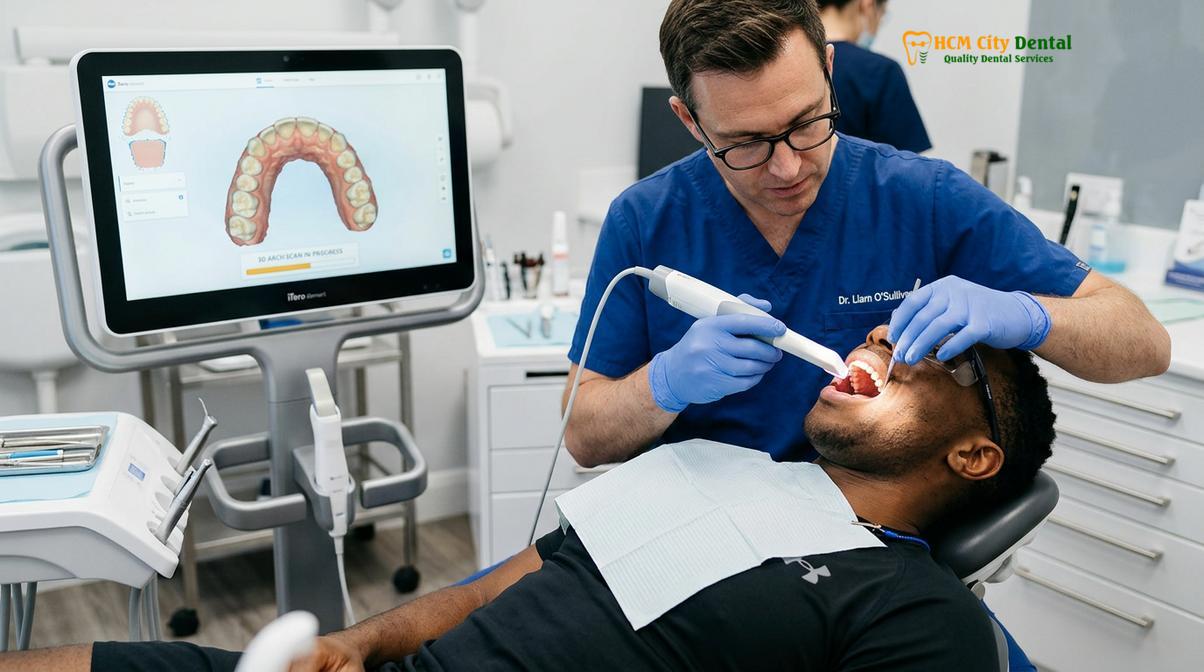
Medium-impact sports, including basketball, soccer, and field hockey, involve a higher likelihood of collisions with other players, elbows, or sports equipment. For these athletes, a dual-layer custom guard (approximately 3mm to 4mm thick) provides the necessary balance between robust protection and the ability to communicate clearly on the field. High-impact and combat sports, such as rugby, boxing, and mixed martial arts (MMA), require the highest level of protection. These athletes face direct, intentional, or highly forceful blows to the maxillofacial region. Consequently, they require heavy-duty, multi-laminated guards (up to 5mm thick), sometimes incorporating a hard inner layer to distribute extreme forces and prevent the teeth from being driven through the protective material [2].
Custom-Fitted: Superior Protection
Fabricated from exact dental impressions, a custom sports guard offers a precise fit that maximizes shock absorption without compromising speech, breathing, or athletic performance.
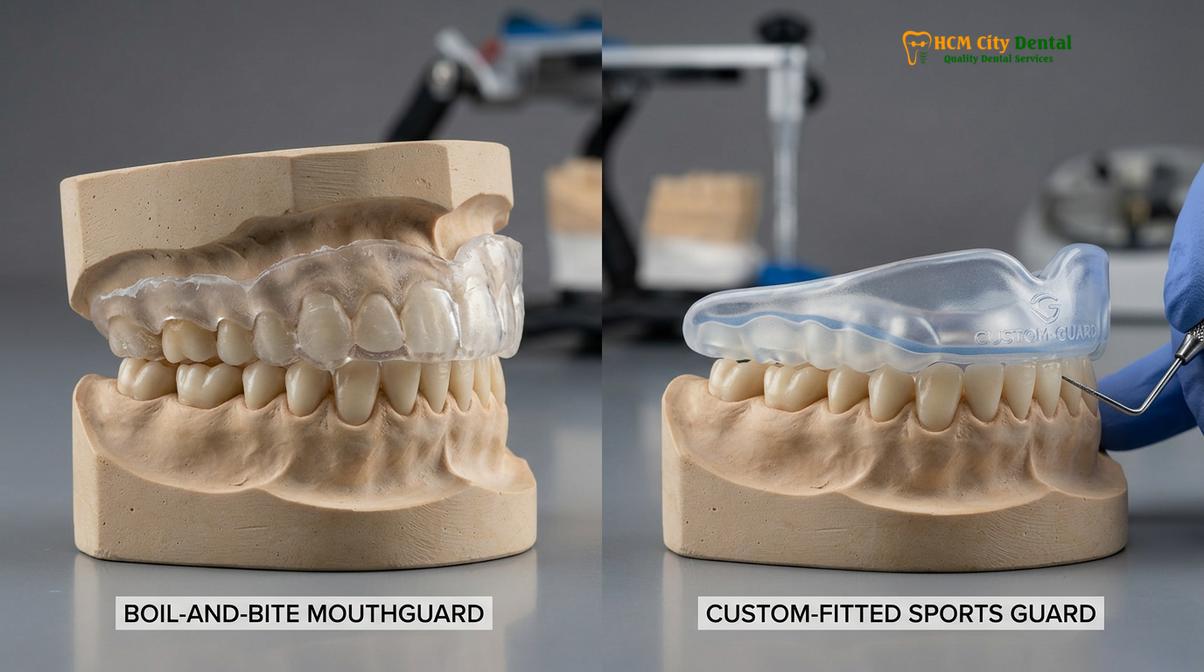
When evaluating the best sports mouthguard custom options, the clinical superiority of a professionally fabricated appliance becomes immediately apparent. The foundation of a custom guard is an exact replica of the patient’s oral anatomy. This is achieved either through traditional high-precision elastomeric impressions (such as Polyvinyl Siloxane) or, increasingly, through advanced 3D intraoral digital scanning. This exact anatomical mapping ensures that the final appliance intimately hugs every contour of the teeth and the surrounding gingival tissues. This intimate fit is the critical factor in retention; a custom guard stays firmly in place through suction and mechanical lock, meaning the athlete does not have to consciously clench their jaw to keep it from falling out.
The material science behind a custom sports guard also sets it apart. Professional dental laboratories utilize Ethylene Vinyl Acetate (EVA), a highly resilient, biocompatible thermoplastic polymer. However, unlike over-the-counter products, custom guards are fabricated using a pressure lamination technique. Multiple thin sheets of EVA are heated and adapted over the dental model under high pressure (often exceeding 4-6 atmospheres). This process fuses the layers together, creating a dense, uniform structure that exhibits superior tensile strength and energy-absorbing properties [3]. Furthermore, the technician can customize the thickness in specific areas—adding extra layers over the vulnerable incisors while keeping the palatal area thin to reduce bulk and prevent the gag reflex.
“The biomechanical advantage of a pressure-laminated custom mouthguard lies in its ability to maintain critical thickness over the incisal edges. When an athlete takes a blow to the mouth, the multi-layered EVA acts as a decelerator, significantly reducing the peak force transmitted to the tooth root and surrounding alveolar bone.”
Dr. Nguyen Van Cuong, a leading expert in restorative and preventive dentistry, frequently emphasizes the physiological benefits of custom appliances. “Beyond just protecting the teeth,” Dr. Cuong notes, “a custom fit allows the mandible to rest in a more natural position. When athletes aren’t forced to clench to hold a bulky guard in place, they experience less muscle fatigue in the masseter and temporalis muscles, and their airway remains fully open, which is critical for oxygenation during peak cardiovascular output.” This level of precision is why many patients exploring General Dentistry services for sports protection ultimately choose custom fabrication over generic alternatives. The difference in quality is similar to the clinical distinctions found when comparing custom vs store-bought dental appliances for nocturnal bruxism.
Boil-and-Bite: Budget Option
While affordable and accessible, boil-and-bite mouthguards often suffer from poor retention, uneven thickness, and reduced protective capabilities during high-impact collisions.
For many amateur athletes and parents of young sports participants, the boil-and-bite mouthguard is the most familiar and accessible option. Available at most sporting goods stores and pharmacies, these guards are made from a basic thermoplastic material. The fitting process involves softening the guard in boiling water, placing it in the mouth, and using finger pressure, tongue thrusting, and biting force to adapt the material to the teeth. While this provides a better fit than a completely unshaped stock mouthguard, the clinical reality of the boil and bite vs custom debate reveals significant shortcomings in the over-the-counter approach.
The primary clinical issue with boil-and-bite guards is the loss of critical material thickness during the fitting process. When the athlete bites down into the softened thermoplastic, the material is displaced away from the biting surfaces (occlusal) and the front edges (incisal) of the teeth. Consequently, the very areas that require the most protection—the prominent upper front teeth—often end up with a dangerously thin layer of material, sometimes less than 1mm thick. In the event of a direct impact, this thin layer fails to provide adequate shock absorption, leaving the teeth highly vulnerable to fractures or avulsion [4].
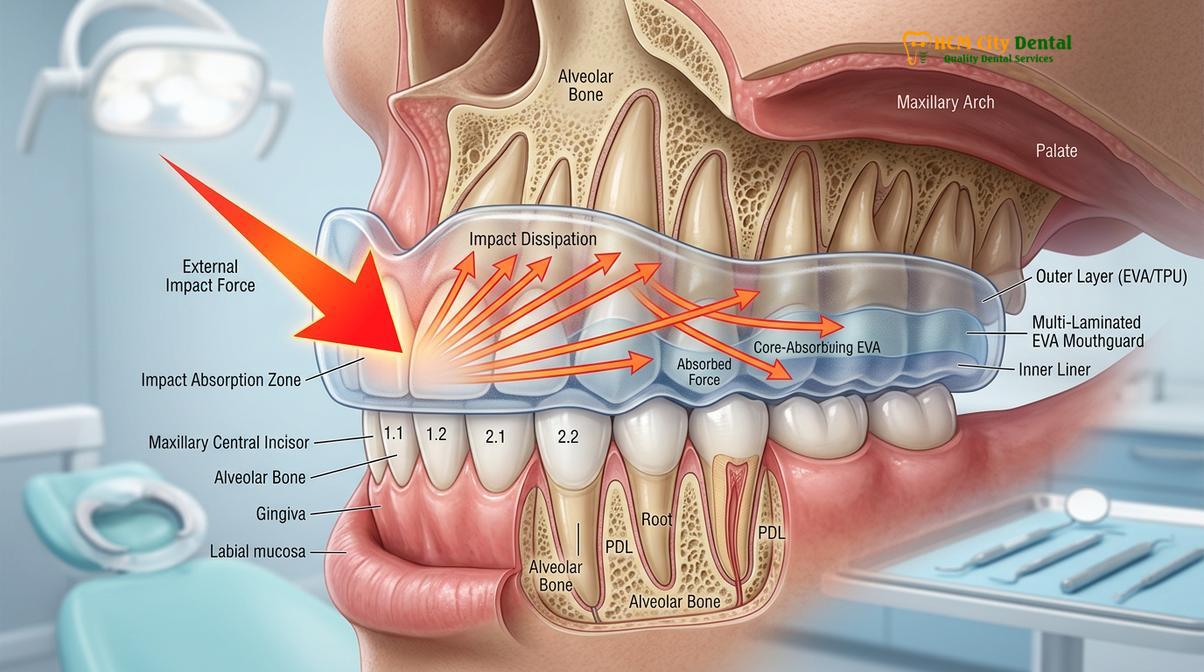
Furthermore, boil-and-bite guards generally exhibit poor retention. Because the adaptation process relies on manual pressure rather than a precise anatomical model, the resulting fit is often loose and bulky. To keep the guard from falling out during play, the athlete must constantly clench their jaw. This continuous isometric contraction of the masticatory muscles can lead to premature fatigue, tension headaches, and potential temporomandibular joint (TMJ) discomfort. More importantly, a bulky, poorly retained guard encroaches on the oral cavity space, significantly restricting airflow and making on-field communication difficult.
Clinical Warning: Relying on a heavily worn or poorly adapted boil-and-bite mouthguard during high-impact sports can create a false sense of security. If the guard requires constant jaw clenching to stay in place, it is not providing optimal protection and may restrict critical oxygen intake during cardiovascular exertion.
Clinical Comparison Table
A direct clinical comparison reveals that custom mouthguards significantly outperform boil-and-bite alternatives in retention, durability, airway management, and overall dental trauma prevention.
To fully understand the value of investing in the best sports mouthguard custom-fitted by a dentist, it is helpful to evaluate the two primary options across several clinical parameters. While budget constraints are a valid consideration, the cost of treating a severe dental injury—such as root canals, implants, or complex reconstructive surgery—far exceeds the initial investment of a professional mouthguard. The following table outlines the fundamental differences in fabrication, performance, and protection.
| Clinical Parameter | Custom-Fitted Mouthguard | Boil-and-Bite Mouthguard |
|---|---|---|
| Fabrication Method | Dental impressions/3D scan, pressure lamination in a lab. | Softened in hot water, bitten into shape at home. |
| Material Thickness | Uniform and clinically controlled; extra layers where needed. | Often thins out dangerously over the incisal edges during biting. |
| Retention & Fit | Excellent; stays in place via anatomical suction. No clenching needed. | Poor to moderate; often requires constant jaw clenching to hold. |
| Airway & Breathing | Maximized airflow; low profile design does not obstruct the airway. | Restricted; bulky material can impede oxygen intake during exertion. |
| Speech Clarity | High; allows for clear communication with teammates. | Low; bulky design often causes slurred or muffled speech. |
| Durability | High; multi-laminated EVA resists tearing and deformation. | Low to moderate; material degrades and loses shape faster. |
This comparison highlights why dental professionals strongly advocate for custom solutions, particularly for athletes engaged in competitive or contact sports. The principles of material science applied here are similar to those used when determining the efficacy of hard vs soft night guard materials for bruxism; precision, material density, and anatomical fit dictate the success of the appliance.
Sports-Specific Recommendations
Tailoring the mouthguard’s thickness, coverage, and design to the specific biomechanical risks of a sport ensures athletes receive optimal protection without unnecessary bulk.
Because the nature of impact varies drastically across different athletic disciplines, a one-size-fits-all approach is clinically inadequate. When fabricating a custom sports guard, the dental technician takes the specific sport into account to engineer the appliance accordingly. For basketball players, the primary risks are stray elbows and head-to-head collisions under the hoop. However, basketball is also a highly aerobic sport that requires constant, clear communication. Therefore, the ideal basketball mouthguard is typically a single or dual-laminated appliance, around 3mm thick. This provides excellent shock absorption for moderate impacts while maintaining a sleek, low profile that does not interfere with breathing or calling plays.
In contrast, sports like rugby and American football involve high-velocity body collisions and a significant risk of impact from hard equipment or the ground. For these athletes, a thicker, dual-laminated guard (approximately 4mm to 5mm) is standard protocol. The added thickness provides a larger buffer zone to dissipate heavy kinetic energy. Furthermore, these guards are often designed with extended buccal (cheek) and labial (lip) flanges to protect the soft tissues from being lacerated against the teeth during a tackle or scrum.
Combat sports, such as boxing, Muay Thai, and MMA, present the most extreme risk to the maxillofacial region. Fighters routinely absorb direct, high-force strikes to the jaw. For these athletes, heavy-duty multi-laminated guards are mandatory. These appliances often feature three layers of EVA, sometimes incorporating a rigid internal skeleton to prevent the guard from collapsing under a heavy blow. In some cases, fighters opt for a dual-arch guard that protects both the upper and lower teeth simultaneously, locking the jaw into a stable position to help mitigate the concussive forces transmitted to the temporomandibular joint and skull base [5].
Clinical Case Example: A professional martial artist visited HCMC Dental Clinic in Ho Chi Minh City seeking a replacement for a generic boil-and-bite guard that was causing severe jaw fatigue and restricting his breathing during sparring. The clinical team took precise 3D digital scans and fabricated a multi-laminated custom sports guard. The new appliance provided a lock-tight fit, allowing the athlete to breathe freely through his mouth without fear of the guard dislodging, significantly improving his cardiovascular endurance and focus during training.
Getting Fitted in Vietnam
The clinical workflow for a custom mouthguard involves digital scanning, precise laboratory fabrication, and a final fitting to ensure perfect retention, comfort, and occlusal balance.
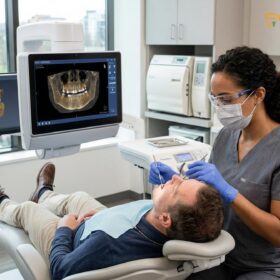
For athletes residing in or visiting Vietnam, obtaining a world-class custom mouthguard is a straightforward and highly precise clinical process. At modern facilities like HCMC Dental Clinic, the workflow has been optimized using digital dentistry to ensure the highest level of accuracy and patient comfort. The process typically requires two short appointments. During the initial consultation, the dentist will examine the oral cavity to ensure there are no underlying dental issues, such as untreated caries or active periodontal disease, that need to be addressed before fabricating an appliance.
Once cleared, the clinical team will capture the exact anatomy of the patient’s teeth and gums. While traditional putty impressions are still used, many advanced clinics now utilize intraoral 3D scanners. This technology captures thousands of images per second, creating a highly accurate digital model of the dental arches without the discomfort or gag reflex associated with traditional impression materials. This digital file is then sent to the dental laboratory, where the custom sports guard is designed and fabricated using the pressure lamination technique over a physical model printed from the 3D scan.
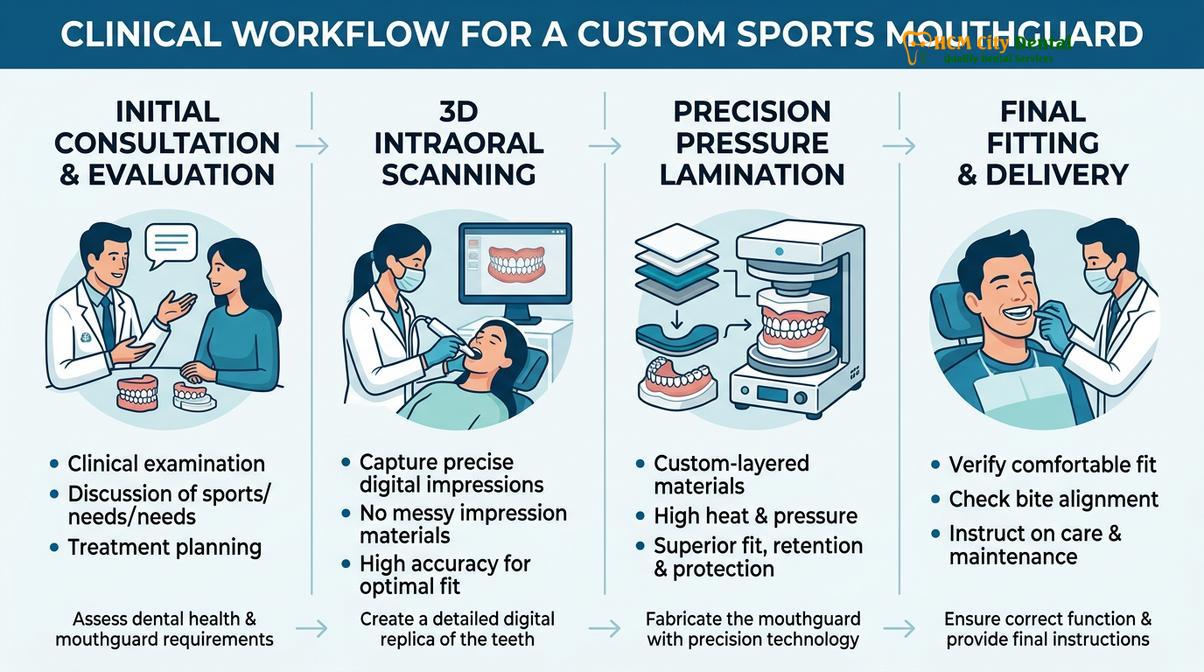
During the second appointment, the final mouthguard is delivered to the patient. The dentist will carefully evaluate the fit, ensuring that the appliance seats fully, provides excellent retention without rocking, and does not impinge on the sensitive gingival tissues or the frenum. The occlusion (bite) is also checked to ensure that the lower teeth contact the guard evenly, distributing forces harmoniously across the arch.
“The delivery appointment is crucial. We meticulously check the borders of the mouthguard to ensure they are smooth and properly extended. A guard that is too long will cause soft tissue ulcerations, while one that is too short compromises protection. The goal is a seamless integration with the athlete’s anatomy.”
Dr. Cuong advises athletes to bring their mouthguards to their regular dental check-ups. Over time, the EVA material can wear down, or the athlete’s dental anatomy may change (especially in adolescents undergoing orthodontic treatment), necessitating a replacement to maintain optimal protection.
When to See a Doctor
While a custom mouthguard provides excellent protection during sports, athletes must remain vigilant about their overall oral health and the condition of their protective gear. You should schedule a clinical evaluation if you experience any of the following issues:
- Loss of Retention: If your custom guard becomes loose and falls out easily, it is no longer providing adequate protection. This can happen due to material degradation over time or changes in your dental alignment.
- Visible Damage: Inspect your mouthguard regularly. If you notice deep bite marks, tears, or delamination of the layers, the structural integrity of the appliance is compromised, and it must be replaced.
- Jaw Pain or Muscle Fatigue: A properly fitted guard should be comfortable. If you experience persistent pain in your jaw joints, tension headaches, or muscle fatigue after wearing the guard, the occlusion may be unbalanced. This is similar to the symptoms experienced with daytime jaw clenching and requires clinical adjustment.
- Post-Impact Evaluation: If you sustain a heavy blow to the face during a game, even while wearing a mouthguard, you should see a dentist promptly. While the guard may have prevented a catastrophic fracture, micro-trauma to the tooth roots or the periodontium can occur and should be evaluated radiographically.
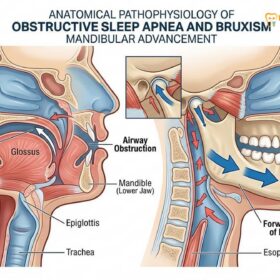
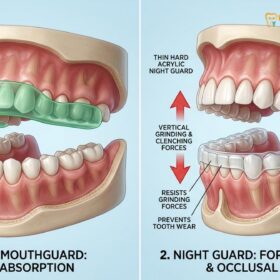
Furthermore, athletes who suffer from nocturnal bruxism should not use their sports mouthguard as a substitute for a dedicated night guard. Sports guards are designed to absorb sudden, high-velocity impacts, whereas night guards are engineered to withstand prolonged, heavy grinding forces. Using the wrong appliance can exacerbate the long-term effects of bruxism on teeth. If you suspect you are grinding your teeth at night, consult your dentist about teeth grinding in sleep and the appropriate clinical methods to stop grinding teeth.
For athletes looking to upgrade their protection, scheduling a consultation at HCMC Dental Clinic in Ho Chi Minh City is the first step toward safeguarding your smile. A thorough clinical evaluation will ensure you receive an appliance tailored specifically to your anatomy and your sport.

Frequently Asked Questions
Which mouthguard offers the best protection?
A custom-fitted mouthguard fabricated by a dental professional offers the highest level of protection. By utilizing precise impressions and multi-layered EVA materials, it provides superior shock absorption, optimal retention, and uniform thickness that over-the-counter options simply cannot match during high-impact activities. The exact fit ensures that impact forces are distributed evenly across the entire dental arch, significantly reducing the risk of localized trauma to individual teeth.
Is boil-and-bite good enough for rugby?
While a boil-and-bite guard provides basic coverage, it is generally not recommended for high-impact sports like rugby. The material often thins out during the molding process, leaving the incisors vulnerable to heavy collisions, and the poor retention can restrict breathing during intense physical exertion. Rugby players face a high risk of direct facial impacts from knees, elbows, and the ground, necessitating the robust, multi-layered protection that only a custom appliance can provide.
How much better is a custom mouthguard?
A custom mouthguard is significantly better in terms of fit, protection, and physiological comfort. Clinical studies show that custom guards distribute impact forces more evenly across the dental arch, reduce the risk of concussive forces transferring to the jaw, and allow for unobstructed oxygen intake. Because they stay in place without the need to clench, athletes experience less jaw fatigue and can communicate clearly with teammates, which is a major advantage in competitive sports.
Do NBA players use custom mouthguards?
Yes, professional basketball players in the NBA almost exclusively use custom-fitted mouthguards. These appliances are specifically designed to be thin enough (usually around 3mm) to allow for clear on-court communication and maximum airflow while still protecting against stray elbows and collisions. The precision fit ensures the guard stays securely anchored to the upper teeth even during rapid movements and heavy breathing.
Can a mouthguard prevent concussion?
No mouthguard can completely prevent a concussion, but a properly fitted custom guard can help reduce the risk. By stabilizing the mandible and absorbing upward impact forces directed at the jaw, a custom guard minimizes the shock transmitted to the base of the skull. Furthermore, the separation of the upper and lower jaws provided by the EVA material acts as a dampening mechanism, which is a critical component of comprehensive sports safety protocols.
References
- Journal of Sports Dentistry. Biomechanics of custom vs thermoplastic mouthguards. (2021).
- American Dental Association. Guidelines on athletic mouthguards and dental trauma. (2020).
- International Journal of Sports Medicine. Impact force dissipation in multi-laminated EVA guards. (2019).
- Dental Traumatology. Prevalence of avulsion injuries in contact sports. (2022).
- Journal of Clinical Pediatric Dentistry. Airway volume and athletic performance with custom guards. (2018).