Waking up with jaw pain is most commonly caused by nocturnal bruxism—unconscious teeth grinding and clenching during sleep. This sustained muscle tension leads to morning soreness, headaches, and potential dental damage, requiring clinical evaluation and protective interventions like custom nightguards.
Clinical Summary:
Morning jaw pain is a prevalent clinical symptom frequently linked to sleep bruxism, a condition characterized by the involuntary clenching and grinding of teeth during the sleep cycle. The immense occlusal forces generated by the masseter and temporalis muscles—often exceeding normal chewing forces by up to three times—result in localized muscle fatigue, lactic acid accumulation, and temporomandibular joint (TMJ) strain. Beyond muscular discomfort, chronic bruxism progressively destroys dental enamel, leading to attrition, abfraction, and heightened tooth sensitivity. While bruxism is the primary etiology, differential diagnosis must also rule out obstructive sleep apnea, sinus inflammation, and postural strain. Effective clinical management typically involves a multidisciplinary approach, prioritizing the fabrication of custom occlusal splints (nightguards) to deprogram the musculature and protect the dentition, alongside stress reduction protocols and physical therapy.
Key Takeaways:
- Nocturnal bruxism is the leading cause of waking up with a stiff, aching jaw.
- The masseter muscle can exert over 250 pounds of force during sleep clenching episodes.
- Unexplained morning headaches and flattened teeth are primary clinical indicators of grinding.
- Custom nightguards provide a crucial physical barrier to prevent irreversible enamel loss.
- Persistent jaw pain requires professional dental evaluation to prevent TMJ osteoarthritis.
Diagnostic evaluations should also rule out other dental sources, such as wisdom tooth headaches and jaw pain.
Why Your Jaw Hurts in the Morning
Morning jaw pain primarily stems from nocturnal bruxism, where the masseter and temporalis muscles remain hyperactive throughout the night, causing lactic acid accumulation and severe muscle fatigue by dawn.
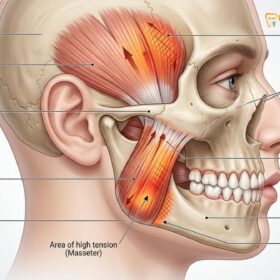
Experiencing a jaw sore when waking up is a distressing symptom that points directly to nocturnal muscular hyperactivity. To understand why this occurs, it is essential to examine the biomechanics of the human masticatory system. The jaw is controlled by a complex network of muscles, primarily the masseter, temporalis, and medial pterygoid. During normal waking hours, these muscles engage briefly during chewing, swallowing, and speaking, allowing ample time for rest and cellular recovery. However, during an episode of sleep bruxism, this natural rhythm is severely disrupted.
Sleep bruxism is classified as a sleep-related movement disorder. During specific phases of the sleep cycle—most notably during the transition from deep non-REM sleep to lighter sleep stages—the central nervous system can trigger rhythmic masticatory muscle activity (RMMA) [1]. When this occurs, the patient unconsciously clenches their jaw or grinds their upper and lower teeth together. The force exerted during these nocturnal episodes can be extraordinary. While normal chewing generates roughly 20 to 40 pounds of pressure per square inch, a patient suffering from severe bruxism can exert up to 250 pounds of force on their posterior teeth.
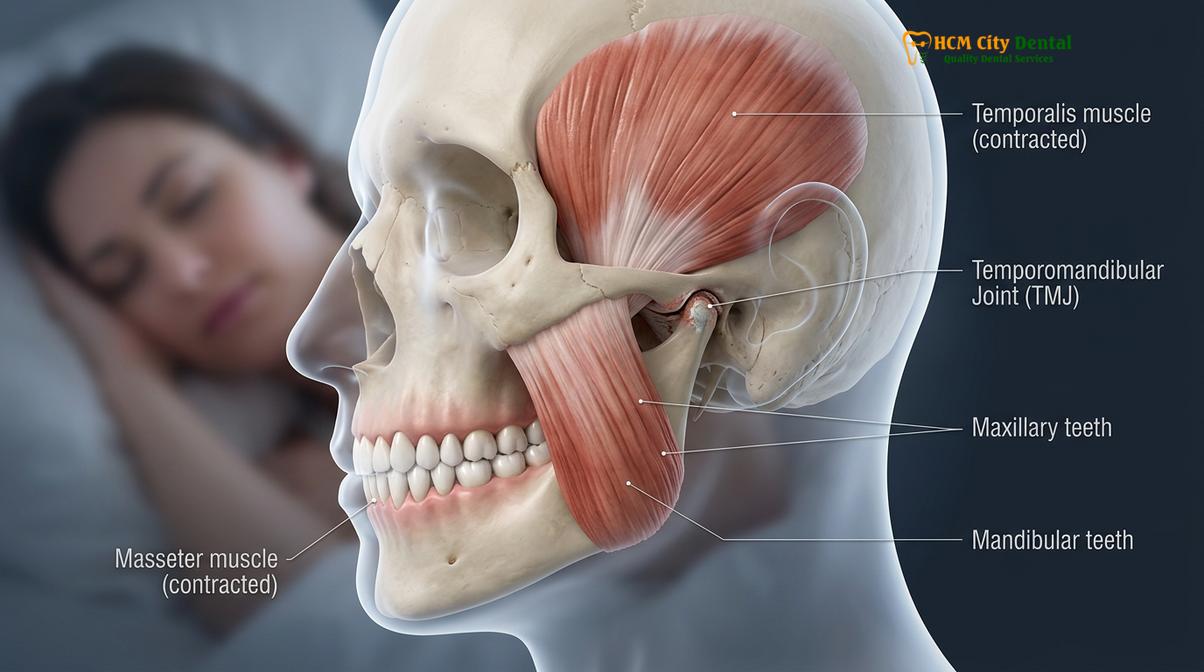
This sustained, extreme pressure has profound physiological consequences. Muscles require oxygen to function efficiently. When the masseter and temporalis muscles are locked in a state of continuous contraction for minutes or even hours at a time, localized blood flow is restricted. This hypoxic environment forces the muscle cells to rely on anaerobic metabolism, leading to the rapid accumulation of lactic acid and other metabolic waste products. Furthermore, the intense contraction causes micro-tears in the muscle fibers. By the time the patient wakes up, the combination of lactic acid buildup, cellular inflammation, and micro-trauma manifests as a deep, throbbing morning jaw pain.
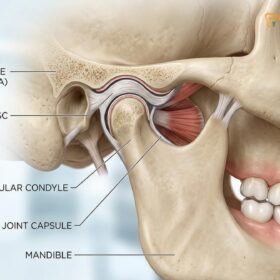
Beyond the musculature, the temporomandibular joint (TMJ) also bears a significant burden. The TMJ acts as a sliding hinge connecting the mandible to the skull. Continuous clenching compresses the articular disc within the joint, reducing the synovial fluid’s ability to lubricate the area. This compression can lead to joint stiffness, clicking, popping sounds upon opening the mouth, and referred pain that radiates to the ears and temples. Understanding teeth grinding in sleep is the first critical step in addressing the root cause of this debilitating morning discomfort.
Self-Assessment: Is It Bruxism?
Identifying bruxism involves checking for specific clinical signs such as flattened tooth surfaces, scalloped tongue borders, unexplained morning headaches, and heightened tooth sensitivity.
Because nocturnal bruxism occurs while the patient is unconscious, many individuals remain entirely unaware of their condition until significant damage has occurred or a sleep partner points out the grinding noises. However, the oral cavity and surrounding facial structures often exhibit clear, telltale signs of chronic parafunctional habits. Conducting a careful self-assessment can help you determine if your bruxism jaw ache is indeed the result of nighttime grinding.
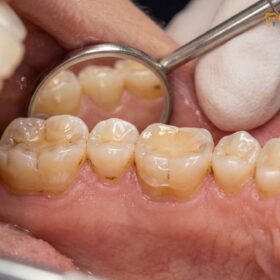
One of the most definitive signs of bruxism is dental attrition. Take a close look at your teeth in the mirror, particularly the incisors (front teeth) and the canines. In a healthy dentition, these teeth have distinct, slightly rounded or pointed edges. In a chronic bruxer, these edges become completely flattened, making the teeth appear uniformly short. The chewing surfaces of the molars may also lose their natural cusps, appearing polished or featuring small, crater-like indentations where the softer underlying dentin has been exposed. This exposure frequently leads to a sharp increase in tooth sensitivity, especially to cold or sweet stimuli, as the protective enamel layer is worn away [2].
Another common intraoral sign is the presence of a scalloped tongue. When the jaw is constantly clenched, the tongue is often pressed forcefully against the lingual surfaces of the teeth. Over time, this creates a wavy, pie-crust-like indentation along the lateral borders of the tongue. Similarly, you may notice a raised, white line on the inside of your cheeks (linea alba), which occurs from the cheeks being drawn in and bitten during clenching episodes.
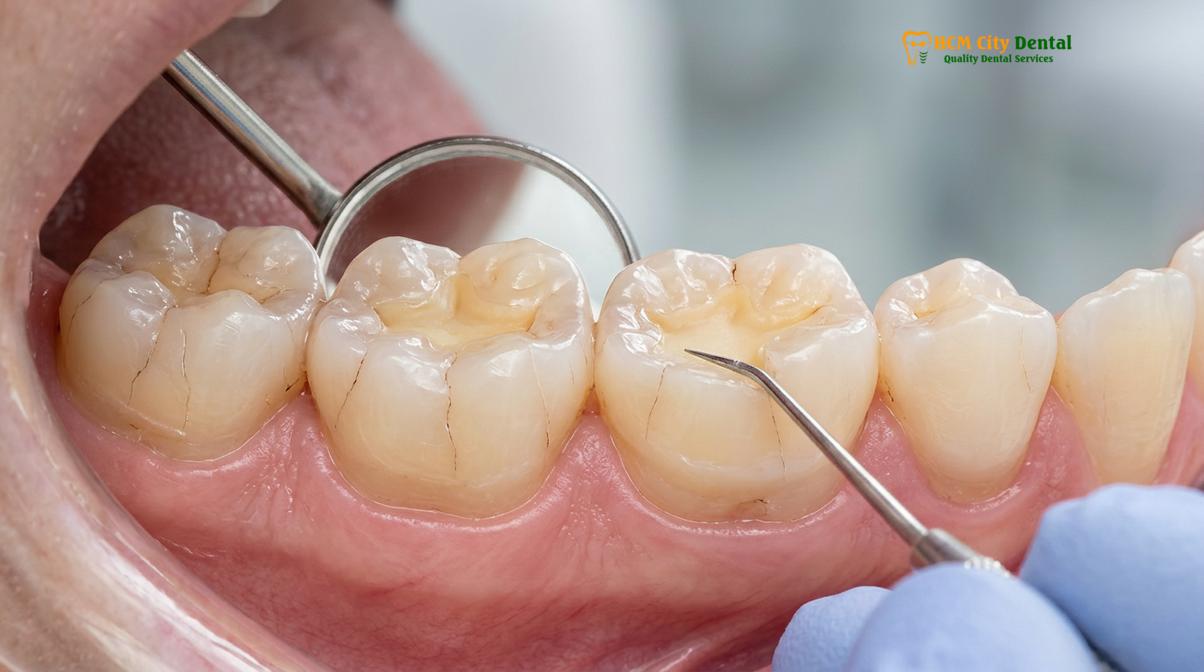
Extraorally, patients should palpate their masseter muscles. Place your fingers at the angle of your jaw, just in front of your earlobes, and clench your teeth. If the muscle feels excessively bulky, hard, or tender to the touch, it is a strong indicator of masseter hypertrophy—a direct result of the muscle “working out” all night. Additionally, if you frequently wake up with a dull headache that originates in the temples and radiates behind the eyes, this is often tension referred from the overworked temporalis muscle.
| Clinical Feature | Normal Physiological Wear | Pathological Bruxism Damage |
|---|---|---|
| Enamel Condition | Gradual, age-appropriate thinning | Rapid flattening, micro-fractures, exposed dentin |
| Muscle Sensation | Relaxed upon waking | Hypertrophic, tender, stiff in the morning |
| Tooth Sensitivity | Minimal to none | High sensitivity to thermal changes |
| Gumline Lesions | Absent | Presence of V-shaped abfraction notches |
| TMJ Function | Smooth, silent movement | Clicking, popping, restricted opening |
If your self-assessment reveals several of these indicators, it is highly probable that your morning discomfort is linked to sleep bruxism. Understanding the bruxism effects on teeth is crucial, as the damage is cumulative and irreversible without intervention.
Other Causes of Morning Jaw Pain
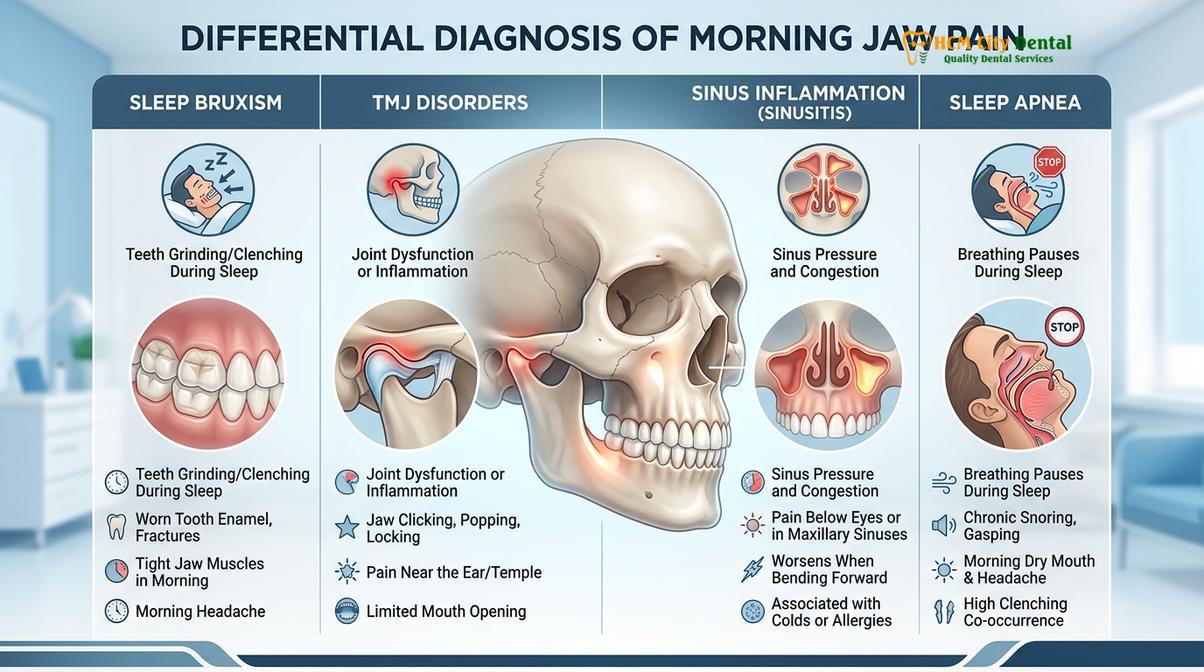
While bruxism is the leading culprit, morning jaw discomfort can also result from obstructive sleep apnea, sinus inflammation, poor sleeping posture, or underlying temporomandibular joint disorders.
Although teeth grinding is the most statistically probable cause of a jaw sore when waking up, the diagnostic process must consider other medical and environmental factors. The maxillofacial region is highly interconnected, and pain perceived in the jaw can often be referred from adjacent structures or systemic conditions.
One of the most critical differential diagnoses is Obstructive Sleep Apnea (OSA). There is a highly documented, bidirectional relationship between sleep apnea and nocturnal bruxism [3]. In patients with OSA, the soft tissues at the back of the throat collapse during sleep, obstructing the airway and causing a drop in blood oxygen levels. The brain detects this hypoxic emergency and triggers a micro-arousal, stimulating the sympathetic nervous system. In an effort to reopen the airway, the brain often commands the jaw muscles to thrust the mandible forward and clench tightly. Therefore, the bruxism is actually a secondary physiological response to the primary respiratory failure. Treating the bruxism without addressing the underlying sleep apnea can be ineffective and potentially dangerous.
“In clinical practice, we never look at morning jaw pain in isolation. A patient presenting with severe masseter hypertrophy and flattened dentition must also be screened for airway patency. Often, the jaw is clenching desperately at night simply to keep the airway open.”
— Dr. Nguyen Van Cuong, Clinical Director
Sinus inflammation, or sinusitis, is another frequent cause of jaw pain after sleeping. The maxillary sinuses are large, air-filled cavities located just above the upper jaw. The roots of the maxillary premolars and molars often extend very close to, or even protrude into, the sinus floor. When the sinus lining becomes inflamed and fills with fluid due to allergies or an infection, the increased pressure pushes down on the dental roots. This pressure is often perceived by the patient as a generalized, dull ache in the upper jaw and teeth, which is typically worse in the morning after lying flat all night, as gravity allows fluid to pool in the sinus cavities.
Furthermore, sleeping posture plays a surprisingly significant role in maxillofacial comfort. Individuals who sleep predominantly on their stomachs or heavily on one side often press their face firmly into the pillow. This unnatural posture can force the mandible laterally, pushing the temporomandibular joint out of its neutral alignment. Sustaining this lateral pressure for six to eight hours strains the delicate ligaments of the TMJ and the contralateral masticatory muscles, leading to unilateral jaw stiffness upon waking.
Finally, pre-existing Temporomandibular Joint Disorders (TMD) can flare up overnight. Conditions such as osteoarthritis of the TMJ, internal derangement of the articular disc, or systemic inflammatory diseases like rheumatoid arthritis can cause the joint to stiffen during periods of inactivity. For these patients, the morning pain is less about muscle fatigue and more about joint inflammation and lack of synovial lubrication.
Home Relief Measures
Initial management of morning jaw pain includes applying warm compresses to relax muscles, performing gentle jaw stretching exercises, and implementing stress-reduction techniques before bedtime.
When you wake up with a stiff, painful jaw, immediate symptomatic relief is often the primary concern. While home remedies cannot cure the underlying cause of bruxism, they are highly effective at mitigating acute muscle spasms, reducing localized inflammation, and improving your range of motion to help you start your day comfortably.
Thermal therapy is one of the most accessible and effective treatments for muscular jaw pain. For the dull, aching pain associated with chronic bruxism and muscle fatigue, moist heat is the preferred modality. Applying a warm, damp washcloth or a microwavable heat pack to the sides of the face for 15 to 20 minutes helps to vasodilate the local blood vessels. This increased blood flow flushes out the accumulated lactic acid and delivers fresh oxygen to the exhausted masseter and temporalis muscles, promoting cellular repair and relaxation. Conversely, if the pain is sharp, acute, or accompanied by noticeable swelling around the TMJ, applying an ice pack wrapped in a thin towel for 10 minutes can help constrict blood vessels and numb the nerve endings, reducing acute inflammation.
Targeted massage and stretching can also provide significant relief. Using your index and middle fingers, apply gentle, circular pressure to the masseter muscles (located at the angle of the jaw) and the temporalis muscles (located on the sides of the head, above the ears). This manual manipulation helps to break up muscle knots and relieve tension. Following the massage, perform gentle range-of-motion exercises. Slowly open your mouth as wide as is comfortable without pain, hold for a few seconds, and slowly close. Repeating this motion helps to stretch the muscle fibers and restore normal joint mobility.
Clinical Warning: While home massage and heat therapy provide excellent temporary relief for morning jaw pain, they do not stop the nocturnal grinding process. If you notice visible changes to your teeth, such as chipping, flattening, or increased sensitivity, relying solely on home remedies will allow irreversible enamel destruction to continue. Professional intervention is required to protect the dentition.
Addressing the psychological triggers of bruxism is equally important. Stress and anxiety are heavily correlated with increased nocturnal muscle activity [4]. Implementing a strict sleep hygiene routine can help downregulate the central nervous system before bed. This includes avoiding caffeine and alcohol at least four hours before sleep, as both substances disrupt sleep architecture and can exacerbate grinding. Engaging in relaxation techniques such as deep diaphragmatic breathing, progressive muscle relaxation, or meditation can significantly lower baseline stress levels, reducing the frequency and intensity of bruxism causes related to psychological tension.
When to See a Dentist
While occasional morning jaw stiffness after a particularly stressful week may resolve on its own, chronic or escalating pain requires professional clinical evaluation. The masticatory system is highly resilient, but it has limits. Ignoring persistent symptoms can lead to cascading dental and joint failures that become increasingly complex and expensive to treat.
You should schedule an immediate consultation with a dental professional if you experience any of the following red flag symptoms:
- Locked Jaw: An inability to fully open or close your mouth, indicating a potential displacement of the TMJ articular disc.
- Visible Tooth Damage: Noticing new chips, cracks, or a sudden flattening of your front teeth.
- Severe Sensitivity: A sharp, lingering pain when consuming hot, cold, or sweet foods, suggesting that the protective enamel has been worn away, exposing the vulnerable dentin.
- Chronic Headaches: Waking up multiple times a week with tension headaches that originate in the temples or behind the eyes.
- Radiating Pain: Jaw pain that radiates down the neck, into the shoulders, or causes persistent earaches without an underlying ear infection.
Clinical Case Study: Managing Severe Attrition
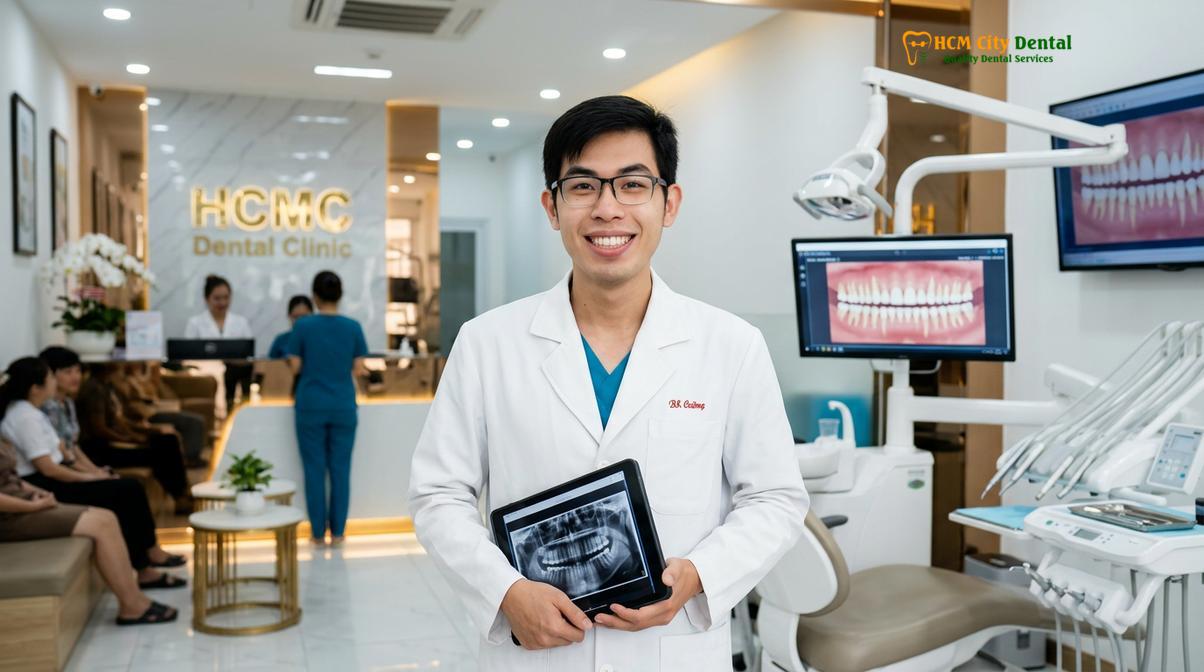
A 34-year-old patient visited HCMC Dental Clinic in Ho Chi Minh City complaining of severe morning jaw pain and hypersensitivity in her lower molars. Clinical examination revealed advanced enamel attrition and bilateral masseter hypertrophy. The patient was unaware of her nocturnal grinding. Dr. Cuong implemented a conservative treatment plan utilizing a custom-fabricated hard acrylic nightguard. Within two weeks of consistent wear, the patient reported a 90% reduction in morning muscle soreness, and the progressive wear on her dentition was successfully halted.
Early intervention is the cornerstone of effective bruxism management. A dentist can accurately diagnose the extent of the damage and implement protective strategies before irreversible harm occurs to the teeth or the temporomandibular joint.
Diagnostic Process at HCMC Dental
A comprehensive bruxism diagnosis involves a clinical examination of dental wear patterns, palpation of masticatory muscles, digital bite analysis, and the fabrication of a custom protective appliance.
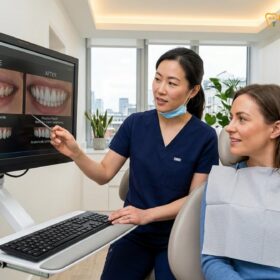
At HCMC Dental Clinic, we approach morning jaw pain with a comprehensive, evidence-based diagnostic workflow. The goal is not merely to treat the symptom, but to identify the precise etiology of the parafunctional habit and protect the patient’s long-term oral health. The diagnostic process begins with a detailed patient history, exploring sleep patterns, stress levels, and the specific nature and timing of the pain.
The clinical examination involves a meticulous intraoral and extraoral assessment. The dentist will evaluate the dentition for signs of pathological wear, looking for flattened cusps, abfraction lesions (V-shaped notches near the gumline caused by flexural stress), and micro-cracks in the enamel [5]. The periodontium is also assessed, as chronic clenching can cause localized bone loss and increased tooth mobility. Extraorally, the masticatory muscles are palpated to check for hypertrophy, asymmetry, and trigger points. The temporomandibular joint is evaluated for range of motion, deviation upon opening, and the presence of joint sounds like clicking or crepitus.
“Accurate diagnosis of bruxism requires looking beyond the teeth. We evaluate the entire stomatognathic system—the muscles, the joints, and the occlusion. A custom nightguard is only effective if it is designed to harmonize with the patient’s specific neuromuscular anatomy.”
— Dr. Nguyen Van Cuong, Clinical Director
If nocturnal bruxism is confirmed, the gold standard of conservative treatment is the fabrication of a custom occlusal splint, commonly referred to as a nightguard. Unlike generic, over-the-counter boil-and-bite guards, a custom appliance is fabricated from precise digital impressions of the patient’s teeth. Understanding the difference between a custom vs store bought night guard is vital; store-bought guards are often soft and bulky, which can inadvertently stimulate the chewing reflex and actually increase muscle activity during sleep.
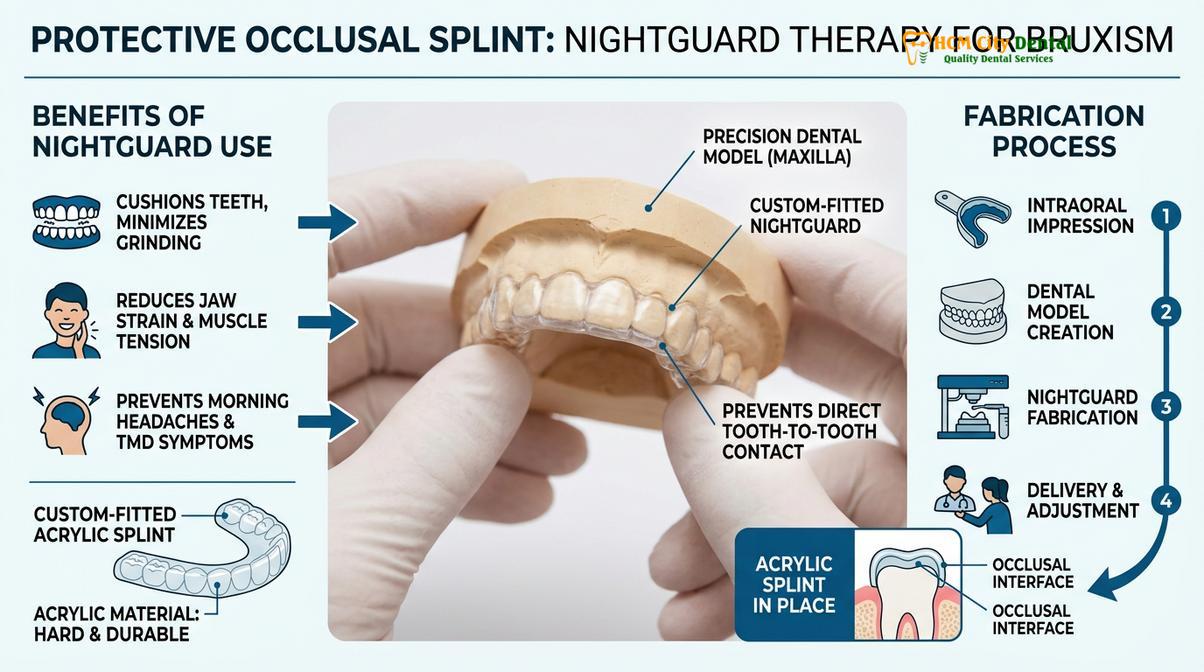
At our clinic, we carefully determine the appropriate material and design for each patient. For severe grinders, a hard acrylic guard is often prescribed to provide maximum durability and to allow the opposing teeth to glide smoothly over the surface, reducing muscle engagement. For patients with lighter clenching habits, a dual-laminate guard (soft inside for comfort, hard outside for protection) may be utilized. You can learn more about these options in our guide on hard vs soft night guards.
The custom Nightguards act as a physical barrier, absorbing the immense occlusal forces and preventing tooth-to-tooth contact. Furthermore, a properly adjusted nightguard slightly opens the bite, which helps to deprogram the hyperactive masseter and temporalis muscles, allowing them to relax and recover during the night. If you are struggling with a bruxism jaw ache, scheduling a consultation to explore how to stop grinding teeth through professional appliance therapy is the most effective path to relief.
Frequently Asked Questions
Why does my jaw hurt when I wake up?
Waking up with jaw pain is typically caused by nocturnal bruxism, where you unconsciously clench or grind your teeth during sleep. This continuous muscle hyperactivity leads to lactic acid buildup, micro-trauma in the muscle fibers, and significant strain on the temporomandibular joint, resulting in morning soreness. Over time, this sustained tension can also lead to tension headaches and referred pain in the neck and shoulders.
Can sleeping position cause jaw pain?
Yes, sleeping on your stomach or side can place unnatural lateral pressure on your jaw and temporomandibular joint. This sustained pressure forces the mandible out of its neutral resting position, straining the surrounding ligaments and muscles, which can manifest as a dull ache upon waking. Transitioning to back sleeping with proper cervical support can often alleviate posture-related jaw discomfort.
Is morning jaw pain always bruxism?
No, while bruxism is the most common cause, morning jaw pain can also stem from other medical conditions. Obstructive sleep apnea, sinus infections, temporomandibular joint (TMJ) disorders, and even poor cervical spine alignment can refer pain to the jaw area during the night. A comprehensive clinical evaluation is necessary to rule out these differential diagnoses and ensure appropriate treatment.
Should I apply heat or ice to jaw pain?
For chronic muscle tension and stiffness resulting from bruxism, moist heat is generally recommended to increase blood flow and relax the masseter muscles. However, if the pain is acute, sharp, or accompanied by sudden swelling—perhaps following an injury or an acute TMJ flare-up—applying an ice pack can help reduce localized inflammation and numb the nerve endings.
How does a dentist diagnose bruxism?
A dentist diagnoses bruxism by conducting a comprehensive clinical examination of your oral cavity and facial muscles. They look for abnormal dental wear patterns (attrition), abfraction lesions at the gumline, scalloped tongue borders, and enlarged masseter muscles, often supplemented by digital bite analysis. Patient history regarding sleep quality and morning symptoms also plays a crucial role in confirming the diagnosis.
References
- Journal of Oral Rehabilitation. Sleep bruxism and temporomandibular disorders: A clinical review. (2021).
- American Academy of Sleep Medicine. International Classification of Sleep Disorders: Sleep Related Bruxism. (2019).
- Journal of Clinical Sleep Medicine. The relationship between obstructive sleep apnea and nocturnal bruxism. (2020).
- International Journal of Prosthodontics. Efficacy of occlusal splints in the management of bruxism. (2022).
- Journal of the American Dental Association. Dental attrition and masseter hypertrophy in chronic bruxers. (2018).
Read also: If you experience severe tooth pain, refer to managing dental pain at night or what to do for a toothache in Vietnam.