Waking up with a dull, persistent ache in your jaw, unexplained morning headaches, or heightened tooth sensitivity are classic indicators of a highly prevalent yet often overlooked condition: sleep bruxism. For expatriates, digital nomads, and international dental tourists navigating life in Vietnam, the stress of travel or adapting to a new environment can frequently exacerbate these symptoms. Finding a reliable nightguard for teeth grinding clinic saigon is not merely about protecting your enamel; it is about preserving your overall quality of life, safeguarding your restorative dental investments, and addressing the root neuromuscular causes of Temporomandibular Joint (TMJ) dysfunction.
Clinical Summary:
For international patients and expatriates seeking a premier nightguard for teeth grinding clinic saigon, HCMC Dental Clinic offers a comprehensive, multi-disciplinary approach to managing bruxism and Temporomandibular Joint (TMJ) dysfunction. Utilizing advanced 3D intraoral scanning and in-house CAD/CAM technology, we fabricate precision-milled and 3D-printed occlusal splints rapidly. Beyond mechanical protection, we provide therapeutic masseter Botox injections to address severe muscle hypertrophy, alongside computerized occlusal equilibration. By integrating these advanced modalities, we aim to alleviate chronic jaw pain, protect valuable dental restorations, and restore optimal neuromuscular harmony for patients visiting Ho Chi Minh City.
Key Takeaways:
- Digital Precision: Custom 3D digital nightguards are crafted using intraoral scanners, eliminating messy traditional impressions and ensuring a flawless, comfortable fit.
- Comprehensive TMJ Therapy: Treatment extends beyond mouthguards to include therapeutic masseter Botox, which helps relax hyperactive jaw muscles and alleviate chronic tension headaches.
- Rapid Turnaround: Our in-house digital laboratory allows for the fabrication of custom splints swiftly, ideal for dental tourists and busy expats.
- Restoration Protection: A professional nightguard is essential to protect expensive cosmetic work, such as porcelain veneers and crowns, from the extreme forces of nocturnal bruxism.
- Expert Oversight: Our clinical team combines decades of expertise with state-of-the-art technology to deliver evidence-based bite realignment and TMJ care.
Recognizing the Signs of Bruxism & TMJ Dysfunction
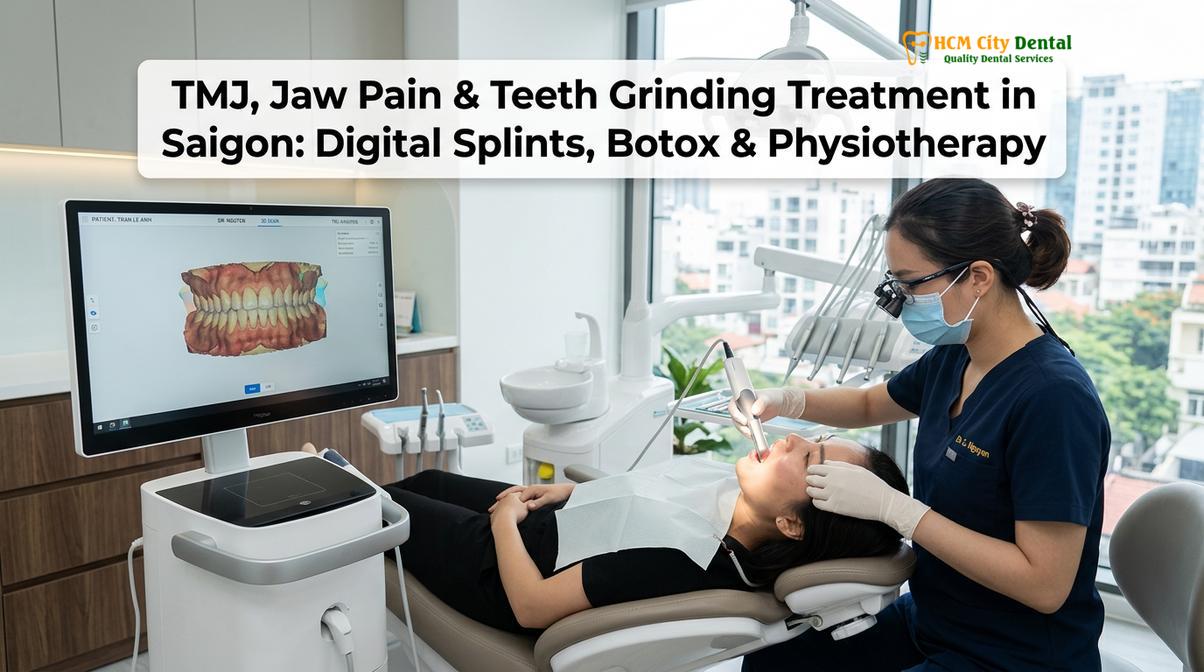
Bruxism is broadly categorized into two types: awake bruxism (often characterized by subconscious clenching during periods of high concentration or stress) and sleep bruxism (characterized by rhythmic grinding and clenching during the night). Because sleep bruxism occurs subconsciously, many patients remain entirely unaware of the habit until a clinical examination reveals the telltale signs of destruction, or until a sleep partner points out the audible grinding noises. Modern digital dentistry allows us to measure these occlusal forces with incredible precision, ensuring that any restorative work is built to withstand such pressures [1].
Clinical Symptoms of Nocturnal Grinding
The clinical manifestations of bruxism extend far beyond simple wear and tear. When you visit a General & Preventive Dentistry at HCMC Dental Clinic specialist, we conduct a comprehensive evaluation to identify the following symptoms:
- Severe Attrition: The flattening of the chewing surfaces (occlusal wear) of the posterior teeth and the shortening of the anterior incisors, which can prematurely age a patient’s smile.
- Abfraction Lesions: V-shaped notches that appear at the gumline. These are caused by the extreme flexing of the tooth during clenching, which causes the brittle enamel rods at the cervical margin to micro-fracture and break away.
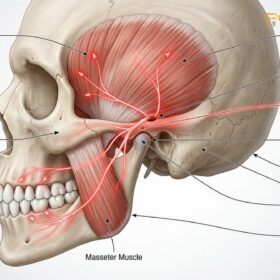
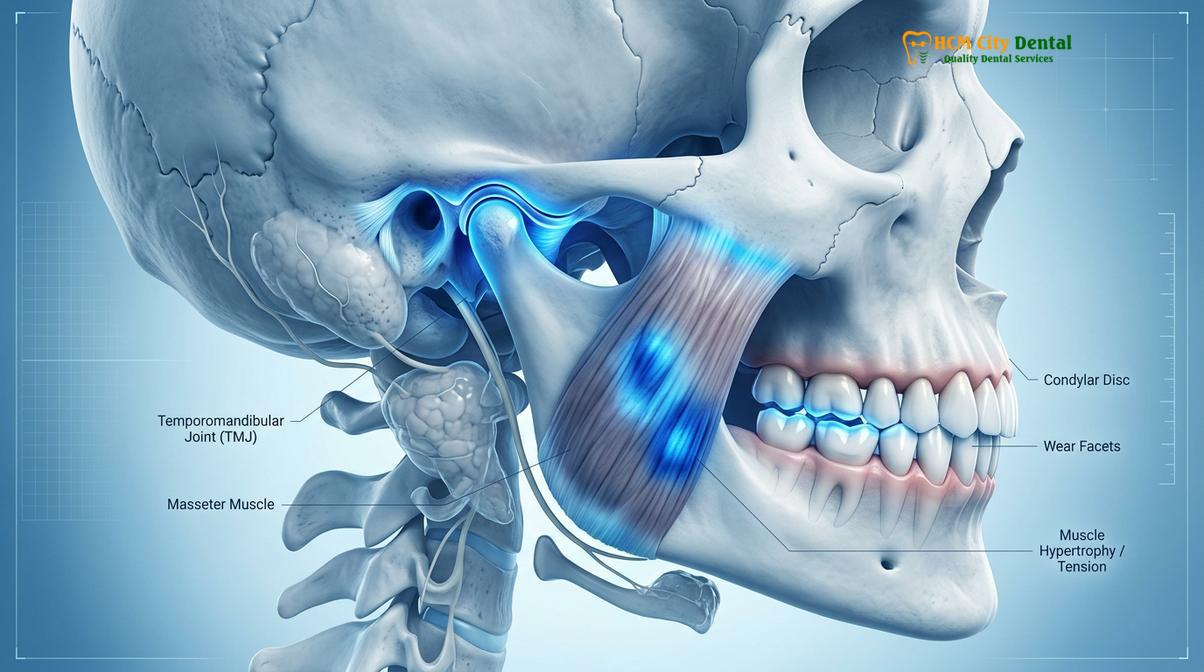
- Masseter Hypertrophy: The visible enlargement or bulging of the jaw muscles (the masseters) at the angle of the jaw, resulting from the muscles being overworked night after night.
- Tinnitus and Ear Pain: Because the TMJ is located mere millimeters from the auditory canal, inflammation in the joint frequently refers pain to the ear, causing ringing (tinnitus) or a sensation of fullness.
- Chronic Morning Headaches: Tension headaches that radiate from the temples down to the neck and shoulders, typically most severe immediately upon waking.
The Link Between Stress, Sleep Apnea, and TMJ
Modern dental science has established a strong correlation between sleep-disordered breathing (such as Obstructive Sleep Apnea) and sleep bruxism. In many cases, the brain initiates a grinding motion to push the lower jaw forward, attempting to open a collapsed airway during sleep. Therefore, treating bruxism requires a nuanced understanding of the patient’s overall health. Our diagnostic process involves evaluating the airway, assessing stress factors, and examining the structural integrity of the TMJ to ensure that our interventions address the underlying etiology, rather than merely masking the symptoms.
Why Drugstore Boil-and-Bite Guards Cause Bite Misalignment
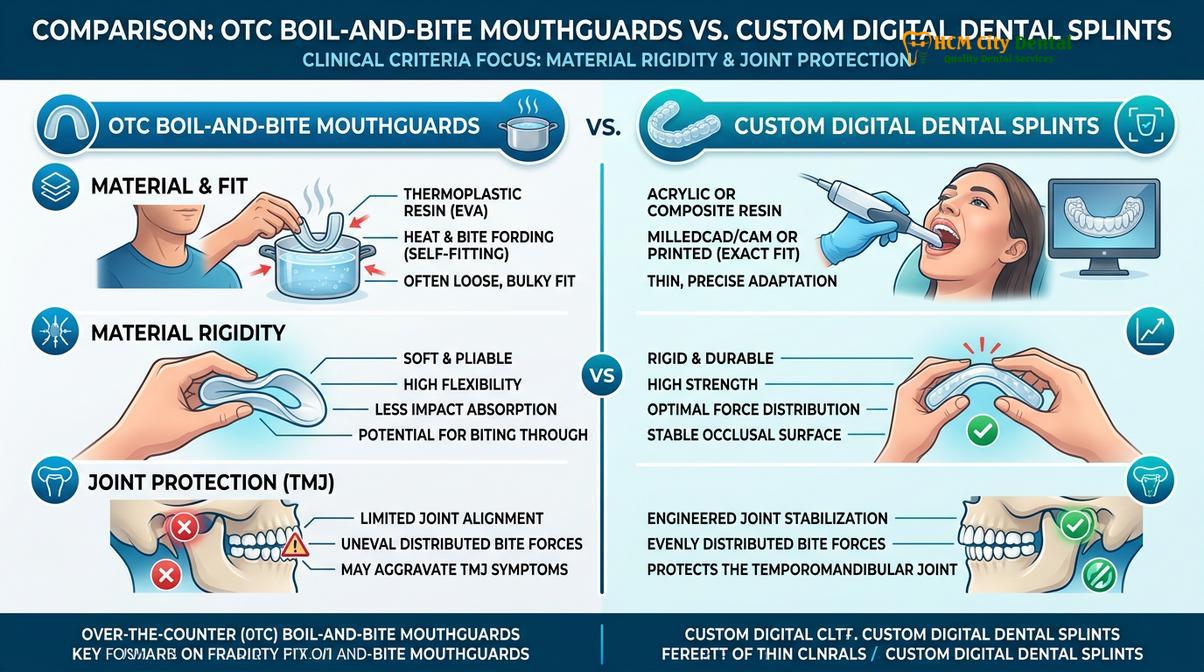
When faced with sudden jaw pain or the realization that they are grinding their teeth, many patients instinctively turn to pharmacies for a quick fix. Over-the-counter (OTC) “boil-and-bite” mouthguards are heavily marketed as an affordable solution. However, from a clinical perspective, these generic devices often do more harm than good, particularly for patients suffering from moderate to severe bruxism. Clinical studies consistently demonstrate that hard occlusal splints are significantly more effective in managing sleep bruxism compared to soft alternatives [2].
The Danger of Soft Plastics on the Temporomandibular Joint
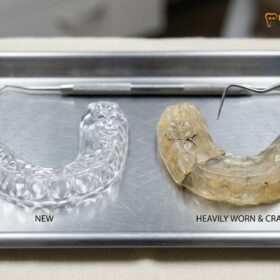
Most OTC mouthguards are manufactured from soft, pliable ethylene-vinyl acetate (EVA) plastics. While these materials may feel comfortable initially, they present a significant biomechanical flaw. The human masticatory system is highly sensitive to proprioception—the sensory feedback from the teeth and periodontal ligaments. When you introduce a soft, squishy material between the upper and lower teeth, the brain interprets it as a bolus of food. Instead of relaxing, the masseter and temporalis muscles are actually stimulated to chew and clench harder.
This phenomenon can drastically increase muscle fatigue and exacerbate TMJ inflammation. Patients using soft OTC guards frequently report waking up with worse jaw pain than they experienced without any guard at all. For a comprehensive understanding of the different types of protective appliances, you can review our clinical guide on Teeth Mouth Guard: Clinical Guide, Types & Uses | HCMC Dental.
Occlusal Changes and Muscle Fatigue
Furthermore, boil-and-bite guards lack the structural rigidity required to support the jaw in a stable, orthopedically neutral position. Because they are molded by the patient at home, they rarely provide even occlusal contacts. This uneven distribution of force can cause the teeth to shift over time, leading to an anterior open bite or posterior interferences.
Custom 3D Digital Nightguards Crafted in Our In-House Lab
To provide definitive protection and therapeutic relief, we advocate exclusively for custom-fabricated occlusal splints. As a leading provider, we have fully digitized our workflow to enhance patient comfort, improve appliance accuracy, and drastically reduce turnaround times. Protecting delicate cosmetic restorations, such as minimal prep veneers, relies heavily on the consistent use of a rigid nightguard to prevent nocturnal fractures [3].
The Digital Workflow: Intraoral Scanning vs. Messy Impressions
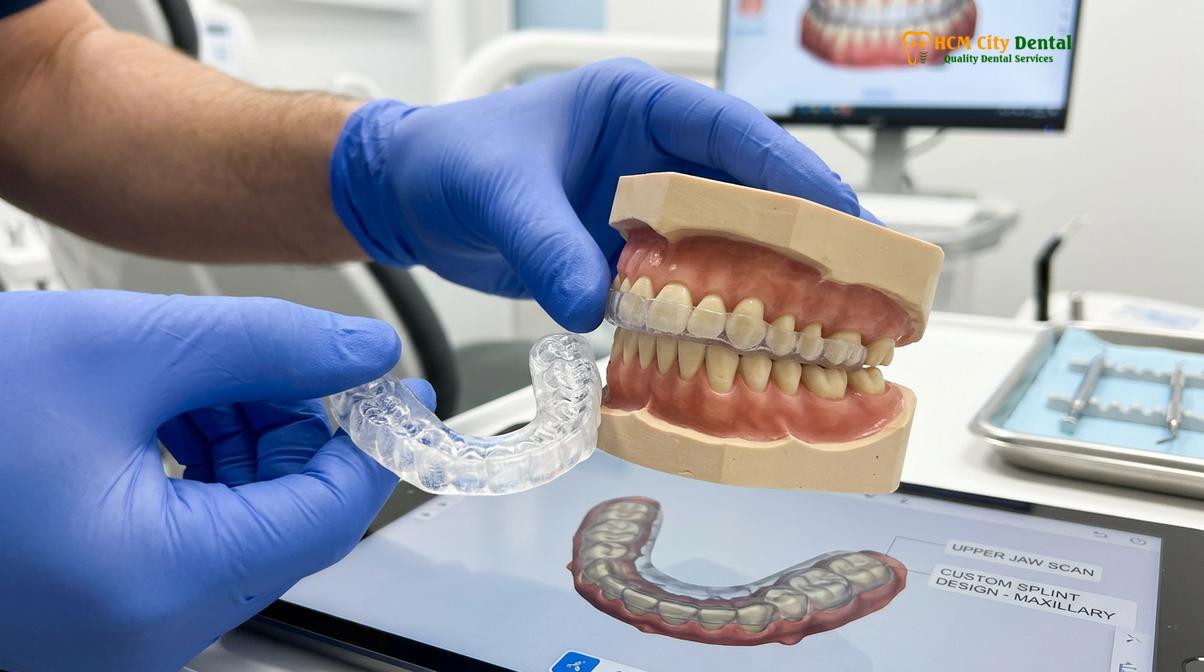
The days of gag-inducing, messy alginate or PVS putty impressions are over. When you visit our clinic for a custom nightguard, the process begins with a high-resolution 3D intraoral scan. Using industry-leading technology, we capture a flawless digital replica of your teeth and soft tissues in less than two minutes. This digital impression is highly accurate, capturing the exact morphology of your dentition without any distortion.
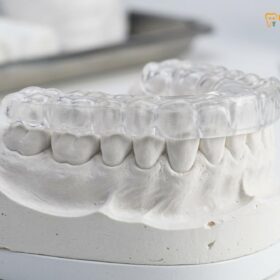
The digital file is then transmitted to our in-house CAD/CAM laboratory. Our specialized dental technicians use advanced software to design the splint, ensuring that the opposing teeth meet the guard with perfect, pinpoint contacts. This precise occlusal scheme allows the jaw muscles to relax, reducing the intensity of bruxism episodes. To learn more about the fabrication process, explore our resources on having a Custom Mouth Guard Made by Dentist: Clinical Guide | HCMC Dental.
Hard vs. Dual-Laminate Splints
Depending on the severity of your bruxism and your specific clinical needs, our specialists will recommend the most appropriate material for your custom splint:
- Hard Acrylic (PMMA) Splints: Milled from a solid block of polymethyl methacrylate or 3D printed using biocompatible resins, these guards are highly durable and ideal for severe grinders. They provide a smooth surface that allows the opposing teeth to glide freely, preventing the jaw from locking into a destructive clenching pattern.
- Dual-Laminate Splints: These guards feature a hard acrylic outer shell for durability and a slightly softer inner lining for enhanced patient comfort. They are often recommended for moderate grinders or patients who find rigid acrylic too restrictive.
For international patients concerned about costs, our clinic offers transparent, highly competitive pricing without compromising on the quality of imported European and American materials. Strict safety protocols and material traceability are paramount in our practice, aligning with international standards for dental tourism [4]. Below is a comparative overview of our nightguard options.
| Nightguard Type | Material Composition | Clinical Indication | Durability Profile |
|---|---|---|---|
| Over-the-Counter (Boil & Bite) | Soft EVA Plastic | Not recommended (Emergency temporary use only) | Low (Prone to tearing and bacterial buildup) |
| Custom Dual-Laminate Splint | Hard outer shell, soft inner lining | Moderate bruxism, clenching, TMJ sensitivity | Medium to High |
| Custom 3D Printed Hard Splint | Biocompatible 3D Printed Resin / PMMA | Severe bruxism, heavy grinders, full mouth restorations | Very High |
For a deeper dive into pricing structures and what influences the investment in your oral health, you can read our detailed guide on Custom Night Guard Vietnam Cost: Clinical Guide & Pricing.
Therapeutic Masseter Botox for Severe Jaw Tension & Muscle Hypertrophy
While a custom nightguard is exceptional at protecting the teeth and stabilizing the joint, it does not stop the muscles from attempting to contract. For patients suffering from severe, intractable bruxism, mechanical protection alone may not be sufficient to alleviate chronic pain. This is where pharmacological intervention becomes a game-changer. Following local guidelines from the Vietnam Odonto-Stomatology Association (VOSA) on the management of temporomandibular disorders, we integrate neuromodulators as a safe and effective adjunct therapy [5].
How Neuromodulators Relax Hyperactive Jaw Muscles
Botulinum Toxin Type A (commonly known as Botox) is a highly purified protein that acts as a neuromodulator. When injected precisely into the masseter and temporalis muscles, it temporarily blocks the release of acetylcholine, the neurotransmitter responsible for signaling the muscle to contract. By inhibiting this signal, Botox effectively weakens the muscle’s ability to engage in the extreme, involuntary clenching associated with sleep bruxism.
It is crucial to understand that therapeutic Botox does not paralyze the jaw or interfere with normal functions such as speaking, chewing, or smiling. The dosing is carefully calibrated by our clinical team to reduce hyperactivity while maintaining normal physiological function. Patients typically begin to feel relief from jaw tension and morning headaches shortly post-injection.
“Integrating therapeutic Botox with custom digital splint therapy allows us to address bruxism from two critical angles: we protect the hard dental tissues mechanically, while simultaneously down-regulating the neurological drive that causes the destructive muscle contractions. It is a highly effective, dual-action approach for our most severe TMJ cases.”
Aesthetic Benefits: Facial Slimming and V-Shape Contouring
An often-welcomed secondary benefit of masseter Botox is its aesthetic impact. Chronic teeth grinding causes the masseter muscles to undergo hypertrophy (enlargement), much like a bodybuilder’s muscles grow with weightlifting. This can result in a widened, square, or overly masculine lower jawline. As the Botox relaxes the masseter muscle, it gradually undergoes disuse atrophy, shrinking back to its normal, genetically predetermined size. For many patients, this results in a desirable facial slimming effect, restoring a softer, V-shaped contour to the lower face.
Clinical Case Study: Severe Bruxism and Masseter Hypertrophy
Patient Profile: A 34-year-old expatriate visiting HCMC Dental Clinic (Ho Chi Minh City) presented with chronic morning migraines, severe tooth sensitivity, and a noticeably widened lower jawline due to years of untreated nocturnal grinding.
Treatment Protocol: Our clinical team initiated a dual-therapy approach. The patient received targeted Botulinum Toxin Type A in each masseter muscle to reduce hyperactivity. Simultaneously, a 3D intraoral scan was taken to fabricate a custom, hard-acrylic maxillary nightguard.
Outcome: At the follow-up appointment, the patient reported a significant reduction in morning headaches and jaw tension. Over the following months, the masseter muscles visibly reduced in volume, providing a slimmer facial profile. The custom nightguard successfully absorbed the residual grinding forces, protecting the patient’s natural enamel.
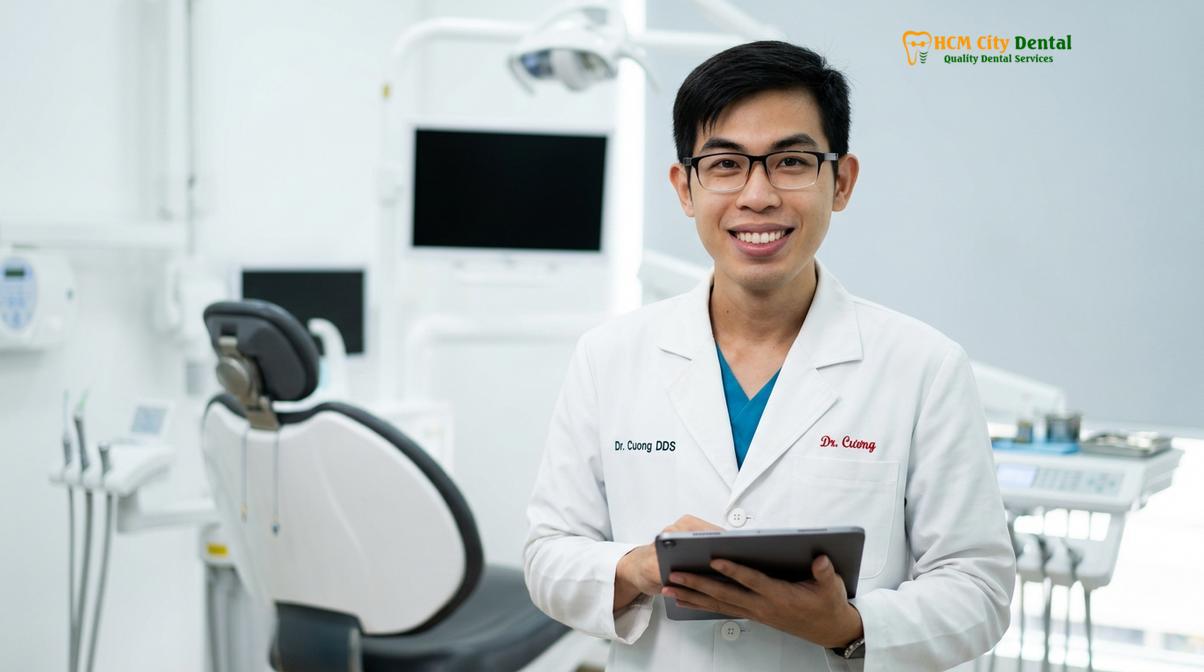
Bite Realignment Therapy by Dr. Cuong
Under the expert clinical direction of Dr. Nguyen Van Cuong, our team is dedicated to providing comprehensive neuromuscular care. Dr. Cuong brings decades of specialized experience in restorative and preventive treatments, ensuring every patient receives a meticulously calibrated appliance. For those seeking top-tier care, our guide on Recommended Cosmetic Dentists: Clinical Guide | HCMC Dental highlights the rigorous standards maintained by our clinical staff.
Occlusal Equilibration and Physiotherapy
Bite realignment therapy, or occlusal equilibration, involves making microscopic adjustments to the chewing surfaces of the teeth. The goal is to ensure that all teeth meet simultaneously and evenly when the jaw closes. By removing premature contacts and interferences, we can often eliminate the neurological trigger that causes the jaw muscles to grind in the first place.
“A harmonious bite is the foundation of long-term dental health. When the teeth, muscles, and joints work in perfect synchronization, the destructive forces of bruxism are naturally mitigated, preserving both natural dentition and complex restorative work.”
In addition to occlusal adjustments, our clinic often recommends targeted jaw physiotherapy exercises. These exercises help stretch and strengthen the masticatory muscles, improving range of motion and reducing localized spasms. When combined with a custom nightguard and, if necessary, masseter Botox, physiotherapy provides a holistic pathway to lasting TMJ relief.
When to See a Doctor: Important Clinical Notes
While mild teeth grinding can often be managed with a custom nightguard, certain symptoms require immediate professional evaluation to prevent irreversible joint damage.
Important Clinical Note: When to Seek Immediate Care
If you experience sudden jaw locking (an inability to fully open or close your mouth), severe radiating pain that disrupts your sleep, or noticeable swelling around the temporomandibular joint, seek professional evaluation immediately. These symptoms may indicate acute joint displacement, severe inflammation, or an underlying infection requiring urgent intervention.
Frequently Asked Questions
Why should I get a custom dental nightguard instead of an over-the-counter guard?
A custom dental nightguard provides precise occlusal support, whereas over-the-counter guards often use soft plastics that can stimulate chewing reflexes and worsen jaw pain. Custom guards are fabricated from rigid or dual-laminate materials that protect the temporomandibular joint and prevent unwanted tooth movement.
How much does a custom 3D printed nightguard cost in Vietnam?
A custom 3D printed nightguard in Vietnam typically ranges from $150 to $300 USD, depending on the material and digital fabrication method. This represents a significant saving compared to Western clinics, without compromising on clinical quality or material biocompatibility.
How does masseter Botox relieve severe teeth grinding and jaw pain?
Masseter Botox works by temporarily blocking the nerve signals that cause the jaw muscles to contract forcefully. This targeted neuromodulation reduces muscle hyperactivity, alleviating jaw tension, morning headaches, and the extreme forces that damage dental enamel.
How many days does it take to make a custom TMJ splint in Saigon?
With our in-house digital laboratory, a custom TMJ splint can typically be designed, 3D printed, and fitted within 24 to 48 hours. This rapid turnaround is ideal for international patients and dental tourists on a tight schedule.
Can untreated teeth grinding break porcelain veneers or dental crowns?
Yes, the extreme occlusal forces generated during nocturnal bruxism can easily fracture porcelain veneers, dental crowns, and even natural teeth. Wearing a custom nightguard acts as a protective barrier, absorbing these forces and preserving your restorative dental work.
References
- Journal of the American Dental Association. Implant survival rates and occlusal forces in digital dentistry. (2022).
- Journal of Prosthetic Dentistry. Efficacy of hard occlusal splints in the management of sleep bruxism. (2021).
- Journal of Esthetic and Restorative Dentistry. Minimal prep porcelain veneer longevity and bruxism protocols. (2020).
- British Dental Journal. Dental tourism safety protocols and material traceability in Southeast Asia. (2023).
- Vietnam Odonto-Stomatology Association (VOSA). Guidelines on the management of temporomandibular disorders and sleep bruxism in clinical practice. (2022).
Are you experiencing chronic jaw pain or looking to protect your smile from nocturnal grinding? Contact HCMC Dental Clinic, Ho Chi Minh City today to schedule a comprehensive TMJ evaluation and discover how our custom digital nightguards and therapeutic Botox can restore your comfort.