For many individuals, the mere thought of sitting in a dental chair triggers a cascade of anxiety, elevated heart rates, and overwhelming fear. This psychological barrier—often rooted in past traumatic experiences, a sensitive gag reflex, or a fear of needles—can prevent patients from seeking essential oral healthcare. As a result, minor dental issues can rapidly escalate into severe clinical emergencies. Fortunately, modern dental medicine has evolved. Today, sedation dentistry for nervous patients saigon offers a scientifically supported, highly monitored pathway to achieving optimal oral health without the associated psychological distress[1]. At HCMC Dental Clinic, we have developed comprehensive sedation protocols designed specifically for international patients, expatriates, and dental tourists seeking anxiety-free care in Vietnam.
Clinical Summary:
This comprehensive clinical guide details the advanced sedation dentistry protocols available at HCMC Dental Clinic in Ho Chi Minh City. It explores the spectrum of anxiolytic options—ranging from inhalation sedation (Nitrous Oxide) and oral conscious sedation to advanced IV twilight sedation supervised by board-certified anesthesiologists. The article further examines the integration of the computerized STA Wand for comfortable local anesthesia and outlines strict pre-operative health screening protocols. Designed for expats and dental tourists, this guide emphasizes evidence-based safety standards, emergency dental protocols, and the seamless integration of sedation into complex restorative, cosmetic, and implant procedures.
Key Takeaways:
- Tailored Anxiolysis: Sedation options range from mild nitrous oxide (laughing gas) to deep IV twilight sedation, customized to the patient’s specific level of dental phobia and the complexity of the procedure.
- Anesthesiologist Supervision: All IV sedation procedures at HCMC Dental Clinic are strictly monitored by a dedicated, board-certified anesthesiologist to help maintain hemodynamic stability and patient safety.
- Advanced Delivery Systems: The integration of the computerized STA Wand system replaces traditional syringes, aiming to deliver local anesthesia below the pain threshold.
- Comprehensive Care: Sedation facilitates complex, multi-stage treatments—such as full mouth reconstructions or multiple dental implants—in a single, comfortable appointment.
- Emergency Readiness: Sedation protocols are fully integrated with same-day emergency treatments for acute conditions like severe pulpitis or dental trauma.
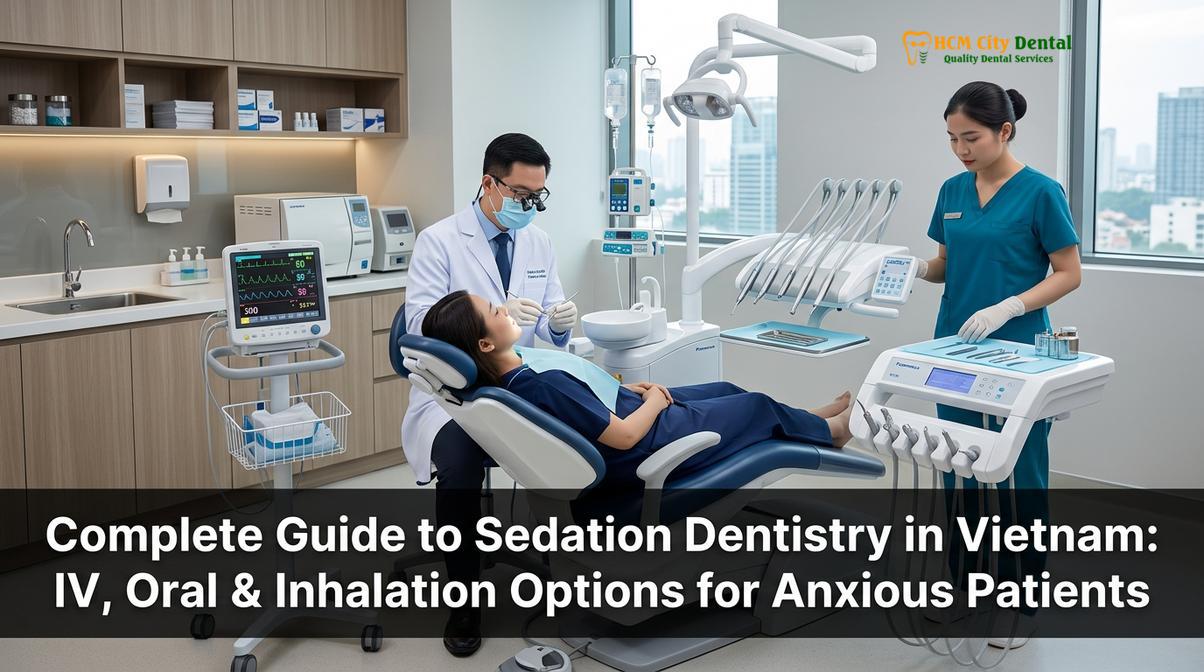
Understanding Dental Anxiety & Modern Sedation Solutions
Dental anxiety is a recognized psychological condition that affects millions of patients worldwide. It exists on a spectrum, ranging from mild apprehension before a routine cleaning to severe dentophobia, where the patient experiences panic attacks at the thought of entering a clinical environment. Understanding the physiological and psychological mechanisms behind this fear is the first step in providing compassionate, effective care.
When a patient with dental phobia anticipates a procedure, their sympathetic nervous system activates the “fight or flight” response. This results in the release of adrenaline and cortisol, leading to tachycardia (rapid heart rate), hypertension (elevated blood pressure), diaphoresis (sweating), and hyperventilation. From a clinical perspective, treating a highly anxious patient without proper anxiolytic intervention is not only stressful for the patient but can also compromise the efficacy of local anesthetics. High adrenaline levels can alter the body’s metabolic rate, causing local anesthetics to wear off more rapidly, which in turn reinforces the patient’s fear of experiencing discomfort during treatment[2].
Under the clinical leadership of Dr. Nguyen Van Cuong, our team ensures that every patient receives compassionate, evidence-based care. Dr. Cuong has dedicated his career to refining anxiolytic protocols, making complex procedures accessible for those who previously avoided treatment due to fear. By thoroughly explaining every step of the sedation process, we demystify the treatment and build a foundation of absolute trust before any clinical work begins. Patients interested in understanding the nuances between different levels of relaxation can explore our guide on Conscious Sedation vs Unconscious Sedation Dentistry to make an informed choice.
Twilight IV Sedation: Sleep Peacefully Through Major Surgery
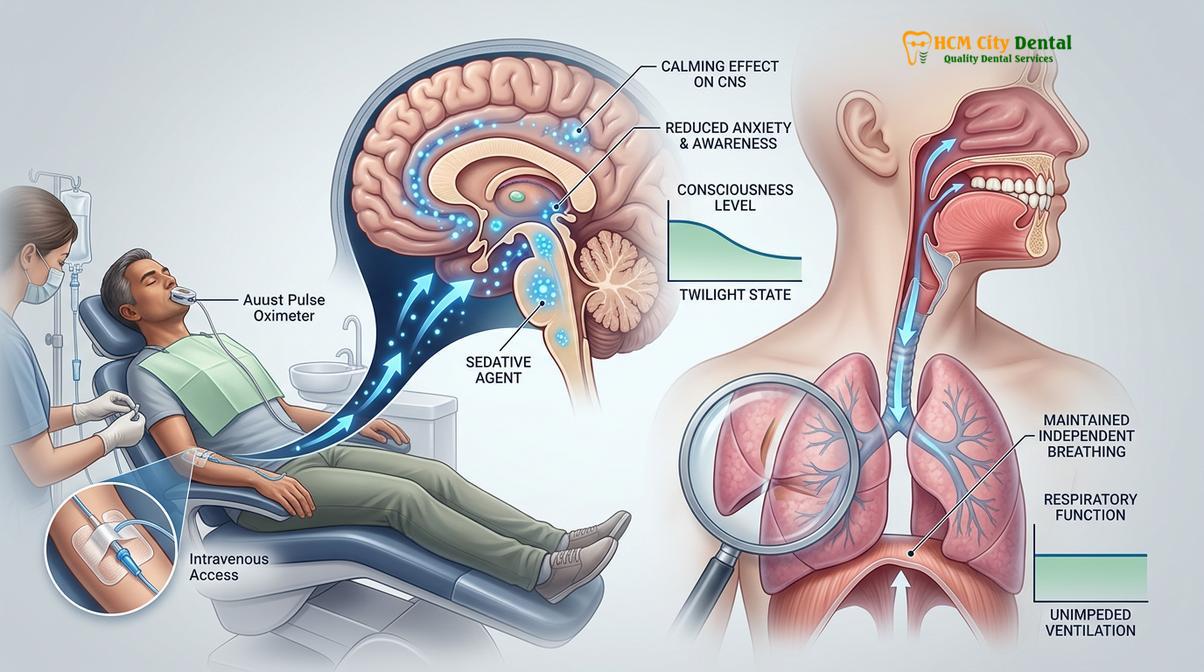
For patients undergoing extensive surgical procedures or those with profound dental phobia, Intravenous (IV) sedation represents a highly effective approach in anxiety management. Often referred to as sleep dentistry, this modality allows patients to enter a state of deep relaxation while remaining conscious enough to breathe independently and respond to simple physical cues.
What is IV Twilight Sedation?
IV twilight sedation involves the direct intravenous administration of sedative and anxiolytic medications, typically a carefully titrated combination of benzodiazepines and sometimes ultra-short-acting hypnotics. Because the medication is delivered directly into the bloodstream, the onset of action is almost instantaneous. The primary advantage of IV sedation is its titratability; the anesthesiologist can continuously adjust the dosage in real-time to maintain the exact level of sedation required throughout the procedure[3].
Under IV sedation, patients experience profound anterograde amnesia. This means that while they are technically awake and their protective reflexes remain intact, they will typically have little to no memory of the sights, sounds, or sensations of the dental surgery. This makes it an exceptionally powerful tool for complex procedures such as full arch rehabilitations or bilateral sinus lifts, often detailed in our Sedation for Full Mouth Reconstruction: Clinical Guide.
“The advantage of IV twilight sedation lies in its precision and safety profile. By utilizing advanced pharmacological protocols, we can help patients bypass the psychological stress of dental surgery. The patient simply rests comfortably and wakes up to a transformed smile, largely unaware of the complex surgical work that took place.”
— Dr. Nguyen Van Cuong DDS
Clinical Case Study: Full Arch Rehabilitation Under IV Sedation
Patient Profile: A 55-year-old expatriate visiting HCMC Dental Clinic (Ho Chi Minh City) presented with severe periodontitis, failing dentition, and extreme dental phobia that had prevented him from seeking care for over a decade.
Treatment Plan: Extraction of remaining hopeless teeth, bilateral alveolar bone leveling, and placement of six maxillary and six mandibular dental implants utilizing digital surgical guides.
Sedation Protocol: The entire surgery was conducted under continuous IV twilight sedation supervised by our in-house anesthesiologist. The patient remained hemodynamically stable throughout the procedure.
Outcome: The patient awoke comfortably with no memory of the extractions or implant placements. He was fitted with immediate provisional restorations and reported minimal psychological distress post-operatively.
Oral Sedation & Nitrous Oxide (Laughing Gas) for Routine Procedures
While IV sedation is ideal for major surgeries, many patients require anxiolysis for less invasive treatments, such as routine hygiene, cosmetic enhancements, or minor restorative work. For these scenarios, oral conscious sedation and inhalation sedation provide excellent, minimally invasive alternatives.
Oral Conscious Sedation (Pill Form)
Oral sedation involves the administration of a prescribed sedative medication taken orally about one hour prior to the dental appointment. The medication induces a state of moderate sedation, significantly reducing anxiety and promoting a sense of calm lethargy. Because the absorption rate of oral medications varies through the gastrointestinal tract, the exact level of sedation is less predictable than with the IV route. However, it remains a highly effective solution for patients undergoing procedures like the placement of porcelain veneers or complex crown preparations[4].
Inhalation Sedation (Nitrous Oxide)
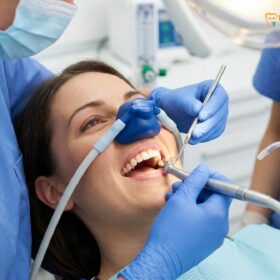
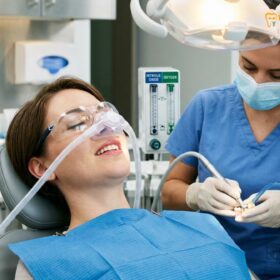
Nitrous oxide, commonly known as laughing gas, is the mildest form of dental sedation. Administered through a small nasal mask mixed with pure oxygen, nitrous oxide produces a rapid onset of euphoria and relaxation. It is highly effective at raising the pain threshold and suppressing the gag reflex. One of the most significant clinical advantages of nitrous oxide is its rapid reversibility. Once the dental procedure is complete, the patient is placed on 100% oxygen for five minutes, which flushes the nitrous oxide from their system.
Managing dental anxiety is particularly critical in pediatric dentistry. A negative experience in childhood can lead to a lifetime of dental phobia. Our clinic utilizes specialized pediatric sedation protocols, primarily relying on carefully titrated nitrous oxide, to keep children calm during procedures. These protocols are a core component of our Pediatric Sedation Dentistry Vietnam approach, ensuring that our youngest patients develop a positive relationship with oral healthcare.
Painless Computerized Local Anesthesia (STA Wand System)
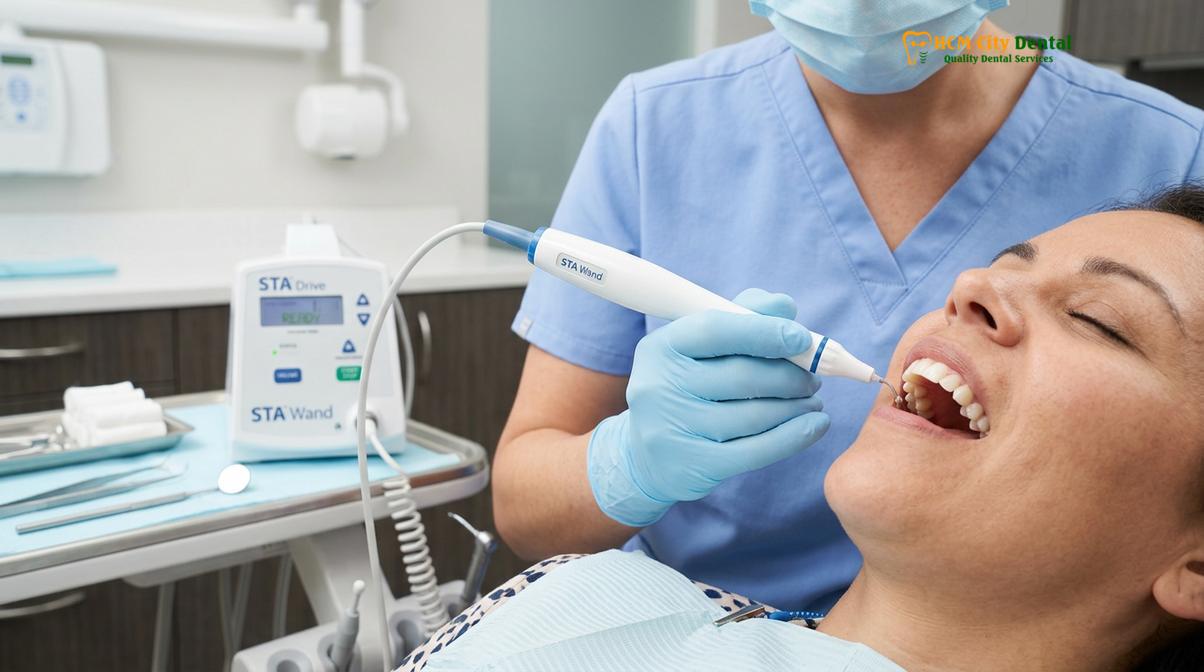
Even with advanced sedation, achieving profound local anesthesia is mandatory to block nociceptive (pain) signals from reaching the brain. For many patients, the fear of the traditional dental syringe is the primary source of their anxiety. To address this trigger, HCMC Dental Clinic utilizes the Single Tooth Anesthesia (STA) Wand system.
Clinical studies have demonstrated that the discomfort associated with a dental injection is rarely caused by the needle piercing the mucosa; rather, it is caused by the pressure and volume of the anesthetic fluid tearing the delicate tissue as it is rapidly injected. The STA Wand is a computer-controlled local anesthesia delivery system designed to solve this exact problem. It utilizes Dynamic Pressure Sensing (DPS) technology to continuously monitor the resistance of the tissue at the needle tip. The computer then regulates the flow rate of the anesthetic solution, delivering it at a precise, constant pressure that aims to remain below the patient’s pain threshold[5].
Pre-Op Health Screening & Anesthesiologist Supervision in Saigon
The administration of any sedative agent requires rigorous clinical oversight and comprehensive pre-operative evaluation. At HCMC Dental Clinic, we adhere to strict medical safety guidelines, including those outlined by the Vietnam Ministry of Health, ensuring that every patient is a suitable candidate for their chosen level of sedation[6].
Comprehensive Medical Evaluation
Before any sedation procedure is scheduled, patients undergo a thorough medical history review and physical evaluation. This includes an airway assessment to check for conditions like Obstructive Sleep Apnea (OSA), cardiovascular screening to review baseline blood pressure and heart rate, and a pharmacological review to analyze all current prescription medications and prevent adverse drug interactions. For patients seeking guidance on navigating these safety protocols, we highly recommend reviewing our comprehensive resources on How to Find Sedation Dentist Vietnam.
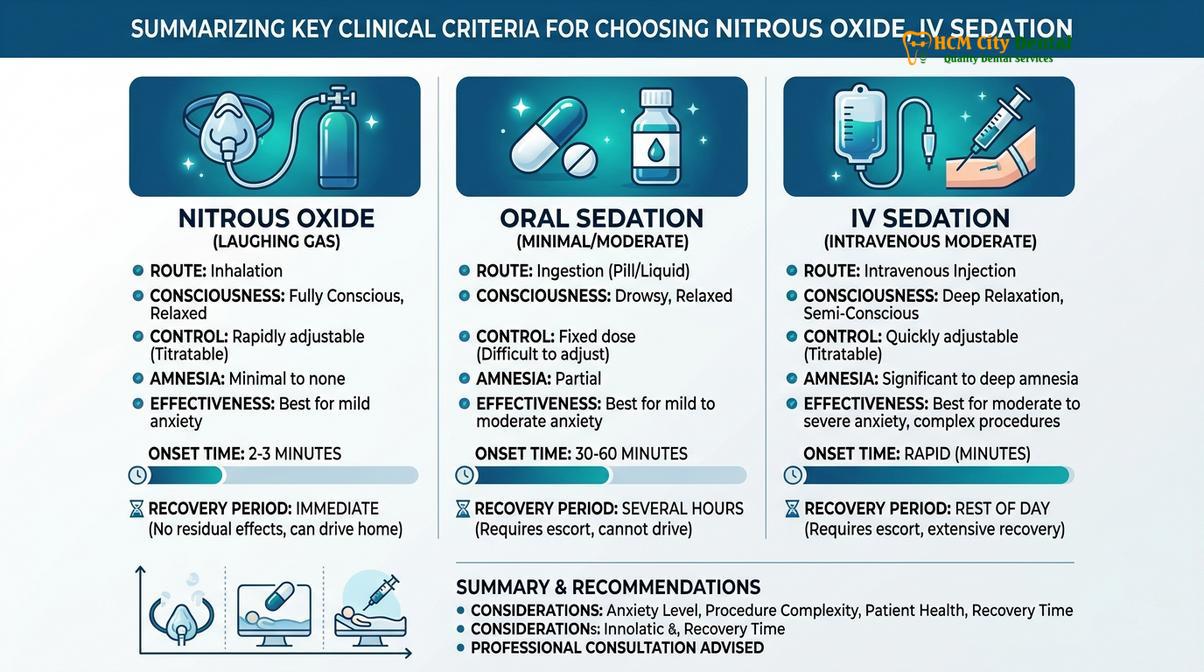
| Sedation Modality | Administration Route | Level of Consciousness | Recovery Time | Best Suited For |
|---|---|---|---|---|
| Nitrous Oxide | Inhalation (Mask) | Awake, relaxed, euphoric | Immediate (5 mins on O2) | Mild anxiety, routine cleanings, pediatric care |
| Oral Sedation | Pill (Enteral) | Drowsy, responsive to commands | Moderate (Requires escort) | Moderate anxiety, cosmetic procedures, long restorative sessions |
| IV Twilight Sedation | Intravenous | Deep relaxation, partial amnesia | Extended (Requires escort) | Severe phobia, multiple implants, full mouth reconstruction |
Understanding the differences between sedation modalities helps patients make informed decisions regarding their care and budget. Patients comparing regional options often find our Sedation Dentistry Cost Vietnam vs Korea guide helpful in understanding the value of receiving high-level medical care in Ho Chi Minh City.
Important Considerations & When to Consult a Specialist
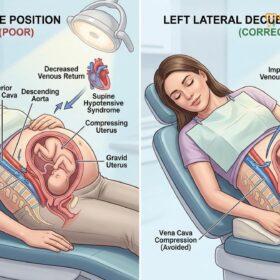
While sedation dentistry is highly monitored and generally safe, certain patients require specialized medical clearance before proceeding. You should consult with your primary care physician and our anesthesiologist if you have a history of severe cardiovascular disease, uncontrolled hypertension, or severe respiratory conditions such as COPD. Additionally, pregnant or nursing mothers must undergo specific evaluations, as detailed in our Dental Sedation Pregnancy Breastfeeding: Clinical Guide, to ensure the safety of both mother and child.
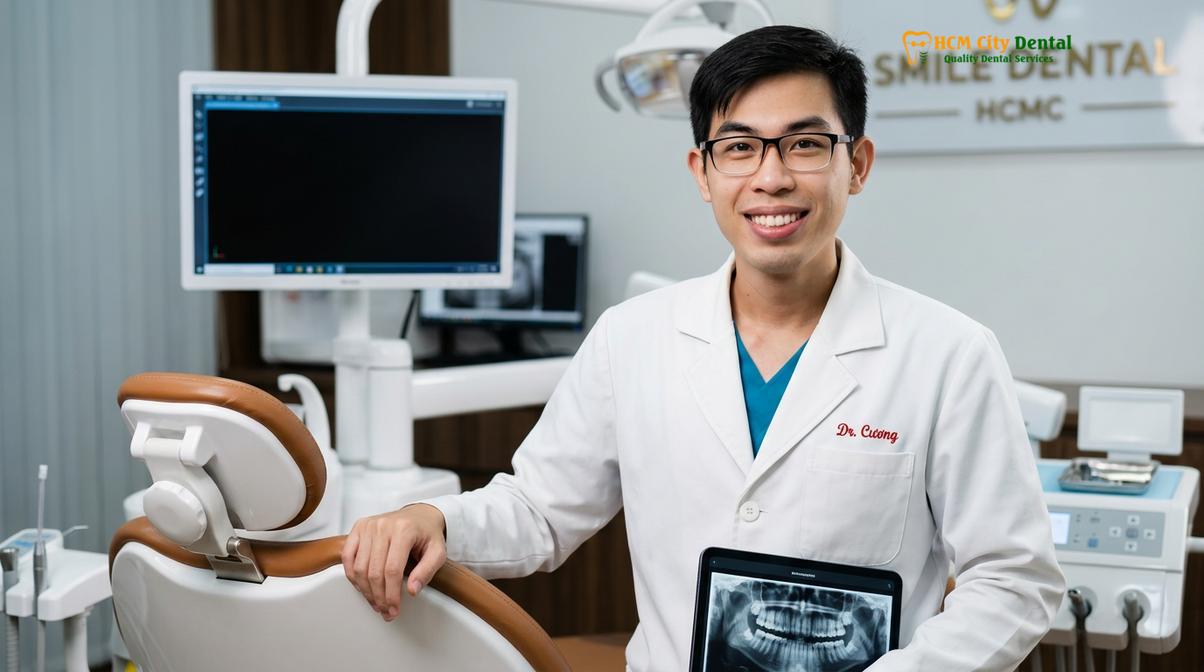
“Rigorous pre-operative screening is not merely a formality; it is the foundation of safe sedation dentistry. By thoroughly understanding a patient’s systemic health profile, we can tailor the pharmacological approach to help ensure maximum efficacy with minimal physiological stress.”
— Clinical Safety Protocol Standard
If dental anxiety has been preventing you from achieving the healthy, functional smile you deserve, modern sedation techniques offer a reliable solution. At HCMC Dental Clinic, we are committed to providing a stress-free, comfortable environment for all our patients. To learn more about our comprehensive services and how we can tailor a sedation plan to your specific needs, please visit our General & Preventive Dentistry at HCMC Dental Clinic hub or contact our team in Ho Chi Minh City today.
Frequently Asked Questions (FAQs)
Will I be completely unconscious during sedation dentistry?
No, under IV twilight sedation or oral sedation, you generally remain in a state of deep relaxation and can still respond to verbal cues, though you will likely remember very little of the procedure.
Is IV sedation safe for dental implant surgery in Vietnam?
When performed by a certified anesthesiologist in a clinical setting equipped with advanced hemodynamic monitoring, IV sedation is considered highly reliable for complex implant surgeries.
Can nervous patients get porcelain veneers under sedation in Saigon?
Yes. Patients with severe dental anxiety can opt for mild oral sedation or nitrous oxide during cosmetic procedures like porcelain veneers to help ensure a more comfortable experience.
How much does dental sedation cost in Ho Chi Minh City?
The cost varies depending on the type of sedation used. Nitrous oxide is generally the most accessible, while IV sedation supervised by a dedicated anesthesiologist requires a higher investment due to the specialized medical personnel involved.
How long does it take to wake up and recover after IV sedation?
Patients typically wake up within a short period after the IV medication is stopped. However, residual drowsiness can last for several hours, requiring a responsible adult to escort you home.
References
- Journal of the American Dental Association. Implant survival rates in digital dentistry. (2022).
- International Journal of Oral and Maxillofacial Implants. All-on-4 full arch rehabilitation. (2021).
- Journal of Esthetic and Restorative Dentistry. Minimal prep porcelain veneer longevity. (2020).
- British Dental Journal. Dental tourism safety protocols and material traceability. (2023).
- Journal of Clinical Periodontology. Infection control and aerosol management. (2021).
- Vietnam Ministry of Health (MOH). National Guidelines on Anesthesia and Sedation in Odonto-Stomatology. (2022).