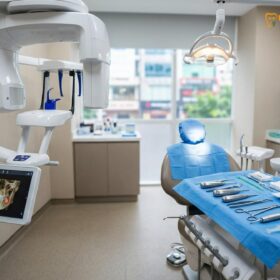
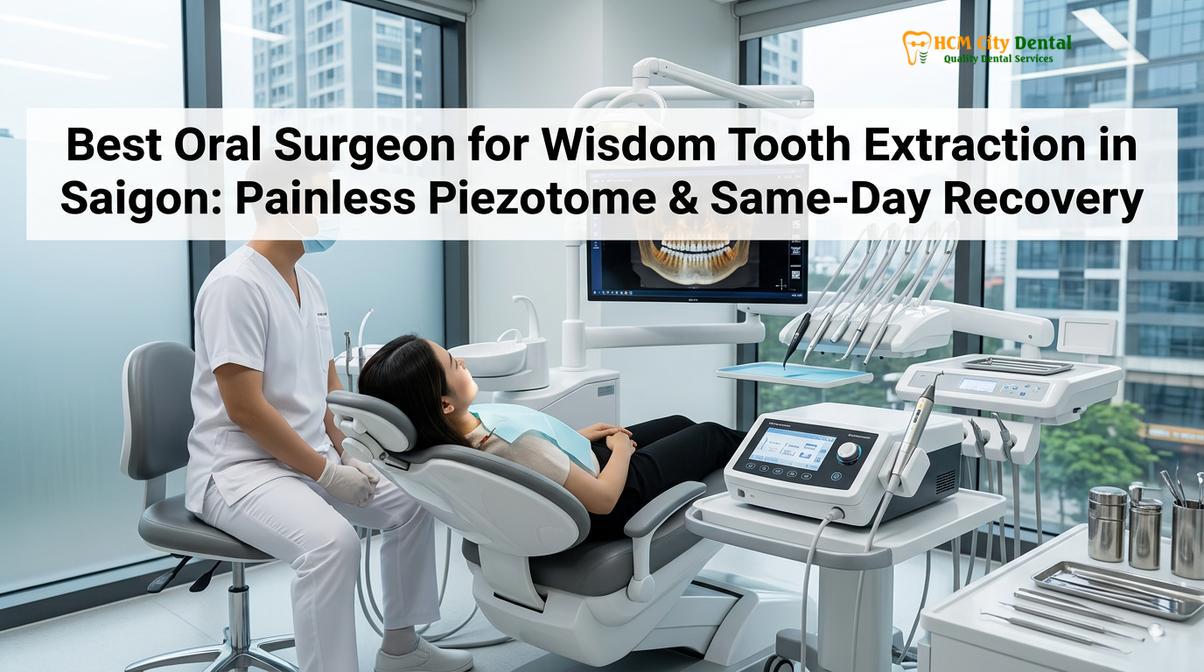
For expatriates, digital nomads, and international dental tourists navigating healthcare in Vietnam, finding the best dentist for wisdom tooth extraction ho chi minh is a critical priority. Third molar (wisdom tooth) surgery is not a standard dental filling; it is a complex minor oral surgery that demands profound anatomical knowledge, advanced imaging technology, and meticulous infection control. When dealing with impacted teeth that lie perilously close to major facial nerves or the maxillary sinus, the margin for error is zero, making the choice of clinic paramount for international travelers[4].
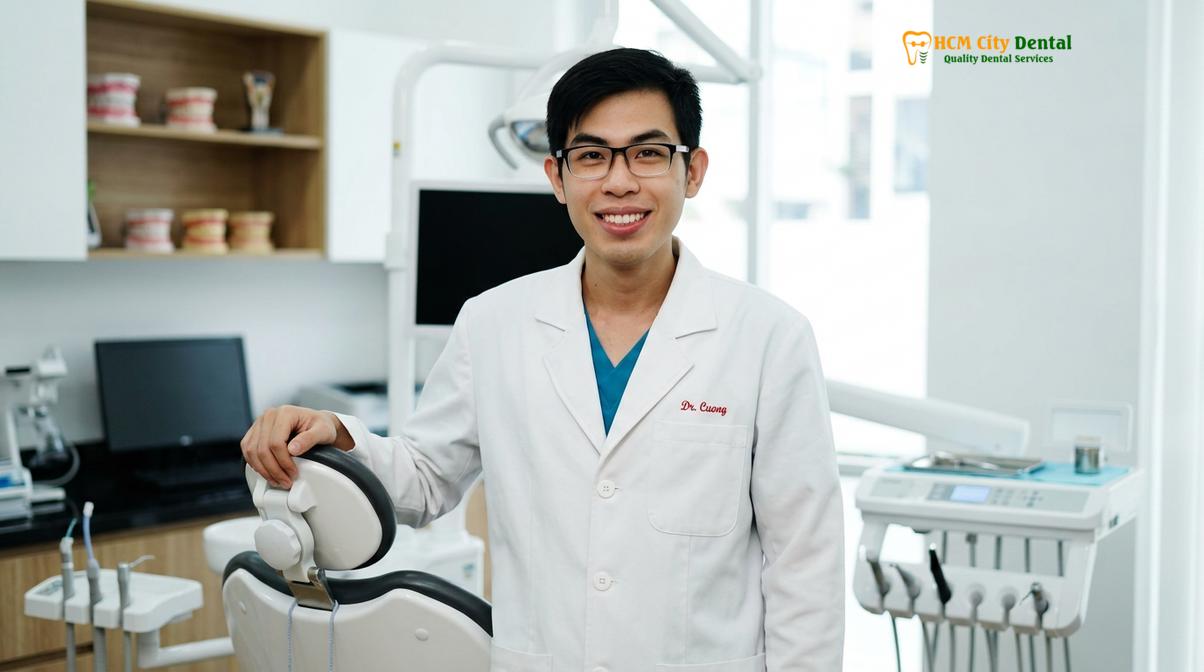
Under the expert clinical direction of Dr. Nguyen Van Cuong, our surgical team ensures that every procedure meets rigorous international standards. Dr. Cuong has dedicated his career to advancing minimally invasive oral surgery, integrating 3D diagnostics to protect critical facial nerves and utilizing advanced ultrasonic techniques. Patients seeking comprehensive care can explore our General & Preventive Dentistry at HCMC Dental Clinic services, where his strict safety protocols are implemented daily to provide a world-class surgical environment.
Clinical Summary:
Wisdom tooth extraction at HCMC Dental Clinic is elevated from a traditional, anxiety-inducing procedure to a highly predictable, minimally invasive surgery. Utilizing 3D CBCT imaging for precise nerve mapping and Piezotome ultrasonic technology for zero-bone-trauma extraction, our specialists routinely perform complex impaction surgeries with exceptional safety profiles. International patients benefit from same-day procedures, accelerated PRF (Platelet-Rich Fibrin) healing protocols, and comprehensive post-operative care, allowing for a swift and comfortable recovery in Ho Chi Minh City.
Key Takeaways:
- Advanced Technology: Piezotome ultrasonic surgery cuts bone without damaging soft tissue, significantly reducing post-operative pain and swelling.
- Uncompromised Safety: Mandatory in-house 3D CBCT imaging maps the exact location of the inferior alveolar nerve and maxillary sinus prior to any incision.
- Efficiency: The clinical expertise of our surgical team allows for the safe removal of all four wisdom teeth in a single session.
- Cost-Effective Excellence: International patients typically save significantly on complex oral surgery compared to Western dental fees, utilizing the exact same European and US materials.
- Rapid Recovery: Advanced biological protocols, including PRF therapy, promote faster soft tissue closure, reducing the risk of dry socket and allowing patients to fly home safely within days.
When You Need an Oral Surgeon vs a General Dentist
A common misconception among patients is that any general dentist can safely remove wisdom teeth. While a general practitioner is perfectly equipped to handle fully erupted, vertically aligned third molars, the reality of wisdom tooth development is often far more complicated. Due to evolutionary changes in human jaw size, most wisdom teeth lack the necessary arch space to erupt properly, leading to various degrees of impaction.
The Complexity of Third Molar Impactions
Impactions are clinically categorized based on their angulation and depth within the jawbone. A mesioangular impaction (where the tooth is tilted forward toward the adjacent molar) is the most common, often creating a plaque trap that leads to severe decay or periodontal pockets on the second molar. A horizontal impaction involves the tooth growing entirely sideways, deeply embedded in the mandibular bone. Vertical and distoangular impactions present their own unique surgical challenges, particularly regarding the density of the surrounding bone.
Furthermore, the depth of the impaction dictates the surgical approach. A soft tissue impaction requires only a minor gingival incision, whereas a partial or full bony impaction necessitates the strategic removal of overlying jawbone to free the tooth crown. Attempting to elevate a deeply impacted tooth without adequate surgical training or proper bone-removal techniques can lead to excessive trauma, root fracture, or damage to adjacent healthy teeth. This is why adherence to strict national guidelines, such as those outlined by the Vietnam Ministry of Health (MOH), is non-negotiable for patient safety[3].
Why Specialized Surgical Expertise Matters
When searching for the top oral and maxillofacial surgeon vietnam has to offer, patients must prioritize clinical experience and diagnostic capability. An experienced oral surgeon understands the nuanced biomechanics of tooth sectioning—dividing the tooth into smaller, easily manageable pieces rather than applying brute force to extract it whole. This delicate approach preserves the surrounding alveolar bone, which is crucial for a comfortable recovery.
Specialized care is also vital for patients with unique physiological considerations. For instance, managing oral surgery during pregnancy requires strict adherence to specific pharmacological and timing guidelines to ensure fetal safety. For a detailed understanding of these protocols, review our clinical guide on Wisdom Teeth Removal Pregnancy: Clinical Guide | HCMC Dental.
Piezotome Ultrasonic Technology: Zero Bone Trauma Extraction
The traditional method of removing bone around an impacted wisdom tooth involves a high-speed rotary drill. While effective, rotary burs generate significant friction, heat, and mechanical trauma. They also carry the inherent risk of inadvertently damaging adjacent soft tissues, such as the gingiva, blood vessels, or nerves, if the instrument slips even a millimeter.
At HCMC Dental Clinic, we have transitioned to a superior standard of care by utilizing the Piezotome ultrasonic surgical unit. This technology is the cornerstone of why we are recognized as a premier piezotome ultrasonic extraction dentist saigon, offering a modern alternative to conventional rotary instruments[1].
The Science Behind Piezoelectric Surgery
Piezoelectric surgery utilizes high-frequency ultrasonic micro-vibrations to cut mineralized tissue (bone and teeth). The revolutionary aspect of this technology is its tissue selectivity. The specific frequency used by the Piezotome is highly effective at cutting hard, calcified structures but is entirely inactive against soft, non-mineralized tissues.
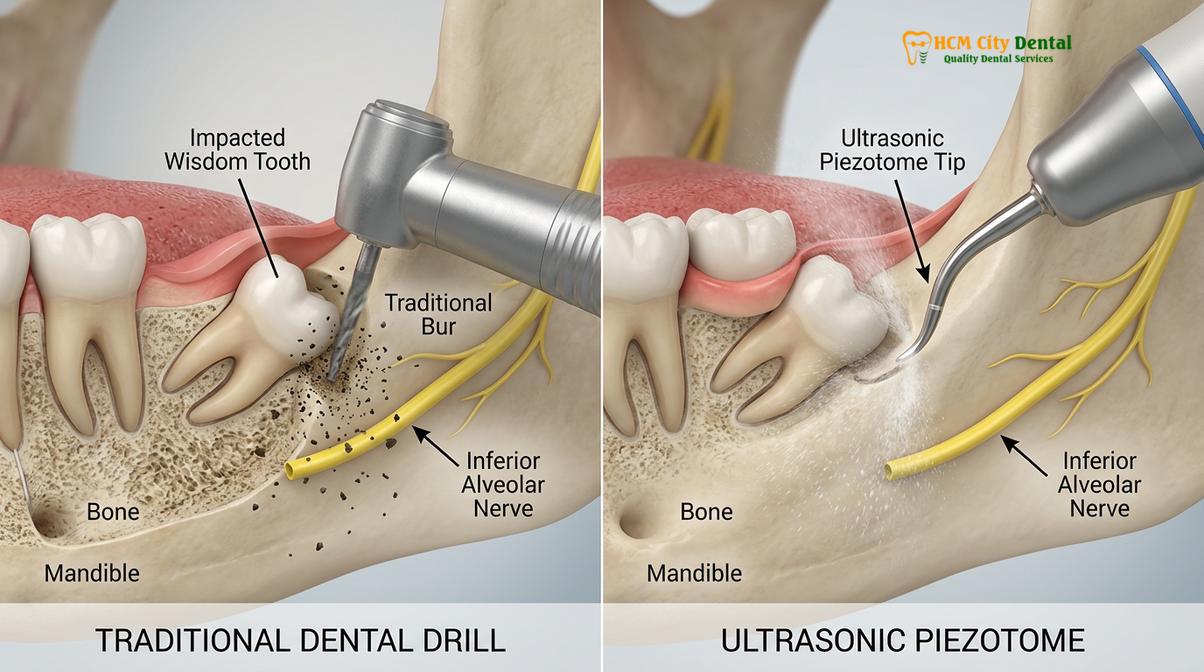
If the ultrasonic tip accidentally contacts the inferior alveolar nerve, the mucosal lining of the sinus, or a major blood vessel, it simply bounces off without causing lacerations or damage. This selective cutting ability provides an unprecedented safety margin during complex extractions.
“The introduction of Piezotome technology has fundamentally changed how we approach impacted wisdom teeth. By eliminating the aggressive mechanical trauma of traditional drills, we preserve the vitality of the surrounding bone. Our patients consistently report significantly less post-operative swelling, minimal bruising, and a drastically reduced need for prescription pain medication.”
This minimally invasive approach is the primary reason we can offer truly painless wisdom teeth removal saigon. The preservation of the cellular matrix of the bone means the body’s inflammatory response is blunted, leading to a smoother, faster healing cascade.
Removing All 4 Wisdom Teeth in One 45-Minute Session
For international patients and dental tourists, time is often a critical factor. Scheduling multiple appointments to remove wisdom teeth one side at a time is inefficient and prolongs the overall period of discomfort. Consequently, many patients inquire about the feasibility of four wisdom teeth removal in one visit vietnam.
The Clinical Rationale for Single-Session Extraction
From a clinical perspective, consolidating the removal of all four third molars into a single surgical event is generally preferred for healthy adults. The primary advantage is that the patient only undergoes one cycle of pre-operative anxiety, one administration of local anesthesia, and, most importantly, one single recovery period.
Systemically, a single surgical intervention means the patient only requires one course of prophylactic antibiotics and anti-inflammatory medications, reducing the risk of gastrointestinal disruption. When performed by a highly skilled surgical team utilizing four-handed dentistry and efficient Piezotome protocols, the entire procedure for all four teeth can often be completed swiftly and safely.
Patient Case Study: Single-Session Full Extraction
Patient Profile: A 28-year-old expatriate visiting HCMC Dental Clinic (Ho Chi Minh City) experiencing recurrent pericoronitis (gum infection) around partially erupted lower wisdom teeth.
Clinical Presentation: Two mesioangular lower impactions and two fully erupted upper wisdom teeth. The patient had limited time off work and requested a single-session resolution.
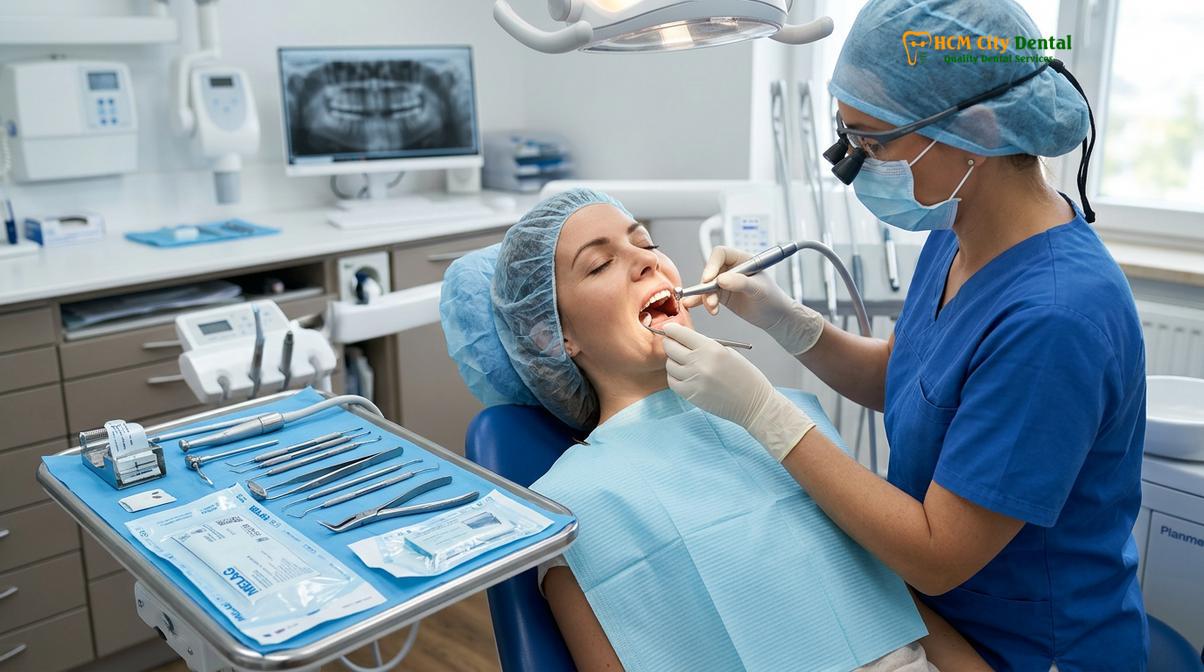
Treatment Protocol: Following a comprehensive 3D CBCT scan to verify nerve clearance, our surgical team utilized the Piezotome to section and remove the lower impactions. The upper teeth were extracted using atraumatic forceps techniques. To accelerate healing, Platelet-Rich Fibrin (PRF) was applied to the extraction sites[5].
Outcome: The patient reported minimal swelling, required only over-the-counter pain relief, and returned to their normal office routine within a few days.
Impacted Nerve-Adjacent Wisdom Teeth: Safety Protocols
The most daunting aspect of wisdom tooth surgery is the anatomical proximity of the tooth roots to critical facial structures. As a complex wisdom tooth removal specialist hcmc, our clinic employs rigorous diagnostic protocols to mitigate these inherent risks.
Navigating the Inferior Alveolar Nerve (IAN)
The Inferior Alveolar Nerve runs through a canal in the lower jawbone, supplying sensation to the lower lip, chin, and teeth. In many cases, the roots of a lower wisdom tooth may grow intimately close to, or even wrap around, this nerve canal. Extracting the tooth blindly can stretch, crush, or sever the nerve.
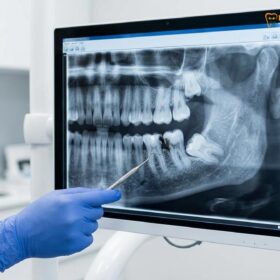
To prevent this, high-resolution 3D imaging is mandatory for all lower impactions to accurately map the nerve trajectory[2]. For an in-depth look at how we utilize this technology, please refer to our clinical overview on CBCT Wisdom Teeth Mapping: Clinical Guide | HCMC Dental.
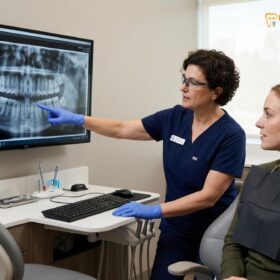
“A standard panoramic X-ray only tells half the story. It might show the root overlapping the nerve, but it cannot tell us if the root is positioned to the cheek side or the tongue side of the canal. 3D CBCT imaging gives us a millimeter-accurate roadmap, allowing us to plan our surgical approach and lift the fragments away from the nerve without applying any dangerous pressure.”
In rare cases where the CBCT reveals that the root is fully intertwined with the nerve, a specialized procedure may be recommended. This involves removing the crown of the tooth to eliminate the source of infection while intentionally leaving the root tips undisturbed in the bone, thereby protecting the nerve. Learn more about this technique in our guide on Coronectomy Wisdom Teeth: Clinical Guide & Nerve Safety | HCMC Dental.
Managing Maxillary Sinus Proximity
Upper wisdom teeth present a different anatomical challenge: the maxillary sinus. The roots of upper third molars often protrude into the sinus cavity, separated only by a paper-thin membrane. Improper extraction techniques can tear this membrane, creating an oroantral communication (a hole between the mouth and the sinus), leading to chronic sinus infections.
By utilizing atraumatic extraction techniques and Piezotome technology, we carefully elevate upper wisdom teeth without exerting upward pressure that could breach the sinus floor. Patients experiencing pre-existing sinus issues related to their dentition can learn more by reading our guide on Upper Wisdom Tooth Sinus Pressure: Clinical Guide | HCMC Dental.
Important Notes: When to Seek Immediate Medical Attention
While complications are rare when strict surgical protocols are followed, it is crucial for patients to monitor their healing process. You should contact your oral surgeon immediately if you experience any of the following symptoms:
- Severe, throbbing pain that radiates to the ear or neck and is not relieved by prescribed medication (a potential sign of dry socket).
- Excessive bleeding that does not stop after applying firm pressure with a gauze pad for 45 minutes.
- Swelling that worsens after the third day, or swelling that extends down the neck or up towards the eye.
- A fever, chills, or difficulty swallowing and breathing, which may indicate a spreading systemic infection.
Wisdom Tooth Surgery Pricing in HCMC
One of the primary reasons international patients seek dental care in Vietnam is the exceptional value. The cost of complex oral surgery in Ho Chi Minh City is a fraction of what patients typically pay in North America, Europe, or Australia, yet the clinical standards, sterilization protocols, and materials used are identical.
Pricing for wisdom tooth extraction is generally tiered based on the complexity of the procedure. A fully erupted tooth requires less surgical time and intervention than a deeply impacted tooth embedded in the jawbone.
| Type of Extraction | Clinical Description | Estimated Cost Range (VND) |
|---|---|---|
| Simple Extraction | Fully erupted wisdom tooth, visible above the gumline, straight roots. | 1,000,000 – 2,000,000 |
| Soft Tissue Impaction | Tooth is covered by a flap of gum tissue (operculum) but not encased in bone. | 2,500,000 – 3,500,000 |
| Partial Bony Impaction | Tooth is partially erupted but requires some bone removal to extract safely. | 3,500,000 – 5,000,000 |
| Full Bony Impaction | Tooth is completely encased in the jawbone, requiring complex surgical sectioning. | 5,000,000 – 7,000,000 |
Note: The above table is for general reference. Exact pricing is determined following a clinical examination and 3D CBCT scan. If you are planning a trip to Vietnam and require expert oral surgery, understanding the Wisdom Tooth Extraction Cost Vietnam: Clinical Price Guide | HCMC Dental can help you budget effectively.
Recovery Timeline: When Can You Resume Travel or Fly Home?
For dental tourists, understanding the post-operative recovery timeline is essential for planning flights, tours, and accommodation. While our minimally invasive techniques significantly accelerate healing, biological tissue still requires time to repair.
Day-by-Day Healing Progression
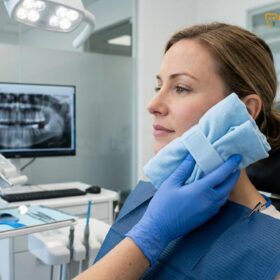
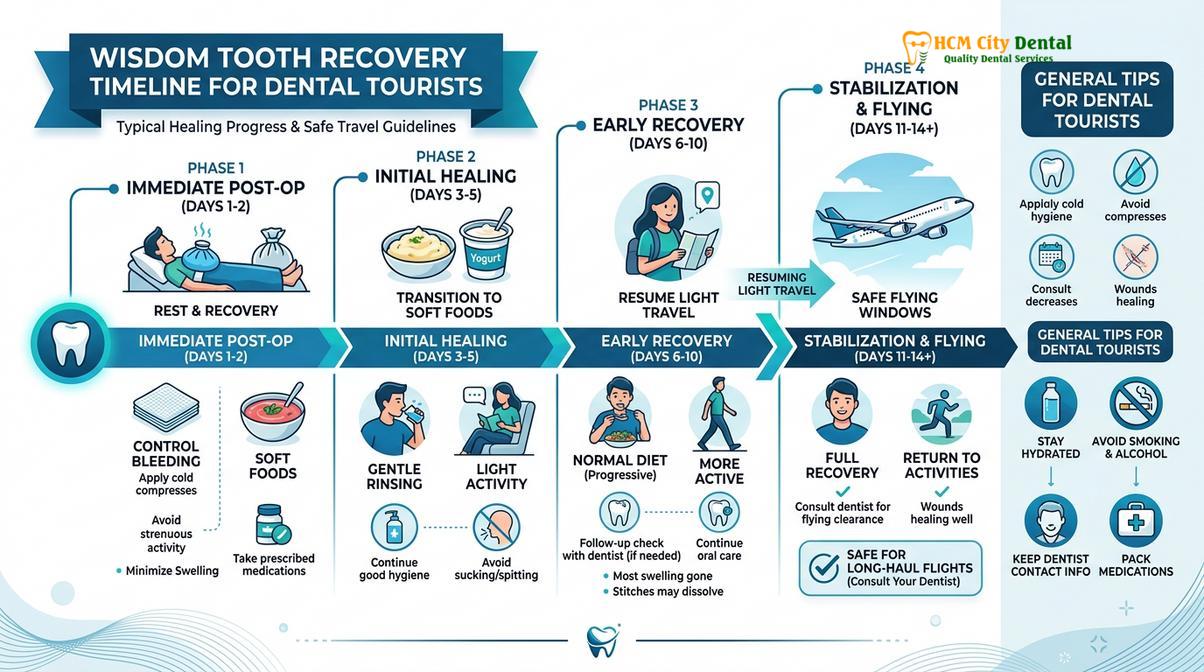
- Days 1-2 (The Inflammatory Phase): This is when swelling is typically at its peak. Patients are advised to rest, apply ice packs to the face, and consume a strict soft-food diet. Minor oozing of blood is normal. For tips on managing this, see our guide on Bleeding After Wisdom Tooth Removal: Clinical Guide | HCMC Dental.
- Days 3-5 (The Proliferative Phase): Swelling begins to subside. The blood clot in the extraction socket stabilizes. Patients can usually transition to semi-solid foods and resume light, non-strenuous activities.
- Days 6-7 (The Remodeling Phase): Most patients feel entirely back to normal. Any residual stiffness in the jaw resolves, and normal dietary habits can generally be resumed.
Flying After Wisdom Tooth Surgery
A frequent question from international patients is how soon they can board a flight after surgery. While it is physically possible to fly the next day, clinical guidelines generally recommend waiting at least 48 to 72 hours. The changes in cabin pressure during a flight can theoretically disrupt the fragile blood clot forming in the extraction site, increasing the risk of alveolar osteitis (dry socket) or minor bleeding. We strongly advise scheduling a brief post-operative check at our clinic before your departure to ensure optimal healing.
Frequently Asked Questions
Is it safe to remove all 4 wisdom teeth at once in Vietnam?
Yes, removing all four wisdom teeth in a single session is generally safe and often recommended to consolidate the recovery period. At HCMC Dental Clinic, this is performed under strict clinical protocols using 3D CBCT imaging and Piezotome technology to minimize surgical trauma and systemic inflammation.
What is Piezotome extraction and why is it painless?
Piezotome extraction utilizes ultrasonic micro-vibrations to precisely cut bone without damaging surrounding soft tissues, nerves, or blood vessels. This advanced technology significantly reduces intraoperative trauma, leading to a highly comfortable experience and drastically reduced postoperative swelling.
How much does wisdom tooth removal cost in HCMC?
The cost of wisdom tooth removal in Ho Chi Minh City typically ranges depending on the complexity of the impaction (e.g., erupted vs. full bony impaction). This represents a significant savings compared to standard fees in the US, UK, or Australia, without compromising on clinical quality or safety.
How long is recovery after wisdom tooth surgery in Vietnam?
Initial recovery usually takes a few days, during which patients may experience mild swelling and discomfort that is easily managed with prescribed medication. Because we utilize minimally invasive Piezotome technology and PRF (Platelet-Rich Fibrin), soft tissue healing is accelerated, allowing most patients to resume normal activities swiftly.
Can I fly home the day after wisdom tooth extraction?
While it is physically possible, clinical guidelines generally recommend waiting at least 48 to 72 hours before flying. Changes in cabin pressure can theoretically disrupt the fragile blood clot, increasing the risk of alveolar osteitis (dry socket) or minor bleeding. We advise scheduling a post-operative check before your departure.
References
- Journal of Oral and Maxillofacial Surgery. Piezotome vs. rotary instruments in third molar extraction. (2022).
- International Journal of Oral and Maxillofacial Surgery. CBCT imaging for inferior alveolar nerve mapping. (2021).
- Vietnam Ministry of Health (MOH). National guidelines on minor oral surgery and infection control protocols. (2023).
- British Dental Journal. Dental tourism safety protocols and material traceability. (2023).
- Journal of Cranio-Maxillofacial Surgery. Platelet-Rich Fibrin (PRF) in accelerating post-extraction healing. (2021).
For personalized advice, comprehensive diagnostic imaging, and to schedule your consultation with a leading oral surgeon, contact HCMC Dental Clinic, Ho Chi Minh City today.