In the highly specialized field of microscopic endodontics, the complete eradication of necrotic pulpal tissue, complex polymicrobial biofilms, and bacterial endotoxins from the intricate root canal system is the absolute prerequisite for long-term clinical success. To achieve this profound level of disinfection, endodontists universally rely on sodium hypochlorite (NaOCl) in concentrations ranging from 2.5% to 5.25%. While this powerful halogenated compound is unmatched in its ability to dissolve organic tissue and neutralize pathogens, it possesses a severe inherent risk: if forced beyond the anatomical confines of the root apex into the highly vascular periapical tissues, it triggers a catastrophic chemical burn known as a sodium hypochlorite extrusion accident. For international patients, expatriates, and dental travelers seeking world-class endodontic therapy in Vietnam, understanding the rigorous safety protocols required to prevent this severe complication is paramount. At HCMC Dental Clinic in District 1, Ho Chi Minh City, our clinical mandate dictates the exclusive use of closed-end side-vented 30-gauge irrigation needles, passive ultrasonic irrigation (PUI), and strict electronic working length control to ensure that every microscopic root canal procedure is performed with zero risk of apical extrusion.
Clinical Summary:
Sodium hypochlorite (NaOCl) is the gold-standard endodontic irrigant due to its unparalleled tissue-dissolving and antimicrobial properties; however, its extrusion into periapical tissues causes severe chemical necrosis, acute pain, and rapid facial swelling. The prevention of a sodium hypochlorite extrusion accident relies entirely on advanced fluid dynamics and strict clinical protocols. By replacing traditional open-ended needles with closed-end side-vented 30-gauge micro-needles, endodontists can direct the caustic irrigant laterally against the canal walls rather than forcefully out the root tip. At HCMC Dental Clinic, Dr. Nguyen Van Cuong, DDS, combines these specialized safety needles with 25x Carl Zeiss microscopic magnification, 100% nitrile rubber dam isolation, and passive ultrasonic activation to safely break the apical vapor lock. This evidence-based protocol ensures profound 3D disinfection of complex Asian molar anatomies (such as C-shaped canals and Radix Entomolaris) while completely eliminating the risk of iatrogenic chemical burns, providing international patients with the highest echelon of endodontic safety in Vietnam.
Key Takeaways:
- The Danger of NaOCl Extrusion: Forcing 2.5%–5.25% sodium hypochlorite beyond the root apex causes immediate, severe tissue necrosis, profuse bleeding, and rapid facial edema requiring emergency pharmacological management.
- Side-Vented Needle Superiority: Closed-end side-vented 30-gauge needles prevent apical stagnation pressure by directing fluid laterally, making them infinitely safer than traditional open-ended needles.
- The “Loose Needle” Mandate: An irrigation needle must never bind or wedge tightly within the canal; continuous coronal backflow is essential to prevent hydraulic pressure buildup.
- Breaking the Vapor Lock: Passive ultrasonic irrigation (PUI) safely agitates the irrigant into the critical apical 3mm, overcoming the trapped gas bubble (vapor lock) without requiring dangerous positive pressure.
- Complex Asian Anatomy: Advanced 3D CBCT diagnostics are crucial for identifying high-risk anatomical variations like C-shaped canals and Radix Entomolaris, which require modified, low-pressure irrigation protocols.
- Transparent Safety Standards: HCMC Dental Clinic includes hospital-grade nitrile rubber dam isolation, microscopic magnification, and side-vented needle protocols in every transparently priced root canal therapy.
Why 2.5%–5.25% Sodium Hypochlorite (NaOCl) Is Indispensable for Dissolving Necrotic Biofilm — Yet Dangerous Beyond the Root Apex
The fundamental objective of endodontic therapy is not merely to shape the root canals with nickel-titanium rotary files, but to chemically debride the microscopic spaces that mechanical instruments cannot reach. The root canal system is a highly complex labyrinth of lateral canals, apical deltas, isthmuses, and dentinal tubules. Mechanical instrumentation alone leaves up to 35% to 50% of the canal walls completely untouched. Therefore, the heavy lifting of endodontic disinfection relies on chemical irrigation. Sodium hypochlorite (NaOCl) remains the undisputed gold standard in endodontics because it is the only solution capable of simultaneously dissolving necrotic organic tissue and destroying resilient polymicrobial biofilms, including persistent pathogens like Enterococcus faecalis.
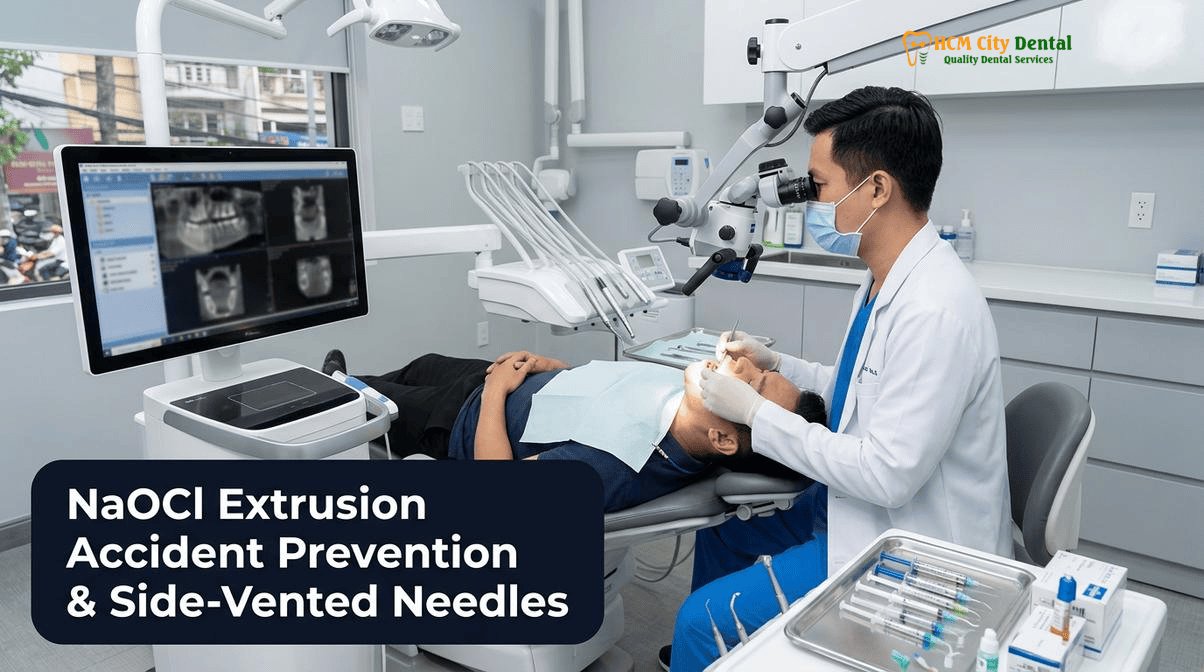
However, the very properties that make NaOCl an exceptional endodontic irrigant—its high alkalinity (pH > 11) and potent oxidative capacity—make it highly cytotoxic to vital human tissues. When confined within the dentinal walls of the root canal, NaOCl safely digests dead pulp tissue. But if the solution breaches the apical constriction (the natural narrowing at the tip of the root) and extrudes into the periapical bone and surrounding soft tissues, it initiates a violent chemical reaction. A sodium hypochlorite extrusion accident (often colloquially referred to as a “bleach accident”) is characterized by the rapid oxidation of proteins and the destruction of endothelial cells, leading to immediate hemorrhage, severe acute pain, and rapid, dramatic facial swelling. In severe cases involving the maxillary premolars or molars, the caustic solution can spread through fascial spaces, causing extensive ecchymosis (bruising), tissue necrosis, and even temporary or permanent neurological deficits if the chemical irritates the infraorbital or inferior alveolar nerves[1].
The risk of extrusion is significantly amplified when treating complex anatomical variations highly prevalent in East and Southeast Asian populations. For instance, Fan’s C1–C3 classification of C-shaped mandibular second molars (which have a 35%–44% prevalence in Asian cohorts) presents a unique challenge. These teeth feature a dangerous <0.6mm mesiolingual danger zone where the dentin is exceptionally thin. Aggressive instrumentation or high-pressure irrigation in these ribbon-like canals can easily lead to strip perforations and subsequent chemical extrusion. Similarly, the presence of a Radix Entomolaris—a supernumerary distolingual third root found in 15%–30% of Asian lower first molars—often exhibits a severe De Moor Type I–III 60°–90° hidden buccolingual curvature. Navigating and irrigating these severe curvatures requires meticulous fluid control to prevent the irrigant from being forced out of the apical foramen. At HCMC Dental Clinic, Dr. Nguyen Van Cuong, DDS, utilizes high-resolution 0.075mm 3D CBCT imaging to map these complex anatomies pre-operatively, ensuring that irrigation protocols are customized to the specific volumetric constraints of each individual root.
Fluid Dynamics in the Root Canal: Why Open-Ended Needles Create High Apical Stagnation Pressure vs. Closed-End Side-Vented 30G Needles
The prevention of a sodium hypochlorite accident is fundamentally an exercise in applied fluid dynamics. The manner in which the irrigant is delivered into the root canal dictates the pressure gradients generated at the apical foramen. Historically, dentists utilized standard open-ended bevel needles (similar to those used for administering local anesthesia) to flush the canals. From a hydrodynamic perspective, this is highly dangerous. When fluid is ejected from an open-ended needle, it travels straight forward as a high-velocity jet. This creates a zone of high apical stagnation pressure directly ahead of the needle tip. If the needle is placed too close to the apex, or if the apical constriction has been compromised by inflammatory resorption or over-instrumentation, this forward-directed pressure easily overcomes the venous pressure of the periapical tissues, forcing the caustic NaOCl directly into the jawbone.
To eliminate this risk, modern microscopic endodontics mandates the use of closed-end side-vented irrigation needles. A closed-end side-vented 30-gauge (30G) needle features a solid, rounded, and polished tip. The opening (the vent) is located laterally, slightly above the terminus of the needle. When the syringe plunger is depressed, the sodium hypochlorite is forced out laterally, striking the dentinal walls of the root canal rather than shooting straight down toward the apex. This lateral dispersion creates a hydrodynamic shear stress along the canal walls, which is highly effective at physically dislodging biofilm and debris. More importantly, because the fluid is directed sideways and slightly backwards, the apical stagnation pressure is virtually eliminated. The fluid naturally seeks the path of least resistance, which is the coronal backflow toward the pulp chamber, where it is safely evacuated by high-volume suction[2].
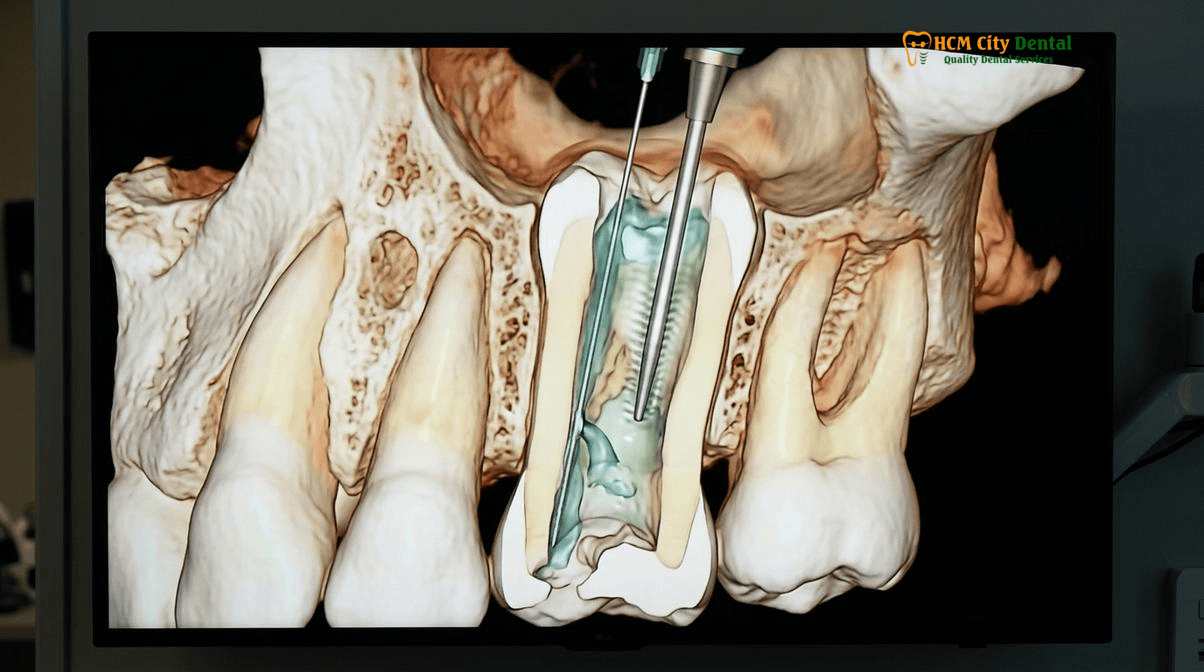
The gauge (diameter) of the needle is equally critical. A 30-gauge needle has an outer diameter of approximately 0.31mm, allowing it to penetrate deeply into the apical third of a canal that has been prepared to a standard ISO size 30 or 35. This ensures that the fresh irrigant is delivered close enough to the working length to be effective, without the needle binding against the canal walls. If a larger needle (such as a 27G) is used in a narrow canal, it will not reach the critical apical zone, leaving the most heavily infected portion of the root untouched by the chemical disinfectant.
“The transition from open-ended to closed-end side-vented irrigation needles represents one of the most significant safety advancements in modern endodontics. By altering the fluid dynamics within the canal, we can harness the profound antimicrobial power of 5.25% sodium hypochlorite while completely neutralizing the risk of apical extrusion. It is a non-negotiable standard of care for every patient we treat.”
— Dr. Nguyen Van Cuong, DDS (Clinical Director, HCMC Dental Clinic)
Our 5-Point Zero-Extrusion Safety Checklist: Electronic Apex Locator Working Length, Silicone Stoppers (2mm Short) & Finger-Light Plunger Control
At HCMC Dental Clinic, the prevention of sodium hypochlorite extrusion is not left to chance; it is governed by a strict, reproducible clinical protocol. Before a single drop of NaOCl is introduced into the root canal system, our endodontic team executes a comprehensive 5-point zero-extrusion safety checklist. This protocol is designed to create multiple layers of redundancy, ensuring that even in the presence of complex anatomy or compromised apical barriers, the patient remains entirely safe from chemical injury.
- 100% Latex-Free Nitrile Rubber Dam Isolation: The foundation of endodontic safety is the rubber dam. We utilize heavy-gauge, latex-free nitrile rubber dams, secured with specialized clamps and hermetically sealed at the gingival margins with a light-cured liquid resin barrier. This creates a watertight surgical field. It prevents saliva and oral bacteria from contaminating the sterile root canal, and crucially, it ensures that no sodium hypochlorite can leak into the patient’s mouth, throat, or airway, preventing caustic burns to the oral mucosa and eliminating aspiration risks.
- Precision Electronic Apex Locator (EAL) Working Length Determination: Accurate determination of the root canal length is vital. Relying solely on 2D digital X-rays is insufficient due to anatomical distortion and the fact that the apical foramen rarely coincides exactly with the radiographic apex. We utilize advanced multi-frequency Electronic Apex Locators (EALs) to pinpoint the exact location of the apical constriction with sub-millimeter accuracy. This establishes the definitive “Working Length” (WL) for both instrumentation and irrigation.
- Silicone Stoppers Set 2mm Short of Working Length: Once the working length is established, a rubber silicone stopper is placed on the 30G side-vented irrigation needle. The stopper is strictly calibrated to remain exactly 2mm short of the established working length. This physical depth gauge prevents the clinician from inadvertently inserting the needle too deeply into the apical third, ensuring a safe buffer zone between the needle tip and the periapical tissues[3].
- The “Loose Needle” Mandate and Continuous Coronal Backflow: This is perhaps the most critical mechanical rule of irrigation. The needle must never bind, wedge, or lock within the root canal. If the needle binds, it creates a closed hydraulic system; pressing the plunger will instantly force fluid out the apex. The clinician must constantly move the needle up and down in a 1-2mm amplitude during irrigation to ensure it remains loose, visually confirming that the NaOCl is continuously flowing backward (coronally) out of the access cavity.
- Finger-Light Plunger Control and Slow Delivery: Irrigation must never be rushed. The irrigant should be delivered at a slow, steady rate of approximately 1 to 2 mL per minute. Using the index finger to apply gentle, controlled pressure to the syringe plunger prevents sudden spikes in hydraulic pressure. If any resistance is felt, irrigation is immediately halted, and the needle position is reassessed.
Clinical Safety Warning: The Danger of the Wedged Needle
Patients should be aware that the most common cause of a sodium hypochlorite accident is iatrogenic error—specifically, the dentist wedging the irrigation needle tightly into a narrow canal and forcefully pressing the syringe. This transforms the root canal into a hydraulic pump, firing caustic bleach directly into the jawbone. If you ever experience sudden, severe, burning pain during the cleaning phase of a root canal, the dentist must stop immediately. At HCMC Dental Clinic, our strict adherence to the “loose needle” protocol and side-vented micro-delivery systems guarantees this hydraulic pressure buildup cannot occur.
Breaking the Apical Vapor Lock Safely: Sonic/Ultrasonic Agitation and Negative Apical Pressure Irrigation
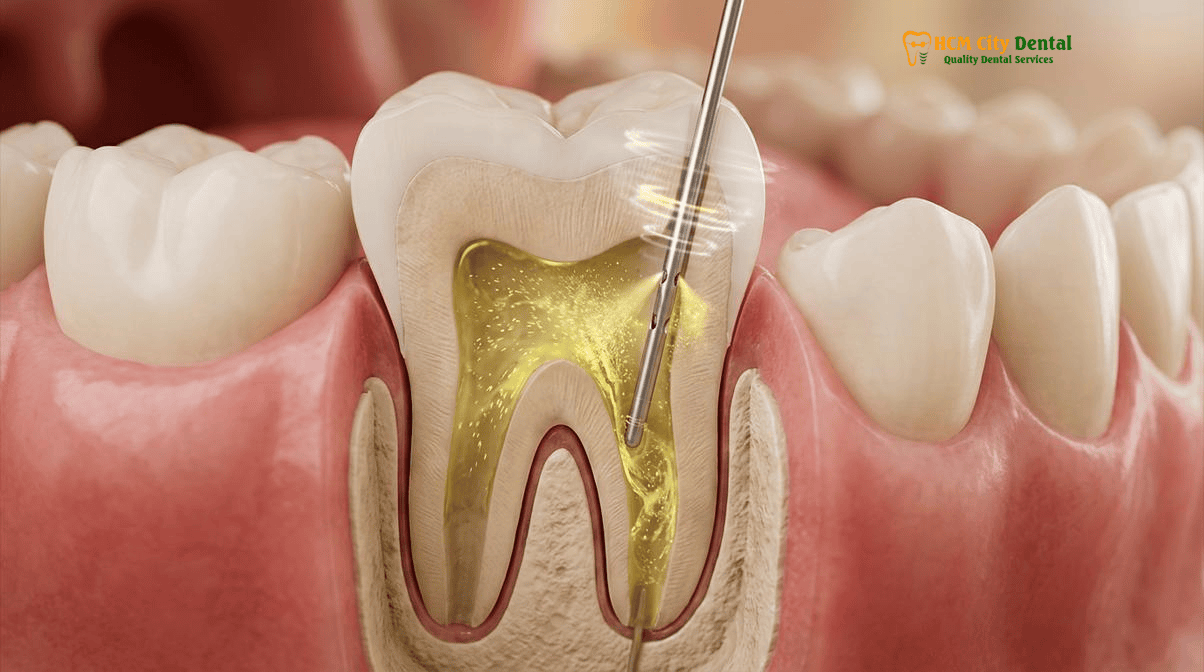
While closed-end side-vented needles placed 2mm short of the working length provide exceptional safety, they introduce a secondary clinical challenge: the apical vapor lock. The root canal is essentially a closed-end micro-tube. As sodium hypochlorite reacts with necrotic tissue, it rapidly produces gas byproducts, primarily ammonia and carbon dioxide. Because the canal is narrow and closed at the bottom, these gases become trapped in the apical 1 to 3 millimeters, forming a microscopic bubble known as the apical vapor lock. This gas bubble acts as an impenetrable physical barrier, preventing the fresh sodium hypochlorite from reaching the very end of the root—the exact location where bacterial biofilms are most concentrated and where thorough disinfection is most critical.
Attempting to break this vapor lock by pushing the needle deeper or applying more pressure is highly dangerous and directly violates the safety protocols designed to prevent extrusion. Instead, modern endodontics relies on advanced agitation technologies to safely disrupt the gas bubble and draw the irrigant apically without increasing hydrostatic pressure. The most proven method is Passive Ultrasonic Irrigation (PUI). After the canal is filled with NaOCl, a smooth, non-cutting ultrasonic file (typically size 15 or 20) is introduced into the canal and activated at high frequencies (around 30,000 Hz). The ultrasonic oscillation creates two powerful fluid dynamic phenomena: acoustic microstreaming and cavitation.
Acoustic microstreaming generates rapid, circular fluid currents that physically shear biofilm off the dentinal walls and pull the irrigant deep into the lateral canals and apical deltas. Cavitation involves the formation and rapid implosion of microscopic vapor bubbles within the irrigant, generating localized shockwaves that disrupt bacterial cell walls and instantly shatter the apical vapor lock. Because the ultrasonic file is used “passively”—meaning it is allowed to vibrate freely without intentionally cutting the dentin—it safely circulates the NaOCl into the critical apical 3mm without generating any positive pressure that could cause extrusion[4].
In cases involving extremely high-risk anatomies—such as teeth with wide-open apices due to incomplete root development (immature teeth) or severe inflammatory apical root resorption—even side-vented needles and PUI may carry a slight risk. For these specific scenarios, specialists may employ Negative Apical Pressure Irrigation systems. Instead of pushing fluid into the canal (positive pressure), these systems use a micro-cannula placed at the working length connected to the dental chair’s high-volume suction. The irrigant is deposited safely in the pulp chamber, and the micro-cannula vacuums the fluid down the canal and out through the suction line. This creates a negative pressure gradient, making it physically impossible for the sodium hypochlorite to extrude beyond the apex, providing the ultimate safety net for compromised teeth.
“The apical vapor lock is the invisible enemy of endodontic success. If you don’t break it, you leave bacteria behind; if you try to break it with pressure, you risk a chemical burn. Passive ultrasonic activation is the elegant solution—it harnesses acoustic physics to achieve profound 3D disinfection of the apical third while maintaining absolute patient safety.”
— Dr. Nguyen Van Cuong, DDS (Clinical Director, HCMC Dental Clinic)
Emergency Clinical Management Protocol for External Referral Cases of NaOCl Tissue Extrusion (Pain Control, Steroids & Neurological Monitoring)
While a sodium hypochlorite extrusion accident is entirely preventable with the correct protocols, HCMC Dental Clinic occasionally receives emergency external referrals from other practices where an accident has occurred. Recognizing the signs immediately and executing a rapid, evidence-based pharmacological management protocol is critical to minimizing tissue damage and ensuring patient recovery. The classic presentation of a NaOCl accident includes sudden, severe, burning pain during irrigation (even if the tooth is profoundly anesthetized), profuse bright red bleeding from the root canal, and rapid, dramatic swelling of the adjacent facial tissues, often followed hours later by extensive ecchymosis (bruising) as the hemorrhage spreads through the fascial planes.
If an accident occurs, the immediate chairside management protocol must be swift and decisive:
- Immediate Cessation and Aspiration: The dentist must instantly stop irrigation. The syringe is used to aspirate (suction) as much of the extruded fluid back out of the canal as possible.
- Saline Flush: The canal is gently flushed with copious amounts of sterile saline or distilled water to dilute the remaining sodium hypochlorite. No further NaOCl should be used.
- Pain Control: Because the chemical burn is excruciatingly painful, the clinician must immediately administer a long-acting local anesthetic (such as Bupivacaine 0.5% with epinephrine) via infiltration or nerve block to provide immediate and sustained pain relief.
- Reassurance and Documentation: The patient must be calmly informed of what has happened. The event, the volume and concentration of the irrigant, and the immediate steps taken must be meticulously documented in the clinical record.
Clinical Case Study: Managing an External NaOCl Referral
Patient Profile: A 42-year-old Australian expatriate was referred to HCMC Dental Clinic following an emergency at a different general dental practice. During a root canal on an upper right canine (Tooth 13), the patient experienced sudden, agonizing pain and rapid swelling of the right cheek and infraorbital region. The referring dentist had used an open-ended needle that wedged in the canal.
Clinical Intervention by Dr. Cuong: Upon arrival, the patient exhibited severe facial edema and early signs of ecchymosis. Dr. Cuong immediately administered a long-acting Bupivacaine nerve block for pain control. The canal was gently irrigated with sterile saline and dressed with non-setting Calcium Hydroxide (Ca(OH)2) to stabilize the pH, and the tooth was temporarily sealed. A 3D CBCT scan confirmed the irrigant had extruded through a large, resorbed apical foramen.
Pharmacological Protocol: The patient was prescribed a high-dose corticosteroid taper (Dexamethasone) to rapidly suppress the severe inflammatory response, alongside Amoxicillin/Clavulanate (Augmentin 1g) to prevent secondary bacterial infection of the necrotic tissue, and strong NSAIDs (Ibuprofen 600mg) for pain management. Cold compresses were advised for the first 48 hours, followed by warm compresses to encourage lymphatic drainage.
Outcome: The patient was monitored daily. The swelling peaked at 48 hours and subsided over the next week. The extensive bruising resolved within 14 days. Crucially, neurological monitoring confirmed no permanent paresthesia of the infraorbital nerve. After 3 weeks of healing, Dr. Cuong safely completed the root canal using a negative pressure irrigation protocol and a bioceramic apical plug, saving the tooth without further complications.
The post-operative pharmacological management is critical. The primary injury is a severe chemical burn and inflammatory response, not an initial bacterial infection. Therefore, the immediate administration of systemic corticosteroids (e.g., Dexamethasone or a Methylprednisolone dose pack) is highly effective in controlling the massive edema and preventing airway compromise if the accident occurs in the mandible. Strong analgesics (a combination of Ibuprofen and Acetaminophen) are required for pain management. While antibiotics do not neutralize sodium hypochlorite, broad-spectrum antibiotics (like Amoxicillin/Clavulanate) are frequently prescribed prophylactically because the extensive tissue necrosis creates an ideal environment for secondary bacterial infections. Finally, close neurological monitoring is essential. If the extrusion occurs near the inferior alveolar nerve or mental foramen, the patient may experience paresthesia (numbness or altered sensation). High-dose Vitamin B-complex therapy may be recommended to support nerve regeneration, and the patient must be followed up meticulously until all symptoms resolve[5].
2026 Hospital-Grade Microscopic Endodontic Safety & Root Canal Fee Schedule at HCMC Dental Clinic (District 1)
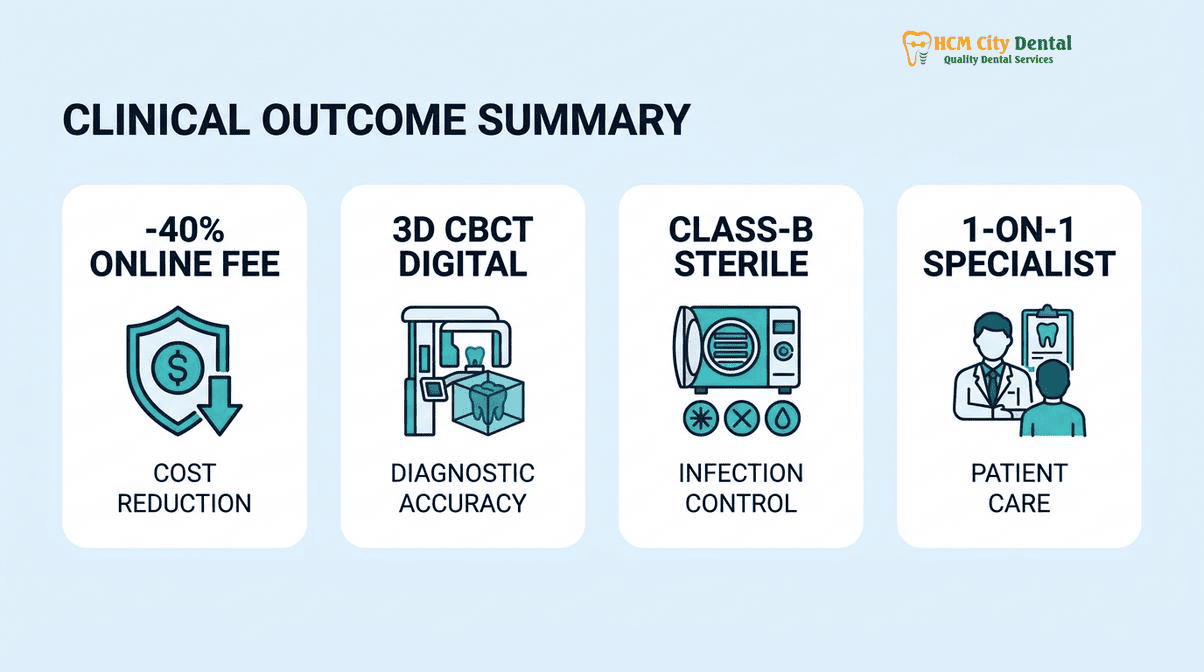
For international patients, expatriates, and dental tourists seeking safe, predictable, and highly advanced endodontic care, transparency in clinical protocols and pricing is essential. At HCMC Dental Clinic, located in the heart of District 1, Ho Chi Minh City, our commitment to patient safety is absolute. Every root canal therapy is performed by Dr. Nguyen Van Cuong, DDS, utilizing 25x Carl Zeiss microscopic magnification, 100% nitrile rubber dam isolation, closed-end side-vented 30G irrigation needles, and passive ultrasonic irrigation (PUI). We do not charge extra for these critical safety measures; they are the baseline standard of care integrated into our transparent 2026 fee schedule.
By booking online prior to arrival in Vietnam, international patients secure our exclusive -40% Online Booking Pricing, offering world-class microscopic endodontics at a fraction of the cost of comparable treatments in Australia, the United States, or Europe. For patients requiring comprehensive restorative care following endodontic therapy, we offer a full spectrum of advanced prosthodontics, from biomimetic fiber posts to full zirconia crowns, ensuring the long-term structural integrity of the treated tooth.
| Advanced Endodontic & Restorative Procedure (2026) | -40% Online Booking Price (USD) | Walk-In / Standard Price (USD) | VND Equivalent (Online) |
|---|---|---|---|
| Microscopic Endodontic Root Canal Therapy (Anterior/Premolar) – Includes Nitrile Dam & Ultrasonic Activation | $77 – $115 USD | $128 – $192 USD | 2,000,000 – 3,000,000 VND |
| Microscopic Endodontic Root Canal Therapy (Complex Molar) – Includes 3D CBCT Mapping & Side-Vented Irrigation | $115 – $154 USD | $192 – $256 USD | 3,000,000 – 4,000,000 VND |
| Microscopic Endodontic Retreatment / Separated File Bypass | $154 – $231 USD | $256 – $385 USD | 4,000,000 – 6,000,000 VND |
| Bioactive ProRoot MTA / Septodont Biodentine Perforation or Resorption Repair | $58 – $96 USD | $96 – $160 USD | 1,500,000 – 2,500,000 VND |
| Biomimetic Quartz/Glass Fiber Post & Core Buildup | $38 – $58 USD | $63 – $96 USD | 1,000,000 – 1,500,000 VND |
| Full Zirconia Crown (Cercon Standard / HT Multilayer) | $154 – $192 USD | $256 – $321 USD | 4,000,000 – 5,000,000 VND |
| IPS E.max All-Ceramic Crown / Inlay / Onlay / Overlay | $231 USD | $385 USD | 6,000,000 VND |
| 3D CBCT Scan (High-Resolution 0.075mm Diagnostic Imaging) | $18 USD | $30 USD | 480,000 VND |
Beyond endodontics, HCMC Dental Clinic is a premier destination for comprehensive oral rehabilitation. Our Official 2026 Dental Price List & -40% Online Booking Fee Schedule details our highly competitive rates for implantology and oral surgery. For instance, a Single Korean Implant (Dentis / Neo Biotech / Dentium) is available for $462 – $654 USD online, while premium Single European / Swiss Implants (Straumann BLT-SLA / BLA-Active) range from $962 – $1,346 USD online. For complex extractions, we utilize advanced Piezotome technology, as detailed in our guide on Piezotome Ultrasonic Bone Surgery vs. Traditional Rotary Bur: Post-Operative Pain, Swelling & Nerve Safety. Patients with high-risk wisdom teeth can explore our protocols for Coronectomy Wisdom Teeth: Clinical Guide & Nerve Safety | HCMC Dental and Upper Wisdom Tooth Sinus Pressure: Clinical Guide | HCMC Dental. To learn more about our clinical leadership, we invite you to read about Dr. Nguyen Van Cuong, DDS (Clinical Director — MOH License 0003265/BL-CCHN), and review our comprehensive International Patient Medical Safety & Post-Op Recovery Guides to prepare for your dental journey to Vietnam.
Frequently Asked Questions
What is a closed-end side-vented 30-gauge irrigation needle and why can’t it shoot disinfectant straight out the tip of the root?
A closed-end side-vented 30-gauge irrigation needle features a solid, rounded tip with a small lateral opening (vent) located slightly above the terminus. Unlike traditional open-ended needles that forcefully eject fluid directly forward—creating high apical stagnation pressure that can push chemicals into the jawbone—a side-vented needle directs the sodium hypochlorite laterally against the root canal walls. This lateral dispersion creates a safe hydrodynamic shear stress to dissolve biofilm while completely preventing the irrigant from shooting straight out the tip of the root, thereby eliminating the risk of a sodium hypochlorite extrusion accident.
Why must a dentist never bind or wedge the irrigation needle tightly inside a narrow root canal while pressing the syringe?
If an irrigation needle binds or wedges tightly inside a narrow root canal, it creates a closed system. When the dentist presses the syringe plunger, the fluid cannot flow backward (coronally) toward the pulp chamber. Instead, the hydraulic pressure builds up instantly and forces the sodium hypochlorite out through the path of least resistance—the apical foramen at the tip of the root. This forceful extrusion into the highly vascular periapical tissues causes an immediate, severe chemical burn known as a sodium hypochlorite accident. Needles must always remain loose to allow continuous coronal backflow.
How does a 100% latex-free nitrile rubber dam sealed with liquid dam block any trace of root canal irrigant from touching your throat?
A 100% latex-free nitrile rubber dam acts as an impenetrable physical barrier that isolates the infected tooth from the rest of the oral cavity. By securing the dam with a specialized clamp and sealing the gingival margins with a light-cured liquid resin dam, the operating field becomes completely watertight. This hospital-grade isolation ensures that strong chemical irrigants like 5.25% sodium hypochlorite remain strictly confined to the tooth structure and are safely suctioned away, preventing any trace of the bitter, caustic solution from leaking into the patient’s mouth, throat, or airway.
What happens if a tooth has a wide-open root tip (apical resorption or immature apex) that cannot safely hold standard sodium hypochlorite?
When a tooth presents with a wide-open root tip—due to incomplete development (immature apex), severe inflammatory apical resorption, or iatrogenic over-instrumentation—the natural anatomical barrier (apical constriction) is lost. In these high-risk cases, standard positive-pressure irrigation with sodium hypochlorite is extremely dangerous. Specialists must utilize negative apical pressure irrigation systems (which vacuum the fluid out rather than pushing it in), lower concentrations of irrigants, or alternative antimicrobial protocols. Furthermore, the open apex is typically sealed using bioactive bioceramic materials like ProRoot MTA or Septodont Biodentine to create an artificial barrier before final obturation.
Are closed-end side-vented micro-needles and ultrasonic activation included in every root canal at HCMC Dental Clinic?
Yes. At HCMC Dental Clinic in District 1, Ho Chi Minh City, our standard of care mandates that every microscopic endodontic procedure utilizes closed-end side-vented 30-gauge irrigation needles and passive ultrasonic irrigation (PUI). Under the magnification of a 25x Carl Zeiss Extaro 300 microscope, Dr. Nguyen Van Cuong, DDS, employs this advanced fluid dynamics protocol to safely dissolve necrotic tissue and break the apical vapor lock without risking chemical extrusion. This uncompromising safety standard is included in our transparent fee schedule, ensuring international patients receive world-class endodontic care without hidden costs.
References
- Boutsioukis, C., & Arias-Moliz, M. T. (2022). Present status and future directions – irrigants and irrigation methods. International Endodontic Journal, 55(Suppl 3), 588-612.
- Gu, L. S., Kim, J. R., Ling, J., Choi, K. K., Pashley, D. H., & Tay, F. R. (2009). Review of contemporary irrigant agitation techniques and devices. Journal of Endodontics, 35(6), 791-804.
- Haapasalo, M., Shen, Y., Wang, Z., & Gao, Y. (2014). Irrigation in endodontics. Dental Clinics of North America, 58(2), 291-312.
- Spencer, H. R., Ike, V., & Brennan, P. A. (2007). Review: the use of sodium hypochlorite in endodontics – potential complications and their management. British Dental Journal, 202(9), 555-559.
- Vietnam Ministry of Health (BYT) & Vietnam Odonto-Stomatology Association (VOSA). National Clinical Guidelines on Specialist Dental Care, Biomaterial Traceability & EN 13060 Class B Infection Control. (2024).