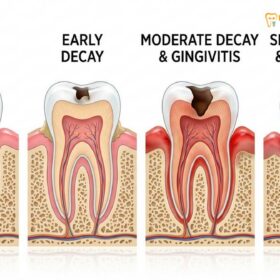
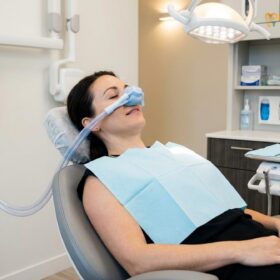
Intravenous (IV) sedation in dentistry involves administering anti-anxiety medications directly into the bloodstream to induce a state of deep relaxation. Patients remain conscious and can respond to verbal cues, yet experience profound amnesia and comfort, making it an excellent option for complex procedures or severe dental phobia.
Clinical Summary:
IV sedation dentistry, frequently referred to as twilight sleep, represents a highly effective modality for managing severe dental anxiety and facilitating extensive oral surgeries. By delivering sedative agents directly into the venous system, clinicians achieve rapid onset and precise titration of the patient’s relaxation level. This advanced approach allows patients to maintain spontaneous breathing and protective airway reflexes while experiencing profound anterograde amnesia regarding the surgical procedure. Continuous physiological monitoring by a dedicated anesthesiology team ensures optimal cardiovascular and respiratory safety. This highly controlled environment significantly reduces the physiological stress response, enabling comprehensive treatments to be completed efficiently and comfortably in a single session.
Key Takeaways:
- Medications are administered directly into the bloodstream, allowing for immediate onset and precise, real-time dosage adjustments.
- Induces a state of deep conscious sedation where the patient remains awake, breathes independently, but feels profoundly relaxed.
- Produces a strong anterograde amnesic effect, ensuring patients rarely remember the details of the dental procedure.
- Requires rigorous, continuous electronic monitoring of vital signs, including blood pressure, heart rate, and oxygen saturation.
- Considered an optimal solution for patients with extreme dental phobia, sensitive gag reflexes, or those requiring lengthy, complex surgeries.
What is IV Conscious Sedation (Twilight Sleep)?
IV conscious sedation is a highly effective pharmacological technique that delivers sedatives directly into the vein, placing the patient in a deeply relaxed, dream-like state while maintaining independent breathing and responsiveness.
Intravenous conscious sedation, widely known in the medical community as twilight sleep dentistry, is an advanced pharmacological intervention designed to alleviate fear, anxiety, and discomfort during dental procedures. Unlike general anesthesia, which renders a patient completely unconscious and often requires mechanical ventilation, IV sedation maintains the patient in a state of depressed consciousness. In this state, the patient retains the ability to independently maintain a patent airway and respond purposefully to physical stimulation or verbal commands from the dental surgeon[1]. This critical distinction makes conscious sedation a highly preferred method in outpatient dental settings, balancing profound patient comfort with a rigorous safety profile.
The term “twilight sleep” accurately describes the clinical experience. Patients are suspended in a tranquil state between wakefulness and sleep. While they are technically awake, their perception of time, pain, and environmental stressors is drastically altered. The clinical objective is to achieve a level of sedation where the patient is entirely cooperative but completely detached from the clinical stimuli that typically trigger dentophobia.
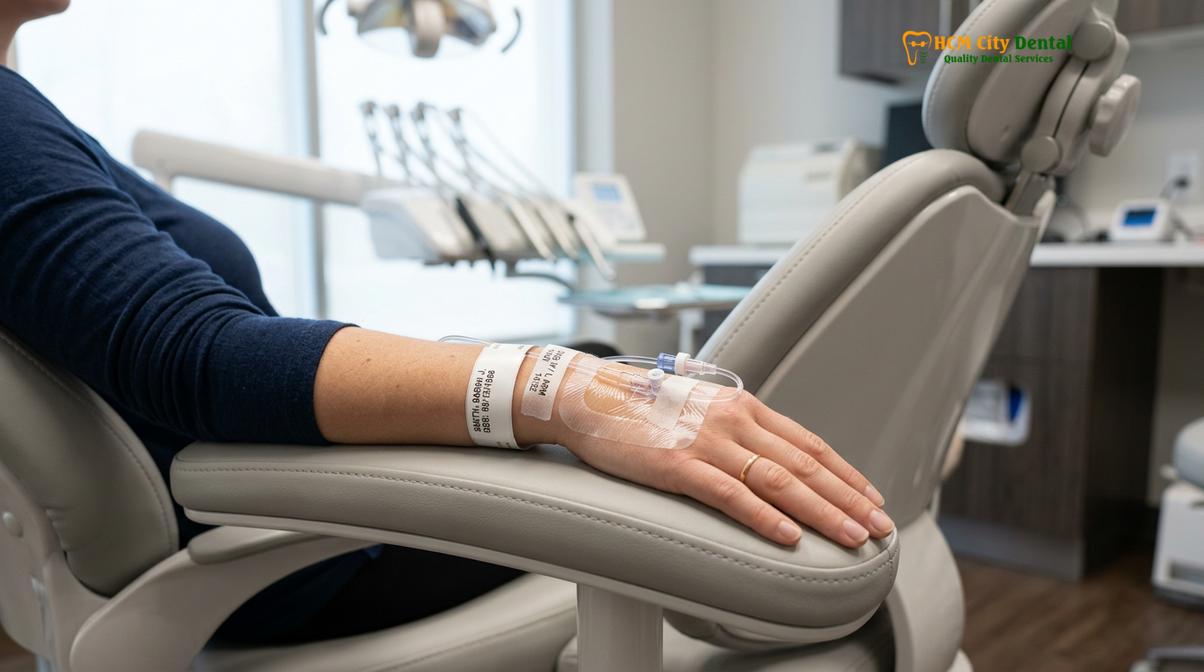
The spectrum of sedation in dentistry ranges from minimal (anxiolysis) to moderate, and finally to deep sedation. Intravenous administration is unique because it allows the clinician to seamlessly navigate this spectrum based on the patient’s real-time physiological responses and the surgical requirements. If a patient begins to show signs of anxiety or if a particularly invasive part of the procedure is commencing, the anesthesiologist can instantly deepen the sedation level. Conversely, as the procedure nears completion, the medication drip can be reduced, initiating a smooth transition toward wakefulness.
Understanding the distinction between general fear and clinical phobia is crucial when determining candidacy for this treatment. Patients experiencing extreme avoidance behaviors may benefit from reading about the clinical differences in Dental Phobia vs Anxiety: Clinical Differences & Care | HCMC Dental. For those with true phobia, standard local anesthesia combined with a reassuring bedside manner is often insufficient. Intravenous dental sedation directly suppresses the sympathetic nervous system overdrive, creating a stable, controlled environment where the dentist can perform complex rehabilitations with optimal precision.
How Intravenous Medications Work for Rapid Relaxation
Intravenous medications bypass the digestive system to interact immediately with the central nervous system, enhancing inhibitory neurotransmitters to rapidly reduce anxiety and induce profound amnesia.
The pharmacokinetic superiority of IV sedation lies in its direct delivery into the systemic circulation. When a sedative is taken orally, it must pass through the gastrointestinal tract and the liver before reaching the brain. This process is slow, unpredictable, and heavily influenced by the patient’s metabolism. In contrast, intravenous administration bypasses the digestive system entirely. The medication is introduced directly into the venous bloodstream, reaching the central nervous system within seconds. This rapid onset allows the clinical team to achieve the desired level of sedation almost instantaneously.
The primary pharmacological agents utilized in intravenous dental sedation are benzodiazepines, with Midazolam being the most prevalent. Midazolam is highly lipophilic, meaning it easily crosses the blood-brain barrier. Once in the brain, it binds to specific sites on the GABA-A receptors. By enhancing the affinity of GABA for its receptor, midazolam increases the influx of chloride ions into the neurons, leading to cellular hyperpolarization[2]. This physiological mechanism effectively dampens neuronal excitability, resulting in profound anxiety reduction and muscle relaxation.
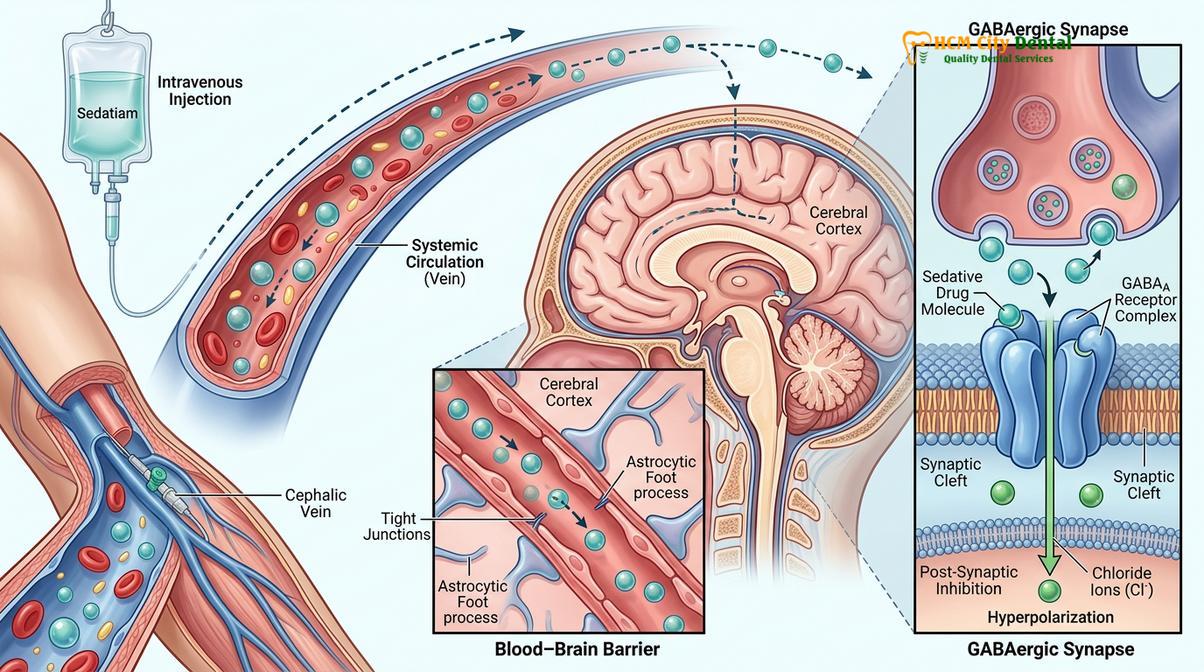
Another critical property of midazolam is its potent anterograde amnesic effect. Anterograde amnesia refers to the inability to form new memories after the administration of the drug. For dental patients, this means that while they may be awake and responding to instructions during the surgery, their brain is not recording the event. Upon recovery, the patient typically has zero recollection of the local anesthetic injections, the sounds of the dental drill, or the pressure of extractions.
In certain complex or prolonged cases, other agents such as Propofol or low-dose opioids may be used as adjuncts. Propofol offers an exceptionally rapid recovery profile, making it ideal for precise titration. The selection of these agents is strictly determined by the anesthesiologist based on the patient’s medical history and the surgical plan. For patients interested in comparing this rapid-onset method with pill-based alternatives, our comprehensive Oral Sedation Dentistry: Clinical Guide & Protocols | HCMC Dental provides further clinical context.
| Sedative Agent | Drug Class | Onset of Action | Amnesic Properties | Primary Clinical Benefit |
|---|---|---|---|---|
| Midazolam | Benzodiazepine | 1 – 3 minutes | Excellent (Anterograde) | Profound anxiety reduction and memory suppression. |
| Propofol | General Anesthetic | 30 – 60 seconds | Moderate | Ultra-rapid onset and extremely fast, clear recovery. |
| Fentanyl | Opioid Analgesic | 1 – 2 minutes | Minimal | Synergistic pain control, reducing local anesthetic needs. |
| Dexmedetomidine | Alpha-2 Agonist | 5 – 10 minutes | Mild | Sedation that closely mimics natural sleep patterns. |
Advantages of IV Sedation over Oral and Gas Methods
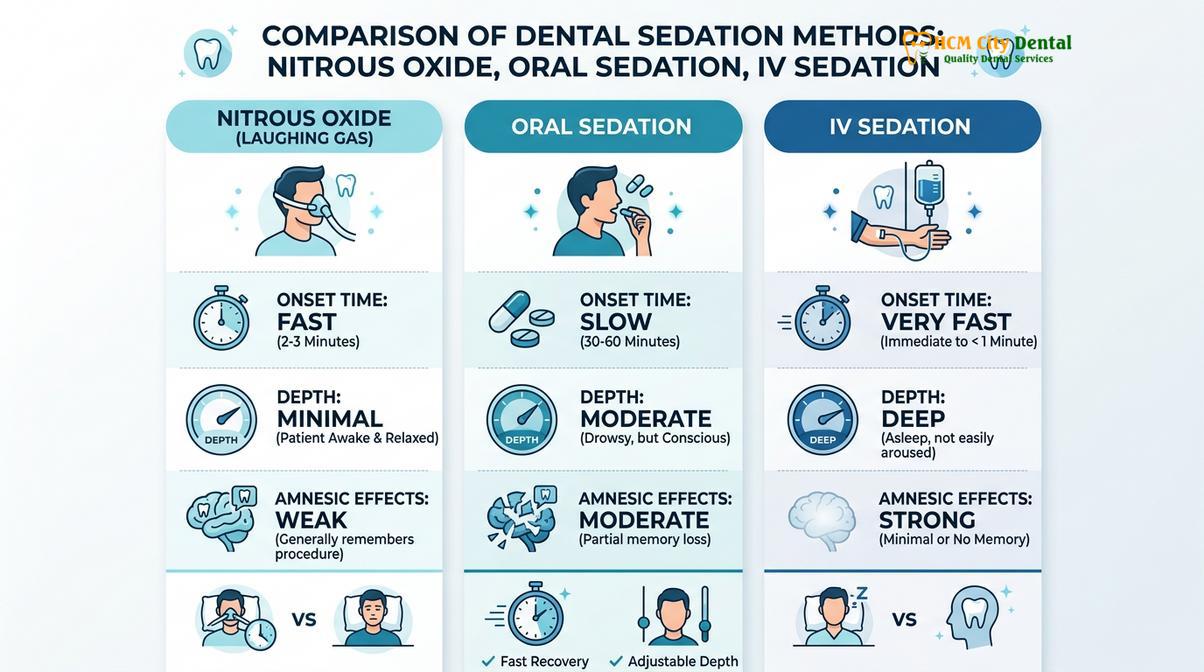
Compared to oral pills or nitrous oxide, intravenous delivery offers superior control over the depth of sedation, faster onset, and a more profound amnesic effect for complex dental surgeries.
When evaluating sedation modalities, clinicians generally categorize them into inhalation (nitrous oxide), enteral (oral pills), and parenteral (intravenous) routes. While nitrous oxide is excellent for mild anxiety and oral sedation works well for moderate fear, IV sedation stands apart due to its unparalleled predictability and control. Because the medication enters the bloodstream directly, the anesthesiologist can titrate the dose drop-by-drop. If a patient requires deeper relaxation during a difficult extraction, the effect can be achieved in seconds. Conversely, oral sedation relies on a fixed dose that cannot be easily adjusted once ingested, leading to variable results depending on the patient’s digestive absorption rates[3].
Clinical Warning: Unlike mild nitrous oxide sedation, intravenous protocols require strict preoperative fasting. Patients must typically abstain from solid foods for at least 8 hours and clear liquids for 2 hours prior to the procedure to prevent the risk of pulmonary aspiration.
Furthermore, the depth of relaxation achieved with the intravenous route is significantly more profound. Patients with severe gag reflexes, complex medical needs, or those undergoing full-mouth rehabilitations benefit immensely from this deeper state. The robust anterograde amnesia associated with IV protocols also ensures that traumatic memories are not formed, which is a critical factor in helping patients overcome long-standing dental phobias and encouraging future compliance with routine care.
The Role of the Certified Medical Anesthesiologist
A certified medical anesthesiologist manages the precise titration of sedative drugs and continuously evaluates the patient’s physiological status, allowing the primary dentist to focus entirely on the surgical procedure.
The administration of deep conscious sedation requires a sophisticated level of medical expertise. The gold standard for complex surgical cases involves a dual-provider model. In this model, a certified medical anesthesiologist or a dedicated dental anesthesiologist is present alongside the operating dentist. This separation of duties is a critical safety protocol. The operating dentist can focus entirely on the intricate details of the oral surgery, while the anesthesiologist focuses on the patient’s physiological stability[4].
The anesthesiologist’s role begins long before the IV line is placed. A comprehensive pre-anesthetic evaluation is conducted to assess the patient’s overall health, utilizing the American Society of Anesthesiologists (ASA) Physical Status Classification System. The anesthesiologist reviews the patient’s medical history, current medications, allergies, and previous experiences with anesthesia. They also perform an airway assessment to ensure that, in the rare event of respiratory depression, the airway can be easily managed.
“The presence of a dedicated anesthesiology professional transforms a potentially stressful surgical environment into a highly controlled, predictable clinical setting. It allows the surgical team to operate with maximum efficiency while ensuring the patient’s physiological parameters remain perfectly stable throughout the procedure.”
During the procedure, the anesthesiologist is responsible for the continuous titration of the sedative agents. Because every patient metabolizes drugs differently, there is no universal dosage in intravenous sedation. The anesthesiologist observes subtle clinical signs to adjust the micro-drip infusion in real-time. If a patient exhibits physical signs of distress, which are often subconscious manifestations of Dental Anxiety Symptoms: Clinical Signs & Management | HCMC Dental, the anesthesiologist can immediately deepen the sedation. This dynamic, vigilant management is the cornerstone of safe and effective twilight sleep dentistry.
Clinical Monitoring: Heart, Oxygen, and Blood Pressure
Rigorous clinical monitoring using electrocardiography, pulse oximetry, and capnography ensures the patient’s cardiovascular and respiratory systems remain stable throughout the entire intravenous sedation process.
The safety of IV sedation is intrinsically linked to the continuous, electronic monitoring of the patient’s vital signs. Because sedative medications depress the central nervous system, they inherently carry the potential to depress the respiratory and cardiovascular systems. To mitigate these risks, modern dental surgical suites are equipped with advanced multi-parameter patient monitors. These devices provide the clinical team with real-time, objective data regarding the patient’s physiological status, allowing for immediate intervention at the earliest sign of deviation from baseline parameters[5].
The standard monitoring protocol includes several critical components. Pulse oximetry (SpO2) is utilized to continuously measure the oxygen saturation of the patient’s blood and their pulse rate. Maintaining optimal oxygenation is paramount, and supplemental oxygen is routinely administered via a nasal cannula throughout the procedure. Additionally, Non-Invasive Blood Pressure (NIBP) monitoring is conducted using an automated cuff that inflates at regular intervals to ensure hemodynamic stability.
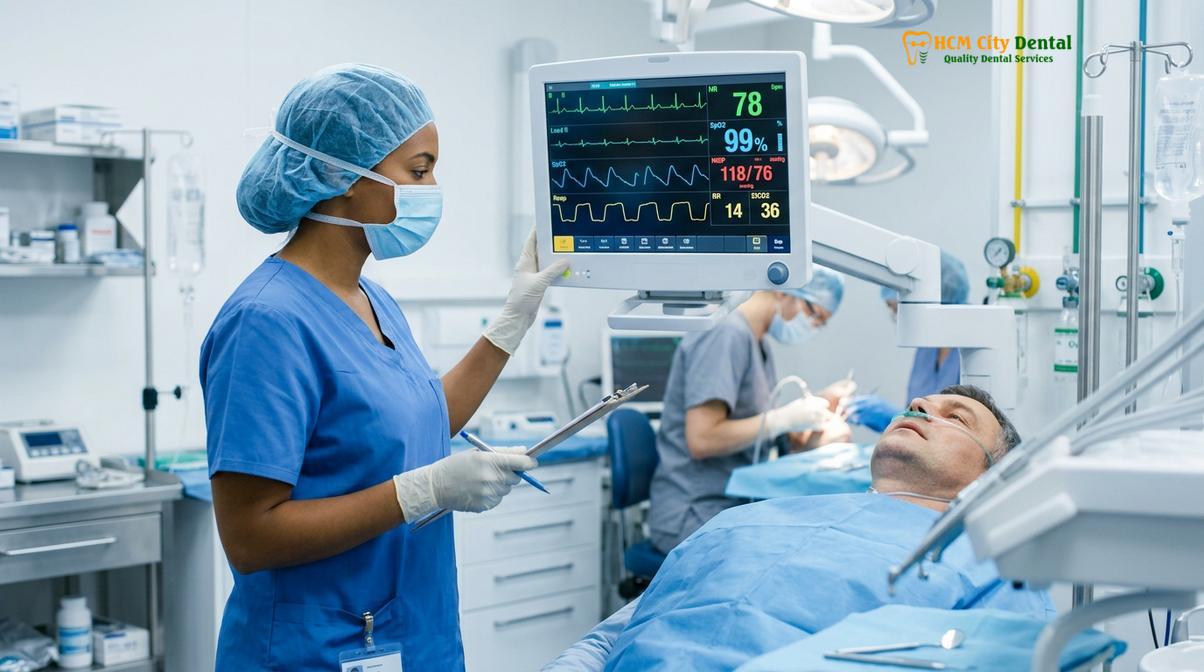
Perhaps the most critical monitoring tool during deep conscious sedation is capnography. While pulse oximetry measures oxygenation, capnography measures ventilation by analyzing the concentration of carbon dioxide in the patient’s exhaled breath. Capnography provides a real-time waveform that instantly alerts the anesthesiologist to any respiratory depression. Furthermore, continuous Electrocardiography (ECG) is employed to monitor the electrical activity of the heart, detecting any arrhythmias or ischemic changes that may occur under sedation.
IV Sedation Pricing and Setup in Ho Chi Minh City
Accessing advanced intravenous sedation in Vietnam involves transparent pricing structures and modern clinical setups that adhere to strict international safety and monitoring standards.
For expatriates and international patients seeking complex dental care, understanding the logistical and financial aspects of sedation is essential. In Vietnam, the integration of dedicated anesthesiology teams into outpatient dental settings has become increasingly sophisticated. The pricing for these services is generally structured as an hourly rate or a flat fee per surgical session, which is billed in addition to the primary dental treatments (such as implant placement or wisdom teeth extraction). This fee covers the specialized medications, the use of advanced monitoring equipment, and the professional time of the certified anesthesiologist.
Clinical Case Study: A 45-year-old expatriate patient with severe dental phobia visited HCMC Dental Clinic in Ho Chi Minh City for the placement of four dental implants. Due to extreme anxiety, the clinical team recommended IV sedation. Under the care of a dedicated anesthesiologist, the patient remained in a comfortable twilight state for the entire two-hour procedure. Upon recovery, the patient reported zero memory of the surgery and experienced stable vital signs throughout, demonstrating the efficacy of this approach for complex rehabilitations.
The clinical setup for these procedures mirrors that of a minor hospital surgical suite. Treatment rooms are equipped with emergency resuscitation equipment, backup oxygen supplies, and automated external defibrillators (AEDs). This rigorous infrastructure ensures that the clinical environment is fully prepared to manage any physiological fluctuations, providing patients with peace of mind when undergoing extensive treatments.
When to Consult a Doctor: Important Clinical Considerations
Before undergoing IV sedation, patients must consult with their dental and medical providers to evaluate their complete health history and determine if they are safe candidates for intravenous pharmacological protocols.
While IV sedation is highly effective, it is not universally suitable for every patient. Determining candidacy requires a rigorous medical evaluation. Patients must proactively consult with their doctor if they have a history of severe systemic diseases, particularly those affecting the cardiovascular, respiratory, hepatic, or renal systems. Conditions such as severe chronic obstructive pulmonary disease (COPD), uncontrolled hypertension, or congestive heart failure may present significant contraindications to deep conscious sedation in an outpatient setting. The guidelines established by the Vietnam Ministry of Health emphasize the necessity of strict patient selection to maintain the highest safety standards in odonto-stomatology[6].
It is also crucial to disclose all current medications, including prescription drugs, over-the-counter supplements, and herbal remedies. Certain medications can interact adversely with intravenous sedatives, either amplifying their depressive effects on the central nervous system or accelerating their metabolism, which could render the sedation ineffective. Patients who are pregnant or suspect they might be pregnant should generally avoid elective procedures under IV sedation due to potential risks to fetal development.
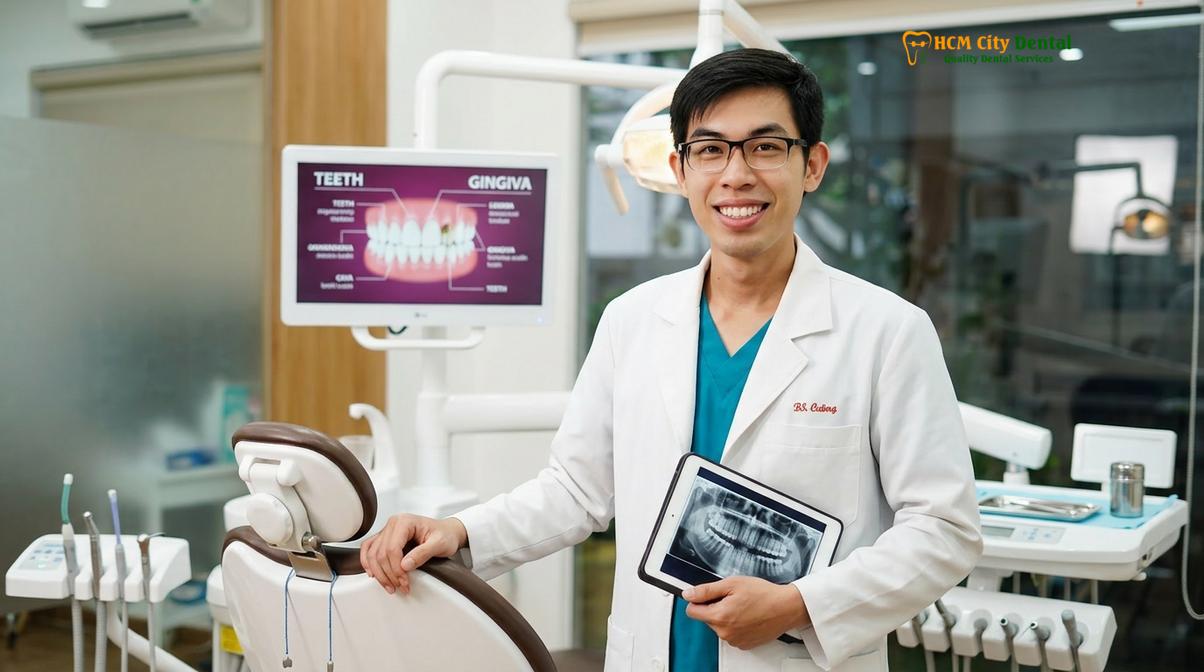
Dr. Nguyen Van Cuong, a leading clinical director, emphasizes that patient safety is the absolute cornerstone of advanced sedation protocols. Dr. Cuong regularly collaborates with certified anesthesiologists to ensure that every individual receives tailored, precise care during complex surgical interventions. This multidisciplinary approach ensures that physiological parameters are meticulously managed from the initial consultation through to full recovery.
If you are unsure about the severity of your dental fear and whether it warrants intravenous intervention, taking a standardized assessment can be a helpful first step. Patients can utilize tools like the Dental Anxiety Scale: MDAS Test & Scoring Guide | HCMC Dental to objectively measure their anxiety levels and discuss the results with their clinician. This data helps the dental team tailor the sedation approach to the patient’s specific psychological needs.
“Patient safety in sedation dentistry begins long before the clinical procedure. A transparent and thorough review of the patient’s medical history, combined with open communication about their anxiety triggers, allows the clinical team to design a pharmacological protocol that maximizes both comfort and physiological stability.”
For more information on our comprehensive general dentistry services or to schedule a specialized consultation to discuss your sedation options, please contact HCMC Dental Clinic in Ho Chi Minh City. Our dedicated clinical team is prepared to guide you through a safe, comfortable, and anxiety-free dental experience.
References
- Journal of Oral and Maxillofacial Surgery. Patient safety in dental sedation and anesthesia.
- International Journal of Oral and Maxillofacial Surgery. Intravenous conscious sedation protocols for complex oral surgery.
- British Dental Journal. Pharmacokinetics of midazolam and propofol in dental settings.
- Journal of the American Dental Association. Patient satisfaction and anxiety levels under conscious sedation.
- Clinical Oral Investigations. Safety and recovery profiles of conscious sedation vs general anesthesia.
- Vietnam Ministry of Health (MOH). National Guidelines on Safe Sedation Practices in Odonto-Stomatology.
For pricing, booking, and a free clinical assessment, visit our Sedation Dentistry service page at HCMC Dental Clinic in Ho Chi Minh City.