Nitrous oxide dentistry utilizes a safe, inhaled blend of nitrous oxide and oxygen to induce mild conscious sedation. It effectively alleviates dental anxiety, raises the pain threshold, and allows patients to remain awake and responsive throughout their procedure with a rapid, seamless recovery.
Clinical Summary:
Nitrous oxide (N2O), commonly known as laughing gas, is a cornerstone of pharmacological behavior management in modern dentistry. Administered via a nasal hood, this colorless, sweet-smelling gas provides rapid anxiolysis and mild analgesia without depressing the patient’s respiratory drive or cardiovascular stability. According to Dr. Nguyen Van Cuong, a leading expert in patient comfort, inhaled conscious sedation is particularly valuable because of its precise titratability and the unique ability to reverse its effects within minutes using 100% oxygen. This modality is highly indicated for patients experiencing mild to moderate dental phobia, those with a hyperactive gag reflex, or individuals undergoing lengthy restorative procedures. While generally safe, strict adherence to patient selection criteria and equipment safety protocols—such as fail-safe oxygen delivery systems and active scavenging—is mandatory to ensure optimal clinical outcomes.
Key Takeaways:
- Nitrous oxide provides rapid-onset conscious sedation, reducing fear and elevating the pain threshold.
- The gas is always mixed with a minimum of 30% oxygen to ensure patient safety and prevent hypoxia.
- Recovery is nearly instantaneous; patients can safely drive themselves home immediately after the appointment.
- It is highly effective for managing hyperactive gag reflexes during dental impressions and treatments.
- Contraindications include severe chronic obstructive pulmonary disease (COPD), first-trimester pregnancy, and recent intraocular surgeries.
What is Nitrous Oxide (Laughing Gas)?
Nitrous oxide is a colorless, non-flammable inorganic gas mixed with oxygen to provide minimal to moderate conscious sedation, effectively reducing patient anxiety and discomfort during dental procedures.
In the realm of modern General Dentistry, managing patient comfort is just as critical as the technical execution of the dental procedure itself. Nitrous oxide (N2O), colloquially known as laughing gas, is one of the oldest and most extensively researched sedative agents used in medicine. Discovered in the late 18th century and first applied to dentistry in the 1840s, it has evolved into a highly sophisticated and controlled method of pharmacological behavior management.
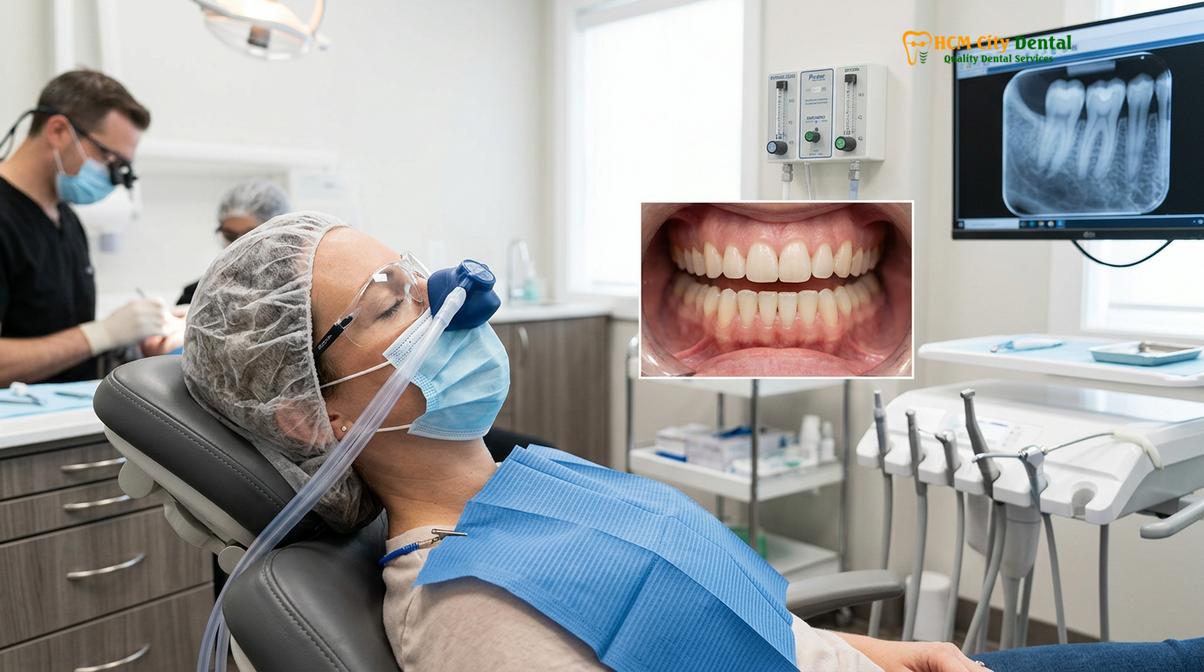
Chemically, nitrous oxide is a stable, colorless, and virtually odorless gas with a faintly sweet profile. In a clinical dental setting, it is never administered as a solitary agent. Instead, it is continuously blended with pure oxygen (O2) through a specialized delivery system. This combination is referred to as inhaled conscious sedation. The primary objective of this sedation modality is not to render the patient unconscious, but rather to induce a state of deep relaxation, emotional detachment from the clinical environment, and mild analgesia (pain relief) [1].
The Concept of Conscious Sedation
Conscious sedation is defined as a minimally depressed level of consciousness that retains the patient’s ability to independently and continuously maintain an airway and respond appropriately to physical stimulation or verbal commands. When utilizing nitrous oxide dentistry, the patient remains fully awake. They can hear the dentist, follow instructions (such as “open wider” or “turn your head”), and maintain all protective reflexes, including the cough and swallow reflexes. This distinguishes it significantly from deep sedation or general anesthesia, which require advanced airway management and prolonged recovery periods.
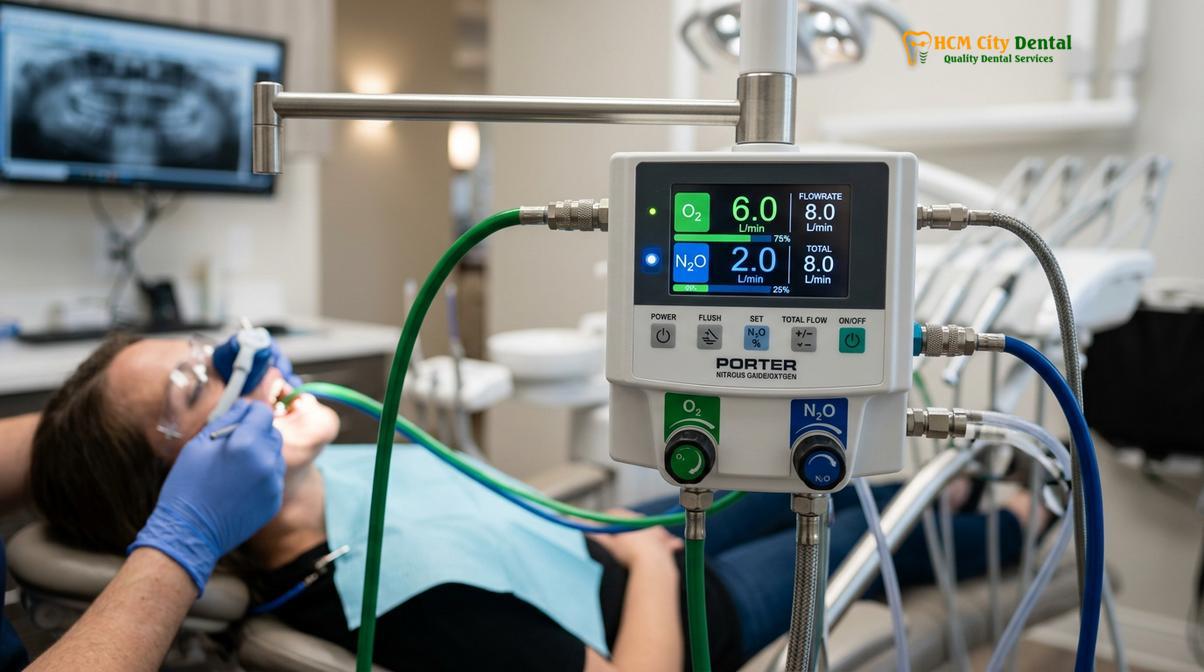
The concentration of nitrous oxide delivered is highly variable and customized to the individual. Most dental delivery units are calibrated to deliver a maximum of 70% nitrous oxide, ensuring that the patient always receives at least 30% oxygen—which is higher than the 21% oxygen concentration found in ambient room air. This built-in safety margin is a fundamental reason why laughing gas safety dental protocols are considered the gold standard for mild anxiolysis.
How Inhaled Sedation Affects Your Body and Mind
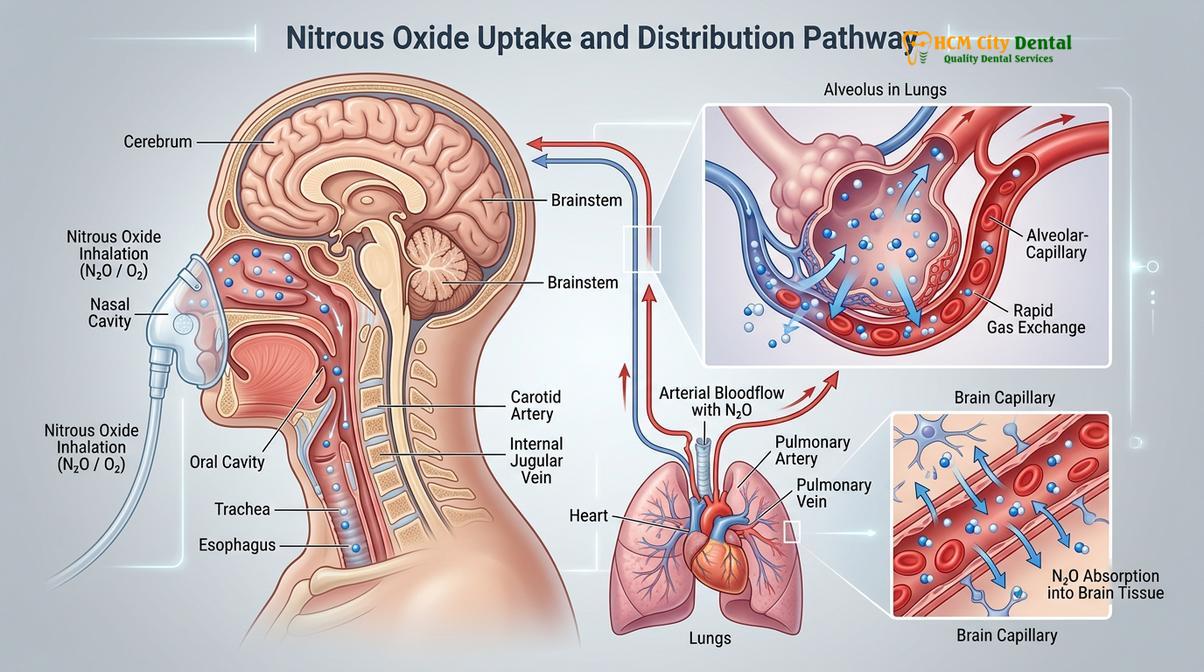
Inhaled nitrous oxide rapidly crosses the blood-brain barrier to depress the central nervous system, triggering the release of endogenous opioids and modulating GABA receptors to reduce anxiety and pain.
Understanding the pharmacokinetics and pharmacodynamics of nitrous oxide provides insight into why it is such an effective tool for dental anxiety. Nitrous oxide is unique among anesthetic gases due to its extremely low blood-gas partition coefficient (approximately 0.47). This physical property means that the gas is highly insoluble in blood. Because the blood does not readily absorb the gas, the alveolar concentration (in the lungs) rises rapidly, creating a steep pressure gradient that forces the gas quickly across the blood-brain barrier and into the central nervous system [2].
Neurological Mechanisms of Action
Once in the brain, nitrous oxide exerts its effects through multiple complex pathways. The anxiolytic (anti-anxiety) effect is believed to be mediated by the activation of Gamma-aminobutyric acid type A (GABA-A) receptors, similar to the mechanism of oral benzodiazepines. This dampens excitatory signals in the brain, leading to a profound sense of calm and relaxation.
Simultaneously, the analgesic (pain-relieving) properties are initiated by the neuronal release of endogenous opioids (such as enkephalins). These natural pain-modulating chemicals bind to opioid receptors in the brain and spinal cord, effectively raising the patient’s pain reaction threshold. While nitrous oxide does not replace the need for local anesthesia (numbing injections) during invasive procedures, it significantly alters the patient’s perception of the injection and subsequent treatment, making the entire experience highly tolerable.
“The true clinical value of nitrous oxide lies not in its absolute potency, but in its unparalleled ability to rapidly alter a patient’s psychological state, transforming a fearful individual into a cooperative, relaxed patient within minutes.”
Systemic Physiology and Elimination
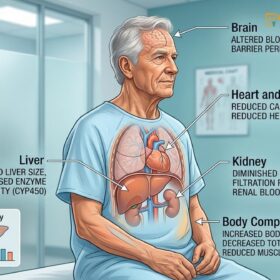
Unlike many oral or intravenous medications, nitrous oxide does not undergo biotransformation or metabolism in the liver, nor is it excreted by the kidneys. It is transported in the blood as a free gas and does not bind to hemoglobin. When the dental procedure is complete and the delivery of nitrous oxide is terminated, the concentration gradient reverses. The gas rapidly diffuses from the brain, back into the blood, and into the alveoli of the lungs, where it is exhaled unchanged. This allows for a near-instantaneous recovery, a hallmark benefit of this sedation method.
The Nitrous Oxide Procedure: Step-by-Step
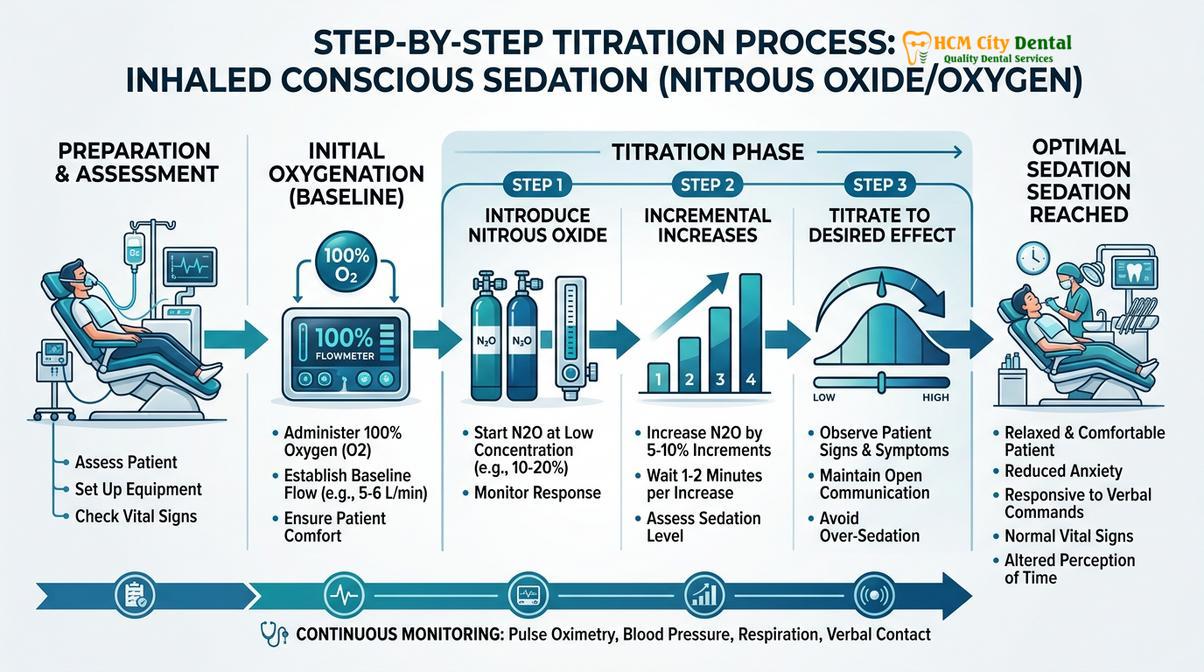
The clinical administration of nitrous oxide involves a systematic titration process, beginning with 100% oxygen, gradually introducing the gas, and concluding with a mandatory oxygen flush to prevent diffusion hypoxia.
The safe and effective administration of nitrous oxide requires a meticulous, step-by-step clinical protocol. At HCMC Dental Clinic, our clinical team adheres to strict international guidelines to ensure patient safety and optimal sedation levels. The process is highly controlled and continuously monitored.
1. Pre-Operative Assessment
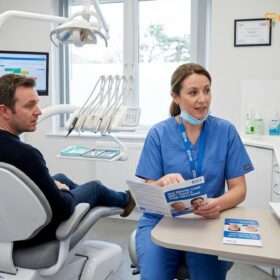
Before any sedation is administered, the dentist conducts a thorough review of the patient’s medical history, current medications, and baseline vital signs (blood pressure, heart rate, and oxygen saturation). The clinician will assess the patient’s airway and ensure there are no nasal obstructions, as the efficacy of inhaled conscious sedation relies entirely on the patient’s ability to breathe comfortably through their nose.
2. Equipment Setup and Safety Checks
Modern nitrous oxide delivery systems are equipped with numerous fail-safe mechanisms. The most critical is the oxygen fail-safe system, which automatically shuts off the flow of nitrous oxide if the oxygen supply is depleted or drops below a safe pressure level. Additionally, the equipment utilizes a pin-index safety system and color-coded tanks (blue for nitrous oxide, green for oxygen) to prevent accidental cross-connection of gases. An active scavenging system is also attached to the nasal hood to vacuum away exhaled gases, protecting the dental staff from occupational exposure and maintaining ambient levels below the recommended limits [3].
3. The Titration Protocol
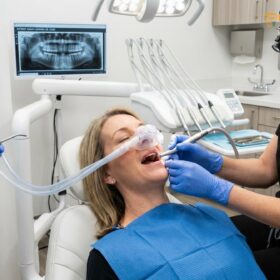
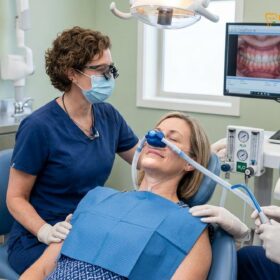
The administration begins by placing a comfortably fitting, scented or unscented nasal hood over the patient’s nose. The protocol follows these precise steps:
- Baseline Oxygen: The patient breathes 100% oxygen at a flow rate of 5 to 7 liters per minute for 2 to 3 minutes to establish a comfortable respiratory rhythm.
- Initial Introduction: Nitrous oxide is introduced at a low concentration, typically 10% to 20%.
- Gradual Titration: The concentration is incrementally increased by 5% to 10% every 1 to 2 minutes. The dentist continuously communicates with the patient, assessing their subjective feelings and objective signs of relaxation.
- Optimal Sedation: Most patients reach an ideal state of relaxation between 30% and 50% nitrous oxide. Once this level is achieved, the local anesthetic is administered, and the dental procedure commences.
| Sedation Stage | Nitrous Oxide Concentration | Patient Experience & Clinical Signs |
|---|---|---|
| Baseline / Induction | 10% – 20% | Normal awareness, slight tingling in extremities, normal vital signs. |
| Ideal Conscious Sedation | 30% – 50% | Deep relaxation, mild euphoria, reduced blink rate, raised pain threshold, fully responsive. |
| Oversedation (Avoided) | > 50% (Patient dependent) | Sluggish responses, uncoordinated movements, nausea, uncontrollable laughter or crying. |
4. The Recovery Phase and Oxygen Flush
Once the dental treatment is nearing completion, the nitrous oxide flow is completely shut off. The patient is then placed on 100% oxygen for a minimum of 3 to 5 minutes. This crucial step, known as the oxygen flush, serves to rapidly clear the remaining nitrous oxide from the patient’s lungs and bloodstream. It also prevents a phenomenon known as “diffusion hypoxia,” where the rapid exit of nitrous oxide into the lungs temporarily dilutes the alveolar oxygen concentration, potentially causing a mild headache or dizziness.
Clinical Benefits: Rapid Onset and Immediate Recovery
The primary clinical advantages of nitrous oxide include its near-instantaneous onset of action, precise titratability, and the unique ability for patients to recover fully within minutes without residual impairment.
When comparing nitrous oxide dentistry to other forms of sedation, such as oral sedatives (pills) or intravenous (IV) sedation, laughing gas offers a distinct set of clinical advantages that make it the preferred choice for routine dental care.
Unmatched Titratability
Titration is the ability to administer a drug in small, incremental doses until the desired clinical effect is achieved. Oral sedatives have a fixed dose and a long onset time (often 45-60 minutes), making it difficult to adjust the level of sedation once administered. Nitrous oxide, however, allows the dentist to increase or decrease the depth of sedation moment by moment. If a patient feels too drowsy, the dentist can simply increase the oxygen flow, and the patient will feel more alert within 30 seconds. This two-way control provides an exceptional safety profile [4].
Suppression of the Gag Reflex
A hyperactive gag reflex can make routine dental procedures—such as taking impressions, taking intraoral X-rays, or performing posterior restorations—nearly impossible. Nitrous oxide is highly effective at depressing the gag reflex, allowing the clinician to work efficiently while the patient remains entirely comfortable.
Clinical Case Study: Managing Severe Needle Phobia
A 28-year-old patient visited HCMC Dental Clinic in Ho Chi Minh City requiring a complex root canal treatment. The patient exhibited severe trypanophobia (fear of needles) and a strong gag reflex, having avoided dental care for five years. Dr. Nguyen Van Cuong recommended inhaled conscious sedation. After titrating nitrous oxide to 40%, the patient reported feeling a “warm, heavy sensation” and profound relaxation. The local anesthetic was administered without the patient exhibiting any physical withdrawal or distress. The 90-minute procedure was completed seamlessly, and following a 5-minute oxygen flush, the patient left the clinic unescorted, reporting zero memory of the injection.
Immediate Post-Operative Recovery
Perhaps the most significant logistical benefit for patients is the recovery time. With oral or IV sedation, patients are legally and medically required to have an escort drive them home, and they must avoid operating machinery or making important decisions for 24 hours. Because nitrous oxide is completely eliminated from the body within minutes of the oxygen flush, patients are fully cleared to drive themselves home, return to work, or resume normal daily activities immediately after their appointment.
Contraindications: Who Should Avoid Laughing Gas?
While highly safe, nitrous oxide is contraindicated for patients with severe respiratory illnesses, first-trimester pregnancy, recent eye surgeries involving intraocular gas, or an inability to breathe through the nose.
Despite its excellent safety record, nitrous oxide is not universally appropriate for every patient. A comprehensive medical history review is essential to identify absolute and relative contraindications. Because nitrous oxide is a gas that expands in closed, air-filled spaces within the body, it must be avoided in specific medical scenarios [5].
Absolute Contraindications
- Recent Intraocular Surgery: Patients who have recently undergone retinal surgery involving the placement of an intraocular gas bubble (such as perfluoropropane or sulfur hexafluoride) must strictly avoid nitrous oxide. The gas can diffuse into the bubble, causing rapid expansion and potentially leading to blindness.
- First Trimester of Pregnancy: While generally considered safe in later stages of pregnancy for emergency procedures, nitrous oxide is contraindicated during the first trimester due to its potential interference with vitamin B12 metabolism and DNA synthesis, which could theoretically impact fetal development.
- Bowel Obstruction: Nitrous oxide diffuses into closed air spaces faster than nitrogen diffuses out. In a patient with a bowel obstruction, this can cause severe abdominal distension and pain.
- Pneumothorax: Patients with a collapsed lung or recent pneumothorax cannot receive nitrous oxide due to the risk of dangerous gas expansion in the pleural cavity.
Relative Contraindications
Patients with severe Chronic Obstructive Pulmonary Disease (COPD) may rely on a low blood oxygen level as their primary stimulus to breathe (hypoxic drive). Administering high concentrations of oxygen alongside nitrous oxide can potentially depress their respiratory drive. Additionally, patients with severe nasal congestion, deviated septums, or upper respiratory infections may simply be unable to inhale enough of the gas through their nose to achieve the desired sedative effect.
Clinical Warning: The Importance of the Oxygen Flush
Failure to administer 100% oxygen for 3 to 5 minutes immediately following the termination of nitrous oxide can result in diffusion hypoxia. This occurs when nitrous oxide rapidly exits the bloodstream into the alveoli, displacing oxygen and carbon dioxide. This temporary imbalance can cause the patient to experience sudden lethargy, headache, or nausea. Proper clinical protocols strictly mandate the post-operative oxygen flush to eliminate this risk entirely.
When to Consult a Dental Anesthesiologist
While nitrous oxide is highly effective for mild to moderate anxiety, it is not a panacea for all dental phobias or complex surgical needs. Patients should consult with their dentist or a dental anesthesiologist to discuss alternative sedation modalities if they fall into certain categories.
Individuals with extreme, debilitating dental phobia, those undergoing extensive full-mouth surgical reconstructions, or patients with severe cognitive impairments who cannot cooperate with instructions may require deeper levels of sedation. In these cases, intravenous (IV) conscious sedation or even general anesthesia may be more appropriate. A thorough clinical evaluation, including an assessment of the patient’s ASA (American Society of Anesthesiologists) physical status classification, is necessary to determine the safest and most effective pharmacological approach.
“Patient selection is the cornerstone of safe sedation practice. Nitrous oxide is an exceptional tool, but recognizing its limitations and knowing when to escalate to deeper sedation modalities is the mark of a highly competent clinical team.”
Cost and Booking for Nitrous Oxide in Vietnam
The cost of nitrous oxide sedation depends on the duration of the procedure and the complexity of the dental treatment, offering an affordable anxiolytic option for international and local patients.
For patients seeking a laughing gas dentist saigon, understanding the financial aspect of sedation is important. The nitrous oxide dentist price is generally structured as an adjunct fee, added to the cost of the primary dental procedure (such as a filling, extraction, or root canal). Because it does not require the presence of a separate medical anesthesiologist or complex IV equipment, it remains one of the most cost-effective sedation options available.
At HCMC Dental Clinic, the fee is typically calculated based on the time required for the procedure—often billed per 30-minute or 60-minute increment. During your initial consultation, Dr. Nguyen Van Cuong and the clinical team will provide a transparent, itemized treatment plan that includes the estimated cost of sedation. For patients traveling to Vietnam for dental tourism, incorporating nitrous oxide into their treatment plan ensures a stress-free experience without significantly inflating the overall medical budget.

Frequently Asked Questions
What does laughing gas feel like at the dentist?
Laughing gas induces a feeling of deep relaxation, mild euphoria, and heaviness in the limbs. Patients remain fully conscious and responsive, often experiencing a warm, tingling sensation while their perception of pain and anxiety significantly diminishes. You may also notice that sounds in the room seem slightly muffled or distant, contributing to a sense of detachment from the clinical environment.
Can I drive myself home after laughing gas sedation?
Yes, you can safely drive yourself home after receiving nitrous oxide. Because the gas is rapidly eliminated from your system following a brief period of pure oxygen inhalation, there is no residual cognitive or motor impairment. Unlike oral or IV sedation, which require a designated driver, nitrous oxide allows you to resume your normal daily activities immediately.
Does nitrous oxide make you tell secrets or laugh uncontrollably?
No, nitrous oxide does not act as a truth serum or cause uncontrollable laughter. While it lowers inhibitions slightly and makes you feel relaxed or mildly amused, you retain complete control over your thoughts, speech, and actions. The term “laughing gas” is somewhat of a misnomer; it refers more to the mild euphoria and reduction of tension rather than literal fits of laughter.
Is laughing gas safe for adults with asthma?
Yes, nitrous oxide is generally highly safe for patients with asthma. It does not irritate the tracheobronchial tree, and by reducing procedure-related stress, it can actually help prevent anxiety-induced asthma attacks during dental treatment. However, you should always inform your dentist about your asthma severity and any recent exacerbations before the procedure begins.
How much does nitrous oxide cost per session in HCMC?
The cost of nitrous oxide sedation in Ho Chi Minh City varies based on the duration of the procedure and the complexity of the dental work. It is generally billed as an affordable adjunct fee per hour or per session. During your consultation at HCMC Dental Clinic, the team will provide a precise cost estimate tailored to your specific treatment timeline.
References
- American Dental Association (ADA). Guidelines for the Use of Sedation and General Anesthesia by Dentists. (2016).
- Journal of Dental Anesthesia and Pain Medicine. Pharmacokinetics and clinical application of nitrous oxide. (2020).
- American Academy of Pediatric Dentistry (AAPD). Best Practices: Use of Nitrous Oxide for Pediatric Dental Patients. (2023).
- International Journal of Clinical Pediatric Dentistry. Nitrous Oxide Inhalation Sedation Rapid Analgesia in Dentistry. (2023).
- National Institute for Occupational Safety and Health (NIOSH). Control of Nitrous Oxide in Dental Operatories. (1998).
For pricing, booking, and a free clinical assessment, visit our Sedation Dentistry service page at HCMC Dental Clinic in Ho Chi Minh City.