For decades, dentistry viewed severe tooth wear as a simple mechanical problem: patients grind their teeth at night, and the friction wears down the enamel. However, modern dental sleep medicine has revealed a far more complex and destructive reality. The most catastrophic cases of rapid tooth destruction are rarely caused by mechanical grinding alone. Instead, they are the result of a highly destructive pathophysiological loop known as the sleep bruxism gastroesophageal reflux GERD airway acid erosion triad. This triad represents a perfect storm where sleep-disordered breathing triggers nocturnal acid reflux, which bathes the teeth in highly corrosive stomach acid, followed immediately by intense, reflexive jaw grinding that obliterates the chemically softened enamel.
For international patients, expats, and dental tourists seeking severe worn teeth rehabilitation in Ho Chi Minh City, understanding this triad is the critical first step toward a lasting reconstruction. Simply placing standard crowns or a basic night guard without addressing the underlying chemical and airway components will inevitably lead to restorative failure. At HCMC Dental Clinic in District 1, Dr. Nguyen Van Cuong, DDS (Clinical Director — MOH License 0003265/BL-CCHN) utilizes advanced biomimetic protocols to diagnose this triad, neutralize the oral environment, and rebuild lost vertical dimension of occlusion (VDO) using ultra-conservative, additive lithium disilicate (IPS E.max) table-top onlays.
Clinical Summary:
The sleep bruxism, GERD, and airway wear triad is a destructive cycle where sleep apnea or upper airway resistance creates negative intragastric pressure, pulling stomach acid (pH 1.5–2.0) into the mouth during sleep. This acid severely softens dental enamel (which demineralizes at pH 5.5). The brain then triggers sleep bruxism as a reflex to open the airway and stimulate saliva flow, causing the patient to grind away the acid-softened tooth structure at an exponentially accelerated rate. Effective rehabilitation requires neutralizing the acid environment and utilizing zero-drill additive E.max table-top onlays to restore the lost vertical dimension of occlusion (VDO), a specialized protocol performed by Dr. Nguyen Van Cuong, DDS at HCMC Dental Clinic in District 1, Ho Chi Minh City.
Key Takeaways:
- The Chemical-Mechanical Synergy: Stomach acid (pH 1.5) softens enamel, allowing nocturnal bruxism to grind away tooth structure up to 10 times faster than mechanical friction alone.
- The Airway Trigger: Sleep-disordered breathing (apnea/hypopnea) creates a vacuum effect in the chest, pulling gastric juices past the esophageal sphincter and into the oral cavity.
- Clinical Warning Signs: Dentists often diagnose “silent reflux” before physicians by spotting palatal enamel erosion on upper teeth, molar cupping, and amalgam islands.
- The Night Guard Danger: Wearing a standard, unbuffered night guard over active reflux can trap stomach acid against the teeth, acting as an “acid reservoir.”
- Biomimetic VDO Restoration: Lost tooth height can be rebuilt without aggressive drilling using 0.6mm IPS E.max table-top onlays and palatal veneers, restoring both function and facial aesthetics.
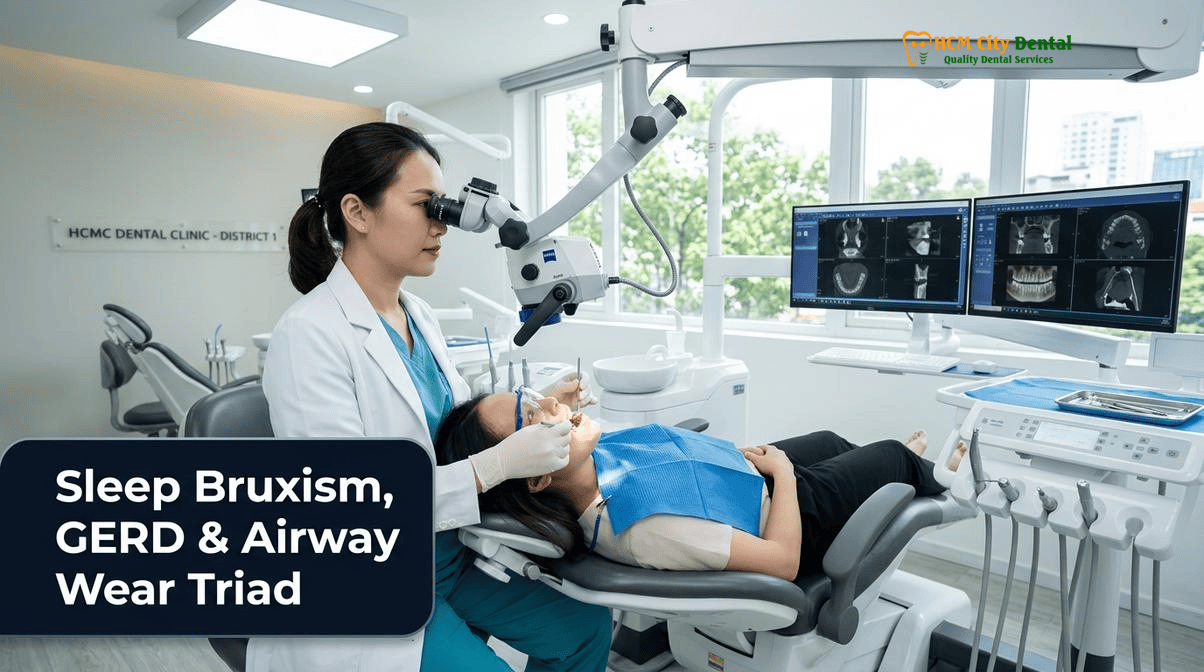
The Deadly Synergy of Gastric Acid (pH 1.5–2.0 vs. Enamel Critical pH 5.5) + Bruxism Attrition: Why Acid-Softened Enamel Grinds Away 10x Faster Overnight
To comprehend the sheer destructive power of the sleep bruxism and acid reflux GERD tooth wear triad, one must look at the tribology of the oral cavity—the science of friction, lubrication, and wear. Human enamel is the hardest substance in the body, composed of densely packed hydroxyapatite crystals. Under normal physiological conditions, enamel is highly resistant to the mechanical forces of chewing. However, enamel has a critical vulnerability: it begins to demineralize and dissolve when the ambient pH drops below 5.5.
Gastroesophageal Reflux Disease (GERD) introduces gastric acid—primarily hydrochloric acid and pepsin—into the oral cavity. Gastric acid has an incredibly low, highly corrosive pH ranging from 1.5 to 2.0. When this acid washes over the teeth during sleep, it rapidly leaches calcium and phosphate ions from the enamel matrix, leaving the surface layer severely softened, porous, and structurally compromised[1]. If a patient only suffered from GERD, this would result in slow, progressive chemical erosion.
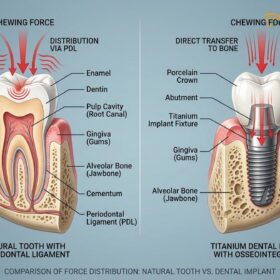
However, when sleep bruxism is added to the equation, the destruction becomes catastrophic. Bruxism involves forceful, rhythmic clenching and grinding of the teeth, generating forces that can exceed normal chewing pressures. When these massive mechanical forces are applied to enamel that has just been chemically softened by stomach acid, the tooth structure is literally sheared away. The acid removes the hard protective layer, the bruxism grinds away the softened underlayer, exposing fresh tooth structure, and the cycle repeats. This deadly synergy explains why patients with the triad experience tooth wear at a rate up to 10 times faster than those with bruxism alone.
“When we see a patient in their 30s or 40s with the dentition of an 80-year-old, we are almost never looking at pure mechanical grinding. We are looking at a chemical-mechanical feedback loop. The stomach acid melts the armor, and the bruxism acts as the battering ram. You cannot fix this by simply putting a piece of plastic between their teeth; you must address the chemistry and the airway first.”
— Dr. Nguyen Van Cuong, DDS (MOH License 0003265/BL-CCHN)
The Pathophysiology of the Airway-Reflux-Bruxism Triad: How Negative Intragastric Pressure During Sleep Breathing Events Pulls Pepsin & Acid Up Into the Mouth
The connection between the three elements of the triad is not coincidental; it is a highly integrated physiological cascade triggered by the body’s desperate attempt to maintain oxygenation during sleep. The cycle begins with the airway. Patients with Obstructive Sleep Apnea (OSA) or Upper Airway Resistance Syndrome (UARS) experience partial or complete collapse of the pharyngeal airway during deep sleep.
When the airway collapses, the brain signals the diaphragm to contract harder to pull air into the lungs. Because the airway is blocked, this intense diaphragmatic effort creates a massive negative pressure vacuum within the thoracic cavity. This vacuum effect is so powerful that it overcomes the Lower Esophageal Sphincter (LES), literally suctioning gastric juices—including hydrochloric acid and the digestive enzyme pepsin—up from the stomach, through the esophagus, and into the oral cavity[2]. This phenomenon is a primary driver of nocturnal GERD and Laryngopharyngeal Reflux (LPR).
Once the acid reaches the mouth, the brain initiates a secondary survival reflex: sleep bruxism. Bruxism Sleep Apnea Connection: Clinical Guide | HCMC Dental research indicates that rhythmic masticatory muscle activity (RMMA) serves two critical functions during an apneic event. First, the forward thrusting of the mandible during grinding helps to mechanically pull the tongue forward, opening the collapsed airway. Second, the chewing motion stimulates the salivary glands to produce bicarbonate-rich saliva, which the body uses to swallow and neutralize the highly irritating stomach acid in the throat. Thus, the bruxism is actually a neurological reflex designed to save the patient’s life and protect the esophagus, but it comes at the devastating cost of the dentition.
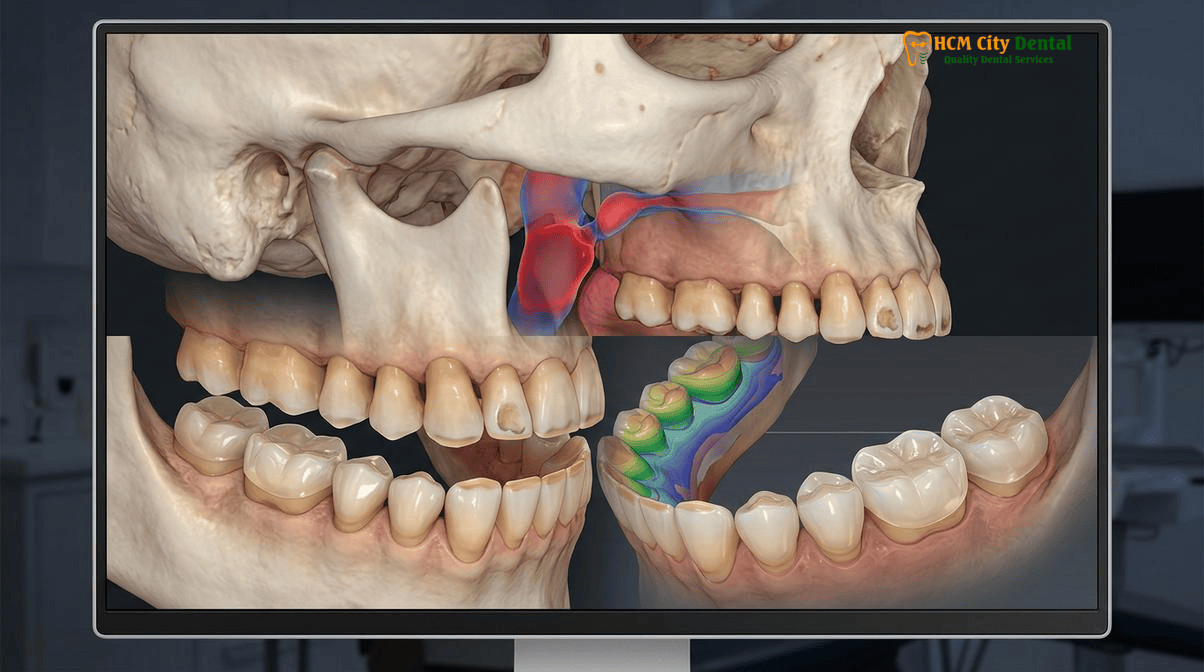
Clinical Signatures Dentists Spot Before Gastroenterologists Do: Palatal Chamfering of Upper Incisors, Molar ‘Cupping’ Craters, and ‘Raised’ Fillings
Because nocturnal reflux often occurs without the classic daytime symptom of heartburn, many patients suffer from “silent reflux” (LPR). Consequently, highly trained prosthodontists and restorative dentists are frequently the first medical professionals to diagnose the condition, spotting the undeniable clinical signatures of the triad long before a gastroenterologist is ever consulted.
When evaluating a patient for severe worn teeth rehabilitation in Ho Chi Minh City, Dr. Nguyen Van Cuong, DDS looks for specific patterns that differentiate pure mechanical attrition from chemical erosion. Pure mechanical bruxism creates flat, glossy wear facets that match perfectly when the upper and lower teeth are brought together. In contrast, the presence of stomach acid leaves distinct, unmistakable hallmarks:
- Palatal Enamel Erosion (Upper Teeth): When a patient sleeps in a supine position, stomach acid pools in the back of the throat and washes over the palatal (tongue-side) surfaces of the upper maxillary anterior teeth. This causes palatal enamel erosion upper teeth silent reflux LPR, thinning the teeth from the inside out until the incisal edges become translucent, chipped, and razor-thin.
- Molar ‘Cupping’ Craters: Acid erosion attacks the softer dentin faster than the harder outer enamel. Once the enamel cap is breached, the acid hollows out the inside of the tooth, creating deep, concave, crater-like depressions on the chewing surfaces of the molars, known as “cupping”[3].
- Amalgam Islands: This is the definitive sign of chemical erosion vs attrition. If a patient has old silver amalgam or composite fillings, the stomach acid will dissolve the natural tooth structure surrounding the filling, but it cannot dissolve the restorative material. Over time, the filling appears to “rise” out of the tooth, sitting higher than the surrounding eroded enamel, creating an “amalgam island.”
Why Wearing an Unbuffered Night Guard Over Uncontrolled Acid Reflux Can Act as an ‘Acid Reservoir’—And How Alkaline Baking Soda / MI Paste Buffering Solves It
A common and tragic mistake in general dentistry is prescribing a standard acrylic night guard to a patient exhibiting severe tooth wear without first diagnosing the presence of GERD. While a night guard protects the teeth from mechanical friction, it can inadvertently accelerate chemical destruction if acid reflux is present.
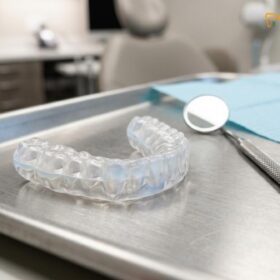
Understanding why standard night guard traps stomach acid in GERD is crucial. When an unbuffered, tightly fitting occlusal splint is placed over the teeth, it creates a sealed micro-environment. If the patient experiences a reflux episode during the night, capillary action draws the highly acidic gastric juice under the edges of the night guard. The plastic barrier then traps the acid directly against the enamel, preventing the natural buffering action of the patient’s saliva from washing it away[4]. The teeth are essentially marinated in a pH 2.0 acid bath for eight hours, leading to rampant, catastrophic decay and erosion beneath the splint.
Clinical Precaution: The Acid Reservoir Effect
If you suffer from GERD or wake up with a sour/acidic taste in your mouth, you must inform your dentist before having a night guard fabricated. At HCMC Dental Clinic, Dr. Nguyen Van Cuong, DDS implements a specific buffering protocol for triad patients. We instruct patients to place a small amount of alkaline MI Paste (containing bio-available calcium and phosphate) or a baking soda slurry inside the night guard before wearing it. This creates an alkaline reservoir that instantly neutralizes any stomach acid that seeps under the splint, protecting the enamel while simultaneously remineralizing the teeth.
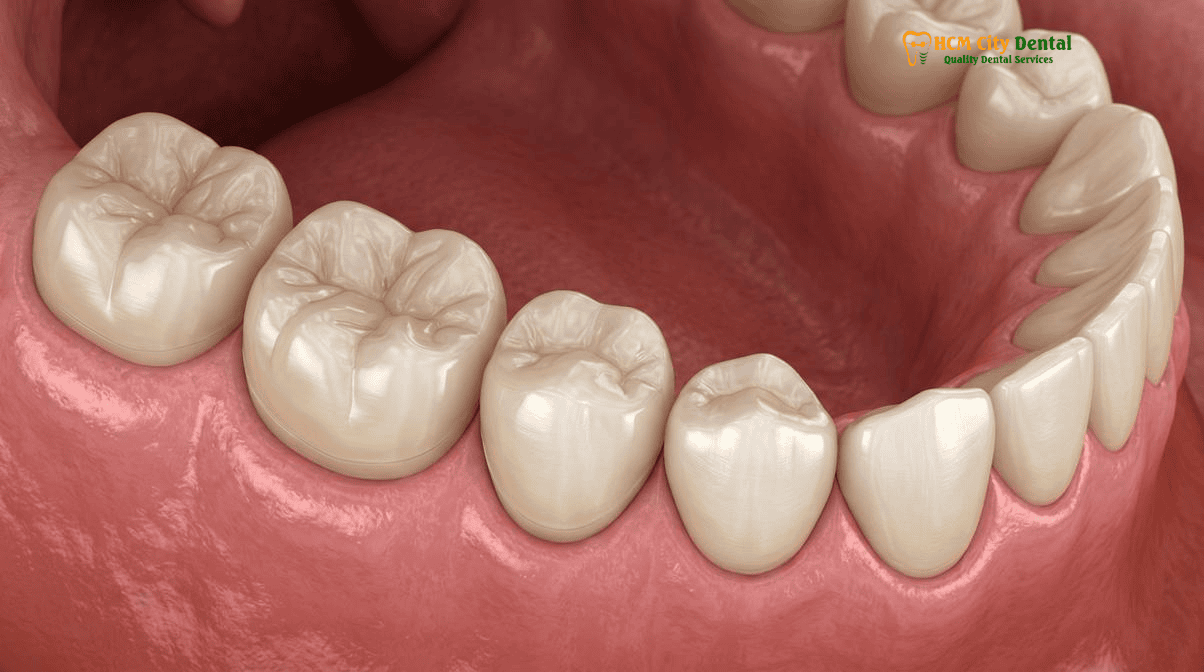
Zero-Drill Additive Full-Mouth VDO Restoration: Rebuilding Lost Vertical Dimension with Palatal Veneers and 0.6mm Lithium Disilicate (IPS E.max) Table-Top Onlays
When the sleep bruxism, GERD, and airway triad has decimated the dentition, the patient loses significant Vertical Dimension of Occlusion (VDO). This means the lower third of the face collapses, causing the chin to move closer to the nose, resulting in deep facial wrinkles, a prematurely aged appearance, and severe temporomandibular joint (TMJ) compression. To learn more about managing the muscular symptoms, patients can review our TMJ & Teeth Grinding Treatment Saigon: Nightguards & Botox guide.
Historically, restoring a collapsed VDO required aggressive “full mouth rehabilitation,” where every single tooth was ground down into small pegs to accommodate traditional porcelain crowns. This highly invasive approach often necessitated elective root canals due to the trauma inflicted on the dental pulp. Today, advanced biomimetic dentistry offers a revolutionary, tissue-preserving alternative: additive IPS E.max table top veneers restore vertical dimension.
At HCMC Dental Clinic, Dr. Nguyen Van Cuong, DDS utilizes a zero-drill or minimal-prep additive protocol. Because the acid and bruxism have already removed too much tooth structure, our goal is to add back what was lost, not drill away more. The protocol involves:
- Digital Deprogramming & Centric Relation: The patient wears a Kois deprogrammer or specialized orthotic to relax the spastic jaw muscles and locate the true, unstrained position of the TMJ (Centric Relation).
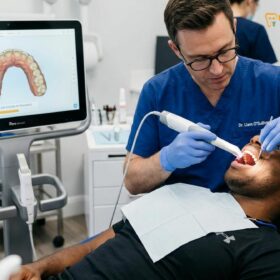
- 3D Digital Smile Design & Mock-up: A 3D CBCT scan and intraoral scan are merged to digitally design the new bite at the correct, youthful vertical height. A temporary resin mock-up is placed over the teeth, allowing the patient to “test drive” the new bite and aesthetics for several weeks.
- Lithium Disilicate (IPS E.max) Table-Top Onlays: Once the new VDO is verified, ultra-strong, 0.6mm to 1.0mm thick IPS E.max table-top onlays are fabricated. These are essentially “occlusal veneers” that sit on top of the worn back teeth to raise the bite.
- Palatal Veneers: For the thinned upper front teeth, palatal veneers are bonded to the back (tongue side) of the teeth to restore the structural integrity dissolved by the acid, while traditional facial veneers restore the cosmetic appearance[5].
- Heated Resin Bonding: The ceramics are bonded to the remaining enamel and dentin using heated composite resin under strict rubber dam isolation, creating a monolithic, incredibly strong restoration that mimics natural tooth biomechanics.
Clinical Case Study: International Patient Rehabilitation in District 1
A 48-year-old Australian expat presented to HCMC Dental Clinic with severe thermal sensitivity, a collapsed bite, and chipping front teeth. He had a history of snoring and frequent heartburn. Clinical examination by Dr. Nguyen Van Cuong, DDS revealed classic signs of the triad: severe molar cupping, amalgam islands, and palatal erosion. Instead of grinding his teeth down for 28 crowns, Dr. Cuong utilized a 100% additive approach. By bonding IPS E.max table-top onlays to the posterior teeth and palatal/facial veneers to the anterior teeth, the patient’s VDO was restored by 4mm. The procedure required zero root canals and zero local anesthesia for tooth preparation. The patient was subsequently fitted with an alkaline-buffered, dual-laminate night guard to protect the new restorations from future nocturnal triad events.
2026 Acid Erosion & Bruxism VDO Rehabilitation (3-Step Technique, Table-Top Onlays & Protective Splints) Fee Schedule at HCMC Dental Clinic (District 1)
For international patients seeking complex full-mouth rehabilitation, navigating the dental tourism landscape in Vietnam requires understanding the different clinical operating models. When evaluating the Best Dentist & Dental Clinics in Ho Chi Minh City (2026 Comparison Guide), patients will encounter four distinct models:
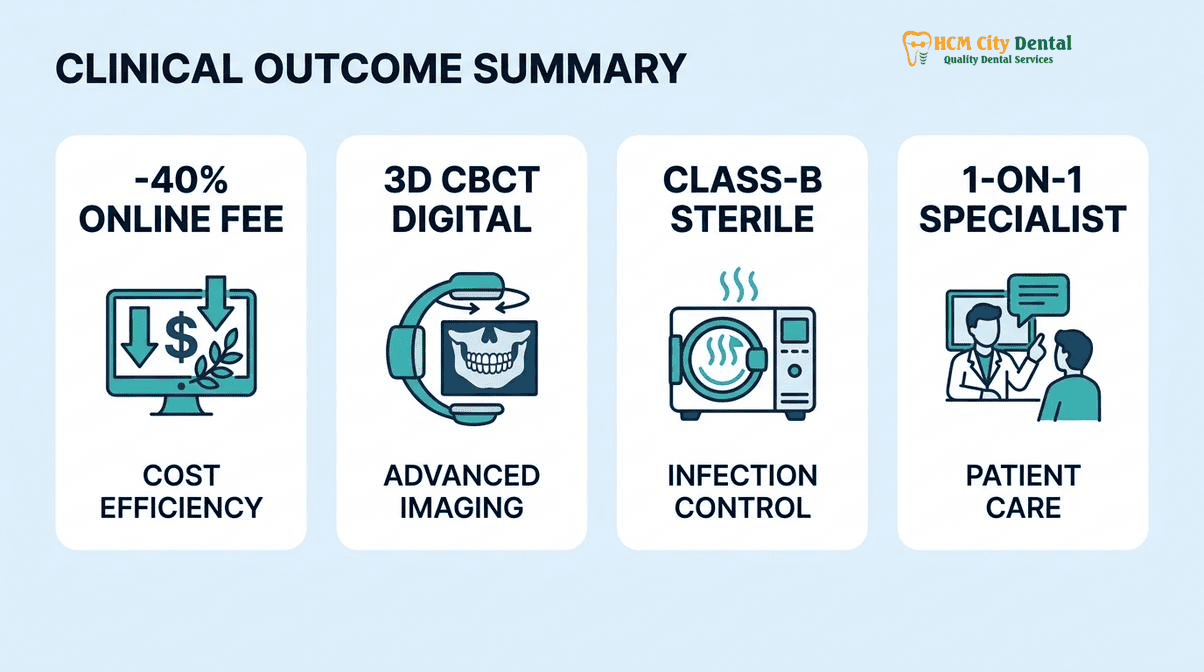
- Model 1 (1-on-1 Doctor-Direct Specialist Boutique): This is the model utilized by HCMC Dental Clinic in District 1. Led personally by Dr. Nguyen Van Cuong, DDS, this model guarantees 100% surgeon continuity. Dr. Cuong handles every step, from the initial 3D CBCT diagnosis of the bruxism/GERD triad to the final bonding of the E.max table-top onlays. Because there are no corporate overheads or associate hand-offs, patients benefit from direct accountability and a transparent -40% online pre-booking savings.
- Model 2 (Multi-Doctor Expat Clinics & Private Dental Hospitals): Clinics located in Thao Dien (District 2) or large private hospitals in District 1/District 3. These facilities offer excellent care but operate with high corporate overhead, multiple associate dentists, and premium pricing structures that often mirror Western fees.
- Model 3 (High-Volume Domestic Dental Chains): Large corporate chains with dozens of branches. While convenient for basic domestic care, the high-volume nature often leads to fragmented care, where different associate dentists handle different phases of a complex VDO reconstruction, increasing the risk of occlusal errors.
- Model 4 (Third-Party Medical Tourism Booking Agencies): Online brokers that refer patients to various clinics in exchange for a 15%–25% commission. Booking directly with a MOH-licensed clinic like HCMC Dental Clinic eliminates the middleman, ensuring direct warranty accountability and lower fees.
To provide complete transparency for patients requiring severe worn teeth rehabilitation, below is the Official 2026 Dental Fee Schedule (-40% Online Booking Pricing) for VDO restoration and protective splints at HCMC Dental Clinic. For patients needing heavy-duty protection post-rehabilitation, we also recommend reviewing our Best Night Guard for Heavy Grinding: Clinical Guide | HCMC Dental.
| VDO Rehabilitation & Bruxism Treatment | 2026 Online Booking Fee (USD) | Walk-In / Standard Fee (USD) | VND Equivalent (Online) |
|---|---|---|---|
| IPS E.max All-Ceramic Crown / Inlay / Onlay / Table-Top Overlay | $231 USD / tooth | $385 USD | 6,000,000 VND |
| IPS E.max Porcelain Veneer (Facial or Palatal) | $185 USD / tooth | $308 USD | 4,800,000 VND |
| Full Zirconia Crown (Cercon Standard / HT Multilayer) | $154 – $192 USD / tooth | $256 – $321 USD | 4,000,000 – 5,000,000 VND |
| Composite Veneer / Dental Bonding (Transitional VDO) | $35 – $46 USD / tooth | $58 – $76 USD | 900,000 – 1,200,000 VND |
| Custom Night Guard / Occlusal Splint (Dual Laminate / Hard Acrylic) | $81 – $115 USD | $135 – $191 USD | 2,106,000 – 2,990,000 VND |
| 3D CBCT Scan & Digital VDO Diagnostic Planning | $18 USD | $30 USD | 480,000 VND |
| Single European / Swiss Implant (Straumann BLT-SLA / BLA-Active) | $962 – $1,346 USD | $1,603 – $2,244 USD | 25,000,000 – 35,000,000 VND |
| Single Korean Implant (Dentis / Neo Biotech / Dentium) | $462 – $654 USD | $769 – $1,090 USD | 12,000,000 – 17,000,000 VND |
“Rebuilding a collapsed bite caused by the bruxism and GERD triad is one of the most complex procedures in dentistry. It requires a profound understanding of occlusion, biomaterials, and airway dynamics. By utilizing a 1-on-1 specialist model, we ensure that every micron of the new vertical dimension is meticulously planned and executed, providing our international patients with world-class rehabilitation at a fraction of the cost in their home countries.”
— Dr. Nguyen Van Cuong, DDS
Frequently Asked Questions
Can I have ‘Silent Reflux’ (Laryngopharyngeal Reflux / LPR) that dissolves the backs of my front teeth and molars at night even if I never feel daytime heartburn?
Yes. Silent reflux, or Laryngopharyngeal Reflux (LPR), often occurs without the classic symptom of daytime heartburn. During sleep, especially in a supine position, gastric acid can bypass the upper esophageal sphincter and pool in the oral cavity. Because you are asleep, you do not feel the burning sensation, but the acid (pH 1.5–2.0) silently dissolves the palatal enamel of your upper teeth and creates cupping on your molars.
Why should you never brush your teeth immediately after an acid reflux episode or morning sour taste, and why should you rinse with alkaline baking soda water first?
Brushing immediately after an acid reflux episode is highly destructive because the stomach acid has temporarily softened the hydroxyapatite crystals of your enamel. Brushing at this stage causes severe abrasion, literally scrubbing away the softened tooth structure. Instead, you must neutralize the oral environment first by vigorously rinsing with an alkaline solution, such as water mixed with baking soda, and wait at least 30 to 60 minutes before brushing.
How can a dentist distinguish mechanical bruxism grinding facets from chemical stomach-acid erosion (‘cupping’) on my back teeth?
Mechanical bruxism (attrition) creates flat, glossy, matching wear facets where the upper and lower teeth fit together perfectly like puzzle pieces. In contrast, chemical stomach-acid erosion creates ‘cupping’—concave, crater-like depressions on the chewing surfaces of molars. If you have silver fillings, the acid dissolves the surrounding tooth structure but leaves the filling intact, creating an ‘amalgam island’ that sits higher than the rest of the tooth.
Can severely worn-down teeth be rebuilt to their original youthful height using no-prep/minimal-prep E.max Table-Top Onlays without root canals?
Absolutely. Modern biomimetic dentistry allows us to restore lost vertical dimension of occlusion (VDO) using additive, zero-drill or minimal-prep techniques. By bonding 0.6mm to 1.0mm thick Lithium Disilicate (IPS E.max) table-top onlays and palatal veneers directly to the worn surfaces, we can rebuild the teeth to their original height without the need for aggressive crown preparations or elective root canal therapy.
How much does conservative additive full-mouth VDO reconstruction for acid erosion and bruxism cost at HCMC Dental Clinic in District 1?
At HCMC Dental Clinic in District 1, Ho Chi Minh City, our 2026 online booking fee for IPS E.max All-Ceramic Inlays/Onlays/Overlays is $231 USD per tooth (compared to $385 walk-in). A custom occlusal splint (night guard) costs $81 – $115 USD. This transparent, direct-care model offers international patients savings of up to 40% to 70% compared to equivalent full-mouth rehabilitation fees in Australia, the US, or the UK.
References
- Journal of Prosthetic Dentistry. (2023). Tribological Interactions in the Sleep Bruxism and Gastroesophageal Reflux Disease (GERD) Triad: Mechanisms of Accelerated Enamel Attrition.
- International Journal of Prosthodontics. (2022). Pathophysiology of Sleep-Disordered Breathing, Negative Intragastric Pressure, and Nocturnal Bruxism: A Polysomnographic Analysis.
- Journal of the American Dental Association (JADA). (2021). Differentiating Chemical Erosion from Mechanical Attrition: Clinical Signatures of Laryngopharyngeal Reflux (LPR) in the Dentition.
- Journal of Clinical Sleep Medicine. (2023). The Acid Reservoir Effect: Complications of Unbuffered Occlusal Splints in Patients with Uncontrolled GERD.
- Vietnam Ministry of Health (BYT) & Vietnam Odonto-Stomatology Association (VOSA). National Clinical Guidelines on Specialist Dental Care, Biomaterial Traceability & EN 13060 Class B Infection Control. (2024).