When comparing retainer cost Vietnam vs Singapore, patients typically save 60% to 70% in Vietnam. While a custom clear retainer in Singapore averages $300 to $600 USD per arch, top-tier clinics in Ho Chi Minh City provide the exact same clinical-grade materials for $80 to $150 USD.
Clinical Summary:
Orthodontic retention is a critical, non-negotiable phase of treatment required to prevent occlusal relapse after braces or aligners. The significant cost disparity between Vietnam and Singapore is driven entirely by operational overhead, real estate, and labor costs, rather than any compromise in material quality. Premium dental facilities in Ho Chi Minh City utilize identical digital scanning, 3D printing, and thermoforming technologies as their Singaporean counterparts. By choosing a reputable provider, international patients can access premium fixed or removable retainers at a fraction of the cost, often benefiting from expedited, same-day fabrication workflows designed specifically for dental tourists.
Key Takeaways:
- Vietnam offers savings of up to 70% on orthodontic retainers compared to Singapore.
- Both countries utilize identical FDA-approved materials, including Essix and Vivera plastics.
- Digital intraoral scanning allows for highly accurate, same-day fabrication in Saigon.
- Singaporean MediSave generally does not cover routine orthodontic retention appliances.
- Fixed lingual retainers require precise clinical bonding to ensure long-term occlusal stability.
Clinical Overview of Orthodontic Retention
Orthodontic retainers stabilize teeth in their new positions while the surrounding periodontal ligament and alveolar bone remodel. Consistent wear is clinically mandatory to prevent orthodontic relapse.
The completion of active Orthodontics marks the beginning of the retention phase, a period just as critical as the initial tooth movement. When braces or clear aligners are removed, the teeth are inherently unstable. The periodontal ligament (PDL)—the fibrous connective tissue that attaches the tooth root to the alveolar bone—has been stretched and compressed. These fibers possess a “memory” and will naturally attempt to pull the teeth back to their original, misaligned positions. Furthermore, the gingival and transeptal fibers take up to a year to fully reorganize and stabilize around the new tooth positions[1].
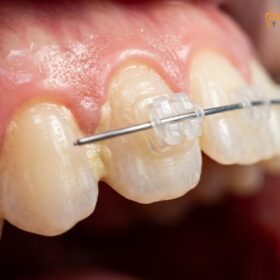
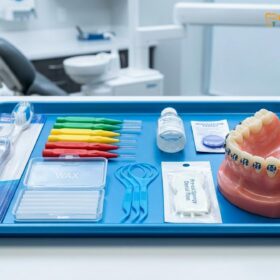
To counteract this biological tendency for relapse, orthodontists prescribe retainers. There are two primary categories of retention appliances: removable and fixed. Removable options include clear thermoplastic aligners (such as Essix or Vivera) and traditional Hawley retainers, which consist of an acrylic base and a metal wire. Fixed retainers, on the other hand, involve a custom-contoured braided wire bonded directly to the lingual (tongue-facing) surfaces of the anterior teeth using dental composite resin.
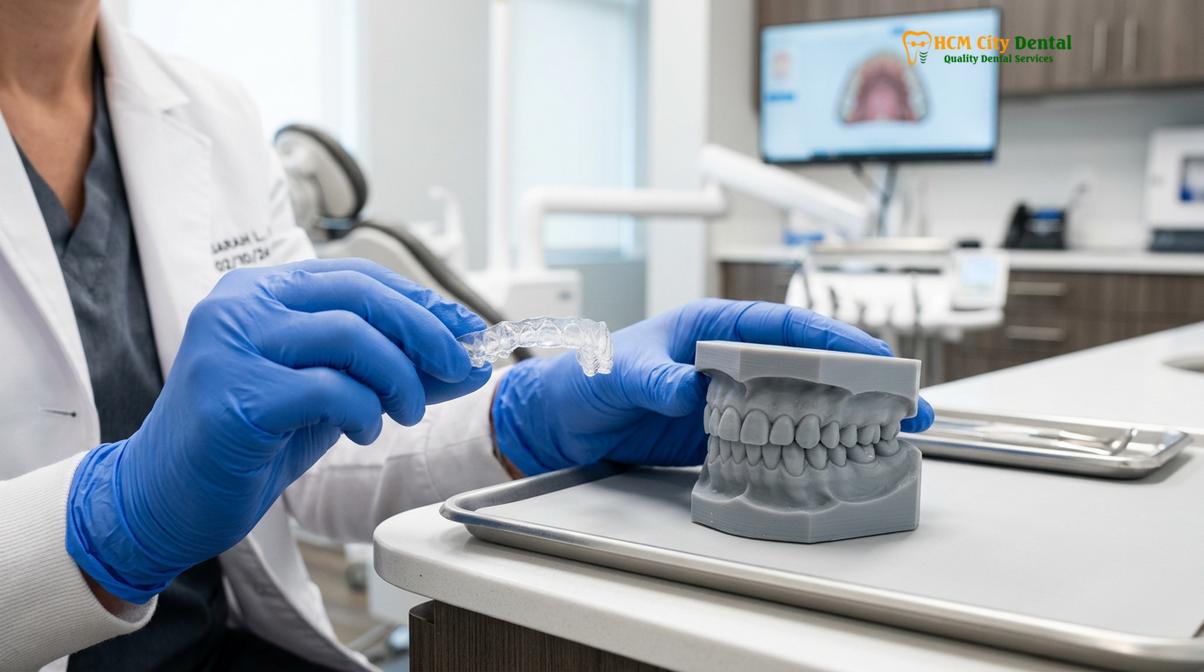
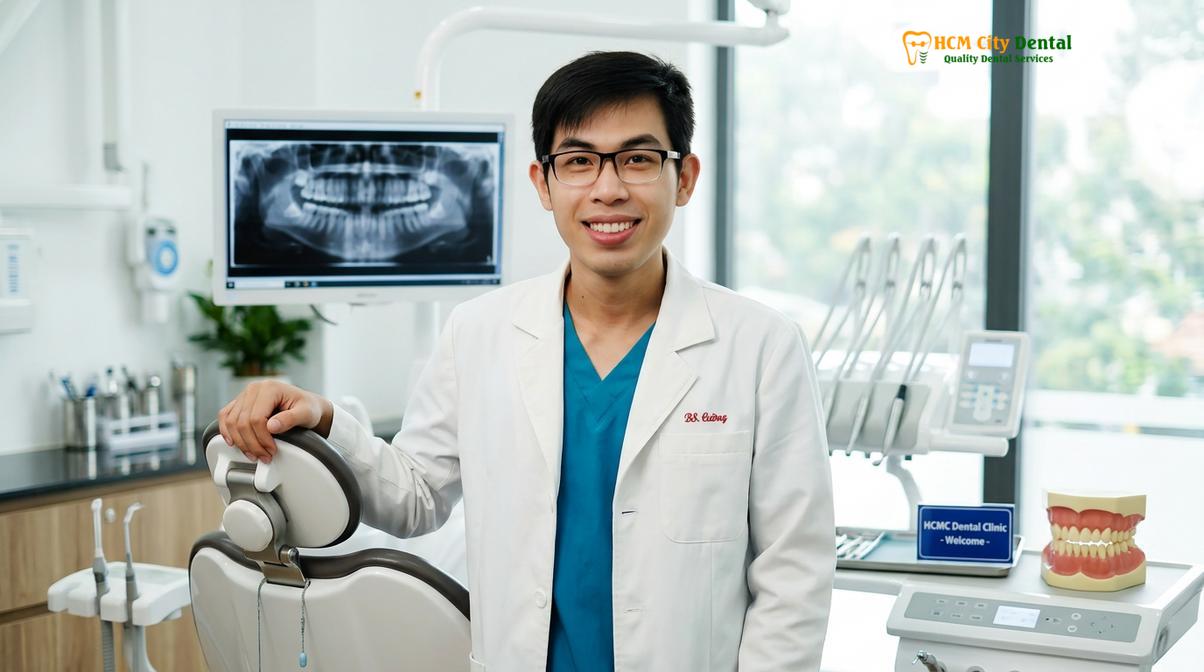
Dr. Nguyen Van Cuong, a leading specialist at HCMC Dental Clinic, emphasizes the biological necessity of this phase: “Patients often assume that once their braces are off, their treatment is entirely finished. Clinically, the bone surrounding the teeth is still relatively soft and requires months of rigid stabilization to mineralize and lock the teeth into their final aesthetic and functional positions.”
Retainer Cost Vietnam vs Singapore: A Comparative Analysis
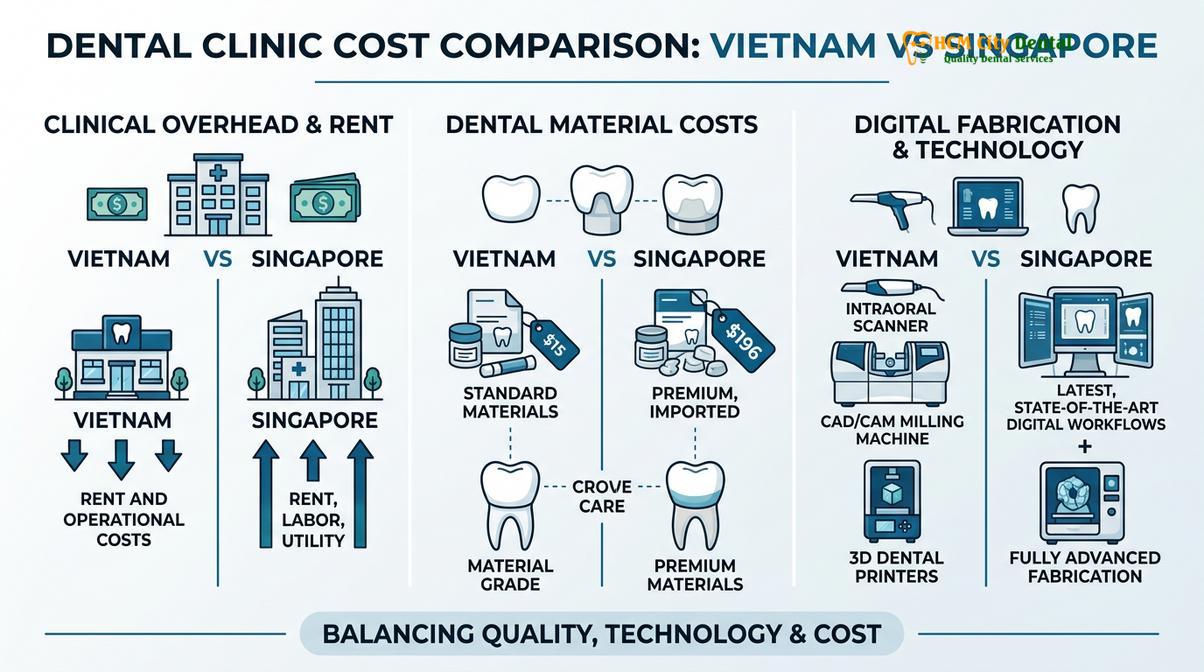
The significant price difference between the two nations stems from clinical overhead and local economic factors, not a compromise in dental material quality or clinical expertise.
For expatriates and medical tourists, understanding the financial landscape of dental care in Southeast Asia is crucial. The retainer cost singapore patients face is notoriously high. In a standard private dental clinic Singapore, the overhead costs—including exorbitant commercial rent in areas like Orchard Road, high staff salaries, and stringent local taxation—are passed directly onto the patient. Consequently, a single arch clear retainer can easily cost between $300 and $600 USD, with full sets (upper and lower) approaching $1,000 USD.
Furthermore, patients hoping to offset these costs using national health schemes are often disappointed. A MediSave dental retainer claim is generally rejected, as the Ministry of Health (MOH) in Singapore classifies orthodontic retention as a non-surgical, cosmetic necessity rather than a medical emergency. This out-of-pocket burden drives many patients to look across borders.
🇸🇬 Cost Comparison: Vietnam vs Singapore (Per Arch)
Save up to 70% - 80% on high-quality custom dental retainers. Below is a detailed cost breakdown comparing local rates in Singapore with HCMC Dental Clinic.
| Retainer Type | Singapore Avg. Cost | HCMC Dental Cost | Your Savings |
|---|---|---|---|
| Essix (Clear Aligner) | $300 - $600 SGD | $72 USD (~$98 SGD) | Save ~80% |
| Hawley (Acrylic & Wire) | $350 - $655 SGD | $120 USD (~$163 SGD) | Save ~75% |
| Fixed Bonded (Wire behind teeth) | $300 - $500 SGD | $60 USD (~$82 SGD) | Save ~80% |
In contrast, the clear retainer price in Vietnam is remarkably affordable. At a premium facility like HCMC Dental Clinic in Ho Chi Minh City, patients can expect to pay between $80 and $150 USD per arch for the exact same imported materials. The lower cost of living, reduced commercial real estate expenses, and competitive medical tourism market allow an expat dentist Saigon to offer world-class care at a fraction of the price.
“The globalization of dental supply chains means that a sheet of premium Essix plastic costs the same whether it is shipped to Singapore or Vietnam. The price discrepancy the patient sees is entirely a reflection of the clinic’s operating environment, not the clinical efficacy of the appliance.”
Treatment Workflows for International Patients
Modern clinics in Vietnam utilize digital intraoral scanners and in-house 3D printing to streamline the retainer fabrication process for traveling patients.
For international patients traveling to Ho Chi Minh City, time is often of the essence. Traditional retainer fabrication involved messy, uncomfortable alginate impressions that had to be shipped to an external dental laboratory, a process that could take weeks. Today, the workflow has been entirely digitized, allowing for a highly efficient same day retainer service.
The clinical workflow begins with a comprehensive oral examination to ensure there is no residual calculus or gingival inflammation that could compromise the fit of the appliance. Next, the dentist uses a high-resolution intraoral scanner (such as a 3Shape TRIOS or iTero) to capture a precise 3D digital impression of the patient’s dental arches. This digital file is immediately exported to an in-house CAD/CAM laboratory.
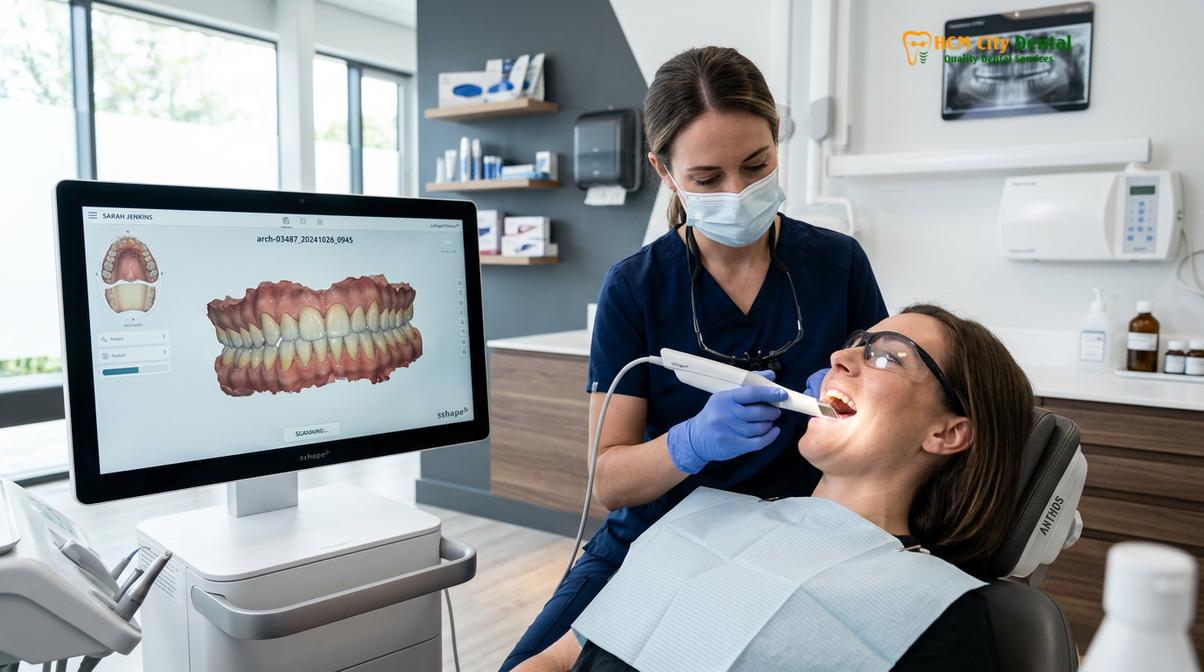
In the lab, a highly accurate resin model of the patient’s teeth is 3D printed. A sheet of medical-grade thermoplastic is then heated and vacuum-formed over this model. Once cooled, the retainer is meticulously trimmed and polished to ensure it does not impinge on the sensitive gingival tissues. This entire process can be completed in a matter of hours, allowing patients to fly in, receive their custom appliance, and enjoy the rest of their trip without delay.
Clinical Case Study: Cross-Border Retention Management
Patient Profile: A 28-year-old expatriate working in Singapore lost his upper clear retainer and noticed minor anterior shifting within 48 hours.
Clinical Action: Facing a $500 replacement quote in Singapore, the patient booked a weekend flight to Ho Chi Minh City. He visited HCMC Dental Clinic, where Dr. Nguyen Van Cuong performed a digital scan. Because the shifting was minor, Dr. Cuong designed an active retainer to gently guide the incisors back into perfect alignment.
Outcome: The patient received his custom appliance the same afternoon for $100 USD, saving hundreds of dollars even after factoring in the cost of the short flight, while successfully preventing further orthodontic relapse.
Material Quality and Clinical Standards
Premium clinics in Ho Chi Minh City import globally recognized thermoplastic materials and orthodontic wire, ensuring identical durability to Western and Singaporean standards.
A common misconception among dental tourists is that lower prices equate to inferior materials. In reality, reputable clinics in Vietnam operate on a global standard, importing their dental supplies from the United States, Germany, and Japan. When evaluating the plastic aligner retainer vs wire retainer debate, the quality of the raw material is paramount to the appliance’s longevity and safety[2].
Clear retainers are typically fabricated from copolyester (PETG) or polyurethane (PU) blends. These materials are chosen for their high tensile strength, optical clarity, and biocompatibility. They are BPA-free and designed to withstand the nocturnal forces of bruxism (teeth grinding) without fracturing. However, even the highest quality clear retainers will eventually succumb to material fatigue and require replacement every 12 to 24 months[3].
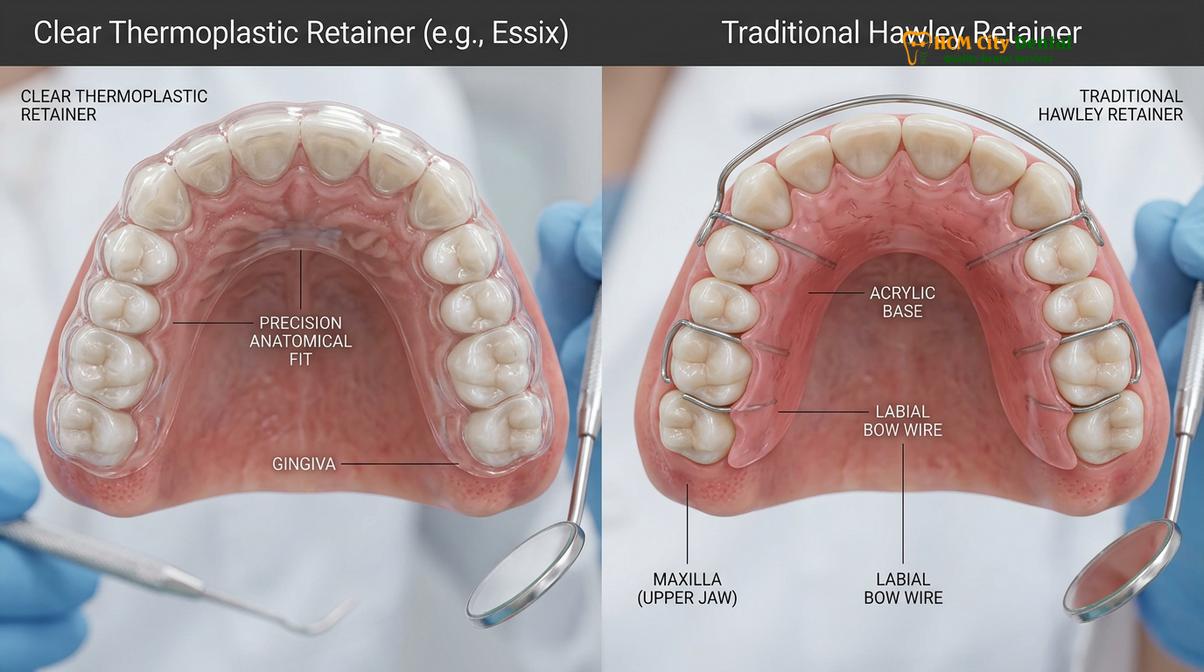
Fixed retainers demand an even higher level of clinical precision. The orthodontic wire must be passively adapted to the lingual anatomy of the teeth; if the wire is active (exerting unintended force), it can cause unwanted tooth movement. The composite resin used to bond the wire must be meticulously polished to prevent plaque accumulation, which could lead to localized periodontitis or dental caries[4].
“Whether we are fabricating a removable Essix appliance or bonding a multi-strand lingual wire, the clinical protocols remain identical to those taught in top international dental schools. Precision in isolation, etching, and bonding is what guarantees the longevity of the retention.”
When to See a Doctor (Clinical Considerations)
While retainers are designed to be durable, they are subjected to significant mechanical stress and the harsh, acidic environment of the oral cavity. Patients must remain vigilant and seek prompt clinical evaluation if they experience any issues with their retention appliances. Delaying care can result in rapid occlusal relapse, potentially necessitating a second round of orthodontic treatment.
You should schedule an appointment with an English speaking dentist retainer replacement specialist if you notice any of the following clinical signs:
- Loss of Appliance: If a removable retainer is lost, teeth can begin shifting within 24 to 48 hours. Immediate replacement is critical.
- Cracks or Perforations: A cracked clear retainer loses its structural integrity and can no longer exert the necessary holding force on the teeth.
- Debonded Fixed Retainer: If the composite resin holding a fixed wire chips or detaches from a single tooth, that specific tooth can quickly rotate out of alignment.
- Unusual Tightness: If a removable retainer feels excessively tight after a period of non-wear, it indicates that the teeth have begun to shift. Forcing a tight retainer can cause trauma to the periodontal ligament.
Clinical Warning: Never attempt to repair a broken fixed retainer wire or a cracked clear plastic retainer with household adhesives (such as superglue). These chemicals are highly toxic, not biocompatible, and can cause severe chemical burns to the oral mucosa. Always seek professional dental care for repairs or replacements.
For patients concerned about the safety of long-term plastic wear, it is important to understand the clinical facts. Are clear retainers safe to wear? Yes, provided they are fabricated from medical-grade, BPA-free materials and are cleaned daily to prevent bacterial colonization. Regular dental check-ups are essential to monitor both the condition of the retainer and the underlying health of the teeth and gums[5].
If you are experiencing issues with your current appliance or are seeking a cost-effective replacement while traveling, the team at HCMC Dental Clinic in Ho Chi Minh City is equipped to provide rapid, international-standard care. Utilizing advanced digital workflows, our specialists can ensure your smile remains perfectly aligned for years to come.
Frequently Asked Questions
Can I use my MediSave to pay for a dental retainer in Singapore?
No, MediSave generally cannot be used for routine orthodontic retainers. The Ministry of Health restricts MediSave usage to surgical procedures, meaning patients must pay out-of-pocket for retainers, which drives many to seek more affordable options in Vietnam. Orthodontic retention is classified as a cosmetic or non-surgical necessity.
How long does it take to get a custom retainer in Vietnam?
A custom clear retainer can often be fabricated within 24 hours. Modern clinics utilize digital intraoral scanners and in-house 3D printing to provide a same day retainer service, making it highly convenient for international travelers. This eliminates the need for messy traditional impressions and long laboratory wait times.
Are the materials used in Vietnam the same as in Singapore?
Yes, reputable clinics in Vietnam import the exact same FDA-approved materials used globally. Whether you choose Essix, Vivera, or a Hawley appliance, the clinical-grade plastics and orthodontic wires are identical to those used in a private dental clinic Singapore. The price difference is due to operational overhead, not material quality.
What should I do if my fixed retainer breaks while traveling?
You should seek immediate clinical attention to prevent your teeth from shifting. An expat dentist Saigon can quickly remove the broken wire, polish the residual composite resin, and bond a new fixed retainer to stabilize your alignment. Delaying repair can lead to rapid orthodontic relapse.
How often should I replace my clear plastic retainers?
Clear retainers typically need replacement every 12 to 24 months, depending on wear and tear. Signs that you need a replacement include cracking, discoloration, or a loose fit that no longer holds the teeth firmly in place. Regular replacement ensures optimal hygiene and continuous occlusal stability.
References
- Journal of Prosthodontic Research. Orthodontic retainer wear and stability. (2021).
- American Journal of Orthodontics. Relapse rates and retention protocols. (2019).
- European Journal of Orthodontics. Essix vs Hawley retainers clinical trial. (2020).
- Journal of Clinical Orthodontics. Plaque accumulation on fixed retainers. (2022).
- Australian Dental Journal. Patient compliance with dental retainers. (2018).