Can a retainer straighten teeth? Generally, no. Retainers are designed to passively hold teeth in their current position, not move them. However, in highly specific cases of minor orthodontic relapse, a slightly adjusted retainer may facilitate microscopic shifts to realign teeth back to their post-treatment state.
Clinical Summary:
Orthodontic retainers serve a distinct biomechanical purpose: maintaining the alignment achieved by braces or aligners by allowing the periodontal ligament and alveolar bone to stabilize. While they lack the active force mechanisms required for significant tooth movement, they can occasionally be utilized to correct very minor shifting if a patient experiences a slight relapse shortly after treatment. Attempting to use an ill-fitting retainer to correct moderate to severe crowding or large gaps is clinically contraindicated and can result in root resorption, periodontal trauma, or irreversible bite complications. Patients seeking to correct noticeable misalignment should undergo a professional clinical evaluation to determine if active orthodontic intervention is required.
Key Takeaways:
- Retainers are passive appliances designed to prevent teeth from shifting, not to initiate active tooth movement.
- In cases of very minor relapse, wearing a recently fitted retainer full-time may guide teeth back into their correct positions.
- Forcing an old, tight-fitting retainer onto shifted teeth can cause severe pain and permanent periodontal damage.
- Wire (Hawley) retainers can sometimes be slightly adjusted by a dentist to direct microscopic tooth movements.
- Significant crowding, bite issues, or large gaps require active orthodontic treatment, such as braces or clear aligners.
The Biomechanics of Retainers vs. Braces
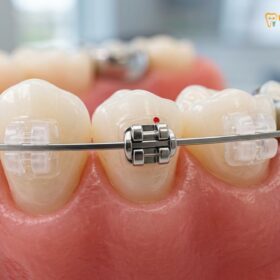
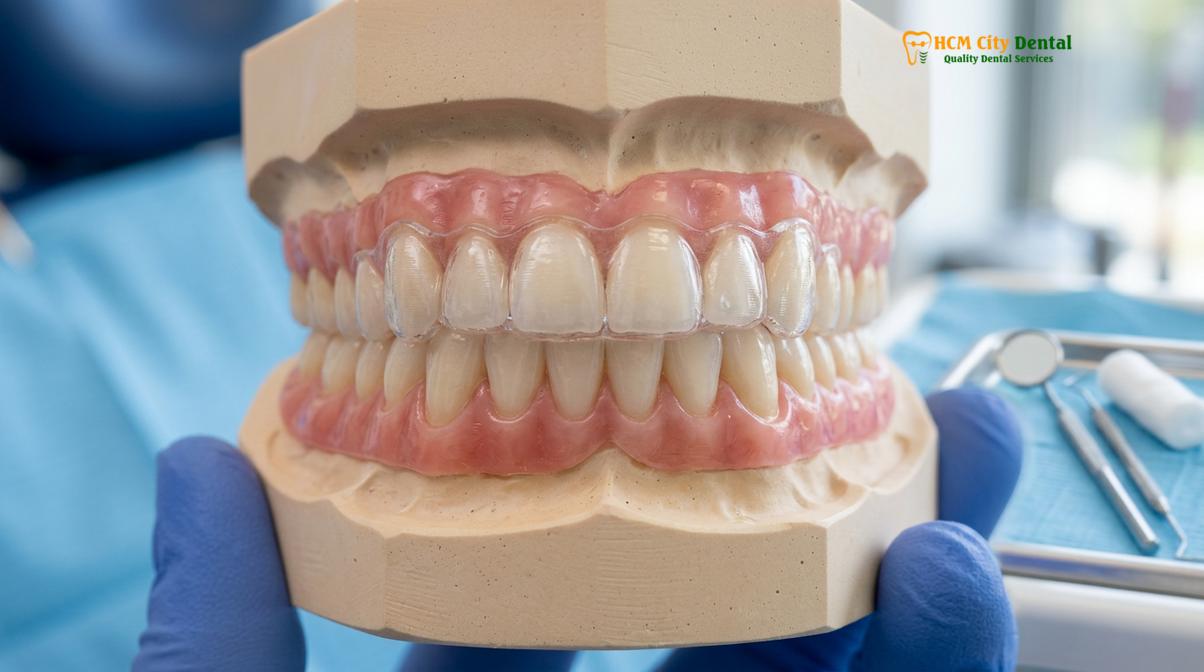
Orthodontic appliances serve distinct biomechanical purposes; braces apply continuous active force to move teeth, whereas retainers provide passive resistance to prevent shifting.
To understand why a retainer is generally ineffective at straightening teeth, it is essential to examine the underlying biomechanics of Orthodontics. Tooth movement is not merely a mechanical process; it is a complex biological response involving the periodontal ligament (PDL) and the surrounding alveolar bone. When active orthodontic appliances, such as traditional braces or clear aligners, are applied to the dentition, they exert a constant, calculated pressure. This pressure compresses the PDL on one side of the tooth root and stretches it on the opposite side.
This mechanical stress triggers a cellular response. Osteoclasts (bone-resorbing cells) break down bone on the compressed side, allowing the tooth to move, while osteoblasts (bone-forming cells) build new bone on the stretched side to stabilize the tooth in its new position. This continuous cycle of bone remodeling requires sustained, active force—something that standard retainers are simply not designed to provide[1].
The Passive Nature of Retention
Once active orthodontic treatment is complete, the teeth are in their optimal positions, but the surrounding bone and gingival fibers have not yet fully stabilized. The gingival fibers, in particular, have a “memory” and can exert a pulling force that attempts to drag the teeth back to their original, misaligned positions. This phenomenon is known as orthodontic relapse.
The primary function of a retainer is to counteract these elastic forces. Retainers are passive appliances. They encapsulate the teeth or rest against them, acting as a physical barrier that prevents movement. Because they do not exert the active, directional pressure required to stimulate osteoclastic and osteoblastic activity, they cannot effectively move teeth through the bone. For patients looking to fix teeth without braces, a retainer is generally not a viable primary treatment method unless the required movement is microscopic.
When Can a Retainer Straighten Teeth?
A retainer can only straighten teeth if the misalignment is a very recent, minor relapse and the original retainer still fits over the dental arch without excessive force.
While the general rule is that retainers do not move teeth, there is a narrow clinical exception: the management of minor orthodontic relapse. If a patient neglects to wear their retainer for a short period, the teeth may begin to drift slightly. In these specific scenarios, the original retainer may feel tight but can still be fully seated over the teeth.
When the patient resumes wearing the retainer full-time, the rigid structure of the appliance acts as a template. The slight pressure exerted by the tight retainer can gently guide the teeth back into the exact positions they were in when the retainer was originally fabricated. This process relies on the fact that the teeth have only shifted a fraction of a millimeter and the surrounding bone has not yet fully solidified in the new, relapsed position[2].
“Patients often ask if they can dig out a retainer they haven’t worn in years to fix their shifted teeth. If the retainer doesn’t seat easily, forcing it can cause severe trauma to the roots and bone. Retainers are for maintenance, not miracles.”
The Window of Opportunity
The success of using a retainer for minor crowding or slight relapse depends entirely on timing and the degree of movement. If the teeth have shifted significantly, the retainer will no longer fit. Attempting to bite down on an ill-fitting clear retainer or forcing a wire retainer over severely shifted teeth is highly dangerous. It applies uncontrolled, excessive force to the crowns of the teeth without properly moving the roots, which can lead to root resorption, severe pain, and even tooth mobility.
Types of Retainers and Their Shifting Capabilities
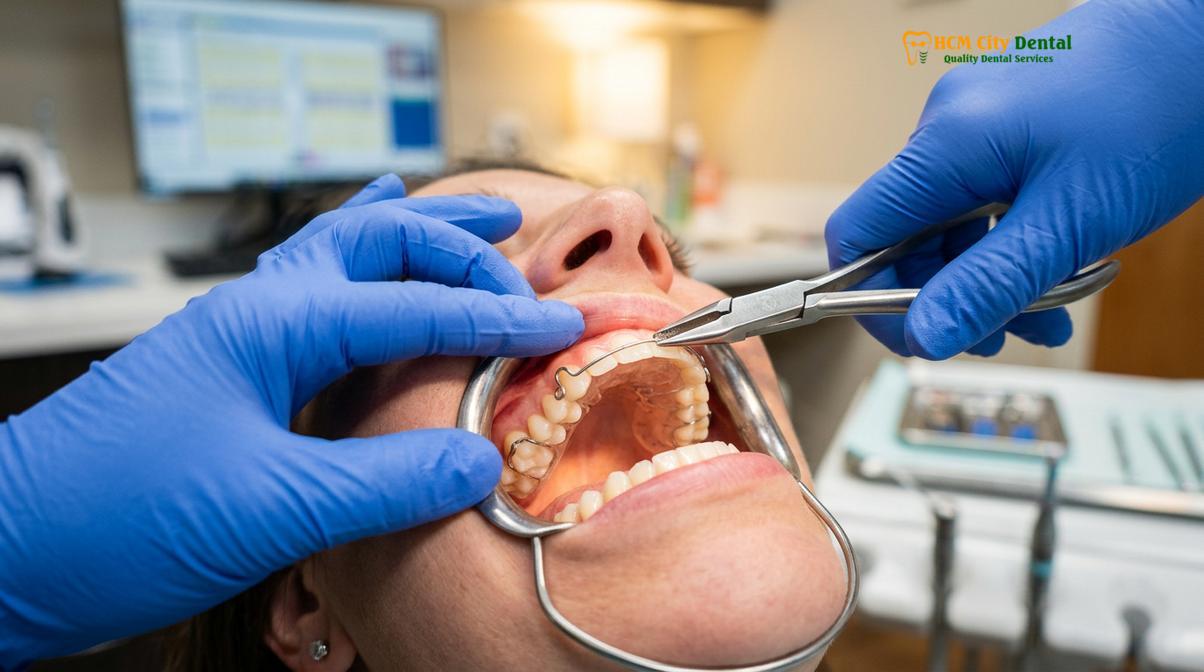
Different retainer materials offer varying degrees of flexibility; clear plastic retainers provide rigid encapsulation, while wire retainers can be slightly adjusted by a dentist to guide minor tooth movement.
The material and design of the retainer play a significant role in its ability to manage minor tooth movement. In modern orthodontics, there are three primary types of retainers: Hawley (wire), Essix (clear plastic), and fixed (permanent) retainers. Each interacts with the dentition differently, and clinical trials have shown varying degrees of stability depending on the appliance used[3].
Hawley Wire Retainers
The Hawley retainer is a traditional appliance consisting of an acrylic base that rests against the palate or the floor of the mouth, combined with a metal wire (labial bow) that wraps around the front teeth. Because the wire is adjustable, a skilled orthodontist can make minute modifications to the omega loops (the U-shaped bends in the wire). By slightly tightening these loops, the dentist can increase the pressure on the front teeth, utilizing the appliance for very minor corrections.
This adjustability makes the Hawley retainer somewhat unique. While it is not a substitute for braces, it can be actively tweaked to close microscopic spaces or tuck in a slightly protruding incisor. Patients interested in the cost and application of these appliances can review the Hawley Wire Retainer Price Vietnam: Clinical Guide | HCMC Dental.
Essix Clear Retainers
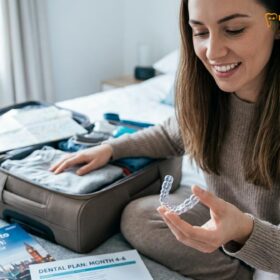
Essix retainers are vacuum-formed, clear thermoplastic appliances that fit snugly over the entire dental arch. They look very similar to clear aligners, but their function is entirely different. Aligners are fabricated in a sequential series, with each tray designed to move the teeth a fraction of a millimeter. An Essix retainer is a single, rigid tray designed to hold the teeth exactly where they are.
Because of their rigid, encapsulating nature, Essix retainers are excellent at preventing movement but offer no adjustability. If a patient experiences an aligner style retainer shift—where the teeth move slightly due to non-wear—an Essix retainer can only correct it if the tray can still be fully seated. For more details on clear retention, see the Essix Clear Retainer Price Vietnam: Clinical Guide | HCMC Dental.
| Retainer Type | Material | Adjustability | Ability to Correct Minor Relapse |
|---|---|---|---|
| Hawley | Acrylic and Metal Wire | High (by a dentist) | Can be adjusted to guide very minor movements or close microscopic spaces. |
| Essix (Clear) | Thermoplastic Polyurethane | None | Can guide teeth back only if the relapse is minimal and the tray still fits. |
| Fixed (Permanent) | Braided Metal Wire and Composite | None | Strictly passive; prevents movement but cannot correct existing misalignment. |
Limitations: What Retainers Cannot Fix
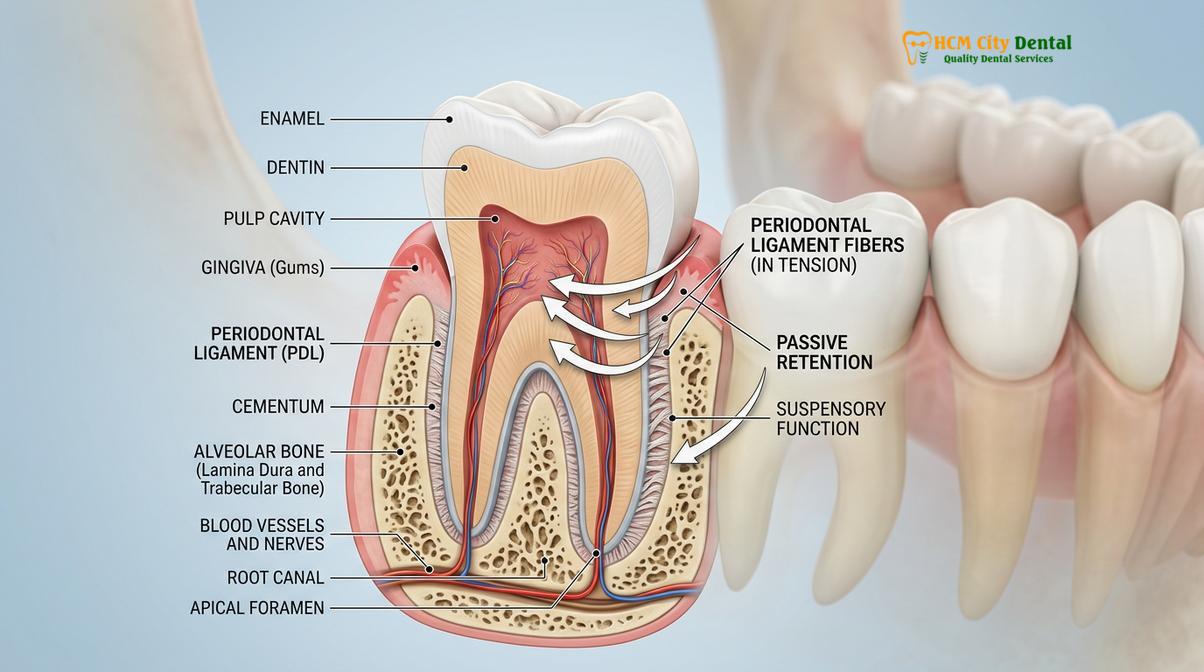
Retainers lack the structural leverage to correct severe crowding, significant bite discrepancies, or large gaps that require active root movement.
It is crucial to establish realistic clinical expectations regarding what a retainer can and cannot achieve. The biomechanical limitations of passive appliances mean that they are entirely unsuitable for comprehensive orthodontic correction. Patients who attempt to use retainers as a primary straightening tool often experience frustration, discomfort, and potential dental harm, particularly if plaque accumulation and poor hygiene complicate the situation[4].
Severe Crowding and Rotations
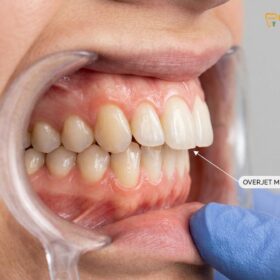
Crowded teeth occur when there is insufficient space in the dental arch for all the teeth to align properly. Correcting crowding requires expanding the arch, extracting teeth, or performing interproximal reduction (IPR) to create space, followed by the application of active forces to move the teeth into that space. A retainer cannot create space, nor can it apply the rotational forces needed to untwist a severely rotated tooth. If a patient has moderate to severe crowding, active treatment with braces or aligners is mandatory.
Clinical Warning: Never attempt to force an old, tight retainer over crowded or rotated teeth. The excessive, undirected pressure can cause the roots of the teeth to resorb (shorten) and may lead to irreversible damage to the periodontal ligament and surrounding bone.
Closing Significant Gaps
Many patients wonder if they can close a gap with retainer appliances. If the gap (diastema) is microscopic—perhaps a fraction of a millimeter that opened up due to a few days of not wearing the retainer—a slightly adjusted Hawley retainer might be able to nudge the teeth back together. However, a retainer cannot close a new, significant gap or a gap that was never closed during previous orthodontic treatment.
Moving teeth together to close a space requires bodily movement—moving both the crown and the root of the tooth simultaneously through the bone. Retainers, if they apply any force at all, tend to cause tipping (moving the crown while the root stays stationary). Tipping teeth to close a gap results in poor root angulation, unstable bites, and a high likelihood of the gap reopening. For permanent retention of closed gaps, dentists often recommend a bonded wire, detailed in the Fixed Permanent Retainer Price Vietnam: Clinical Guide | HCMC Dental.
Clinical Case Study: Managing Orthodontic Relapse
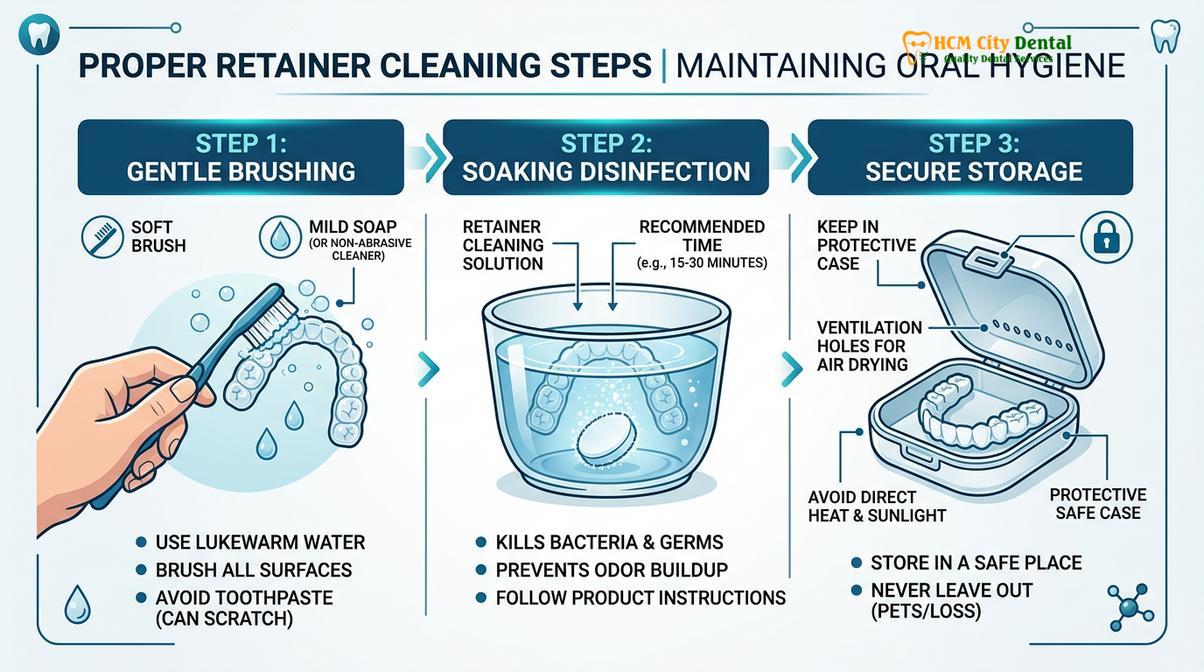
Real-world clinical applications demonstrate that timely intervention with an existing retainer can successfully reverse minor post-treatment shifting without requiring full braces.
To illustrate the specific scenarios where a retainer can be used to manage tooth movement, we can examine a typical clinical presentation of orthodontic relapse. The success of such interventions relies heavily on the patient seeking prompt professional evaluation rather than attempting to force an ill-fitting appliance at home.
Patient Profile: A 24-year-old patient visited HCMC Dental Clinic in Ho Chi Minh City reporting that her upper front teeth had begun to shift. She had completed clear aligner therapy two years prior but admitted to losing her Essix retainer three weeks ago.
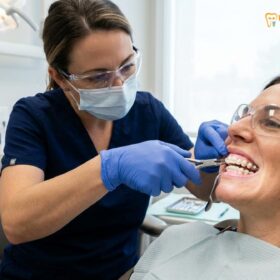
Clinical Assessment: Clinical examination revealed a 0.5mm diastema (gap) forming between the maxillary central incisors and slight mesial rotation of the lateral incisors. The relapse was classified as very minor. The periodontal tissues were healthy, and the bone architecture was stable.
Intervention: Because the original Essix retainer was lost, the dentist could not use it to guide the teeth back. Instead, a new active intervention was required. However, because the movement was so minor, full braces were unnecessary. The clinical team at HCMC Dental Clinic fabricated a slightly modified active clear retainer (essentially a single-stage aligner) based on her original post-treatment digital scans.
Outcome: The patient was instructed to wear the modified active retainer for 22 hours a day. Within 14 days, the microscopic gap closed, and the lateral incisors de-rotated back into perfect alignment. A new, passive Essix retainer was then fabricated for long-term nighttime wear.
This case highlights that while a standard passive retainer cannot fix shifted teeth, a dentist can utilize retainer-like appliances to manage very minor relapse. Patients requiring custom retention solutions can explore options via the Orthodontic Retainer Price Ho Chi Minh City | HCMC Dental guide.
The Role of Patient Compliance in Retention
Consistent adherence to prescribed retainer wear protocols is the only definitive method to prevent orthodontic relapse and maintain long-term dental alignment.
The question of whether a retainer can straighten teeth usually arises because a patient has failed to comply with their retention protocol. The biological forces that cause teeth to shift are persistent and lifelong. As we age, natural physiological changes, such as late mandibular growth and changes in the periodontal ligament, cause teeth to drift forward and inward—a process known as mesial drift.
To combat this, orthodontists prescribe specific wear schedules. Immediately following the removal of braces or aligners, patients are typically instructed to wear their retainers full-time for several months. This critical period allows the alveolar bone to remodel and harden around the teeth in their new positions, and for the gingival fibers to reorganize and lose some of their elastic memory. Studies consistently show that patient compliance is the single most critical factor in preventing relapse[5].
“Retention is not the end of orthodontic treatment; it is a lifelong phase of maintenance. The bone is dynamic, and without the passive stabilization of a retainer, the teeth will inevitably follow the path of least resistance and shift.”
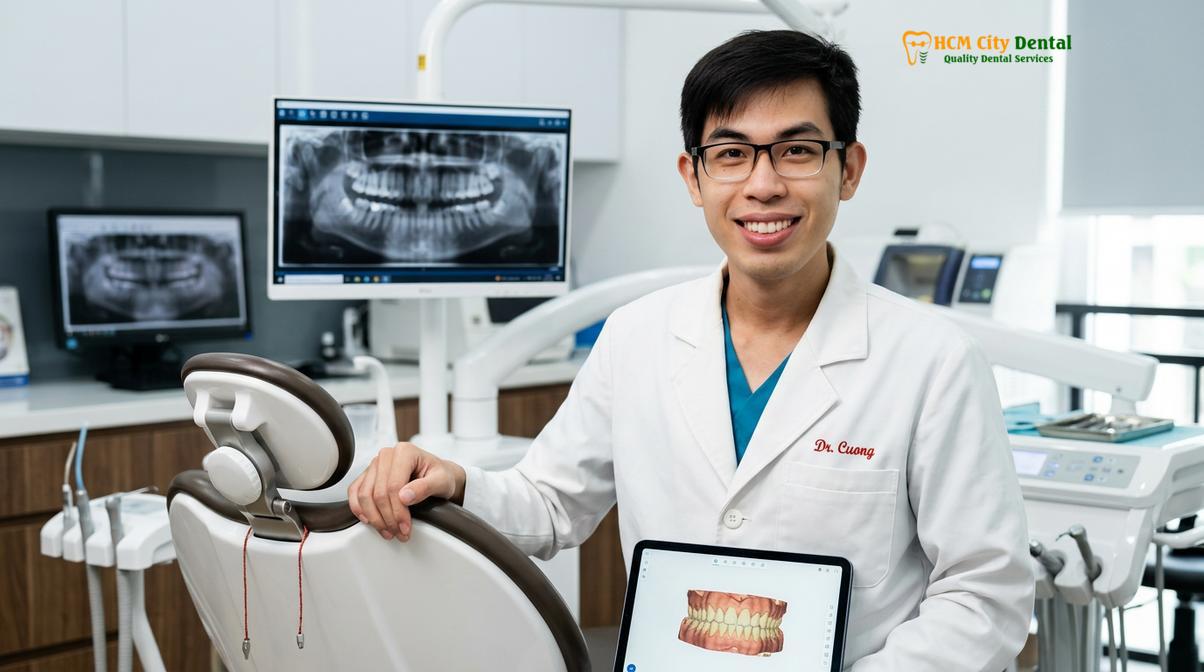
Dr. Nguyen Van Cuong, a leading specialist, emphasizes that retention is a lifelong commitment requiring the right appliance and strict patient adherence. For patients experiencing minor shifts, consulting with an expert ensures the correct appliance is chosen without risking root damage. You can learn more about his clinical approach in the Dr Cuong Dentist Custom Retainers: Clinical Guide | HCMC Dental.
When to Consult an Orthodontist
Recognizing the signs of problematic tooth shifting and seeking timely professional advice can prevent the need for extensive retreatment.
If you have noticed your teeth shifting and are wondering if your old retainer can fix the problem, it is imperative to seek professional clinical advice. Attempting to diagnose and treat orthodontic relapse at home can lead to severe dental complications. According to guidelines aligned with the Vietnam Association of Orthodontists (VAO) and the Ministry of Health, patients should seek immediate evaluation if their retainer causes sharp pain, fails to seat fully, or if visible gaps and crowding begin to reappear.
A clinical examination will determine whether a simple adjustment to your current retainer is sufficient, or if a short course of active aligner therapy is required to safely guide your teeth back into their optimal positions.
References
- Journal of Prosthodontic Research. Orthodontic retainer wear and stability. (2021).
- American Journal of Orthodontics. Relapse rates and retention protocols. (2019).
- European Journal of Orthodontics. Essix vs Hawley retainers clinical trial. (2020).
- Journal of Clinical Orthodontics. Plaque accumulation on fixed retainers. (2022).
- Australian Dental Journal. Patient compliance with dental retainers. (2018).
If you are experiencing orthodontic relapse or need a new appliance to maintain your smile, contact HCMC Dental Clinic in Ho Chi Minh City today. Our specialists can evaluate your alignment and recommend the safest, most effective retention strategy. Explore our Affordable Dental Retainers Vietnam: Cost & Guide | HCMC Dental to find the best solution for your long-term dental health.