A comprehensive dental tourism vietnam guide provides international patients with a strategic roadmap to access world-class, affordable dental care. By combining advanced clinical treatments with a structured travel itinerary, patients can achieve exceptional oral health outcomes while enjoying significant cost savings compared to healthcare systems in Western countries.
Clinical Summary:
Dental tourism in Vietnam offers a highly regulated, cost-effective solution for complex restorative and cosmetic dentistry. Clinics in Ho Chi Minh City utilize international sterilization protocols, digital CAD/CAM workflows, and premium biocompatible materials. Comprehensive dental packages streamline the patient experience by integrating clinical care with logistical support, including airport transfers and accommodation assistance. With English-fluent specialists leading multidisciplinary teams, international patients receive predictable, high-quality outcomes at a fraction of the cost typically found in Australia, the United States, or the United Kingdom.
Key Takeaways:
- Cost savings can reach up to 70% compared to standard dental fees in Australia, the US, and the UK.
- Premium dental packages include airport transfers, concierge support, and hotel partner discounts.
- Clinical workflows follow strict international autoclave sterilization and Vietnam Ministry of Health safety standards.
- A structured travel itinerary ensures efficient scheduling, from initial 3D scanning to final prosthesis fitting.
- English-fluent clinical teams and direct billing insurance options provide a seamless experience for foreigners.
The Clinical and Financial Advantages of Dental Tourism in Ho Chi Minh City
Ho Chi Minh City combines advanced dental technology with highly competitive pricing, allowing international patients to save significantly on complex procedures without compromising clinical quality.
The global landscape of healthcare is shifting rapidly, and Southeast Asia has emerged as a premier hub for medical travel. For patients requiring extensive restorative work—such as full-arch implant rehabilitations, complex endodontic therapy, or comprehensive smile makeovers—the financial burden in Western nations can be prohibitive. This economic reality has given rise to a new demographic of proactive patients seeking uncompromising clinical excellence alongside substantial financial relief.
When conducting a thorough price comparison, the economic advantages become immediately apparent. Procedures in Ho Chi Minh City typically cost a fraction of what they would in Australia, the United States, or the United Kingdom. For instance, a single premium titanium implant that might cost upwards of several thousand dollars in North America can often be completed for significantly less in Vietnam. Importantly, this price differential is not achieved by utilizing inferior materials. Top-tier clinics import the exact same FDA-approved and CE-marked materials—such as premium implant systems and high-strength ceramics—used by leading practitioners globally [1].
The cost savings are primarily driven by macroeconomic factors, including lower commercial real estate overhead, reduced administrative costs, and a highly competitive local healthcare market. This allows clinics to invest heavily in state-of-the-art diagnostic equipment, such as Cone Beam Computed Tomography (CBCT) scanners and intraoral digital impression systems, ensuring that the clinical standard of care remains exceptionally high. For patients exploring general dentistry options abroad, understanding this economic model is crucial for building trust in the cross-border healthcare system.
“The paradigm of international dental care has evolved from mere cost-saving to value-optimization. Patients now travel not just for cheaper treatments, but to access multidisciplinary specialist teams and digital workflows that might be financially out of reach in their home countries.”
Comprehensive Dental Packages: What to Expect
Premium dental packages in Vietnam are designed to eliminate logistical stress by bundling clinical treatments with airport transfers, translation services, and accommodation support.
Traveling abroad for medical procedures can induce anxiety, particularly when navigating a new city and a foreign language. To mitigate this, leading clinics have developed comprehensive dental packages tailored specifically for foreigners. These packages operate on a concierge medicine model, ensuring that every aspect of the patient’s journey is meticulously managed from the moment they disembark from their flight.
A standard premium package typically begins with a complimentary airport transfer. A dedicated clinic representative meets the patient at the international airport, providing immediate reassurance and seamless transportation to their accommodation. Furthermore, clinics often establish strategic partnerships with local hospitality providers, offering hotel partner discounts in central districts. This central location is vital, as it places the patient in a safe, vibrant area with immediate access to the clinic for multiple appointments and post-operative check-ups.
Beyond logistics, administrative support is a cornerstone of these packages. Navigating international healthcare policies can be complex, which is why top clinics employ dedicated patient coordinators. These professionals assist with direct billing insurance claims, providing the necessary translated medical records, itemized invoices, and diagnostic imaging required by international insurers. This level of administrative transparency is essential for expats and medical travelers seeking reimbursement.
For patients who may require urgent attention upon arrival, having access to an emergency dentist in Ho Chi Minh City ensures that unexpected issues—such as a lost crown during transit or acute pulpitis—are managed swiftly and professionally within the framework of their planned dental tourism experience.
Step-by-Step Travel Itinerary for Major Dental Procedures
A well-planned travel itinerary synchronizes clinical appointments with recovery periods, ensuring efficient treatment delivery from the initial consultation to the final fitting.
Time is a critical factor in dental tourism. Unlike local patients who can spread appointments over several months, international patients require highly condensed, efficient treatment schedules. A meticulously planned travel itinerary is therefore essential to maximize clinical outcomes while allowing the patient to enjoy their time in Vietnam.
The clinical workflow for restorative procedures—such as porcelain veneers or multiple crowns—is typically structured over a five to seven-day period. This timeframe accounts for the biological requirements of tissue healing and the technical requirements of laboratory fabrication. The integration of in-house CAD/CAM (Computer-Aided Design and Computer-Aided Manufacturing) milling machines has revolutionized this process, allowing for rapid turnaround times without sacrificing precision [2].
Below is a standard clinical itinerary for a multi-unit restorative case:
| Day | Clinical Phase | Description of Procedures |
|---|---|---|
| Day 1 | Diagnostics & Preparation | Comprehensive examination, CBCT scanning, digital smile design, tooth preparation, and placement of provisional (temporary) restorations. |
| Day 2 | Laboratory Fabrication | Patient rests or tours the city while the in-house dental laboratory mills and characterizes the final ceramic restorations. |
| Day 3 | Try-In & Adjustments | The provisional restorations are removed. The final ceramics are tried in to verify marginal fit, occlusion, and aesthetic integration. |
| Day 4 | Final Glazing | Any necessary micro-adjustments are communicated to the lab for final glazing and polishing of the ceramics. |
| Day 5 | Final Cementation | The restorations are permanently bonded using advanced adhesive protocols. Occlusion is meticulously checked. |
| Day 6 | Post-Operative Review | A final clinical review to ensure gingival health, occlusal harmony, and patient satisfaction before departure. |
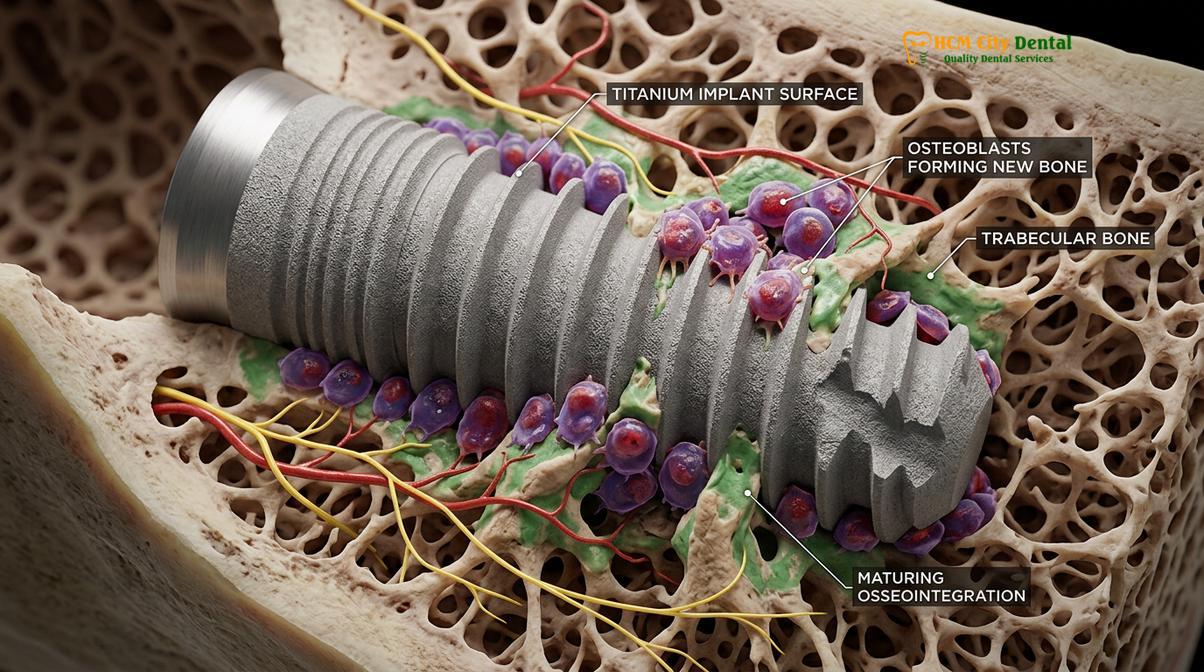
For surgical procedures, the timeline is dictated by the principles of osseointegration and tissue healing. Patients undergoing implant placement must understand that the process usually requires two separate trips. The first trip involves the surgical placement of the titanium fixture. Following a healing period of several months—during which the bone fuses to the implant surface—the patient returns for a second trip to have the final abutment and crown fitted. Detailed adherence to a comprehensive post-op care guide is critical during the interim healing phase to ensure implant success.
Ensuring Safety: Clinic Selection and Infection Control
Selecting a reputable clinic requires verifying strict autoclave sterilization protocols, adherence to local health guidelines, and the presence of an English-fluent clinical team.
The primary concern for any patient traveling abroad for medical care is safety. The success of dental tourism hinges entirely on the rigorous implementation of cross-infection controls and the clinical expertise of the attending practitioners. When evaluating clinic selection, patients must look beyond marketing aesthetics and scrutinize the facility’s adherence to international medical standards.
Top-tier facilities implement rigorous cross-infection controls that strictly adhere to the Vietnam Ministry of Health (MOH) guidelines, while simultaneously mirroring those mandated by international health authorities. This begins with the sterilization room, which should be the heart of any reputable clinic. Instruments must undergo a multi-step decontamination process: manual scrubbing, ultrasonic enzymatic cleaning, individual pouching with chemical indicators, and finally, sterilization in a Class B vacuum autoclave. These autoclaves utilize fractionated pre-vacuum technology to ensure steam penetrates even the most complex hollow instruments, guaranteeing complete eradication of all microbial life, including bacterial spores [3].
Furthermore, the materials used during restorative procedures must be biocompatible and safe. Reputable clinics prioritize the use of non-toxic materials, ensuring that treatments align with holistic health principles. Patients seeking BPA-free composite fillings can rest assured that modern composite resins and ceramic materials used in premium Vietnamese clinics are entirely free of harmful endocrine disruptors.
Advanced Clinical Workflows and Technology
Modern clinics in Vietnam utilize 3D Cone Beam CT imaging, intraoral digital scanners, and CAD/CAM milling to ensure precise diagnostics and predictable restorative outcomes.
The technological infrastructure of a dental clinic directly correlates with the predictability and safety of the treatments provided. In Ho Chi Minh City, the leading centers for dental tourism have invested heavily in digital dentistry, transitioning away from analog techniques that are prone to human error and material distortion.
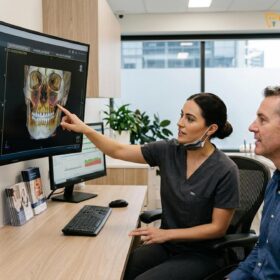
Diagnostic precision begins with 3D Cone Beam Computed Tomography (CBCT). Unlike traditional 2D panoramic X-rays, CBCT provides a three-dimensional volumetric reconstruction of the maxillofacial region. This allows the surgeon to accurately assess bone density, locate the inferior alveolar nerve, and map the maxillary sinus cavities prior to any surgical intervention. This technology is the cornerstone of guided implant surgery, where a 3D-printed surgical stent dictates the exact angulation and depth of the implant drill, significantly reducing the risk of iatrogenic nerve damage [4].
In the restorative phase, intraoral digital scanners have largely replaced traditional alginate or PVS impression materials. The integration of intraoral scanning eliminates the discomfort of traditional impressions while capturing the dental arches with micron-level accuracy. This digital file is instantly transmitted to the CAD software, where the final restoration is designed and subsequently milled from a solid block of zirconia or lithium disilicate, ensuring expedited delivery for traveling patients [5].
“Digital dentistry is not merely a convenience; it is a clinical necessity for the medical traveler. By utilizing intraoral scanners and CAD/CAM technology, we drastically reduce the margin of error, ensuring that the final prosthesis fits perfectly within the condensed timeframe of a travel itinerary.”
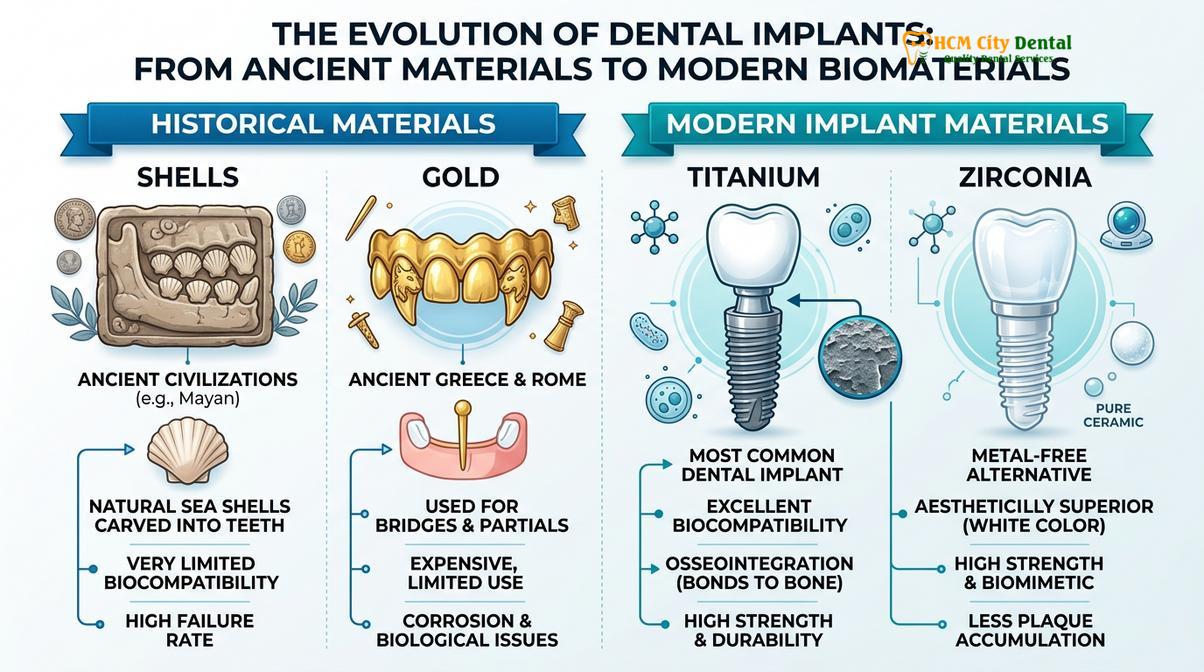
Understanding the evolution of these technologies helps patients appreciate the high standard of care available. A review of the history and evolution of dental implants reveals how modern workflows have drastically reduced surgical trauma and accelerated healing times. When comparing implant destinations in Southeast Asia, Vietnam consistently ranks at the top due to its rapid adoption of these digital protocols.
Case Study: Full-Mouth Restoration Journey
Real-world clinical outcomes demonstrate the efficacy of combining advanced implantology with a structured dental tourism itinerary for international patients.
To illustrate the practical application of a dental tourism vietnam guide, consider the clinical journey of a patient requiring extensive rehabilitation. Complex cases require meticulous multidisciplinary planning, seamless execution, and dedicated post-operative support.
Patient Profile: A 58-year-old male patient from Australia presented with severe generalized periodontitis, multiple failing amalgam restorations, and bilateral posterior bite collapse. The patient sought a comprehensive, fixed restorative solution but found the proposed treatment costs in his home country prohibitive.
Clinical Intervention at HCMC Dental Clinic: The patient traveled to Ho Chi Minh City for a planned 14-day initial surgical phase. Diagnostics included a full CBCT scan and digital intraoral mapping. The treatment plan involved the atraumatic extraction of hopeless dentition using advanced techniques similar to ultrasonic piezotome extractions, followed by the immediate placement of six maxillary and six mandibular titanium implants. Immediate provisional acrylic bridges were loaded to restore aesthetics and vertical dimension of occlusion.
Outcome: Following a dedicated osseointegration period in Australia, the patient returned to HCMC Dental Clinic for a 7-day restorative phase. The provisional bridges were replaced with definitive monolithic zirconia prostheses layered with facial porcelain for optimal aesthetics. The patient achieved a fully restored, functional bite and a highly aesthetic smile, with total treatment costs amounting to a fraction of the initial Australian quotation.
Important Clinical Considerations and When to Seek Immediate Care
While dental tourism offers immense benefits, patients must remain vigilant during their recovery and understand when to seek professional medical intervention.
Post-operative care is a critical component of any successful dental procedure, especially when traveling. Patients must strictly adhere to the prescribed medication regimens, which typically include prophylactic antibiotics and anti-inflammatory analgesics. Maintaining impeccable oral hygiene around surgical sites using prescribed antimicrobial mouthwashes is non-negotiable to prevent localized infections.
It is vital to recognize the signs of potential complications. While mild swelling and localized discomfort are normal inflammatory responses following surgery, certain symptoms warrant immediate clinical evaluation. Patients should contact their clinic without delay if they experience severe, throbbing pain that is unresponsive to prescribed painkillers, persistent bleeding that does not subside with applied pressure, or a sudden spike in body temperature accompanied by facial swelling. Reputable clinics provide 24/7 contact channels for their international patients, ensuring that any post-operative concerns are addressed promptly before the patient boards their return flight.
Expert Clinical Leadership
The success of complex restorative and surgical procedures relies heavily on the expertise and continuous education of the attending clinical specialists.
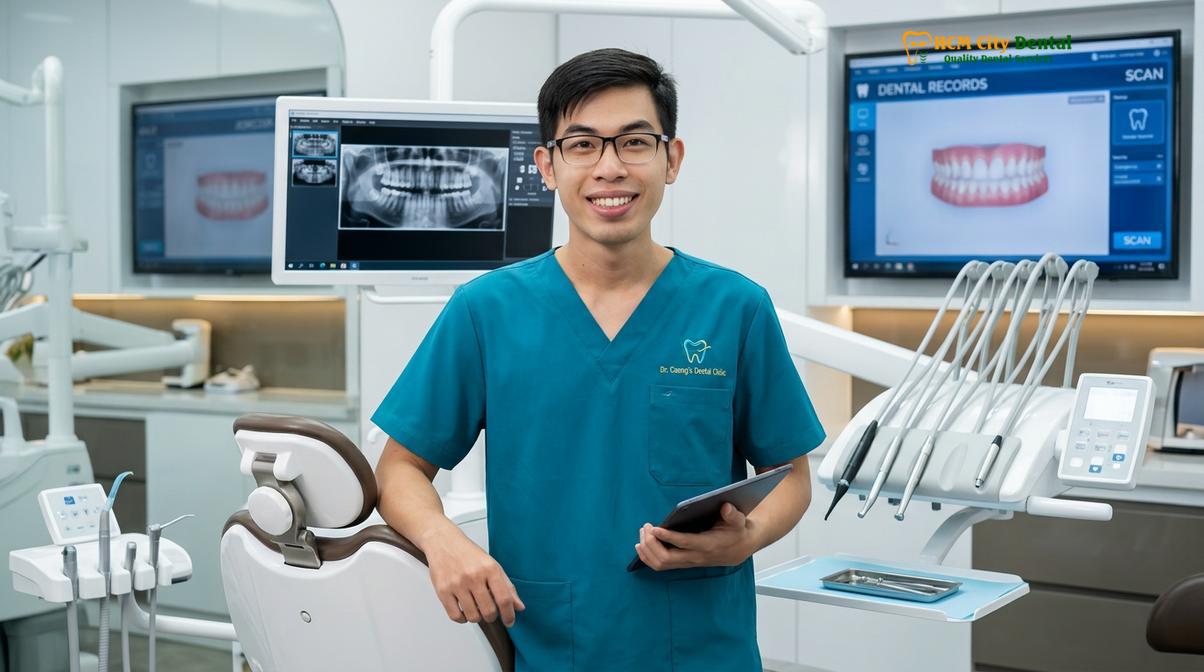
Dr. Nguyen Van Cuong brings decades of clinical expertise to the forefront of international patient care. As a leading specialist, Dr. Cuong ensures that every treatment plan is meticulously crafted to meet global standards, providing medical travelers with highly predictable, quality outcomes. His dedication to continuous education and the implementation of advanced surgical protocols makes him a trusted figure in the field of restorative dentistry.
References
- International Journal of Medical Tourism. Economic analysis of cross-border dental care in Southeast Asia. (2021).
- Journal of Prosthetic Dentistry. CAD/CAM workflows in expedited restorative dentistry. (2021).
- Journal of Clinical Periodontology. Global standards in cross-infection control and autoclave sterilization. (2020).
- Clinical Oral Implants Research. Osseointegration protocols for traveling patients: A clinical review. (2022).
- American Dental Association (ADA). Guidelines for international patient care and digital record sharing. (2019).
Ready to Transform Your Smile?
If you are considering traveling for advanced restorative or cosmetic dentistry, our multidisciplinary team is here to provide a seamless, world-class experience. For personalized advice, comprehensive treatment planning, and to begin your journey, contact HCMC Dental Clinic, Ho Chi Minh City today.