The dental implant history timeline spans from ancient civilizations using carved seashells to modern dentistry’s reliance on biocompatible titanium. Today, osseointegration allows implants to fuse securely with the jawbone, providing a highly predictable foundation for lifelike prosthetic teeth that restore both masticatory function and aesthetic confidence. Understanding this evolution helps patients appreciate the sophisticated nature of contemporary restorative dentistry and the rigorous scientific research that makes modern tooth replacement possible.[1]
Clinical Summary:
The evolution of dental implants highlights a remarkable transition from rudimentary foreign-body insertions to precise, science-backed osseointegration. Discovered in the mid-twentieth century, titanium’s unique ability to bond with human bone revolutionized restorative dentistry. Modern implantology now utilizes Grade 5 titanium, advanced 3D CBCT imaging, and guided surgical protocols to ensure exceptionally high success rates. Today, patients globally access these sophisticated treatments, often traveling to specialized medical hubs like Ho Chi Minh City for world-class care. These modern clinics combine European CE-certified materials, strict Class B autoclave sterilization, and expert surgical execution to deliver predictable, long-lasting oral rehabilitation.
Key Takeaways:
- Ancient civilizations experimented with carved stones, ivory, and seashells as early forms of tooth replacement.
- The accidental discovery of titanium osseointegration established the scientific foundation of modern implantology.
- Contemporary treatments utilize Grade 5 titanium and advanced ceramics for optimal biocompatibility and structural integrity.
- Complex restorative cases may require adjunctive procedures like bone grafting or a sinus lift to ensure long-term stability.
- International dental tourism in Ho Chi Minh City offers premium implants at highly competitive rates compared to Western markets.
The Ancient Origins of Tooth Replacement
Early attempts at tooth replacement involved primitive materials like seashells and ivory, demonstrating humanity’s long-standing desire to restore oral function despite the lack of biocompatible materials.
The desire to replace missing teeth is not a modern phenomenon; it is a pursuit that dates back thousands of years. The earliest records in the dental implant history timeline reveal that ancient civilizations possessed a profound understanding of the importance of dentition for both survival and social status. Archaeological excavations in Central America discovered the remains of ancient individuals whose lower jaws featured tooth-shaped pieces of seashell hammered directly into the empty sockets. Remarkably, radiographic imaging of these ancient mandibles showed signs of compact bone formation around the shells, indicating a primitive, albeit accidental, form of integration.
Similarly, ancient Egyptians and Phoenicians experimented with various materials to stabilize loose teeth or replace missing ones. Gold wire was frequently used to bind replacement teeth—often carved from ivory, animal bones, or even teeth extracted from human donors—to adjacent natural teeth. While these early endeavors highlight incredible ingenuity, they were fundamentally flawed by modern clinical standards. The human immune system naturally recognizes these materials as foreign bodies, leading to fibrous encapsulation, chronic infection, and eventual rejection. It was not until the understanding of biocompatibility emerged centuries later that true, permanent tooth replacement became a clinical reality.
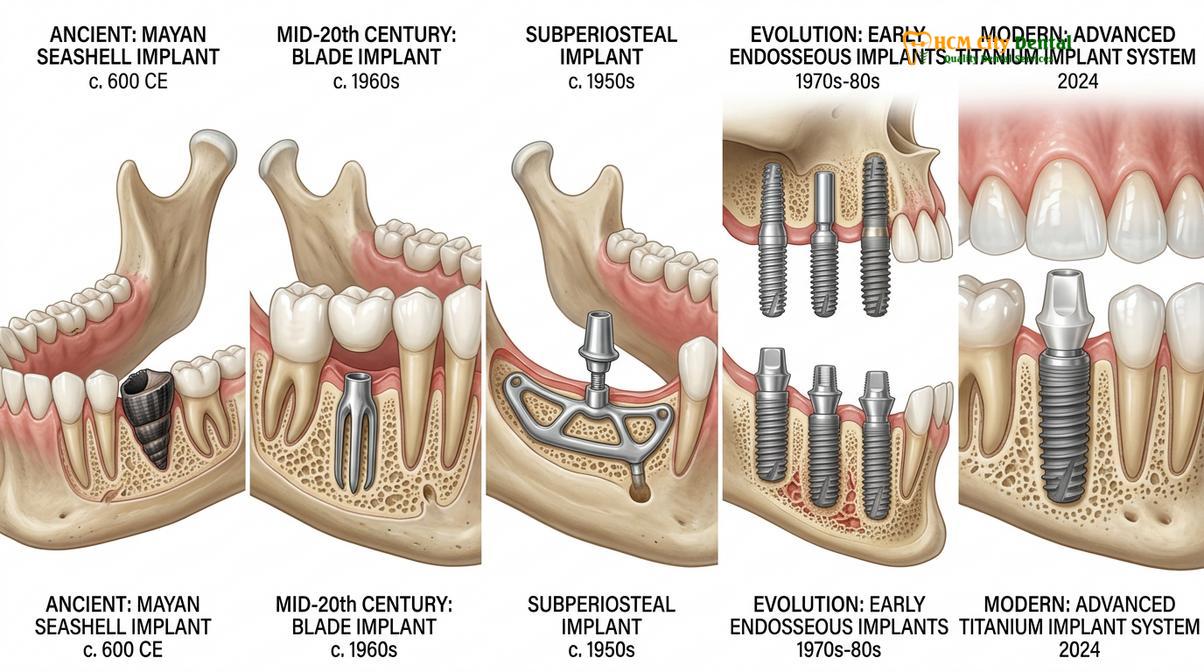
Throughout the eighteenth and nineteenth centuries, European physicians and early dentists continued to experiment with various metal alloys, including gold, platinum, and silver. These metals were shaped into rudimentary roots and placed into freshly extracted tooth sockets. However, because these metals lack the specific surface properties required to stimulate bone-forming cells (osteoblasts), the long-term success rates were abysmal. The implants would inevitably loosen under the biomechanical stress of chewing, leading to failure. This era of trial and error, while fraught with clinical failures, paved the way for the scientific rigor that would define modern dentistry.
The Breakthrough of Osseointegration
The accidental discovery that titanium fuses irreversibly with living bone tissue marked the turning point in the dental implant history timeline, birthing modern, evidence-based implantology.
The most pivotal moment in the history of restorative dentistry occurred not in a dental clinic, but in an orthopedic research laboratory. A Swedish orthopedic surgeon was conducting research on bone healing and microcirculation. He placed titanium optic chambers into the femurs of test subjects to observe the healing process. When the experiment concluded, he discovered, to his astonishment, that the titanium cylinders could not be removed; they had fused completely with the surrounding living bone tissue. He coined this biological phenomenon “osseointegration.”
“Osseointegration is defined as the direct structural and functional connection between ordered, living bone and the surface of a load-carrying implant, fundamentally changing the trajectory of reconstructive medicine.”
Recognizing the profound implications of this discovery for dentistry, researchers shifted their focus to oral rehabilitation. Shortly thereafter, the first modern titanium dental implants were placed into a human volunteer who suffered from severe jaw deformities and tooth loss. The implants successfully integrated, providing a stable foundation for a full-arch prosthesis that the patient utilized comfortably for the rest of his life. This success initiated decades of rigorous clinical trials and data collection, establishing the protocols we rely on today.[2]
Despite the undeniable clinical success, the global dental community was initially skeptical. It wasn’t until a landmark international conference on osseointegration that overwhelming, longitudinal data was presented. The conference established the first standardized guidelines for successful implant dentistry, leading to widespread acceptance. Following this, the material science evolved rapidly. The industry shifted toward using Titanium Grade 5 (an alloy of titanium, aluminum, and vanadium), which offers superior tensile strength and fracture resistance compared to commercially pure titanium, ensuring the implants could withstand the immense biomechanical forces of human mastication.
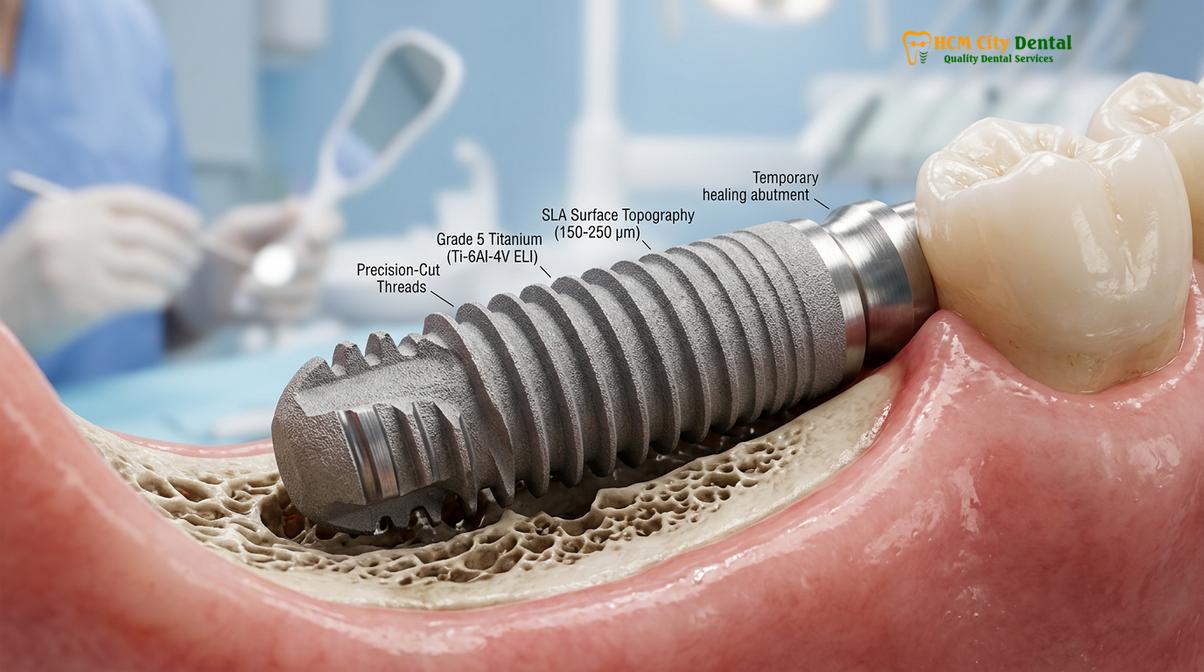
Modern Dental Implant Workflows and Materials
Contemporary implant dentistry relies on advanced 3D diagnostics, biocompatible titanium fixtures, and precise surgical protocols to ensure long-term functional and aesthetic success.
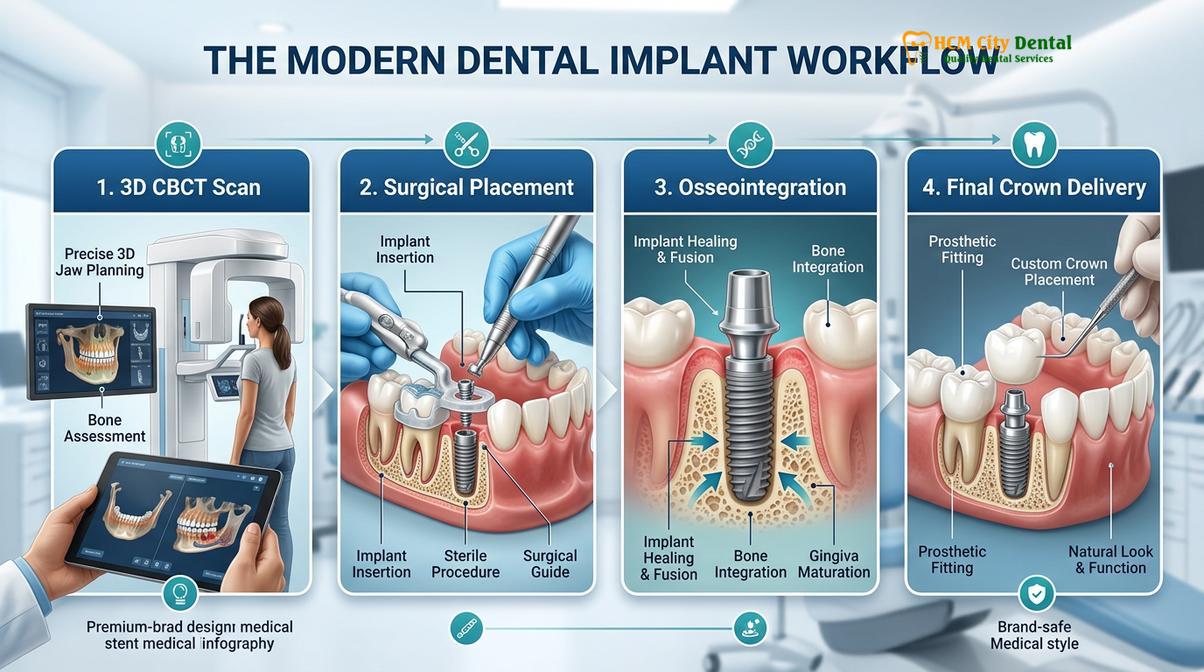
Today, the clinical workflow for placing dental implants is a highly sophisticated, predictable process driven by digital technology and advanced material science. The modern approach begins with comprehensive diagnostics, primarily utilizing Cone Beam Computed Tomography (CBCT). This 3D imaging allows the clinician to evaluate bone volume, bone density, and the precise location of critical anatomical structures such as the inferior alveolar nerve and the maxillary sinus. Based on this data, a digital surgical guide can be fabricated, ensuring the implant is placed at the optimal angle and depth for both biomechanical stability and aesthetic emergence profile.
| Era | Materials Used | Clinical Predictability | Primary Fixation Method |
|---|---|---|---|
| Ancient Civilizations | Seashells, Ivory, Animal Bone | Extremely Low (High Rejection) | Mechanical wedging, gold wire binding |
| 18th – 19th Century | Gold, Platinum, Silver Alloys | Poor (Fibrous Encapsulation) | Friction fit in fresh extraction sockets |
| Mid-20th Century | Commercially Pure Titanium | High (True Osseointegration) | Machined threads, biological bone fusion |
| Modern Dentistry | Titanium Grade 5, Zirconia | Exceptionally High (Predictable) | SLA surface treatments, 3D guided placement |
The global market is now led by several premier implant manufacturers, each offering unique surface technologies designed to accelerate osseointegration. Swiss brands utilize proprietary surfaces which are highly hydrophilic and stimulate faster bone healing, making them ideal for patients with compromised bone density. Other industry pioneers are renowned for innovative thread designs that achieve excellent primary stability. Meanwhile, Korean brands have gained massive global traction by offering exceptional clinical reliability and high success rates at a more accessible price point. Once the implant is fully integrated, patients often review the Zirconia Dental Crown Cost & Clinical Guide | HCMC Dental to select the most durable and aesthetic final restoration.[3]
However, not all patients present with adequate bone volume to immediately receive an implant. When teeth are lost, the surrounding alveolar bone naturally begins to resorb (shrink) due to the lack of biomechanical stimulation. In the upper jaw, this bone loss can cause the maxillary sinus to expand downward. In such cases, adjunctive surgical procedures are required. A sinus lift involves gently elevating the delicate Schneiderian membrane and placing a bone graft beneath it to increase vertical bone height. Similarly, Guided Bone Regeneration (GBR) uses particulate bone grafts and resorbable collagen membranes to widen a narrow alveolar ridge. These procedures, while adding complexity to the treatment plan, are essential for creating a robust foundation for the titanium fixture.
When to Consult a Specialist: Important Clinical Notes
Recognizing the early signs of failing dentition and seeking timely specialist intervention can prevent severe bone loss and simplify the implant placement process.
Patients often wonder when it is the right time to transition from attempting to save a failing tooth to considering a dental implant. According to clinical guidelines aligned with the Vietnam Odonto-Stomatology Association (VOSA) and the Ministry of Health, early intervention is crucial. If a tooth suffers from severe structural decay that cannot be restored with a traditional crown, or if advanced periodontal disease has compromised the supporting bone, extraction followed by immediate or delayed implant placement is often the most predictable course of action.
For patients who are not ideal candidates for surgery due to systemic health issues, exploring a Porcelain Dental Bridge: Clinical Guide & Workflows | HCMC Dental might serve as a viable alternative, though implants remain the gold standard for preserving jawbone density and preventing facial collapse.
The Rise of Dental Tourism in Ho Chi Minh City
Patients globally are seeking high-quality, cost-effective implant solutions in specialized medical hubs like Saigon, where international standards meet exceptional affordability.
As the demand for sophisticated restorative dentistry has grown, so too has the phenomenon of international dental tourism. Patients facing prohibitive costs in their home countries are increasingly looking abroad for solutions that do not compromise on clinical quality. Ho Chi Minh City has emerged as a premier destination for complex implantology. Clinics in this region have heavily invested in state-of-the-art technology and continuous medical education, aligning their protocols with the highest global standards.
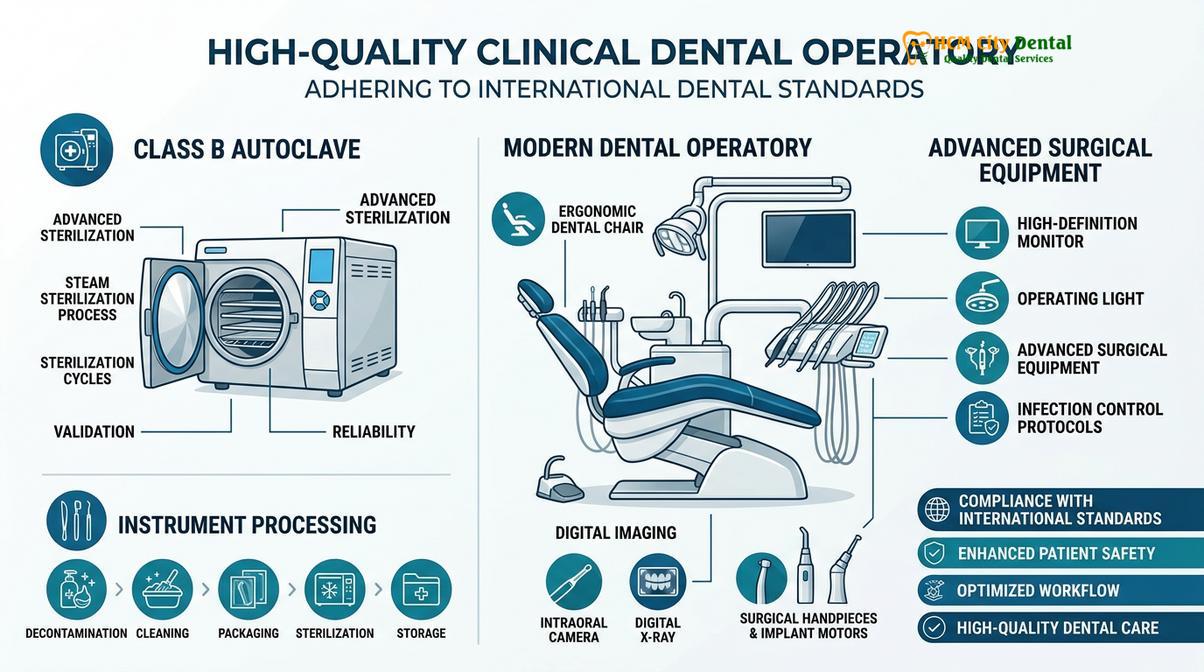
At the forefront of this movement is HCMC Dental Clinic, where international patients receive care that rivals or exceeds what is available in Western markets. The clinic operates under strict European CE certification for all implant materials and utilizes sterile Class B autoclave standards to ensure absolute infection control. This commitment to safety and precision is paramount when performing invasive procedures like bone grafting or the placement of a premium implant.
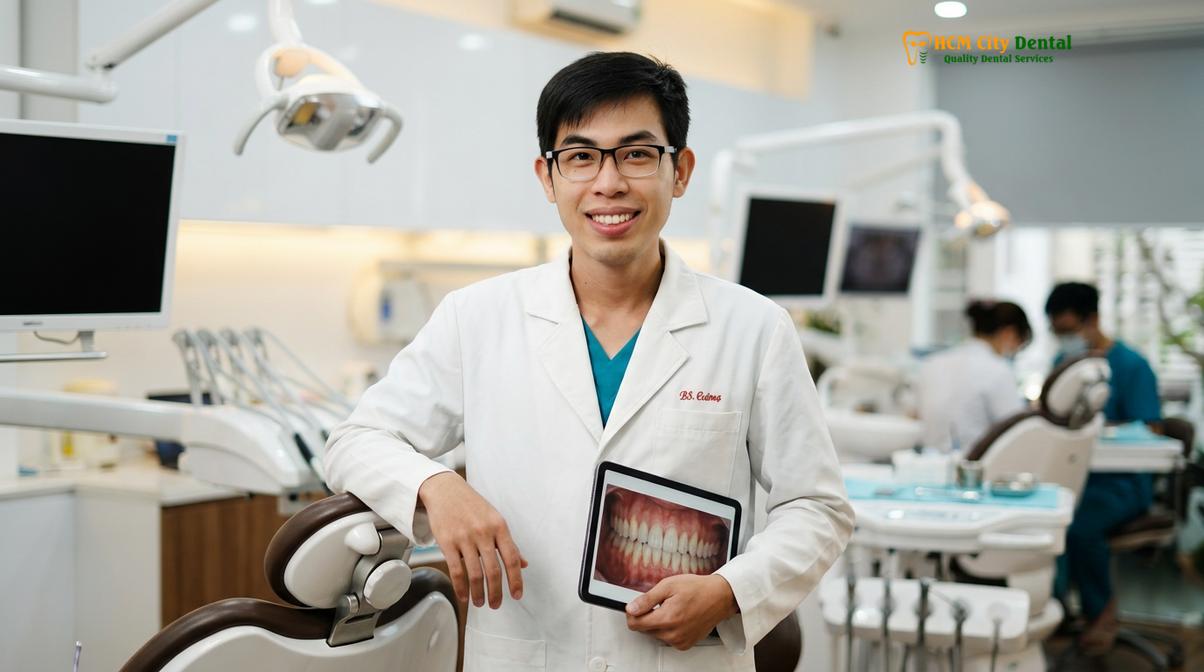
Clinical leadership plays a vital role in these successful outcomes. Dr. Nguyen Van Cuong, a leading specialist at HCMC Dental Clinic, emphasizes the importance of precision in implantology. With extensive experience in complex full-arch rehabilitations and advanced bone regeneration techniques, Dr. Cuong utilizes advanced 3D diagnostics to ensure optimal outcomes for every patient. His commitment to evidence-based protocols ensures that even the most challenging cases are managed with profound clinical competence.
Clinical Case Example: A middle-aged international patient presented to HCMC Dental Clinic in Ho Chi Minh City with severe posterior bone loss and failing dentition. After a comprehensive 3D CBCT analysis, the clinical team designed a treatment plan involving bilateral sinus lifts and the placement of six premium implants. By utilizing pre-arrival remote consultations, the patient secured a highly competitive rate on the surgical fees. The entire surgical phase was completed within a short trip, demonstrating the efficiency and high clinical standards of modern international dental care.
The logistical workflow for international patients has been streamlined to maximize efficiency and minimize travel stress. Patients typically initiate their journey via a remote consultation, sharing their panoramic X-rays or local CBCT scans through secure digital channels. This allows the clinical team to formulate a preliminary treatment plan, estimate costs, and schedule the surgical intervention before the patient even boards a flight. This level of concierge medical service, combined with the vibrant cultural experience of visiting Vietnam, makes the prospect of traveling for dental care highly attractive.
Navigating Costs: International Dental Care vs. Domestic Options
Evaluating treatment costs requires comparing domestic insurance limitations with the comprehensive, specialized care available through international dental providers.
One of the primary drivers pushing patients toward international dental care is the structural limitation of domestic healthcare systems. For example, individuals relying on health and dental insurance canada often discover that their policies are heavily geared toward preventative care—such as cleanings, fillings, and basic extractions. When it comes to comprehensive restorative work, standard dental insurance canada frequently classifies implants as elective or cosmetic procedures, imposing strict annual maximums that barely cover the cost of a single titanium fixture, let alone the necessary abutment, crown, or adjunctive bone grafting.[4]
Faced with these financial barriers, patients often explore domestic alternatives like clear choice dental implants canada, which offer streamlined, full-arch solutions. While clinically effective, these domestic corporate models often carry premium price tags that remain out of reach for many. Consequently, the value proposition of traveling to a specialized hub in Southeast Asia becomes undeniable. By choosing a reputable clinic, patients can access the exact same premium materials at a fraction of the cost, even when factoring in flights and accommodation. For a detailed breakdown of regional advantages, patients often consult the Dental Tourism Vietnam vs Thailand: Clinical Guide & Cost Comparison.
“The globalization of medical technology means that geographic location no longer dictates the quality of clinical care; rigorous sterilization protocols, CE-certified materials, and specialized surgical expertise are now accessible worldwide.”
It is crucial, however, for patients to differentiate between levels of care when traveling abroad. While a local hoi an dentist might be perfectly suited for routine cleanings or simple fillings during a vacation, complex surgical procedures like sinus lifts and full-arch implant rehabilitations require the advanced infrastructure typically found only in major metropolitan centers like Ho Chi Minh City. Patients must prioritize clinics that demonstrate transparent sterilization protocols, utilize globally recognized implant brands, and employ specialists with documented experience in advanced oral surgery.[5]
Frequently Asked Questions
How long does the modern dental implant process take?
The modern dental implant process typically requires a short surgical trip for initial placement, followed by a healing period of several months for osseointegration before the final crown is attached. Same-day loading is possible for specific clinical cases with excellent primary bone stability. Your clinician will determine the exact timeline based on your bone density and healing capacity.
Are dental implants covered by standard insurance?
Standard dental insurance policies often classify implants as elective or cosmetic, providing little to no coverage for the surgical placement. Patients frequently find that comprehensive implant procedures exceed their annual maximums, prompting many to explore international dental care options to manage out-of-pocket expenses effectively while receiving premium materials.
What is the difference between Korean and Swiss implants?
Korean implants offer excellent clinical reliability at a more accessible price point, while Swiss implants feature proprietary surface technologies that can accelerate bone healing. Both utilize biocompatible titanium, but Swiss brands are often recommended for patients with compromised bone density or those requiring faster integration.
Why might I need a sinus lift before getting an implant?
A sinus lift is required when there is insufficient vertical bone height in the upper jaw to securely anchor a dental implant. This procedure elevates the sinus membrane and places bone graft material beneath it, creating a solid foundation for the implant and preventing the titanium fixture from penetrating the sinus cavity.
Is the dental implant surgery painful?
Dental implant surgery is performed under local anesthesia, ensuring the procedure itself is highly comfortable and virtually pain-free. Post-operative discomfort is typically mild to moderate, similar to a tooth extraction, and can be effectively managed with prescribed anti-inflammatory medications and proper adherence to clinical aftercare instructions.
References
- Journal of the American Dental Association. Historical perspectives on osseointegration and implantology.
- International Journal of Oral & Maxillofacial Implants. Biomechanics of titanium Grade 5 in modern restorative dentistry.
- Clinical Implant Dentistry and Related Research. Efficacy of guided bone regeneration and sinus elevation protocols.
- Journal of Global Health. Economic analysis of international dental tourism in Southeast Asia.
- Periodontology 2000. Long-term survival rates of endosseous dental implants in diverse patient populations.
For more comprehensive information on restorative procedures and to explore how modern implantology can transform your oral health, visit our Kiến thức nha khoa tại HCMC Dental Clinic. Our dedicated team in Ho Chi Minh City is ready to provide you with a personalized, world-class treatment plan.