The dental crown zirconia cost typically ranges from $192 to $350 per tooth in Vietnam, depending on the specific material grade and clinical complexity. Zirconia offers exceptional durability and biocompatibility, making it a premier choice for both functional molar restorations and highly aesthetic anterior treatments.
Clinical Summary:
Zirconia dental crowns represent a significant advancement in restorative dentistry, combining the aesthetic appeal of metal-free ceramics with the structural integrity required for heavy masticatory forces. The dental crown zirconia cost is influenced by the integration of digital CAD/CAM workflows, the specific type of zirconia utilized (monolithic versus layered), and the clinical expertise of the treating physician. For the expat community in Ho Chi Minh City, accessing these premium restorations is highly convenient due to state-of-the-art intraoral scanning technology, multilingual clinical teams, and seamless direct billing insurance partnerships. Comprehensive treatment planning ensures that each restoration not only restores biomechanical function but also harmonizes perfectly with the natural gingival architecture.
Key Takeaways:
- Zirconia crowns provide superior flexural strength, often exceeding 1,000 MPa, making them highly resistant to fracture.
- Digital intraoral scanning eliminates the need for uncomfortable traditional impression materials, enhancing precision.
- Direct billing partnerships with major international insurers facilitate cashless treatments for eligible expat patients.
- Pre-arrival bookings via WhatsApp offer significant cost reductions on premium ceramic restorations and preventive care.
- Strict adherence to European CE sterilization standards ensures optimal patient safety and long-term clinical success.
Understanding Zirconia Dental Crowns and Clinical Indications
Zirconia crowns are advanced, metal-free ceramic restorations known for their exceptional fracture toughness and biocompatibility. They are clinically indicated for restoring severely damaged teeth while maintaining natural gingival health.
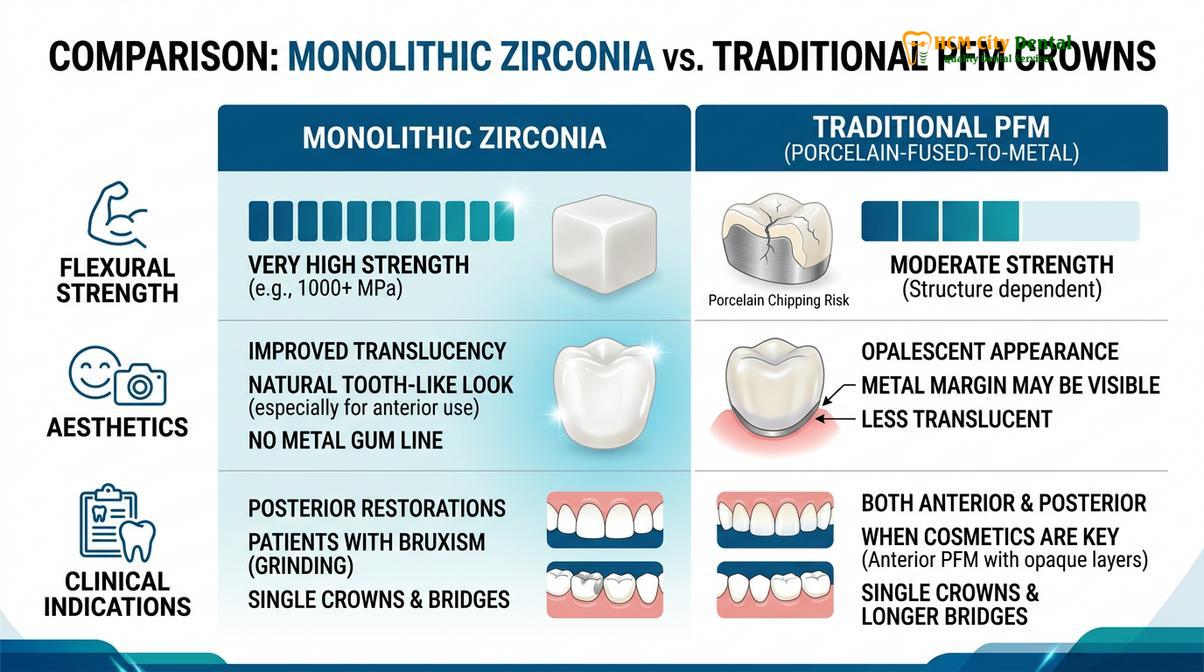
In modern restorative dentistry, the selection of an appropriate crown material is critical for ensuring both biomechanical stability and long-term aesthetic success. Zirconia, scientifically known as yttria-stabilized tetragonal zirconia polycrystal (Y-TZP), has revolutionized the field by offering a metal-free alternative that does not compromise on strength. Unlike traditional porcelain-fused-to-metal (PFM) crowns, which can leave a dark, unsightly line at the gingival margin, zirconia provides a highly biocompatible surface that promotes excellent soft tissue integration and prevents localized gingival inflammation [1].
The clinical indications for zirconia crowns are extensive. They are highly recommended for teeth that have undergone endodontic therapy (root canals), teeth with extensive carious lesions that cannot be restored with standard composite fillings, and teeth suffering from severe structural fractures. Furthermore, zirconia is an excellent choice for patients who exhibit signs of bruxism (chronic teeth grinding), as its high flexural strength can withstand significant occlusal forces without chipping or fracturing [2].
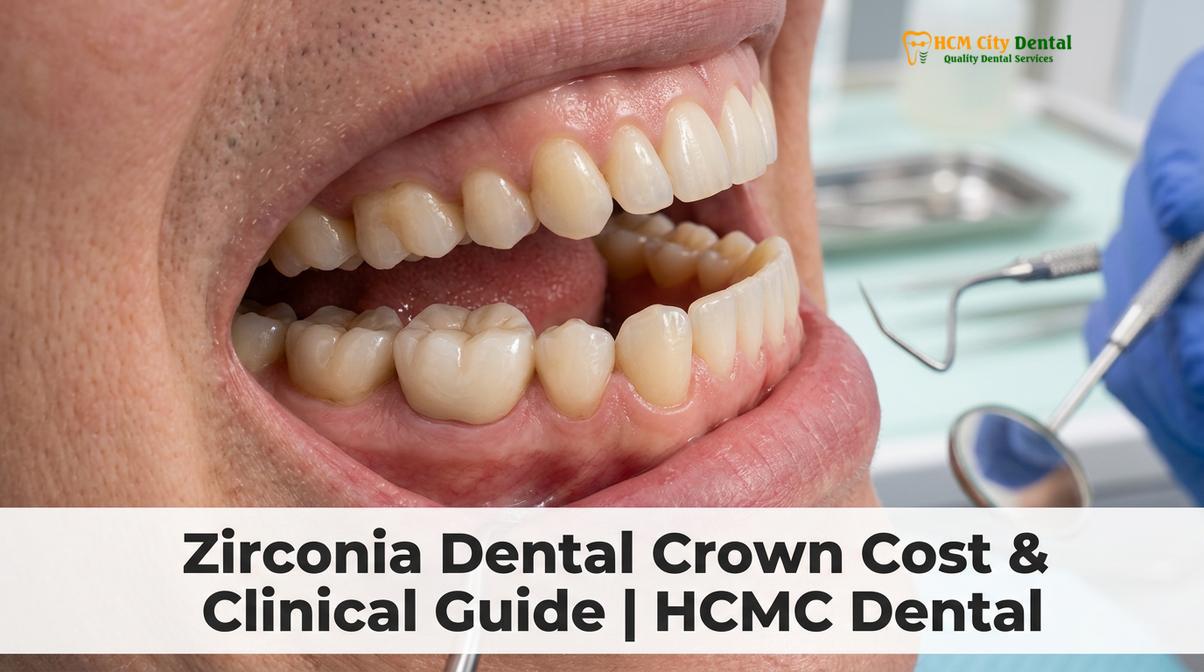
When discussing the monolithic zirconia cost, it is important to differentiate between monolithic and layered zirconia. Monolithic zirconia is milled from a single, solid block of material, offering maximum strength and durability, making it the gold standard for posterior (back) teeth where chewing forces are highest. Layered zirconia, on the other hand, consists of a strong zirconia core overlaid with highly translucent feldspathic porcelain. This layered approach provides superior optical properties, mimicking the natural light transmission of human enamel, and is typically reserved for anterior (front) teeth where aesthetics are the primary concern.
The preparation of a tooth for a zirconia crown requires meticulous clinical precision. The dentist must ensure adequate occlusal reduction to provide sufficient restorative space, while carefully designing the cervical margin—typically a heavy chamfer or rounded shoulder—to ensure a seamless transition between the tooth structure and the ceramic restoration. This precise marginal adaptation is crucial for preventing microleakage, secondary caries, and periodontal complications over the lifespan of the crown.
Comprehensive Pricing Structure: Dental Crown Zirconia Cost
The cost of a zirconia crown depends on the fabrication technology, material origin, and clinical expertise involved. Transparent pricing ensures patients understand their investment in long-term oral health.
Understanding the financial investment required for high-quality dental restorations is a primary concern for many patients, particularly those exploring dental tourism or seeking care as an expat in Vietnam. The dental crown zirconia cost at a reputable dental clinic is structured to reflect the use of premium, internationally certified materials, the utilization of advanced digital fabrication technologies, and the rigorous clinical protocols employed by the dental team.
To provide absolute transparency and exceptional value, HCMC Dental Clinic offers a highly competitive pricing structure, particularly for patients who utilize our digital booking channels. By securing an appointment prior to arrival, patients can access significant reductions on a wide range of essential and restorative treatments. This approach not only streamlines the administrative process but also makes world-class dental care highly accessible.
Below is a detailed overview of our current pricing structure, highlighting the substantial benefits of our pre-arrival booking system:
| Clinical Service | Standard Walk-in Fee (Estimated) | WhatsApp Pre-Booking Discount |
|---|---|---|
| Scaling & Polishing (Deep Teeth Cleaning) | ~$40 (1.0M VND) | From $24 (600k VND) [-40%] |
| Family / Pediatric Dental Exam & Consultation | ~$30 (750k VND) | From $18 (450k VND) [-40%] |
| Custom Nightguard (Bruxism Protection) | ~$160 (4.0M VND) | From $96 (2.4M VND) |
| In-Office Teeth Whitening (Laser) | ~$140 (3.5M VND) | From $84 (2.1M VND) |
| E.max Ceramic Crown / Zirconia Crown | ~$320 (8.0M VND) | From $192 (4.8M VND) [-40%] |
When evaluating the zirconia crown price saigon, it is essential to consider the comprehensive nature of the service provided. The quoted fees typically encompass the initial clinical examination, the digital intraoral scanning, the custom CAD/CAM design, the precise milling process, and the final adhesive cementation. There are no hidden fees, and patients are provided with a detailed, itemized treatment plan prior to the commencement of any clinical procedures.
For patients requiring extensive full-mouth rehabilitation or multiple dental implants, the cost-efficiency of receiving treatment in Ho Chi Minh City becomes even more pronounced. The combination of highly skilled specialists, state-of-the-art laboratory facilities, and favorable local economic factors allows clinics to deliver restorations that meet or exceed Western standards at a fraction of the cost.
Material Comparison: Porcelain vs Zirconia Price and Durability
Choosing between different ceramic materials requires evaluating functional load, aesthetic demands, and budget constraints. Zirconia generally provides superior strength, while traditional porcelain offers distinct optical translucency.
A frequent topic of discussion during restorative consultations is the comparison between various ceramic materials, specifically analyzing the porcelain vs zirconia price, aesthetic outcomes, and long-term biomechanical performance. Both materials have distinct clinical indications, and the optimal choice depends heavily on the specific location of the tooth, the patient’s occlusal dynamics, and their aesthetic expectations.
Traditional porcelain crowns, particularly lithium disilicate (such as IPS e.max), are renowned for their exceptional optical properties. They possess a natural translucency that closely mimics human enamel, making them highly desirable for restoring anterior incisors and canines. However, their flexural strength typically ranges between 300 to 400 MPa. While this is more than sufficient for front teeth, it may not be adequate for patients with heavy posterior bites or severe bruxism [3].
“The evolution of dental ceramics has allowed clinicians to move away from metal-based restorations. Zirconia, with its unique phase-transformation toughening mechanism, provides an unprecedented combination of high fracture resistance and excellent soft tissue biocompatibility, fundamentally changing our approach to posterior restorations.”
Conversely, monolithic zirconia is engineered for maximum durability. With a flexural strength often exceeding 1,000 MPa, it is virtually indestructible under normal masticatory forces. This makes it the ideal material for molar restorations and for patients who exert excessive force on their dentition. While older generations of zirconia were somewhat opaque, modern high-translucency zirconia formulations have significantly improved the aesthetic profile of these crowns, allowing them to blend seamlessly with adjacent natural teeth.
From a financial perspective, the dental crown zirconia cost is generally comparable to, or slightly higher than, premium lithium disilicate restorations, reflecting the advanced milling technology required for its fabrication. However, when factoring in the longevity and reduced risk of fracture, zirconia often presents a superior long-term return on investment. For patients seeking a comprehensive overview of restorative options, exploring our General & Preventive Dentistry resources can provide further clarity on material selection.
The Digital Workflow: Intraoral Scanning and Precision Fabrication
Modern restorative dentistry utilizes advanced intraoral scanners and CAD/CAM milling to create highly precise, custom-fitted crowns. This eliminates messy traditional impressions and significantly reduces clinical chair time.
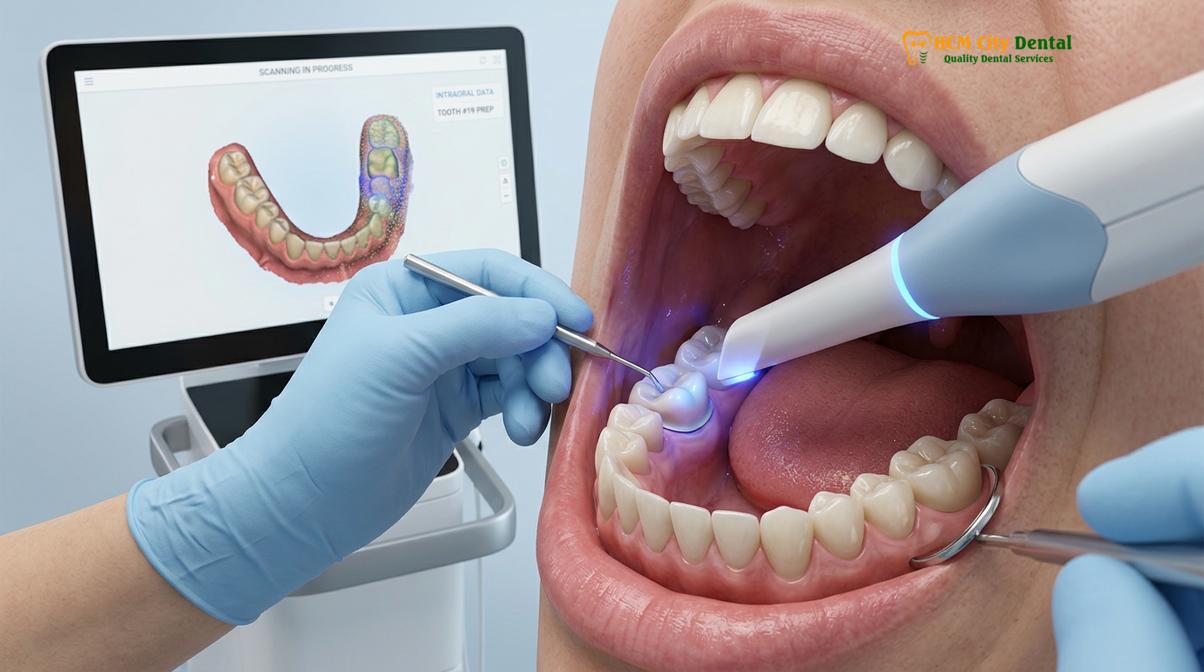
The fabrication of a zirconia crown has been entirely transformed by the advent of digital dentistry. The traditional workflow, which relied on uncomfortable, gag-inducing elastomeric impression materials, has been largely superseded by high-resolution optical scanning. This digital approach not only enhances patient comfort but also exponentially increases the accuracy of the final restoration.
At the forefront of this technological shift are advanced intraoral scanners such as the iTero Element 5D and the Medit i700. These devices capture thousands of images per second, stitching them together to create a highly accurate, full-color 3D model of the patient’s dentition and gingival architecture. This digital impression is immediately available for review, allowing the clinician to verify the quality of the tooth preparation and the clarity of the restorative margins in real-time [4].
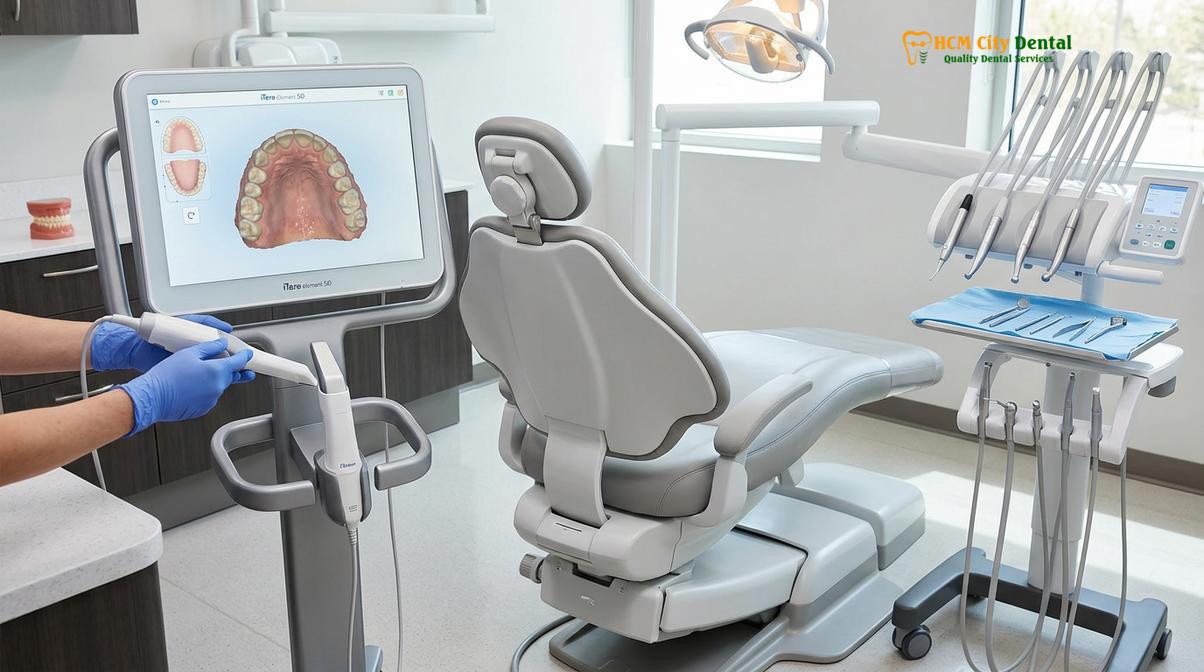
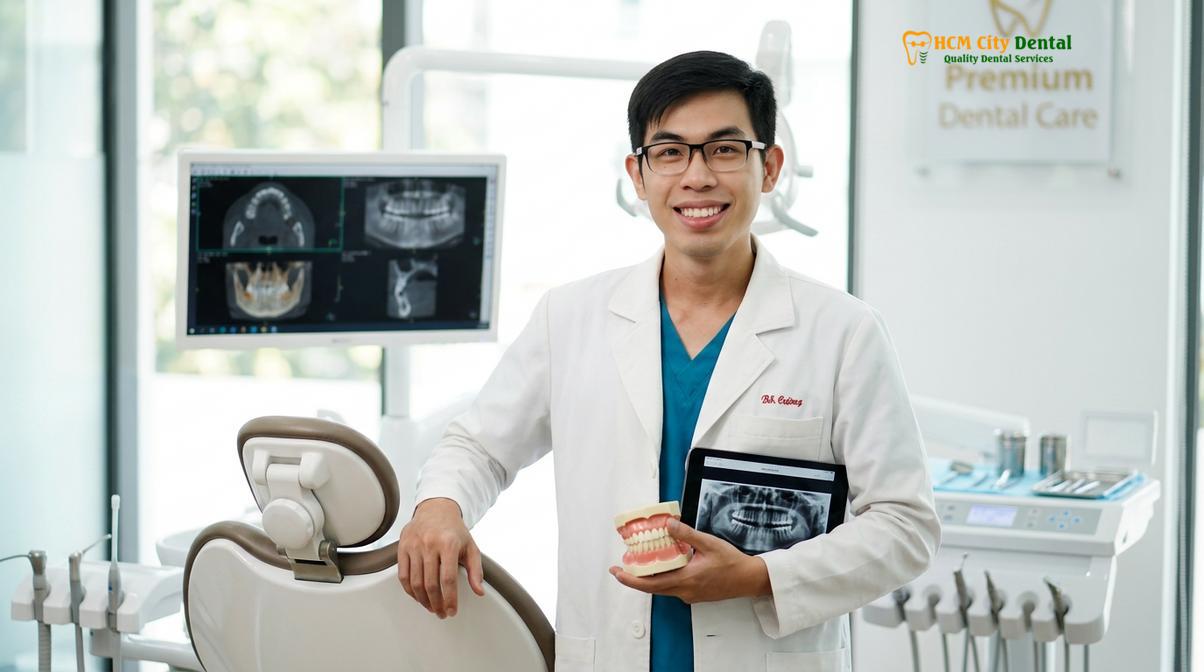
Dr. Nguyen Van Cuong emphasizes that the precision of the digital scan is the foundation of a successful zirconia restoration. By utilizing these advanced scanners, Dr. Cuong ensures that the digital data sent to the CAD/CAM laboratory is flawless. The laboratory technicians then use sophisticated software to design the crown, meticulously adjusting the proximal contacts, occlusal anatomy, and marginal fit to microscopic tolerances.
Once the design is finalized, the data is transmitted to a 5-axis milling machine, which carves the crown from a solid puck of pre-sintered zirconia. The milled restoration is then placed in a high-temperature sintering furnace, a process that shrinks the material to its final, exact dimensions while maximizing its crystalline strength. Finally, the crown is characterized with custom stains and glazes to match the specific shade and texture of the patient’s natural teeth, resulting in a restoration that is both functionally robust and aesthetically beautiful.
Expat Dental Care, Insurance, and Direct Billing in Ho Chi Minh City
Navigating dental treatments abroad is simplified through direct billing partnerships, multilingual communication, and comprehensive family care protocols. Clinics in central districts offer seamless transit and internationally recognized standards.
For the expat community residing in or visiting Vietnam, accessing high-quality dental care that aligns with international standards is a top priority. Navigating a foreign healthcare system can be daunting, which is why premier clinics have tailored their services to meet the specific needs of international patients, ensuring a seamless, stress-free experience from the initial consultation to the final follow-up.
A cornerstone of this expat-focused approach is the establishment of robust Direct Billing Insurance Partners. HCMC Dental Clinic offers direct billing arrangements with major international insurers, including Allianz, Bupa, Cigna, Liberty, Generali, Aetna, and InterGlobal. This allows expat families to enjoy cashless transactions for a wide range of services, including routine checkups, professional teeth cleaning, and complex restorative procedures like zirconia crowns. Our dedicated administrative team handles all the necessary documentation and liaises directly with the insurance providers, significantly reducing the administrative burden on the patient [5]. For more details on financial arrangements, patients can review our guide on Dental Clinic Payment Methods Vietnam.
Clinical Case Study: Expat Restorative Care
Patient Profile: A 45-year-old expatriate executive residing in Ho Chi Minh City presented with a fractured maxillary first molar and significant dentin hypersensitivity.
Clinical Intervention: Following a comprehensive digital assessment, the fractured tooth was prepared for a monolithic zirconia crown. The patient’s international insurance (Cigna) was utilized through our direct billing system, covering 80% of the restorative costs.
Outcome: The custom-milled zirconia crown was cemented with a high-strength resin adhesive, immediately restoring masticatory function and eliminating sensitivity. The seamless insurance process and precise clinical execution provided a highly satisfactory experience.
Beyond adult restorative care, providing exceptional Expat Pediatric Dentistry is a critical component of our family dentist philosophy. We understand that children require a gentle, patient, and highly communicative approach to alleviate dental anxiety. Dr. Nguyen Van Cuong and the pediatric team focus heavily on preventive measures, offering services such as dental sealants, fluoride varnishes, and gentle pulpotomy procedures in a highly welcoming, kid-friendly environment. Ensuring that children have positive early experiences at the dental clinic sets the foundation for a lifetime of excellent oral health.
Convenience and accessibility are also paramount. Located strategically in the heart of the city, the clinic is easily accessible via short Grab rides from major local landmarks and expat enclaves in District 1, District 2 (Thao Dien), and District 7. Furthermore, all clinical procedures are conducted with fluent English communication, ensuring that patients fully understand their diagnoses, treatment options, and post-operative care instructions. This clear communication is vital for building trust and ensuring optimal clinical outcomes, particularly in emergency situations requiring an Emergency Dentist Expat Ho Chi Minh City.
Clinical Standards, Warranty, and Follow-Up Care
Long-term restorative success relies on strict adherence to international sterilization protocols, precise bonding techniques, and structured follow-up care. Comprehensive warranties provide additional peace of mind for complex treatments.
The longevity of a zirconia crown is not solely dependent on the material itself, but equally on the clinical protocols employed during its placement. Adherence to stringent, internationally recognized clinical standards is non-negotiable. All procedures must comply with European CE guidelines and strict sterilization protocols, utilizing Class B autoclaves to ensure the absolute safety of every instrument used in the operatory.
The cementation phase is particularly critical. Zirconia requires specific surface treatments, such as gentle sandblasting with aluminum oxide and the application of MDP-containing chemical primers, to achieve a durable, long-lasting bond with the underlying tooth structure. Proper isolation, often utilizing a rubber dam, is essential to prevent moisture contamination during the adhesive process, which could otherwise compromise the integrity of the bond and lead to premature failure.
“The ultimate success of a ceramic restoration is dictated by the meticulous execution of the adhesive protocol. A perfectly milled crown will fail if the bonding interface is compromised by salivary contamination or inadequate surface preparation.”
To demonstrate absolute confidence in the quality of our restorative work, comprehensive warranties are provided. Patients receive official clinic warranty cards that include a 3-year bonding guarantee for all ceramic crowns and veneers, as well as a 1-year guarantee for BPA Free Composite Fillings. Furthermore, we recognize that many of our patients travel frequently. To accommodate this, we offer dedicated remote follow-up support via WhatsApp, allowing patients to easily communicate with our clinical team, share photographs if they have concerns, and receive prompt, professional advice regardless of their geographic location.
When to See a Doctor for Dental Crown Evaluation
While zirconia crowns are exceptionally durable, they are not entirely immune to complications, particularly if the underlying tooth structure becomes compromised or if the patient neglects their oral hygiene. It is crucial to monitor the health of the restored tooth and the surrounding gingival tissues to ensure the long-term success of the treatment. Early detection of potential issues can often prevent the need for more invasive and costly interventions, such as root canal retreatment or tooth extraction.
Important Clinical Considerations
You should schedule an immediate clinical evaluation if you experience any of the following symptoms associated with your dental crown:
- Persistent Pain or Sensitivity: Sharp pain when biting down, or prolonged sensitivity to hot or cold temperatures, which may indicate pulpal inflammation or a compromised cement seal.
- Gingival Inflammation: Redness, swelling, or bleeding of the gums immediately surrounding the crown, suggesting potential subgingival plaque accumulation or an allergic response.
- Mobility or Looseness: Any perceptible movement of the crown, which indicates that the adhesive bond has failed or the underlying tooth structure has fractured.
- Foul Odor or Taste: A persistent bad taste or odor originating from the crowned tooth, often a sign of secondary decay developing beneath the restoration.
Routine dental checkups, ideally every six months, are essential for maintaining the integrity of your restorations. During these visits, the dentist will perform a thorough clinical examination, evaluate the marginal adaptation of the crown using an explorer, and take digital radiographs to assess the health of the underlying bone and root structure. For patients who have undergone extensive rehabilitations, reviewing our Comprehensive Dental Implants Post Op Instructions & Clinical Care Guide can provide valuable insights into maintaining complex dental work.
Frequently Asked Questions
How long does a zirconia dental crown typically last?
A zirconia dental crown typically lasts 10 to 15 years, and often longer with excellent oral hygiene. Clinical longevity depends heavily on precise occlusal alignment, meticulous daily brushing, routine professional scaling, and avoiding excessive biting forces on hard objects.
Is the dental crown zirconia cost covered by international insurance?
Yes, many international insurance plans cover a significant portion of the dental crown zirconia cost if deemed medically necessary. Coverage varies by policy, so our direct billing team will verify your specific benefits prior to initiating restorative treatment.
Does the preparation for a zirconia crown hurt?
No, the preparation for a zirconia crown does not hurt. The procedure is performed under profound local anesthesia, ensuring the tooth and surrounding gingival tissues are completely numb, providing a comfortable and anxiety-free experience throughout the clinical workflow.
Can I get a zirconia crown completed in a single visit?
While some digital workflows allow for same-day milling, a standard high-quality zirconia crown typically requires two visits. This ensures the dental laboratory has adequate time for precise CAD/CAM milling, custom shading, and high-temperature sintering for maximum structural durability.
How do I care for my new zirconia crown?
Care for your new zirconia crown by brushing twice daily with a non-abrasive toothpaste and flossing meticulously around the margins. Regular professional cleanings and wearing a custom nightguard if you suffer from bruxism will further protect the restoration.
References
- Journal of Prosthetic Dentistry. Clinical outcomes of monolithic zirconia crowns. (2021).
- International Journal of Prosthodontics. Fracture resistance of CAD/CAM ceramic restorations. (2020).
- Dental Materials. Phase transformation and aging of yttria-stabilized zirconia. (2019).
- Journal of Clinical Periodontology. Gingival response to subgingival crown margins. (2022).
- American Dental Association. Guidelines on direct billing and international patient care. (2018).