A dentist recommended electric toothbrush significantly improves daily oral hygiene by utilizing advanced oscillating-rotating or sonic technology to disrupt plaque biofilm more effectively than manual brushing. Clinical evidence demonstrates that these powered devices reduce gingival inflammation, prevent enamel abrasion through integrated pressure sensors, and ensure optimal two-minute brushing compliance.
Clinical Summary:
Electric toothbrushes are widely endorsed by dental professionals due to their superior ability to remove plaque and manage gingival health compared to traditional manual brushes. By automating the mechanical sweeping action, these devices eliminate the common human errors of aggressive scrubbing and insufficient brushing duration. Key clinical features such as built-in quadrant timers, piezoelectric pressure sensors, and specialized brush heads work synergistically to mitigate enamel wear and gingival recession. Whether utilizing sonic fluid dynamics or oscillating-rotating mechanisms, a powered toothbrush is a cornerstone of preventive dentistry, particularly beneficial for patients with orthodontic appliances, dental implants, or limited manual dexterity.
Key Takeaways:
- Powered toothbrushes utilizing oscillating-rotating or sonic technologies remove significantly more plaque biofilm than manual alternatives.
- Built-in pressure sensors actively prevent aggressive brushing habits, safeguarding delicate enamel and gingival tissues from abrasion.
- Integrated two-minute timers with 30-second quadrant pacing ensure comprehensive and evenly distributed cleaning across all dental arches.
- Soft-bristled replacement heads must be exchanged every three months to maintain structural integrity and optimal clinical efficacy.
- Electric toothbrushes provide critical hygiene support for patients managing orthodontic brackets, dental implants, or periodontal disease.
Why a Dentist Recommended Electric Toothbrush Outperforms Manual Brushing
Electric toothbrushes automate the precise mechanical action required for plaque removal, reducing reliance on perfect manual dexterity and significantly lowering the risk of gingival inflammation and enamel wear.
The foundation of preventive General Dentistry relies on the daily mechanical disruption of dental plaque, a complex biofilm composed of diverse bacterial colonies embedded in an extracellular polymeric matrix. When left undisturbed, this biofilm calcifies into calculus (tartar) and initiates an inflammatory cascade leading to gingivitis and periodontitis. While a manual toothbrush can theoretically achieve adequate plaque removal, clinical reality shows that most patients lack the precise dexterity, patience, and technique required to clean all tooth surfaces effectively. This discrepancy between theoretical capability and actual patient compliance is precisely why dental professionals advocate for powered devices.
A dentist recommended electric toothbrush bridges this gap by automating the brushing stroke. Instead of relying on the patient to perform hundreds of micro-movements per minute, the device’s motor generates thousands—sometimes tens of thousands—of strokes. This high-frequency action shears the sticky biofilm away from the enamel and out of the shallow gingival sulcus. Clinical studies consistently demonstrate that powered toothbrushes, particularly those with oscillating-rotating heads, achieve a statistically significant reduction in both plaque indices and bleeding on probing compared to manual brushing over a three-month period[1].
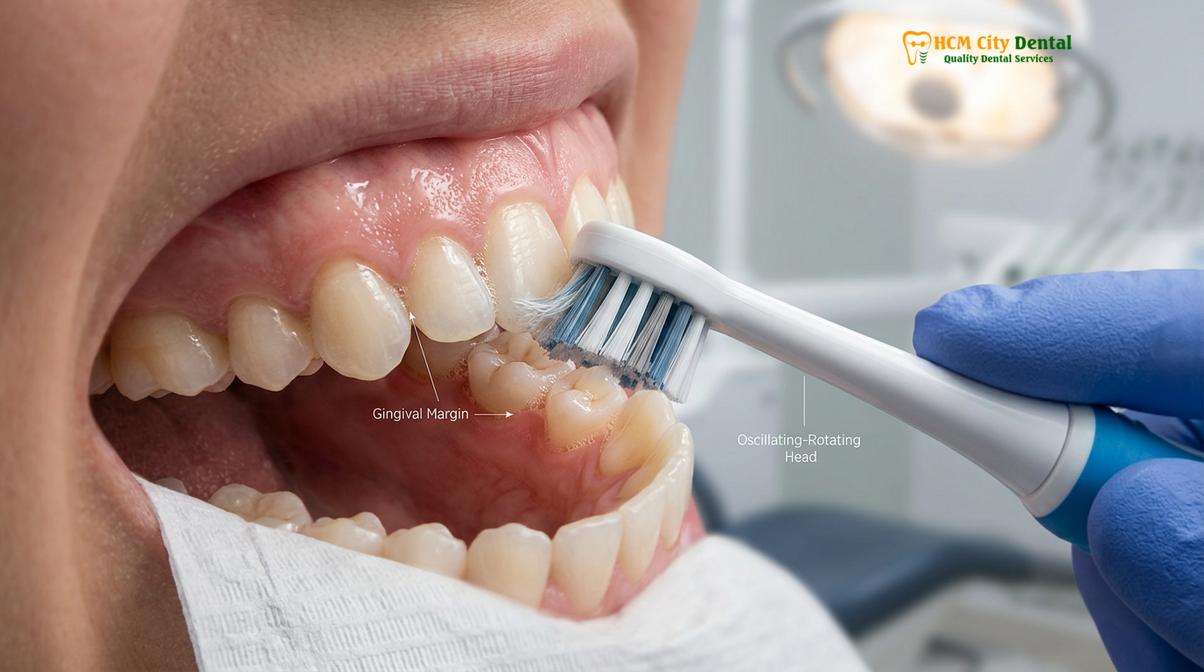
Furthermore, manual brushing is frequently associated with a phenomenon known as “scrubbing.” Patients often equate brushing harder with brushing cleaner, applying excessive lateral force across the buccal (outer) surfaces of the teeth. Over time, this aggressive mechanical trauma leads to gingival recession and non-carious cervical lesions (abfraction and abrasion). Electric toothbrushes mitigate this risk entirely. By simply guiding the brush head from tooth to tooth, the patient allows the device to perform the work, drastically reducing the applied force. For patients wondering how long should you brush your teeth, these devices also eliminate guesswork by providing tactile or auditory feedback when the clinically recommended two minutes have elapsed.
Core Clinical Features to Look For in an Electric Toothbrush
When selecting a powered toothbrush, patients should prioritize models equipped with visible pressure sensors, two-minute quadrant timers, and compact brush heads to ensure safe, thorough, and compliant cleaning.
Not all powered toothbrushes are created equal. The market is saturated with devices ranging from inexpensive battery-operated models that offer little more than a vibrating handle, to highly advanced smart brushes equipped with artificial intelligence and Bluetooth connectivity. When searching for the ideal dentist toothbrush, patients should focus on clinical utility rather than cosmetic appeal. The American Dental Association (ADA) evaluates powered toothbrushes based on their safety and efficacy, and devices that earn the ADA Seal of Acceptance typically share several core clinical features[2]. Furthermore, regional health authorities, including the Vietnam Ministry of Health (MOH), emphasize the importance of standardized oral hygiene practices to prevent widespread dental caries and periodontal disease[6].
The most critical feature is the pressure sensor. Integrated into the handle, piezoelectric sensors detect the amount of force being applied to the tooth surface. If the pressure exceeds a safe threshold (typically around 2 to 2.5 Newtons), the brush will alert the user—often by flashing a red light, altering the vibration pattern, or automatically decelerating the motor. This biofeedback mechanism is invaluable for retraining patients who have a history of aggressive manual brushing, thereby protecting the gingival margins from irreversible recession.
Equally important is the built-in timer. Dental professionals universally recommend brushing for a full two minutes, twice daily. However, studies show that the average manual brusher only sustains the activity for about 45 seconds. Electric toothbrushes solve this compliance issue with integrated timers that pulse or pause every 30 seconds. This “quadrant pacing” prompts the user to move to a different section of the mouth (upper right, upper left, lower right, lower left), ensuring that no area is neglected.
| Feature Category | Specific Component | Clinical Benefit | Necessity Level |
|---|---|---|---|
| Essential | Pressure Sensor | Prevents enamel abrasion and gingival recession by alerting the user to excessive force. | Critical |
| Essential | 2-Minute Quadrant Timer | Ensures adequate brushing duration and even distribution across all four dental quadrants. | Critical |
| Essential | Compact, Soft Bristle Head | Allows access to posterior molars and cleans the sulcus without traumatizing soft tissue. | Critical |
| Optional | Multiple Cleaning Modes | Provides varied intensities (e.g., sensitive, whitening) for customized patient comfort. | Moderate |
| Optional | Bluetooth / AI Tracking | Maps brushing habits via a smartphone app to identify consistently missed zones. | Low |
The design of the brush head itself is another vital consideration. A clinically effective brush head should be compact enough to navigate the narrow corridors of the posterior mandible and maxilla (the back teeth). Bristles must be end-rounded and soft; medium or hard bristles have no place in daily oral hygiene, as they cause micro-scratches on the enamel surface and lacerate the delicate gingival epithelium.
Oscillating-Rotating vs. Sonic Technology: A Clinical Perspective
Oscillating-rotating brushes use a pulsating circular motion to physically sweep away plaque, whereas sonic brushes rely on high-frequency vibrations to create fluid dynamics that disrupt biofilm beyond the bristle tips.
When navigating the electric toothbrush market, patients inevitably encounter two dominant technologies: oscillating-rotating (championed primarily by Oral-B) and sonic (championed primarily by Philips Sonicare). Understanding the biomechanical differences between these two modalities is essential for making an informed, clinically appropriate choice.
Oscillating-rotating technology features a small, circular brush head that rapidly rotates back and forth (oscillates) while simultaneously pulsing inward and outward (pulsates). This 3D cupping action is designed to surround each individual tooth, adapting to its unique morphology. The mechanical sweeping motion physically shears the plaque biofilm from the enamel surface. Because the brush head does the moving, the patient’s role is simply to guide the brush slowly from tooth to tooth, allowing it to rest on each surface for a few seconds. Clinical literature frequently highlights the superior efficacy of oscillating-rotating brushes in reducing plaque and gingivitis compared to manual brushes, making them a highly recommended choice for patients with heavy plaque accumulation.
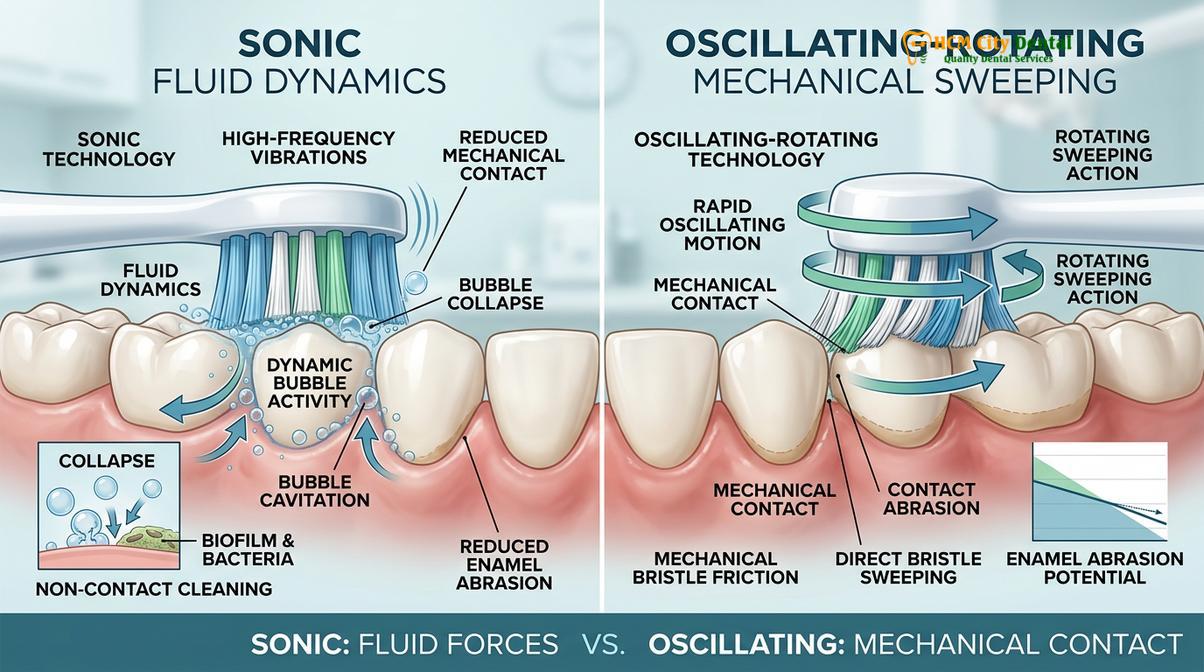
Conversely, sonic technology utilizes a traditional, elongated brush head shape that vibrates side-to-side at exceptionally high frequencies—typically between 31,000 and 62,000 brush strokes per minute. This rapid vibration achieves two things. First, it provides a highly effective mechanical scrubbing action on the surfaces the bristles directly touch. Second, and more uniquely, the high-frequency movement generates hydrodynamic shear forces. The rapid vibration whips the mixture of saliva, water, and toothpaste into microbubbles, propelling this oxygen-rich fluid deep into the interproximal spaces (between the teeth) and slightly below the gumline[3]. This fluid dynamic action can disrupt biofilm colonies up to 2-3 millimeters beyond where the bristles actually reach.
“The choice between sonic and oscillating technology often comes down to patient comfort and gingival biotype. Both are clinically proven to elevate oral hygiene, but the key to success lies in consistent, gentle application along the sulcus rather than the specific motor mechanics.”
Patients often ask which technology is definitively better. From a clinical standpoint, both are highly effective and vastly superior to manual brushing. The decision often rests on personal preference. Patients who prefer a vigorous, “polished” feeling often gravitate toward oscillating-rotating models. Those with sensitive gums, or those who find the mechanical vibration of oscillating brushes too intense, often prefer the gentler, sweeping sensation of a sonic brush. Regardless of the technology chosen, pairing the device with a high-quality, fluoride-rich toothpaste is essential for maximizing enamel remineralization and preventing carious lesions.
Proper Brushing Technique with Powered Devices
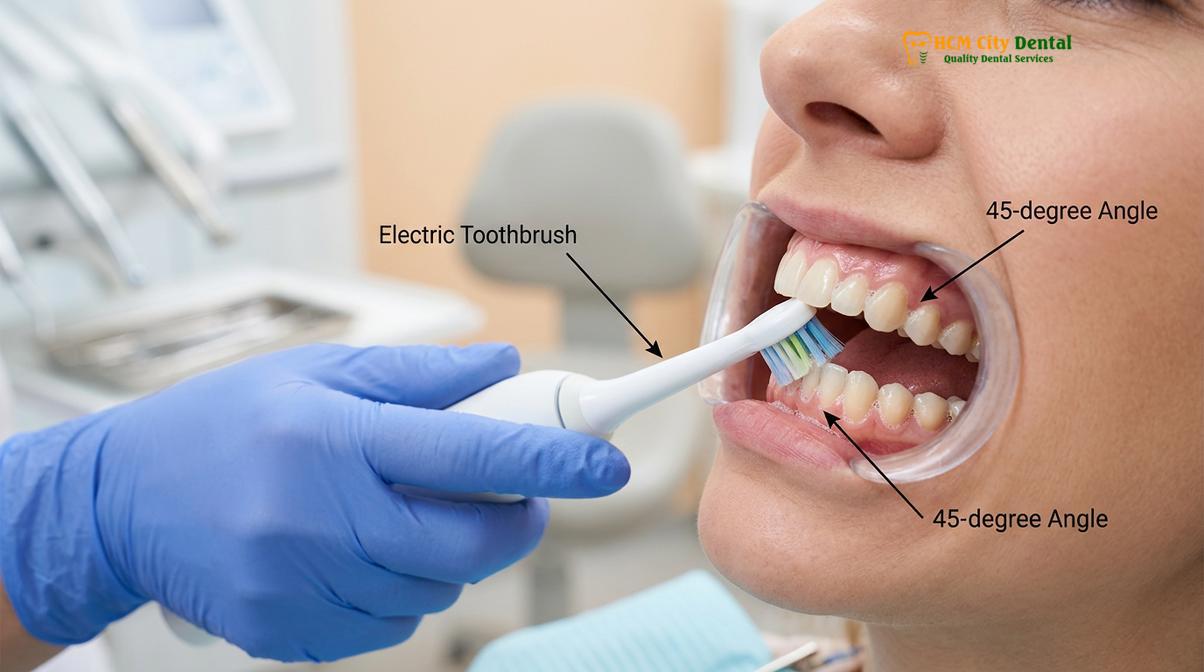
Unlike manual brushing, electric toothbrushes require a passive guiding technique where the device is held at a 45-degree angle and slowly moved from tooth to tooth without active scrubbing.
A common clinical observation is that patients purchase high-end electric toothbrushes but continue to use them as if they were manual brushes. Actively scrubbing back and forth with a powered device not only defeats the purpose of the technology but can also trigger the pressure sensor constantly, reducing the motor’s efficacy and potentially causing tissue trauma. To harness the full clinical benefit of a dentist recommended electric toothbrush, patients must adopt a modified brushing technique.
The fundamental principle is to let the brush do the work. For sonic toothbrushes, the technique closely mirrors the Modified Bass method used in manual brushing, but without the active sweeping stroke. The bristles should be placed at a 45-degree angle to the long axis of the tooth, directed toward the gingival margin (where the tooth meets the gum). The user should turn the device on and slowly glide the brush head along the dental arch, pausing for a few seconds on the facial (outer), lingual (inner), and occlusal (chewing) surfaces of each tooth. The high-frequency vibrations will handle the plaque disruption.
For oscillating-rotating brushes, the technique is even more passive. Because the round head is designed to cup each tooth individually, the user should place the brush head on a single tooth, adapting it to the gingival margin, and hold it there for two to three seconds before rolling it to the adjacent tooth. It is crucial to follow the natural curve of the dentition, ensuring that the bristles dip into the interproximal embrasures (the spaces between teeth). Research indicates that proper angulation combined with pressure sensor feedback significantly reduces the incidence of gingival abrasion[4].
In addition to technique, the choice of dentifrice plays a supportive role. Pairing your device with a low-abrasivity, fluoride-rich dentist toothpaste maximizes enamel protection while minimizing wear. Highly abrasive whitening toothpastes, when combined with the rapid strokes of an electric brush, can sometimes be too aggressive for patients with exposed dentin or severe recession. Furthermore, proper brushing technique must include the tongue. The dorsal surface of the tongue is highly papillated and harbors anaerobic bacteria responsible for volatile sulfur compounds. Gently brushing the tongue with the powered device is a critical step in managing halitosis and maintaining overall oral freshness.
Managing Sensitive Gums and Orthodontic Appliances
Patients with gingival recession, fixed orthodontic braces, or dental implants benefit immensely from electric toothbrushes featuring sensitive modes and specialized, contour-adapting brush heads.
Specialized dental conditions require tailored hygiene approaches. For patients undergoing orthodontic treatment with fixed brackets and wires, plaque control becomes exponentially more difficult. The complex architecture of braces creates numerous stagnation areas where food debris and biofilm accumulate rapidly, leading to decalcification (white spot lesions) and hyperplastic gingivitis. Electric toothbrushes are indispensable in these scenarios. Many manufacturers offer specialized orthodontic brush heads with a unique bristle trim—often shorter in the center and longer on the periphery—designed to clean over and around brackets effectively.
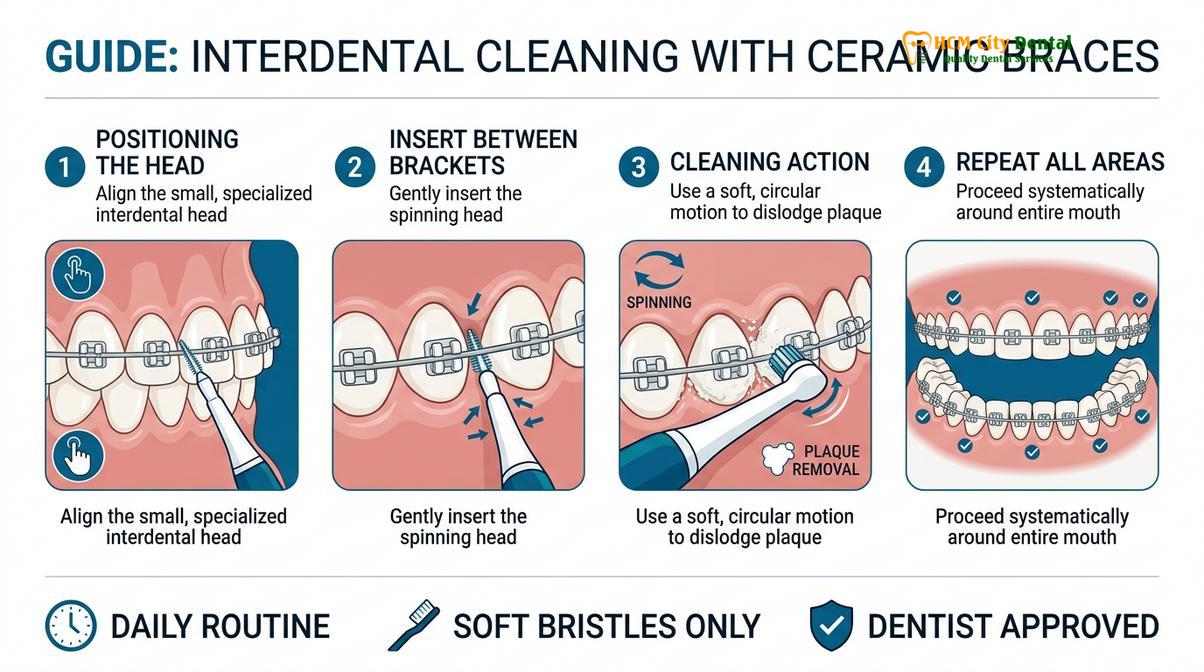
Similarly, patients with dental implants, crowns, or extensive bridgework must maintain impeccable hygiene to prevent peri-implantitis or recurrent decay at the restoration margins. Powered toothbrushes deliver the consistent, thorough cleaning required to maintain the health of the peri-implant mucosa without scratching the delicate titanium or ceramic surfaces[5]. Adult patients with complex prosthodontics require tailored brush heads and sensitive cleaning modes to ensure longevity of their restorations.
Clinical Case Study: Orthodontic Hygiene Management
A 24-year-old patient presented to HCMC Dental Clinic in Ho Chi Minh City with severe gingival hyperplasia and bleeding associated with fixed ceramic braces. The patient was struggling with manual brushing dexterity. The clinical team recommended transitioning to an oscillating-rotating electric toothbrush equipped with an orthodontic brush head and a visible pressure sensor. The patient was instructed on the passive guidance technique. Upon the 4-week follow-up, clinical evaluation revealed a 60% reduction in bleeding on probing and a significant decrease in visible plaque index, demonstrating the efficacy of powered mechanical biofilm control in complex anatomical environments.
For patients with naturally sensitive gums or a history of periodontal disease, the transition to an electric toothbrush can initially feel intimidating. The vibrations may cause a tickling sensation or mild discomfort. To accommodate this, modern devices feature “Sensitive” or “Gum Care” modes, which operate at a lower frequency to gently massage the tissues while still providing adequate plaque disruption.
When to Consult a Dental Professional for Oral Hygiene Guidance
While an electric toothbrush is a powerful tool for daily maintenance, it cannot replace professional diagnostics and targeted hygiene instruction from a qualified dental provider.
Even with the most advanced powered toothbrush, patients may still experience localized areas of gingival inflammation or calculus buildup due to anatomical challenges or deeply embedded habits. Knowing how often you should go to the dentist is critical for intercepting these issues before they progress into irreversible periodontal disease. Routine professional cleanings (scaling and root planing) are necessary to remove calcified deposits that no toothbrush, manual or electric, can dislodge.
“An electric toothbrush is an investment in your daily preventive care, but its true value is unlocked when paired with professional guidance. We assess your unique gingival biotype and restorative needs to recommend the exact brush head and technique that will protect your smile.”
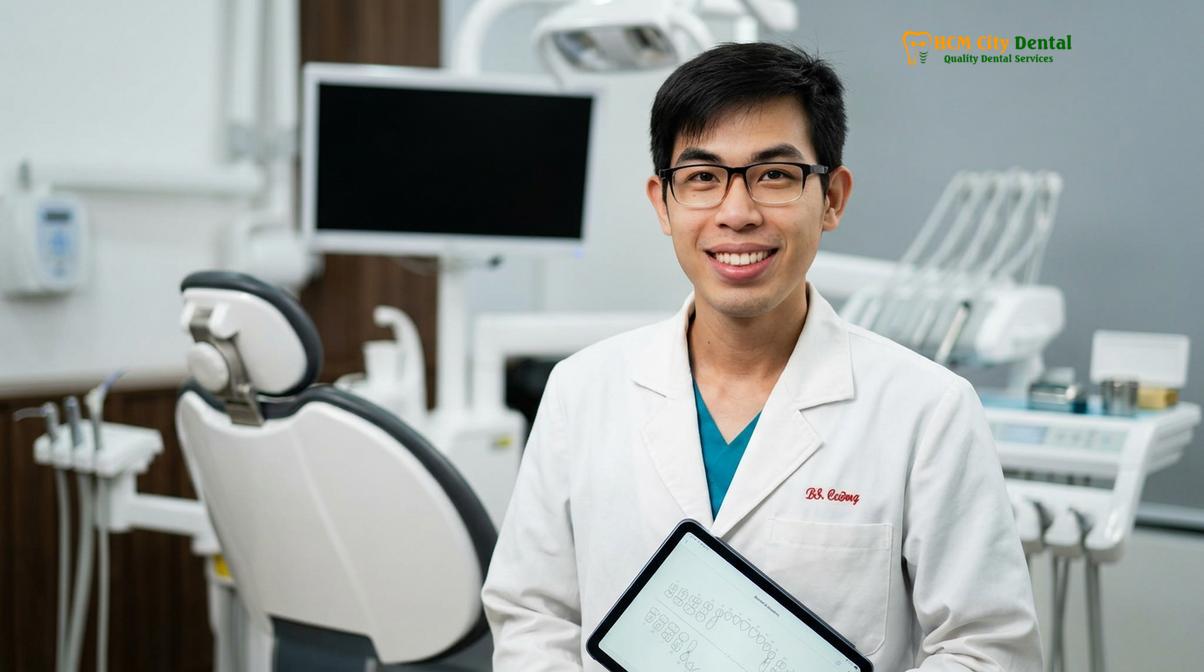
Dr. Nguyen Van Cuong, a leading practitioner at HCMC Dental Clinic in Ho Chi Minh City, emphasizes that transitioning to a powered device is a critical step in preventive care. He routinely educates patients on proper brushing mechanics to prevent enamel abrasion and gingival recession. For those seeking comprehensive care, understanding how to find a good dentist who prioritizes personalized hygiene instruction is essential for long-term oral health and the successful maintenance of complex dental restorations.
Conclusion
Upgrading to a dentist recommended electric toothbrush is one of the most effective decisions a patient can make for their daily oral hygiene routine. By automating the mechanical sweeping action, providing real-time pressure feedback, and ensuring adequate brushing duration, these devices overcome the inherent limitations of manual brushing. Whether managing orthodontic appliances, protecting delicate gingival tissues, or simply striving for a cleaner, healthier smile, a powered toothbrush provides the clinical precision necessary for optimal plaque control.
If you are unsure which electric toothbrush technology is best suited for your specific dental needs, or if you require a comprehensive evaluation of your current oral hygiene practices, contact HCMC Dental Clinic in Ho Chi Minh City. Our experienced team is dedicated to providing personalized General Dentistry services and expert guidance to help you achieve and maintain exceptional oral health.
References
- Journal of Clinical Periodontology. Efficacy of oscillating-rotating versus manual toothbrushes in plaque and gingivitis reduction. (2020).
- American Dental Association (ADA) Council on Scientific Affairs. Acceptance Program Guidelines for Powered Toothbrushes. (2021).
- International Journal of Dental Hygiene. The hydrodynamic effects of sonic toothbrushes on interproximal biofilm disruption. (2019).
- Journal of Periodontology. Impact of brushing force and pressure sensors on gingival abrasion and recession. (2022).
- Clinical Oral Investigations. Maintenance of peri-implant health using powered mechanical biofilm control. (2018).
- Vietnam Ministry of Health (MOH). National Guidelines on Preventive Dentistry and Oral Hygiene Practices. (2021).