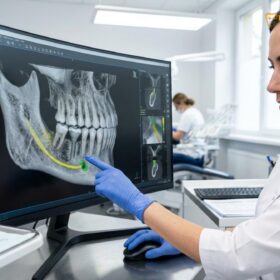
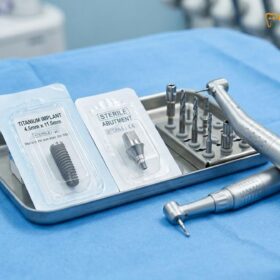
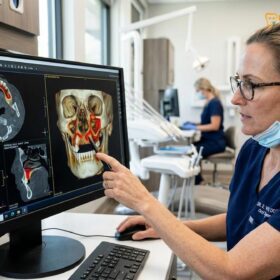
Choosing between All on 4 vs All on 6 dental implants depends primarily on your jawbone density and bite force requirements. While All-on-4 utilizes angled posterior implants to maximize existing bone, All-on-6 provides superior mechanical stability by distributing chewing forces across two additional titanium posts.
Clinical Summary:
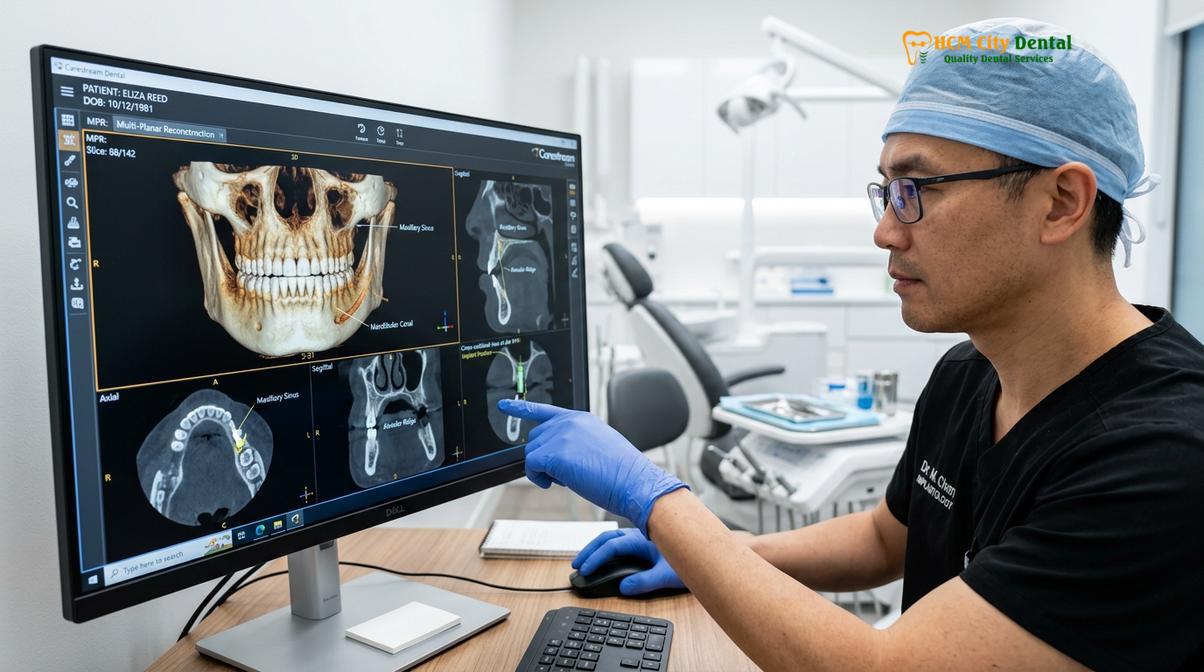
Both All-on-4 and All-on-6 are full-arch implant-supported prostheses designed to replace an entire row of missing teeth with a fixed, non-removable bridge. The primary clinical distinction lies in the number of titanium fixtures utilized and the anatomical prerequisites for their placement. The All-on-4 protocol is frequently indicated for patients presenting with moderate to severe bone loss, as it utilizes angled posterior implants to bypass anatomical structures like the sinus cavities and nerve canals, often eliminating the need for complex bone grafting. Conversely, the All-on-6 system offers enhanced structural rigidity and superior chewing force distribution, making it the preferred choice for patients with sufficient posterior bone volume or those exhibiting heavy bruxism. A comprehensive diagnostic evaluation, including a 3D CBCT scan, is mandatory to determine the optimal biomechanical approach, ensuring the long-term survival of both the implants and the final prosthetic restoration.
Key Takeaways:
- All-on-4 utilizes four implants per arch, often avoiding bone grafts by strategically angling the posterior posts.
- All-on-6 provides enhanced biomechanical stability and better chewing force distribution through two additional posterior implants.
- Jawbone density requirements are significantly stricter for All-on-6, particularly in the posterior maxilla and mandible.
- Both protocols support a fixed, non-removable hybrid prosthesis that restores near-natural masticatory function and aesthetics.
- Clinical diagnostics, including 3D CBCT imaging, dictate the safest and most predictable treatment pathway for each individual patient.
Restoring the Full Arch: How Many Posts Do You Need?
The decision between four or six implant posts is dictated by the patient’s anatomical bone availability, opposing dentition, and the required anterior-posterior spread for the final prosthesis.
The evolution of implant dentistry has revolutionized the way clinicians approach the completely edentulous (toothless) patient. Historically, restoring a full arch of missing teeth required either a removable denture or the placement of eight to ten individual implants to support a segmented bridge. Today, the concept of full-arch immediate loading has streamlined this process, allowing patients to receive a fixed, functional prosthesis on a reduced number of strategically placed titanium fixtures. When evaluating a full-arch implant restoration, the fundamental question arises: is a foundation of four implants sufficient, or does the clinical scenario demand the reinforcement of six?
To answer this, we must understand the concept of the anterior-posterior (A-P) spread. The A-P spread is the distance between the center of the most anterior (front) implant and the distal aspect of the most posterior (back) implant. This measurement is critical because it dictates how far the final prosthetic bridge can safely extend backward (the cantilever) without placing excessive stress on the implants. In an All-on-4 configuration, the two anterior implants are placed straight into the dense bone of the premaxilla or mandibular symphysis, while the two posterior implants are tilted up to 45 degrees. This tilting maximizes the A-P spread, allowing for a prosthesis of 10 to 12 teeth. [1]
However, while four implants serve as the minimum biomechanical foundation for a fixed full-arch bridge, they leave little room for error. If one implant fails to integrate or is lost to peri-implantitis over time, the entire prosthesis may be compromised, potentially requiring a complete redesign of the treatment plan. This is where the All-on-6 protocol offers a distinct advantage. By adding two additional implants in the posterior regions, the clinician significantly increases the total surface area for bone-to-implant contact (osseointegration). This redundancy acts as a safety net; in the rare event that one implant fails, the remaining five are often sufficient to support the bridge while the failed site is grafted and retreated.
Furthermore, the choice between four and six posts is heavily influenced by the opposing dentition. If a patient is receiving an upper full-arch implant bridge and has natural, healthy teeth in their lower jaw, the bite forces generated will be significantly higher than if they were biting against a conventional removable denture. Natural teeth possess periodontal ligaments that provide proprioception, allowing for powerful masticatory forces. In such cases, a full mouth implant comparison often leans toward the All-on-6 configuration to ensure the upper implants can withstand the rigorous demands of opposing natural dentition without succumbing to mechanical overload.
The Role of Immediate Loading
Both the All-on-4 and All-on-6 protocols are frequently associated with “immediate loading” or “teeth in a day” concepts. This means that a temporary, acrylic or PMMA (polymethyl methacrylate) bridge is attached to the implants on the very same day as the surgery. This immediate provisionalization provides the patient with instant aesthetic and functional benefits. However, for immediate loading to be successful, the implants must achieve a high degree of primary stability—meaning they must be tightly anchored in the bone at the time of placement. Achieving this stability is often easier in the dense anterior bone utilized by the All-on-4 technique, whereas the softer posterior bone sometimes required for the extra implants in an All-on-6 may necessitate a delayed loading approach if adequate torque cannot be reached. [2]
Mechanical Differences: Bite Force Distribution and Structural Load
All-on-6 systems inherently reduce the mechanical stress on individual implants by spreading occlusal loads across a wider surface area, whereas All-on-4 relies heavily on the angulation of posterior posts to manage stress.
The longevity of any implant-supported prosthesis is inextricably linked to its biomechanical environment. Every time a patient chews, swallows, or clenches their teeth, complex occlusal forces are transmitted through the prosthetic bridge, down into the titanium abutments, through the implant fixtures, and finally into the surrounding jawbone. Managing this chewing force distribution is paramount to preventing mechanical complications such as screw loosening, abutment fracture, acrylic chipping, or even catastrophic failure of the titanium implant itself.
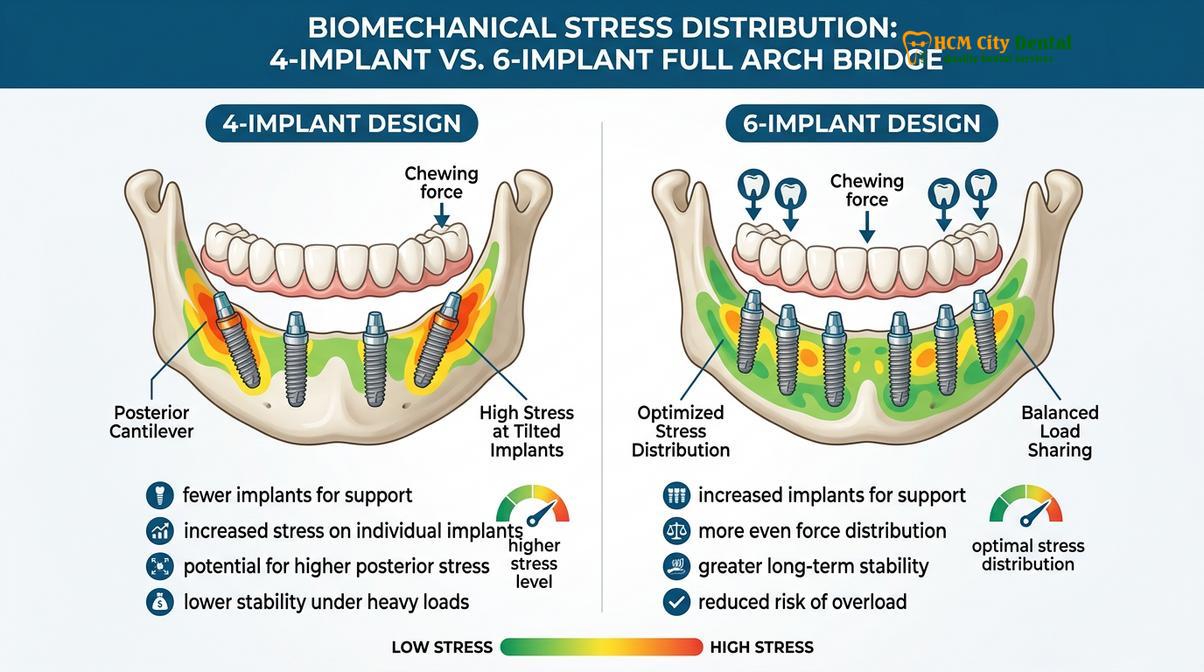
In an All-on-4 system, the entire occlusal load of a 12-tooth bridge is borne by four pillars. Because the posterior implants are tilted, they emerge from the bone further back in the mouth, which helps to reduce the length of the cantilever. The cantilever is the portion of the bridge that extends backward beyond the last implant, effectively acting like a diving board. When a patient bites down hard on the very back teeth of an All-on-4 bridge, the cantilever acts as a lever, creating a magnifying force that attempts to pull the anterior implants out of the bone. While modern engineering and precise surgical placement mitigate this risk, the cantilever remains the most vulnerable aspect of the All-on-4 design. [3]
Conversely, the All-on-6 configuration fundamentally alters this biomechanical equation. By placing two additional implants further back in the posterior regions (typically in the molar areas), the cantilever is either drastically reduced or eliminated entirely. The occlusal forces are now distributed across six pillars instead of four, significantly lowering the stress concentrated on any single implant. This enhanced load distribution is particularly crucial for patients who exhibit parafunctional habits, such as severe bruxism (teeth grinding) or clenching, which can generate forces far exceeding normal masticatory limits.
n”The biomechanical superiority of a six-implant configuration lies in its ability to minimize cantilever length, thereby reducing the bending moments and shear forces that contribute to long-term prosthetic fatigue and marginal bone loss.”n
When comparing implant-supported solutions to traditional dentures, both All-on-4 and All-on-6 offer a monumental leap in bite force capability. A conventional denture typically restores only 15% to 20% of a patient’s natural bite force, whereas a fixed implant bridge can restore up to 80% or 90%. However, managing that restored force requires careful material selection. The final prosthesis for an All-on-6 is often milled from a solid block of monolithic zirconia, a material renowned for its immense flexural strength. While zirconia can also be used for All-on-4, the higher stress concentrations on the four implants sometimes dictate the use of a titanium framework wrapped in acrylic or composite, which offers slightly more flex and shock absorption, albeit with a higher risk of long-term wear and chipping.
Comparative Biomechanical Profile
| Biomechanical Factor | All-on-4 Protocol | All-on-6 Protocol |
|---|---|---|
| Number of Support Pillars | 4 implants (2 straight anterior, 2 tilted posterior) | 6 implants (typically all placed axially/straight) |
| Cantilever Length | Moderate to Long (up to 1.5x the A-P spread) | Short to None (implants extend into molar regions) |
| Stress per Implant | Higher concentration, especially on posterior tilted implants | Lower concentration, evenly distributed across the arch |
| Ideal Opposing Dentition | Removable denture or another All-on-4 | Natural teeth, heavy bite, or another fixed implant bridge |
| Redundancy (Safety Net) | Low (loss of one implant compromises the entire bridge) | High (loss of one implant can often be managed without bridge failure) |
Anatomical Suitability: Assessing Bone Volume in Posterior Zones
The feasibility of placing six implants heavily depends on having adequate posterior bone volume, whereas the All-on-4 protocol is specifically designed to bypass anatomical limitations like the maxillary sinus and mandibular nerve.
While the biomechanical advantages of the All-on-6 system are clear, its clinical application is frequently limited by the patient’s natural anatomy. Following the loss of natural teeth, the jawbone undergoes a continuous and irreversible process of resorption (shrinkage). This bone loss is most pronounced in the posterior regions of the mouth. In the upper jaw (maxilla), the loss of molar teeth often leads to the pneumatization (expansion) of the maxillary sinus cavities, leaving only a paper-thin layer of bone separating the oral cavity from the sinus. In the lower jaw (mandible), severe bone resorption brings the inferior alveolar nerve—a major sensory nerve supplying the lower lip and chin—dangerously close to the crest of the bony ridge.
The genius of the All-on-4 concept lies in its anatomical circumvention. By tilting the posterior implants backward at angles of 30 to 45 degrees, the surgeon can anchor the implants in the dense, high-quality bone of the anterior jaw while completely avoiding the maxillary sinuses above and the mental foramen (where the nerve exits) below. This strategic angulation allows patients with severe posterior bone loss to receive a fixed full-arch prosthesis without the need for extensive, time-consuming, and costly bone grafting procedures. [4]
In stark contrast, the jawbone density requirements for an All-on-6 procedure are far more demanding. Because the goal is to place implants further back into the molar regions to eliminate the cantilever, the surgeon must have adequate vertical height and horizontal width of bone in these posterior zones. If a patient desires an All-on-6 but lacks this posterior bone volume, advanced pre-prosthetic surgeries become mandatory. In the upper jaw, this typically involves a bilateral sinus lift—a procedure where the delicate Schneiderian membrane lining the sinus is gently elevated, and bone graft material is packed underneath to create a new foundation for the implants. In the lower jaw, vertical ridge augmentation or nerve repositioning (a highly complex and risky procedure) might be required.
Clinical Warning: Attempting to place posterior implants for an All-on-6 configuration in areas of inadequate bone volume without proper grafting significantly increases the risk of implant failure, sinus membrane perforation, or permanent paresthesia (numbness) due to nerve damage. Always insist on a 3D CBCT scan prior to treatment.
These grafting procedures not only increase the surgical morbidity and discomfort for the patient but also significantly extend the overall treatment timeline. A sinus lift, for example, may require six to nine months of healing before implants can be safely placed, delaying the final restoration. Therefore, the choice between the two protocols is rarely a simple matter of preference; it is a clinical decision dictated by the patient’s unique anatomical landscape as revealed by three-dimensional radiographic imaging.
Cost-Benefit Analysis: Upfront Investment vs. Long-term Stability
While All-on-4 presents a more accessible initial price point due to fewer surgical components, All-on-6 may offer long-term financial benefits by reducing the risk of prosthetic failure and implant overload.
The financial investment required for full-arch implant rehabilitation is significant, and understanding the cost-benefit ratio of both protocols is essential for patients making this life-changing decision. The upfront cost of an All-on-4 procedure is inherently lower than that of an All-on-6. This price difference is primarily driven by the reduction in surgical hardware—two fewer titanium implants, two fewer multi-unit abutments, and two fewer prosthetic connections. Furthermore, because the All-on-4 protocol is specifically designed to avoid bone grafting, patients save on the substantial costs associated with sinus lifts, particulate bone grafts, and resorbable collagen membranes.
When evaluating the comprehensive cost of dental implants, it is also important to factor in the surgical time and facility fees. An All-on-4 surgery is generally faster and less invasive, which can translate to lower operative costs. For many patients, this makes the All-on-4 an highly attractive and accessible option that provides excellent functional and aesthetic outcomes without breaking the bank.
However, the cost-benefit analysis must extend beyond the initial surgical phase and consider the long-term maintenance and potential for complications. As discussed in the biomechanics section, the All-on-4 system places higher stress on the four supporting pillars and relies on a cantilevered prosthesis. Over a period of ten to fifteen years, this increased stress can lead to a higher incidence of prosthetic complications, such as the fracturing of the acrylic veneer, the wearing down of the prosthetic teeth, or the loosening of the retaining screws. Repairing or replacing a fractured full-arch bridge can be a costly endeavor. [5]
In this context, the higher upfront investment of an All-on-6 can be viewed as an insurance policy against future mechanical failures. By distributing the occlusal load more evenly and eliminating the cantilever, the All-on-6 system significantly reduces the wear and tear on the final prosthesis. Patients who invest in premium implant systems like Straumann and Nobel Biocare for an All-on-6 configuration often experience fewer maintenance issues over the decades, potentially offsetting the initial price difference. Ultimately, the decision must balance the patient’s current financial capacity with their long-term functional expectations and tolerance for potential future maintenance.
Dr. Cuong’s Recommendations: Choosing Between 4 and 6 Implants
Dr. Nguyen Van Cuong emphasizes that the choice between four and six implants should never be based solely on budget, but rather on a rigorous evaluation of the patient’s unique biomechanical and anatomical profile.
At HCMC Dental Clinic in Ho Chi Minh City, the approach to full-arch rehabilitation is deeply rooted in personalized, evidence-based diagnostics. Dr. Nguyen Van Cuong, a leading expert in complex implantology, frequently consults with patients who come in requesting a specific protocol—often asking for an All-on-6 because they assume “more is always better,” or requesting an All-on-4 strictly for budgetary reasons. Dr. Cuong’s philosophy is that the treatment plan must be dictated by the anatomy, not the other way around.
During the initial consultation, Dr. Cuong utilizes advanced 3D CBCT imaging to map the precise topography of the patient’s jawbone. He evaluates the density of the bone (measured in Hounsfield units), the position of the sinus cavities, the trajectory of the inferior alveolar nerve, and the dynamics of the patient’s bite. If a patient presents with excellent posterior bone volume and a heavy bite, Dr. Cuong will strongly advocate for the All-on-6 to ensure maximum long-term stability. Conversely, if a patient has severe posterior resorption, he will expertly execute the All-on-4 protocol, utilizing the dense anterior bone to provide a secure, graft-less solution.
Clinical Case Study: A 62-year-old male patient visited HCMC Dental Clinic in Ho Chi Minh City requesting an All-on-6 restoration for his failing upper dentition. He was a heavy bruxer and wanted maximum stability. However, his CBCT scan revealed severe pneumatization of both maxillary sinuses, leaving less than 2mm of posterior bone. Dr. Cuong explained that an All-on-6 would require bilateral sinus lifts and a 9-month delay in treatment. Instead, Dr. Cuong designed a customized All-on-4 treatment plan using highly angled, extra-long implants anchored in the dense bone near the nose (paranasal bone). The patient received a fixed provisional bridge on the same day and achieved excellent, stable results without the need for invasive grafting.
n”The success of a full-arch restoration is not measured by the number of titanium screws we place, but by how intelligently we utilize the patient’s available bone to create a biomechanically sound, easily maintainable, and aesthetically pleasing foundation.” — Dr. Nguyen Van Cuongn
For older adults considering these procedures, Dr. Cuong also factors in overall systemic health and the ability to tolerate longer surgical times. When evaluating dental implants for older adults, a minimally invasive All-on-4 approach is often preferred to reduce surgical trauma and expedite the healing process, provided the biomechanical parameters are met.
When to See a Doctor for Full Arch Restoration
Patients experiencing severe tooth mobility, chronic failing dentition, or those currently wearing uncomfortable removable dentures should seek a specialized prosthodontic evaluation immediately.
Recognizing the signs that you may need a full-arch implant restoration is the first step toward regaining your oral health and quality of life. You should schedule a comprehensive clinical evaluation if you are experiencing any of the following symptoms:
- Severe Tooth Mobility: If multiple teeth are loose due to advanced periodontal (gum) disease, attempting to save them individually may be a losing battle. A full-arch clearance and implant placement can eliminate the chronic infection and provide a stable bite.
- Chronic Dental Pain and Abscesses: A cycle of recurring infections, root canals, and extractions indicates a failing dentition. Transitioning to an implant-supported prosthesis can halt this cycle.
- Ill-Fitting Dentures: If you currently wear removable dentures that slip, click, or cause painful sore spots on your gums, implant-supported solutions can provide the retention and stability you lack.
- Inability to Chew Properly: If your diet is restricted to soft foods because you cannot generate enough bite force, your nutritional intake and overall health are at risk.
If you are experiencing these issues, it is crucial to consult with an experienced implantologist. By evaluating the pros and cons of dental implants tailored to your specific case, a specialist can guide you toward the most appropriate treatment. We encourage patients to visit HCMC Dental Clinic for a thorough diagnostic workup, where our team will utilize state-of-the-art imaging to determine whether an All-on-4 or All-on-6 configuration is the safest and most predictable path to restoring your smile.
Frequently Asked Questions
Is All-on-6 always better than All-on-4?
No, All-on-6 is not inherently better for every patient; the optimal choice depends entirely on your anatomical bone volume and biomechanical needs. While six implants provide superior load distribution and a shorter cantilever, patients with severe posterior bone loss may achieve excellent, long-lasting results with an All-on-4 protocol without the need for invasive bone grafting procedures. A thorough clinical evaluation is required to determine the safest approach.
Can you upgrade an All-on-4 to an All-on-6 later?
Upgrading from an All-on-4 to an All-on-6 is technically possible but clinically complex and generally not recommended as a planned phased treatment. Adding two posterior implants later requires new surgical interventions, potential bone grafting, and the complete fabrication of a brand-new prosthetic bridge to fit the new six-implant configuration. It is far more predictable to determine the correct number of implants during the initial comprehensive treatment planning phase.
Does All-on-6 require bone grafting?
Yes, All-on-6 frequently requires bone grafting if the patient lacks sufficient vertical or horizontal bone volume in the posterior regions of the jaw. Because the two additional implants are placed further back in the mouth, they often encounter areas where the jawbone has resorbed or where the maxillary sinus has expanded. If bone density is inadequate, sinus lifts or ridge augmentations are mandatory to ensure implant stability.
How long does the surgical procedure take for these full-arch restorations?
The surgical phase for a full-arch implant restoration typically takes between two to four hours per jaw, depending on the complexity of the case and whether extractions are needed. An All-on-6 procedure generally takes slightly longer than an All-on-4 due to the placement of the two additional fixtures and any associated minor bone grafting. Both procedures are routinely performed under local anesthesia with optional conscious sedation for patient comfort.
What is the difference in recovery time between the two options?
The initial soft tissue recovery time for both procedures is quite similar, generally ranging from one to two weeks for the swelling and bruising to subside. However, if an All-on-6 procedure involves extensive bone grafting or sinus lifting, the overall biological healing timeline—specifically the osseointegration phase—may be extended by several months before the final permanent zirconia prosthesis can be safely loaded onto the implants.
References
- Journal of Prosthodontic Research. Biomechanical evaluation of All-on-4 and All-on-6 implant-supported prostheses under dynamic loading. (2021).
- International Journal of Oral and Maxillofacial Implants. The influence of anterior-posterior spread on cantilever length in full-arch restorations. (2020).
- Clinical Implant Dentistry and Related Research. Marginal bone loss and survival rates of tilted vs. axial implants in the edentulous maxilla. (2019).
- Journal of Clinical Periodontology. Long-term outcomes of immediate loading in full-arch implant rehabilitations. (2022).
- Journal of Oral Implantology. Anatomical considerations and sinus pneumatization in posterior maxillary implant placement. (2018).