Navigating a claim for dental work overseas with providers like Bupa or Allianz requires meticulous clinical documentation and pre-treatment authorization. While many international health policies cover emergency dental care or major restorative procedures abroad, successful reimbursement depends on submitting itemized invoices, standardized ADA treatment codes, and comprehensive diagnostic records.
Clinical Summary:
Securing reimbursement for international dental treatments involves bridging the gap between overseas clinical protocols and the stringent requirements of global health insurers. Providers such as Bupa and Allianz evaluate claims based on medical necessity, requiring robust diagnostic evidence including CBCT scans, periapical radiographs, and detailed periodontal charting. To successfully process an overseas dental benefit claim, patients must ensure their chosen clinic provides an itemized invoice dental code utilizing universally recognized ADA (American Dental Association) terminology. Furthermore, distinguishing between acute emergency interventions covered by standard travel insurance and elective restorative procedures covered by comprehensive global health plans is critical. By partnering with a clinic experienced in saigon insurance verification and international documentation standards, patients can significantly streamline the reimbursement workflow while receiving high-quality, evidence-based dental care.
Key Takeaways:
- Pre-authorization is highly recommended for major restorative work to confirm coverage limits before traveling.
- Insurers require standardized ADA treatment codes on all invoices to accurately process international claims.
- Diagnostic evidence, including pre- and post-operative X-rays, is mandatory to prove medical necessity.
- Travel insurance typically covers only acute emergencies, whereas comprehensive health plans may cover routine and restorative care.
- Choosing a clinic experienced in international documentation ensures seamless communication with global insurance providers.
How Private Health Insurance Policies View Overseas Dental Care
International health insurance policies evaluate overseas dental care by strictly differentiating between medically necessary emergency interventions and elective cosmetic procedures, requiring robust clinical evidence for approval.
When patients travel abroad for medical care, understanding how private health insurance policies categorize and evaluate treatments is the foundational step in securing reimbursement. The landscape of international health coverage is complex, with insurers applying rigorous clinical criteria to determine the validity of an overseas dental benefit claim. The primary distinction insurers make is between emergency dental care and elective or planned restorative treatments. This differentiation dictates not only the likelihood of approval but also the specific type of policy required—ranging from standard travel insurance to comprehensive global health plans.
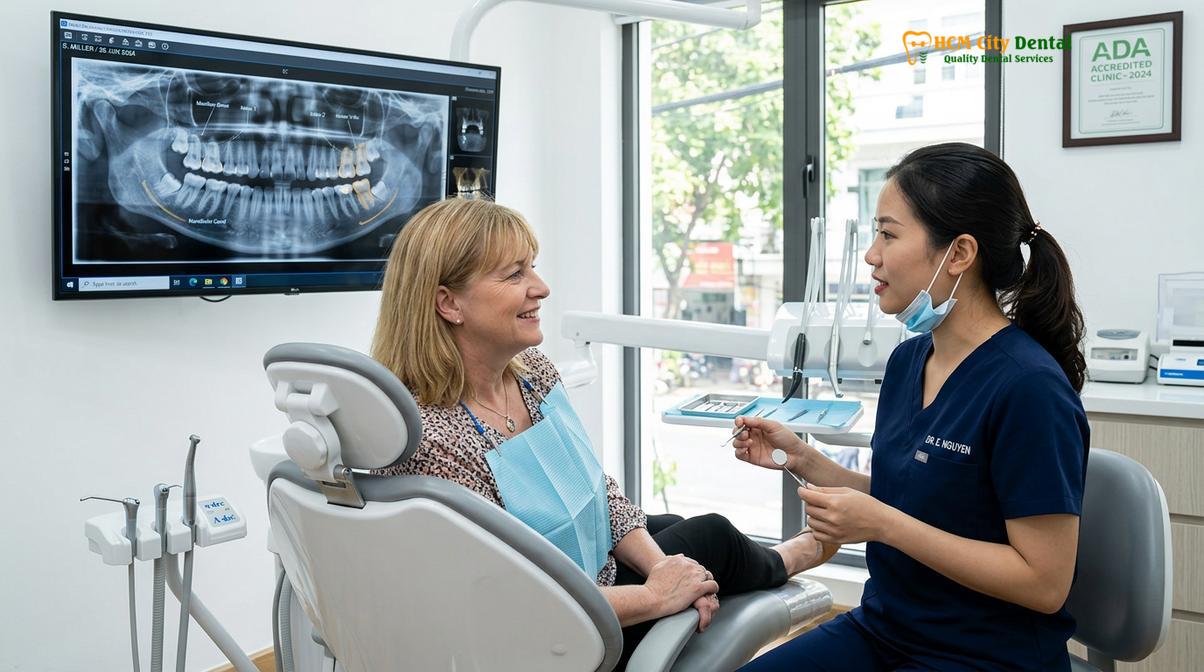
Emergency dental care is generally defined as immediate clinical intervention required to alleviate severe pain, manage acute infection, or treat dental trauma resulting from an accident. For example, if a patient suffers a fractured tooth that exposes the dental pulp, leading to acute pulpitis, the immediate extraction or extirpation of the nerve (pulpectomy) is classified as an emergency. Standard travel insurance policies often include provisions for these acute scenarios, recognizing that immediate treatment is necessary to stabilize the patient’s health and allow them to continue their journey or return home safely. However, these policies strictly exclude any treatment that could have been reasonably delayed until the patient returned to their home country, such as routine prophylaxis or the definitive restoration of a previously asymptomatic carious lesion.
Conversely, comprehensive international health insurance policies—often held by expatriates, digital nomads, or frequent travelers—may offer broader coverage that includes routine, preventative, and major restorative dental care. These policies evaluate claims based on the principle of “medical necessity.” To prove medical necessity, the attending dentist must provide objective diagnostic evidence demonstrating that the proposed treatment is required to restore oral function or prevent the progression of disease. This is where the clinical rigor of the overseas provider becomes paramount. According to global health guidelines, comprehensive documentation is the cornerstone of cross-border medical validation [1].
“In the realm of international dental claims, the clinical narrative provided by the attending dentist is just as critical as the treatment itself. Insurers rely on objective diagnostic data—such as high-resolution radiographs and detailed periodontal charting—to verify that an overseas procedure meets global standards of medical necessity.”
Dr. Nguyen Van Cuong, a leading specialist at HCMC Dental Clinic, emphasizes the importance of diagnostic foresight when treating international patients. “Before we initiate any major restorative work, such as a multi-unit bridge or dental implants, we ensure that comprehensive diagnostic records, including 3D CBCT scans and intraoral photographs, are captured. This not only guides our clinical precision but provides the exact evidentiary baseline that international insurers demand to approve a claim.”
Furthermore, insurers assess the appropriateness of the treatment plan against established clinical guidelines. If a patient requests a full-mouth rehabilitation utilizing porcelain veneers purely for aesthetic enhancement, the claim will likely be denied as elective cosmetic dentistry. However, if the same patient requires full-mouth rehabilitation due to severe occlusal wear, amelogenesis imperfecta, or generalized advanced periodontitis compromising masticatory function, the treatment may be deemed medically necessary and eligible for coverage under a major restorative tier. Navigating these clinical nuances requires a dental provider who understands how to articulate the patient’s pathology in a manner that aligns with the insurer’s evaluation criteria. For those considering traveling for such comprehensive care, exploring a Dental Tourism Vietnam: Complete Guide for International Patients can provide valuable insights into the process.
Bupa and Allianz: Sourcing Out-of-Country Dental Benefits
Providers like Bupa and Allianz offer specific international health plans that reimburse out-of-country dental treatments, provided the clinical protocols and documentation align with their stringent global standards.
Among the myriad of international health insurance providers, Bupa and Allianz stand out for their comprehensive global networks and structured approaches to processing out-of-country medical claims. Patients holding a bupa overseas dental cover or seeking to file an allianz global medical claim must navigate specific administrative and clinical workflows to access their benefits. Understanding the architecture of these policies is crucial for patients planning to receive dental care in destinations like Ho Chi Minh City.
Both Bupa Global and Allianz Care typically structure their dental benefits into distinct tiers: Preventative/Routine, Minor Restorative, and Major Restorative/Orthodontic. Preventative care includes comprehensive oral examinations, prophylaxis (scaling and polishing), and topical fluoride applications. Minor restorative care encompasses direct composite restorations (fillings) and simple non-surgical extractions. Major restorative care, which represents the highest financial outlay, includes endodontic therapy (root canals), indirect restorations (crowns, inlays, onlays), fixed prosthodontics (bridges), and surgical implant placement. Each tier carries its own annual limits, waiting periods, and co-insurance percentages.
When sourcing benefits for overseas treatment, the concept of “Usual, Customary, and Reasonable” (UCR) charges comes into play. Insurers evaluate the cost of the treatment in Vietnam against the standard fees for the same procedure in that specific geographic region, rather than the fees in the patient’s home country. Because the cost of high-quality dental care in Vietnam is significantly lower than in the US, UK, or Australia, patients often find that their policy limits stretch much further, allowing them to complete extensive treatment plans with minimal out-of-pocket expenses. This economic advantage is a primary driver of global medical travel [2].
To successfully leverage these benefits, the clinical workflow must incorporate a pre-treatment estimate or pre-authorization process. For any major restorative work, Bupa and Allianz strongly recommend—and often require—that the patient submits a detailed treatment plan before any clinical intervention begins. This pre-authorization request must include the proposed ADA treatment codes, the estimated cost per procedure, and the supporting diagnostic evidence. The insurer’s dental consultants will review the clinical data to confirm that the proposed treatment is the most appropriate and cost-effective solution for the patient’s diagnosis.
| Treatment Category | Examples of Procedures | Typical Insurance Requirement | Required Clinical Evidence |
|---|---|---|---|
| Preventative / Routine | Exams, X-rays, Prophylaxis (Cleaning) | Usually covered immediately; no pre-authorization. | Itemized invoice, basic clinical notes. |
| Minor Restorative | Composite Fillings, Simple Extractions | Subject to annual limits; waiting periods may apply. | Pre-op X-rays showing caries or pathology. |
| Major Restorative | Crowns, Bridges, Root Canals, Implants | Pre-authorization highly recommended/required. | CBCT scans, Periapical X-rays, detailed narrative. |
| Emergency / Trauma | Palliative care, reimplantation of avulsed tooth | Covered under travel or health plans; immediate action. | Emergency room notes, trauma radiographs. |
For example, if a patient requires a porcelain fused to metal (PFM) crown, the insurer will look for radiographic evidence that the tooth has lost more than 50% of its coronal structure or has undergone successful endodontic therapy, rendering a direct composite filling clinically insufficient. If the pre-authorization is approved, the patient receives a guarantee of coverage, providing financial peace of mind before traveling. Patients comparing regional options for major procedures often review resources like Dental Implants in Vietnam vs Thailand: Which Is Better? to maximize their insurance benefits while ensuring top-tier clinical outcomes.
Essential Documentation for Insurance Claims: English Medical Invoices
Securing reimbursement necessitates comprehensive clinical documentation, including an itemized invoice, pre- and post-operative radiographs, and detailed treatment narratives provided entirely in English.
The success of any international insurance claim hinges entirely on the quality, accuracy, and language of the clinical documentation provided by the treating facility. Insurers process thousands of claims daily, and any ambiguity, missing information, or language barrier can result in immediate delays or outright denials. Therefore, obtaining an itemized invoice dental code and comprehensive medical records in English is a non-negotiable requirement for patients seeking reimbursement.
An acceptable medical invoice for insurance purposes is vastly different from a standard payment receipt. A standard receipt merely proves that a financial transaction occurred. An itemized medical invoice, however, is a clinical and financial document that details exactly what procedures were performed, on which specific teeth, on what dates, and by whom. It must include the clinic’s official letterhead, contact information, the treating dentist’s credentials and license number, the patient’s full name and date of birth, and a line-by-line breakdown of each procedure with its corresponding standardized code and fee.
Clinical Documentation Warning: Never leave the clinic without securing your complete digital diagnostic records. Insurers frequently reject claims if post-operative X-rays (proving the treatment was completed) or pre-operative X-rays (proving the treatment was necessary) are missing. Request all files in standard formats (JPEG/DICOM) before your departure.
Beyond the invoice, the clinical narrative is vital. This is a formal letter or section within the medical record where the dentist explains the diagnosis and the rationale for the chosen treatment plan. For instance, if a patient undergoes surgical extraction of an impacted third molar, the narrative must describe the angle of impaction, the proximity to the inferior alveolar nerve, and the specific surgical techniques employed (e.g., mucoperiosteal flap reflection, bone removal, tooth sectioning). This level of detail allows the insurer’s medical review board to verify that the procedure billed matches the clinical reality of the case. Maintaining these high standards of documentation is a hallmark of internationally accredited facilities [3].
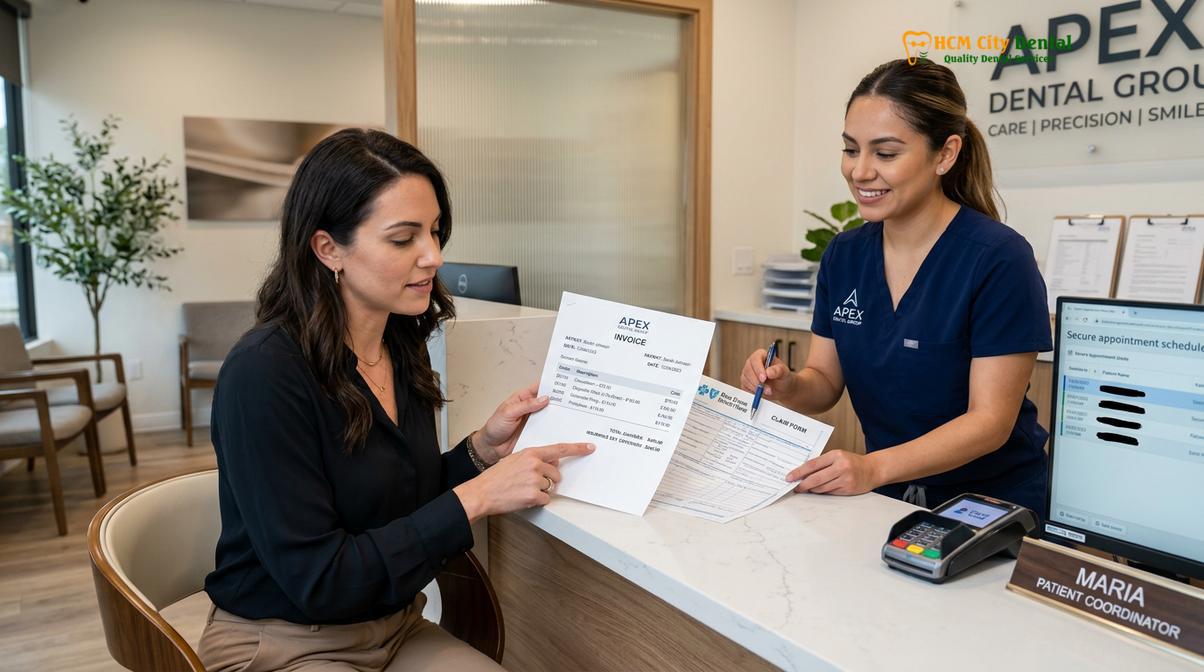
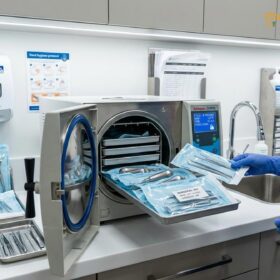
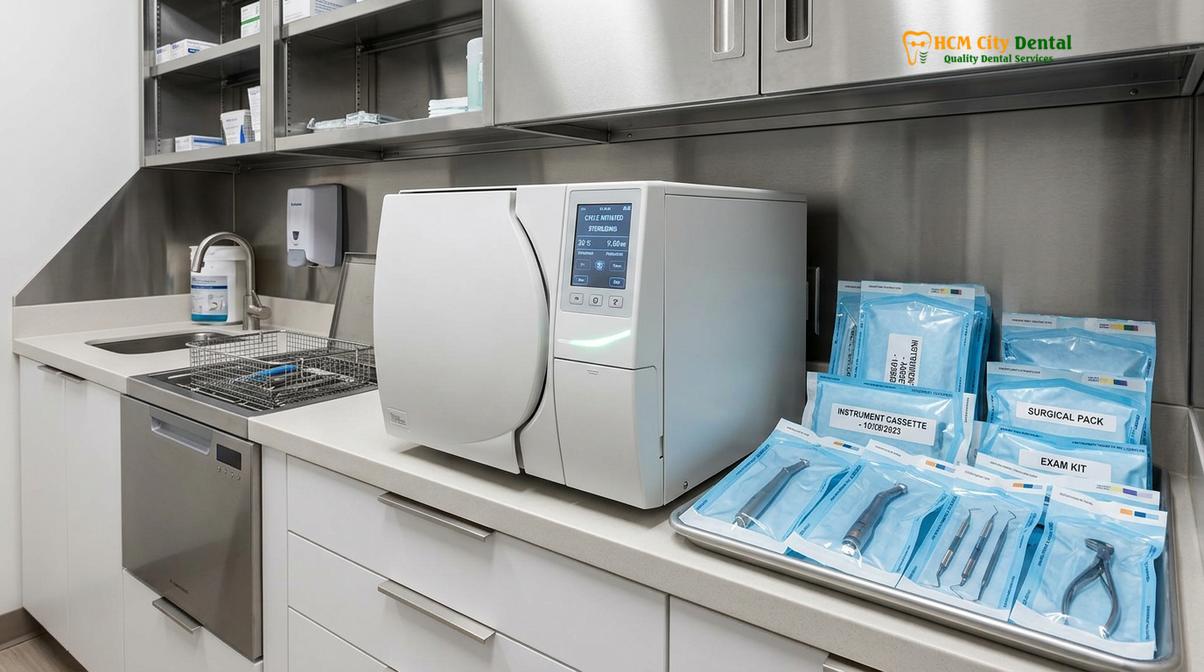
At HCMC Dental Clinic, the administrative protocol is specifically designed to support international patients through the saigon insurance verification process. The clinic ensures that all medical records, treatment plans, and invoices are generated in clear, professional English. Furthermore, if an insurer requires proof of the facility’s safety standards—a common request for high-value surgical claims—the clinic can provide documentation of its Class-B autoclave sterilization protocols, demonstrating adherence to strict European infection control standards. This comprehensive approach to documentation minimizes administrative friction and empowers patients to claim their benefits confidently. Finding a provider capable of this level of administrative support is crucial, which is why many patients seek an English-Speaking Dentist in Ho Chi Minh City: Complete Guide to ensure seamless communication.
Understanding ADA (American Dental Association) Treatment Codes in Vietnam
Utilizing standardized ADA treatment codes ensures that international insurers accurately process and evaluate the specific dental procedures performed by overseas clinics.
To facilitate global communication between dental providers and insurance companies, a standardized language is required. The most widely recognized system for this purpose is the Current Dental Terminology (CDT) code set, maintained by the American Dental Association (ADA). Even when treatment is performed in Vietnam, utilizing these ADA codes on the itemized invoice is critical for ensuring that insurers like Bupa, Allianz, or Cigna understand exactly what clinical procedures were executed.
ADA codes are highly specific, alphanumeric identifiers that describe every possible dental procedure. They eliminate ambiguity. For example, a patient might simply say they had a “tooth pulled.” However, from a clinical and insurance perspective, there is a significant difference between a simple coronal extraction of an erupted tooth (ADA Code D7140) and the complex surgical removal of an erupted tooth requiring elevation of a mucoperiosteal flap and removal of bone (ADA Code D7210). The latter requires more clinical time, advanced surgical skill, and carries a higher fee. If a clinic bills for a surgical extraction but fails to use the correct D7210 code or lacks the radiographic evidence to justify it, the insurer will likely downgrade the claim to a simple extraction, resulting in a lower reimbursement for the patient.
Understanding the mapping of these codes is essential for complex restorative cases. Consider a patient receiving a dental implant. The process is not billed as a single “implant” code. Instead, it is broken down into distinct clinical phases: the surgical placement of the implant body (D6010), the placement of the custom abutment (D6057), and the final delivery of the implant-supported porcelain crown (D6059). Furthermore, if the patient required a bone graft at the time of extraction to preserve the ridge for future implant placement, that procedure (D7953) must be coded and justified separately. The precise application of these codes ensures that the insurer accurately assesses the scope of the rehabilitation [4].
Clinical Case Study: Maximizing Reimbursement through Precise Coding
A 45-year-old expatriate presented to HCMC Dental Clinic with a fractured maxillary premolar requiring extraction and immediate implant placement. Dr. Cuong meticulously documented the case, utilizing CBCT imaging to confirm adequate bone volume. The final English invoice included precise ADA codes: D7140 (Extraction), D6010 (Surgical Implant Placement), and D6058 (Abutment Supported Porcelain Crown). By providing the exact codes alongside the pre- and post-operative radiographs, the patient successfully secured an 80% reimbursement from their international health plan without any administrative delays.
Dr. Nguyen Van Cuong and the clinical team at HCMC Dental Clinic are highly proficient in aligning their clinical workflows with ADA coding standards. During the treatment planning phase, the team maps out the proposed procedures using the appropriate CDT codes, allowing patients to submit accurate pre-treatment estimates to their insurers. This proactive approach prevents the common pitfall of “upcoding” (billing for a more complex procedure than was performed) or “downcoding” (the insurer reducing the benefit due to lack of clarity), ensuring a transparent and fair reimbursement process. Patients planning complex procedures often rely on resources like Can I Get Dental Implants on Holiday in Vietnam? (Practical Guide) to understand these clinical phases.
Steps to Submit a Claim for Reimbursement After Your Saigon Trip
Submitting a successful reimbursement claim involves a systematic process of gathering clinical records, completing insurer-specific forms, and providing verifiable proof of payment.
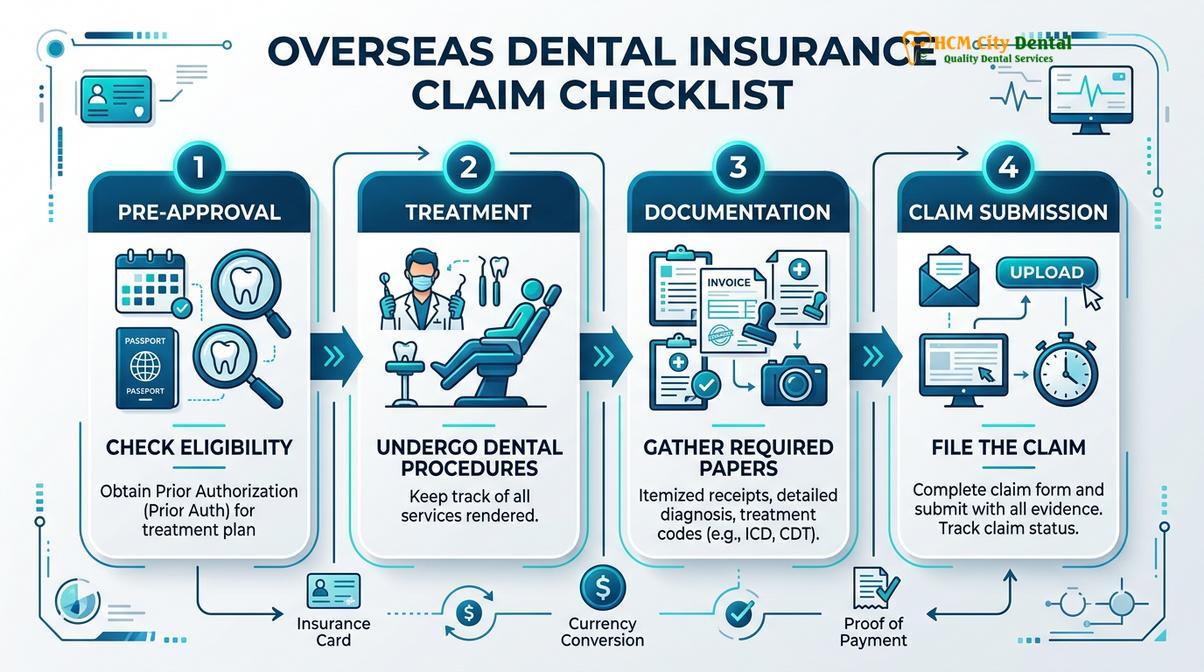
Once your clinical treatment in Ho Chi Minh City is complete, the final phase of your dental journey involves compiling the necessary documentation and submitting your claim to your insurance provider. Approaching this process systematically ensures that your claim is processed efficiently and reduces the likelihood of requests for additional information, which can delay your reimbursement.
The first step is to ensure you have all physical and digital records before leaving the clinic. This dossier should include the itemized invoice with ADA codes, a zero-balance receipt proving full payment, the clinical narrative or treatment plan signed by the attending dentist, and all relevant diagnostic imaging (pre-operative, intra-operative, and post-operative X-rays or CBCT scans). It is highly recommended to request these files on a USB drive or via a secure digital transfer link before you depart Vietnam.
Next, you must complete the specific claim form required by your insurer. Most international providers, including Bupa and Allianz, offer digital portals where you can download the appropriate forms or submit the claim entirely online. These forms typically require you to fill out your personal policy details and provide a brief description of the reason for treatment. There is often a section designated for the “Attending Dentist” to complete. If you are submitting the claim post-treatment, you can usually attach the clinic’s detailed invoice and narrative in lieu of having the dentist fill out the form directly, provided the clinic’s documents contain all the required clinical data.
“Efficiency in claims processing is directly correlated to the completeness of the initial submission. Patients who provide a well-organized dossier containing itemized codes, clear radiographs, and proof of payment experience significantly faster reimbursement turnaround times.”
Regarding payment, international insurers require proof that the financial transaction was completed. HCMC Dental Clinic facilitates this by offering multiple transparent payment options. Patients can settle their accounts using Visa/Mastercard, international bank transfers, cash (in USD or VND), PayPal, various e-wallets, and even major cryptocurrencies (Crypto). Regardless of the method chosen, the clinic provides an official receipt detailing the transaction, which serves as the final piece of evidence for your claim. Ensuring you have a clear financial record is a critical component of international travel health guidelines [5].
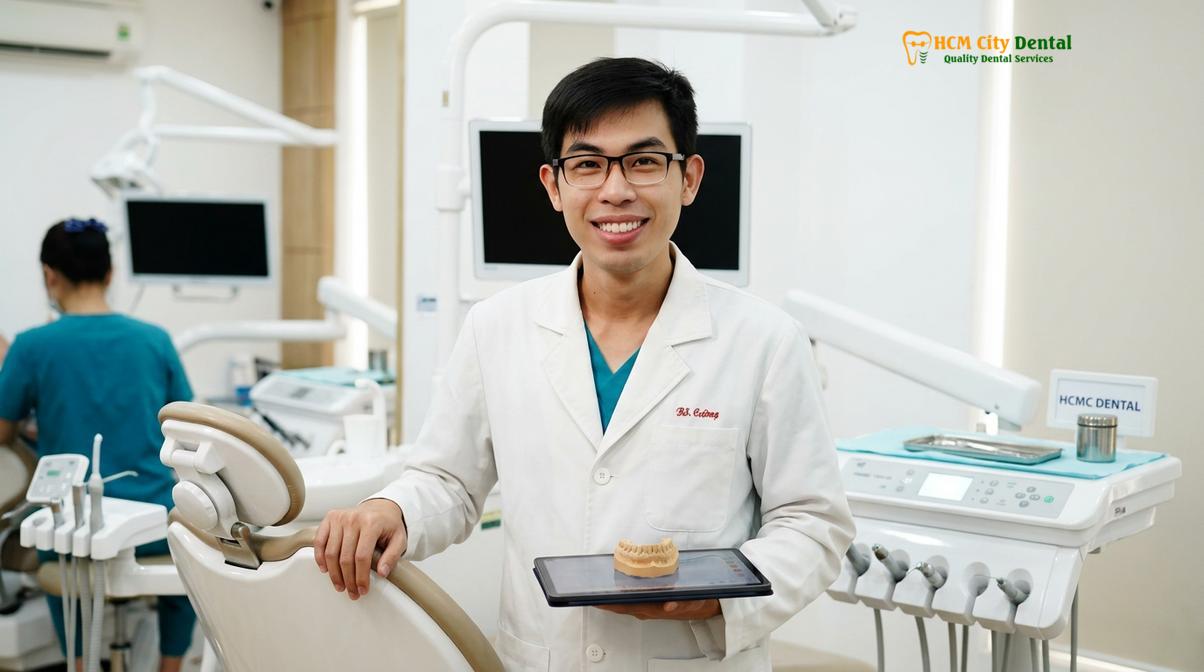
To further assist international patients, HCMC Dental Clinic offers a 40% online booking discount for treatments scheduled in advance, helping to maximize the value of your insurance benefits. Patients can also arrange a direct clinical consult with Dr. Cuong via WhatsApp prior to their arrival, allowing for preliminary treatment planning and insurance discussions. For logistical support, the clinic’s concierge team is available via WhatsApp to provide hotel recommendations in District 1 and arrange convenient airport pickup services, ensuring a stress-free experience from arrival to final reimbursement. For a comprehensive overview of organizing your journey, refer to Dental Work in Vietnam: How to Plan Your Trip (Step-by-Step).
Important Clinical Considerations (When to See a Doctor)
While navigating insurance pre-authorizations and claims is important, it must never supersede urgent clinical needs. Delaying necessary dental treatment while waiting for insurance approval can lead to severe complications, exacerbation of pathology, and ultimately, more invasive and costly procedures.
You should seek immediate dental care, regardless of your insurance pre-authorization status, if you experience any of the following acute symptoms:
- Severe, Unremitting Pain: Pain that disrupts sleep or is not managed by over-the-counter analgesics often indicates acute pulpitis or a developing abscess, requiring immediate endodontic intervention or extraction.
- Facial Swelling or Fever: Swelling that extends beyond the immediate gum area into the face, neck, or eye region, especially when accompanied by a fever, is a sign of a spreading bacterial infection. This is a medical emergency that requires immediate antibiotic therapy and surgical drainage to prevent systemic complications.
- Dental Trauma: If a tooth is knocked out (avulsed), fractured, or significantly displaced due to an accident, immediate clinical intervention is required. An avulsed tooth has the highest chance of successful reimplantation if treated within 30 to 60 minutes.
- Post-Operative Complications: If you have received treatment and experience excessive bleeding, severe swelling, or mobility of a newly placed dental implant, you must contact your treating dentist or seek local emergency care immediately.
In emergency situations, standard travel insurance or the emergency provisions of your global health plan will typically cover the immediate palliative care required to stabilize your condition. Always prioritize your health and address acute clinical symptoms promptly; the administrative claims process can be managed once the medical emergency is resolved.
Frequently Asked Questions
Does private health insurance cover dental treatment in Vietnam?
Yes, many comprehensive private international health insurance policies cover dental treatment in Vietnam, provided the procedures are medically necessary and within your policy limits. Coverage typically depends on whether your specific plan includes global dental extras and if the overseas clinic provides standardized English documentation and recognized treatment codes. Standard travel insurance, however, usually only covers acute dental emergencies and excludes elective or routine care.
Will HCMC Dental Clinic fill out my insurance claim forms?
Yes, the administrative and clinical teams at HCMC Dental Clinic routinely assist international patients by completing the necessary medical sections of insurance claim forms. They provide itemized invoices, ADA treatment codes, and diagnostic records required by major insurers to facilitate your reimbursement process. This comprehensive support ensures that your claim meets the strict documentation standards of global providers.
What is the success rate of getting reimbursed for overseas implants?
The success rate for overseas implant reimbursement is high when patients secure pre-authorization and submit comprehensive clinical evidence. Insurers require detailed diagnostic imaging, such as CBCT scans, and precise ADA coding to verify medical necessity before approving major restorative claims. If the implant is deemed medically necessary to restore function (e.g., replacing a tooth lost to severe decay or trauma), comprehensive global plans frequently approve the claim.
Can I claim emergency dental work on my standard travel insurance?
Standard travel insurance often covers emergency dental work required to alleviate sudden, acute pain or treat trauma sustained during your trip. However, these policies strictly exclude elective procedures, routine check-ups, and major restorative work that is not deemed an immediate medical emergency. You will need to provide emergency room notes or a clinical narrative proving the acute nature of the intervention.
How long does it take for international insurers to process a dental claim?
International insurers typically take between two to six weeks to process an overseas dental claim, depending on the complexity of the treatment and the completeness of the submitted documentation. Providing pre- and post-operative X-rays alongside an itemized English invoice significantly expedites the review process. Ensuring all ADA codes are accurate upon initial submission prevents administrative delays and requests for additional information.
References
- World Health Organization (WHO). Guidelines for Safe Surgery and Infection Prevention in Dental Settings. (2020).
- Medical Tourism Association (MTA). Global Medical Tourism Index and Patient Safety Ratings. (2023).
- FDI World Dental Federation. Infection Control and Sterilization Standards in International Dental Practice. (2022).
- International Dental Journal. Global Trends in Dental Tourism, Clinical Standards, and Insurance Reimbursement. (2021).
- Centers for Disease Control and Prevention (CDC). Health Information for Travelers to Southeast Asia. (2023).