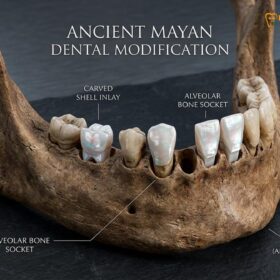
The dental implant timeline Vietnam typically requires two separate trips spanning three to six months. The first trip involves a 7 to 10-day stay for surgical placement, while the second trip requires 5 to 7 days for the final prosthetic restoration after complete osseointegration.
Clinical Summary:
The standard protocol for international patients undergoing implant therapy in Ho Chi Minh City involves a carefully phased approach designed to ensure predictable biological healing. Trip 1 focuses on comprehensive 3D CBCT diagnostics, the precise surgical placement of the titanium fixture, and immediate postoperative monitoring. Following a mandatory 3 to 6-month healing period, Trip 2 focuses on digital intraoral impressions and the delivery of the final custom-milled ceramic crown. This structured timeline prioritizes long-term functional stability over rushed holiday schedules, adhering strictly to global standards of implantology and aviation medicine safety limits.
Key Takeaways:
- The standard protocol requires two distinct trips separated by a 3 to 6-month healing phase.
- Trip 1 (Surgical Phase) necessitates a 7 to 10-day stay in Ho Chi Minh City for safe monitoring.
- Trip 2 (Restorative Phase) requires a 5 to 7-day stay for the fabrication and fitting of the final crown.
- Aviation safety protocols dictate waiting at least 48 to 72 hours post-surgery before flying.
- Strict adherence to the biological timeline maximizes the long-term success rate of the restoration.
The Two-Trip Implant Protocol
The two-trip protocol is the global gold standard for implantology, allowing the titanium post to biologically fuse with the jawbone before bearing chewing forces, thereby maximizing long-term success and minimizing the risk of implant failure.
When international patients begin researching planning a dental vacation to Vietnam, one of the most common misconceptions is that complex restorative surgery can be completed in a single, brief holiday. While immediate loading (often marketed as “teeth in a day”) is possible for highly specific clinical cases with exceptional bone density, the vast majority of patients require a phased, two-trip approach. This methodology is not a logistical inconvenience; it is a strict biological necessity dictated by the cellular process of osseointegration.
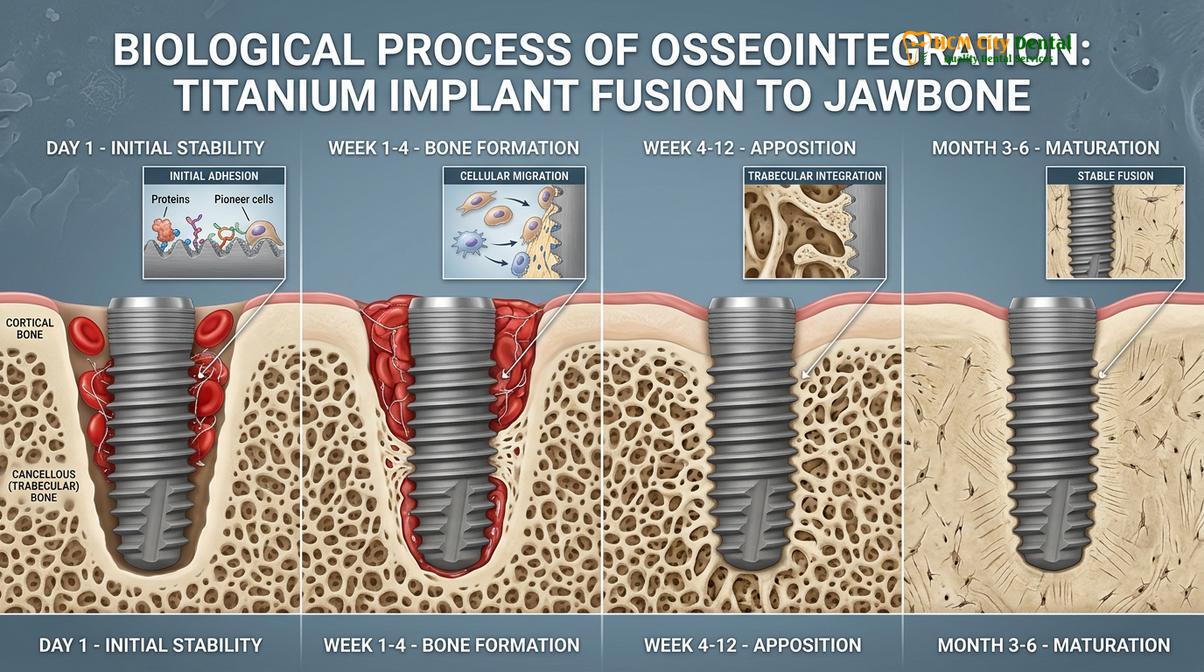
Osseointegration is the structural and functional connection between living bone and the surface of a load-bearing artificial implant. When a titanium fixture is placed into the alveolar ridge, the body initiates a complex cascade of healing. Blood clot formation is followed by an inflammatory phase, angiogenesis (the formation of new blood vessels), and eventually, the deposition of woven bone which matures into dense lamellar bone[1]. This intricate biological sequence cannot be artificially accelerated. Rushing to place a permanent crown on an implant that has not fully integrated introduces micromovements that can disrupt bone formation, leading to fibrous encapsulation and ultimate implant failure.
“Predictable implant success relies entirely on respecting the biological timeline. The jawbone requires undisturbed time to remodel and lock onto the titanium threads. Attempting to bypass this physiological requirement for the sake of travel convenience drastically increases the risk of surgical failure.”
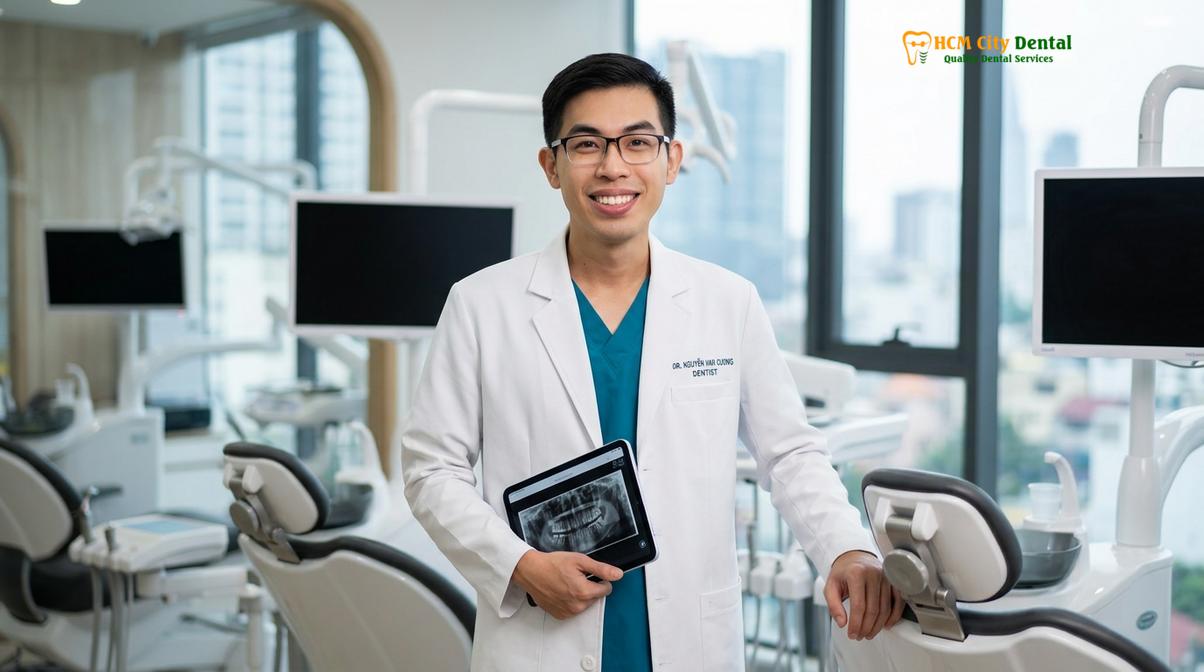
Dr. Nguyen Van Cuong, a leading specialist at HCMC Dental Clinic, frequently emphasizes to international patients that the biological healing process is universal. As a highly sought-after English-speaking dentist in Ho Chi Minh City, Dr. Cuong ensures that overseas visitors fully understand why the two-trip protocol is essential. By adhering to this evidence-based approach, his clinical team can ensure that the foundation is rock-solid before introducing the heavy occlusal forces generated by the final ceramic crown.
Detailed Day-by-Day Timeline for Trip 1 (Surgical Phase)
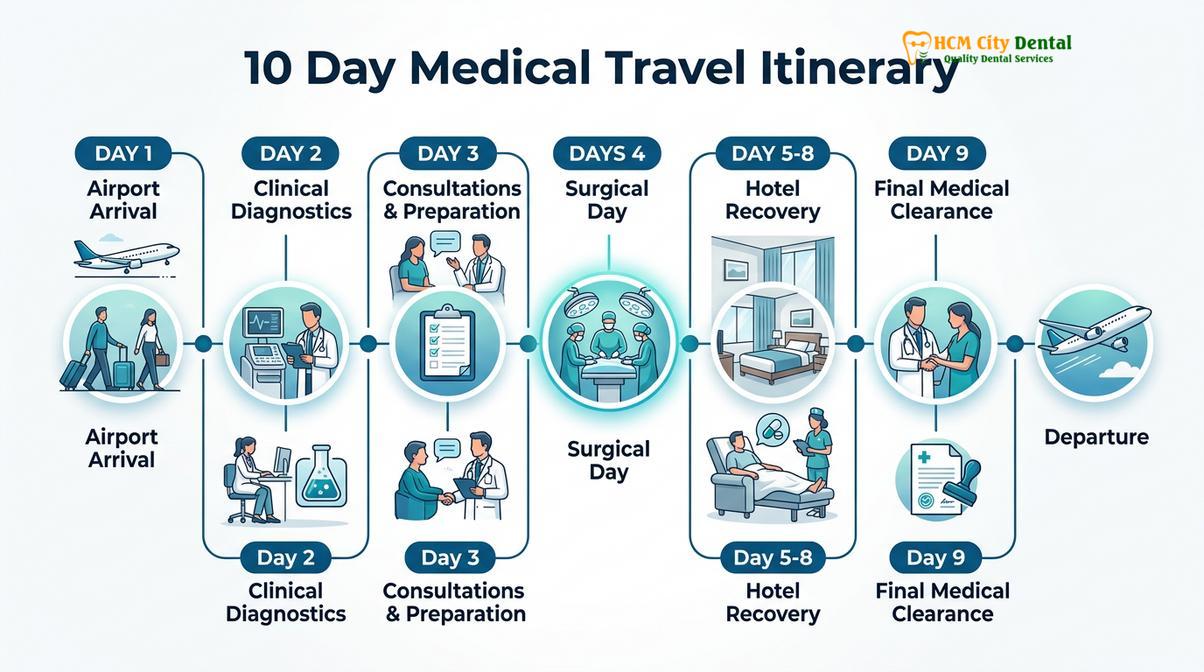
Trip 1 requires a 7 to 10-day stay, encompassing comprehensive 3D diagnostics, the surgical placement of the implant fixture, and crucial postoperative monitoring to ensure initial soft tissue healing.
The first phase of your journey is the most clinically intensive. Patients frequently ask about the exact duration required during the first visit. A minimum stay of 7 to 10 days in Ho Chi Minh City is strongly recommended. This window provides ample time for unhurried diagnostics, precise surgical execution, and the critical initial days of soft tissue recovery before you are subjected to the physical stress of international air travel.
Day 1: Comprehensive Diagnostics and Treatment Planning
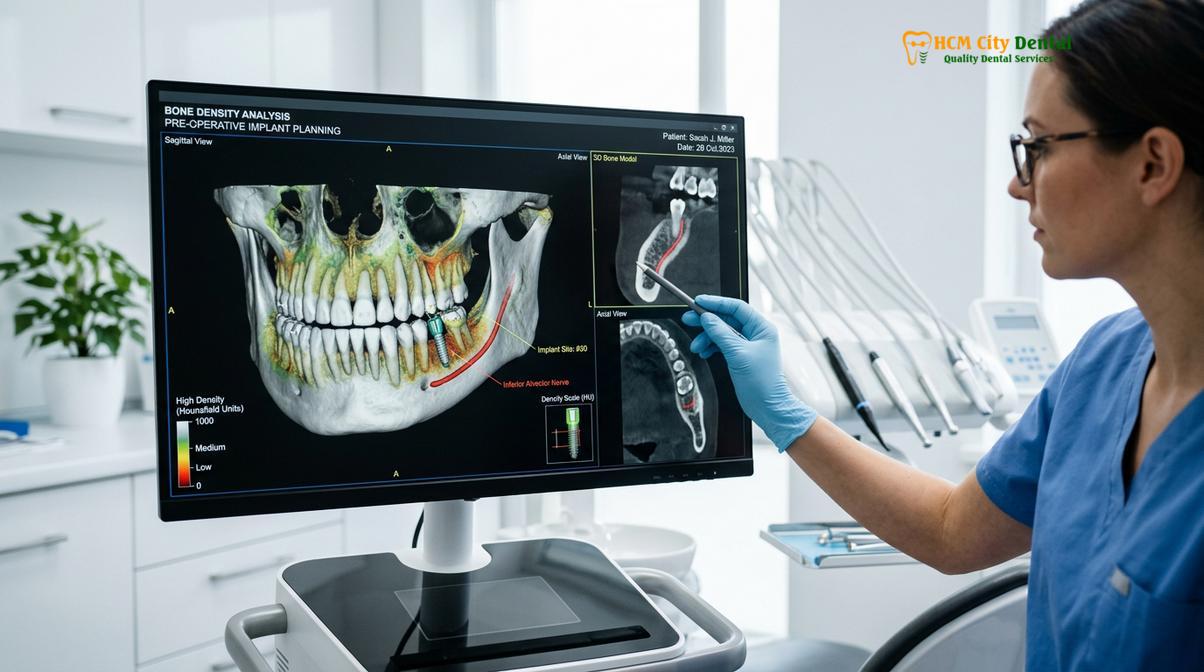
Your journey begins with an in-depth clinical consultation. Upon arriving at the clinic, you will undergo a high-resolution 3D Cone Beam Computed Tomography (CBCT) scan. Unlike traditional 2D X-rays, a CBCT scan provides a volumetric, 360-degree view of your maxillofacial structures. The surgical team evaluates the Hounsfield units (a measure of bone density), maps the exact trajectory of the inferior alveolar nerve, and assesses the volume of the maxillary sinus cavities. Based on these precise anatomical metrics, a customized surgical guide is often digitally fabricated to ensure the implant is placed at the optimal angulation and depth.
Day 2 to 3: The Surgical Intervention
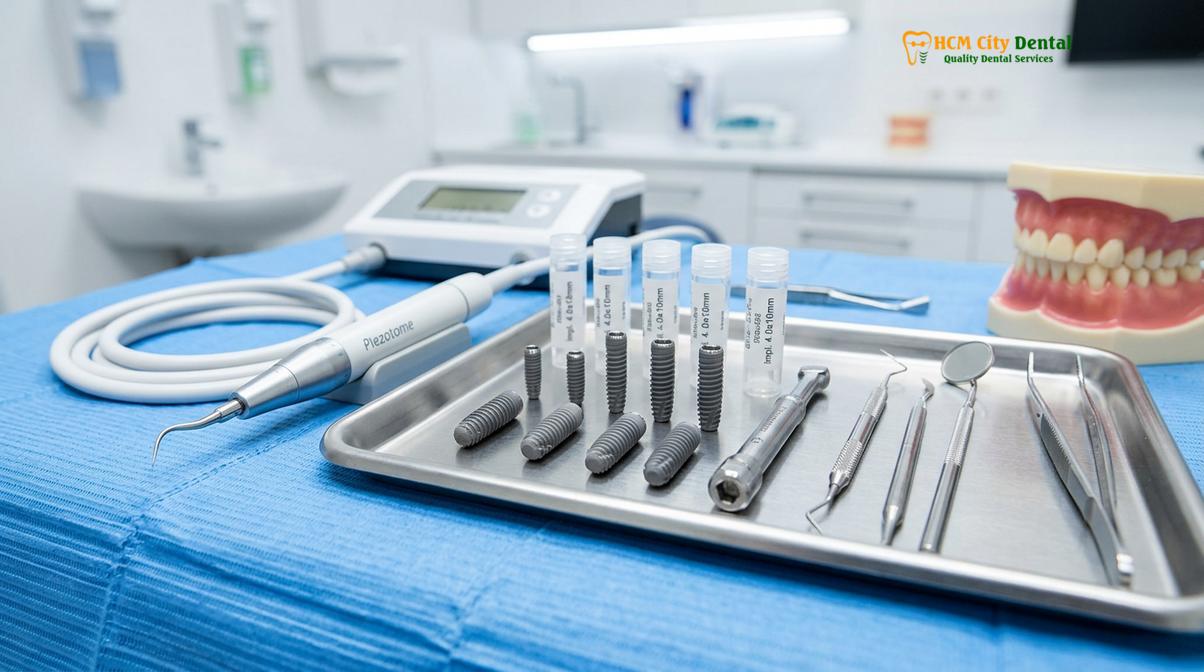
The surgical placement is typically scheduled for your second or third day. The procedure is performed under profound local anesthesia, ensuring that the surgical site is completely numb. For patients requiring Dental Implants, the clinic utilizes advanced Piezotome ultrasonic technology. Instead of relying solely on traditional rotary drills, ultrasonic micro-vibrations are used to gently prepare the osteotomy (the bone site) and perform any necessary bone grafting or sinus lifting. This minimally invasive technique preserves delicate soft tissues, reduces intraoperative bleeding, and significantly minimizes postoperative swelling.
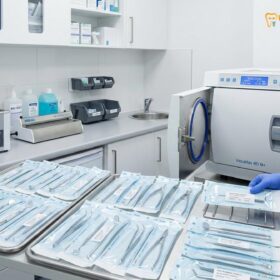
Infection control is paramount during this phase. HCMC Dental Clinic strictly adheres to the Ministry of Health (MOH) Vietnam national guidelines on infection control in dental facilities, utilizing Class-B autoclave sterilization protocols to ensure a completely sterile surgical environment and mitigate the risk of cross-contamination[2].
Clinical Workflow Example: Single Posterior Implant
Patient Profile: 45-year-old male visiting HCMC Dental Clinic in Ho Chi Minh City, requiring replacement of a missing lower first molar (tooth #36).
Surgical Execution: Following CBCT analysis, a 4.5mm x 10mm titanium fixture was placed using a surgical guide. Insertion torque reached 35 Ncm, indicating excellent primary stability. A healing abutment was placed immediately, and the soft tissue was secured with resorbable sutures.
Outcome: The patient experienced minimal swelling and returned for a postoperative check on Day 7 before flying home safely.
Day 4 to 6: Supervised Recovery and Soft Tissue Healing
Following the surgery, you will enter the acute recovery phase. It is entirely normal to experience mild to moderate swelling and localized discomfort during the first 48 to 72 hours. You will be provided with a comprehensive pharmacological protocol, typically including broad-spectrum antibiotics to prevent infection, anti-inflammatory medications to manage swelling, and an antimicrobial chlorhexidine mouthwash to maintain oral hygiene without disrupting the surgical site. During these days, you must adhere to a strict soft-food diet and avoid strenuous physical activity.
Day 7 to 10: Postoperative Clearance and Suture Removal
Before you are cleared to fly home, a final clinical evaluation is mandatory. The surgical team will inspect the soft tissue closure, ensure there are no signs of localized infection, and remove any non-resorbable sutures if they were used. A postoperative panoramic X-ray may be taken to verify the initial positioning of the fixture. Only when the clinical team is satisfied with your initial healing will you be given medical clearance to board your flight.
Detailed Day-by-Day Timeline for Trip 2 (Restorative Phase)
Returning 3 to 6 months later, Trip 2 requires a 5 to 7-day stay focused on digital intraoral scanning, custom milling of the ceramic crown, and final bite adjustment.
After returning home, the silent, biological work of osseointegration takes place. Depending on whether you received bone grafting and the specific density of your jawbone, this waiting period lasts between three to six months. Once your local dentist or our remote clinical team confirms that the integration is complete, you will return to Ho Chi Minh City for the restorative phase. Because no major surgery is involved, this trip is generally much more relaxed and requires a shorter stay of 5 to 7 days.
Day 1: Uncovering and Digital Impressions
If your implant was placed using a two-stage surgical protocol (where the implant was buried under the gum line to heal), a minor procedure is performed to uncover the implant and attach a gingival former (healing abutment). If a healing abutment was already placed during Trip 1, this step is bypassed. The primary focus of Day 1 is capturing the exact topography of your mouth. Instead of using messy, uncomfortable impression putty, the clinic utilizes high-speed digital intraoral scanners. This wand captures thousands of microscopic images per second, creating a flawless 3D digital model of your dental arches and the precise emergence profile of the implant[3].
Day 2 to 4: CAD/CAM Laboratory Fabrication
While you enjoy the sights and culinary experiences of Saigon, the in-house dental laboratory is hard at work. The 3D digital impression is imported into CAD/CAM (Computer-Aided Design and Computer-Aided Manufacturing) software. Master ceramists design a custom abutment and a highly aesthetic ceramic crown that perfectly matches the shade, translucency, and anatomical contours of your adjacent natural teeth. The crown is then precision-milled from a solid block of high-strength zirconia or lithium disilicate, ensuring exceptional durability and a lifelike appearance.
| Clinical Parameter | Trip 1 (Surgical Phase) | Trip 2 (Restorative Phase) |
|---|---|---|
| Duration of Stay | 7 to 10 Days | 5 to 7 Days |
| Primary Objective | Diagnostics & Fixture Placement | Digital Scanning & Crown Delivery |
| Clinical Sensation | Profound local anesthesia, minor post-op swelling | Painless, minor occlusal adjustments |
| Dietary Restrictions | Strict soft diet, no hot liquids initially | Gradual return to normal chewing forces |
Day 5 to 7: Final Delivery and Occlusal Calibration
During your final appointments, the custom abutment and ceramic crown are securely attached to the integrated implant. The clinician will meticulously evaluate the interproximal contacts (how the new tooth touches its neighbors) and perform a detailed occlusal calibration. It is critical that the new implant crown does not bear excessive force when you bite down, as implants lack the periodontal ligament that provides natural teeth with slight shock-absorbing mobility. Once the bite is perfectly balanced and you are satisfied with the aesthetics, the restoration is finalized, completing your step-by-step dental trip.
Airport Pickup & Logistics for Major Operations
Coordinating your medical travel involves arranging airport transfers, booking central accommodation, and understanding flexible payment options to ensure a stress-free clinical experience.
Managing the logistics of cross-border medical care can seem daunting, but a well-structured travel itinerary eliminates the stress. HCMC Dental Clinic is dedicated to providing a seamless experience from the moment you land at Tan Son Nhat International Airport. To ensure your safety and comfort, especially if you are arriving for major surgical operations, the clinic can assist in coordinating reliable airport pickup services directly to your accommodation.
For optimal convenience, we highly recommend booking your hotel in District 1. This central location not only places you within a short distance of the clinic—minimizing travel time immediately after surgery—but also provides easy access to soft-food dining options, pharmacies, and comfortable amenities essential for a smooth recovery.
To further streamline your journey, international patients can initiate a direct clinical consultation with our specialists via WhatsApp prior to booking flights. This allows for a preliminary review of your local X-rays and a transparent discussion of your customized treatment plan. Additionally, patients who secure their treatment plan remotely can take advantage of online booking benefits, making world-class implantology highly accessible.
Understanding that international banking can be complex, the clinic offers highly flexible payment options. Patients can settle their medical fees using Visa/Mastercard, secure international bank transfers, or cash in either USD or VND. Furthermore, modern payment gateways including PayPal, various e-wallets, and major cryptocurrencies are fully supported, ensuring that financial transactions do not complicate your search for a trustworthy dentist.
Clinical Safety Limits: When Flying Home is Safe
Patients must wait a minimum of 48 to 72 hours after implant surgery before flying, as cabin pressure changes can exacerbate swelling, trigger bleeding, or compromise sinus lift grafts.
A critical factor in determining your travel timeline is strict adherence to aviation medicine guidelines. Many patients mistakenly believe they can undergo surgery in the morning and board an international flight that same evening. This is clinically contraindicated and highly dangerous. The environment inside a commercial aircraft cabin presents unique physiological challenges that can severely compromise a fresh surgical site.
According to Boyle’s Law, as altitude increases and cabin pressure decreases, gases trapped within enclosed body spaces expand. If you have undergone a maxillary sinus lift—a common adjunct procedure for upper jaw implants—the expansion of air within the sinus cavity can exert immense pressure on the fresh bone graft and the delicate Schneiderian membrane. This phenomenon, known as barodontalgia, can cause excruciating pain and potentially rupture the surgical site, leading to graft failure and severe infection[4].
“Never board a commercial flight within 48 hours of major oral surgery, particularly if a sinus lift or extensive bone grafting was performed. Changes in cabin pressure can induce severe barotrauma, dislodge blood clots, and trigger uncontrolled secondary hemorrhage. Always obtain explicit medical clearance from your surgeon before flying.”
Furthermore, the dry, recirculated air in an aircraft cabin can dehydrate oral tissues, and the stress of travel can elevate blood pressure, increasing the risk of secondary hemorrhage (bleeding). By enforcing a strict 7 to 10-day stay for Trip 1, the clinical team ensures that the initial inflammatory phase has peaked and subsided, blood clots are firmly stabilized, and the risk of aviation-induced complications is virtually eliminated. If you are wondering if you can get implants on holiday, the answer is yes, provided you respect these non-negotiable safety limits.
Important Clinical Notes: When to Seek Immediate Medical Attention
While complications are rare when protocols are followed, patients must be vigilant during the recovery phase and contact their clinical team immediately if specific warning signs arise.
Postoperative care is a shared responsibility between the surgical team and the patient. Following the American Academy of Implant Dentistry (AAID) patient guidelines for postoperative implant care, it is crucial to monitor your healing progress closely during your stay in Ho Chi Minh City[5]. While mild swelling, slight bruising, and minor oozing are expected within the first 48 hours, certain symptoms require immediate clinical evaluation.
You should contact the clinic without delay if you experience any of the following:
- Uncontrolled Bleeding: If active bleeding persists despite applying firm pressure with sterile gauze for 30 to 45 minutes.
- Escalating Pain: If pain worsens significantly after the third day, rather than gradually subsiding, which may indicate an emerging infection.
- Fever or Chills: An elevated body temperature is a systemic sign of infection that requires prompt antibiotic intervention.
- Numbness: Prolonged numbness or a tingling sensation in the lips, chin, or tongue lasting more than 12 hours after the local anesthesia should have worn off.
References
- International Journal of Oral & Maxillofacial Implants. Protocols for predictable osseointegration. (2022).
- Ministry of Health (MOH) Vietnam. National guidelines on infection control in dental facilities. (2021).
- Journal of Prosthetic Dentistry. Digital workflows in implant prosthodontics. (2023).
- Aviation, Space, and Environmental Medicine. Barodontalgia and aeromedical considerations in dentistry. (2020).
- American Academy of Implant Dentistry (AAID). Patient guidelines for postoperative implant care. (2022).
Are you ready to restore your smile with world-class precision? Compare your options and discover why thousands of international patients choose HCMC Dental Clinic, Ho Chi Minh City for their restorative needs. Contact our English-speaking specialists today to receive a comprehensive, day-by-day treatment itinerary tailored to your unique clinical requirements.