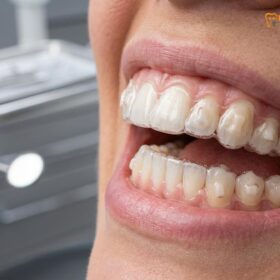
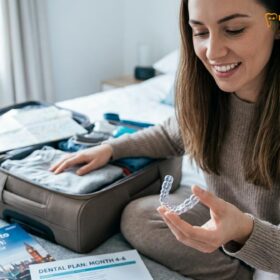
Invisalign moves teeth using SmartTrack, a proprietary, highly elastic multilayer polyurethane material that applies constant, gentle force. This advanced polymer tightly grips the dental crowns, translating digital treatment plans into precise biomechanical movements, ensuring predictable orthodontic correction without the need for traditional metal brackets.
Clinical Summary:
Understanding how Invisalign moves teeth SmartTrack involves exploring the intersection of advanced polymer science and precise orthodontic biomechanics. Unlike traditional braces that rely on the tension of metal archwires and brackets, the Invisalign system utilizes a patented, medical-grade multilayer polyurethane resin. This material is specifically engineered to deliver continuous, low-level forces that stimulate the periodontal ligament, initiating the cellular processes of bone resorption and deposition necessary for safe tooth movement. Guided by sophisticated digital planning software, these aligners map out exact micro-movements, ensuring that each tray in the series brings the patient closer to their optimal occlusal alignment. The integration of this highly elastic material with digital precision offers a highly predictable, comfortable, and biocompatible alternative to conventional orthodontic therapies, fundamentally changing how dental professionals approach malocclusion.
Key Takeaways:
- SmartTrack is a patented, multilayer polyurethane material engineered specifically for clear aligner therapy to maximize elasticity and force retention.
- The system delivers constant, low-level orthodontic forces, optimizing the biological response of periodontal ligaments without causing undue trauma.
- High elasticity allows the aligners to conform intimately to tooth morphology and composite attachments, improving directional control.
- Digital software maps the exact trajectory of each tooth, dictating the precise shape and sequence of the aligner series.
- The material is highly biocompatible, FDA-approved, and completely free from BPA, BPS, latex, and gluten.
The Material Science: What is SmartTrack?
SmartTrack is a proprietary, medical-grade multilayer polyurethane resin developed by Align Technology after testing over 260 compounds to maximize elasticity and sustained force delivery.
The foundation of modern clear aligner therapy lies in the sophisticated chemistry of the materials used to fabricate the trays. For many years, early iterations of clear aligners relied on standard, single-layer plastics, primarily polycarbonate or polyethylene terephthalate glycol (PETG). While these materials were transparent and capable of moving teeth, they suffered from rapid stress relaxation—meaning they would quickly lose their shape and force-delivery capabilities shortly after being inserted into the mouth. To solve this clinical limitation, researchers spent eight years testing over 260 different material compounds, ultimately developing the proprietary SmartTrack aligner material.
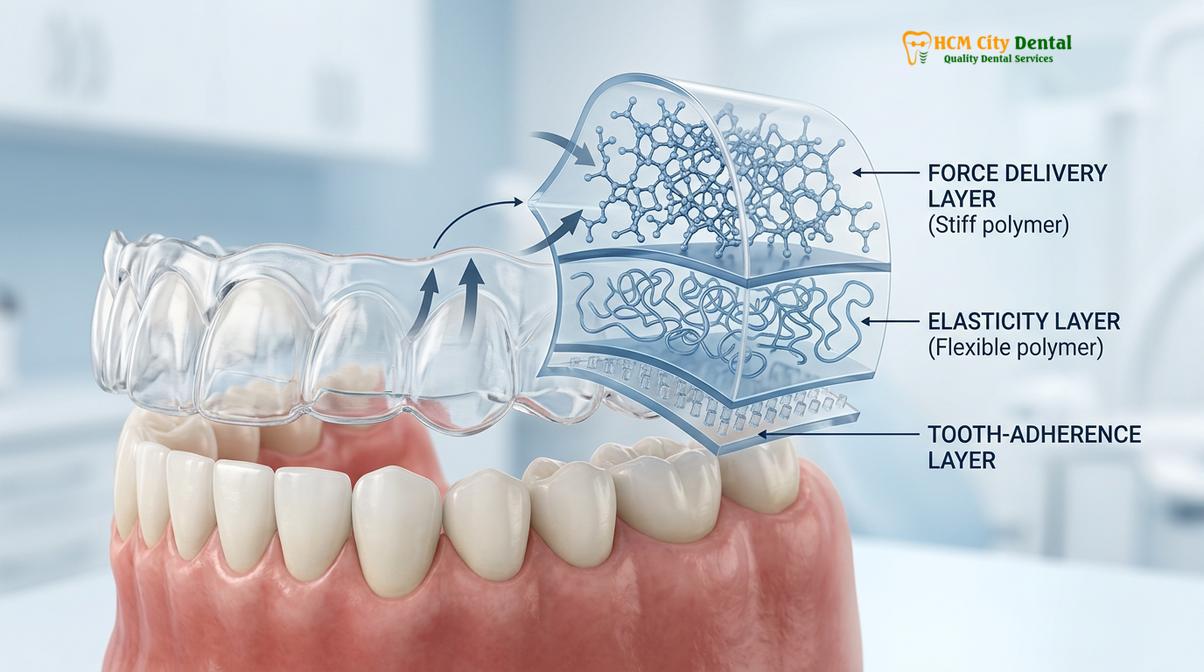
SmartTrack is not a generic plastic; it is a highly engineered, multilayer polyurethane elastomer. The architecture of this material involves laminating different layers of polymers, each serving a distinct biomechanical purpose. The outer layers are designed for durability and resistance to the harsh, abrasive environment of the oral cavity, protecting the aligner from bruxism (teeth grinding) and the chemical breakdown caused by salivary enzymes. The inner core layers are formulated for profound elasticity and memory. This means that when the aligner is stretched over the teeth, it desperately “wants” to return to its original, digitally programmed shape, thereby exerting a continuous, controlled force on the dental arches [1].
This multilayer construction fundamentally changes how the aligner interacts with the tooth surface. Because the material is highly elastic, it can stretch over complex dental anatomies—including severe crowding, pronounced undercuts, and the composite resin “attachments” bonded to the teeth—without permanently deforming. Once seated, it intimately wraps around the clinical crown, providing a superior grip. This intimate fit is crucial because orthodontic tooth movement requires precise control over the center of resistance of each tooth. Without a tight, conforming grip, the aligner would simply slip off or apply off-axis forces, leading to unpredictable results and prolonged treatment times.
“The transition from single-layer thermoplastics to multilayer polyurethane elastomers represents a paradigm shift in orthodontic materials. By maintaining a more constant force over the two-week wear cycle, we significantly improve the predictability of complex root movements.”
Furthermore, the thermal properties of this material are calibrated for the human body. The polymer remains stable at the average intraoral temperature of 37°C (98.6°F), ensuring that the aligner does not become overly rigid or excessively soft during daily wear. This thermal stability guarantees that the biomechanical forces calculated by the orthodontist are accurately transferred to the dentition, day in and day out, facilitating a smoother and more efficient remodeling of the alveolar bone.
Constant Gentle Force: The Biomechanics of Aligner Movement
Invisalign utilizes SmartTrack to apply continuous, light forces that stimulate osteoclast and osteoblast cellular activity, safely remodeling the surrounding alveolar bone.
To truly understand how clear aligners work, one must look beyond the plastic itself and examine the biological response of the human body. Orthodontic tooth movement is not merely a mechanical process of pushing a hard object through a softer medium; it is a complex, biologically mediated inflammatory response. When an aligner applies pressure to a tooth, it compresses the periodontal ligament (PDL)—the fibrous connective tissue that anchors the tooth root to the surrounding alveolar bone. This compression is the catalyst for all orthodontic biomechanics.
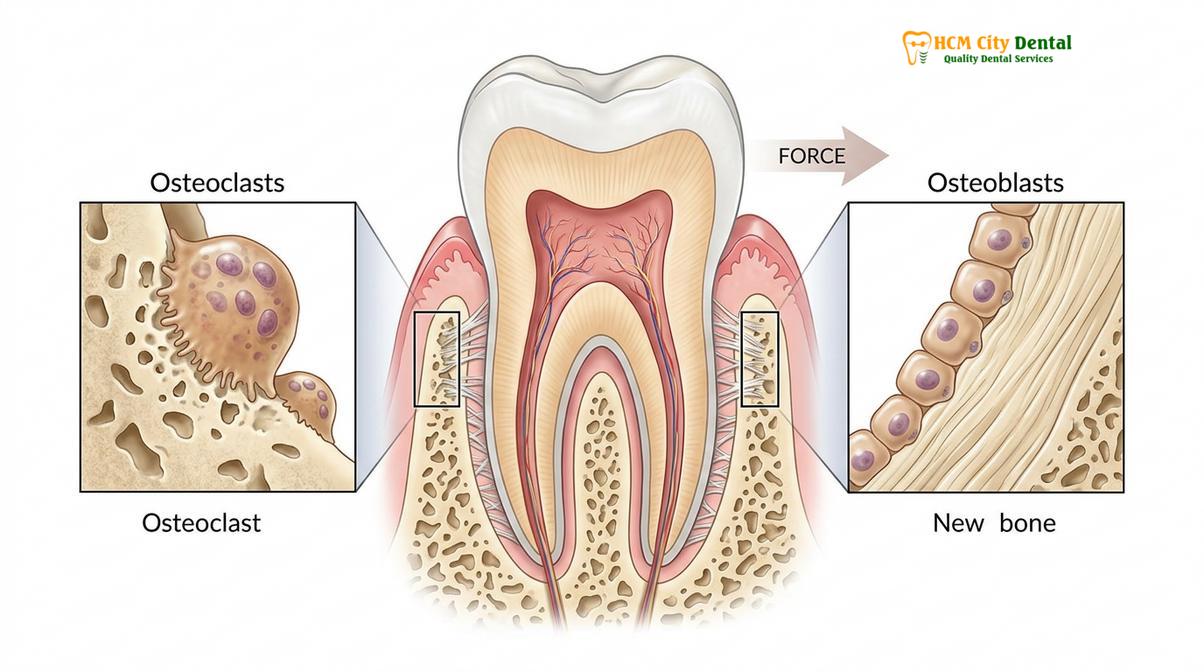
According to the principles of aligner force physics, when the PDL is compressed on one side of the root (the direction the tooth is moving), blood flow in that localized area decreases. This mild, controlled ischemia triggers the immune system to recruit specialized cells called osteoclasts. Osteoclasts are responsible for breaking down and resorbing the bone tissue in the path of the moving tooth, effectively clearing the way. Simultaneously, on the opposite side of the root, the PDL is stretched (tension zone). This stretching stimulates a different set of cells called osteoblasts, which begin depositing new bone tissue to fill in the space left behind by the moving tooth [2].
The critical factor in this biological equation is the magnitude and duration of the force applied. If the force is too heavy, it can completely crush the blood vessels in the PDL, leading to a condition called hyalinization. When hyalinization occurs, tooth movement actually stops because the necessary cellular activity is halted, and the body must first clear away the necrotic (dead) tissue before bone remodeling can resume. Heavy forces also significantly increase the risk of root resorption, where the body begins to dissolve the tooth root itself. Conversely, if the force is too light, it will not cross the biological threshold required to trigger osteoclastic activity, and the tooth will remain stationary.
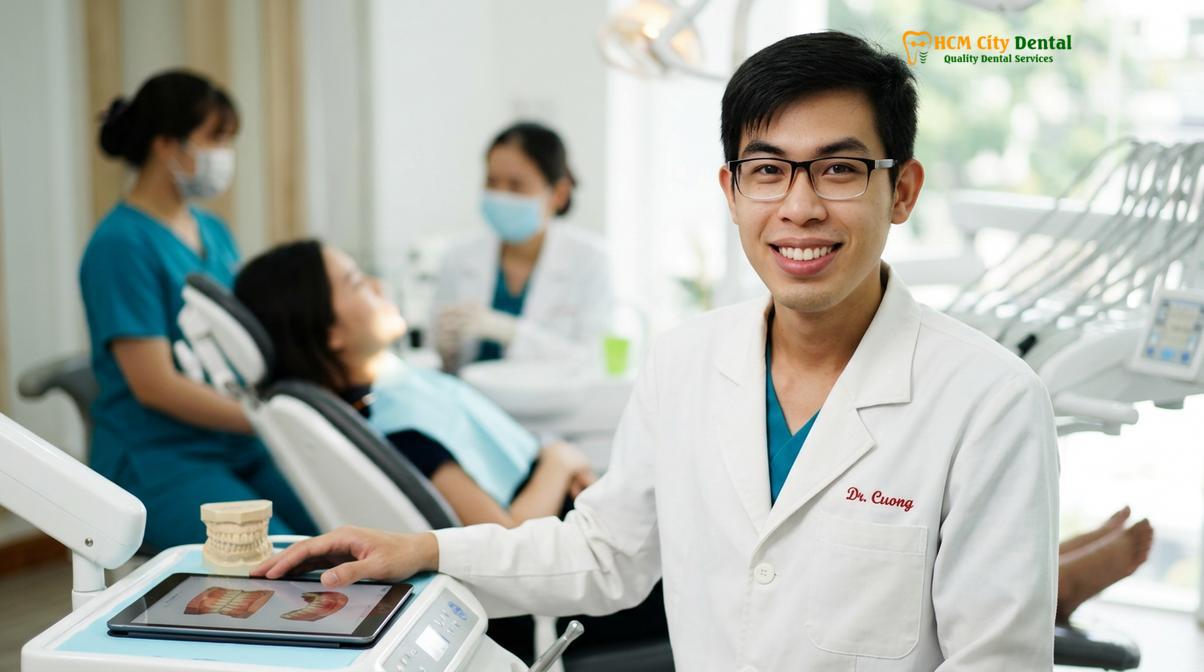
This is where the specific properties of the aligner material shine. Because it is highly elastic, it delivers a “constant, gentle force.” When a patient inserts a new tray, the initial pressure is lower and more comfortable than the sharp, heavy force typically associated with the tightening of traditional metal braces. More importantly, as the tooth begins to move and the plastic relaxes slightly, the material continues to exert a biologically active level of pressure throughout the entire 7 to 14-day wear cycle. Dr. Nguyen Van Cuong, a leading expert in Orthodontics, frequently emphasizes to his patients that the success of clear aligner therapy relies entirely on this sustained, low-level force, which maximizes cellular efficiency while minimizing patient discomfort and tissue trauma.
In complex cases involving root torque, extrusion, or rotation, the aligners work in tandem with SmartForce attachments. These are small, tooth-colored composite bumps bonded to specific teeth. The aligner is manufactured with corresponding ridges that snap over these attachments, creating active surfaces that direct the force vectors precisely where they are needed. This synergy between the elastic polymer and the geometric attachments allows for sophisticated biomechanical control that was previously thought impossible with removable appliances.
ClinCheck Simulation: Mapping Every Phase digitally
ClinCheck software uses 3D digital impressions to calculate precise tooth trajectories, breaking down complex movements into micro-adjustments programmed into each aligner.
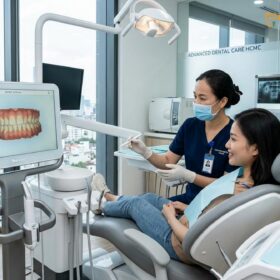
The physical aligner is only half of the equation; the other half is the immense computational power used to design it. The journey begins with a highly accurate 3D digital scan of the patient’s oral cavity, typically captured using an intraoral scanner like the iTero. This digital impression captures the exact morphology of the teeth, the gingival margins, and the occlusal relationship (how the upper and lower teeth bite together) with micron-level precision. This data is then imported into the digital ClinCheck software, a sophisticated algorithmic platform that serves as the architectural blueprint for the entire treatment [3].
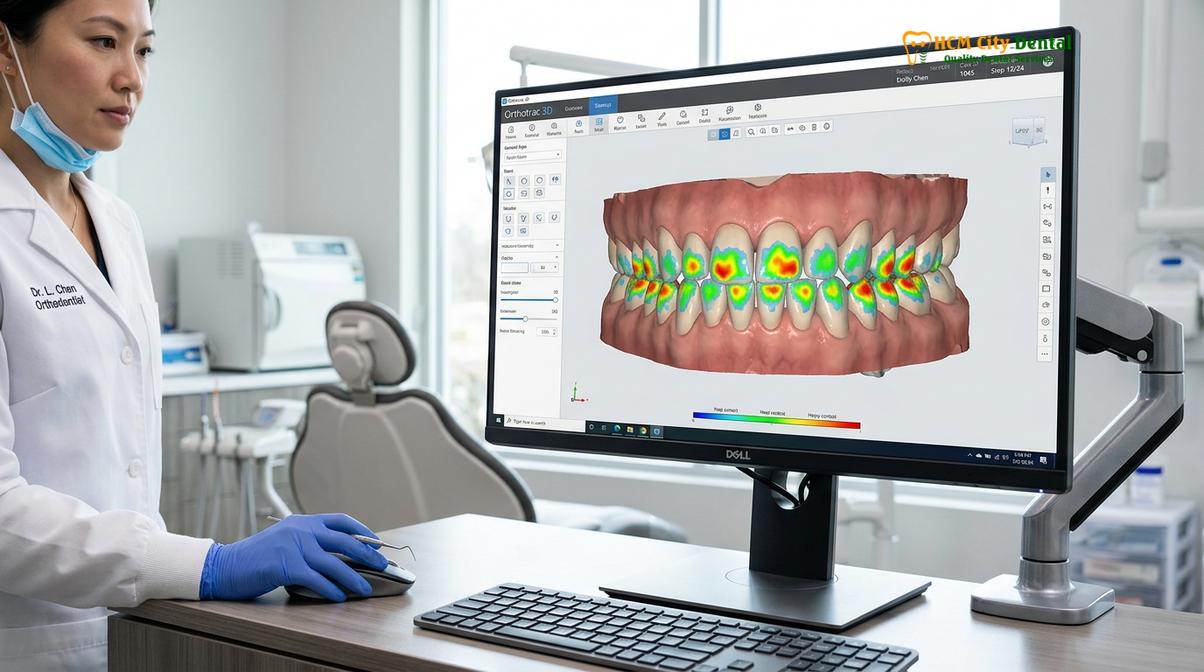
Within the software, the orthodontist can manipulate the digital models of the teeth in three dimensions. The software calculates the center of resistance for each individual tooth based on its root surface area and bone level. The doctor then programs the final desired position for every tooth. Once the final goal is set, the software’s algorithms reverse-engineer the process, breaking down the total required movement into a series of highly controlled, sequential stages. Typically, each stage (representing one aligner tray) is programmed to move a tooth by approximately 0.25 millimeters or rotate it by 1 to 2 degrees.
| Treatment Phase | Digital ClinCheck Action | Biological & Biomechanical Response |
|---|---|---|
| Initial Scan & Setup | 3D mapping of crown morphology and root axis estimation. | Baseline establishment; no active biological forces applied. |
| Tray Insertion (Days 1-3) | Maximum programmed discrepancy between aligner and current tooth position. | PDL compression; initial inflammatory response; osteoclast recruitment begins. |
| Active Movement (Days 4-8) | Aligner material utilizes elastic memory to push toward programmed shape. | Active bone resorption on compression side; tooth begins physical migration. |
| Stabilization (Days 9-14) | Aligner shape nearly matches new tooth position; force levels decrease. | Osteoblast activity peaks; new bone matrix is deposited to stabilize the root. |
This digital staging is crucial for preventing collisions between teeth as they move. The software allows the clinician to sequence the movements—for example, expanding the posterior arch first to create space before retracting the anterior teeth. It also calculates exactly where and when to place attachments, and whether interproximal reduction (IPR)—the gentle polishing of enamel between crowded teeth—is necessary to create additional space.
The precision of this digital workflow ensures that the clear plastic tooth movement is highly predictable. The orthodontist can review the entire simulated treatment plan with the patient before a single aligner is manufactured. Once approved, the data is sent to automated stereolithography (3D printing) facilities, where a physical resin model is printed for every single stage of the treatment. The multilayer polyurethane material is then thermoformed over these highly accurate models, trimmed precisely to the gingival margin, and polished to create the final series of custom aligners.
Comparing SmartTrack to Generic Clear Aligner Plastics
Unlike generic single-layer plastics that lose elasticity rapidly, SmartTrack maintains consistent force delivery over the entire wear period, resulting in more predictable tooth tracking.
As the popularity of clear aligner therapy has surged, numerous direct-to-consumer brands and alternative in-office systems have entered the market. Many of these alternatives utilize generic, off-the-shelf thermoplastic materials, such as single-layer PETG or standard polyurethane. While these materials can move teeth, their biomechanical performance differs drastically from highly engineered, proprietary polymers.
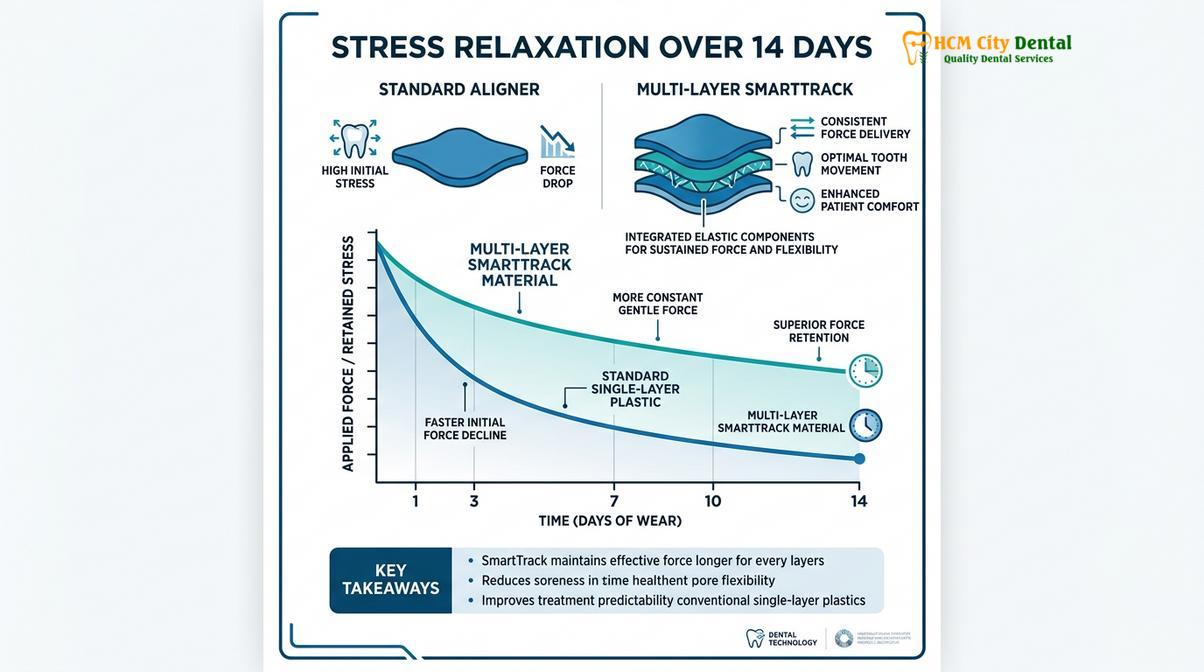
The primary metric for evaluating an aligner material is its “stress relaxation” curve. When a plastic is stretched over a tooth, it exerts a specific amount of force. Over time, as the material is exposed to the warm, wet environment of the mouth and the constant mechanical strain of the teeth, its molecular structure begins to yield. Generic plastics exhibit a steep stress relaxation curve; they may lose up to 50% or more of their initial force within the first 24 to 48 hours of wear. This results in a heavy, often painful initial force that quickly tapers off into a biologically inactive force, stalling the tooth movement process [4].
Clinical Case Study: Overcoming Relapse with Advanced Polymers
A 28-year-old patient presented to HCMC Dental Clinic in Ho Chi Minh City with moderate anterior crowding. The patient had previously undergone traditional braces as a teenager but experienced relapse due to non-compliance with their retention protocol. Seeking a discreet solution, the patient opted for Invisalign. Utilizing the advanced elasticity of the proprietary aligner material, the clinical team was able to resolve the crowding in just 14 months without the need for extractions. Following the successful realignment, the patient was transitioned to a robust retention phase. For patients concerned about maintaining their results, understanding the retainer cost comparisons with Korea or exploring retainer pricing versus Japan can provide valuable context on the long-term investment required to protect a newly straightened smile.
In contrast, the multilayer architecture of advanced proprietary materials is specifically designed to flatten this stress relaxation curve. While there is an initial drop in force, the inner elastomeric layers retain their memory significantly better, continuing to deliver a steady, biologically active force for the entire two-week duration. This sustained force is why teeth “track” better with premium aligners—meaning the physical movement of the tooth closely matches the digital simulation. When generic plastics lose their force prematurely, teeth often fall behind the digital plan, requiring mid-course corrections or refinement scans.
Furthermore, the superior elasticity of premium materials makes the aligners significantly easier for the patient to insert and remove, especially in cases with severe crowding or numerous composite attachments. Rigid, single-layer plastics can lock into undercuts, making removal difficult and increasing the risk of damaging the aligner or debonding an attachment. The flexibility of advanced polymers mitigates this risk while still providing the necessary rigidity to execute complex root torquing movements.
Long-Term Safety and Biocompatibility of Invisalign Trays
SmartTrack aligners are FDA-approved, hypoallergenic, and formulated without harmful endocrine disruptors, ensuring long-term safety for both intraoral tissues and systemic health.
Because orthodontic aligners are worn for 20 to 22 hours a day over a period of months or even years, the chemical safety and biocompatibility of the material are of paramount importance. The oral cavity is a highly reactive environment; saliva contains enzymes that can degrade certain materials, and the constant fluctuation of temperature and pH levels can cause unstable plastics to leach chemical compounds into the body.
The development of biocompatible dental polymers has been a major focus in modern orthodontics. Premium aligner materials are rigorously tested to meet stringent international medical device standards (such as ISO 10993 for biological evaluation of medical devices). They are formulated to be completely free of Bisphenol-A (BPA) and Bisphenol-S (BPS), which are known endocrine disruptors found in many commercial plastics. Additionally, they contain no latex, parabens, or gluten, making them exceptionally safe for patients with severe allergies or chemical sensitivities [5].
“The intraoral environment is incredibly hostile to synthetic materials. The ability of modern aligner polymers to remain chemically inert, resisting degradation from salivary enzymes while maintaining structural integrity, is a triumph of biomedical engineering.”
Clinical studies and decades of patient data have demonstrated that these advanced polyurethane blends do not provoke mucosal irritation, gingival inflammation, or cytotoxic responses when proper oral hygiene is maintained. The smooth, laser-trimmed edges of the aligners also prevent the mechanical ulcerations and soft tissue trauma frequently associated with the sharp wires and brackets of traditional metal braces. This high level of biocompatibility ensures that patients can undergo comprehensive orthodontic treatment without compromising their systemic health or the localized health of their periodontal tissues.
When to See a Doctor: Clinical Considerations for Aligner Therapy
While clear aligner therapy is highly effective for a wide range of malocclusions, it is not a universal solution for every orthodontic issue. It is crucial to undergo a comprehensive clinical examination by a qualified dental professional to determine candidacy. Patients presenting with severe skeletal discrepancies (such as a severe overjet or underbite requiring orthognathic surgery), severely rotated premolars, or teeth that are significantly extruded or intruded may require traditional fixed appliances or a hybrid approach.
Furthermore, active periodontal disease or untreated dental caries (cavities) are strict contraindications for any form of orthodontic tooth movement. Moving teeth through inflamed or infected bone can rapidly accelerate bone loss and lead to tooth mobility or loss. Dr. Nguyen Van Cuong strongly advises that all foundational dental health issues must be fully resolved before initiating aligner therapy.
Clinical Warning: The Risks of Direct-to-Consumer Aligners
The rise of mail-order, direct-to-consumer aligner companies poses significant risks to patient health. These services often bypass comprehensive clinical examinations, relying solely on patient-taken molds or limited scans. Without professional oversight, moving teeth can exacerbate underlying periodontal disease, cause irreversible root resorption, or create traumatic occlusal interferences (bite issues). Furthermore, these companies typically use inferior, single-layer plastics that lack the sustained force delivery of premium materials. Always seek treatment under the direct, ongoing supervision of a licensed dentist or orthodontist.
Patients must also be prepared for the lifelong commitment to retention following active treatment. Teeth have a natural tendency to shift back toward their original positions as the periodontal fibers remodel. Whether you are considering orthodontic retention expenses compared to New Zealand or evaluating post-treatment retainer costs compared to Canada, budgeting for high-quality retainers is essential. If a retainer is damaged or misplaced, seeking immediate professional help—such as repairing a broken fixed retainer or replacing a lost retainer—is critical to preventing relapse. For a personalized assessment and to explore your orthodontic options, we encourage you to schedule a consultation with the expert team at HCMC Dental Clinic in Saigon.
Frequently Asked Questions
Is SmartTrack BPA-free and safe for children?
Yes, SmartTrack material is completely free of BPA, BPS, latex, and gluten, making it highly safe for pediatric and adult patients. The medical-grade polyurethane is rigorously tested for biocompatibility, ensuring no harmful chemicals leach into the saliva during the continuous wear required for orthodontic treatment. This makes it an excellent, hypoallergenic option for growing children and teenagers undergoing interceptive or comprehensive orthodontics.
How does Invisalign move teeth faster than traditional metal braces?
Invisalign can achieve faster results in specific cases by applying simultaneous, multi-directional forces across all teeth using SmartTrack material. Unlike braces that pull teeth sequentially along an archwire, aligners are digitally programmed to execute highly coordinated, concurrent micro-movements, optimizing the biological remodeling process. The ClinCheck software eliminates the “guesswork” and inefficient movements sometimes associated with manual wire bending.
Can aligner forces cause tooth root resorption?
While any orthodontic force carries a minimal risk of root resorption, Invisalign minimizes this risk through digitally calibrated, low-level continuous forces. The ClinCheck software ensures that the pressure applied by the SmartTrack material never exceeds the biological threshold of the periodontal ligament, protecting the root structure. Regular clinical monitoring by your orthodontist further mitigates this risk by tracking the health of the bone and roots throughout treatment.
What happens if my teeth stop tracking with the SmartTrack aligners?
If teeth stop tracking, it means the dental anatomy is no longer fitting intimately within the aligner’s programmed shape. Your orthodontist will evaluate the discrepancy, potentially use chewies (small silicone cylinders) to help seat the tray more firmly, or perform a mid-course correction. A mid-course correction involves rescanning your teeth and manufacturing a new series of aligners to get the treatment back on the precise digital trajectory.
Can I wear SmartTrack aligners if I have dental crowns or veneers?
Yes, patients with dental restorations like crowns, veneers, or bridges can successfully undergo clear aligner therapy. The orthodontist will digitally adjust the treatment plan to ensure that the SmartTrack material applies appropriate, gentle forces to the restored teeth without compromising the integrity of the porcelain or ceramic. Special care is taken when placing composite attachments on artificial surfaces to ensure they bond correctly and can be removed safely.
References
- American Journal of Orthodontics and Dentofacial Orthopedics. Biomechanical properties of clear aligner materials and their clinical implications. (2021).
- Journal of Clinical Orthodontics. The evolution of polyurethane polymers in clear aligner therapy. (2020).
- European Journal of Orthodontics. Periodontal ligament cellular response to continuous low-level orthodontic forces. (2019).
- International Journal of Computerized Dentistry. Accuracy of digital staging and ClinCheck software in predicting tooth movement. (2022).
- Dental Materials Journal. Long-term biocompatibility and stress relaxation of thermoplastic orthodontic polymers. (2018).