A complete dental checkup in Vietnam for a foreigner involves a comprehensive clinical examination, digital imaging, periodontal charting, and an oral cancer screening. Expatriates and international travelers consistently choose Ho Chi Minh City clinics for world-class diagnostics at accessible prices, guided by fluent English-speaking dental specialists.
Clinical Summary:
The standard protocol for an international patient seeking a comprehensive dental examination in Vietnam adheres strictly to global diagnostic guidelines. The process encompasses a detailed review of medical history, extraoral and intraoral clinical assessments, and advanced digital radiography (such as OPG or CBCT) to establish an accurate baseline of oral health. By utilizing evidence-based diagnostic criteria, clinicians can detect early-stage caries, periodontal disease, and asymptomatic pathologies. The integration of dedicated treatment coordinators ensures that cross-cultural communication is seamless, allowing patients to fully comprehend their diagnoses, explore conservative treatment modalities, and navigate international insurance documentation with confidence.
Key Takeaways:
- A comprehensive exam includes soft tissue screening, periodontal probing, and hard tissue evaluation.
- Digital imaging (Bitewings, OPG, or CBCT) is essential for diagnosing hidden interproximal and periapical pathologies.
- English-speaking coordinators facilitate clear communication regarding treatment plans and informed consent.
- Clinics provide transparent, itemized fee schedules prior to initiating any restorative or surgical procedures.
- Proper documentation is supplied to assist patients with international dental insurance reimbursement claims.
Why Expats Choose Vietnam for Comprehensive Dental Exams
Expatriates and international patients select Vietnam for dental examinations due to the combination of advanced diagnostic technology, internationally trained specialists, and highly competitive pricing compared to Western healthcare systems.
The landscape of global healthcare has shifted significantly, positioning Southeast Asia as a premier destination for medical and dental care. For expatriates residing in the region and international visitors, securing a reliable General Dentistry provider is a primary concern. The appeal of a foreigner dental checkup in Vietnam extends far beyond mere cost savings; it is deeply rooted in the quality of clinical care, the availability of state-of-the-art diagnostic equipment, and the efficiency of the healthcare delivery system. In many Western countries, public dental systems are often overburdened, leading to prolonged wait times for routine examinations and rushed appointments that may overlook subtle, early-stage pathologies[1].
Conversely, top-tier dental institutions in Ho Chi Minh City operate on a patient-centric model that prioritizes thoroughness. A standard comprehensive oral exam in a reputable clinic typically spans 45 to 60 minutes. This extended timeframe allows the clinician to perform a meticulous evaluation of the stomatognathic system, rather than merely screening for gross carious lesions. The integration of international clinical protocols ensures that the standard of care mirrors, and occasionally exceeds, that of clinics in North America, Europe, or Australia.
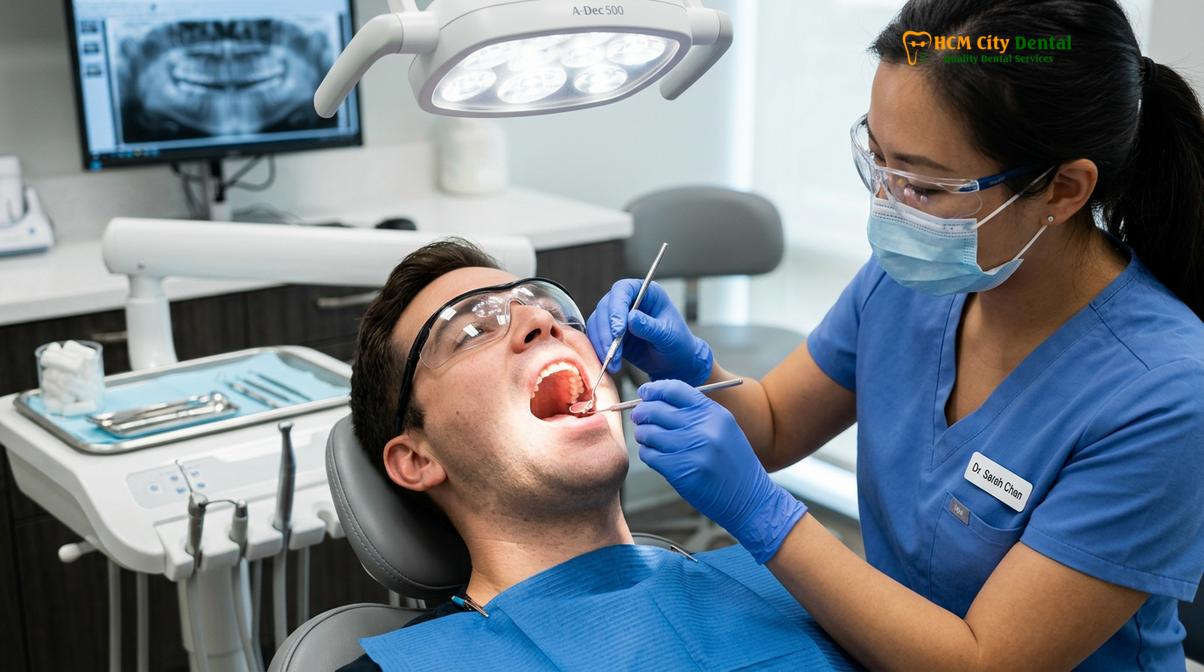
Furthermore, the psychological barrier of seeking medical care in a foreign country is mitigated by the presence of an English speaking dentist. Clear, nuanced communication is the cornerstone of effective medical practice. When patients can articulate their symptoms, dental history, and aesthetic concerns in their native language, the diagnostic accuracy improves exponentially. Dr. Nguyen Van Cuong, a leading specialist at HCMC Dental Clinic, emphasizes that “a comprehensive baseline examination is the most critical phase of dental care; it dictates the trajectory of all subsequent treatments and allows us to intercept disease processes before they require invasive interventions.”
“The migration of international patients toward Southeast Asian dental hubs is driven by a demand for transparent, high-quality diagnostic care that integrates advanced imaging with comprehensive clinical evaluations, free from the constraints of overburdened domestic healthcare systems.” — International Dental Journal[2]
The economic advantage remains a significant factor, but it is the value proposition—the ratio of cost to clinical excellence—that truly defines the Saigon clinic checkup experience. Patients find that they can access premium diagnostic modalities, such as 3D Cone Beam Computed Tomography (CBCT) and intraoral digital scanning, at a fraction of the cost they would incur in their home countries. This accessibility encourages patients to undergo more frequent and thorough screenings, ultimately leading to better long-term oral health outcomes and the preservation of natural dentition.
The Checkup Protocol: Step-by-Step Diagnostic Steps
A standard comprehensive examination includes a meticulous review of medical history, extraoral and intraoral assessments, periodontal probing, and an oral cancer screening to establish a complete baseline of oral health.
The clinical workflow for a comprehensive dental examination is highly structured, designed to evaluate every component of the oral cavity and its associated structures. This systematic approach ensures that no pathology, however minor, is overlooked. The protocol begins before the patient even sits in the dental chair, starting with a rigorous review of their systemic health.
Medical History and Vitals Review
The oral cavity is not an isolated system; it is intimately connected to overall systemic health. The initial phase of the examination involves a detailed review of the patient’s medical history. The clinician will assess current medications, known allergies, previous surgeries, and systemic conditions such as diabetes, hypertension, or cardiovascular disease. Certain medications can induce xerostomia (dry mouth), which significantly elevates the risk of dental caries, while systemic conditions like diabetes can exacerbate periodontal disease. Understanding this medical background is crucial for tailoring a safe and effective treatment plan.
Extraoral Examination
Before examining the teeth, the dentist performs an extraoral assessment. This involves palpating the lymph nodes in the head and neck region to check for lymphadenopathy, which could indicate an underlying infection or malignancy. The temporomandibular joint (TMJ) is also evaluated. The clinician will ask the patient to open and close their mouth, feeling for crepitus (clicking or popping sounds), assessing the range of motion, and checking for any deviation or pain during function. Facial symmetry and the muscles of mastication are also examined for signs of hypertrophy or spasm, which are often associated with bruxism (teeth grinding).
Intraoral Soft Tissue and Oral Cancer Screening
The intraoral examination begins with the soft tissues. The dentist will systematically inspect the lips, buccal mucosa (inside of the cheeks), hard and soft palate, floor of the mouth, and the lateral borders of the tongue. This step is primarily an oral cancer screening. The clinician looks for any mucosal abnormalities, such as leukoplakia (white patches), erythroplakia (red patches), ulcerations that have not healed within two weeks, or any unusual masses. Early detection of oral squamous cell carcinoma dramatically improves the prognosis, making this screening a vital, life-saving component of the checkup.
Periodontal Evaluation
The foundation of a healthy mouth is the periodontium—the gums and bone supporting the teeth. Periodontal charting involves using a specialized instrument called a periodontal probe to measure the depth of the sulcus (the space between the tooth and the gum) at six specific points around each tooth. Healthy sulcus depths typically range from 1 to 3 millimeters. Depths of 4 millimeters or greater indicate the presence of periodontal pockets, a hallmark of periodontitis[4]. The clinician also notes any bleeding on probing (BOP), which is a primary indicator of active gingival inflammation, as well as any gingival recession or tooth mobility.
Clinical Case Study: The Value of Comprehensive Screening
A 45-year-old expatriate presented for a routine dental tourist consult at HCMC Dental Clinic in Ho Chi Minh City, reporting no pain or sensitivity. During the comprehensive examination, periodontal probing revealed localized 6mm pockets in the posterior maxilla, and transillumination highlighted an asymptomatic interproximal carious lesion. Because these issues were detected early, the patient was successfully treated with conservative scaling and a minimally invasive restoration, avoiding the need for future endodontic therapy or extractions.
Hard Tissue and Dentition Charting
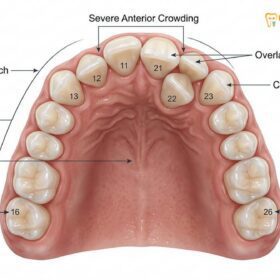
The final phase of the clinical exam focuses on the hard tissues. Using a dental mirror, an explorer, and adequate illumination, the dentist evaluates each tooth individually. They chart missing teeth, existing restorations (such as amalgams, composites, or crowns), and any signs of primary or secondary caries. For patients with older restorations, the clinician will carefully check the margins for signs of microleakage or structural failure. If an old restoration is failing, the dentist may discuss replacing old silver fillings with composite to restore both function and aesthetics. Furthermore, the occlusal relationship (how the upper and lower teeth meet) is analyzed to detect signs of malocclusion or traumatic wear.
Understanding Dental Imaging: OPG Panoramic vs 3D CBCT Scans
Digital imaging is crucial for diagnosing hidden pathologies; panoramic X-rays provide a broad 2D overview, while 3D CBCT scans offer precise volumetric data for complex surgical planning.
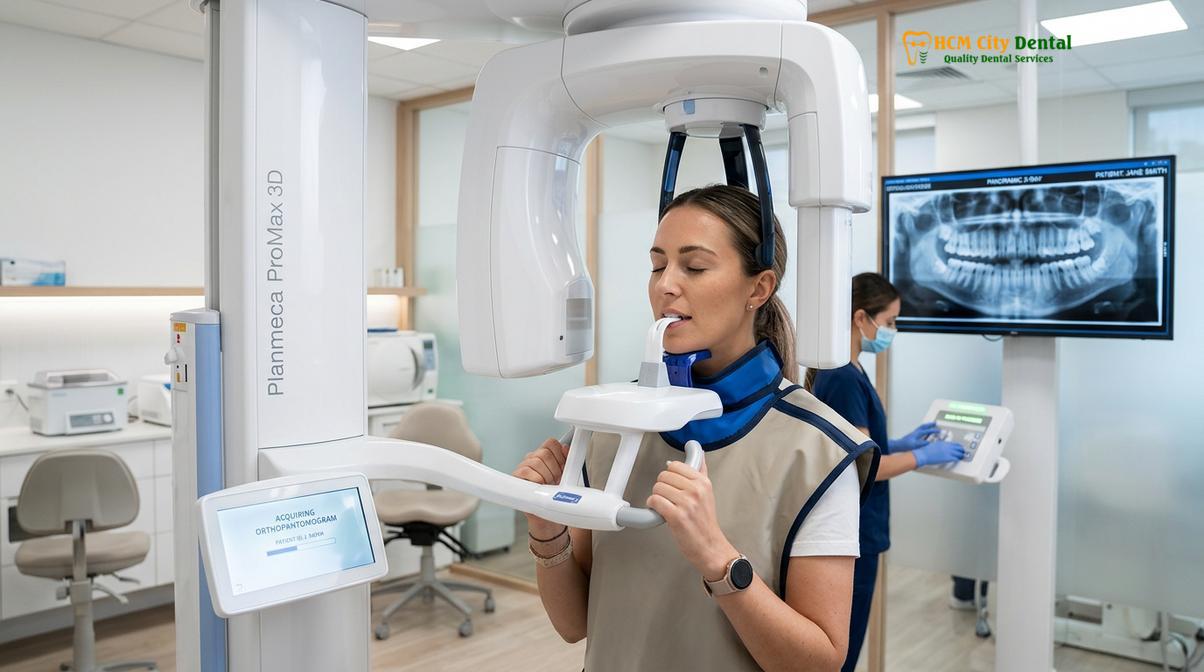
While a meticulous clinical examination is indispensable, it is inherently limited to what the clinician can see on the surface. A significant portion of dental anatomy—including the roots, the alveolar bone, and the interproximal spaces between teeth—remains hidden from the naked eye. To achieve a truly comprehensive diagnosis, radiographic imaging is an absolute necessity. Modern dental clinics utilize advanced digital radiography, which significantly reduces radiation exposure compared to traditional film-based X-rays while providing superior image resolution.
Bitewing Radiographs
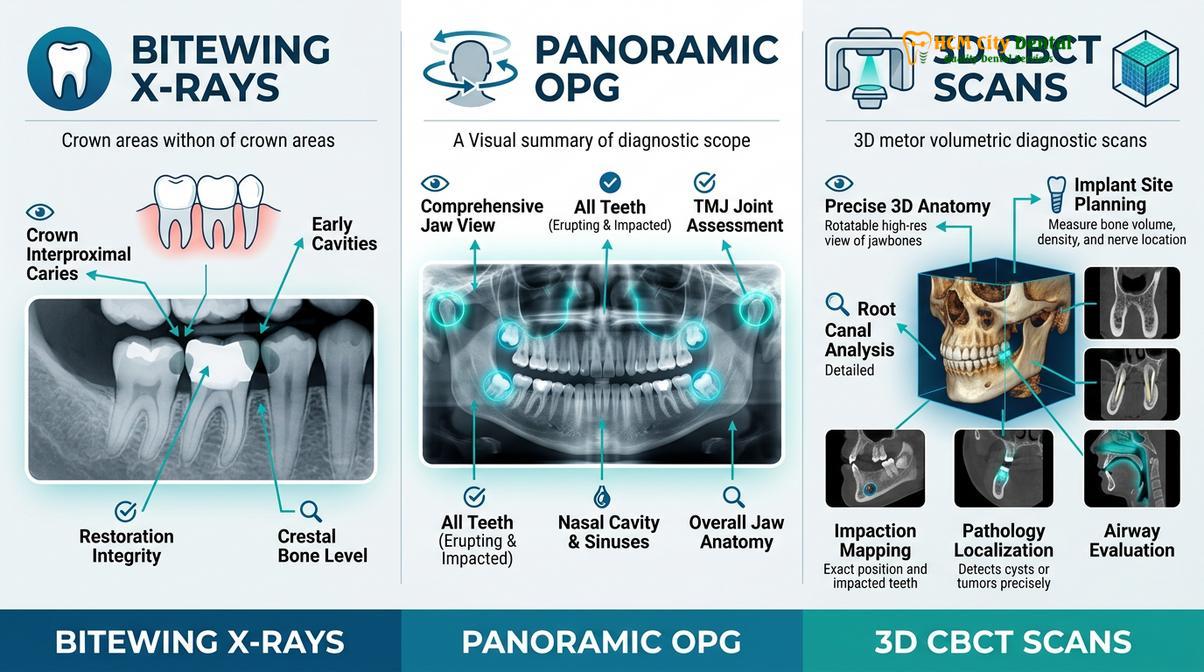
For routine checkups, bitewing radiographs are the standard of care. These localized images capture the crowns of the upper and lower teeth in a specific area. They are highly effective for detecting interproximal caries (cavities forming between the teeth) that cannot be seen or probed clinically. Bitewings also allow the dentist to evaluate the crestal bone levels, providing valuable information about early periodontal bone loss. If cavities are detected, the clinician can plan for a painless cavity treatment using modern local anesthetics and conservative preparation techniques.
Digital Panoramic Radiography (OPG)
An orthopantomogram (OPG), commonly referred to as a digital panoramic x-ray, provides a broad, two-dimensional overview of the entire maxillofacial region. This single image captures all the teeth in the upper and lower jaws, the temporomandibular joints, the maxillary sinuses, and the surrounding bone structure. An OPG is invaluable for assessing the overall dental development, identifying impacted wisdom teeth, detecting large periapical lesions (cysts or abscesses), and evaluating generalized bone loss. It is a standard component of a comprehensive foreigner dental checkup, offering a macro-level view of the patient’s oral health[3].
Cone Beam Computed Tomography (CBCT)
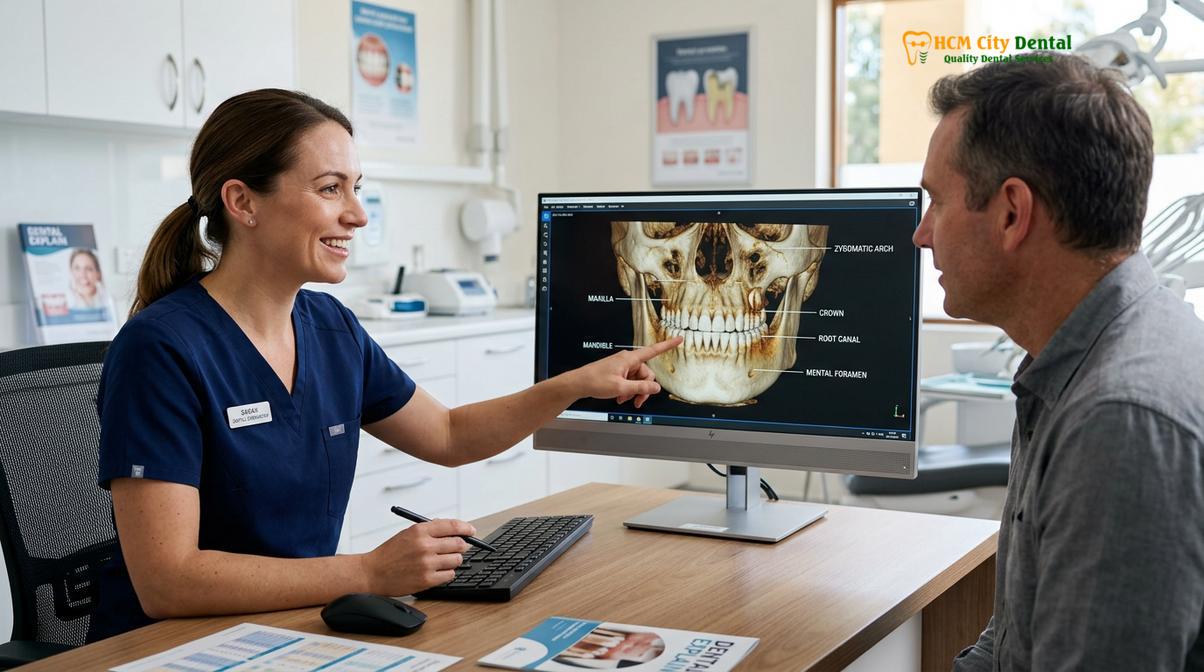
When two-dimensional imaging is insufficient for a definitive diagnosis, a 3D CBCT scan is utilized. Unlike medical CT scans, dental CBCT uses a cone-shaped X-ray beam to capture volumetric data of the maxillofacial region with a significantly lower radiation dose. The resulting 3D images can be manipulated and viewed in multiple planes (axial, coronal, and sagittal). CBCT is not typically required for a routine checkup but is critical for complex diagnostic scenarios, such as planning dental implant placement, evaluating the proximity of impacted teeth to the inferior alveolar nerve, or diagnosing complex endodontic (root canal) anatomy.
Clinical Warning: The Limitations of Visual Exams
Relying solely on a visual examination without appropriate radiographic imaging is clinically insufficient and can lead to severe misdiagnoses. Pathologies such as interproximal caries, periapical abscesses, and early-stage bone loss are often entirely asymptomatic and invisible to the naked eye until they reach an advanced, destructive stage.
The selection of the appropriate imaging modality is governed by the ALARA principle (As Low As Reasonably Achievable), ensuring that patients receive the minimum radiation dose necessary to achieve a diagnostic benefit. When multiple restorations are required based on the radiographic findings, the clinic may organize multiple fillings in one visit to maximize efficiency for traveling patients.
| Imaging Modality | Dimensionality | Primary Clinical Indications | Relative Radiation Dose |
|---|---|---|---|
| Bitewing X-rays | 2D (Localized) | Interproximal caries detection, crestal bone evaluation, assessing restoration margins. | Very Low |
| Panoramic (OPG) | 2D (Full Arch) | Impacted teeth, gross bone pathology, TMJ overview, general orthodontic assessment. | Low |
| CBCT Scan | 3D (Volumetric) | Implant surgical planning, complex endodontics, nerve proximity assessment, trauma. | Moderate |
The Role of the English-Speaking Treatment Coordinator
An English-speaking treatment coordinator bridges the communication gap, ensuring that international patients fully understand their clinical diagnoses, treatment options, and informed consent documents.
Navigating healthcare in a foreign country can be a daunting experience, primarily due to potential language barriers and differing medical protocols. To alleviate this anxiety and ensure the highest standard of patient care, premier dental facilities employ dedicated English-speaking treatment coordinators. These professionals serve as the vital link between the clinical team and the patient, ensuring that every aspect of the consultation is clearly understood.
During the examination, the dentist will use specific medical terminology to describe their findings. The treatment coordinator is trained to translate this clinical jargon into accessible, everyday language. For instance, if the dentist identifies a failing restoration and discusses the filling vs crown threshold, the coordinator will explain the biomechanical reasons why a simple filling may no longer be sufficient and why full-coverage protection is recommended. This level of clarity is essential for obtaining true informed consent[5].
Furthermore, the coordinator assists in sequencing the treatment plan. For a dental tourist with a limited timeframe, scheduling is critical. The coordinator will work with the clinical team to prioritize urgent treatments, such as active infections or deep decay, while scheduling elective or aesthetic procedures appropriately. They also discuss the various tooth colored filling materials available, explaining the differences in durability, aesthetics, and cost between composite resins and ceramic inlays.
“Effective cross-cultural communication in dentistry is not merely about language translation; it is about cultural competence, empathy, and ensuring that the patient feels fully empowered to make informed decisions regarding their oral health.” — British Dental Journal[5]
Beyond clinical explanations, the treatment coordinator acts as a patient advocate. They are available to answer questions about post-operative care, medication instructions, and follow-up protocols. By fostering a transparent and supportive environment, the coordinator ensures that the patient’s experience is stress-free, building a foundation of trust that is crucial for successful dental outcomes.
Transparent Fee Guidelines and Insurance Documentation
Reputable clinics provide fully itemized treatment plans and assist with international insurance claim forms, ensuring financial transparency before any clinical intervention begins.
One of the primary concerns for expatriates and international patients is the financial aspect of dental care. The fear of hidden fees or unexpected charges can deter individuals from seeking necessary treatment. To combat this, leading clinics in Vietnam operate on a strict policy of financial transparency. Following the comprehensive examination and diagnostic imaging, the patient is presented with a detailed, itemized treatment plan.
This document outlines every proposed procedure, the specific materials to be used, and the exact cost associated with each step. There is no ambiguity. Patients are encouraged to review the plan, ask questions, and make informed decisions without any pressure. When comparing the dental filling cost in Vietnam vs UK or Australia, patients quickly realize the substantial economic benefits, often saving up to 60-70% on complex restorative work without compromising on the quality of materials or clinical expertise.
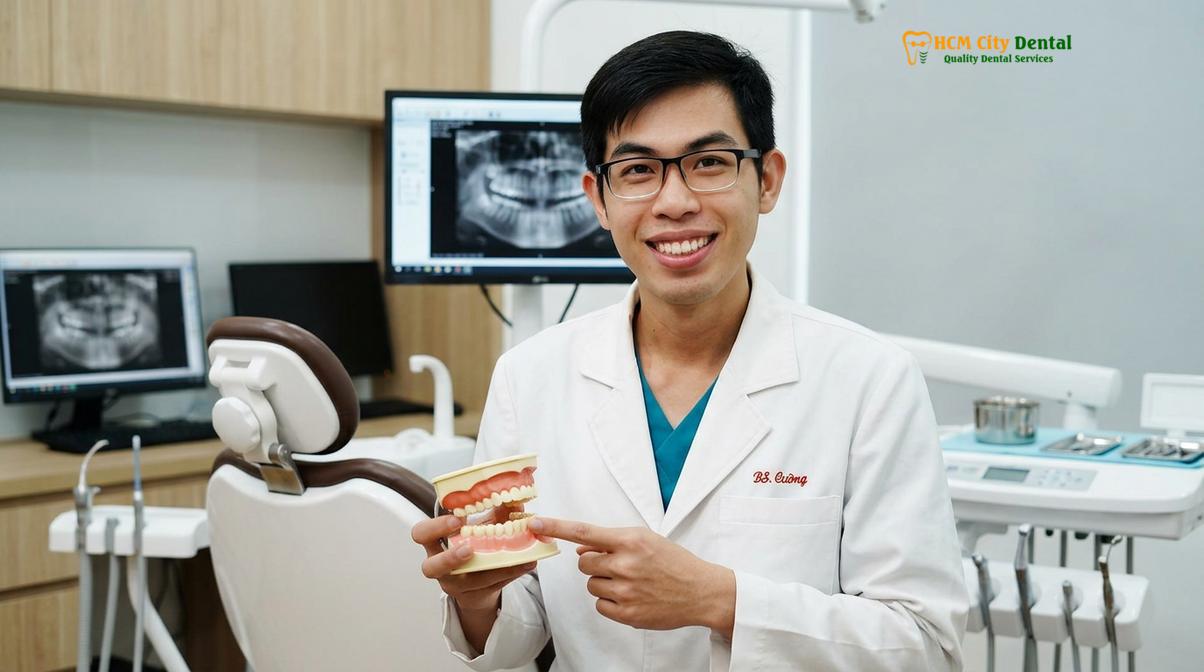
For patients holding international health or dental insurance, navigating the claims process can be complex. While direct billing networks exist, many international policies operate on a “pay-and-claim” reimbursement model. In these scenarios, the clinic’s administrative team plays a crucial role. They are experienced in preparing the necessary documentation required by major global insurance providers. This typically includes an itemized receipt in English, a detailed medical report outlining the diagnosis and treatment rendered, and copies of pre- and post-operative radiographs.
Dr. Cuong notes that “providing comprehensive documentation is just as important as the clinical treatment itself. We ensure our international patients leave not only with a restored smile but with all the necessary paperwork to seamlessly process their insurance claims back home.” This commitment to administrative excellence further solidifies the reputation of Ho Chi Minh City as a premier destination for reliable, high-quality dental care.
When to See a Doctor
While a routine comprehensive dental checkup is generally recommended every six months to maintain optimal oral health, certain clinical signs and symptoms require immediate professional evaluation. You should schedule an urgent consultation if you experience any of the following red flags:
- Spontaneous or Throbbing Pain: Unprovoked toothache that wakes you up at night or persists after consuming hot or cold stimuli often indicates irreversible pulpitis or an acute periapical infection.
- Localized Swelling: Any swelling in the gums, face, or neck, particularly if accompanied by a fever or difficulty swallowing, is a medical emergency that may signify a spreading bacterial abscess.
- Persistent Bleeding: Gums that bleed profusely during normal brushing or flossing, or spontaneous bleeding from the oral mucosa, require immediate periodontal or systemic evaluation.
- Non-Healing Ulcers: Any sore, ulcer, or unusual patch (white or red) in the mouth that does not resolve within 14 days must be examined to rule out oral pathology or malignancy.
- Trauma: Any physical impact to the face or teeth resulting in a fractured, displaced, or avulsed (knocked-out) tooth requires immediate emergency dental intervention to save the dentition.
Early intervention is the key to conservative dentistry. Ignoring these symptoms can lead to the progression of disease, resulting in more complex, invasive, and costly treatments. If you are experiencing any discomfort, it is highly recommended to seek a professional clinical assessment promptly.
Frequently Asked Questions
What does a standard dental checkup include in Saigon?
A standard dental checkup in Saigon includes a comprehensive clinical examination, periodontal charting, oral cancer screening, and digital imaging. The attending dentist will evaluate your teeth, gums, jaw joints, and existing restorations to establish a complete baseline of your oral health and formulate a personalized treatment plan. This thorough process ensures that both visible issues and hidden pathologies are accurately diagnosed.
How much does a dental exam and panoramic X-ray cost in Vietnam?
The cost of a comprehensive dental exam and panoramic X-ray in Vietnam is highly competitive, typically ranging from a fraction of Western prices to complimentary when combined with major treatments. Clinics provide transparent, itemized fee schedules prior to any procedure, ensuring international patients understand all costs upfront without hidden fees. This transparency allows patients to budget effectively for their dental care.
What documentation do I need to bring for my appointment?
You should bring your passport or valid ID, a comprehensive list of your current medications, and any previous dental records or recent X-rays. If you intend to claim reimbursement from an international health insurance provider, bringing your specific insurance claim forms will allow the clinic staff to assist you efficiently. Having your medical history readily available ensures a safe and accurate diagnostic process.
Can I get my teeth cleaned during the same checkup visit?
Yes, professional teeth cleaning (scaling and polishing) is routinely performed during the same visit as your comprehensive checkup. Unless you present with severe periodontal disease requiring specialized deep cleaning sessions, the standard prophylaxis can be seamlessly integrated into your initial consultation appointment for maximum convenience. This combined approach is highly favored by international travelers with limited schedules.
Will my home country dental insurance cover treatments in Vietnam?
Many international dental insurance policies operate on a pay-and-claim reimbursement model for treatments received overseas. While direct billing may not always be available, reputable clinics provide all necessary documentation, including itemized receipts in English, diagnostic X-rays, and signed medical reports, to facilitate your reimbursement process back home. It is advisable to check your specific policy limits and required forms prior to your travel.
References
- Journal of the American Dental Association. Evidence-based clinical practice guideline on the use of pit and fissure sealants and comprehensive oral evaluations. (2016).
- International Dental Journal. The impact of dental tourism on cross-border healthcare and clinical outcomes. (2019).
- Clinical Oral Investigations. Diagnostic efficacy of digital panoramic radiography versus cone-beam computed tomography in general dentistry. (2021).
- Journal of Periodontology. Comprehensive periodontal charting and its role in the early detection of systemic inflammatory markers. (2020).
- British Dental Journal. Patient communication and informed consent in cross-cultural dental practice environments. (2018).