Your first dental visit in Vietnam can trigger anxiety, but overcoming this fear relies on establishing clinical trust. By understanding international sterilization protocols, verifying dentist credentials, and ensuring transparent communication, international patients can safely access world-class dental care at HCMC Dental Clinic in Ho Chi Minh City without compromising on quality.
Clinical Summary:
Navigating dental care in a foreign country requires overcoming significant psychological and informational barriers. For international patients, the primary concerns revolve around clinical safety, communication efficacy, and financial transparency. Modern dental facilities in Vietnam address these concerns by implementing rigorous, hospital-grade sterilization protocols that meet or exceed global standards. Furthermore, the presence of fluent English-speaking clinicians ensures that informed consent is obtained accurately, mitigating the risks associated with miscommunication. By prioritizing comprehensive diagnostic workflows and transparent, itemized treatment planning, reputable clinics build a foundation of trust. This evidence-based approach not only alleviates dental anxiety but also ensures that patients receive high-quality, predictable outcomes comparable to those in their home countries.
Key Takeaways:
- Dental anxiety in medical tourism is effectively managed through transparent communication and structured clinical workflows.
- Top-tier clinics utilize Class B vacuum autoclaves and strict biological monitoring to ensure absolute infection control.
- Fluent English communication is critical for accurate diagnosis, treatment planning, and obtaining informed consent.
- Ethical practices provide comprehensive, itemized fee schedules prior to treatment to eliminate hidden costs.
- Patients should actively verify a clinician’s national licensing, specialized certifications, and international affiliations.
The Psychology of Seeking Medical Care in a Foreign Country
Dental anxiety is amplified when traveling abroad due to unfamiliar environments, but structured clinical consultations and empathetic communication effectively mitigate these psychological barriers.
The decision to undergo medical or dental procedures outside of one’s home country introduces a unique set of psychological challenges. Dental anxiety, a well-documented phenomenon characterized by an exaggerated fear of dental procedures, is often exacerbated by the unfamiliarity of a foreign healthcare system. When patients consider their first dental visit in Vietnam, the anticipation of potential language barriers, differing clinical standards, and the physical distance from their primary support networks can trigger significant stress responses. Understanding the neurobiology of this anxiety is the first step in overcoming it. The sympathetic nervous system’s “fight or flight” response is frequently activated by sensory triggers in a dental environment—such as the sound of a high-speed handpiece or the distinct olfactory presence of clinical disinfectants[1]. For the international patient, these universal triggers are compounded by the vulnerability of being in a new country.
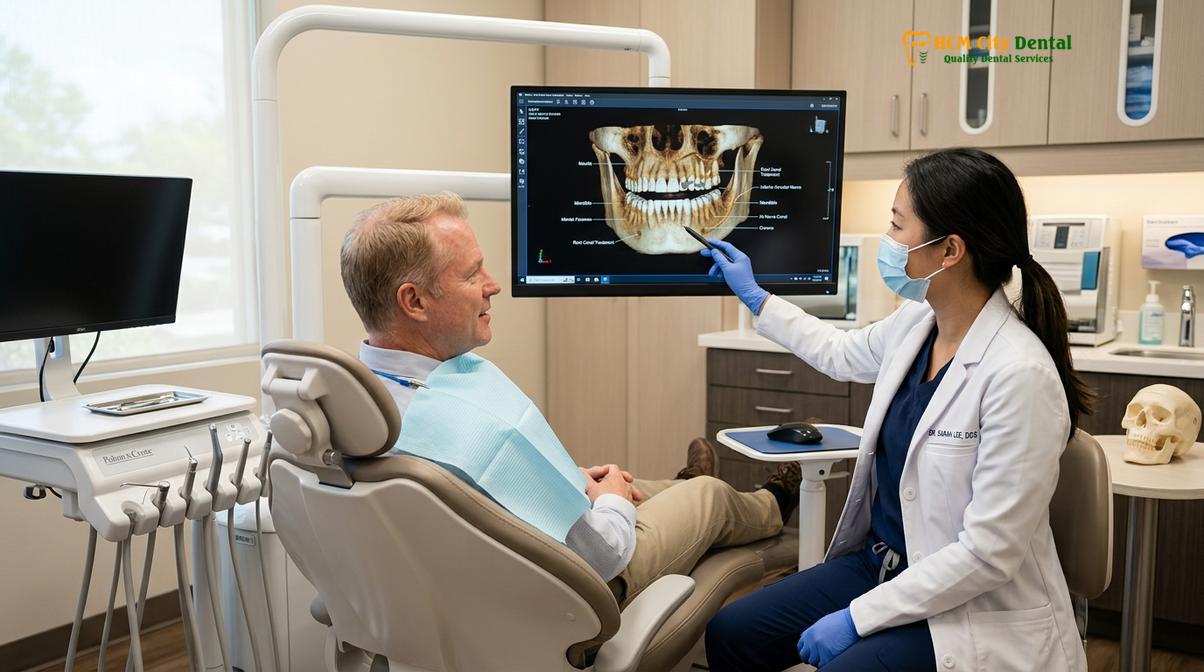
To effectively manage this heightened state of arousal, leading practitioners employ targeted cognitive and environmental strategies. Overcoming dental anxiety requires a deliberate shift from a purely procedural focus to a patient-centered model of care. Dr. Nguyen Van Cuong, a leading specialist in restorative dentistry, emphasizes that the initial consultation is the most critical phase of treatment for international patients. He focuses on establishing a foundation of trust by validating patient concerns and explaining the clinical rationale behind each diagnostic step. Under his guidance, patients receive comprehensive care tailored to their specific needs, ensuring a comfortable and predictable experience.
“The foundation of successful cross-border healthcare lies in the clinician’s ability to bridge the psychological gap. Trust is not assumed; it is meticulously built through transparent communication, demonstrable clinical competence, and an unwavering commitment to patient comfort.”
Furthermore, modern clinics integrate sensory management techniques to create a calming environment. This includes the use of ambient lighting, noise-canceling headphones, and the elimination of harsh clinical odors. When a patient feels physically comfortable and psychologically secure, their pain threshold increases, and their overall compliance with the treatment plan improves. Establishing this trust is particularly crucial when discussing complex procedures, such as determining the clinical threshold between a filling and a crown. By taking the time to educate the patient on the biomechanical reasons for a specific recommendation, the dentist transforms the patient from a passive recipient of care into an active, informed participant in their own oral health journey.
Sterilization Protocols: De-mystifying ISO and Hospital-Grade Hygiene
Reputable clinics in Vietnam adhere strictly to international standards, utilizing Class B autoclaves and multi-step infection control protocols to prioritize patient safety.
One of the most pervasive concerns among international patients is the standard of infection control in developing nations. However, the reality of modern dentistry in major urban centers like Ho Chi Minh City often challenges these preconceived notions. Top-tier facilities operate under stringent hygiene standards, implementing protocols that mirror or exceed those found in North America, Europe, and Australia. The cornerstone of dental safety is the rigorous application of the Spaulding classification system, which categorizes medical instruments based on their risk of transmitting infection and dictates the appropriate level of sterilization or disinfection required.
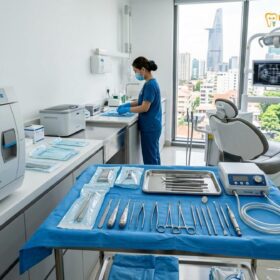
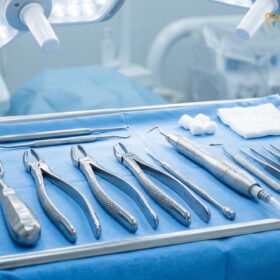
Critical instruments—those that penetrate soft tissue or bone, such as surgical scalpels, periodontal scalers, and implant drills—must undergo absolute sterilization. This is achieved through a meticulous, multi-stage process. Initially, instruments are subjected to an ultrasonic bath containing enzymatic detergents to break down bioburden at a microscopic level. Following thorough rinsing and drying, the instruments are sealed in specialized sterilization pouches equipped with chemical indicators. These indicators undergo a distinct color change only when specific parameters of time, temperature, and pressure have been met, providing a visual confirmation of sterility[2].
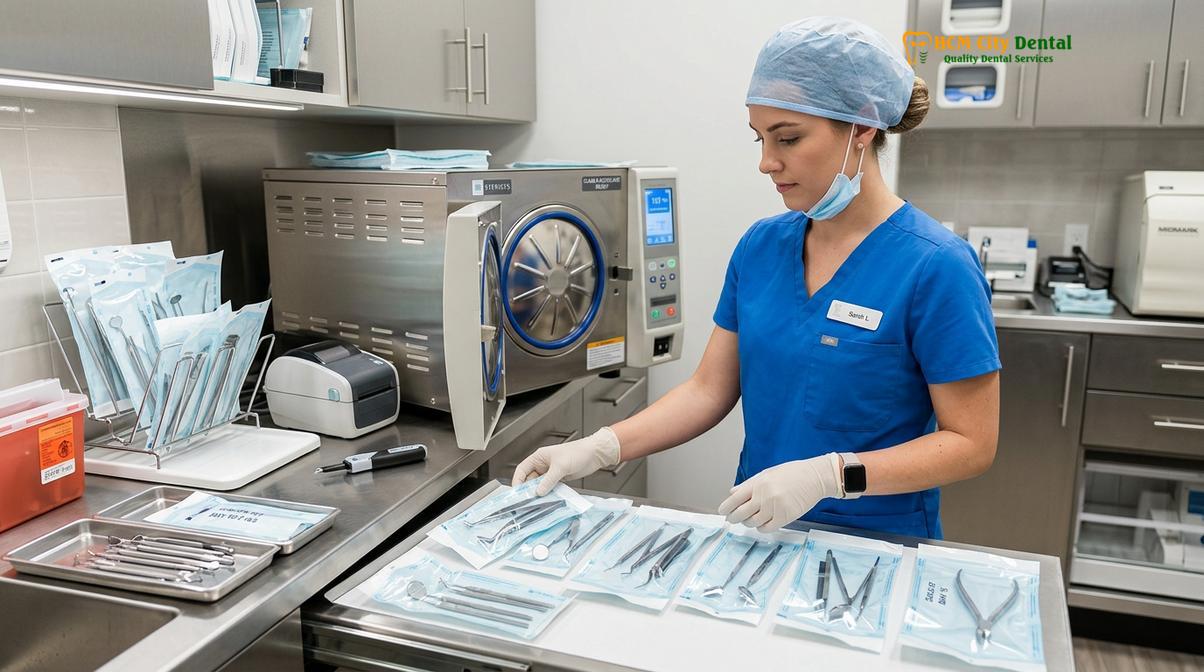
The actual sterilization process is conducted using Class B vacuum autoclaves. Unlike standard gravity displacement autoclaves, Class B sterilizers utilize a fractionated pre-vacuum cycle to completely remove air from the chamber, ensuring that pressurized steam penetrates even the most complex, hollow instruments, such as high-speed handpieces. The standard cycle operates at high temperatures and pressure for a sustained duration, effectively destroying all microbial life, including highly resistant bacterial endospores.
| Protocol Element | Standard Clinic Practice | Hospital-Grade Protocol |
|---|---|---|
| Instrument Pre-cleaning | Manual scrubbing | Ultrasonic enzymatic bath & automated thermal washer |
| Autoclave Technology | Class N (Gravity displacement) | Class B (Fractionated pre-vacuum) |
| Sterility Verification | External chemical tape only | Internal/External chemical indicators & biological spore testing |
| Surface Disinfection | Standard alcohol wipes | Hospital-grade virucidal/bactericidal agents |
| Waterline Management | Municipal water supply | Independent distilled water reservoirs with anti-retraction valves |
Beyond instrument sterilization, environmental infection control is paramount. Operatory surfaces are treated with hospital-grade disinfectants between every patient. Dental unit waterlines, a notorious source of biofilm accumulation, are managed using independent distilled water reservoirs and anti-retraction valves to prevent cross-contamination. By transparently demonstrating these protocols, clinics provide tangible clinical quality verification, reassuring international patients that their safety is the absolute highest priority.
Bridging the Gap: English Fluency and Dental Terminology in Saigon
Accurate clinical communication is vital; top clinics employ fluent English-speaking dentists and provide translated medical documents to ensure complete informed consent.
In the realm of healthcare, effective communication is not merely a convenience; it is a fundamental clinical requirement. The inability to accurately convey symptoms, understand diagnoses, or comprehend proposed treatment plans can lead to severe clinical complications. For the international patient, seeking out English-speaking dentists is a critical step in ensuring a safe and successful dental experience. Fluency in conversational English is insufficient; clinicians must possess a deep command of English dental terminology to accurately explain complex biomechanical concepts and procedural risks[3].
Informed consent is a cornerstone of ethical medical practice. It requires that the patient fully understands their current oral health status, the nature of the proposed intervention, the anticipated benefits, the potential risks, and any viable alternative treatments. When language barriers exist, the validity of informed consent is compromised. Reputable clinics address this by ensuring that all consultations are conducted in fluent English and that all written materials—including treatment plans, consent forms, and post-operative instructions—are provided in the patient’s native language. This rigorous approach to communication is essential when discussing nuanced procedures, such as the benefits of advanced tooth-colored restorative materials versus traditional amalgam.
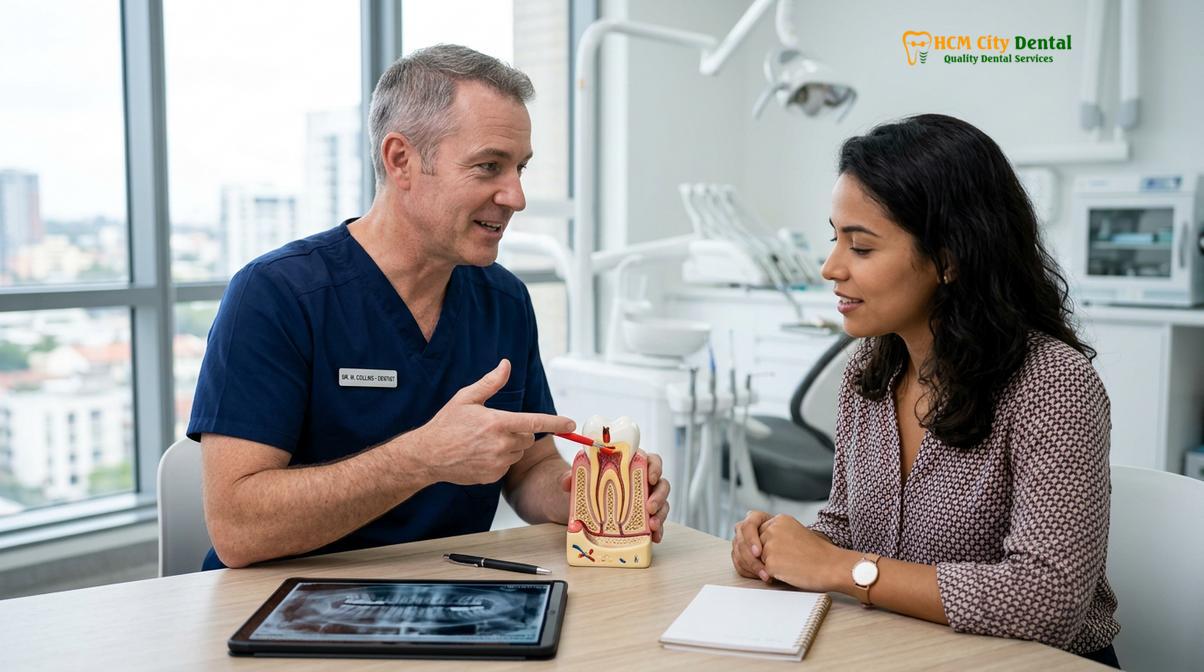
Clinical Case Study: Overcoming Communication Barriers
Patient Profile: A 45-year-old expatriate visiting HCMC Dental Clinic in Ho Chi Minh City presented with acute localized pain in the mandibular right quadrant and significant dental anxiety stemming from a previous misdiagnosis abroad.
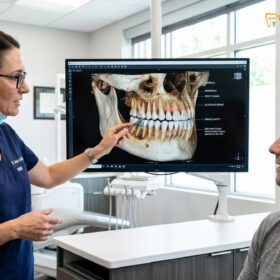
Clinical Approach: The attending clinician prioritized clear, jargon-free communication. Utilizing a 3D CBCT scan, the dentist visually demonstrated the presence of secondary caries beneath an existing restoration. The patient was guided through the diagnostic findings step-by-step in fluent English.
Outcome: By thoroughly explaining the clinical rationale for replacing outdated amalgam restorations with modern composites, the patient’s anxiety was significantly reduced. The transparent communication fostered a high level of trust, allowing the procedure to be completed successfully with full patient cooperation.
Furthermore, effective communication extends beyond the dentist-patient interaction. The entire clinical team, including receptionists, treatment coordinators, and dental assistants, must be proficient in English to ensure a seamless and stress-free experience from the initial booking to the final follow-up appointment. This comprehensive linguistic support is a hallmark of clinics dedicated to serving the international community.
Fee Transparency: How We Protect Tourists from Hidden Costs
Ethical dental practices provide comprehensive, itemized treatment plans prior to any procedure, eliminating hidden fees and establishing financial trust with international patients.
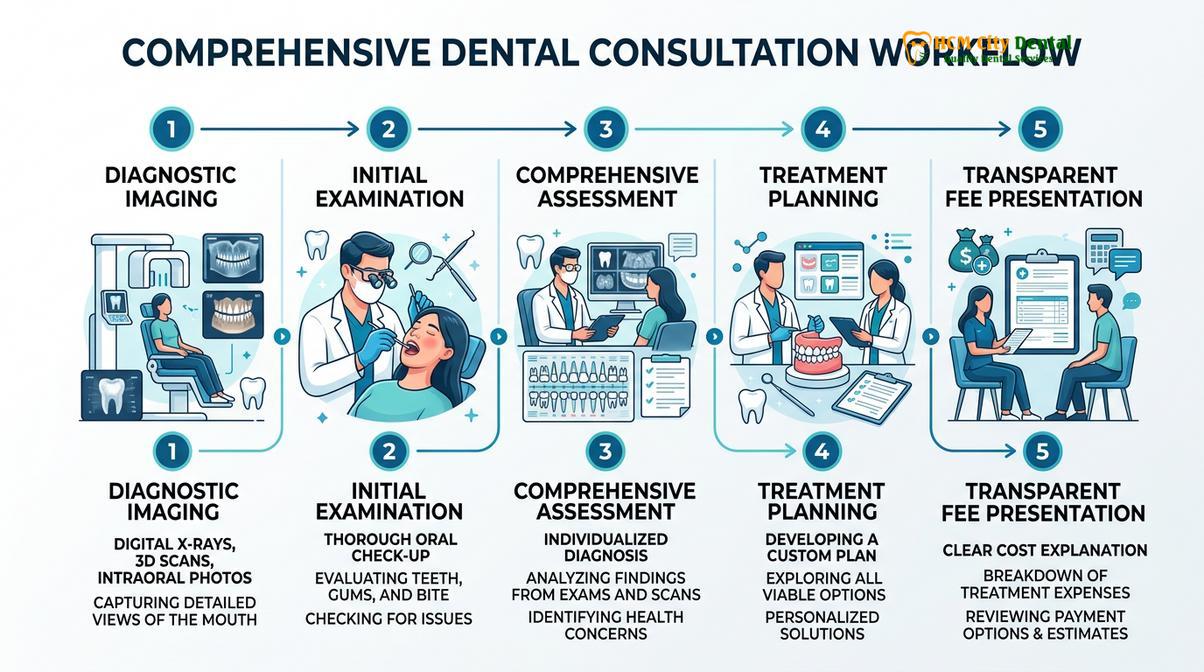
Financial ambiguity is a significant source of stress for patients seeking healthcare abroad. The fear of hidden costs, unexpected surcharges, or “tourist pricing” can quickly erode trust and deter patients from receiving necessary care. To combat this, leading dental practices in Vietnam have adopted strict policies of absolute fee transparency. This process begins during the initial consultation, where a comprehensive diagnostic evaluation is performed to determine the exact scope of work required.
Following the clinical examination and radiographic analysis, the patient is presented with a detailed, itemized treatment plan. This document outlines every proposed procedure, the specific materials to be used, and the exact cost associated with each step. There are no vague estimates or open-ended financial commitments. For example, if a patient requires restorative work, the treatment plan will clearly differentiate the costs associated with various options, allowing the patient to make an informed decision based on a comparative cost analysis of dental procedures. This level of detail ensures that the patient is fully aware of their financial obligations before any clinical intervention begins.
Moreover, ethical clinics maintain a standardized fee schedule that applies equally to domestic and international patients. The practice of dual pricing is strictly avoided, as it fundamentally undermines the integrity of the clinician-patient relationship. In cases where multiple treatments are required, the clinic may offer phased treatment planning, allowing the patient to prioritize urgent care while managing costs over time. For instance, a patient might opt for completing multiple restorations in a single appointment to maximize efficiency and reduce overall travel-related expenses. By prioritizing financial clarity, clinics empower patients to make decisions that align with both their clinical needs and their budgetary constraints.
Verifying Qualifications: Checking Vietnamese Dentists Credentials
Patients can verify clinical expertise by checking national medical licenses, international affiliations, and specialized postgraduate certifications before committing to treatment.
While Vietnam boasts a rapidly advancing healthcare sector, the quality of care can vary significantly between individual practitioners and facilities. For the international patient, conducting due diligence and verifying the credentials of their chosen dentist is a non-negotiable step in ensuring a safe and successful outcome. The foundation of clinical competence in Vietnam is the Odonto-Stomatology degree, a rigorous university program that culminates in the issuance of a medical license by the Vietnamese Ministry of Health (MOH)[4]. Additionally, reputable practitioners are often registered with the Vietnam Odonto-Stomatology Association (VOSA), ensuring adherence to national clinical guidelines.
However, basic licensure is merely the starting point. Patients seeking complex restorative, surgical, or cosmetic procedures should look for clinicians who have pursued extensive postgraduate education and specialized training. Many top-tier dentists in Vietnam have completed advanced fellowships or master’s degrees at prestigious international institutions in the United States, Europe, or Australia. Furthermore, active membership in recognized international professional organizations serves as a strong indicator of a clinician’s commitment to maintaining global standards of care.
“Verifying a clinician’s credentials is a fundamental patient right. In an era of globalized healthcare, transparency regarding national licensure and international specialized training is the ultimate indicator of clinical safety.”
International patients must exercise caution and avoid seeking treatment at unregistered facilities that cannot transparently provide proof of their clinicians’ MOH licenses and specialized certifications. Treatment by underqualified practitioners significantly increases the risk of procedural failure and cross-contamination.
When to Seek Immediate Dental Care in Vietnam
Recognizing the signs of a dental emergency is crucial for travelers to prevent severe complications and ensure timely intervention.
While routine check-ups and planned restorative work form the bulk of dental tourism, emergencies can arise unexpectedly. Knowing when to seek immediate care is vital for preserving oral health and preventing systemic infections. International patients should not delay treatment if they experience severe, unremitting tooth pain that disrupts sleep or is unresponsive to over-the-counter analgesics. Such pain often indicates irreversible pulpitis or an acute periapical abscess, requiring prompt endodontic evaluation or extraction.
Important Clinical Note: If you experience facial swelling that extends to the eye or neck, difficulty swallowing, or a high fever accompanying dental pain, seek emergency medical attention immediately. These are signs of a spreading fascial space infection that can become life-threatening if left untreated.
Other situations necessitating urgent care include dental trauma resulting in avulsed (knocked-out) or severely fractured teeth, uncontrolled bleeding following an extraction, or the sudden loss of a critical restoration that exposes sensitive dentin. In these scenarios, accessing a clinic equipped for painless and efficient emergency interventions is essential. Top-tier facilities maintain emergency protocols to accommodate urgent cases, utilizing advanced diagnostics to quickly identify the source of the problem and implement immediate palliative or definitive care[5].
If you are planning your first dental visit and want to ensure a safe, transparent, and comfortable experience, it is essential to choose a clinic that prioritizes international standards of care. For comprehensive general dentistry services and expert consultations, contact HCMC Dental Clinic in Ho Chi Minh City to begin your journey toward optimal oral health.
References
- Journal of Dental Research. Psychological management of dental anxiety and phobia in adult patients.
- International Dental Journal. Global standards for infection control and sterilization in dental practice.
- British Dental Journal. The role of effective communication in establishing patient trust and clinical consent.
- Vietnam Ministry of Health (MOH). National guidelines on infection control in odonto-stomatology facilities.
- Clinical Oral Investigations. Emergency dental protocols and diagnostic criteria for acute oral infections.