A periodontal dentist, or periodontist, is a specialized dental professional focused exclusively on the prevention, diagnosis, and treatment of diseases affecting the gums and supporting bone structures. They manage complex cases of gum disease, perform soft tissue surgeries, and expertly place dental implants to restore oral function.
Clinical Summary:
A periodontal dentist is a highly trained specialist who focuses on the periodontium—the soft and hard tissues that support the teeth. While general dentists manage routine oral health, periodontists complete extensive post-graduate surgical training to address severe gingival infections, advanced alveolar bone loss, and complex oral rehabilitation. Their clinical scope includes non-surgical therapies like scaling and root planing, as well as advanced surgical interventions such as gingival flap surgery, soft tissue grafting, guided bone regeneration, and the precise placement of dental implants. By collaborating closely with general practitioners, periodontal specialists play a critical role in halting disease progression, preserving natural dentition, and restoring the structural foundation of the mouth for long-term oral and systemic health.
Key Takeaways:
- A periodontal dentist specializes in treating the gums, periodontal ligaments, and alveolar bone.
- They complete three additional years of specialized surgical residency after dental school.
- Core treatments include deep cleanings (SRP), gum grafting, bone regeneration, and dental implants.
- Periodontal disease is closely linked to systemic health issues, including cardiovascular disease and diabetes.
- Strict periodontal maintenance every 3-4 months is essential to prevent disease relapse.
What is a Periodontal Dentist?
A periodontal dentist is a highly trained specialist who treats the periodontium—the gums, alveolar bone, cementum, and periodontal ligaments—ensuring the foundational structures of your teeth remain healthy and intact.
To fully understand the role of a periodontal dentist, one must first understand the anatomy they specialize in. The word “periodontics” is derived from the Greek words “peri” (meaning around) and “odont” (meaning tooth). Therefore, a periodontal dentist focuses entirely on the structures that surround and support the teeth, collectively known as the periodontium[1]. From a comprehensive general dentistry perspective, while routine care focuses on the tooth itself, periodontal care focuses on the foundation.
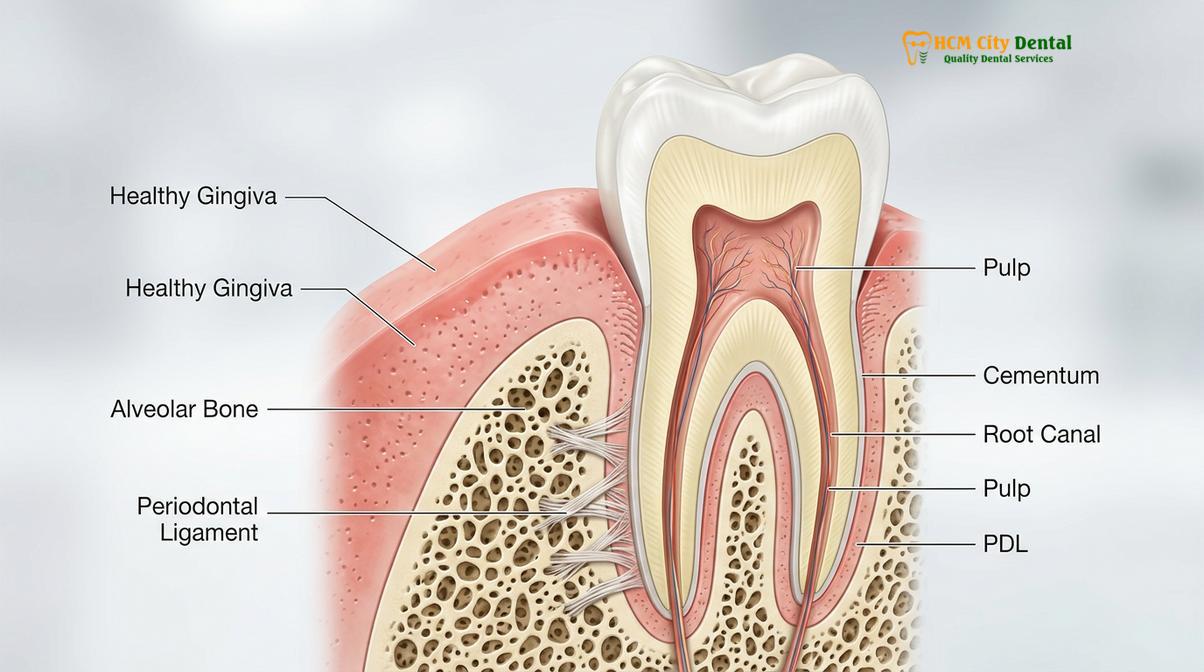
The periodontium consists of four primary components, each requiring specific clinical expertise to maintain and treat:
- Gingiva (Gums): The visible pink soft tissue that covers the alveolar bone and surrounds the cervical portion of the teeth. It acts as a protective mucosal barrier against oral bacteria.
- Periodontal Ligament (PDL): A complex network of connective tissue fibers that attach the tooth root to the surrounding jawbone. The PDL acts as a crucial shock absorber during chewing and biting.
- Cementum: A specialized, calcified substance covering the root of the tooth. It provides a surface for the periodontal ligament fibers to attach, securing the tooth in its socket.
- Alveolar Bone: The thickened ridge of bone that contains the tooth sockets (dental alveoli). This bone is highly dynamic and relies on the presence of teeth and chewing forces to maintain its density.
From a dental public health perspective, periodontal disease is one of the leading causes of tooth loss in adults worldwide. A periodontal dentist is tasked with diagnosing inflammatory conditions that threaten these structures. They utilize advanced diagnostic tools, including 3D cone-beam computed tomography (CBCT) and precise periodontal probing, to assess the health of the periodontium. Their ultimate goal is to halt disease progression, regenerate lost tissue where possible, and provide a stable foundation for the natural teeth or dental implants.
General Dentist vs. Periodontal Dentist: Understanding the Difference
While general dentists handle routine care and restorations, periodontal dentists complete additional years of specialized surgical training to manage advanced gum disease, complex extractions, and implant placements.
A common point of confusion for patients is understanding when to see a general dentist versus a periodontal specialist. Primary dentist goals include preserving the natural dentition through preventative care, routine cleanings, and restorative procedures like fillings or crowns. General dentists are the primary care providers of the oral cavity. They are highly skilled in diagnosing early-stage gingivitis and providing routine dental care to maintain overall oral hygiene.
However, when gum disease progresses beyond the early stages, or when a patient requires complex surgical intervention, a referral to a periodontal dentist is necessary. Patients sometimes wonder, can a dental hygienist become a dentist or a periodontist? The answer is yes, but it requires transitioning from a hygiene degree to completing a rigorous four-year doctoral dental program, followed by an intensive three-year surgical residency in periodontics[2].
During this residency, periodontal dentists receive advanced training in soft and hard tissue surgery, intravenous (IV) sedation, medical emergency management, and complex implantology. They are trained to handle severe anatomical defects and systemic complications that affect oral health.
| Clinical Aspect | General Dentist | Periodontal Dentist |
|---|---|---|
| Primary Focus | Overall oral health, preventative care, and tooth restoration. | Health of the gums, bone, and supporting structures. |
| Education | 4 years of dental school (DDS or DMD). | 4 years of dental school + 3 years of surgical residency. |
| Common Procedures | Fillings, crowns, routine cleanings, basic extractions. | Gum grafting, bone regeneration, advanced implant placement, flap surgery. |
| Disease Management | Manages early gingivitis and mild periodontitis. | Treats moderate to severe, refractory, and aggressive periodontitis. |
“The collaboration between a general dentist and a periodontist is the cornerstone of comprehensive oral rehabilitation. We work together to ensure that the beautiful restorations placed by the general dentist have a healthy, disease-free foundation to stand upon.”
Whether a patient is referred by a local general practitioner, such as a Dr. White, dentist in a family practice, or seeks a direct specialist consultation, the transition of care is seamless. The periodontal dentist will manage the surgical and disease-control phases, and once the periodontium is stabilized, the patient often returns to their general dentist for final restorations, such as placing a fixed dental bridge or a permanent crown.
Common Periodontal Diseases and Conditions Treated
Periodontal specialists primarily treat progressive bacterial infections like gingivitis and periodontitis, alongside structural issues such as severe gum recession and jawbone deterioration.
The oral cavity is a complex microbiome harboring hundreds of bacterial species. When oral hygiene is inadequate, pathogenic bacteria accumulate along the gumline, forming a sticky biofilm known as plaque. If not removed, plaque calcifies into tartar (calculus), triggering a localized immune response. A periodontal dentist is an expert in managing the resulting inflammatory cascade.
Gingivitis: The Early Stage
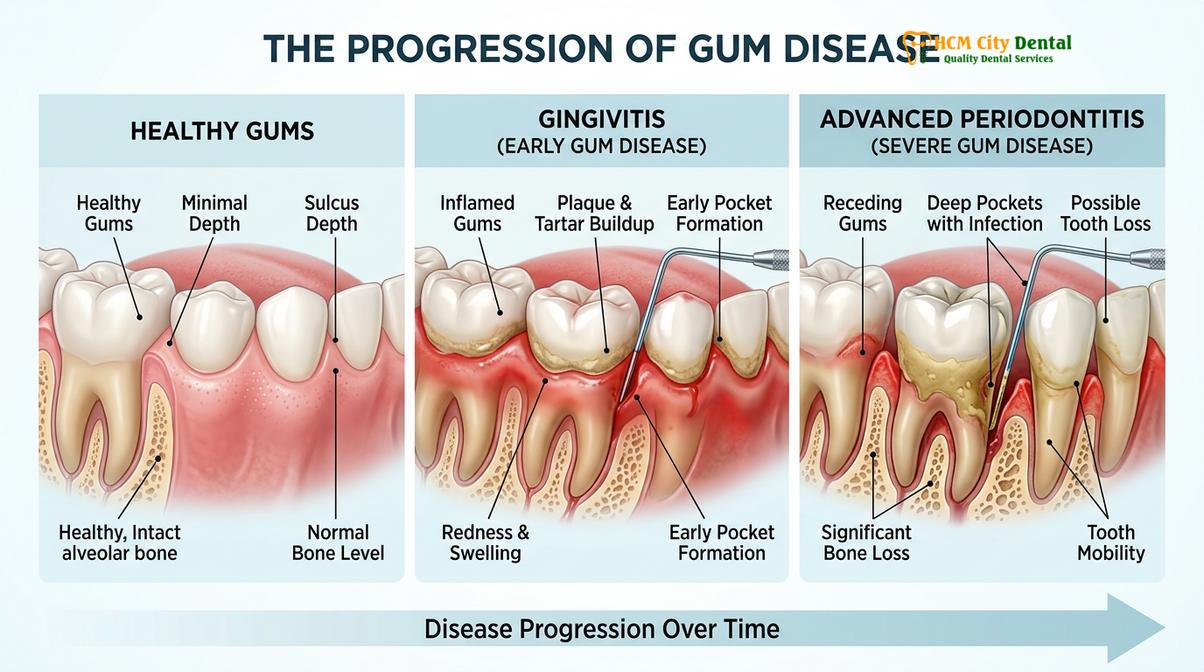
Gingivitis is the mildest form of periodontal disease, characterized by red, swollen gums that bleed easily during brushing or flossing. At this stage, the inflammation is confined to the soft tissue, and no irreversible bone loss has occurred. While general dentists often treat gingivitis, a periodontal dentist may be consulted for refractory cases that do not respond to standard cleanings. Certain demographics, such as pregnant women or women with braces, may experience heightened gingival inflammation due to hormonal shifts or plaque retention around orthodontic brackets, requiring specialized monitoring.
Periodontitis: Advanced Infection and Bone Loss
If gingivitis is left untreated, the bacterial infection penetrates deeper beneath the gumline, leading to periodontitis. The body’s immune system reacts to the bacterial toxins by releasing enzymes that inadvertently break down the periodontal ligament and alveolar bone[3]. This creates deep “pockets” between the teeth and gums, which harbor even more aggressive anaerobic bacteria.
Periodontitis is categorized by stages (severity of disease) and grades (rate of progression). A periodontal dentist meticulously measures these pocket depths using a calibrated periodontal probe. Pockets measuring 4 millimeters or deeper typically indicate active disease requiring specialized intervention. Without treatment, the teeth lose their structural support, become mobile, and eventually require extraction.
Gum Recession and Mucogingival Deformities
Beyond bacterial infections, periodontal dentists treat structural abnormalities. Gum recession occurs when the gingival margin pulls away from the crown of the tooth, exposing the sensitive root surface. This can be caused by aggressive brushing, genetic predisposition, orthodontic movement, or periodontal disease. Exposed roots are highly susceptible to treating severe tooth decay and thermal sensitivity. Periodontists utilize advanced microsurgical techniques to graft new tissue over the exposed roots, restoring both function and aesthetics.
Advanced Clinical Procedures Performed by Periodontists
Treatment ranges from non-surgical scaling and root planing to advanced surgical interventions like gingival flap surgery, soft tissue grafting, and guided bone regeneration.
The clinical arsenal of a periodontal dentist is extensive. Treatment always begins with the most conservative, non-surgical approach possible, escalating to surgical intervention only when necessary to arrest disease progression or regenerate lost tissue.
Non-Surgical Therapy: Scaling and Root Planing (SRP)
Often referred to as a “deep cleaning,” scaling and root planing is the gold standard initial therapy for periodontitis. Unlike a routine prophylaxis that cleans above the gumline, SRP is performed under local anesthesia. The periodontal dentist or a specialized hygienist uses ultrasonic scalers and hand curettes to meticulously remove plaque and calculus from deep within the periodontal pockets (scaling). The rough surfaces of the tooth roots are then smoothed (planing) to prevent bacteria from easily reattaching and to encourage the gums to heal and reattach to the tooth structure.
Gingival Flap Surgery (Pocket Reduction Surgery)
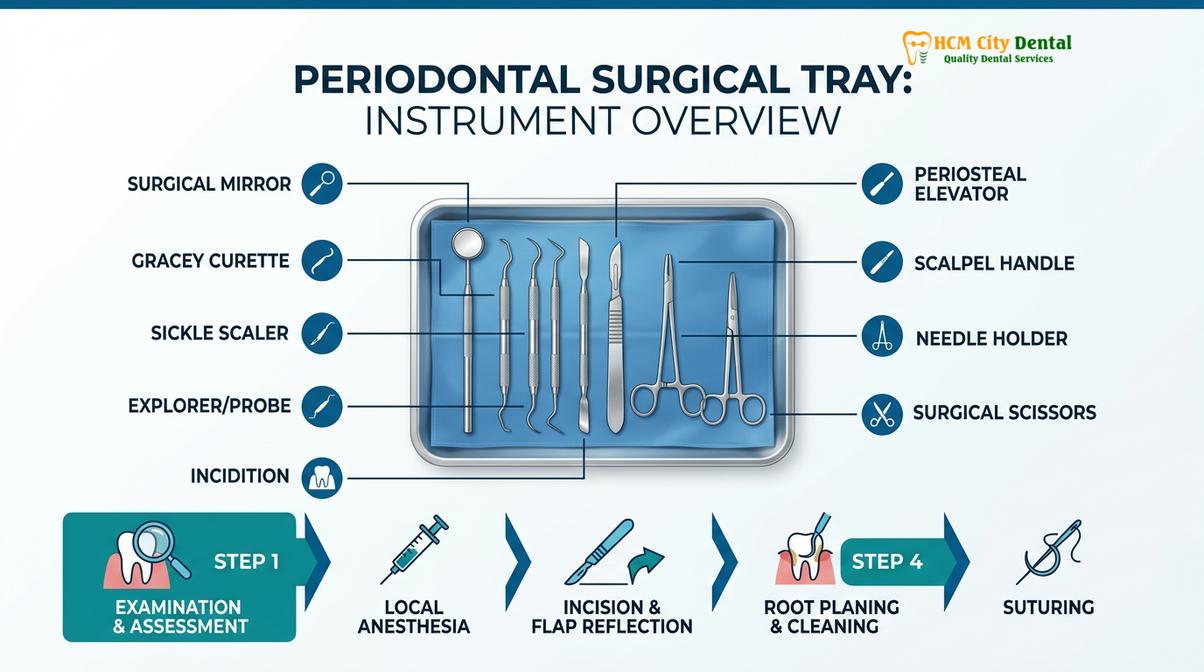
When periodontal pockets are too deep to be effectively cleaned through SRP alone, surgical intervention is required. During gingival flap surgery, the periodontal dentist makes precise incisions to gently fold back the gum tissue. This provides direct visibility and access to the tooth roots and underlying bone. The infected tissue is removed, the roots are thoroughly debrided, and the irregular bone surfaces may be smoothed (osseous resective surgery) to eliminate areas where bacteria can hide. The gums are then sutured back into place, reducing the pocket depth and making the area easier for the patient to keep clean.
Clinical Warning: Ignoring deep periodontal pockets allows anaerobic bacteria to thrive. This localized infection can enter the bloodstream, and extensive research has linked severe periodontitis to an increased risk of cardiovascular disease, poorly controlled diabetes, and adverse pregnancy outcomes.
Soft Tissue Grafting
To combat severe gum recession, a periodontal dentist performs soft tissue grafting. There are several techniques, but the most common involves taking a small piece of connective tissue from the roof of the patient’s mouth (palate) or using a medically processed allograft matrix. This tissue is meticulously sutured over the exposed tooth root. The graft integrates with the surrounding tissue, thickening the gums, reducing sensitivity, and improving the cosmetic appearance of the smile.
Guided Bone Regeneration (GBR) and Dental Implants
When periodontitis destroys the alveolar bone, the foundation of the jaw is compromised. Periodontal dentists use guided bone regeneration techniques to rebuild this lost bone. They place bone grafting material (autograft, allograft, or xenograft) into the defect and cover it with a biocompatible barrier membrane. This membrane prevents fast-growing soft tissue from invading the space, allowing the slower-growing bone cells to regenerate the area[4].
This expertise in bone and soft tissue management makes periodontal dentists exceptionally qualified to place dental implants. Whether replacing a single tooth lost to trauma or performing a complex wisdom tooth extraction followed by immediate implant placement, the periodontist ensures the implant is surrounded by adequate, healthy bone and thick, resilient gum tissue for long-term success.
When to See a Periodontal Doctor (Doctor’s Advice)
Recognizing the early warning signs of periodontal disease is critical for successful intervention. Because gum disease is often painless in its early stages, many patients are unaware of the progressive damage occurring beneath the gumline. You should seek an evaluation from a periodontal dentist if you experience any of the following symptoms:
- Persistent Bleeding: Gums that bleed regularly when brushing, flossing, or eating hard foods are a primary indicator of active inflammation.
- Receding Gums: If your teeth appear longer than they used to, or if you experience sudden thermal sensitivity, your gums may be receding.
- Chronic Halitosis: Persistent bad breath or a constant bad taste in the mouth that does not improve with oral hygiene can indicate deep bacterial pockets.
- Tooth Mobility: Teeth that feel loose or shift in position indicate severe loss of the supporting alveolar bone.
- Changes in Bite: If your teeth fit together differently when you close your mouth, or if partial dentures suddenly fit poorly, periodontal shifting may be the cause.
Patients frequently ask how often should you go to the dentist uk versus other regions; universally, while healthy individuals may visit bi-annually, those exhibiting these symptoms require immediate specialist intervention. Furthermore, if you are experiencing unexplained tooth pain that seems to originate deep within the gums rather than the tooth itself, a periodontal evaluation is highly recommended.
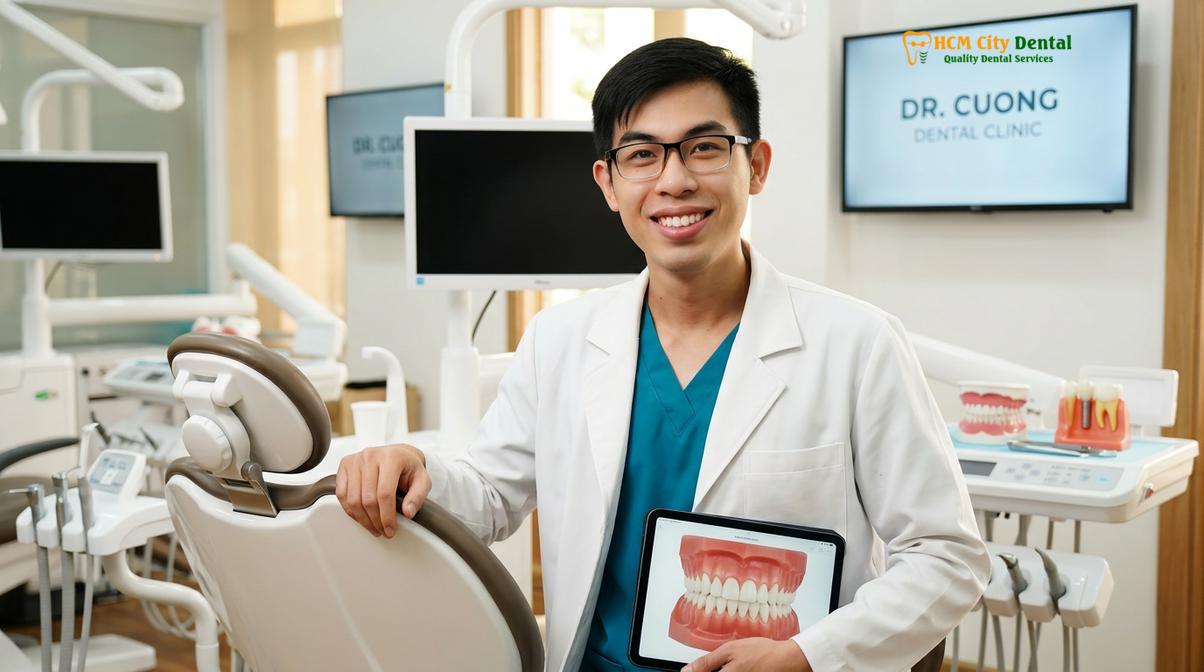
Clinical Case Review: A 52-year-old patient visited HCMC Dental Clinic in Ho Chi Minh City presenting with severe tooth mobility and bleeding gums. Upon examination by Dr. Nguyen Van Cuong, 3D CBCT imaging revealed advanced periodontitis with significant vertical bone loss. The treatment plan involved targeted scaling and root planing, followed by guided tissue regeneration using bone grafts. Within six months, the patient’s periodontal pockets were reduced from 8mm to a healthy 3mm, stabilizing the teeth and avoiding multiple extractions.
The Periodontal Treatment Workflow and Maintenance
A comprehensive periodontal workflow involves precise 3D diagnostics, personalized surgical or non-surgical intervention, and a strict periodontal maintenance schedule to prevent disease relapse.
Advanced periodontal surgery requires a highly sterile, specialized clinical environment, which differs significantly from a routine checkup at the dentist off main street. At specialized centers like HCMC Dental Clinic, the workflow is meticulously structured to ensure predictable, long-term outcomes.
Phase 1: Comprehensive Diagnostics and Etiotropic Therapy
The journey begins with a thorough clinical and radiographic examination. The periodontal dentist measures pocket depths, assesses clinical attachment loss, evaluates tooth mobility, and analyzes bone density. The initial phase of treatment (etiotropic phase) focuses on eliminating the bacterial cause. This involves extensive oral hygiene instruction, scaling and root planing, and occasionally the use of localized antimicrobial agents placed directly into the periodontal pockets.
Phase 2: Surgical Intervention
Following a healing period of 4 to 8 weeks, the periodontium is re-evaluated. If deep pockets persist or structural defects remain, the patient enters the surgical phase. This is where the periodontal dentist performs flap surgery, bone grafting, or soft tissue grafting to correct the anatomical deformities caused by the disease.
Phase 3: Restorative Phase
Once the periodontal foundation is healthy and stable, the restorative phase begins. The periodontist works in tandem with the general dentist or prosthodontist to replace missing teeth with dental implants, bridges, or crowns. The health of the gums is paramount to the aesthetic and functional success of these restorations.
Phase 4: Periodontal Maintenance Therapy
Perhaps the most critical phase of treatment is ongoing maintenance. Periodontal disease is a chronic condition; while it can be controlled, the susceptibility remains. To maintain clinical stability, regular visits to the dentist should be scheduled every three to four months for periodontal maintenance[5].
“Periodontal maintenance is not just a standard cleaning. It is a targeted medical therapy designed to disrupt the bacterial biofilm before it has the chance to mature and trigger the destructive inflammatory cascade once again.” — Dr. Nguyen Van Cuong
During these maintenance visits, the periodontal dentist or specialized hygienist will re-measure pocket depths, assess home care efficacy, and perform targeted debridement of any newly formed plaque or calculus. This strict recall interval is based on clinical evidence showing that periodontal pathogens take approximately 90 to 120 days to repopulate a pocket to destructive levels.
By understanding the vital role of a periodontal dentist, patients can take proactive steps to protect not just their smiles, but their overall systemic health. If you are experiencing signs of gum disease or require advanced implant therapy, seeking the expertise of a periodontal specialist is the most effective path to lasting oral wellness.
Frequently Asked Questions
What is the difference between a periodontist and a general dentist?
A general dentist provides routine preventative and restorative care, while a periodontist completes three additional years of surgical residency to specialize in treating gum disease, bone loss, and placing dental implants. They handle complex cases that exceed routine care. While a general dentist focuses on the tooth structure itself, the periodontist focuses entirely on the foundation—the gums and bone—ensuring the teeth have a stable environment to function properly.
Does periodontal treatment hurt?
Periodontal treatments are performed under local anesthesia or sedation, ensuring the procedure is highly comfortable. Post-operative mild discomfort is normal and can typically be managed effectively with over-the-counter or prescribed anti-inflammatory medications. Advanced techniques, such as microsurgery and laser-assisted periodontics, have significantly reduced tissue trauma, leading to faster healing times and minimal post-operative swelling for the patient.
Can periodontal disease be completely cured?
Advanced periodontal disease cannot be completely cured, but it can be successfully managed and halted. Through professional intervention and strict home care, a periodontal dentist can stabilize the condition and prevent further bone and tooth loss. Because the genetic and biological susceptibility to the bacteria remains, the disease is considered “in remission” rather than cured, requiring lifelong commitment to proper oral hygiene and professional maintenance.
How often do I need periodontal maintenance cleanings?
Patients with a history of periodontal disease typically require maintenance cleanings every three to four months. This specific interval prevents the harmful bacteria from repopulating and causing further damage to the gums and underlying bone. Scientific studies show that it takes roughly 90 days for destructive anaerobic bacteria to re-establish themselves in a periodontal pocket, making this timeline critical for preventing disease relapse.
Are dental implants placed by a periodontal dentist better?
Periodontists are highly trained in both hard and soft tissue management, making them exceptionally qualified to place dental implants. Their expertise in bone grafting and gum aesthetics often leads to highly predictable and natural-looking implant outcomes. Because they understand the complex biology of the periodontium, they can expertly manage the surrounding tissues to prevent peri-implantitis (gum disease around an implant), ensuring the long-term survival of the restoration.
References
- Journal of Periodontology. Comprehensive periodontal therapy: a statement by the American Academy of Periodontology. (2020).
- Clinical Advances in Periodontics. The role of the periodontist in interdisciplinary dental care. (2021).
- International Journal of Periodontics & Restorative Dentistry. Soft tissue grafting techniques for gingival recession. (2019).
- Journal of Clinical Periodontology. Systemic links between periodontitis and cardiovascular disease. (2022).
- Periodontology 2000. Guided bone regeneration and implant site development protocols. (2018).