Getting a night guard after dental crowns is highly recommended to protect your restorative investment from the destructive forces of bruxism. A custom-fitted guard absorbs grinding pressure, helping to prevent porcelain fractures, preserve the cement seal, and ensure your new restorations remain intact and functional for years to come.
Clinical Summary:
Bruxism exerts excessive occlusal forces that can severely compromise dental restorations. Fabricating a custom night guard after dental crowns is a standard clinical protocol designed to mitigate the risk of ceramic chipping, structural fractures, and premature wear of opposing natural dentition. Hard acrylic or dual-laminate guards are typically prescribed by dental professionals to provide optimal force distribution, maintain occlusal harmony, and protect the integrity of the crown margins over the long term.
Key Takeaways:
- Nocturnal grinding can generate immense force, which can easily fracture unprotected dental ceramics.
- A new night guard is usually required after crown placement because the restoration alters your unique occlusal anatomy.
- Hard acrylic guards generally offer superior protection for porcelain and zirconia crowns compared to soft, over-the-counter alternatives.
- Wearing a guard helps prevent premature wear on opposing natural teeth, which can be accelerated by hard crown materials.
- Investing in a custom guard is significantly more cost-effective than undergoing complex procedures to replace a fractured dental crown.
Additionally, wearing a dedicated nightguard for zirconia crowns helps protect the aesthetic restorations from micro-fractures.
How Grinding Damages Crowns
Teeth grinding subjects dental crowns to extreme lateral and vertical forces, which can lead to micro-fractures, margin degradation, and eventual catastrophic failure of the restoration.
To understand why a custom night guard is essential, one must first examine the biomechanics of the human bite. During normal mastication (chewing), the teeth only touch for a few minutes a day, and the forces exerted are relatively moderate and vertically directed. However, during sleep bruxism, the jaw muscles can contract with immense power. These forces are not only vertical (clenching) but also lateral (grinding side-to-side), creating severe shear stress on both natural teeth and dental restorations [1].
When a patient grinds their teeth, the ceramic material of a dental crown is subjected to repetitive stress cycles. Over time, this constant mechanical loading can lead to material fatigue. Microscopic cracks begin to form within the porcelain matrix. As the bruxism continues, these micro-cracks propagate, eventually resulting in a visible chip or a complete structural fracture of the crown. This phenomenon is one of the leading causes of premature restoration failure in clinical settings [4].
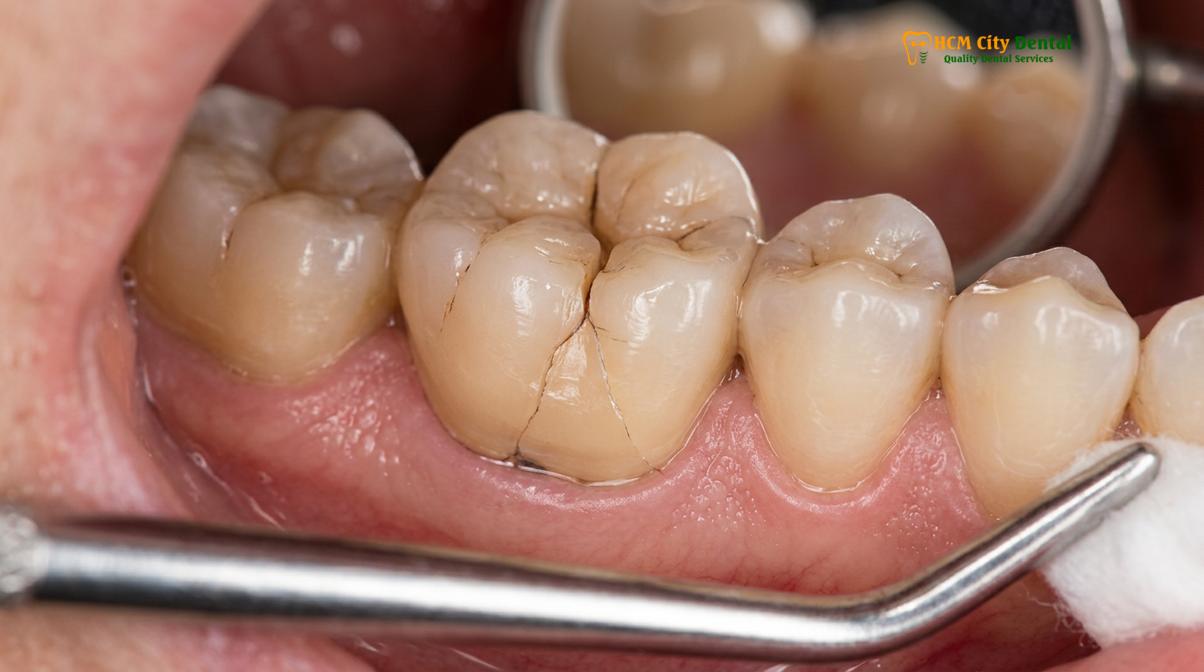
Furthermore, the damage is not limited to the crown itself. The excessive forces are transmitted through the crown into the underlying natural tooth structure and the periodontal ligament. This can lead to a widened periodontal ligament, tooth mobility, and even root fractures. The cement seal that holds the crown in place can also degrade under constant shear stress, leading to microleakage. Once the seal is broken, bacteria can infiltrate beneath the crown, causing secondary decay that may go unnoticed until it reaches the dental pulp.
Zirconia vs Porcelain Under Grinding Force
While zirconia offers superior flexural strength compared to traditional porcelain, both materials require protection against chronic grinding to prevent structural fatigue and opposing tooth wear.
In modern restorative dentistry, patients have access to a variety of high-quality materials, primarily monolithic zirconia, lithium disilicate (often known by the brand name E.max), and traditional porcelain-fused-to-metal (PFM). Each material responds differently to the extreme forces of bruxism, but all benefit significantly from the use of a crown protection guard.
Monolithic zirconia is currently one of the strongest tooth-colored materials available in dentistry. Because of its durability, dentists frequently recommend zirconia for posterior (back) teeth, which bear the brunt of chewing and grinding forces. However, the extreme hardness of zirconia presents a different clinical challenge. If a patient grinds their teeth, the zirconia crown will likely survive, but it can act like an anvil against the opposing natural teeth. The natural enamel, which is softer than zirconia, will undergo accelerated, severe wear. Therefore, a night guard is prescribed not just to protect the crown, but to protect the opposing natural dentition [2].
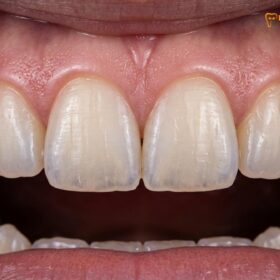
Lithium disilicate and traditional feldspathic porcelain are highly aesthetic materials often used for anterior (front) teeth and Porcelain Veneers. They mimic the translucency of natural teeth beautifully. However, their flexural strength is lower. Under the lateral shear forces of bruxism, these materials are highly susceptible to chipping and cohesive fractures. For patients with these aesthetic restorations, a night guard is absolutely critical to help prevent catastrophic failure of the ceramic.
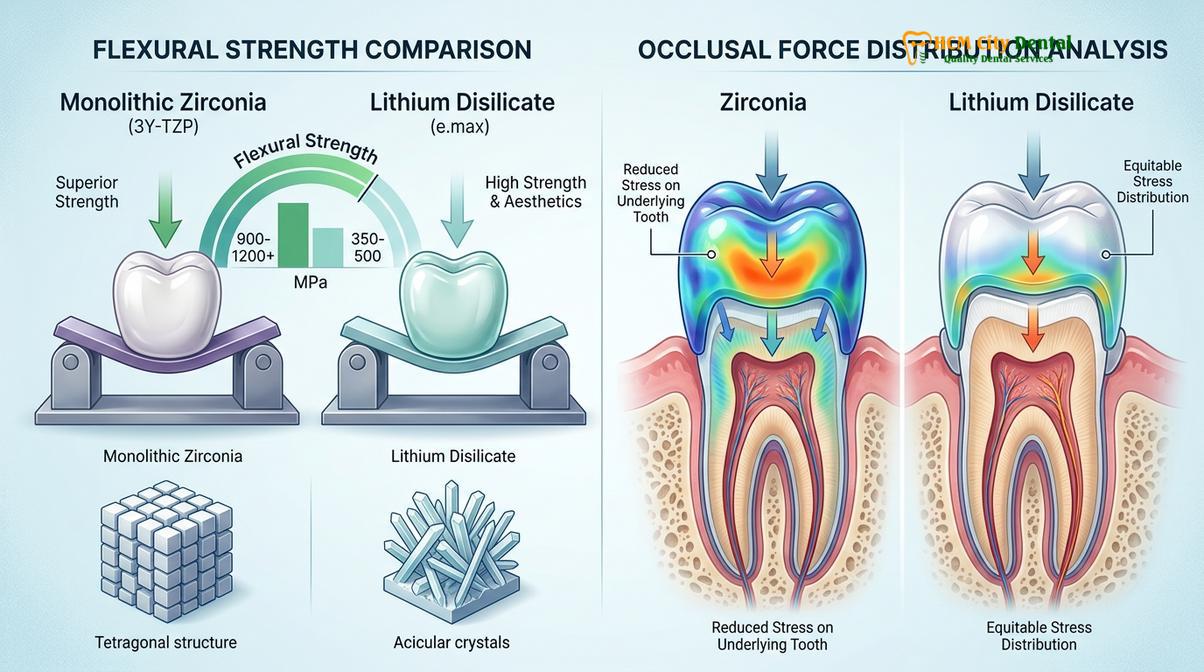
| Crown Material | Flexural Strength (Approx.) | Risk of Crown Fracture | Risk to Opposing Natural Teeth |
|---|---|---|---|
| Monolithic Zirconia | 900 – 1200 MPa | Low | High (if unpolished/unprotected) |
| Lithium Disilicate (E.max) | 400 – 500 MPa | Moderate to High | Moderate |
| Porcelain-Fused-to-Metal (PFM) | Varies (Porcelain layer is weak) | High (Porcelain chipping) | Moderate |
| Gold / Base Metal Alloys | High (Yield strength) | Very Low | Low (Wears similarly to enamel) |
Regardless of the material chosen, the surface glaze on any ceramic crown can wear away over time due to grinding. Once the glaze is gone, the underlying ceramic becomes rough and highly abrasive, acting like sandpaper against opposing teeth. A custom night guard provides a smooth, protective barrier that absorbs the friction, preserving both the crown’s surface finish and the natural enamel.
Guard Recommendations for Crown Patients
Dentists typically prescribe hard acrylic or dual-laminate custom night guards for crown patients, as soft guards can stimulate chewing reflexes and fail to distribute heavy occlusal loads.
When selecting a night guard to protect crowns from grinding, the material and fit of the appliance are of paramount importance. Not all mouthguards are created equal, and choosing the wrong type can actually exacerbate jaw pain or damage dental work. Broadly, night guards fall into three categories: soft, hard, and dual-laminate (hybrid) [3].
Soft night guards, often made from flexible materials, are commonly found over-the-counter at pharmacies. While they may feel comfortable initially, they are generally contraindicated for patients with severe bruxism and dental crowns. The soft, rubbery texture can inadvertently stimulate the patient’s chewing reflex during sleep. The brain perceives the soft material as food, causing the masseter muscles to contract even harder. Over time, a heavy grinder will chew right through a soft guard, leaving their crowns unprotected.
“For patients with extensive ceramic restorations, a hard acrylic splint is often considered the gold standard. It provides a rigid surface that allows the opposing teeth to glide smoothly without catching, thereby reducing muscle activation and protecting the porcelain from shear stress.”
Hard acrylic night guards are custom-fabricated in a dental laboratory from dense, rigid polymethyl methacrylate (PMMA) or advanced 3D-printed resins. These guards are highly durable and provide a flat, smooth occlusal surface. When the patient attempts to grind, the opposing teeth simply slide across the hard acrylic without encountering resistance. Clinical studies comparing appliance materials often conclude that hard acrylic splints demonstrate superior efficacy in managing severe bruxism compared to soft alternatives [5].
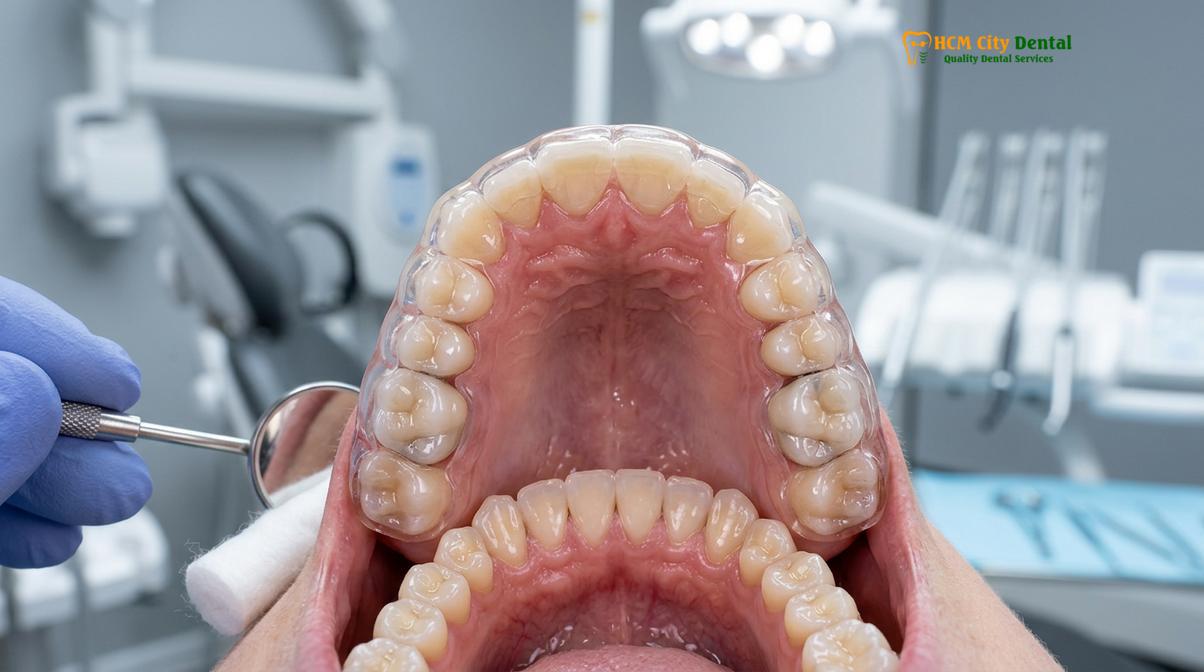
Dual-laminate or hybrid guards offer a middle ground. They feature a hard acrylic outer layer to withstand grinding forces and provide a smooth gliding surface, combined with a soft inner lining for enhanced patient comfort against the teeth and gums. These are an excellent choice for patients who find pure hard acrylic too rigid but still require robust protection for their restorations. It is important to understand the Mouthguard vs Night Guard Difference; a sports mouthguard is designed to absorb sudden, blunt impact and is entirely unsuitable for managing nocturnal bruxism.
Timing Your Guard with Crown Treatment
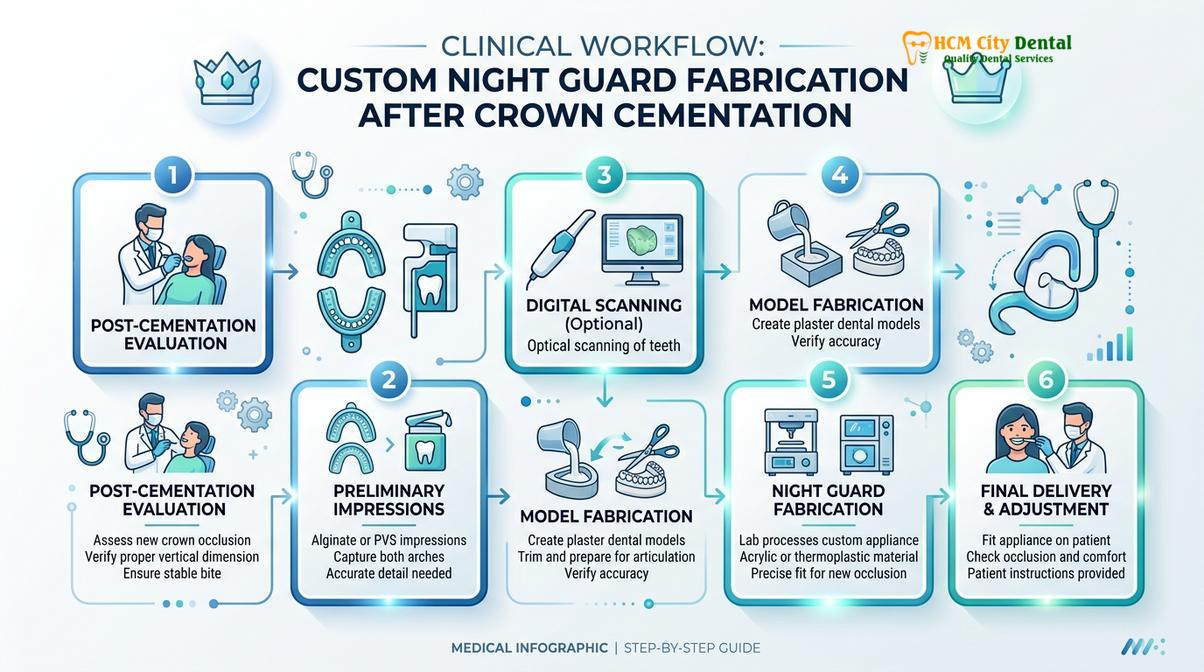
Impressions for a permanent night guard should only be taken after the final crown is cemented and the bite is fully adjusted to ensure a precise, comfortable fit.
The sequence of treatment is a critical factor when integrating a night guard into your restorative dental plan. A common question patients ask is whether they can continue using their old night guard after receiving a new crown. In almost all cases, the answer is no. A dental crown alters the size, shape, and contour of the treated tooth. Even a microscopic change in the tooth’s anatomy will prevent an old, rigid custom guard from seating properly.
If you experience issues with an existing appliance, understanding why a Night Guard Not Fitting Properly requires clinical attention is vital. The standard workflow dictates that a new guard must be fabricated to match the new occlusal landscape.
During the crown fabrication process, patients typically wear a temporary crown for one to two weeks. Temporary crowns are made of relatively weak acrylic or bis-acrylic composite and are cemented with temporary cement. Because they are fragile, they are highly susceptible to bruxism crown fracture. However, it is not cost-effective to fabricate a custom hard guard for a temporary crown. During this interim phase, your dentist may recommend a temporary, soft over-the-counter guard or advise you to manage stress and avoid hard foods until the permanent crown is delivered.
Cost of Crown Replacement vs Guard
The financial investment in a custom night guard is a fraction of the cost required to replace a fractured crown, making it an essential preventive measure.
From a clinical and economic perspective, dentistry is always most effective when it is preventive. Dental crowns are significant financial investments, requiring advanced materials, laboratory expertise, and extensive clinical time. When a patient declines a night guard and subsequently fractures a crown due to bruxism, the economic and biological costs are substantial.
Replacing a fractured crown is not simply a matter of gluing the broken piece back on. The entire damaged restoration must be sectioned and removed using specialized dental burs. The underlying tooth structure must be re-prepared, refined, and cleaned. New impressions or digital scans must be taken, a new temporary crown fabricated, and a new permanent crown manufactured by the laboratory. This process requires multiple appointments, local anesthesia, and subjects the underlying tooth to additional trauma.
In contrast, the cost of a custom-fabricated night guard is generally a small fraction of the cost of a single crown replacement. When viewed as an insurance policy for your dental work, a crown protection guard is one of the most cost-effective investments a patient can make. It protects not just one crown, but the entire dentition from the cumulative wear and tear of nocturnal grinding.
HCMC Dental’s Crown Protection Protocol
At HCMC Dental Clinic, our comprehensive restorative workflow includes digital occlusal analysis and custom guard fabrication to ensure the long-term success of every crown.
At HCMC Dental Clinic in Ho Chi Minh City, the long-term success of restorative treatments is our primary objective. We recognize that placing a beautiful, well-fitting crown is only half the battle; protecting that crown from the patient’s own parafunctional habits is equally critical. Our clinical protocol is designed to identify bruxism early and implement protective strategies seamlessly into the treatment plan.
Dr. Nguyen Van Cuong frequently emphasizes to patients that a dental crown is a highly engineered medical device, but it is not indestructible. He notes that just as natural enamel can wear down under the immense pressure of a hyperactive masseter muscle, advanced dental ceramics also require dedicated protection. By integrating custom occlusal guards into restorative treatment plans, Dr. Cuong helps patients safeguard their investments and maintain optimal oral health for the long term.
“Preventive dentistry extends beyond cavity prevention; it encompasses the biomechanical protection of every restoration we place. A custom guard acts as a crucial shock absorber, ensuring that the immense forces of nocturnal grinding do not compromise the structural integrity of your dental crowns.”
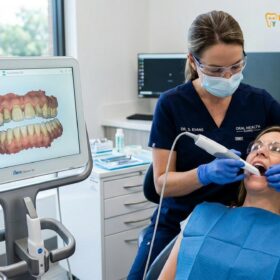
Following the guidelines set forth by the Vietnam Odonto-Stomatology Association (VOSA), our clinical protocols prioritize conservative management of bruxism to prevent catastrophic failure of ceramic restorations [6]. Our clinic utilizes advanced digital intraoral scanners to capture the exact anatomy of the newly crowned teeth. This digital workflow eliminates the discomfort of traditional messy impression materials and provides the dental laboratory with a highly accurate 3D model. For patients who also engage in athletic activities, we provide specialized guidance on obtaining a Custom Sports Mouthguard Vietnam to protect their crowns during contact sports, ensuring comprehensive protection around the clock.

When to Seek Clinical Evaluation
Regular monitoring of your dental crowns and night guard is essential to ensure ongoing protection and to address any changes in your bite or bruxism habits.
Even with a high-quality dental crown and a custom night guard, it is important to remain vigilant about your oral health. Bruxism is a dynamic condition, and the forces exerted by the jaw can change over time due to stress, medication changes, or other systemic factors. You should schedule a clinical evaluation if you experience a sudden increase in jaw pain, notice visible wear or cracks on your night guard, or feel that your bite has shifted.
Additionally, if your night guard begins to feel excessively tight or loose, it may indicate that the acrylic has warped or that your teeth have slightly moved. Do not attempt to adjust the guard yourself, as this can ruin the precise occlusal balance. Bring the appliance to your next dental appointment so your provider can professionally evaluate its fit and make any necessary micro-adjustments to ensure your crowns remain fully protected.
References
- Journal of Prosthetic Dentistry. Effects of sleep bruxism on dental ceramic restorations. (2021).
- International Journal of Prosthodontics. Wear of natural enamel opposing monolithic zirconia. (2019).
- American Dental Association. Clinical guidelines for occlusal appliance therapy. (2020).
- Journal of Clinical Dentistry. Biomechanics of crown failures under occlusal load. (2018).
- European Journal of Oral Sciences. Efficacy of hard vs soft occlusal splints in bruxism management. (2022).
- Vietnam Odonto-Stomatology Association (VOSA). Clinical protocols for restorative protection and bruxism management. (2023).
Are you concerned about protecting your new dental crowns from grinding? Contact HCMC Dental Clinic in Ho Chi Minh City today to schedule a comprehensive bite evaluation and discuss custom night guard options to safeguard your smile.
For premium porcelain crowns, bridges, and advanced smile reconstructions, visit our Dental Crowns & Bridges service page at HCMC Dental Clinic in Ho Chi Minh City.