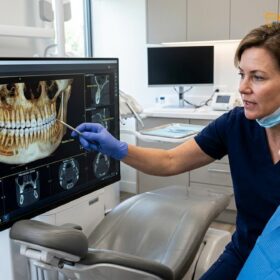
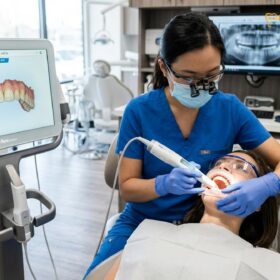
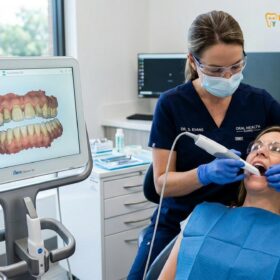
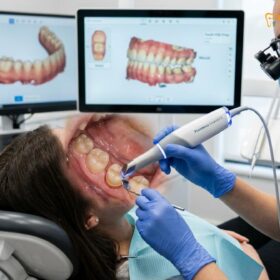
Wearing a night guard after dental crowns is highly recommended to help protect your investment from the destructive forces of bruxism. A custom-fitted guard acts as a shock absorber, designed to prevent excessive occlusal pressure from fracturing ceramic materials or damaging the underlying tooth structure while you sleep.
Whether you have recently undergone a single tooth restoration or a comprehensive full-mouth reconstruction, safeguarding your new smile is a critical step in long-term dental maintenance. The transition from a compromised tooth to a fully restored, functional bite introduces new dynamics to your masticatory system. Understanding how to protect these advanced restorations helps ensure they remain functional, aesthetic, and structurally sound for years to come.
Clinical Summary:
The application of a custom night guard after receiving dental crowns is a vital preventive measure against the extreme shear and compressive forces generated by sleep bruxism. Modern dental ceramics, while boasting high flexural strength, remain susceptible to micro-fractures under unmitigated parafunctional habits. Utilizing advanced digital workflows, clinicians can fabricate precise occlusal splints that distribute bite forces evenly. This protection not only preserves the integrity of materials like Zirconia HT and E.max lithium disilicate but is also frequently a mandatory requirement for maintaining global clinical warranties on extensive restorative work.
Key Takeaways:
- A custom nightguard absorbs nocturnal bite force, helping to prevent ceramic fractures.
- Digital scanning technology eliminates messy impressions, ensuring a precise fit over new crowns.
- Protecting restorations is crucial for maintaining the structural integrity of the underlying tooth and root canal post.
- Consistent use of an occlusal splint is often required to validate global dental warranties.
- Custom guards help prevent harder ceramic materials from wearing down opposing natural teeth.
Understanding Bruxism and Bite Forces
Bruxism generates extreme, unmitigated occlusal forces that can severely compromise both natural dentition and artificial restorations if left unprotected during sleep.
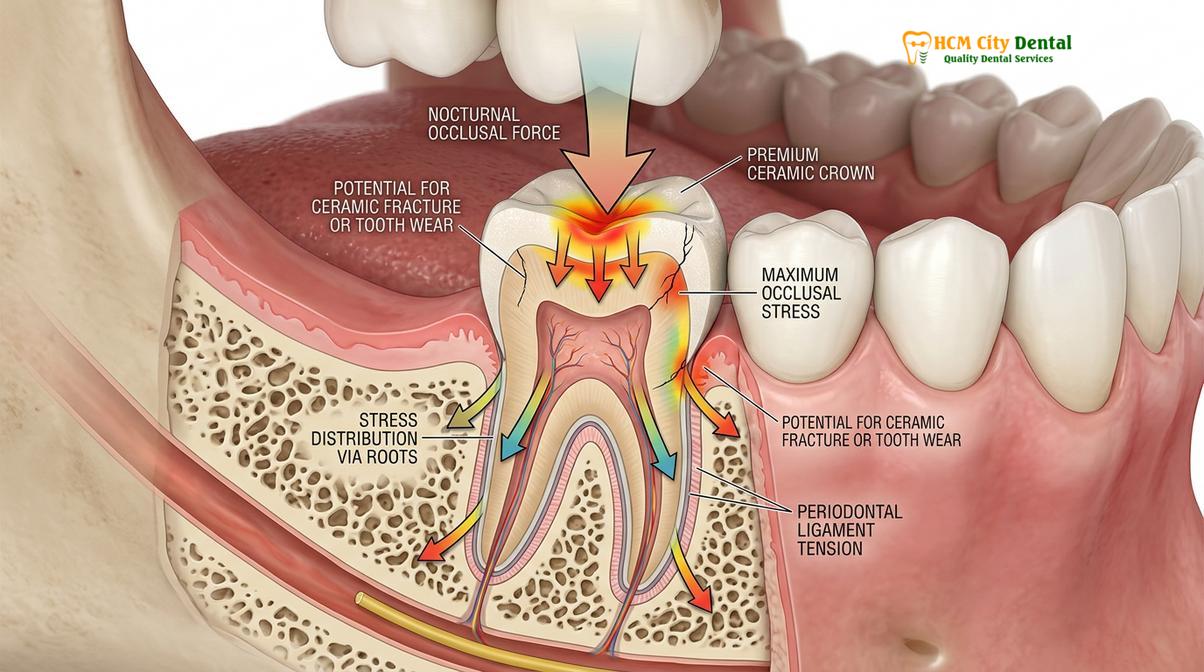
The human masticatory system is incredibly powerful, designed to break down tough foods through a complex coordination of the masseter, temporalis, and medial pterygoid muscles. During normal waking hours, chewing forces typically range between 20 to 40 pounds of pressure per square inch. Furthermore, the natural proprioception of the periodontal ligament—the fibrous tissue connecting the tooth root to the alveolar bone—acts as a feedback mechanism, signaling the brain to release jaw pressure when biting down too hard. However, during sleep, this protective reflex is significantly diminished.
Sleep bruxism, characterized by the involuntary clenching and grinding of teeth, can generate immense pressure[1]. These extreme bruxism occlusal forces are not directed vertically along the long axis of the tooth, where the root is strongest, but rather laterally. These lateral shear forces are highly destructive. When a tooth has been restored with a crown, especially one that has undergone a root canal and relies on a post and core buildup for structural integrity, the entire foundation is put at risk. The continuous lateral stress can lead to root fractures, cementation failure, or the violation of the biologic width if the tooth preparation margin is subjected to chronic micro-movement.
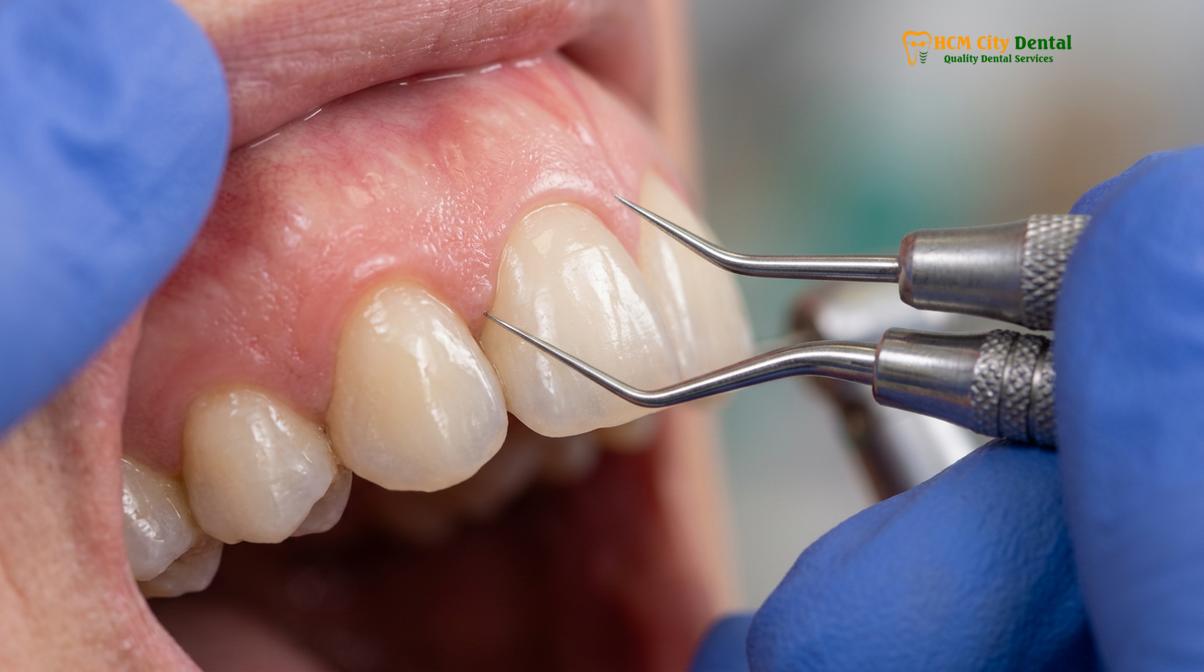
Furthermore, the impact of these forces extends beyond the restored tooth itself. If a patient has received crown lengthening to expose more healthy tooth structure for crown retention, the newly established bone and gingival levels require a stable environment to heal and mature. Excessive grinding can induce localized periodontal inflammation, compromising the long-term success of the surgical and restorative intervention. Therefore, mitigating these forces is not merely about protecting the ceramic shell; it is about preserving the entire biomechanical complex of the tooth, root, and surrounding periodontium.
How Teeth Grinding Impacts Zirconia and E.max
While modern dental ceramics possess exceptional strength, continuous grinding can cause micro-fractures in E.max or lead to severe wear of opposing natural teeth when monolithic Zirconia is used.
The evolution of dental material science has provided clinicians with highly durable and aesthetic options for restoring damaged teeth. However, no material is entirely immune to the laws of physics. When discussing the necessity of a night guard after dental crowns, it is imperative to understand the specific properties of the ceramics utilized in modern prosthodontics.
At the forefront of aesthetic restorations is E.max (lithium disilicate). E.max is celebrated for its outstanding lifelike aesthetics, high translucency, and excellent shade matching capabilities, making it a premier choice for anterior teeth. While it boasts a flexural strength significantly stronger than natural tooth enamel, the extreme point-loading forces generated during bruxism can initiate micro-cracks within the glass-ceramic matrix[5]. Over time, these micro-cracks propagate, eventually leading to cohesive failure or chipping of the crown margin.
“The selection of restorative materials must always be paired with a comprehensive occlusal risk assessment. Even the most beautifully crafted lithium disilicate restoration can fail if subjected to the relentless, unmanaged shear forces of nocturnal bruxism.”
Conversely, Zirconia HT (High Translucency) is utilized for its ultimate strength, often exceeding 1000 MPa in flexural strength[2]. Zirconia is the material of choice for posterior teeth, heavy biters, and multi-unit structures like bridges. Because monolithic zirconia is so robust, the risk of the crown cracking is relatively low compared to other materials. However, this extreme hardness introduces a different clinical challenge: the wear of the opposing natural dentition. If a patient grinds a monolithic zirconia crown against a natural tooth, the natural enamel can rapidly wear away, leading to severe attrition, loss of vertical dimension, and dentin hypersensitivity.
Dr. Nguyen Van Cuong, a leading prosthodontic expert, emphasizes that the clinical perspective on cosmetic material selection must account for these dynamic forces. At HCMC Dental Clinic, his comprehensive approach ensures that every patient receiving a dental crown is evaluated for parafunctional habits. Proper bite adjustment during the cementation phase is critical, but a custom nightguard remains the definitive solution to separate the arches and protect both the restorations and the opposing natural teeth from mutual destruction.
Custom Nightguards vs. Store-Bought Options
Professionally fabricated custom nightguards offer precise occlusal adaptation and superior material durability, ensuring optimal protection without compromising the fit of your new crowns.
When patients are advised to protect dental restorations from grinding, they are often faced with a choice between over-the-counter (OTC) mouthguards and professionally fabricated custom nightguards. From a clinical standpoint, the differences in efficacy, safety, and comfort are profound, and professional guidelines strongly favor custom fabrication for restorative protection[4].
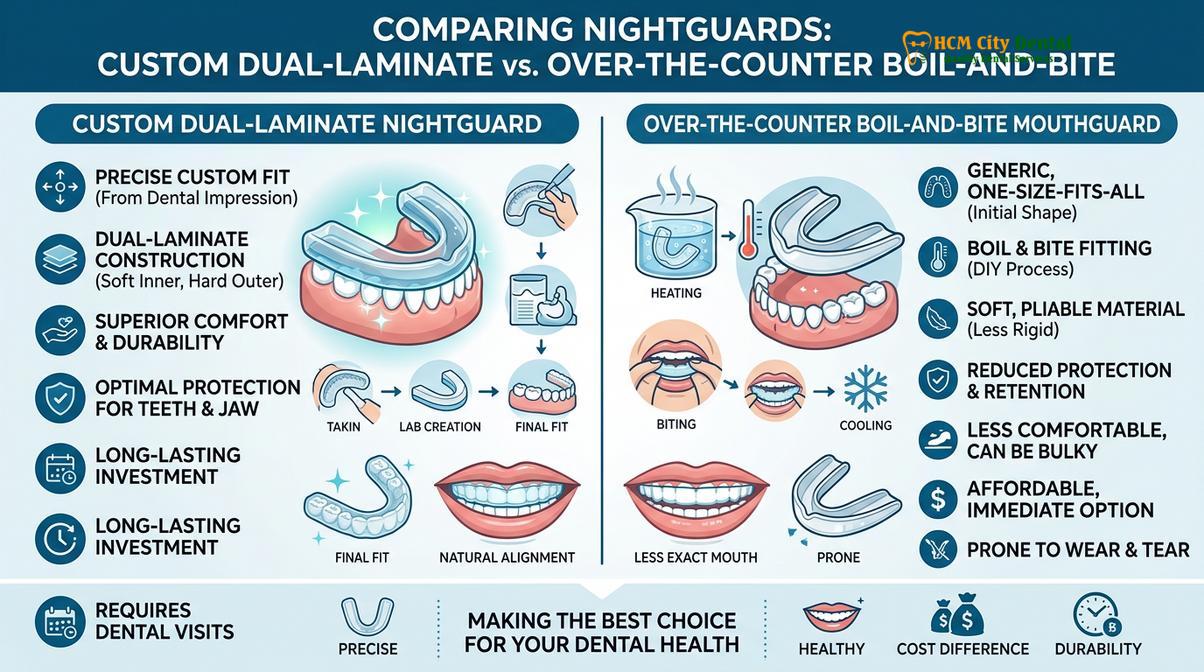
Store-bought, “boil-and-bite” guards are made from thermoplastic materials that soften in hot water and are then bitten into to form a generic impression. These devices are inherently bulky, porous, and lack precise occlusal adaptation. Because they do not fit intimately against the contours of the teeth, they can easily become dislodged during sleep. More concerningly, an ill-fitting OTC guard can place uneven, excessive pressure on a newly cemented temporary crown or permanent restoration, potentially causing it to debond or shift. Furthermore, the soft, spongy nature of many OTC guards can actually stimulate the chewing reflex in some patients, inadvertently exacerbating muscle activity and temporomandibular joint (TMJ) strain.
In contrast, a custom dental nightguard is fabricated using state-of-the-art digital dentistry. The workflow begins with the use of advanced intraoral scanners. This technology eliminates the need for messy, uncomfortable traditional silicone impressions, providing maximum comfort for the patient and capturing the 3D micro-anatomy of the teeth with micron-level precision. The digital scan is then transmitted to a dental laboratory.
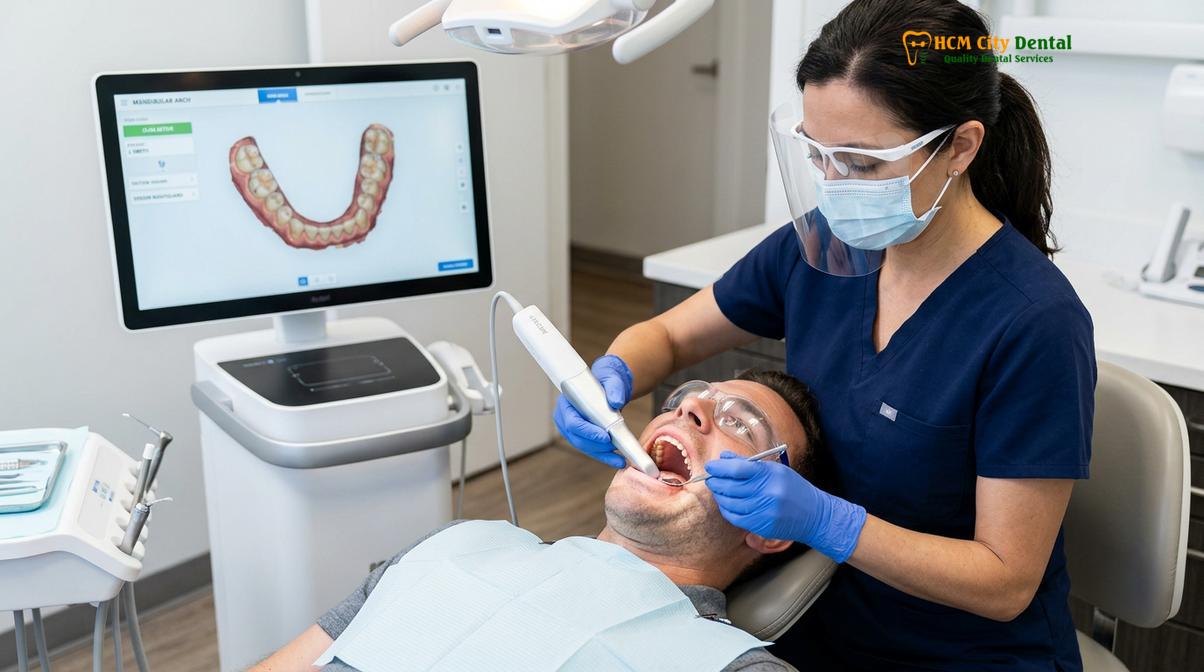
Through direct lab partnerships, prosthodontists and ceramists collaborate directly to design a guard that perfectly accommodates the specific margin designs and contours of the new crowns. Custom guards are typically fabricated from dual-laminate materials (a soft, comfortable inner layer and a hard, durable acrylic outer layer) or rigid acrylic. These materials distribute occlusal forces evenly across the entire arch, preventing point-loading on any single restoration.
| Feature | Custom Nightguard (Lab Fabricated) | Over-the-Counter (Boil-and-Bite) |
|---|---|---|
| Fit & Precision | Exact 3D adaptation via digital scanning. | Generic, loose fit; relies on manual molding. |
| Material Durability | High-grade dual-laminate or hard acrylic. | Soft thermoplastic; degrades and deforms quickly. |
| Crown Protection | Distributes forces evenly; safe for ceramic materials. | Uneven pressure; risk of dislodging crowns. |
| TMJ Impact | Promotes muscle relaxation and proper jaw alignment. | Spongy material may stimulate increased clenching. |
| Comfort | Slim profile, does not impede breathing or speech. | Bulky, often triggers the gag reflex. |
Nightguards as Warranty Protection
Consistent use of a prescribed custom nightguard is frequently a mandatory requirement to maintain the global warranty on extensive dental restorations.
Investing in high-quality dental crowns, whether for functional rehabilitation or a cosmetic smile makeover, is a significant financial and emotional commitment. Reputable dental institutions stand behind their clinical work by offering comprehensive warranty policies. However, these warranties are a two-way street, requiring patient compliance with prescribed post-operative care protocols.
For patients diagnosed with bruxism, the prescription of a night guard after dental crowns is not merely a suggestion; it is a clinical necessity. Dental ceramics like Zirconia and E.max are rigorously tested to withstand normal masticatory forces, but they are not indestructible under the pathological conditions of severe grinding[3]. If a patient fractures a crown and clinical examination reveals clear signs of unmanaged bruxism (such as wear facets on opposing teeth or hypertrophic masseter muscles) without the use of a prescribed occlusal splint, the warranty for replacement may be voided.
Clinical Warning: Failure to wear a prescribed nightguard can lead to catastrophic failure of ceramic restorations. Clinics reserve the right to void global warranties if post-operative instructions regarding occlusal protection are ignored, as the damage is caused by patient non-compliance rather than material defect.
To ensure patients receive continuous care, especially those participating in dental tourism, clinics implement robust global warranty policies with remote follow-up support. Remote support via WhatsApp allows clinicians to employ specific photo and video assessment protocols to monitor the health of the restorations and the condition of the nightguard. If a patient reports discomfort or if the nightguard shows signs of severe wear, early intervention can be coordinated before any damage occurs to the underlying crowns or dental implants.
Prolonging the Lifespan of Your Dental Restorations
Combining excellent oral hygiene, regular professional cleanings, and nocturnal occlusal protection ensures your crowns and bridges maintain their function and aesthetics.
The longevity of dental restorations is determined by a combination of precise clinical execution, high-quality material certification, and diligent patient maintenance. At HCMC Dental Clinic, the workflow is optimized to deliver world-class results efficiently. For expats and international patients, the Express 3-5 Day Turnaround is tailored specifically for dental tourists, allowing complete smile makeovers or multiple crowns and bridges to be fabricated and fitted within a single week. This rapid turnaround does not compromise quality, as the clinic adheres strictly to national and international guidelines for prosthodontic restorations and occlusal management[6].
Understanding the pricing parameters is crucial for patients planning their treatment. HCMC Dental Clinic offers a transparent pricing structure, significantly enhanced by a 40% pre-arrival discount for WhatsApp bookings. According to the clinic fee schedule, the estimated costs are highly competitive:
- PFM Crown: Walk-in: ~$140 | WhatsApp pre-booking discount: From $84 (-40%).
- Zirconia Crown (Cercon): Walk-in: ~$200 | WhatsApp pre-booking discount: From $120 (-40%).
- Zirconia HT Crown (Cercon HT): Walk-in: ~$260 | WhatsApp pre-booking discount: From $156 (-40%).
- E.max Crown (Ivoclar): Walk-in: ~$280 | WhatsApp pre-booking discount: From $168 (-40%).
- 3-Unit Bridge (Zirconia HT): Walk-in: ~$480 | WhatsApp pre-booking discount: From $288 (-40%).
- 4-Unit Bridge (Zirconia HT): Walk-in: ~$640 | WhatsApp pre-booking discount: From $384 (-40%).
- Inlay / Onlay (Sứ Lab): Walk-in: ~$180 | WhatsApp pre-booking discount: From $108 (-40%).
To further assist patients, the clinic provides flexible financials, including 0% interest monthly credit card installment plans, making premium dental care accessible. However, protecting this investment is paramount. Once the final cementation is complete and the bite adjustment is verified, the delivery of the custom nightguard is the final, crucial step in the treatment workflow.
Clinical Case Study: Full Arch Protection
A 45-year-old international patient visited HCMC Dental Clinic in Ho Chi Minh City presenting with severe enamel attrition and multiple failing restorations due to chronic bruxism. The treatment plan involved a combination of E.max crowns on the anterior teeth for aesthetic restoration and Zirconia HT crowns on the posterior teeth for maximum durability. Utilizing advanced digital scanners, the preparations were digitized, and the restorations were delivered within the Express 3-5 Day Turnaround. Upon final cementation, a custom dual-laminate nightguard was immediately fabricated. At the remote follow-up six months later, the patient reported complete cessation of jaw pain, and the ceramic restorations showed zero signs of wear or micro-fracturing, highlighting the efficacy of immediate occlusal protection.
“The true success of a restorative case is not judged on the day of cementation, but a decade later. A well-designed nightguard is one of the most effective insurance policies a patient can have for their dental work.”
When to See a Doctor
While a night guard after dental crowns provides excellent protection, patients must remain vigilant about their oral health. You should schedule an appointment with your dentist if you experience any of the following symptoms:
- Persistent Jaw Pain: If you wake up with soreness in your jaw, neck, or shoulders despite wearing your nightguard, the appliance may need an occlusal adjustment.
- Visible Wear on the Guard: If your custom nightguard shows deep grooves, cracks, or holes, it has absorbed significant force and needs to be replaced to continue protecting your crowns.
- Changes in Your Bite: If your teeth feel like they do not fit together correctly when you remove the guard in the morning, consult your clinician immediately.
- Crown Sensitivity: While mild sensitivity is normal immediately after crown placement, prolonged or worsening pain could indicate an underlying issue with the tooth or the bite alignment.
References
- Journal of Prosthetic Dentistry. The effect of bruxism on the survival of ceramic restorations.
- International Journal of Prosthodontics. Flexural strength and fracture toughness of monolithic zirconia.
- Journal of Clinical Medicine. Efficacy of occlusal splints in the management of sleep bruxism.
- American Dental Association. Clinical guidelines for the fabrication and maintenance of dental crowns and bridges.
- Journal of Esthetic and Restorative Dentistry. Marginal adaptation of CAD/CAM milled lithium disilicate crowns.
- Vietnam Ministry of Health (MOH). National Guidelines on Prosthodontic Restorations and Occlusal Management.
If you have recently received dental restorations or suspect you suffer from sleep bruxism, do not leave your smile unprotected. Contact HCMC Dental Clinic in Ho Chi Minh City today to schedule a consultation for a custom-fitted nightguard and ensure the long-term success of your dental crowns.