When international patients seek a minimal prep veneer dentist ho chi minh, they are often driven by a singular, vital goal: achieving a flawless, radiant smile without sacrificing the underlying health and structural integrity of their natural teeth. In the rapidly evolving field of cosmetic dentistry, the paradigm has shifted dramatically away from aggressive tooth reduction toward biomimetic, tissue-preserving techniques[1]. For dental tourists and expatriates visiting Vietnam, understanding the profound clinical differences between minimal prep veneers, traditional veneers, and full-coverage crowns is the most critical step in making an informed healthcare decision.
Clinical Summary:
Minimal prep veneers utilize ultra-thin lithium disilicate (IPS E.max) ceramics, requiring only 0.2mm to 0.3mm of enamel reduction. This biomimetic approach keeps the preparation entirely within the enamel layer, yielding a superior adhesive bond while preserving tooth vitality. In contrast, traditional preparations or aggressive crown reductions remove up to 70% of the tooth structure, exposing dentin and significantly increasing the risk of irreversible pulpal trauma, nerve death, and future biomechanical failure. Advanced clinics now utilize Digital Smile Design (DSD) and 3D intraoral scanning to map enamel thickness, ensuring highly predictable, non-invasive aesthetic rehabilitations.
Key Takeaways:
- Enamel Preservation: Minimal prep techniques remove only 0.2mm–0.3mm of tooth structure, preserving the vast majority of your natural enamel.
- Superior Bond Strength: Bonding porcelain to enamel is highly predictable and significantly stronger than bonding to underlying dentin.
- Pulp Vitality: By avoiding deep dentin exposure, minimal prep veneers drastically reduce the risk of post-operative sensitivity and nerve damage.
- Advanced Materials: Ultra-thin IPS E.max lithium disilicate offers unparalleled strength even at contact-lens thickness.
- Digital Precision: 3D intraoral scanning and Digital Smile Design (DSD) allow patients to preview their new smile before any enamel is modified.
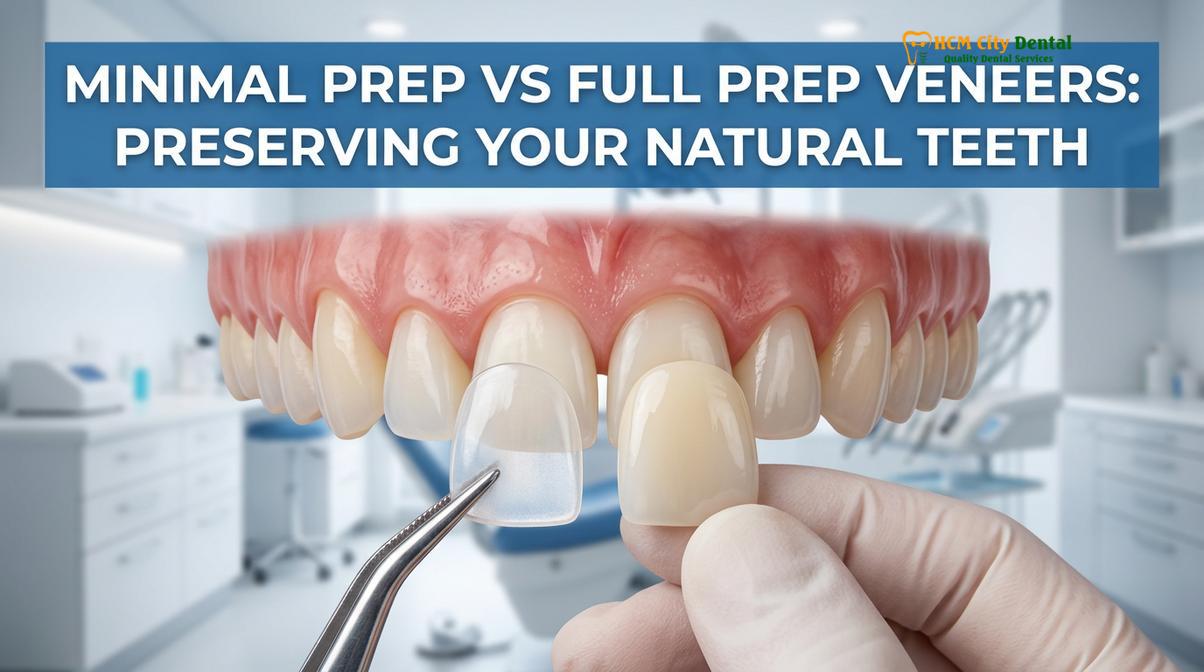
The Philosophy of Enamel Conservation in Cosmetic Dentistry
The foundation of modern cosmetic dental rehabilitation is rooted in biomimetics—the science of mimicking the natural biomechanics and aesthetics of human teeth. Historically, achieving a dramatic cosmetic transformation required significant tooth reduction to create space for opaque, bulky porcelain materials. Today, advancements in ceramic engineering and adhesive dentistry have rendered aggressive tooth shaving largely obsolete for purely cosmetic cases.
Biomimetic Dentistry Principles
Enamel is the hardest substance in the human body, serving as a highly mineralized, protective outer shield for the sensitive dentin and the living pulp (nerve) within. From a clinical perspective, enamel is also the ultimate substrate for dental adhesives. When a restoration is bonded entirely to enamel, the shear bond strength routinely reaches optimal levels, creating a virtually impenetrable seal that resists microleakage, bacterial infiltration, and marginal degradation over time[2].
Conversely, when a tooth is aggressively shaved down to the dentin layer, the bonding dynamics change drastically. Dentin contains microscopic tubules filled with fluid, making it a highly challenging surface for long-term adhesion. Furthermore, dentin bonding is susceptible to degradation by natural enzymes in the tooth that can break down the adhesive bond. Therefore, preserving enamel is not merely a conservative preference; it is a clinical imperative supported by the Vietnam Odonto-Stomatology Association (VOSA) guidelines on conservative cosmetic dentistry[6].
Clinical Leadership and Expertise
At HCMC Dental Clinic, the clinical philosophy is spearheaded by Dr. Nguyen Van Cuong DDS, a leading specialist in biomimetic dentistry. Dr. Cuong meticulously evaluates each patient’s oral health to determine Who Can Get Veneers safely and effectively. His approach ensures that every cosmetic enhancement prioritizes the long-term structural integrity of the natural tooth, utilizing advanced magnification to preserve maximum enamel.
“Our primary duty as clinicians is to do no harm. When a patient requests a smile makeover, our goal is to enhance their natural beauty while fiercely protecting their biology. By utilizing ultra-thin ceramics and high-magnification microscopes, we can transform a smile by altering only fractions of a millimeter of enamel. The tooth remains vital, strong, and structurally sound.”
Finding an emax veneer specialist in saigon who adheres to these strict biomimetic principles ensures that international patients receive world-class care that prioritizes long-term oral health over quick, destructive cosmetic fixes.
Ultra-Thin Emax Laminates (0.2mm – 0.3mm) vs Traditional Prep (0.5mm – 0.7mm)
When discussing porcelain veneers, the terminology can sometimes be confusing. It is crucial to differentiate between minimal prep veneers, traditional veneers, and full-coverage crowns. The distinction lies entirely in the depth of the preparation and the type of material utilized to achieve the final aesthetic result[3].
Material Science: IPS E.max Lithium Disilicate
The gold standard for ultra thin porcelain veneers saigon is IPS E.max, a lithium disilicate glass-ceramic. E.max is celebrated in the dental community for its exceptional combination of high flexural strength and lifelike optical properties. Unlike older feldspathic porcelains, which were highly aesthetic but brittle, E.max can be milled or pressed to incredibly thin margins—often as thin as 0.2mm, which is roughly the thickness of a standard contact lens.
Because E.max is so inherently strong, it does not require a thick layer of material to resist the forces of mastication (chewing). This allows the minimal prep veneer dentist ho chi minh to remove only a microscopic layer of the facial (front) surface of the tooth. This minimal reduction is often just enough to remove the aprismatic enamel layer, creating a micro-retentive surface for the adhesive resin, and to provide a seamless emergence profile at the gingival (gum) margin so the veneer does not look bulky or trap plaque.
Preparation Depth Comparison
To fully grasp the clinical differences, one must look at the exact measurements of tooth reduction required for various restorative options. Patients often compare these options when evaluating the Dental Bonding Price versus the long-term investment of porcelain.
| Clinical Feature | Minimal Prep Veneers (E.max) | Traditional Veneers | Full-Coverage Crowns |
|---|---|---|---|
| Enamel Reduction | 0.2mm – 0.3mm (Facial only) | 0.5mm – 0.7mm (Facial & Incisal) | 1.5mm – 2.0mm (360-degree reduction) |
| Tooth Structure Preserved | 95% – 98% | 70% – 80% | 25% – 30% |
| Bonding Substrate | 100% Enamel | Mixed Enamel & Dentin | Primarily Dentin |
| Anesthesia Required? | Often Not Required | Yes | Yes (Mandatory) |
| Risk of Nerve Damage | Extremely Low | Low to Moderate | High over time |
| Primary Indication | Cosmetic enhancement, minor spacing, mild discoloration | Moderate crowding, deeper discoloration | Severe decay, fractured teeth, post-root canal |
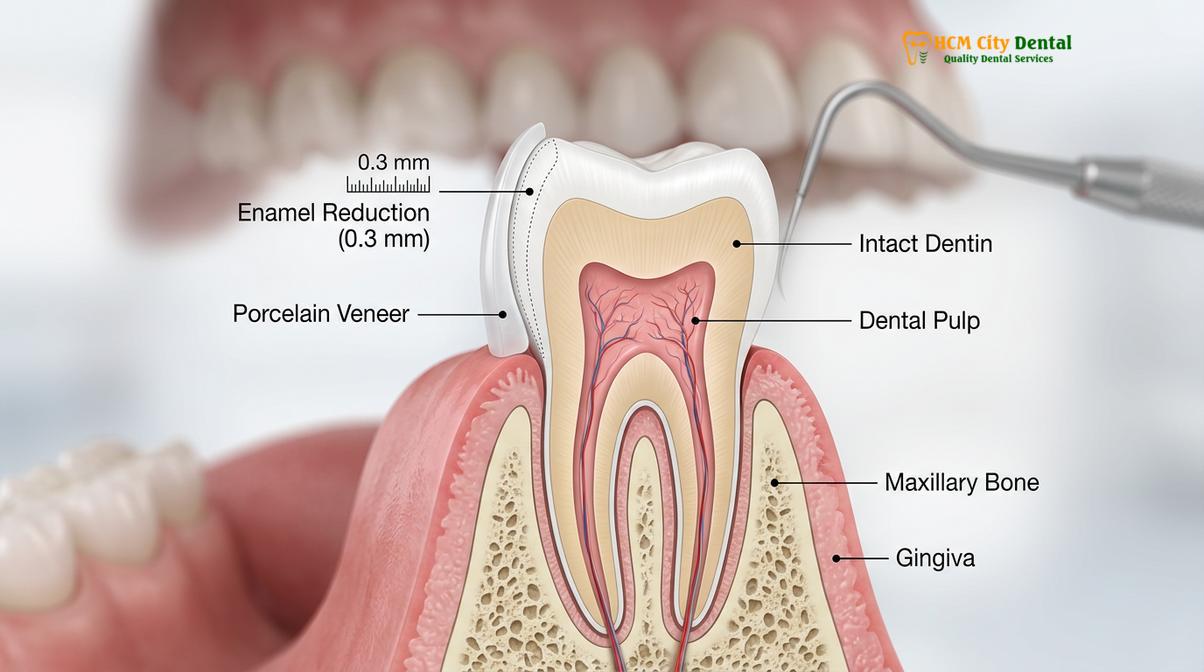
Why ‘Turkey Teeth’ Aggressive Shaving Causes Nerve Death
In recent years, a deeply concerning trend has emerged in the realm of dental tourism, colloquially referred to as “Turkey Teeth.” This phenomenon involves patients traveling abroad to receive what are advertised as “veneers,” but are, in clinical reality, full-coverage crowns placed on aggressively shaved-down teeth. This aggressive reduction is often performed to expedite the treatment process or to mask severe crowding without the use of preliminary orthodontics.
The Danger of Full Crown Preparations for Cosmetic Goals
A porcelain veneer is designed to cover only the front surface and the very edge of the tooth. A crown, however, requires 360-degree reduction, essentially turning a healthy, robust tooth into a small, vulnerable peg. When this aggressive shaving is performed on healthy teeth solely for cosmetic purposes, it violates every principle of biomimetic dentistry and can lead to severe endodontic complications[4].
Clinical Warning: The Risks of Aggressive Tooth Reduction
Shaving healthy teeth down to pegs for cosmetic crowns removes the protective enamel layer entirely and deeply invades the dentin. This aggressive trauma to the tooth structure significantly increases the risk of pulpal inflammation (pulpitis). Clinical studies indicate that teeth aggressively prepared for full crowns may eventually suffer from nerve death (necrosis), requiring complex root canal therapy or extraction. Never allow a dentist to shave your healthy teeth into pegs for purely cosmetic reasons.
Endodontic Risks and Pulpal Trauma
The dental pulp, located in the center of the tooth, contains the nerves and blood vessels that keep the tooth vital. The closer a dental bur gets to the pulp during preparation, the higher the risk of thermal and mechanical trauma. When dentin is exposed, the microscopic dentinal tubules act as direct pathways for bacteria and restorative chemicals to irritate the nerve.
If the pulp becomes irreversibly inflamed due to aggressive preparation, the patient will experience severe pain, sensitivity to hot and cold, and eventually, nerve death. This necessitates endodontic treatment (a root canal) to save the tooth, which further weakens the remaining tooth structure. Furthermore, aggressive preparations can alter the patient’s bite, leading to temporomandibular joint (TMJ) disorders and chronic facial pain.
By choosing a minimal prep veneer dentist ho chi minh, patients actively protect themselves against these catastrophic complications. Routine maintenance, such as a professional Dental Hygiene Session, remains straightforward and effective because the natural contours and biological width of the gums are respected and preserved.
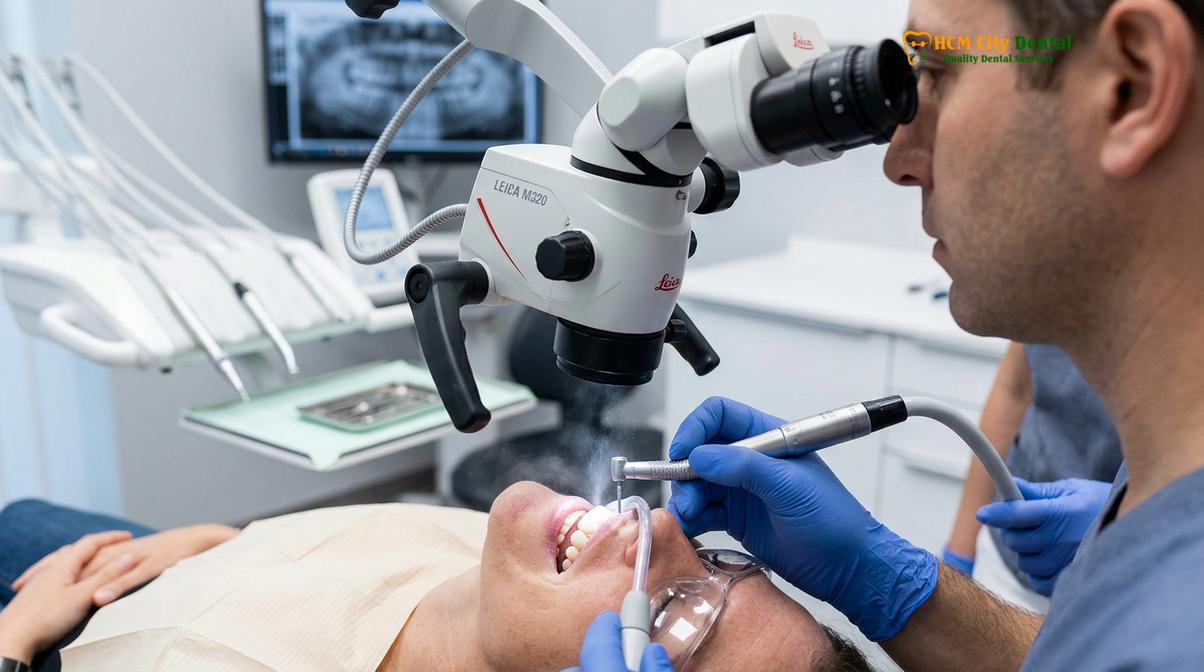
Digital Smile Design Simulation & Enamel Mapping
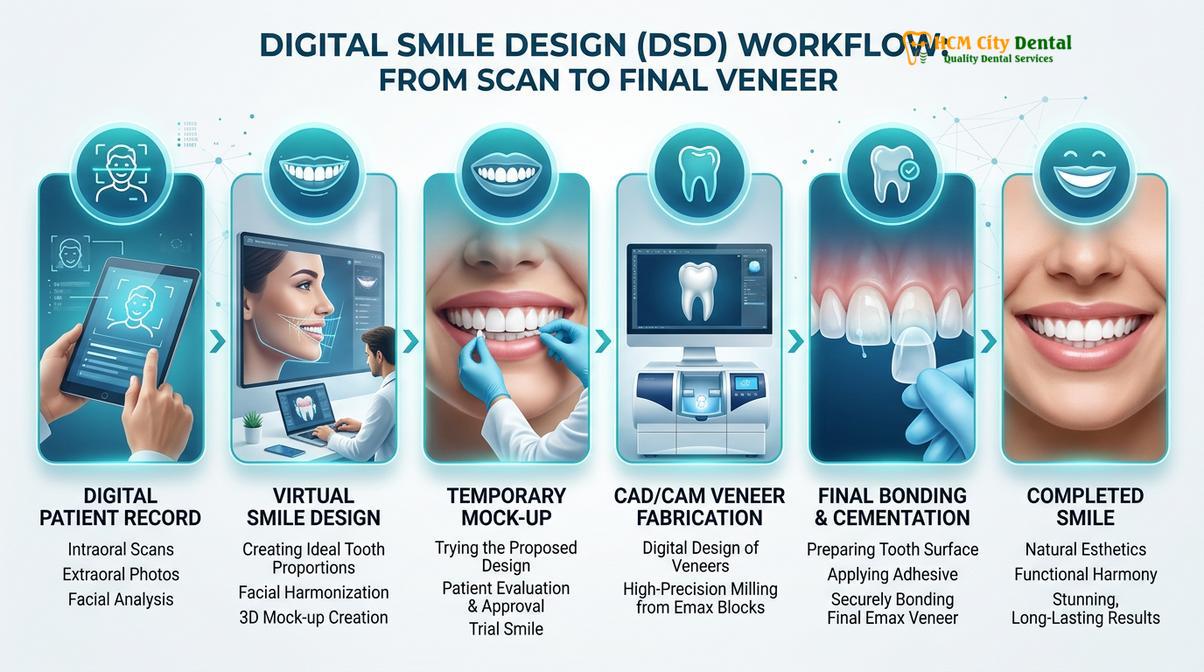
The success of no shave veneers vietnam or minimal prep cases relies heavily on meticulous pre-operative planning. The integration of digital technology ensures that every fraction of a millimeter is accounted for before the handpiece is ever picked up, allowing for highly predictable outcomes[5].
3D Intraoral Scanning and CBCT Integration
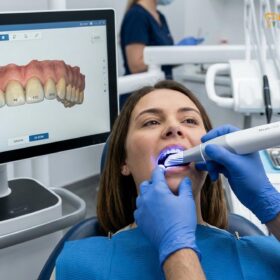
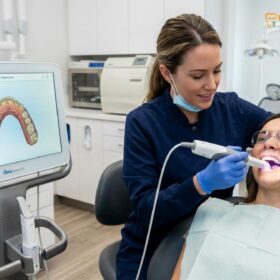
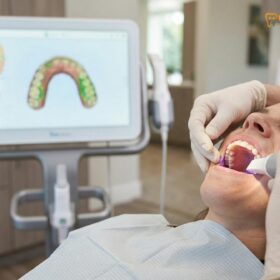
The clinical workflow begins with high-resolution 3D intraoral scanning. This optical scan captures the exact topography of the patient’s teeth, gums, and bite relationship without the need for uncomfortable, gooey impression materials. In complex cases, this data is merged with a Cone Beam Computed Tomography (CBCT) scan to evaluate the underlying bone architecture and root positioning.
Using specialized Digital Smile Design (DSD) software, the cosmetic dentist and the master ceramist collaborate to design the new smile. The software allows the clinician to perform “enamel mapping,” calculating exactly how much space is needed to achieve the desired tooth shape, length, and color. If a tooth is slightly rotated, the software indicates precisely where a 0.2mm reduction is necessary to bring the tooth into perfect alignment within the arch.
Mock-up and Trial Smile Process
One of the most powerful aspects of the DSD workflow is the creation of a physical mock-up. Based on the digital design, a 3D-printed model is fabricated. Using a temporary bis-acryl resin, the dentist transfers this design directly into the patient’s mouth over their unprepared teeth. This “Trial Smile” allows the patient to see, feel, and speak with their proposed new smile in real-time.
Clinical Case Study: The Power of the Trial Smile
Patient Profile: A 34-year-old expatriate visiting HCMC Dental Clinic in Ho Chi Minh City seeking a Smile Makeover Vietnam to correct mild spacing and worn incisal edges.
Clinical Challenge: The patient was terrified of having her teeth “shaved down” after seeing horror stories online.
Treatment Protocol: The clinical team utilized the DSD workflow to create a 3D mock-up. The trial smile was placed over her natural teeth without any anesthesia or drilling. The patient approved the aesthetics immediately. Because the design required adding volume rather than taking it away, the dentist proceeded with ultra-thin 0.2mm E.max minimal prep veneers. The final result yielded a stunning, natural-looking smile with the underlying enamel preserved, resulting in zero post-operative sensitivity.
Cost of Minimal Prep Veneers in Saigon
For international patients, the decision to seek a minimal prep veneer dentist ho chi minh is often influenced by the exceptional value offered by Vietnamese dental clinics. However, it is vital to understand that quality dentistry requires premium materials and advanced clinical expertise. The focus should always be on clinical value, material authenticity, and the skill of the specialist.
Investment Breakdown for International Patients
In Western countries, a single minimal prep IPS E.max veneer placed by a highly skilled cosmetic dentist can represent a significant financial investment. A full smile makeover involving multiple upper veneers can easily become cost-prohibitive for many patients.
At a premium facility in Vietnam, the cost for the exact same procedure, utilizing authentic Ivoclar Vivadent IPS E.max materials and digital workflows, is significantly more accessible. Patients can generally expect a much lower investment per tooth, depending on the complexity of the case, the level of custom shading required by the master ceramist, and the specific digital planning involved.
“We do not compromise on materials or technology. The accessible price point is strictly a reflection of the local economic environment, not a reduction in clinical standards. International patients receive biomimetic care that rivals the top clinics globally.”
Value of Dental Tourism in Vietnam
Choosing to undergo a cosmetic rehabilitation in Saigon offers benefits beyond the clinical chair. Comprehensive packages often include dedicated international patient coordinators who manage the entire Dental Tourism Vietnam Veneers itinerary. This ensures a stress-free environment, allowing the patient’s body to relax and heal optimally during the fabrication phase of their restorations.
When to Consult a Minimal Prep Veneer Dentist (Important Notes)
While minimal prep veneers offer an incredible solution for many aesthetic concerns, they are not a universal fix for every dental issue. It is crucial to consult with a qualified specialist to determine if you are a suitable candidate. You should seek a professional evaluation if you experience any of the following:
- Mild to Moderate Discoloration: If your teeth are stained but do not respond to traditional whitening treatments, ultra-thin veneers can provide a permanent, bright solution.
- Minor Spacing or Gaps: Diastemas (gaps between teeth) can often be closed beautifully with minimal prep veneers without the need for lengthy orthodontic treatment.
- Chipped or Worn Edges: Teeth that have suffered minor wear and tear can be restored to their youthful length and shape while preserving the remaining healthy enamel.
- Desire for Non-Invasive Treatment: If you are highly anxious about dental drills or losing your natural tooth structure, a consultation for a Smile Makeover Guide focusing on biomimetic approaches is highly recommended.
Patients with severe crowding, active periodontal disease, or extreme bruxism (teeth grinding) may require preliminary treatments, such as orthodontics or gum therapy, before minimal prep veneers can be safely placed.
References
- Journal of Esthetic and Restorative Dentistry. Biomimetic approaches to minimal prep porcelain veneer longevity and enamel preservation. (2020).
- Journal of the American Dental Association. Shear bond strength of lithium disilicate to enamel versus dentin. (2022).
- International Journal of Periodontics & Restorative Dentistry. Emergence profile and gingival health in ultra-thin laminate veneers. (2021).
- British Dental Journal. Endodontic complications following aggressive tooth preparation for cosmetic crowns. (2023).
- Journal of Prosthetic Dentistry. Digital Smile Design and 3D mock-up integration in modern cosmetic dentistry. (2021).
- Vietnam Odonto-Stomatology Association (VOSA). National guidelines on conservative cosmetic dentistry and enamel preservation protocols. (2022).
Frequently Asked Questions
What is the difference between minimal prep and no-prep veneers?
Minimal prep veneers require the removal of approximately 0.2mm to 0.3mm of enamel to create a seamless margin, whereas no-prep veneers require zero enamel removal. While no-prep sounds ideal, minimal prep often provides a more natural emergence profile at the gumline, preventing the bulky appearance sometimes associated with no-prep options.
Does getting veneers ruin your natural teeth forever?
When performed by a skilled minimal prep veneer dentist, the procedure does not ruin your teeth; it modifies them slightly. Because only a microscopic layer of enamel is removed, the structural integrity and vitality of the tooth are preserved, though the process is considered irreversible.
Are ultra-thin veneers strong enough to bite apples or steak?
Yes, once bonded to natural enamel, ultra-thin IPS E.max veneers become incredibly strong. The shear bond strength of porcelain to enamel is exceptionally high, allowing patients to eat a normal diet, provided they do not use their teeth as tools to open packages or bite on non-food items.
How much enamel is removed for Emax porcelain veneers in Vietnam?
For minimal prep Emax veneers, typically only 0.2mm to 0.3mm of facial enamel is removed. This conservative approach ensures that the preparation remains entirely within the enamel layer, avoiding the sensitive dentin underneath and maximizing the adhesive bond strength of the final restoration.
How many years do minimal prep veneers last?
With proper oral hygiene and regular professional maintenance, minimal prep porcelain veneers can last many years. Their longevity is heavily dependent on the quality of the initial enamel bond, the patient’s bite alignment, and adherence to routine dental care protocols.
If you are considering a smile transformation that prioritizes the health of your natural teeth, contact HCMC Dental Clinic in Ho Chi Minh City today to explore our General & Preventive Dentistry services and schedule your comprehensive biomimetic consultation.