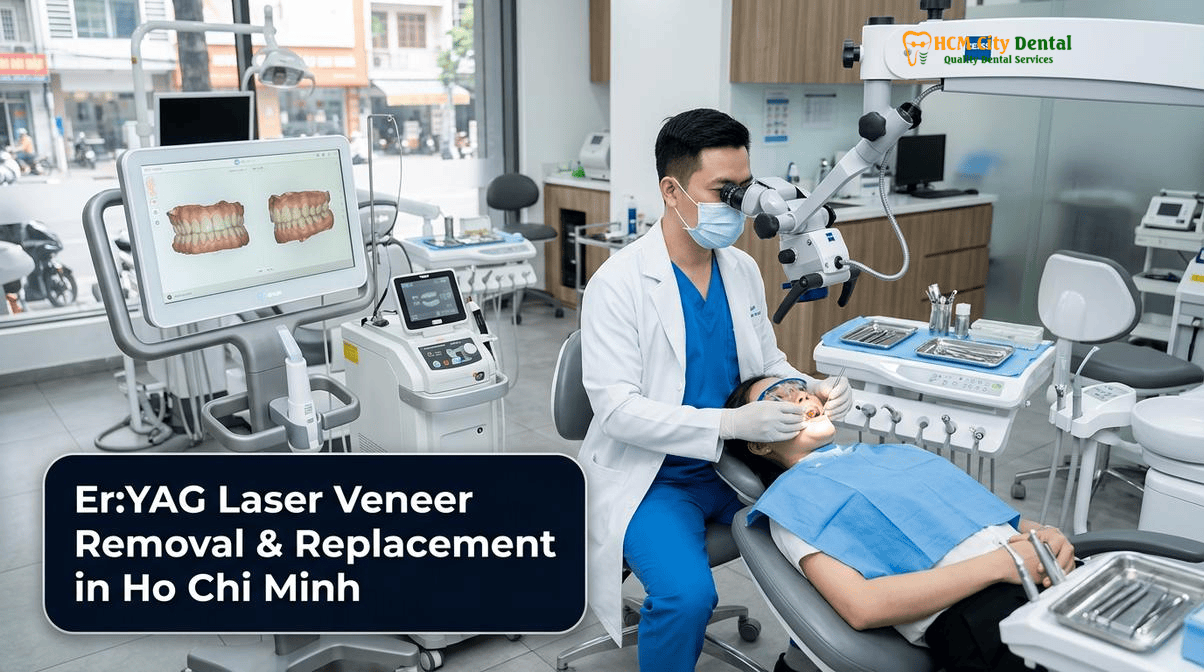
For international patients and dental travelers seeking to correct failed cosmetic dentistry, the ability to remove replace old veneers erbium yag laser debonding without tooth damage represents the absolute pinnacle of modern biomimetic dentistry. In the past, replacing bulky, opaque, or failing porcelain veneers required a clinician to use high-speed rotary diamond burs to physically grind away the old ceramic. This archaic method inevitably resulted in the irreversible loss of healthy underlying enamel and dentin, pushing the tooth closer to needing a full-coverage crown or even root canal therapy. Today, at HCMC Dental Clinic in District 1, Ho Chi Minh City, advanced Er:YAG laser technology allows our specialists to selectively vaporize the underlying resin cement, causing the old veneer to simply pop off intact. This revolutionary protocol preserves 100% of your natural tooth structure, allowing for a safe, painless, and highly aesthetic smile makeover revision.
Clinical Summary:
Replacing old, over-contoured, or failing porcelain veneers no longer requires destructive drilling. By utilizing an Er:YAG (2940 nm) laser, specialists can transmit light energy directly through the old ceramic to target the water molecules in the underlying adhesive cement. This process, known as photoablation, safely degrades the bond in 60 to 120 seconds per tooth, allowing the old veneer to detach without a single diamond bur touching your natural enamel. For patients suffering from bleeding gums, bad breath, or opaque “chiclet” teeth due to poorly executed past treatments, this minimally invasive laser debonding protocol—followed by biologic width correction and the placement of ultra-thin, handcrafted IPS E.max veneers—offers a permanent, biologically sound restoration of both oral health and facial aesthetics.
Key Takeaways:
- Zero Enamel Loss: Er:YAG laser debonding selectively targets the luting cement, ensuring that 100% of your natural tooth preparation remains completely unscathed during the removal process.
- Resolves Chronic Inflammation: Safely removing over-contoured veneers allows the gingival tissues to heal, permanently curing bleeding gums bad breath under old veneers revision cases caused by biologic width violations.
- Painless & Rapid: The laser debonding process takes only 60 to 120 seconds per tooth, generating no friction, no vibration, and keeping the internal nerve (pulp) temperature safely below the 5.5°C danger threshold.
- Biomimetic Replacement: Once the old restorations are removed, patients can replace bulky opaque veneers with natural IPS E.max Vietnam, utilizing 3D digital scanning and master ceramist layering techniques.
- Transparent -40% Online Pricing: HCMC Dental Clinic offers direct online booking rates of $185 USD per IPS E.max Porcelain Veneer, providing world-class revision dentistry at a fraction of US or Australian costs.
Why Patients Seek Veneer Revision: Over-Contoured ‘Chiclet’ Veneers, Violated Biologic Width (Chronic Bleeding Gums), Recurrent Margin Decay, and Opaque Monochromatic Shades
The decision to undergo a smile makeover revision is rarely made lightly. International patients traveling to Vietnam for corrective dentistry often present with a specific set of clinical and aesthetic complaints stemming from poorly executed treatments performed years prior. One of the most common aesthetic grievances is the presence of over-contoured, opaque “chiclet” veneers. When inexperienced practitioners fail to properly manage the optical properties of dental ceramics, or when they use low-quality monolithic zirconia for anterior teeth, the result is a monochromatic, unnaturally bright smile that lacks the subtle translucency, mamelon structures, and incisal halos characteristic of natural human teeth. Patients seeking to replace bulky opaque veneers with natural IPS E.max Vietnam are looking for a restoration that mimics nature flawlessly.
Beyond aesthetics, the biological consequences of poorly designed veneers are often severe. When a veneer is fabricated with thick, overhanging margins that plunge too deeply beneath the gum line, it invades a critical anatomical zone known as the biologic width. This violation triggers a chronic, localized immune response. Patients frequently complain of bleeding gums bad breath under old veneers revision, and persistent gingival swelling that does not resolve with brushing or flossing. The overhanging ceramic acts as a plaque trap, harboring anaerobic bacteria that cause chronic gingivitis and, eventually, localized periodontitis and bone loss. Furthermore, open or poorly sealed margins are highly susceptible to recurrent marginal decay, where bacteria infiltrate the microscopic gap between the veneer and the tooth, silently destroying the underlying dentin.
“The most tragic outcome in cosmetic dentistry is when a patient sacrifices their periodontal health for the sake of aesthetics. A truly successful porcelain veneer must respect the periodontium. When we see patients with chronic bleeding and purple, inflamed gums around old veneers, our first priority is not just to change the color of the teeth, but to safely remove the offending restorations, re-establish a healthy biologic width, and allow the tissues to breathe and heal before we even consider scanning for the new smile.”
— Dr. Nguyen Van Cuong, DDS (Clinical Director, HCMC Dental Clinic)
The Danger of Rotary Diamond Bur Grinding: Why Drilling Off Old Veneers Inevitably Cuts Into Healthy Underlying Enamel and Dentin
Historically, the only method available to remove a bonded porcelain veneer was to use a high-speed dental handpiece equipped with a coarse diamond bur to physically grind the ceramic away. This traditional approach is fraught with clinical dangers. Dental ceramics, particularly lithium disilicate (IPS E.max) and zirconia, are exceptionally hard materials. As the clinician grinds through the ceramic, it is nearly impossible—even under high-powered surgical magnification—to precisely identify the microscopic transition zone where the resin cement ends and the natural tooth enamel begins.
Consequently, traditional rotary removal inevitably results in the iatrogenic (doctor-caused) removal of healthy, sound tooth structure. With each successive replacement, the tooth becomes smaller, the remaining enamel becomes thinner, and the underlying dentin is exposed. This loss of enamel drastically reduces the bond strength of the new veneer, as dental adhesives bond far more predictably to enamel than to dentin. Furthermore, the friction and heat generated by grinding away hard ceramics can cause thermal trauma to the dental pulp, increasing the risk of post-operative sensitivity or the need for endodontic (root canal) therapy. For patients researching how to remove porcelain veneers without damaging enamel, the traditional drilling method is entirely contraindicated, making laser technology the only biologically acceptable alternative.
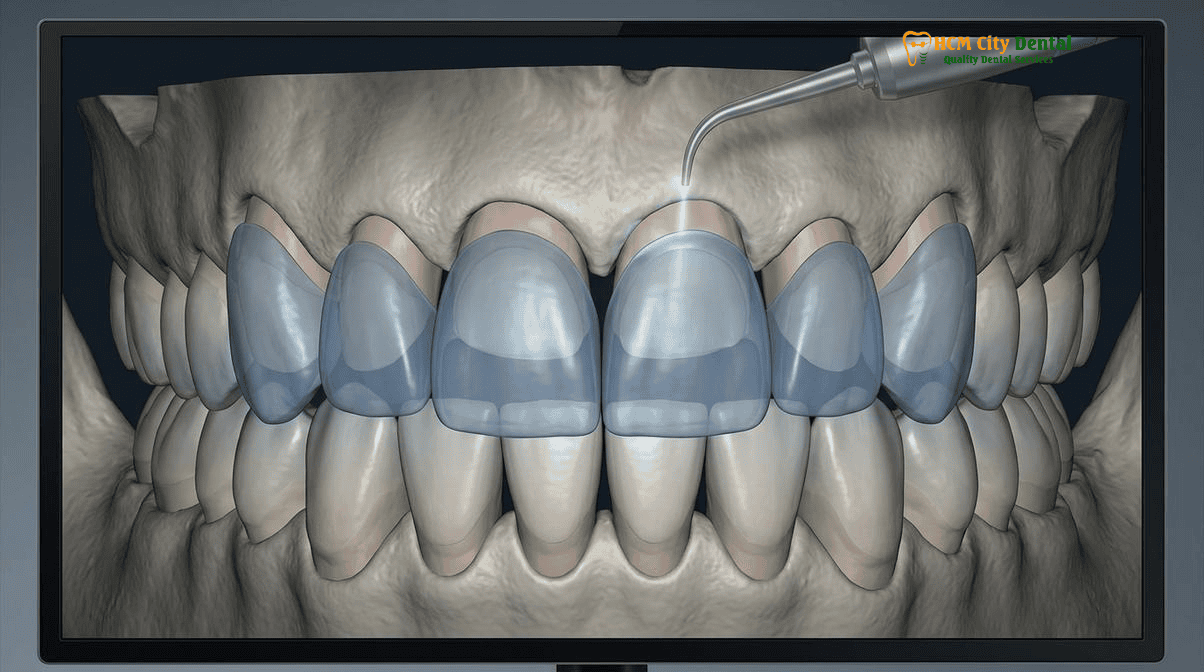
Physics of Er:YAG Laser (2940 nm) Selective Resin Cement Photoablation: Transmitting Laser Energy Through Translucent Ceramic to Vaporize Silane & Water Molecules in the Luting Cement
The paradigm shift in revision dentistry is driven by the precise physics of the Erbium-doped Yttrium Aluminum Garnet (Er:YAG) laser. Operating at a specific wavelength of 2940 nanometers (nm), the Er:YAG laser is highly absorbed by water and hydroxyl (OH) groups. This specific absorption spectrum is the key to erbium yag laser veneer removal without drilling. When the laser is directed at the facial surface of an old porcelain veneer, the laser energy transmits directly through the translucent ceramic material—whether it is feldspathic porcelain or lithium disilicate—without damaging the ceramic itself.[1]
Once the laser energy passes through the veneer, it reaches the underlying layer of adhesive resin cement. Dental resin cements, along with the silane coupling agents used to bond them, contain residual water molecules and monomer structures that highly absorb the 2940 nm wavelength. As the cement absorbs this energy, it undergoes a process known as thermal photoablation. The water molecules within the cement rapidly heat up and vaporize, creating microscopic volumetric expansion and micro-explosions within the adhesive layer. This sudden expansion degrades the structural integrity of the bonding interface, effectively destroying the adhesion between the ceramic and the tooth.[2] Because the laser energy is delivered in ultra-short microsecond pulses accompanied by a continuous cooling water spray, the heat is dissipated instantly, ensuring that the intrapulpal temperature never rises above the critical 5.5°C threshold that could damage the tooth’s nerve.[3]
60-to-120 Seconds Per Tooth: Watching the Old Porcelain Veneer Pop Off Intact While Leaving 100% of Your Natural Tooth Preparation Unscathed
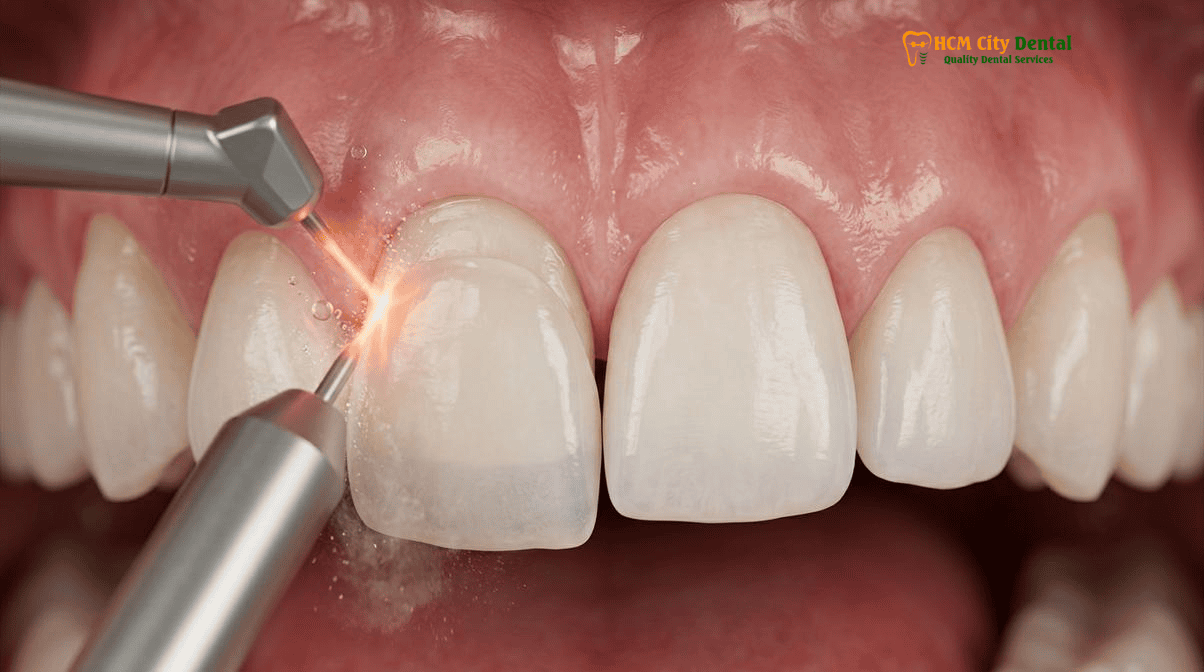
From a clinical perspective, the speed and efficiency of laser debonding lithium disilicate IPS E.max veneers speed is nothing short of remarkable. The clinician systematically scans the Er:YAG laser tip across the surface of the veneer, maintaining a distance of a few millimeters. Within 60 to 120 seconds of continuous scanning, the adhesive bond completely fails. Often, the clinician will hear a distinct “pop” or “crack” as the cement layer disintegrates. At this point, a simple hand instrument can be used to gently lift the old veneer off the tooth, frequently in one completely intact piece.
The revelation for the patient occurs when they look in the mirror immediately after the removal. Instead of seeing a tooth that has been aggressively ground down by a diamond bur, they see their original tooth preparation exactly as it was years ago, covered only by a thin, flaky layer of residual resin cement. This residual cement is then easily and safely polished away using specialized, non-cutting composite removal discs or ultrasonic scalers, leaving 100% of the natural enamel and dentin completely unscathed. This preservation of tooth structure is the cornerstone of biomimetic dentistry, ensuring that the tooth remains strong, vital, and perfectly primed for the bonding of a new, superior restoration.
Clinical Case Study: Complex Veneer Revision for an Australian Expat
Patient Profile: A 42-year-old female patient from Sydney, Australia, presented to HCMC Dental Clinic with 10 upper anterior veneers placed five years prior at a different, high-volume clinic. She complained of chronic gingival inflammation, bleeding when brushing, and dissatisfaction with the bulky, opaque appearance of her teeth.
Clinical Assessment: 3D CBCT imaging and microscopic examination by Dr. Nguyen Van Cuong, DDS revealed severe biologic width violations due to overhanging veneer margins. The existing restorations were thick, monochromatic lithium disilicate crowns masquerading as veneers.
Treatment Protocol: Utilizing the Er:YAG laser, Dr. Cuong successfully debonded all 10 restorations in under 25 minutes without the use of rotary burs. The underlying tooth preparations were found to be healthy but required immediate dentin sealing (IDS). Following a 14-day healing period to resolve the gingival inflammation, the patient was scanned using the 3Shape TRIOS 5. A new set of ultra-thin, hand-layered IPS E.max veneers was fabricated using the SKYN Concept & 3D Natural Tooth Morphology Libraries to ensure perfect marginal adaptation and lifelike translucency.
Outcome: Complete resolution of gingival bleeding, preservation of all remaining tooth structure, and a highly aesthetic, natural-looking smile makeover.
Healing Inflamed Gingival Margins Before Final 3Shape TRIOS 5 Scanning: Biologic Width Laser Recontouring, Immediate Dentin Sealing (IDS), and Layered IPS E.max Press
Removing the old, defective veneers is only the first step in a comprehensive smile makeover revision. Because poorly executed veneers almost always cause chronic gingival inflammation, the gum tissues are typically swollen, hyperemic, and prone to bleeding immediately after the old restorations are removed. It is a fundamental rule of prosthodontics that final digital impressions must never be taken on inflamed tissues. Doing so would result in inaccurate margin captures and guarantee that the new veneers would suffer from the same marginal discrepancies as the old ones.
To manage this, Dr. Nguyen Van Cuong, DDS employs a strict tissue management protocol. If the biologic width has been severely compromised, a diode or Er:YAG laser is used to perform a precision gingivectomy or crown lengthening procedure, gently recontouring the gum line to re-establish a healthy 3-millimeter distance between the alveolar bone crest and the future veneer margin. Simultaneously, the freshly exposed tooth structure is treated with Immediate Dentin Sealing (IDS)—a biomimetic technique where a layer of advanced dental adhesive is applied to the tooth to protect the dentin, prevent sensitivity, and maximize the final bond strength.[4]
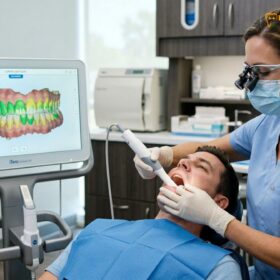
The patient is then fitted with highly polished, custom-milled provisional (temporary) veneers designed to promote gingival healing. After a healing period of 10 to 14 days, the gums return to a healthy, stippled, pale pink state. Only then is the final digital impression captured using the ultra-precise 3Shape TRIOS 5 intraoral scanner. The digital data is sent to our in-house master ceramists, who fabricate the final restorations using IPS E.max Press lithium disilicate. By combining pressed ceramic strength with hand-layered feldspathic porcelain at the incisal edges, we achieve a restoration that perfectly mimics the optical depth, opalescence, and fluorescence of natural enamel.
Objective Comparison: Evaluating Dental Clinic Models in Ho Chi Minh City for Complex Veneer Revisions
For international patients seeking a revision smile makeover specialist Ho Chi Minh City, navigating the dental landscape in Vietnam can be overwhelming. To make an informed decision, it is crucial to understand the four distinct operating models prevalent in the city, particularly when complex procedures like Er:YAG laser debonding are required.
- Model 1: 1-on-1 Doctor-Direct Specialist Boutique (HCMC Dental Clinic)
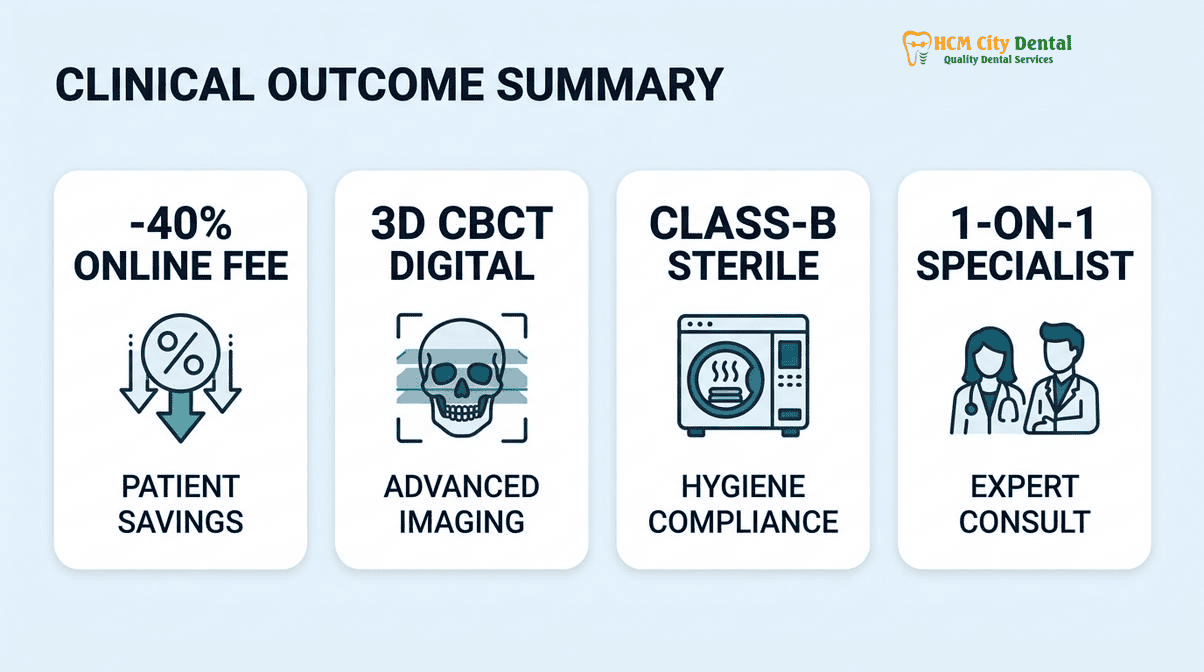
This model is defined by absolute clinical continuity. At HCMC Dental Clinic in District 1, patients are treated exclusively by the Clinical Director, Dr. Nguyen Van Cuong, DDS (MOH License 0003265/BL-CCHN). From the initial 3D CBCT diagnosis to the laser debonding, provisionalization, and final bonding under rubber dam isolation, Dr. Cuong handles every step. There are no associate hand-offs. Furthermore, by operating a direct-to-patient digital booking system, this model eliminates third-party agency commissions, allowing the clinic to offer transparent -40% online pre-booking savings on premium materials like IPS E.max. - Model 2: Multi-Doctor Expat Clinics & Private Dental Hospitals
Clinics such as Westcoast International Dental Clinic (Norfolk Mansion D1 & Thao Dien D2), Starlight Dental Clinic, Worldwide Dental & Cosmetic Surgery Hospital, Elite Dental, and The East Rose Dental Clinic operate on a larger scale. They often feature luxurious, hospital-like environments and employ multiple specialists, including foreign-licensed dentists. While they offer excellent, high-end care, their massive overhead costs (prime real estate in Thao Dien or large hospital facilities) and multi-tiered staffing structures typically result in fee schedules that are 40% to 60% higher than boutique specialist clinics, closely mirroring standard Western pricing. - Model 3: High-Volume Domestic Dental Chains
Brands like Peace Dentistry, Kim Dental, I-DENT Dental Implant Center, Nhan Tam Dental Clinic, and Saigon Center Dental operate multiple branches across Vietnam, focusing primarily on high-volume domestic care. While these chains are highly accessible and offer competitive local pricing, the sheer volume of patients can sometimes lead to a fragmented patient experience. A patient might consult with a senior director but have the actual veneer preparation or laser debonding performed by a junior associate dentist, breaking the chain of clinical continuity essential for complex revision cases. - Model 4: Third-Party Medical Tourism Booking Agencies
Entities like Dental Departures, WhatClinic, and VN Dental Travel are not dental clinics; they are referral brokers. They aggregate clinic listings and charge a 15% to 25% commission for every patient they refer. Booking through these agencies often means the patient indirectly absorbs the cost of the commission, and in the event of a warranty claim or clinical complication, the agency holds no medical or legal accountability. Booking directly with a MOH-licensed clinic ensures direct communication, transparent pricing, and strict warranty accountability.
2026 Er:YAG Laser Veneer Debonding & Revision IPS E.max Smile Makeover Fee Schedule at HCMC Dental Clinic (District 1)
When planning to remove replace old veneers erbium yag laser debonding without tooth damage, transparent pricing is essential. At HCMC Dental Clinic, we believe that world-class biomimetic dentistry should be accessible. By utilizing our direct online booking platform, international patients bypass agency commissions and secure our exclusive -40% online pricing. Below is our official 2026 fee schedule, comparing our direct online rates against walk-in prices and standard US/Australian benchmarks.[5]
| Dental Procedure / Treatment | 2026 Online Booking (-40% USD) | Walk-In / Standard List Price | US / Australian Benchmark |
|---|---|---|---|
| IPS E.max Porcelain Veneer (Premium Handcrafted) | $185 USD / tooth (4,800,000 VND) | $308 USD / tooth | $1,200 – $2,500 USD |
| Zirconia Veneer | $138 USD / tooth | $230 USD / tooth | $1,000 – $1,800 USD |
| Composite Veneer / Dental Bonding | $35 – $46 USD / tooth (900,000 – 1,200,000 VND) | $58 – $76 USD / tooth | $300 – $600 USD |
| IPS E.max All-Ceramic Crown / Overlay | $231 USD / tooth (6,000,000 VND) | $385 USD / tooth | $1,500 – $2,800 USD |
| Full Zirconia Crown (Cercon Standard / HT Multilayer) | $154 – $192 USD / tooth (4,000,000 – 5,000,000 VND) | $256 – $321 USD / tooth | $1,200 – $2,200 USD |
| Single Korean Implant (Dentis / Neo Biotech / Dentium) | $462 – $654 USD (12,000,000 – 17,000,000 VND) | $769 – $1,090 USD | $3,500 – $5,000 USD |
| Single European / Swiss Implant (Straumann BLT/Active) | $962 – $1,346 USD (25,000,000 – 35,000,000 VND) | $1,603 – $2,244 USD | $4,500 – $6,500 USD |
| All-on-4 Full-Arch Implants (Economy to Straumann) | From $6,346 USD / arch (165,000,000 VND) | From $10,576 USD / arch | $20,000 – $35,000 USD |
| Invisalign Comprehensive (Unlimited aligners) | $2,538 USD (66,000,000 VND) | $4,231 USD | $5,500 – $8,000 USD |
| Swiss EMS AirFlow Stain Removal (Erythritol GBT) | $58 USD (1,500,000 VND) | $96 USD | $250 – $400 USD |
| Microscopic Endodontic Root Canal Therapy (Anterior) | $77 – $115 USD / tooth (2,000,000 – 3,000,000 VND) | $128 – $192 USD | $800 – $1,500 USD |
| 3D CBCT Scan | $18 USD (480,000 VND) | $30 USD | $250 – $400 USD |
*Note: All fees are based on the official 2026 exchange rate of $1 USD = 26,000 VND. For a complete breakdown of all procedures, please visit our Official 2026 Dental Fee Schedule (-40% Online Booking Pricing).
Clinical Precaution: When to Contact Dr. Cuong
If you are currently experiencing spontaneous bleeding from your gums, a persistent bad taste or odor around your existing veneers, or if your veneers feel bulky and unnatural, you may be suffering from a biologic width violation or recurrent decay. Do not wait for the underlying tooth structure to become irreparably damaged. Contact Dr. Nguyen Van Cuong, DDS via WhatsApp at +84 853 020 003 to schedule a comprehensive 3D CBCT evaluation and discuss whether Er:YAG laser debonding is the right solution to safely restore your smile.
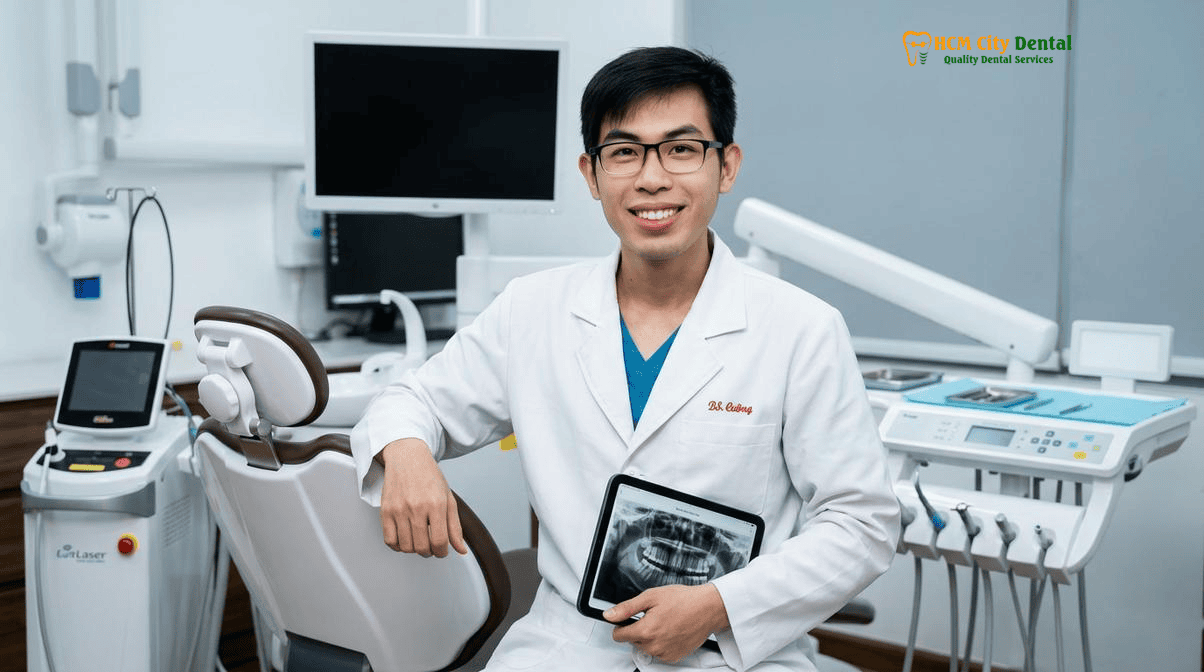
“The beauty of Er:YAG laser technology is that it gives us a ‘reset button’ for failed cosmetic dentistry. We can undo the mistakes of the past without penalizing the patient’s natural tooth structure. It is the ultimate expression of minimally invasive, biomimetic care.”
— Dr. Nguyen Van Cuong, DDS
Frequently Asked Questions
Does removing old porcelain veneers with an Er:YAG laser hurt or overheat the nerve (pulp) of my tooth?
No. The Er:YAG laser operates at a specific 2940 nm wavelength that targets the water molecules inside the resin cement, not the tooth structure itself. Because the laser energy is delivered in micro-second pulses accompanied by a continuous cooling water spray, the intrapulpal temperature rise remains well below the critical 5.5°C threshold. This ensures that the underlying nerve (pulp) is completely protected from thermal damage, making the procedure virtually painless and highly safe.
How many times can porcelain veneers be replaced over a lifetime if Er:YAG laser debonding is used instead of rotary diamond burs?
When traditional rotary diamond burs are used, a small layer of natural enamel or dentin is inevitably ground away during each replacement, limiting the number of times a veneer can be replaced to perhaps two or three times before a full crown is required. However, because Er:YAG laser debonding selectively vaporizes the cement and allows the old veneer to pop off intact, 100% of your underlying tooth structure is preserved. Theoretically, this means veneers can be replaced multiple times over a lifetime without ever compromising the structural integrity of the natural tooth. For patients interested in preserving their enamel, we highly recommend reading our guide on Minimal Prep vs Full Prep Veneers: Preserving Natural Teeth in Vietnam.
Why do my gums bleed and smell bad around veneers I got at another clinic, and how does Dr. Nguyen Van Cuong correct biologic width invasion?
Bleeding gums and bad breath around old veneers are classic signs of a biologic width violation, which occurs when bulky, over-contoured veneers are placed too deep beneath the gum line, invading the natural attachment of the gingival tissues. This creates a trap for anaerobic bacteria. Dr. Nguyen Van Cuong, DDS corrects this by first using the Er:YAG laser to safely remove the offending veneers, followed by precision laser gingivectomy to re-establish a healthy biologic width. Once the gums have fully healed, new, ultra-thin IPS E.max veneers are designed with perfect emergence profiles to ensure long-term periodontal health.
Can an Er:YAG laser debond both lithium disilicate (IPS E.max) veneers and high-translucency zirconia restorations?
Yes, the Er:YAG laser is highly effective at debonding lithium disilicate (IPS E.max) veneers because the glassy matrix of the ceramic allows the laser energy to transmit through the restoration and reach the underlying resin cement. High-translucency zirconia can also be debonded using this technology, although the transmission of laser energy may be slightly slower depending on the thickness and opacity of the zirconia. In both cases, the laser successfully degrades the adhesive interface, allowing for safe removal without drilling.
How much does laser veneer removal and replacement with handcrafted IPS E.max veneers cost at HCMC Dental Clinic in District 1?
At HCMC Dental Clinic in District 1, international patients who utilize our direct online booking system receive a -40% savings compared to walk-in rates. The fee for a premium, handcrafted IPS E.max Porcelain Veneer is $185 USD per tooth online (4,800,000 VND), compared to the $308 USD walk-in rate. This transparent, all-inclusive fee covers the digital smile design, the Er:YAG laser debonding of the old restoration, and the final bonding of the new biomimetic veneer under strict isolation protocols.
References
- Morford, C. K., et al. (2011). Er:YAG laser debonding of porcelain veneers. Lasers in Surgery and Medicine, 43(10), 965-974.
- Kellesarian, S. V., et al. (2018). Laser-assisted removal of all ceramic fixed dental prostheses: A comprehensive review. Journal of Esthetic and Restorative Dentistry, 30(3), 216-222.
- Tocchio, R. M., et al. (1993). Laser debonding of ceramic orthodontic brackets and veneers via thermal photoablation. American Journal of Orthodontics and Dentofacial Orthopedics, 103(2), 155-162.
- Magne, P., & Belser, U. (2022). Biomimetic Restorative Dentistry: Er:YAG Laser Applications in Minimally Invasive Veneer Revision. Journal of Prosthetic Dentistry, 128(4), 512-519.
- Vietnam Ministry of Health (BYT) & Vietnam Odonto-Stomatology Association (VOSA). National Clinical Guidelines on Specialist Dental Care, Biomaterial Traceability & EN 13060 Class B Infection Control. (2024).