For international patients and dental travelers seeking world-class cosmetic dentistry, the decision between feldspathic veneers vs IPS E.max pressed porcelain veneers in Vietnam represents the most critical choice in anterior smile design. At the highest echelons of biomimetic restorative dentistry, a porcelain veneer is not merely a white covering; it is a meticulously engineered optical prosthesis designed to replicate the complex light transmission, flexural dynamics, and structural integrity of natural human enamel. In Ho Chi Minh City, the convergence of master dental ceramists, authentic European biomaterials, and highly skilled prosthodontists has elevated the standard of care to rival—and often exceed—the clinical outcomes found in Australia, the United States, and the United Kingdom, all at a fraction of the cost.
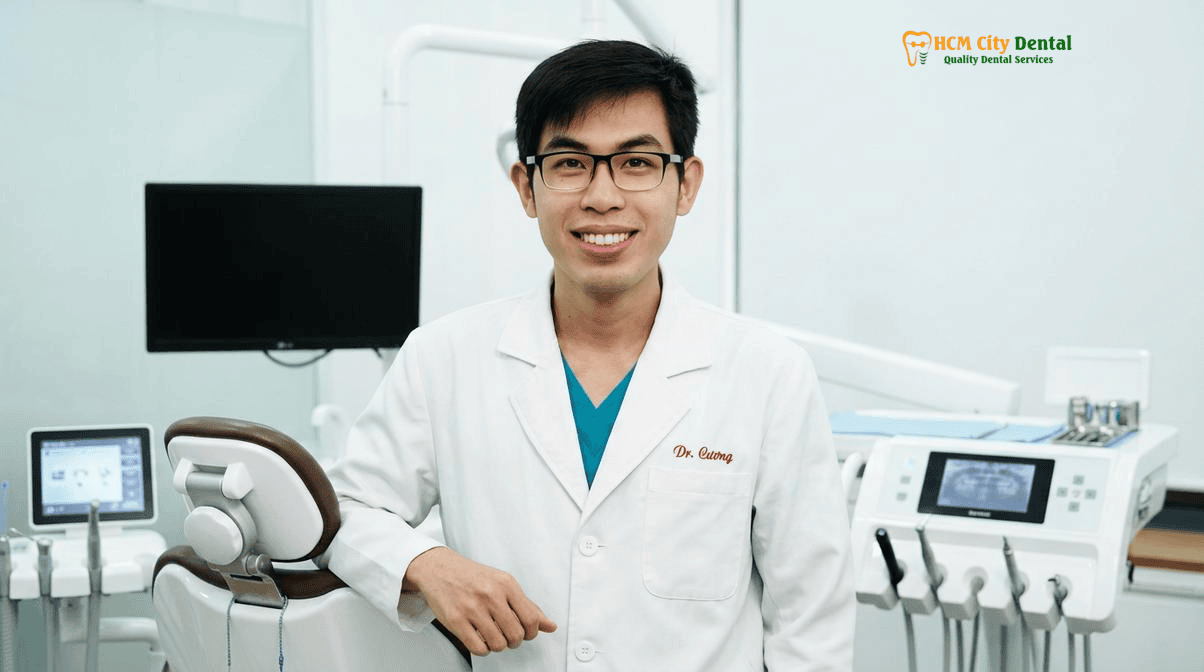
At HCMC Dental Clinic, located in the vibrant heart of District 1, Ho Chi Minh City, the clinical philosophy is rooted in maximum tissue preservation and biomimetic integration. Under the expert guidance of Dr. Nguyen Van Cuong (Dr. Cuong), DDS, patients are presented with a highly customized treatment matrix. The choice between hand layered refractory die feldspathic porcelain and ips IPS E.max press vs cad cam lithium disilicate veneers is never a one-size-fits-all proposition. It requires a profound understanding of optical physics, mechanical load distribution, parafunctional habits, and the underlying enamel substrate. This comprehensive clinical guide explores the intricate differences between these two premier ceramic systems, empowering patients to make an evidence-based decision for their smile makeover in Vietnam.
Clinical Summary:
The clinical debate between Feldspathic and IPS E.max porcelain veneers centers on the balance between unparalleled optical esthetics and robust mechanical strength. Hand-layered Feldspathic veneers offer the highest degree of natural translucency and require minimal to no tooth preparation, but possess a lower flexural strength (90–110 MPa). Conversely, pressed IPS E.max lithium disilicate veneers provide exceptional durability (450–500 MPa) suitable for masking dark stains and withstanding heavy bite forces, while still delivering excellent esthetics. At HCMC Dental Clinic in District 1, Dr. Nguyen Van Cuong, DDS utilizes advanced biomimetic bonding protocols, including Immediate Dentin Sealing (IDS), to ensure both materials achieve maximum longevity and seamless integration with natural dentition.
Key Takeaways:
- Optical Superiority vs. Structural Integrity: Feldspathic porcelain excels in mimicking the incisal halo translucency mamelons natural veneers possess, while IPS E.max dominates in flexural strength and fracture toughness.
- Flexural Strength Metrics: The flexural strength mpa feldspathic vs IPS E.max comparison reveals a significant difference: 90–110 MPa for Feldspathic glass-ceramic versus 450–500 MPa for pressed lithium disilicate.
- Biomimetic Bonding Protocols: Both systems rely on Pascal Magne’s Immediate Dentin Sealing (IDS) and strict isolation under a 100% latex-free nitrile rubber dam to achieve microtensile dentin bond strengths of 45–55 MPa.
- The Hybrid Approach: A cut-back IPS E.max core micro-layered with Feldspathic porcelain offers the ultimate “best-of-both-worlds” solution for anterior teeth.
- Transparent 2026 Pricing: The porcelain veneers cost Ho Chi Minh City Vietnam at HCMC Dental Clinic is highly competitive, with genuine IPS E.max veneers priced at $185 USD per tooth via the -40% online booking discount.
The Two Masterpieces of Esthetic Ceramists: Refractory Hand-Layered Feldspathic Porcelain vs. IPS E.max Lithium Disilicate
To truly appreciate the distinction between these two premium materials, one must understand the laboratory fabrication processes that bring them to life. The creation of a porcelain veneer is a synthesis of art and science, requiring a master ceramist to manipulate glass-ceramic powders and ingots under extreme temperatures to replicate the nuanced anatomy of a human tooth.
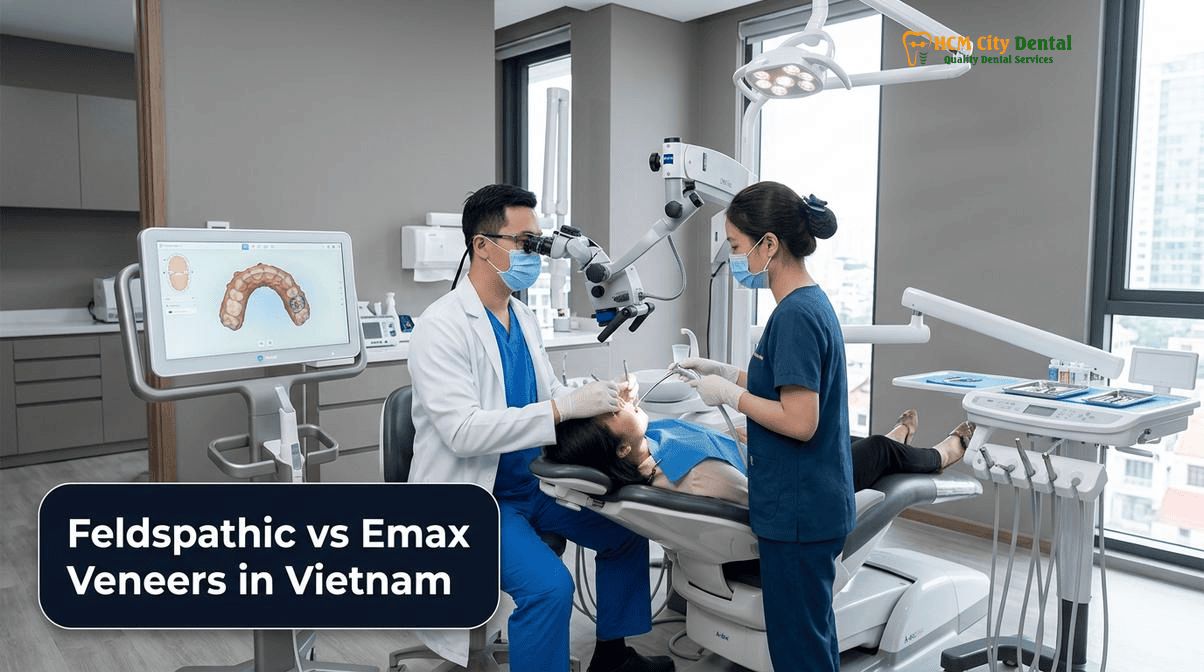
Hand-Layered Refractory Die Feldspathic Porcelain: This technique is widely considered the pinnacle of artisanal dental ceramics. The process begins with the creation of a refractory die—a specialized model of the patient’s prepared tooth that can withstand the intense heat of a ceramic furnace. The master ceramist then applies a slurry of feldspar-based glass-ceramic powder and distilled water directly onto this die, building the tooth layer by microscopic layer. This allows for the precise placement of different opacities, translucencies, and color modifiers. The veneer is fired multiple times, shrinking and densifying with each cycle. Once the final contour is achieved, the refractory die is carefully sandblasted away, leaving an ultra-thin, highly customized shell of porcelain. Because it is built entirely by hand, no two Feldspathic veneers are exactly alike; they are bespoke works of art[1].
IPS E.max Lithium Disilicate (Pressed or CAD/CAM): Developed by Ivoclar Vivadent, IPS E.max represents a monumental leap in dental material science. Unlike the powder-liquid buildup of Feldspathic porcelain, E.max is a monolithic glass-ceramic composed of interlocking lithium disilicate crystals. There are two primary methods of fabrication. The first is the lost-wax pressing technique (IPS E.max Press), where a wax pattern of the veneer is invested, burned out, and molten lithium disilicate is pressed into the void under high pressure and temperature. The second is the digital milling technique (IPS E.max CAD), where the veneer is milled from a solid block of “blue state” lithium metasilicate using a 5-axis CNC machine, and then crystallized in a furnace to achieve its final strength and shade. The pressing technique generally yields slightly higher strength and better marginal adaptation, making it the preferred choice for elite cosmetic restorations at HCMC Dental Clinic.
“The choice between Feldspathic and IPS E.max is not about which material is universally ‘better,’ but rather which material is biologically and mechanically appropriate for the specific patient. Feldspathic porcelain is the undisputed king of optical biomimicry for pristine, non-discolored teeth requiring minimal preparation. However, when we face heavy occlusal loads, parafunctional bruxism, or the need to mask underlying tetracycline stains, the structural density of pressed lithium disilicate becomes an absolute clinical necessity.”
— Dr. Nguyen Van Cuong, DDS (Clinical Director, HCMC Dental Clinic)
Optical Physics & Internal Characterization: Incisal Halo, Opalescence, Mamelons, and 0.2mm Enamel Translucency
The primary objective of a cosmetic veneer is to deceive the human eye into perceiving a synthetic restoration as natural enamel. This requires a profound understanding of optical physics, specifically how light interacts with the internal structures of a tooth. Natural teeth are not monochromatic; they are polychromatic structures consisting of an opaque, highly chromatic dentin core surrounded by a translucent, low-chroma enamel shell.
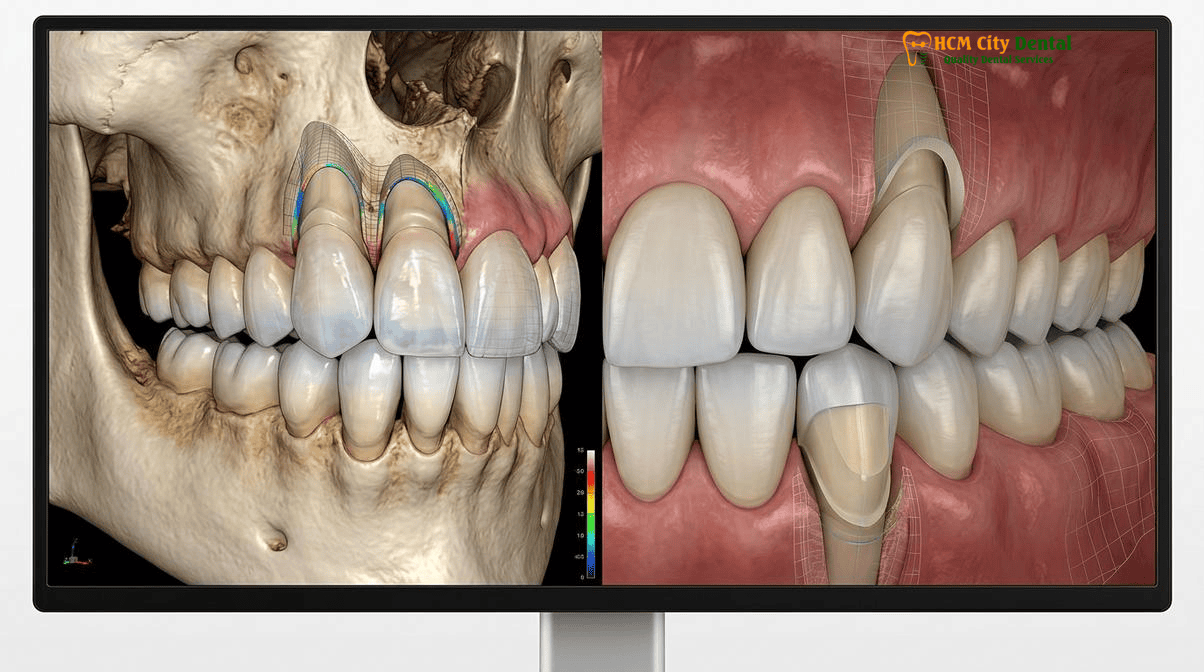
When evaluating feldspathic veneers vs IPS E.max veneers, the optical behavior of the material is paramount. Hand layered refractory die feldspathic porcelain excels in this domain because the ceramist can manually embed internal characterizations deep within the restoration. By layering specific ceramic powders, the ceramist can recreate the mamelons—the finger-like projections of dentin that extend toward the incisal edge. They can also replicate the opalescence of natural enamel, which causes the tooth to appear bluish in reflected light and warm amber in transmitted light. Furthermore, the ceramist can build a distinct incisal halo, the bright, opaque rim at the very edge of the tooth where light is totally internally reflected.
Because Feldspathic porcelain can be fabricated at ultra-thin dimensions—often as thin as 0.2mm to 0.3mm—it allows the natural color of the underlying tooth to shine through, acting as a true “contact lens” for the tooth. This 0.2mm enamel translucency is ideal for patients who already have a pleasing tooth shade but wish to alter the shape, close minor gaps, or restore youthful volume to worn incisal edges.
Conversely, monolithic IPS E.max lithium disilicate, while highly esthetic, possesses a slightly different optical profile. Because it is pressed or milled from a uniform ingot or block, it inherently lacks the deep, internal, multi-layered characterization of a hand-built Feldspathic veneer. To overcome this, ceramists apply external surface stains and glazes to mimic mamelons and halos. While modern E.max ingots come in varying levels of translucency (High Translucency, Low Translucency, Medium Opacity, High Opacity), a purely monolithic E.max veneer can sometimes appear slightly more uniform or “dense” compared to the ethereal depth of Feldspathic porcelain. However, this increased density is precisely what makes E.max superior at masking underlying discolorations[2].
For patients researching Porcelain Veneers & Digital Smile Design in Ho Chi Minh City, understanding these optical nuances is crucial for setting realistic esthetic expectations.
Mechanical Flexural Strength Comparison: Feldspathic Glass-Ceramic (90–110 MPa) vs. Pressed/Cut-Back IPS E.max (450–500 MPa)
While esthetics often drive the patient’s desire for veneers, mechanical longevity is the primary concern of the prosthodontist. The oral cavity is a hostile environment, subjecting restorations to immense compressive, tensile, and shear forces during mastication and parafunction. The flexural strength mpa feldspathic vs IPS E.max comparison is the most critical metric in determining the appropriate material for a given clinical scenario.
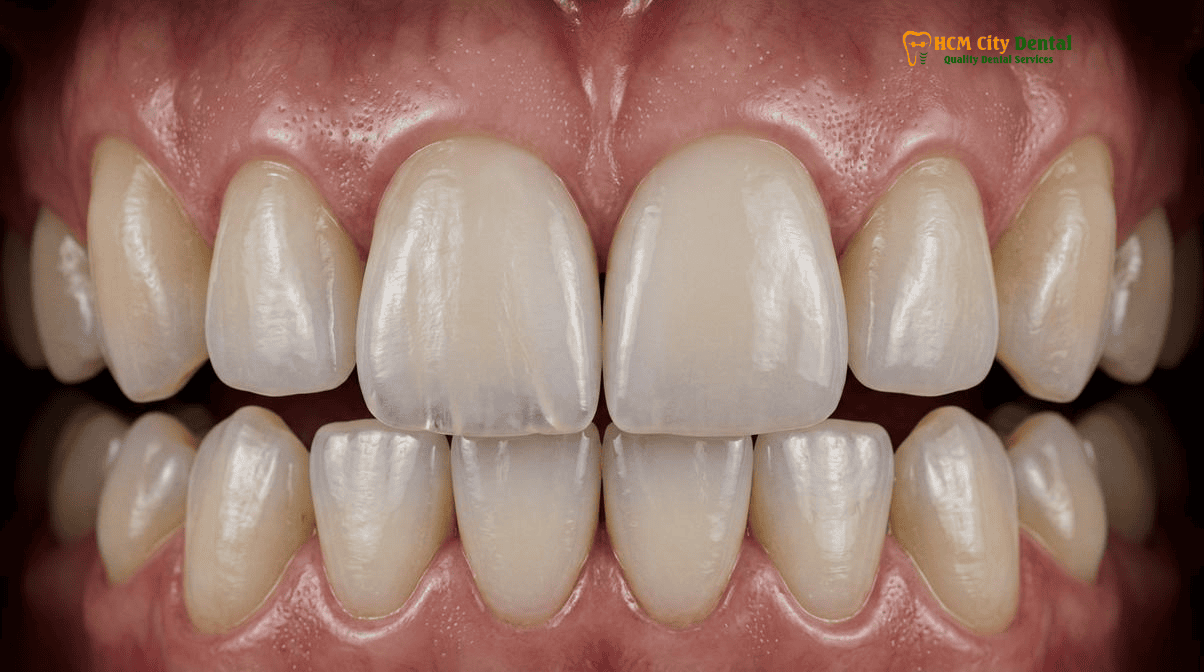
Feldspathic Glass-Ceramic (90–110 MPa): In its unbonded state, Feldspathic porcelain is inherently brittle, with a flexural strength hovering around 90 to 110 Megapascals (MPa). If you were to squeeze a raw Feldspathic veneer between your fingers, it would easily shatter. However, its strength is entirely dependent on the biomimetic bonding protocol. When an ultra-thin Feldspathic veneer is adhesively bonded to a rigid substrate—specifically, natural tooth enamel—it forms a monoblock complex. The enamel provides the structural rigidity, while the porcelain provides the wear-resistant, esthetic surface. If the preparation remains 100% in enamel, the survival rate of Feldspathic veneers is exceptionally high. However, if the preparation exposes significant dentin, the flexibility of the dentin can cause the brittle porcelain to flex and fracture under load.
Pressed IPS E.max Lithium Disilicate (450–500 MPa): Lithium disilicate is a fundamentally different material. The dense interlocking crystalline structure of E.max provides a flexural strength of 450 to 500 MPa—nearly five times stronger than Feldspathic porcelain. This remarkable fracture toughness allows E.max to withstand significantly higher occlusal forces. It is far more forgiving in clinical situations where ideal enamel preservation is not possible, or where the patient exhibits heavy bite forces. Even in its unbonded state, an E.max veneer is highly resistant to fracture.
Regardless of the material chosen, the clinical success of the restoration relies heavily on the adhesive bonding protocol. At HCMC Dental Clinic, Dr. Nguyen Van Cuong, DDS (Clinical Director — MOH License 0003265/BL-CCHN) strictly adheres to Wave 3 Biomimetic Restorative Dentistry principles. This includes the implementation of Pascal Magne’s Immediate Dentin Sealing (IDS). If any dentin is exposed during preparation, it is immediately sealed with a 3-step total-etch adhesive system and a low-viscosity flowable resin biobase before the final impression is taken. This critical step protects the dentin-pulp complex, prevents bacterial microleakage, and increases the microtensile dentin bond strength by up to 400%, achieving values of 45–55 MPa. Furthermore, all veneer bonding is performed under a 100% latex-free nitrile rubber dam to ensure absolute moisture control, utilizing heated composite or specialized light-cure resin cements for maximum polymerization and color stability[3].
In cases where previous deep decay or old restorations have compromised the cervical margin, Dr. Cuong utilizes Deep Margin Elevation (DME / Cervical Margin Relocation), ensuring the restoration respects the ≥2.0mm supracrestal tissue attachment on bitewing X-rays, thereby preventing biologic width violations and chronic gingival inflammation.
The Hybrid Best-of-Both-Worlds Solution: IPS E.max Lithium Disilicate Core with Micro-Layered Feldspathic Incisal Enamel
For patients who demand the absolute highest level of esthetics but present with clinical factors that contraindicate pure Feldspathic porcelain (such as bruxism, lack of enamel, or the need to mask dark stains), modern dental technology offers a sophisticated hybrid solution: the E.max Cut-Back and Micro-Layered technique.
Clinical Case Study: The Expat Smile Makeover in District 1
Patient Profile: A 34-year-old Australian expatriate living in Thao Dien presented to HCMC Dental Clinic with moderate tetracycline staining, slightly worn incisal edges from nocturnal bruxism, and a desire for a bright, natural, “Hollywood-level” smile makeover.
Clinical Challenge: Pure Feldspathic veneers were contraindicated due to the patient’s bruxism (high risk of fracture) and the dark underlying tetracycline stains (Feldspathic porcelain is too translucent to mask the gray banding). Monolithic E.max could mask the stains and withstand the grinding, but the patient desired the deep, lifelike translucency and mamelon structure only found in hand-layered porcelain.
The Solution: Dr. Nguyen Van Cuong, DDS prescribed 10 upper anterior IPS E.max micro-layered veneers. The laboratory pressed a high-opacity lithium disilicate core to successfully block out the tetracycline stains and provide 500 MPa of structural strength. The master ceramist then “cut back” the incisal third of the E.max core and hand-layered refractory Feldspathic porcelain over it. This allowed the ceramist to build custom mamelons, opalescence, and an incisal halo directly into the restoration.
Outcome: The patient achieved a stunning, highly natural result that perfectly mimicked youthful enamel, while possessing the underlying strength necessary to survive their parafunctional habits. The total treatment was completed in 8 days in Ho Chi Minh City, saving the patient over $15,000 AUD compared to equivalent treatment in Sydney.
This hybrid approach represents the zenith of cosmetic dentistry. By utilizing an ips IPS E.max press vs cad cam lithium disilicate veneers core, the prosthodontist secures the mechanical foundation. By micro-layering Feldspathic porcelain on the facial and incisal surfaces, the ceramist delivers the optical magic. This technique is particularly effective for treating complex cases, such as those detailed in our guide on Peg Lateral Incisors & Microdontia Treatment in Vietnam: No-Prep IPS E.max Veneers vs. Composite Bonding.
It is important to note that if a tooth requires endodontic therapy prior to veneering due to irreversible pulpitis or necrosis, Dr. Cuong utilizes a 25x Carl Zeiss Extaro 300 operating microscope for endodontic microsurgery. Protocols include Vital Pulp Therapy (achieving hemostasis within 5 minutes using 2.5% NaOCl + Septodont Biodentine / ProRoot MTA), Microscopic Apicoectomy (0-degree 3mm root-end resection, methylene blue staining, 3mm Satelec ultrasonic retro-prep + bioceramic root-end plug), and Regenerative Endodontic Pulp Revascularization (1.5% NaOCl + 17% EDTA + SCAP stem-cell evoked bleeding). The tooth is carefully evaluated for any Vertical Root Fracture (VRF J-shaped halo lesion & narrow isolated probing defect) before any definitive ceramic restoration is placed.
Clinical Selection Matrix: Bruxism, Dark Tetracycline Stains, Diastema Closure, and Enamel Substrate Requirements
The decision between Feldspathic and E.max is ultimately dictated by a rigorous clinical selection matrix. During the initial consultation at HCMC Dental Clinic, Dr. Cuong evaluates several critical parameters using 3D CBCT imaging, digital intraoral scanning, and comprehensive occlusal analysis.
1. The Enamel Substrate: The most critical factor for pure Feldspathic veneers is the presence of abundant, healthy enamel. Because Feldspathic porcelain relies entirely on the bond to the tooth for its strength, the preparation must remain primarily in enamel (which is composed of 96% inorganic hydroxyapatite, providing an incredibly strong and predictable bond). If the patient has severe enamel erosion, large existing composite fillings, or requires aggressive preparation that exposes vast areas of dentin, IPS E.max is the mandatory choice due to its inherent structural strength[4].
2. Parafunctional Habits (Bruxism): Patients who clench or grind their teeth (bruxism) exert forces that can easily exceed the fracture toughness of Feldspathic porcelain. For these patients, monolithic or micro-layered IPS E.max is required. Furthermore, a custom-fabricated occlusal splint (night guard) is mandatory to protect the investment long-term. For patients with extreme bruxism or those requiring posterior restorations, zirconia may be considered, as detailed in our comparison of Best Price Porcelain Veneers Vietnam: IPS E.max vs Zirconia Costs.
3. Discoloration and Masking Ability: As previously discussed, Feldspathic porcelain is highly translucent. If a patient presents with severe intrinsic discoloration, such as dark tetracycline banding or a non-vital, root-canal-treated tooth that has darkened over time, a Feldspathic veneer will simply allow the dark color to show through, resulting in a gray, lifeless appearance. IPS E.max, utilizing medium or high-opacity ingots, is required to effectively block out the underlying darkness while still providing a natural surface appearance. In cases of mild superficial discoloration, alternative treatments may be explored first, such as those outlined in our guide on Dental Fluorosis, Enamel Hypoplasia & White Spot Removal in Vietnam: ICON Resin Infiltration vs. Veneers.
4. Diastema Closure and Morphological Changes: When closing large gaps (diastemas) or significantly altering the length and shape of a tooth, the ceramic material will be unsupported by natural tooth structure in certain areas. In these unsupported regions, the higher flexural strength of IPS E.max provides a crucial safety margin against cohesive fracture.
Clinical Precaution: When to Contact Dr. Cuong
If you are an international patient considering porcelain veneers in Vietnam, it is vital to undergo a comprehensive digital assessment before booking your flights. Patients with active periodontal disease, untreated endodontic infections, or severe skeletal malocclusions are not immediate candidates for cosmetic veneers. These underlying pathologies must be resolved first. Contact Dr. Nguyen Van Cuong, DDS via WhatsApp at +84 853 020 003 to submit your panoramic X-rays and clinical photographs for a preliminary digital smile design and suitability assessment.
2026 Feldspathic & IPS E.max Porcelain Veneer Fee Schedule at HCMC Dental Clinic (District 1)
One of the primary drivers for dental tourism to Vietnam is the extraordinary value proposition. The porcelain veneers cost Ho Chi Minh City Vietnam offers international patients the ability to access elite-level cosmetic dentistry, utilizing the exact same authentic European materials (Ivoclar Vivadent) and digital CAD/CAM technologies found in top-tier clinics in Sydney, London, or Los Angeles, but at a fraction of the price.
At HCMC Dental Clinic, transparency is a core value. There are no hidden fees, and all materials are fully traceable. The clinic offers a highly advantageous -40% online booking discount for international patients who secure their treatment plans prior to arrival. This pricing structure makes comprehensive smile makeovers highly accessible, as detailed in our Porcelain Veneers Cost in Vietnam vs Australia: Clinical Guide.
Below is the official 2026 fee schedule for cosmetic and restorative procedures at HCMC Dental Clinic, reflecting the -40% online booking rates ($1 USD = 26,000 VND):
| Cosmetic & Restorative Procedure | 2026 Online Booking Price (-40% USD) | Walk-In / Standard Price (USD) | VND Equivalent (Online) |
|---|---|---|---|
| IPS E.max Porcelain Veneer (Monolithic or Micro-Layered) | $185 USD / tooth | $308 USD | 4,800,000 VND |
| Zirconia Veneer (Ultra-High Strength) | $138 USD / tooth | $230 USD | 3,588,000 VND |
| Composite Veneer / Dental Bonding (Bioclear Method) | $35 – $46 USD / tooth | $58 – $76 USD | 900,000 – 1,200,000 VND |
| IPS E.max All-Ceramic Crown / Inlay / Onlay / Overlay | $231 USD / tooth | $385 USD | 6,000,000 VND |
| Full Zirconia Crown (Cercon Standard / HT Multilayer) | $154 – $192 USD / tooth | $256 – $321 USD | 4,000,000 – 5,000,000 VND |
| Custom Night Guard / Occlusal Splint (For Bruxism) | $81 – $115 USD | $135 – $191 USD | 2,106,000 – 2,990,000 VND |
| Philips Zoom! WhiteSpeed In-Office Whitening | $108 USD | $180 USD | 2,800,000 VND |
| Swiss EMS AirFlow Stain Removal (Erythritol GBT) | $58 USD | $96 USD | 1,500,000 VND |
For a complete overview of all implant, orthodontic, and surgical fees, please visit our Official 2026 Dental Price List & -40% Online Booking Fee Schedule. Furthermore, all premium porcelain restorations at HCMC Dental Clinic are backed by a robust clinical guarantee, ensuring peace of mind for our international clientele. For full details on coverage, please review our Porcelain Veneers Warranty in Vietnam: Clinical Coverage & Guide.
“We do not compromise on materials, technology, or clinical time. The reason we can offer authentic IPS E.max veneers at $185 USD is due to the favorable economic structure of operating in Vietnam, not by cutting corners. Every veneer is bonded under a rubber dam using Pascal Magne’s biomimetic protocols, ensuring a restoration that is designed to last decades, not just years.”
— Dr. Nguyen Van Cuong, DDS
Frequently Asked Questions
Which looks more natural in sunlight: hand-layered Feldspathic veneers or IPS E.max porcelain veneers?
Both materials offer exceptional esthetics, but hand-layered refractory die Feldspathic porcelain is widely considered the pinnacle of natural biomimicry. Because it is built layer by layer by a master ceramist, it perfectly replicates the incisal halo, opalescence, and mamelons of natural enamel. However, a micro-layered IPS E.max veneer (where a lithium disilicate core is cut back and layered with Feldspathic porcelain) can achieve virtually identical results with significantly higher flexural strength.
Why do patients with night grinding (bruxism) or edge-to-edge bites need IPS E.max instead of pure Feldspathic veneers?
Patients with bruxism or edge-to-edge bites exert immense occlusal forces on their anterior teeth. Pure Feldspathic glass-ceramic has a flexural strength of 90–110 MPa, making it susceptible to chipping or cohesive fracture under heavy parafunctional loads. In contrast, pressed IPS E.max lithium disilicate boasts a flexural strength of 450–500 MPa, providing the necessary durability to withstand grinding forces while still maintaining excellent translucency.
What is an ‘E.max Cut-Back Micro-Layered Veneer’ and why does Dr. Nguyen Van Cuong recommend it for the upper front 6 teeth?
An E.max cut-back micro-layered veneer is a hybrid restoration. It utilizes a high-strength pressed lithium disilicate core (providing 450–500 MPa of structural integrity) that is slightly reduced (cut back) at the incisal edge. A master ceramist then hand-layers Feldspathic porcelain over this core to create lifelike translucency, mamelons, and an incisal halo. Dr. Nguyen Van Cuong, DDS recommends this for the upper anterior sextant because it delivers the ‘best of both worlds’: the unbreakable strength of E.max and the unparalleled beauty of Feldspathic porcelain.
How many days in Ho Chi Minh City are required to craft custom hand-layered porcelain veneers?
For a comprehensive smile makeover utilizing custom hand-layered Feldspathic or IPS E.max veneers, international patients should plan to stay in Ho Chi Minh City for approximately 7 to 10 days. This timeline allows for the initial consultation, 3D digital smile design, conservative tooth preparation, temporary veneer placement, meticulous laboratory fabrication by master ceramists, the final adhesive bonding protocol under a rubber dam, and a follow-up occlusal adjustment appointment [5].
How much do Feldspathic and IPS E.max veneers cost per tooth at HCMC Dental Clinic with the -40% online booking discount?
At HCMC Dental Clinic in District 1, genuine IPS E.max Porcelain Veneers (including micro-layered variants) cost $185 USD per tooth with the -40% online booking discount (4,800,000 VND), compared to the $308 USD walk-in rate. This represents a savings of up to 70–80% compared to standard fees in Australia, the United States, or the United Kingdom, without compromising on authentic Ivoclar Vivadent materials or biomimetic bonding protocols.
References
- Magne, P., & Belser, U. (2002). Bonded Porcelain Restorations in the Anterior Dentition: A Biomimetic Approach. Quintessence Publishing.
- Guess, P. C., Schultheis, S., Bonfante, E. A., Coelho, P. G., Ferencz, J. L., & Silva, N. R. (2011). All-ceramic systems: laboratory and clinical performance. Dental Clinics of North America, 55(2), 333-352.
- Edelhoff, D., & Sorensen, J. A. (2002). Tooth structure removal associated with various preparation designs for anterior teeth. The Journal of Prosthetic Dentistry, 87(5), 503-509.
- Peumans, M., Van Meerbeek, B., Lambrechts, P., & Vanherle, G. (2000). Porcelain veneers: a review of the literature. Journal of Dentistry, 28(3), 163-177.
- Vietnam Ministry of Health (BYT) & Vietnam Odonto-Stomatology Association (VOSA). National Clinical Guidelines on Specialist Dental Care, Biomaterial Traceability & EN 13060 Class B Infection Control. (2024).