The best toothpaste for veneers is a non-abrasive, gel-based formula containing fluoride or nano-hydroxyapatite, with a Relative Dentin Abrasivity (RDA) score below 70. Avoiding harsh whitening agents, baking soda, and charcoal is essential to prevent scratching the porcelain surface and dulling your custom smile makeover.
Clinical Summary:
Maintaining the high-gloss finish and structural integrity of dental restorations requires specialized daily care. Because ceramic and composite materials do not respond to traditional bleaching agents, using abrasive whitening toothpastes will only cause microscopic scratches that attract plaque and chromogenic stains. Prosthodontists strongly recommend utilizing low-RDA (Relative Dentin Abrasivity) gel formulations enriched with fluoride to protect the vulnerable junction where the veneer meets the natural tooth. A comprehensive maintenance protocol—combining the right toothpaste, proper flossing techniques, and routine clinical evaluations—ensures the longevity of your aesthetic investment while preserving optimal periodontal health.
Key Takeaways:
- Choose a toothpaste with an RDA score below 70 to prevent scratching the veneer’s surface.
- Strictly avoid charcoal, baking soda, and heavy peroxide-based whitening formulas.
- Opt for smooth, gel-based toothpastes over gritty, traditional pastes.
- Fluoride or nano-hydroxyapatite is critical for preventing decay at the veneer margins.
- Pair your toothpaste with a soft-bristled toothbrush and a non-alcoholic mouthwash for optimal care.
Understanding RDA (Relative Dentin Abrasivity) in Toothpastes
The Relative Dentin Abrasivity (RDA) scale measures how aggressively a toothpaste wears down dental materials; for veneers, an RDA below 70 is clinically required to prevent microscopic surface scratches.
When selecting the ideal oral care products for your aesthetic restorations, understanding the science of abrasivity is paramount. The Relative Dentin Abrasivity (RDA) is a standardized scale used by dental professionals and the American Dental Association (ADA) to quantify the erosive potential of a toothpaste [1]. The scale typically ranges from 0 to 250. While natural tooth enamel is incredibly hard and can withstand moderate RDA levels, the highly polished glaze of Porcelain Veneers is much more susceptible to micro-abrasions.
To ensure the longevity of your smile, you must prioritize a low dentin abrasivity RDA. Toothpastes with an RDA between 0 and 70 are classified as low-abrasive and are considered safe for daily use on both porcelain and composite materials. Products scoring between 70 and 130 are medium-abrasive, while anything above 130 is highly abrasive and strictly contraindicated for patients with cosmetic dental work [2].
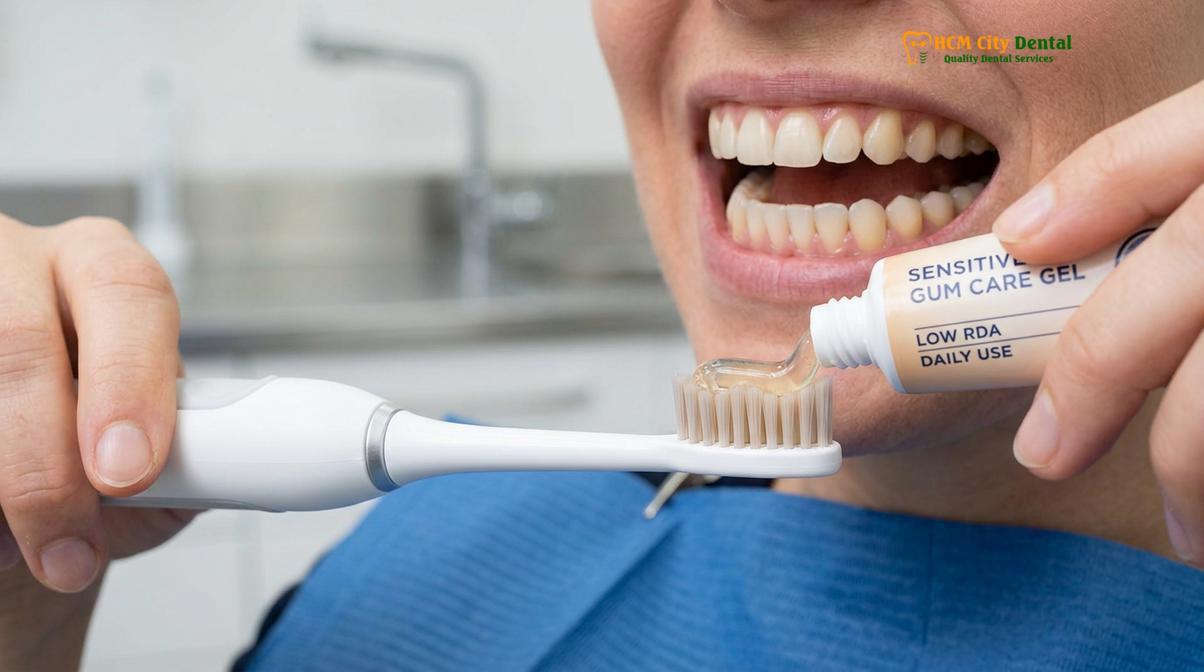
When a high-RDA toothpaste is used consistently, the gritty particles act like liquid sandpaper. Over time, this mechanical friction strips away the protective, light-reflecting glaze applied by the ceramist. Once this glaze is compromised, the underlying ceramic becomes porous, leading to a dull, matte appearance that easily absorbs stains from coffee, tea, and red wine. Therefore, checking the RDA value—or consulting your prosthodontist for a specific recommendation—is the first critical step in veneer maintenance.
Why Whitening and Charcoal Toothpastes Scratch and Dull Porcelain/Composite
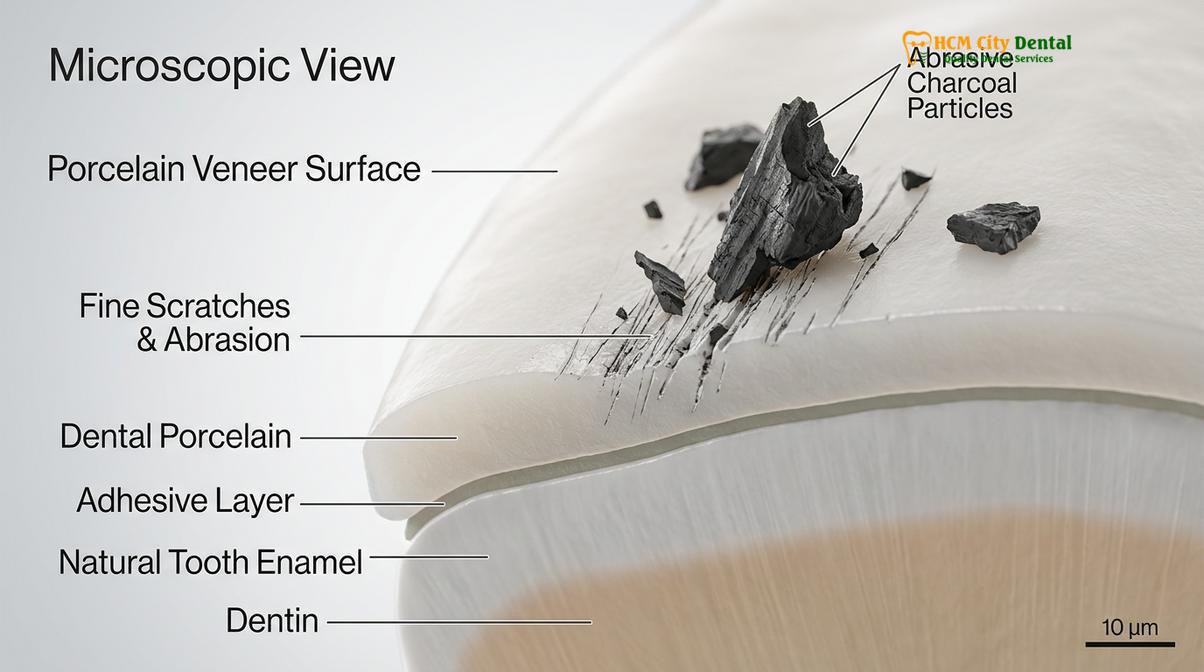
Whitening and charcoal toothpastes rely on highly abrasive particles to scrub away stains, which permanently scratches the glaze of porcelain and composite veneers, leading to a dull appearance and increased plaque retention.
A common misconception among patients is that they need to use whitening toothpaste to keep their new smile bright. However, the material science behind dental restorations dictates otherwise. Dental porcelain and composite resin are non-porous and color-stable; they do not respond to the chemical bleaching agents (like hydrogen peroxide or carbamide peroxide) found in over-the-counter whitening pastes. Instead of chemically lifting stains, these toothpastes rely on physical abrasives—such as hydrated silica, calcium carbonate, or aluminum oxide—to scrub the surface.
The trend of using activated charcoal presents an even greater risk. Charcoal toothpaste damage is a well-documented clinical issue. The jagged, crystalline structure of charcoal particles is excessively harsh. Not only does it obliterate the surface polish of the veneer, but the black particles can also become permanently lodged in the microscopic junction between the veneer and the gum line, creating a dark, tattooed appearance that is incredibly difficult to remove professionally [3].
Clinical Warning: Never use baking soda, activated charcoal, or heavy tartar-control toothpastes on your veneers. These substances will cause irreversible micro-scratching, accelerating the degradation of the material and requiring premature replacement of the restorations.
If you notice that your composite veneers or porcelain shells are beginning to look stained, the issue is likely surface accumulation rather than internal discoloration. A professional polishing by your dental hygienist is the safest and most effective way to restore their original luster without causing structural harm.
Gel-Based vs. Paste Formulations: Which is Safer?
Gel-based toothpastes are inherently smoother and lack the gritty silica or calcium carbonate found in traditional pastes, making them the safest choice for preserving the high-gloss finish of dental veneers.
The physical texture of your toothpaste plays a significant role in the daily preservation of your smile. When browsing the oral care aisle, you will generally encounter two main formulations: opaque pastes and translucent gels. For patients with cosmetic restorations, a gel based toothpaste is almost universally recommended by dental professionals.
Traditional opaque pastes achieve their thick consistency and cleaning power through the inclusion of solid abrasive particles. While effective for removing heavy plaque from natural, unrestored teeth, these particles are too aggressive for the delicate margins of a veneer. In contrast, gel formulations utilize hydrated silica in a much finer, smoother state, or omit heavy abrasives entirely, relying instead on chemical surfactants and enzymes to dissolve plaque [4].
To better understand the clinical differences, consider the following comparison:
| Feature | Gel-Based Toothpaste | Traditional Paste |
|---|---|---|
| Texture & Consistency | Smooth, translucent, non-gritty | Thick, opaque, often chalky or gritty |
| Abrasivity (RDA) | Typically Low (RDA < 70) | Medium to High (RDA 70 – 150+) |
| Veneer Safety | Highly Safe; preserves ceramic glaze | Unsafe; risks micro-scratching over time |
| Primary Cleaning Mechanism | Chemical dissolution and gentle foaming | Mechanical scrubbing and friction |
When selecting a product, squeeze a small amount between your fingers. If you can feel any grit or sand-like texture, it is too abrasive for your veneers. Always opt for a smooth, homogenous gel to ensure maximum safety.
Fluoride and Hydroxyapatite: Strengthening the Supporting Tooth Structure
While porcelain itself cannot decay, the underlying natural tooth structure remains vulnerable; using fluoride or nano-hydroxyapatite toothpaste is critical for remineralizing enamel and preventing decay at the veneer margins.
A critical aspect of veneer maintenance that is often overlooked is the health of the underlying natural tooth. While the ceramic shell is impervious to bacterial acid and cavities, the natural tooth structure beneath it—and specifically the margin where the veneer meets the root—is highly susceptible to decay. If a cavity forms at this junction, it can undermine the entire restoration, leading to failure and the need for a complete replacement.
To combat this, utilizing an enamel strengthening fluoride toothpaste is non-negotiable. Fluoride ions integrate into the hydroxyapatite crystals of your natural enamel, converting them into fluorapatite, which is significantly more resistant to acid attacks from plaque bacteria. This chemical process is the cornerstone of margin decay prevention [5].
“The success of a porcelain veneer is not just about the beauty of the ceramic; it is entirely dependent on the biological health of the underlying tooth and the surrounding gingival tissues. Protecting the marginal seal with fluoride and meticulous hygiene is what allows these restorations to last for decades.”
— Dr. Nguyen Van Cuong, Lead Prosthodontist
For patients who prefer fluoride-free alternatives, nano-hydroxyapatite (n-HA) toothpastes offer an excellent, evidence-based solution. Nano-hydroxyapatite is a biocompatible material that mimics the natural composition of tooth enamel. It works by directly depositing microscopic calcium and phosphate particles into demineralized areas, effectively sealing the vulnerable margins around your dental veneers without the use of abrasives.
Recommended Toothpaste Brands and Ingredients to Look For
Clinical recommendations for veneer care prioritize low-RDA, non-whitening formulas such as Sensodyne Pronamel or specific nano-hydroxyapatite gels that protect both the ceramic glaze and the underlying dentin.
Navigating the oral care market can be overwhelming, but focusing on specific active ingredients will guide you to the safest choices. When reading labels, look for potassium nitrate (excellent for soothing nerve sensitivity), sodium fluoride or stannous fluoride (for cavity protection), and xylitol (a natural sweetener that inhibits cavity-causing bacteria).
Conversely, you must actively avoid Sodium Lauryl Sulfate (SLS) if you are prone to canker sores or tissue irritation, as well as hydrogen peroxide, baking soda (sodium bicarbonate), and activated charcoal.
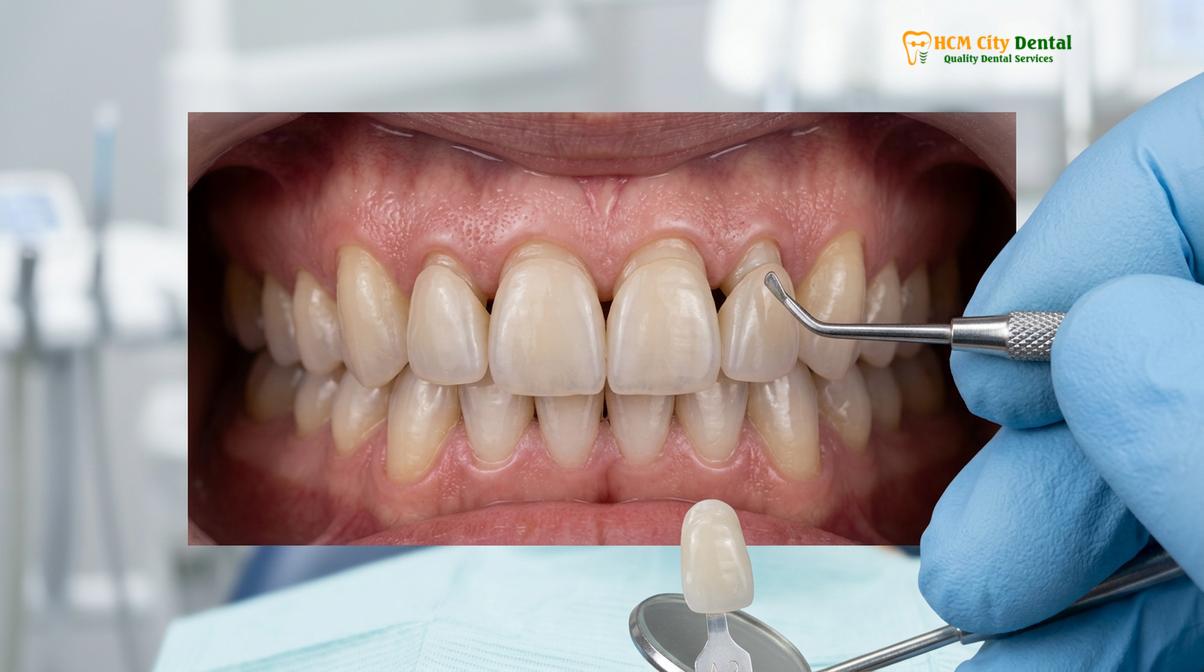
Based on clinical diagnostics and material science, the following brands are frequently recommended by prosthodontists for the care of porcelain and composite restorations:
- Sensodyne Pronamel: Widely considered the gold standard for veneer patients. It has a very low RDA (around 34), contains fluoride for enamel protection, and is specifically formulated to be gentle on both natural teeth and dental ceramics. It also helps mitigate any post-operative temperature sensitivity.
- Premier Enamelon: A premium, low-abrasive gel that utilizes stannous fluoride and amorphous calcium phosphate (ACP) to remineralize the tooth structure without scratching the veneer surface.
- Davids Nano-Hydroxyapatite (Sensitive): An excellent natural, fluoride-free alternative that uses n-HA to repair micro-defects in the enamel while maintaining a smooth, non-abrasive texture.
- CloSYS Fluoride Toothpaste: Known for being exceptionally gentle and free of harsh foaming agents (SLS-free), making it ideal for maintaining healthy gums around the veneer margins.
Comprehensive Daily Care for Dental Restorations
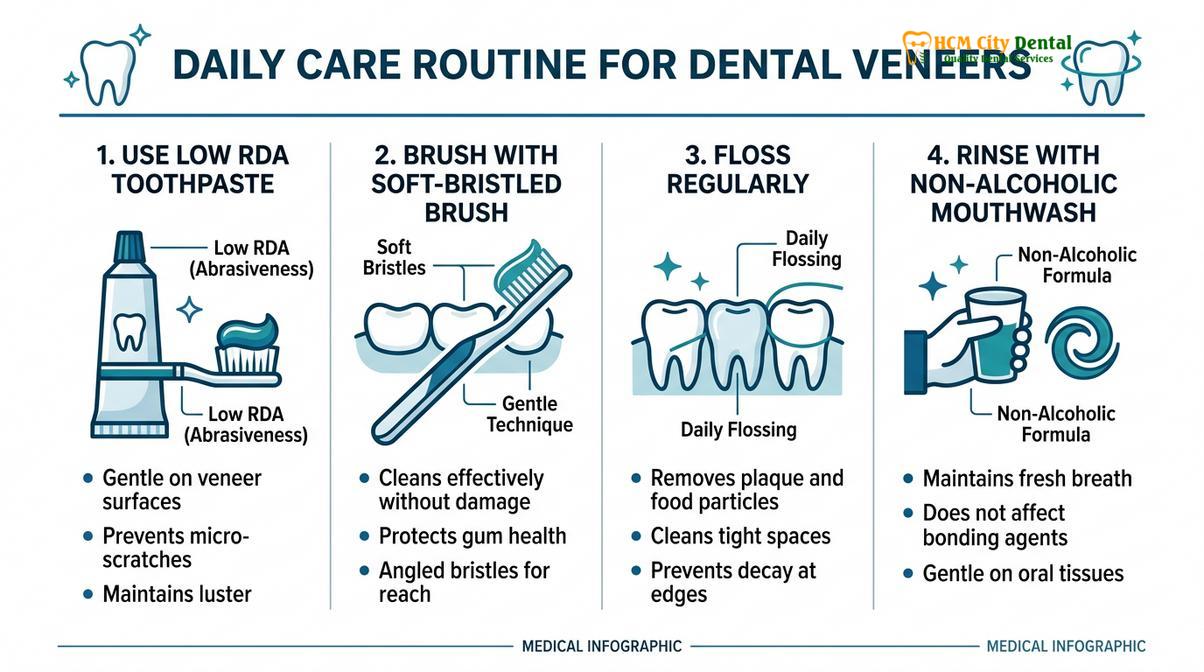
Beyond toothpaste selection, maintaining veneers requires a holistic oral hygiene routine incorporating a soft-bristled electric toothbrush, proper flossing techniques, and a non-alcoholic mouthwash to protect the bonding cement.
Toothpaste is only one component of a successful oral hygiene regimen. The mechanical tools you use to apply the paste are equally important. Hard or medium-bristled toothbrushes can cause gingival recession, exposing the root of the tooth and the margin of the veneer. Therefore, transitioning to an electric soft toothbrush is highly recommended. Sonic toothbrushes, when used with light pressure, create fluid dynamics that gently flush plaque away from the delicate gumline without abrasive scrubbing.
Furthermore, mastering the correct flossing technique veneers require is essential. Instead of aggressively snapping the floss up and down—which can theoretically catch the margin of the restoration—you should gently slide the floss between the teeth in a C-shape hugging the tooth, and then pull it through horizontally near the gumline. This prevents any upward dislodging force on the ceramic shell.
Patient Success Story: A patient visiting HCMC Dental Clinic in Ho Chi Minh City presented with dull, stained composite veneers after two years of using a harsh whitening paste. After a professional polishing to restore the surface, the patient was transitioned to a low-RDA gel, a soft sonic brush, and a daily fluoride rinse. At their one-year follow-up, the restorations maintained a high-gloss finish with zero marginal staining or gingival inflammation.
Finally, conclude your routine with a non alcoholic rinse. Mouthwashes containing high concentrations of alcohol can degrade the composite luting cement used to bond the veneer to the tooth over time. Alcohol also dries out the oral mucosa, reducing saliva flow, which is your mouth’s natural defense against decay. An alcohol-free, fluoride-enriched rinse provides the perfect finishing touch to protect your dental crowns and veneers.
Protecting Your Investment: Night Guards and Clinical Maintenance
Long-term veneer survival depends on mitigating excessive occlusal forces through custom night guards and adhering to routine clinical evaluations to ensure marginal integrity and periodontal health.
While chemical and mechanical hygiene protects the surface and margins of your veneers, biomechanical forces pose the greatest risk to their structural integrity. Sleep bruxism (unconscious teeth grinding and clenching) can generate hundreds of pounds of force per square inch. This excessive pressure can easily chip, fracture, or debond even the strongest ceramic materials.
To ensure absolute bite force protection, your prosthodontist will likely prescribe a custom night guard. This hard-acrylic appliance acts as a shock absorber, distributing occlusal forces evenly and preventing the upper and lower teeth from grinding against each other during sleep.
“We utilize digital occlusal analysis and 3D scanning to design night guards that perfectly balance the patient’s bite. Protecting the ceramic from nocturnal grinding is just as critical as the daily brushing routine in ensuring a lifelong aesthetic result.”
— Dr. Nguyen Van Cuong, Lead Prosthodontist
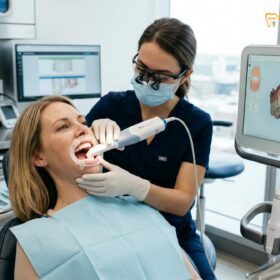
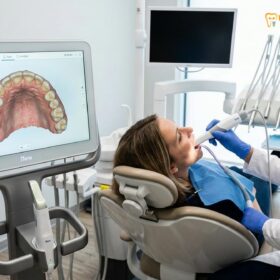
At HCMC Dental Clinic, the workflow for creating a flawless, long-lasting smile is driven by advanced digital technology. We utilize the iTero Element 5D and Medit i700 Intraoral Scanners to capture highly precise, comfortable 3D impressions—eliminating the need for messy traditional silicone. Through our Direct Lab Partnership in Ho Chi Minh City, we maintain strict quality control over every restoration.
For international patients and dental tourists, we offer an Express 3-5 Day Turnaround. This allows for a complete smile makeover to be designed, milled via CAD/CAM technology, characterized, and permanently cemented within a single week. We exclusively use certified, premium materials such as Zirconia HT (Cercon HT, Germany) for high-stress areas and E.max lithium disilicate (Ivoclar, Liechtenstein) for unparalleled lifelike translucency and shade matching (such as the highly desired VITA BL1 shade).
Understanding the financial investment is also crucial. According to the latest clinic fee schedule, patients booking via WhatsApp receive a 40% pre-arrival discount. The estimated cost structure is highly competitive:
- Composite Veneer (Chair-side): From $48 (1.2M VND) per tooth.
- Zirconia Veneer (Cercon HT): From $144 (3.6M VND) per tooth.
- E.max Porcelain Veneer (Ivoclar): From $192 (4.8M VND) per tooth.
- Smile Design 3D Mock-up: From $120 (Free if treatment is performed).
All E.max and Zirconia restorations come with global manufacturer warranty cards and a 3-year clinic bonding guarantee, supported by remote follow-up care via WhatsApp to ensure your peace of mind long after you return home.
When to See a Doctor
While meticulous home care using the right toothpaste and a soft brush will dramatically extend the life of your porcelain restorations, certain clinical signs require immediate professional intervention. You should schedule an evaluation with your dentist if you experience any of the following:
- Sharp or lingering sensitivity: Sensitivity to hot, cold, or sweet stimuli can indicate that the bonding margin has been compromised or that decay has formed underneath the veneer.
- Visible dark lines at the gumline: This may be a sign of micro-leakage, margin decay, or gingival recession exposing the root surface.
- Roughness or chipping: If you feel a sharp edge with your tongue, the ceramic may have micro-fractured due to bite trauma or abrasive damage.
- Bleeding or swollen gums: Persistent gingival inflammation around the veneers (gingivitis) suggests that plaque is being trapped at the margins, requiring professional scaling and a review of your flossing technique.
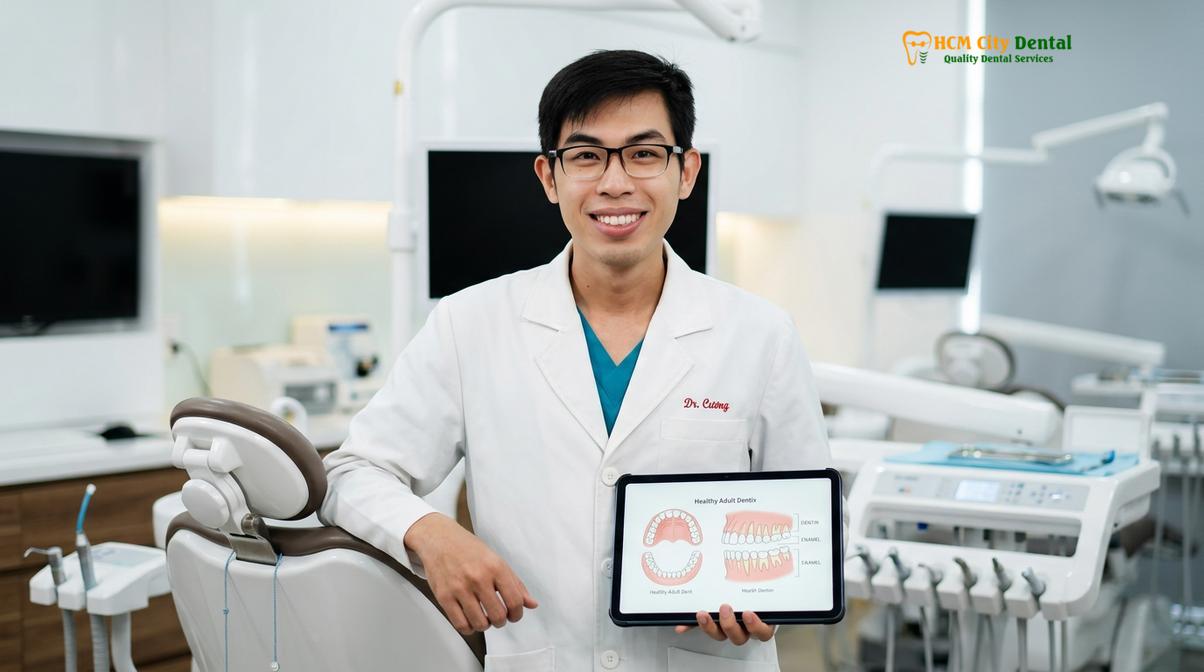
Early detection of these issues allows for conservative interventions, such as localized polishing or margin sealing, preventing the need for a complete replacement. If you are considering upgrading your smile or need an expert evaluation of your current restorations, our team at HCMC Dental Clinic is ready to assist. Contact us today to schedule your comprehensive digital consultation.
Frequently Asked Questions
Can I use regular whitening toothpaste on veneers?
No, you should avoid regular whitening toothpaste on veneers. These formulas contain harsh abrasives like silica or baking soda that scratch the porcelain glaze, making your veneers look dull and more susceptible to future staining. Always opt for a non-whitening, low-abrasive gel to preserve the high-gloss finish of your restorations.
What is RDA in toothpaste and why does it matter?
RDA stands for Relative Dentin Abrasivity, a scale measuring how gritty a toothpaste is. For veneers, an RDA below 70 is crucial to ensure the paste cleans effectively without scratching the delicate ceramic or composite surface. High RDA pastes will permanently damage the aesthetic glaze over time.
Will charcoal toothpaste stain or ruin my veneers?
Yes, charcoal toothpaste can permanently ruin your veneers. The highly abrasive charcoal particles scratch the protective glaze and can become lodged in the gum margins, causing a dark, tattooed appearance around the edges of your restorations that is very difficult to remove.
Is baking soda safe for cleaning porcelain veneers?
Baking soda is not safe for porcelain veneers. While it is a common natural remedy for whitening natural teeth, its abrasive crystalline structure can wear down the polished surface of dental ceramics over time, leading to a loss of shine and increased plaque accumulation.
How often should I brush my teeth with veneers?
You should brush your veneered teeth at least twice a day for two minutes each time. Consistent brushing with a non-abrasive gel and a soft-bristled toothbrush removes plaque and protects the underlying natural tooth from decay, which is vital for the long-term success of the veneer.
References
- Journal of Esthetic and Restorative Dentistry. The effect of abrasive toothpastes on the surface roughness of porcelain and composite restorations. (2021).
- American Dental Association (ADA). Relative Dentin Abrasivity (RDA) and toothpaste safety standards. (2020).
- International Journal of Prosthodontics. Margin integrity and secondary caries prevention in ceramic veneers. (2019).
- Clinical Oral Investigations. The impact of charcoal-based dentifrices on dental ceramics and gingival health. (2022).
- Journal of Clinical Periodontology. Biological width preservation and periodontal maintenance around aesthetic restorations. (2018).
Recommended Toothpaste Ingredients & FAQ for Veneers
Maintaining porcelain and composite veneers requires using a non-abrasive toothpaste. Avoid ingredients like baking soda, hydrated silica, and charcoal, which score high on the RDA (Relative Dentin Abrasivity) index and can scratch the polished surface of your veneers, leading to staining and loss of shine. Choose gentle fluoridated toothpastes with an RDA under 70 (such as Sensodyne or Colgate Cavity Protection) to keep your gums healthy and protect the underlying natural teeth.