When choosing between porcelain vs composite veneers, the primary difference lies in material fabrication and longevity. Porcelain offers superior durability and stain resistance through lab-milled ceramics, while composite provides a cost-effective, same-day resin application. Both effectively restore aesthetic harmony, but clinical suitability depends on your specific dental anatomy.
Clinical Summary:
Porcelain veneers utilize advanced ceramics like lithium disilicate for exceptional optical translucency and long-term durability, requiring indirect laboratory fabrication. Conversely, composite veneers employ nano-hybrid composite resin applied directly to the tooth in a single visit. While composite is more affordable and often reversible, porcelain delivers unmatched stain resistance, higher flexural strength, and a more lifelike integration with natural gingival contours. The optimal choice depends on the patient’s aesthetic goals, bite dynamics, and budget.
Key Takeaways:
- Porcelain veneers offer a lifespan of 10-15+ years with exceptional resistance to discoloration and wear.
- Composite resin bonding provides a same-day, budget-friendly alternative that typically lasts 5-7 years.
- Digital Smile Design (DSD) and intraoral scanning ensure precise marginal fit for both restorative materials.
- Minimal-prep porcelain requires 0.3mm to 0.7mm of enamel reduction, whereas composite is often prep-less.
- International patients can leverage express 3-5 day turnarounds for full porcelain smile makeovers.
Direct Sculpting vs. Indirect Laboratory Fabrication
Direct composite veneers are sculpted chairside in a single appointment, whereas indirect porcelain veneers require digital impressions and specialized laboratory milling for precise fabrication.
The fundamental distinction between these two cosmetic treatments is rooted in their clinical workflows. Composite resin bonding is a direct restorative technique. During this procedure, the dentist applies a pliable nano-hybrid composite resin directly onto the prepared tooth surface. The material is meticulously sculpted by hand to achieve the desired anatomical shape, cured with a specialized halogen or LED light, and then polished to a high gloss. This entire process is completed in a single visit, making it an immediate solution for minor aesthetic corrections.
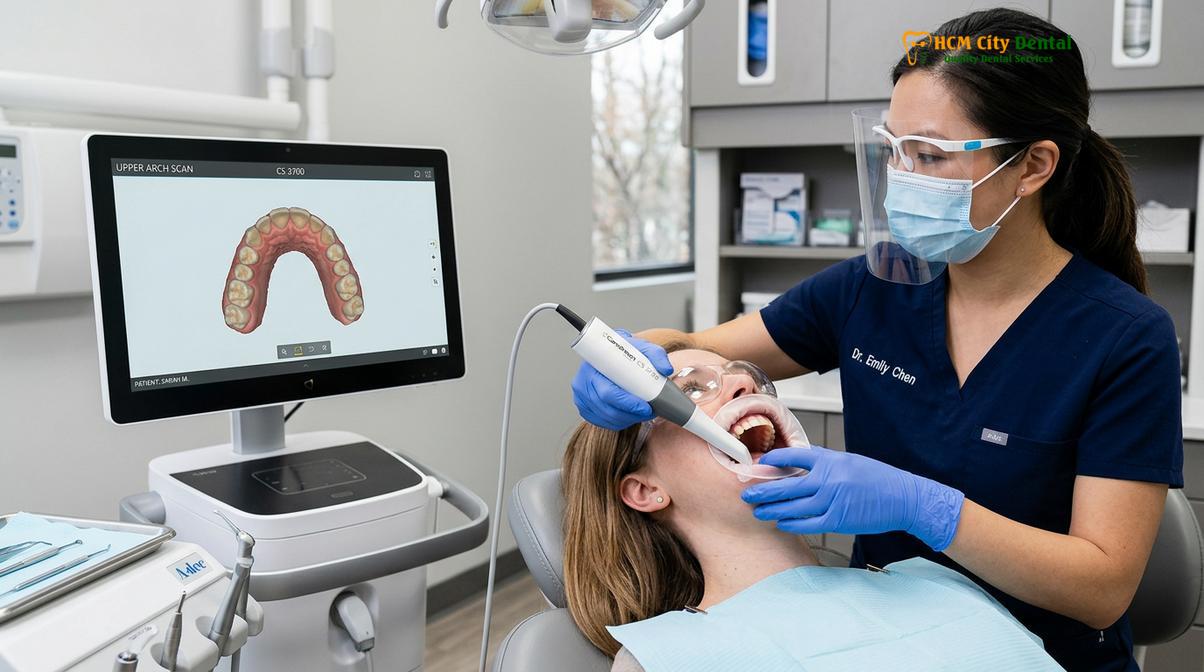
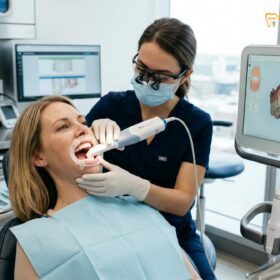
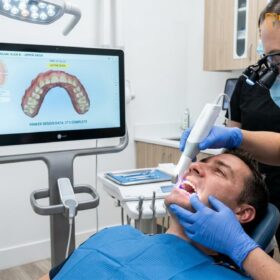
In contrast, indirect porcelain veneers follow a more sophisticated, multi-step protocol. The workflow begins with precise tooth preparation, followed by digital impressions. At HCMC Dental Clinic, Dr. Nguyen Van Cuong utilizes state-of-the-art iTero Element 5D and Medit i700 Intraoral Scanners. This advanced technology eliminates the need for messy, uncomfortable traditional silicone impressions, capturing the exact micro-anatomy of the teeth with 3D precision[1]. These digital files are then transmitted to a specialized dental laboratory.
Through a Direct Lab Partnership in Ho Chi Minh City, the prosthodontist and master ceramist collaborate closely to design the restorations. The veneers are milled from a solid ceramic ingot using CAD/CAM technology and then hand-characterized to mimic natural enamel. For international patients and dental tourists, this streamlined communication allows for an Express 3-5 Day Turnaround, enabling a complete smile makeover to be fabricated, characterized, and permanently fitted within a single week.
Aesthetic Longevity: Stain Resistance and Gloss Retention
Porcelain maintains its brilliant gloss and resists dietary stains indefinitely, while composite resin gradually absorbs pigments and loses its initial luster over time.
When evaluating cosmetic dental materials, optical properties play a critical role in achieving a lifelike appearance. Natural tooth enamel possesses a unique depth and light-scattering ability. High-quality ceramics, particularly feldspathic porcelain and lithium disilicate, closely replicate this optical translucency. Light penetrates the ceramic surface and reflects off the underlying opaque dentin, creating a vibrant, natural vitality that is virtually indistinguishable from a biological tooth[2].
“The inherent glass matrix of dental ceramics prevents pigment absorption, ensuring that a well-polished porcelain veneer retains its exact shade and surface texture for decades, unlike porous resin alternatives.”
Stain resistance is a major deciding factor for many patients. Porcelain is an impermeable, glass-like substance. It does not absorb pigments from coffee, tea, red wine, or tobacco. Furthermore, the custom shading process allows the ceramist to map specific color gradients, from a dazzling Hollywood white (VITA BL1) to a more natural, subtle brightness (VITA B1). Once the ceramic is glazed and fired in the kiln, its color is permanently locked in.
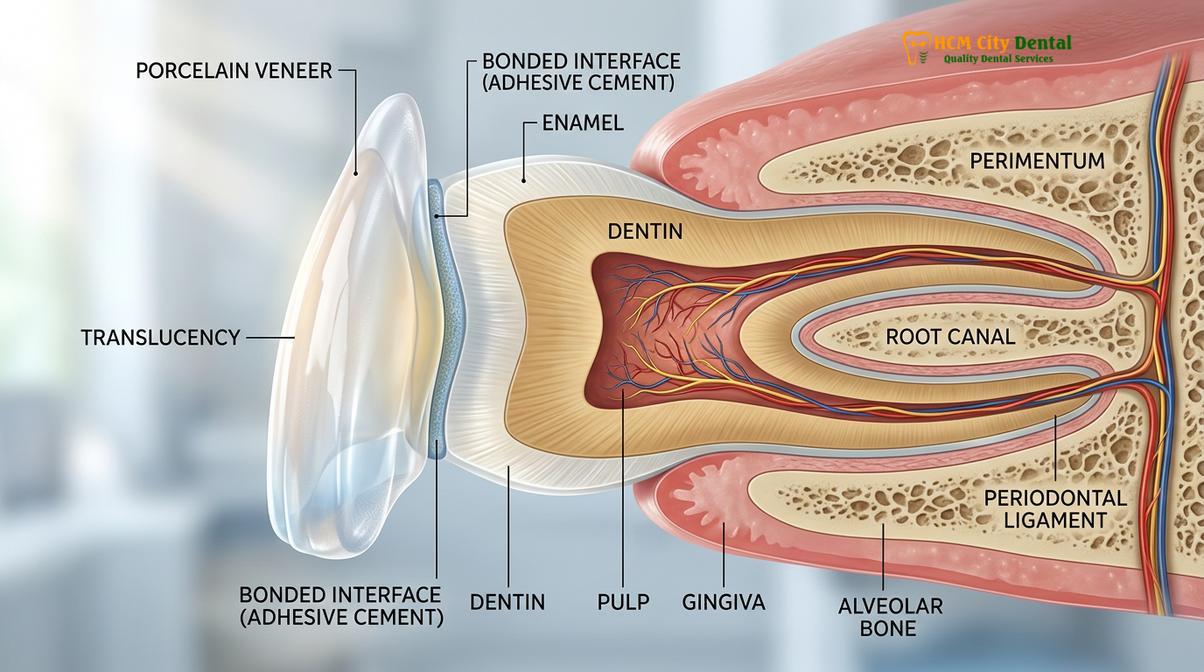
Conversely, composite materials are composed of a polymer matrix embedded with filler particles. While modern nano-hybrids polish beautifully on the day of placement, the resin matrix is inherently slightly porous. Over the lifespan of composite veneers, this porosity allows microscopic stain molecules to infiltrate the surface. Additionally, the daily friction from brushing and chewing gradually degrades the surface polish, leading to a duller appearance that requires periodic professional repolishing to maintain its aesthetic appeal.
Structural Durability: Resistance to Chipping and Fractures
High-strength ceramics withstand significant occlusal forces without fracturing, whereas composite materials are more prone to edge chipping under heavy bite pressure.
The mechanical properties of dental materials dictate their clinical survival rates. Structural durability is measured in flexural strength MPa (megapascals), which indicates the material’s ability to resist bending forces before fracturing. Traditional composite resins generally exhibit a flexural strength of 100 to 150 MPa. While sufficient for low-stress areas, they are susceptible to chipping at the incisal edges, especially if the patient has a heavy bite or engages in parafunctional habits like nail-biting.
Modern porcelain restorations utilize advanced crystalline structures to achieve extraordinary strength. E.max (Ivoclar, Liechtenstein), a highly popular lithium disilicate glass-ceramic, boasts a flexural strength of approximately 400 to 500 MPa. This makes it incredibly resilient while still offering exceptional aesthetics. For patients with severe bruxism (teeth grinding) or those requiring restorations in high-stress posterior areas, zirconium dioxide (Zirconia HT, such as Cercon HT from Germany) provides an unparalleled flexural strength exceeding 1000 MPa[3].
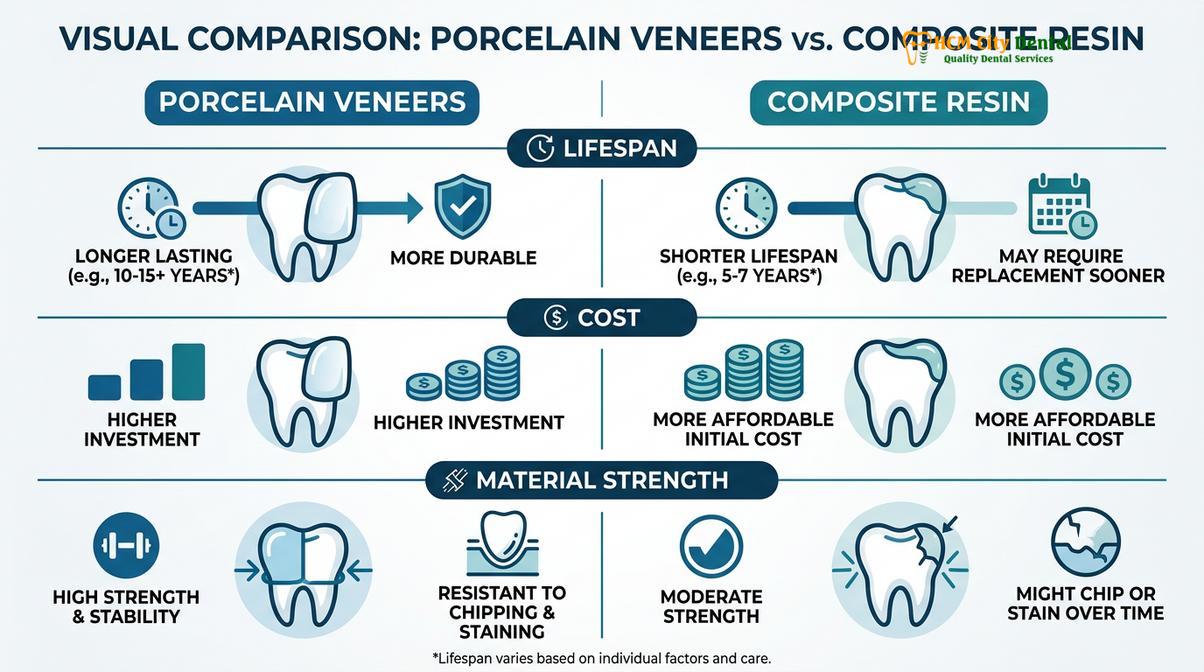
Because of these material differences, the lifespan of porcelain restorations significantly outpaces resin alternatives. Porcelain can comfortably last 10 to 15 years, and often much longer with meticulous care. Composite typically requires replacement or significant repair every 5 to 7 years. Regardless of the material chosen, clinicians strongly recommend the use of a custom nightguard for sleep bruxism to protect the investment from excessive nocturnal grinding forces.
Upfront Cost vs. Long-Term Value: A Financial Comparison
While composite veneers offer a lower initial price point, the extended lifespan and minimal maintenance of porcelain often yield a superior long-term financial return.
Understanding the financial implications of cosmetic dentistry requires looking beyond the initial price tag. Composite bonding is highly cost-effective upfront because it eliminates laboratory fees and reduces chair time. However, when factoring in the cost of periodic repolishing, repairing chips, and eventual replacement, the lifetime cost of composite can accumulate.
Porcelain requires a higher initial investment due to the sophisticated CAD/CAM milling, master ceramist labor, and premium certified materials. However, its longevity and zero-maintenance aesthetic make it a highly cost-effective long-term solution. At HCMC Dental Clinic, the pricing structure is transparent, utilizing only authentic, certified materials from Germany and Liechtenstein. Furthermore, international patients booking via WhatsApp receive a substantial 40% pre-arrival discount.
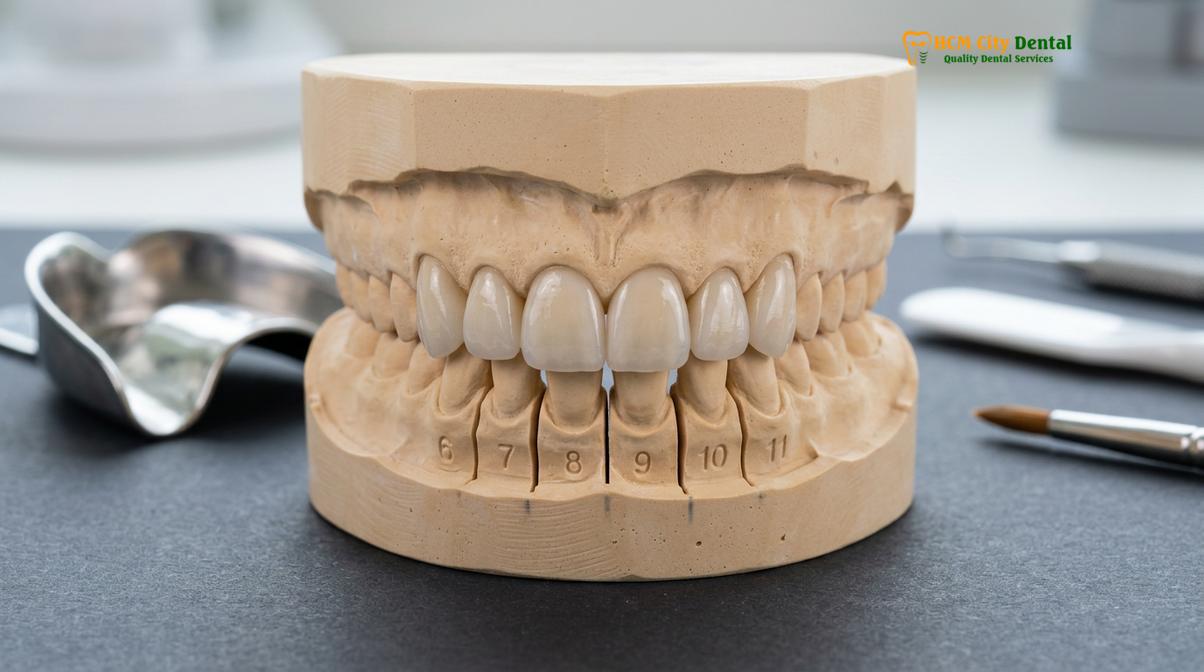
According to the latest clinic fee schedule, the estimated costs are structured as follows:
| Treatment / Material | Standard Walk-in Price | WhatsApp Discount (-40%) | Warranty Period |
|---|---|---|---|
| Composite Veneer (Chair-side) | ~$80 (2.0M VND) | From $48 (1.2M VND) | 1-Year Guarantee |
| Zirconia Veneer (Cercon HT, Germany) | ~$240 (6.0M VND) | From $144 (3.6M VND) | 3-Year Clinic + Global Mfg |
| E.max Porcelain Veneer (Ivoclar) | ~$320 (8.0M VND) | From $192 (4.8M VND) | 3-Year Clinic + Global Mfg |
| Smile Design 3D Mock-up | ~$200 (5.0M VND) | From $120 (Free if treated) | N/A |
| Laser Gum Contouring (Diode) | ~$160 (4.0M VND) | From $96 (2.4M VND) per arch | N/A |
To further support patients, the clinic offers 0% interest monthly credit card installment plans. The comprehensive Warranty & Support program includes global manufacturer warranty cards and remote follow-up support via WhatsApp, utilizing strict photo and video assessment protocols to ensure ongoing patient care regardless of their geographic location.
Clinical Suitability: When to Choose Porcelain Over Composite
The choice between materials depends on the severity of aesthetic correction needed, the patient’s bite dynamics, and the desired level of enamel preservation.
Determining the appropriate restorative material is a highly individualized clinical decision. During the consultation, the prosthodontist evaluates several critical factors, including the biological width, gingival zenith calibration, and the structural integrity of the existing enamel. Digital Smile Design (DSD) is often employed to visually map the proposed changes, allowing the patient to preview the final outcome before any physical alterations occur.
For minor corrections—such as closing small gaps (diastema closure), repairing slight edge wear, or masking localized white spot lesions—composite resin is an excellent, conservative choice. It requires virtually zero enamel removal. However, for comprehensive smile makeovers involving severe discoloration (such as deep tetracycline stains), significant misalignment, or extensive structural wear, porcelain is the gold standard.
Porcelain allows for precise control over tooth preparation depth. Depending on the case, the clinician may opt for minimal-prep veneers (requiring only 0.3mm to 0.7mm of enamel reduction) or prep-less Lumineers (0.2mm thickness) to maximize enamel preservation. The final restorations are bonded using advanced adhesive cementation protocols. While temporary restorations might be seated with a resin-modified glass ionomer, the final ceramic is permanently fused to the enamel using a dual-cure resin cement, creating a virtually seamless and impenetrable margin[4].
Clinical Case Study: Comprehensive Smile Makeover
A 34-year-old patient visited HCMC Dental Clinic in Ho Chi Minh City presenting with moderate diastemas, uneven gingival margins, and intrinsic tetracycline staining that did not respond to professional whitening. Dr. Cuong utilized a multidisciplinary approach. First, diode laser gum contouring was performed to harmonize the gingival zenith. Following a brief healing period, minimal-prep E.max lithium disilicate veneers (shade BL1) were fabricated. The high opacity of the specialized ceramic ingot successfully masked the dark underlying dentin while maintaining natural surface translucency, resulting in a dramatic, lifelike transformation.
Patients wondering about the scope of their treatment can explore how many veneers are needed to achieve a balanced, symmetrical arch, which typically ranges from 6 to 10 units across the visible smile line.
Important Clinical Considerations
While cosmetic dentistry offers profound aesthetic benefits, it is crucial to recognize that not every patient is an immediate candidate for veneers. The foundation of any successful restoration is optimal oral health. Active periodontal disease, untreated dental caries, or severe occlusal instability must be addressed prior to embarking on cosmetic enhancements.
“Placing aesthetic restorations over compromised biological foundations inevitably leads to premature failure, marginal leakage, and exacerbation of underlying periodontal issues.”
Patients with severe, untreated sleep bruxism pose a specific challenge. The excessive lateral forces generated during nocturnal grinding can fracture even the strongest ceramics or rapidly degrade composite resins. In such cases, a comprehensive occlusal analysis is required. The treatment plan may necessitate full-coverage crowns rather than conservative veneers, or at minimum, the mandatory nightly use of a rigid custom occlusal splint (nightguard) to protect the investment[5].
Clinical Warning: Do not pursue cosmetic masking if underlying decay, active gum inflammation, or unresolved root canal infections are present. Aesthetic restorations must only be placed on a biologically sound and disease-free foundation to ensure long-term success and prevent severe dental complications.
If a tooth has suffered extensive structural loss or has previously undergone endodontic (root canal) therapy, a veneer may not provide sufficient mechanical support. In these scenarios, understanding the difference between a dental crown vs veneer is essential, as a crown encapsulates the entire tooth to restore its structural integrity.
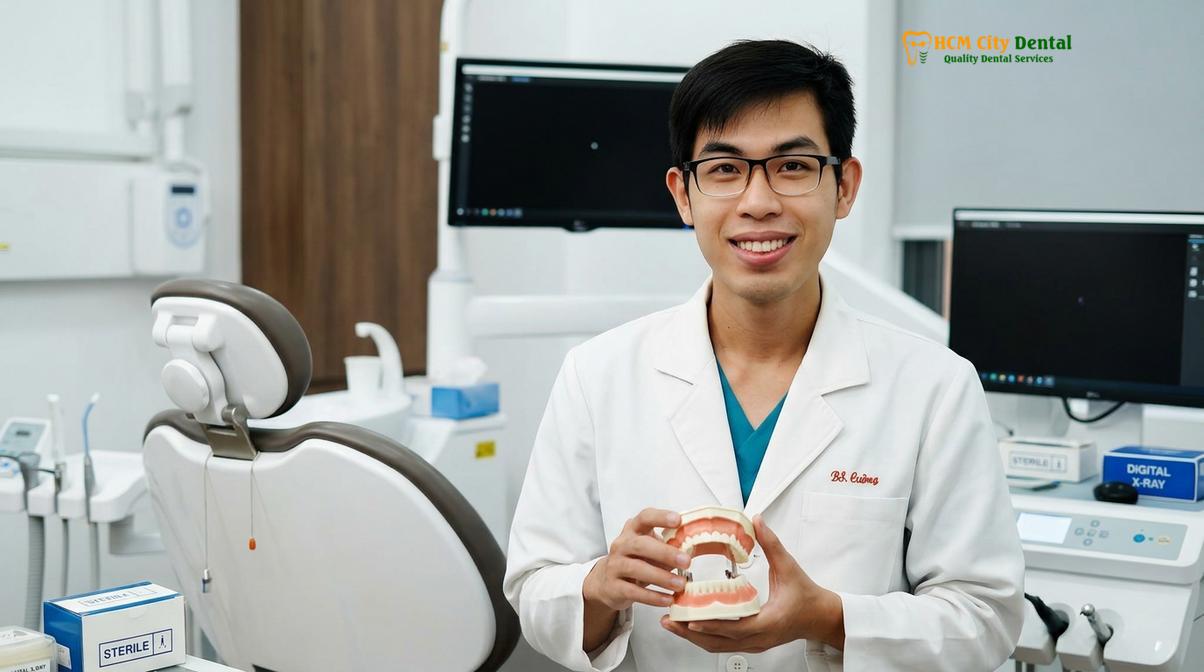
Ultimately, the decision between porcelain and composite should be made collaboratively with an experienced prosthodontist. A thorough clinical examination, including 3D radiographic imaging and digital scanning, is the only way to accurately determine the most predictable and biologically sound treatment pathway. For personalized advice and to explore your options, consider scheduling a comprehensive consultation with the expert team at HCMC Dental Clinic.
Frequently Asked Questions
Is composite veneer reversible?
Yes, composite veneers are generally considered reversible because they require little to no removal of natural tooth enamel. If you decide to remove them, a dentist can carefully polish away the resin, leaving your underlying tooth structure largely intact. However, if any enamel was roughened or reduced during the initial placement to achieve a better bond or profile, the tooth may require minor polishing or a new restoration to feel completely smooth again.
Do composite veneers stain easily?
Composite veneers are more susceptible to staining than porcelain because the resin material is slightly porous and can absorb pigments over time. Frequent consumption of coffee, tea, red wine, or tobacco can lead to surface discoloration. While routine professional polishing can remove superficial stains and restore some gloss, deep intrinsic discoloration within the resin matrix eventually requires the composite to be repaired or entirely replaced to maintain a bright aesthetic.
Can chipped composite veneers be repaired?
Yes, one of the primary advantages of composite resin is that minor chips or fractures can be easily repaired chairside in a single visit. The dentist simply roughens the damaged area, applies a bonding agent, and sculpts new composite material directly onto the existing veneer. This seamless integration makes maintenance highly convenient and cost-effective compared to porcelain, which typically requires a complete replacement if it fractures.
Does the tooth preparation for porcelain veneers hurt?
Tooth preparation for porcelain veneers is generally painless, as it is performed under local anesthesia to ensure complete patient comfort. Because modern minimal-prep techniques only remove 0.3mm to 0.7mm of enamel, the procedure is minimally invasive and rarely affects the sensitive inner dentin or nerve. Post-operative sensitivity is usually mild and temporary, subsiding within a few days once the final ceramic restorations are securely bonded.
How do I maintain my new veneers?
Maintaining veneers requires excellent daily oral hygiene, including brushing twice daily with a non-abrasive toothpaste and flossing to preserve gum health. You should avoid biting directly into excessively hard items like ice, pens, or hard candies to prevent chipping. Additionally, wearing a custom nightguard if you grind your teeth and attending regular professional cleanings will maximize the lifespan and aesthetic brilliance of your restorations.
References
- Journal of Prosthodontic Research. Accuracy of intraoral scanners in fixed prosthodontics. (2021).
- Dental Materials. Optical properties and translucency of lithium disilicate ceramics. (2020).
- The Journal of Prosthetic Dentistry. Flexural strength and fracture toughness of CAD/CAM materials. (2019).
- Clinical Oral Investigations. Biological width and gingival health around aesthetic restorations. (2022).
- Journal of Clinical Periodontology. Periodontal considerations prior to cosmetic dental treatments. (2018).