Yes, you can get veneers if you have bruxism, provided the underlying grinding forces are managed. By utilizing high-strength materials like zirconia and wearing a custom hard acrylic nightguard, patients with teeth grinding can safely achieve a durable, aesthetic smile makeover without premature chipping or debonding.
Clinical Summary:
The intersection of bruxism and cosmetic dentistry presents unique biomechanical challenges. Sleep bruxism generates excessive occlusal forces that can easily fracture or debond standard porcelain restorations. However, advanced clinical protocols have made it entirely possible for chronic grinders to receive long-lasting smile makeovers. By leveraging state-of-the-art digital dentistry—including iTero Element 5D and Medit i700 intraoral scanners—prosthodontists can design highly precise restorations. Dr. Nguyen Van Cuong at HCMC Dental Clinic emphasizes the necessity of material selection, specifically utilizing monolithic Zirconia HT (Cercon HT, Germany) for its superior flexural strength in high-stress areas. Furthermore, the long-term survival of these restorations in parafunctional patients relies heavily on meticulous enamel preservation, precise cementation protocols, and the mandatory nightly use of a custom hard acrylic nightguard. Through comprehensive occlusal management and direct lab partnerships in Ho Chi Minh City, patients can achieve highly aesthetic, functional, and durable results.
Key Takeaways:
- Bruxism exerts severe shear stress that can fracture standard lithium disilicate (E.max) veneers if not properly managed.
- Monolithic Zirconia HT is the preferred material for heavy grinders due to its exceptional flexural strength and durability.
- A custom hard acrylic nightguard is mandatory to protect cosmetic restorations from nocturnal grinding forces.
- Soft, over-the-counter mouthguards are contraindicated as they can stimulate muscle hyperactivity and worsen grinding.
- Advanced digital scanning (iTero/Medit) ensures precise marginal fit, reducing the risk of debonding and microleakage.
How Sleep Bruxism Destroys Natural Teeth and Restorations
Sleep bruxism exerts immense involuntary pressure on the dentition, leading to accelerated enamel attrition, micro-fractures, and the eventual compromise of both natural teeth and cosmetic restorations.
Bruxism is a parafunctional habit characterized by the involuntary clenching, grinding, and gnashing of teeth. While it can occur during waking hours (awake bruxism), it is most destructive during sleep. Sleep bruxism is a sleep-related movement disorder mediated by the central nervous system, often exacerbated by stress, anxiety, sleep apnea, or certain medications. The forces generated during these nocturnal episodes are exponentially higher than the forces used during normal mastication (chewing).
In a healthy stomatognathic system, the teeth only make contact for a few minutes a day during swallowing and chewing. However, a patient with active sleep bruxism may subject their teeth to hours of continuous, intense friction. This relentless mechanical wear leads to severe enamel attrition. As the protective enamel layer is ground away, the softer underlying dentin is exposed. Dentin wears down at a much faster rate, leading to cupping, cratering, and significant loss of vertical dimension. [1]
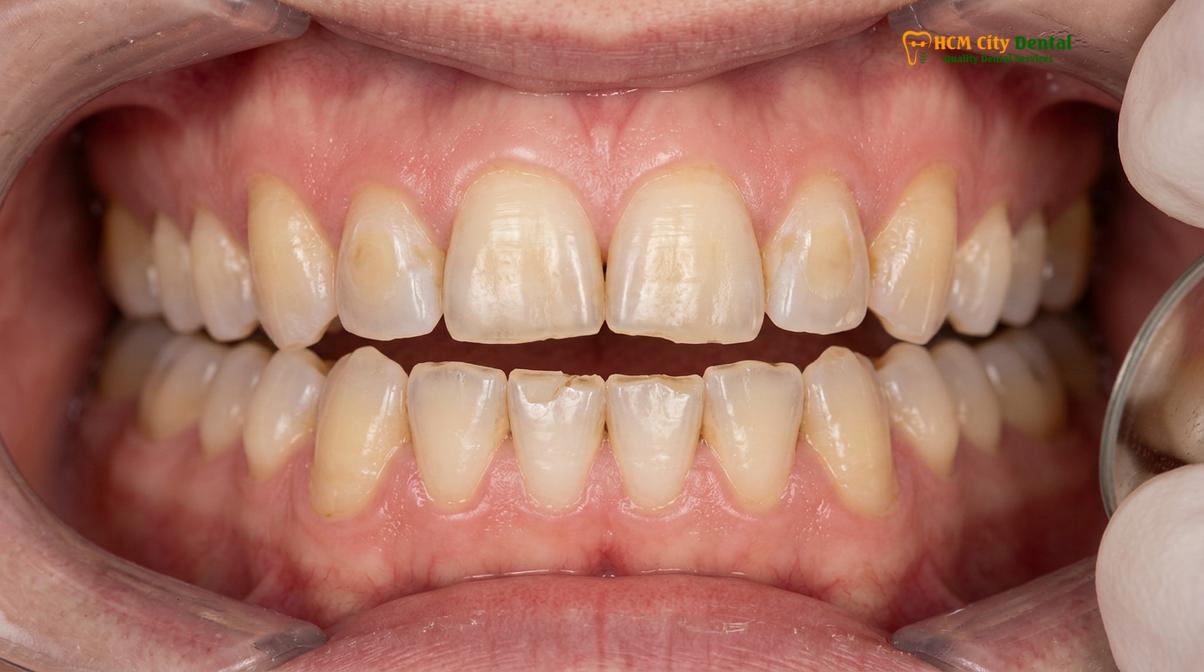
Beyond the occlusal (biting) surfaces, the lateral forces of grinding cause the teeth to flex at the cervical margin (the area where the tooth meets the gum line). This constant flexing disrupts the crystalline structure of the enamel, leading to non-carious cervical lesions known as abfractions. These V-shaped notches weaken the structural integrity of the tooth and create highly sensitive areas. When standard cosmetic restorations are placed in an environment characterized by such aggressive biomechanical forces without proper occlusal management, the risk of catastrophic failure is exceptionally high.
For patients seeking advanced cosmetic dental restorations, understanding the destructive nature of this condition is the first step. A comprehensive clinical evaluation is required to assess the extent of the wear, the health of the temporomandibular joint (TMJ), and the remaining enamel volume before any cosmetic intervention can be planned.
To manage jaw joint stress, check our Complete TMJ and bruxism guide.
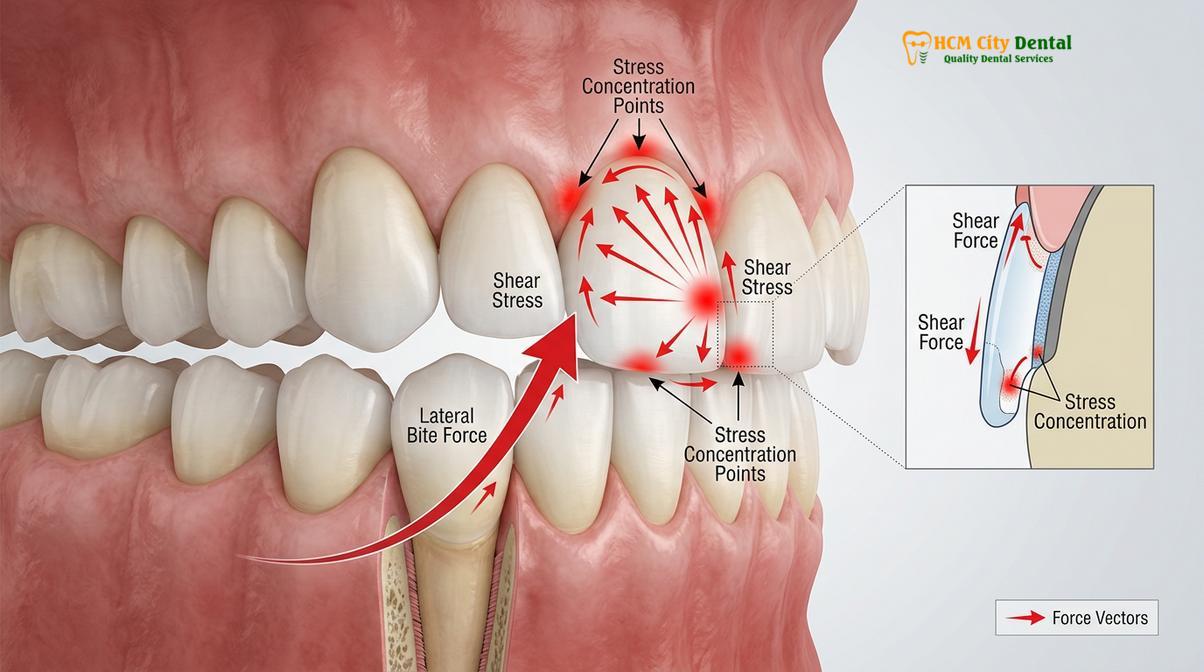
Shear Stress and Bite Force: Why Porcelain Can Chip or De-bond
The lateral movements during teeth grinding generate severe shear stress and bite force, which can exceed the flexural strength of standard porcelain, causing catastrophic chipping or debonding.
To understand why veneers fail in patients with bruxism, one must examine the physics of dental occlusion. Dental materials are generally highly resistant to compressive stress (forces pushing straight down). However, they are significantly weaker when subjected to tensile stress (pulling forces) and shear stress (sliding or lateral forces). [2]
During normal chewing, the posterior teeth absorb the heavy compressive loads, while the anterior teeth (incisors and canines) guide the jaw movements. In a patient with bruxism, the jaw often moves laterally while the teeth are tightly clenched. This movement, known as eccentric bruxism, places immense shear stress on the anterior teeth. If these teeth are restored with standard porcelain veneers, the lateral grinding forces act directly against the bonded interface and the ceramic material itself.
“The survival of anterior ceramic restorations is heavily dependent on the management of lateral excursive forces. In patients with active parafunctional habits, unmitigated shear stress is the primary etiology for cohesive ceramic fractures and adhesive debonding at the enamel-resin interface.”
When the shear stress exceeds the flexural strength of the ceramic, a cohesive fracture occurs, resulting in a chipped or broken veneer. Alternatively, the constant flexing of the underlying tooth structure can cause the adhesive bond to fail, leading to the veneer popping off entirely (debonding). This phenomenon, often referred to as sleep bruxism shear stress, dictates that standard treatment protocols must be modified.
To ensure long-term success, the clinician must establish proper anterior guidance and canine rise, ensuring that the posterior teeth disocclude (separate) during lateral jaw movements. Furthermore, implementing robust bite force protection strategies is non-negotiable to shield the delicate margins of the restorations from the devastating effects of nocturnal grinding.
Zirconia Veneers: The Preferred Material Choice for Grinders
For patients with heavy bruxism, monolithic zirconia offers superior flexural strength compared to traditional lithium disilicate, making it the optimal choice to withstand intense grinding forces.
The evolution of dental material science has provided clinicians with a variety of ceramics, each with distinct optical and mechanical properties. Historically, patients with severe bruxism were often told they were not candidates for veneers and had to settle for full-coverage dental crowns. However, the advent of high-translucency monolithic zirconia has revolutionized the treatment landscape, offering a viable solution for zirconia restoration bruxism cases. [3]
When comparing resin and ceramic options, composite resin is generally contraindicated for heavy grinders due to its low wear resistance and susceptibility to chipping. The debate for bruxism patients usually centers around two premium ceramics: Lithium Disilicate (E.max by Ivoclar, Liechtenstein) and Yttria-stabilized Zirconia (Cercon HT, Germany).
Lithium disilicate is renowned for its unparalleled aesthetics, lifelike translucency, and excellent bond strength to enamel. However, its flexural strength typically ranges from 400 to 500 MPa. While this is more than sufficient for normal mastication, it may not withstand the extreme forces generated by a severe nocturnal grinder.
Monolithic Zirconia HT, on the other hand, boasts a flexural strength exceeding 1000 to 1200 MPa. It is exceptionally resistant to fracture and wear. In the past, zirconia was criticized for being too opaque for anterior cosmetic restorations. Today, advanced CAD/CAM milling techniques and multi-layered zirconia blocks allow ceramists to achieve stunning aesthetics, perfectly matching natural shades or ultra-white bleach shades like VITA BL1, while maintaining structural invincibility.
At HCMC Dental Clinic, we utilize only authentic, certified materials. Our direct lab partnership in Ho Chi Minh City allows for complete quality control and an express 3-5 day turnaround for international patients. Below is our current pricing structure, which includes a special 40% pre-arrival discount for WhatsApp bookings:
| Material / Treatment | Standard Walk-in Price | WhatsApp Discount (-40%) | Best Suited For |
|---|---|---|---|
| Composite Veneer (Chair-side) | ~$80 (2.0M VND) | From $48 (1.2M VND) | Minor corrections, non-grinders |
| E.max Porcelain (Ivoclar) | ~$320 (8.0M VND) | From $192 (4.8M VND) | Maximum aesthetics, light/no bruxism |
| Zirconia Veneer (Cercon HT) | ~$240 (6.0M VND) | From $144 (3.6M VND) | Heavy grinders, high-stress areas |
| Smile Design 3D Mock-up | ~$200 (5.0M VND) | From $120 (3.0M VND) | Treatment planning (Free if proceeding) |
| Laser Gum Contouring (Diode) | ~$160 (4.0M VND) | From $96 (2.4M VND) | Gingival zenith calibration per arch |
All E.max and Zirconia restorations come with global manufacturer warranty cards and a 3-year clinic bonding and fit guarantee, supported by remote follow-up protocols.
Dr. Cuong’s Protocols for Safe Veneer Placement in Bruxism Patients
Dr. Cuong employs advanced digital scanning, precise occlusal calibration, and meticulous cementation protocols to ensure veneers remain structurally sound even in patients with active parafunctional habits.
The success of cosmetic restorations in a hostile oral environment depends entirely on the precision of the clinical workflow. Dr. Nguyen Van Cuong, a leading specialist at HCMC Dental Clinic, has developed a stringent protocol specifically tailored for patients with parafunctional habits. This protocol prioritizes enamel preservation, marginal integrity, and occlusal harmony.
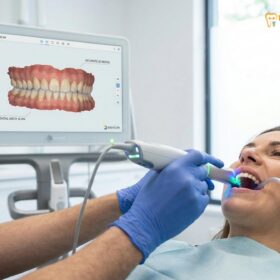
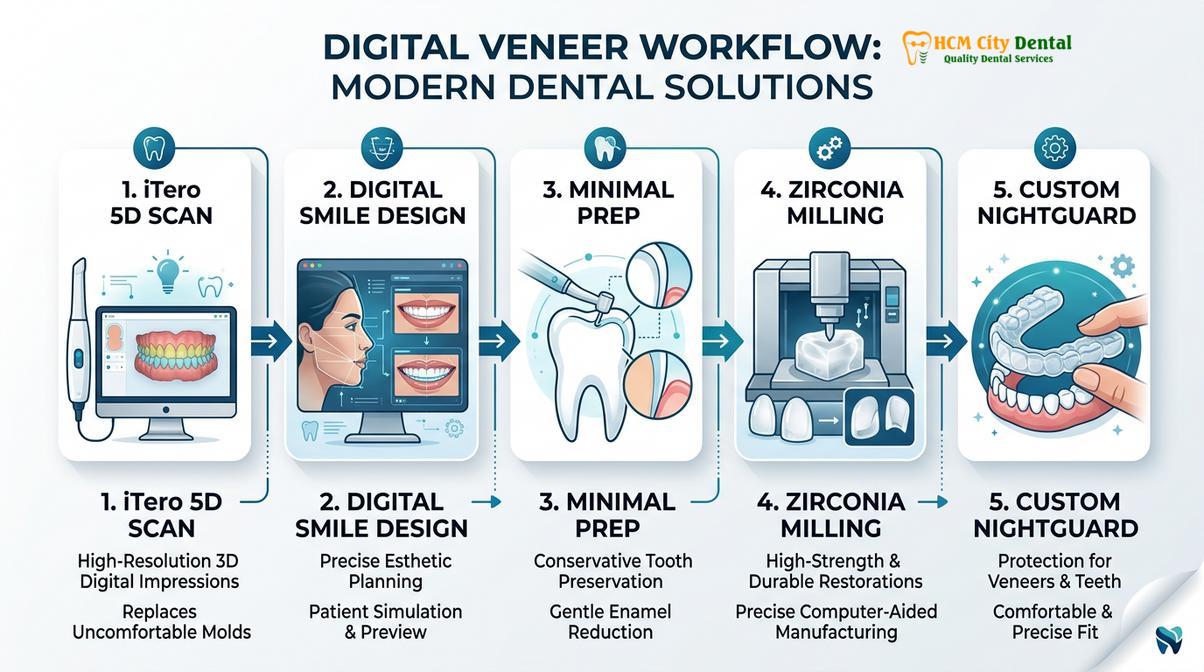
The process begins with state-of-the-art digital diagnostics. Traditional messy silicone impressions have been entirely replaced by the iTero Element 5D and Medit i700 Intraoral Scanners. These devices capture the dentition in high-definition 3D, providing maximum patient comfort and unparalleled accuracy. The digital data is then used to create a Digital Smile Design (DSD), allowing the patient to preview their new smile and ensuring the proposed restorations function harmoniously within their specific bite parameters.
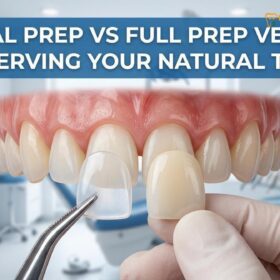
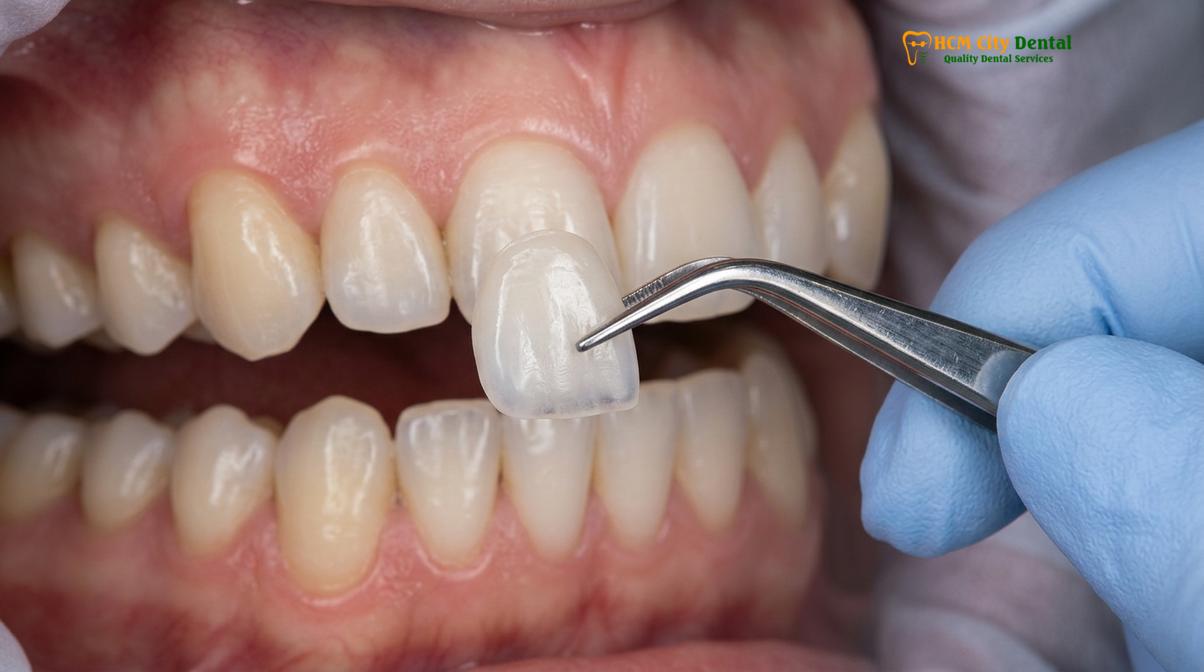
Tooth preparation is a critical phase. To maximize the adhesive bond, it is imperative to keep the preparation entirely within the enamel layer. Dr. Cuong utilizes minimal-prep techniques, removing only 0.3mm to 0.7mm of tooth structure (and sometimes utilizing prep-less 0.2mm designs where appropriate). [4] Special attention is paid to the biological width and gingival zenith calibration to ensure the margins of the veneers do not impinge on the gum tissue, which could cause chronic inflammation.
Clinical Case Study: Managing Severe Attrition
A 42-year-old male patient presented to HCMC Dental Clinic in Ho Chi Minh City with severe incisal wear and dentin exposure due to decades of untreated sleep bruxism. He desired a full smile makeover but was concerned about longevity. Dr. Nguyen Van Cuong utilized the Medit i700 scanner to map his occlusal dynamics. The treatment plan involved minimal-prep monolithic Zirconia HT veneers (shade BL1) to restore the lost vertical dimension and provide maximum fracture resistance. Following meticulous cementation, the patient was fitted with a custom hard acrylic nightguard. At the two-year remote follow-up, the restorations exhibited zero chipping, demonstrating the efficacy of combining high-strength materials with proper occlusal protection.
The cementation protocol is equally vital. For zirconia, which does not contain silica and therefore cannot be etched with hydrofluoric acid like E.max, specialized primers containing MDP (10-methacryloyloxydecyl dihydrogen phosphate) are used. This creates a powerful chemical bond between the zirconia, the dual-cure resin cement, and the natural tooth structure, ensuring the restoration remains securely in place despite the shear forces of bruxism.
For patients planning your smile makeover, understanding that these meticulous steps are what differentiate a long-lasting medical treatment from a temporary cosmetic fix is crucial.
Custom Hard Acrylic Nightguards vs. Soft OTC Retail Guards
A custom hard acrylic nightguard provides rigid occlusal support and bite force protection, whereas soft over-the-counter guards can actually stimulate muscle hyperactivity and exacerbate grinding.
Regardless of how strong the ceramic material is or how perfectly it is bonded, a patient with active sleep bruxism must wear a protective appliance every night. This is the ultimate insurance policy for your investment. However, not all mouthguards are created equal. The distinction between a custom hard acrylic nightguard and a soft over-the-counter (OTC) retail guard is profound and clinically significant. [5]
A custom night guard is fabricated from rigid, high-density acrylic based on precise digital scans of your teeth. The biting surface of the guard is meticulously adjusted by the dentist to ensure that all teeth contact evenly simultaneously. This even distribution of force prevents any single tooth or veneer from bearing the brunt of the grinding pressure. Furthermore, the hard, smooth surface allows the opposing teeth to glide freely during lateral movements, reducing friction and minimizing shear stress.
Clinical Warning: The Danger of Soft Mouthguards
Soft, rubbery mouthguards purchased at pharmacies are strongly contraindicated for patients with bruxism, especially those with porcelain restorations. The soft material triggers a proprioceptive response in the jaw muscles, simulating the sensation of chewing food. This “chewing gum effect” can actually increase muscle hyperactivity, causing the patient to clench and grind more intensely than they would without the guard, ultimately leading to severe TMJ pain and potential damage to the restorations.
By providing rigid bite force protection, a custom hard acrylic splint not only protects the ceramics from fracturing but also helps to deprogram the jaw muscles, reducing the frequency and intensity of the bruxism episodes over time. It is an indispensable component of the treatment plan for any grinder seeking cosmetic dentistry.
Maintenance and Longevity for Bruxism Patients
Long-term success requires stringent daily oral hygiene, including proper flossing techniques and the use of non-abrasive tools, to prevent marginal decay and maintain gingival health.
Once the restorations are placed and the nightguard is fabricated, the responsibility shifts to the patient to maintain the health of their new smile. For patients wondering about maximizing the lifespan of your restorations, daily maintenance is just as important as the clinical execution.
The margins where the porcelain meets the natural tooth structure are the most vulnerable areas. Plaque accumulation in these zones can lead to secondary caries (cavities) underneath the veneer. Therefore, margin decay prevention is paramount. Patients must adopt a rigorous oral hygiene routine.
Brushing should be performed at least twice daily using an electric soft toothbrush. Hard bristles can cause micro-abrasions on the ceramic surface over time, dulling the aesthetic finish and potentially causing gingival recession. The mechanical action of a high-quality electric toothbrush, combined with a non-abrasive toothpaste, effectively disrupts plaque biofilm without damaging the restorations.
Interdental cleaning is equally critical. The correct flossing technique veneers require involves gently sliding the floss between the teeth and pulling it through, rather than snapping it forcefully up and down, which could theoretically stress the adhesive bond over time. Additionally, incorporating a daily non alcoholic rinse helps to reduce bacterial load and maintain healthy gum tissue without the drying effects of alcohol, which can degrade composite luting cements over decades of use.
“The longevity of a ceramic restoration is a partnership between the clinician’s precision and the patient’s daily compliance. Impeccable marginal hygiene and strict adherence to occlusal protection protocols are the cornerstones of lasting aesthetic success.”
When to See a Doctor
Immediate clinical evaluation is necessary if you experience TMJ pain, notice visible chips in your restorations, or if your nightguard becomes damaged or ill-fitting.
Even with the best materials and protocols, patients with severe bruxism must remain vigilant. You should schedule a clinical examination if you experience any of the following symptoms:
- TMJ Discomfort: Persistent pain, clicking, or popping in the jaw joint, or frequent morning headaches, which may indicate that your bruxism is worsening or your nightguard needs adjustment.
- Visual Damage: Any visible chips, cracks, or rough edges on your veneers. Do not wait for the damage to worsen.
- Sensitivity: Sudden thermal sensitivity (hot or cold) in a veneered tooth, which could indicate microleakage or a compromised adhesive bond.
- Nightguard Wear: If your hard acrylic nightguard develops deep grooves, cracks, or feels loose, it is no longer providing adequate protection and must be replaced.
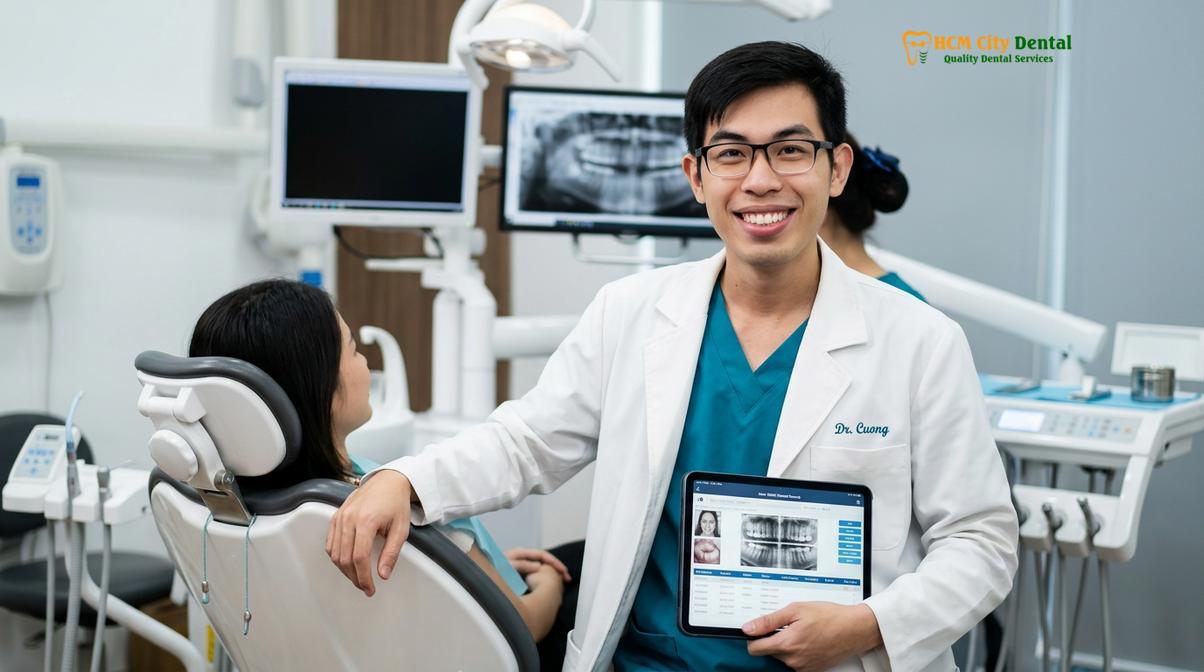
If you are struggling with worn teeth and are considering full coverage vs partial coverage restorations, professional guidance is essential. Contact the team at HCMC Dental Clinic in Ho Chi Minh City for a comprehensive digital assessment and personalized treatment plan.
Frequently Asked Questions
Can I get veneers if I grind my teeth?
Yes, you can get veneers even if you suffer from teeth grinding, provided the condition is clinically managed. Dentists typically recommend high-strength materials like monolithic zirconia and require the nightly use of a custom hard acrylic nightguard to protect the restorations from excessive occlusal forces and prevent premature failure. A thorough occlusal analysis is required prior to treatment.
Why is a soft store-bought nightguard bad for veneers?
Soft, over-the-counter nightguards can actually exacerbate bruxism by triggering a chewing reflex, increasing muscle hyperactivity and jaw tension. Furthermore, they lack the precise occlusal calibration needed to evenly distribute bite forces, leaving your porcelain veneers vulnerable to localized shear stress, micro-fractures, and eventual debonding. Always opt for a custom-milled hard acrylic splint.
How often should I replace my dental nightguard?
A custom hard acrylic nightguard should generally be replaced every two to five years, depending on the severity of your bruxism and the rate of material wear. Regular clinical inspections are necessary; if the guard shows deep indentations, cracks, or no longer fits securely, it must be replaced immediately to ensure continuous protection for your dental work.
Do veneers for bruxism require more tooth preparation?
Not necessarily, but the preparation design must be highly strategic. While minimal-prep techniques (0.3mm to 0.7mm) are still utilized to preserve enamel, the dentist must ensure adequate restorative space for high-strength materials like zirconia, particularly at the incisal edges, to withstand heavy grinding forces without fracturing. Enamel preservation remains the primary goal for optimal bond strength.
What happens if a veneer chips from grinding?
If a veneer chips due to bruxism, it usually cannot be seamlessly repaired with composite resin, as the patch will likely fail under the same grinding forces. The standard clinical protocol is to remove the damaged restoration, re-scan the tooth, and fabricate a new, stronger veneer, often upgrading to zirconia. The patient’s nightguard will also need to be evaluated and likely adjusted or replaced.
References
- Journal of Prosthetic Dentistry. The effect of bruxism on the survival of porcelain laminate veneers. (2021).
- Clinical Oral Investigations. Shear stress distribution in anterior ceramic restorations under lateral excursive forces. (2020).
- International Journal of Prosthodontics. Flexural strength comparison of monolithic zirconia and lithium disilicate. (2019).
- Journal of Clinical Periodontology. Marginal adaptation and biological width preservation in CAD/CAM restorations. (2022).
- Journal of Oral Rehabilitation. Efficacy of hard acrylic vs soft occlusal splints in the management of sleep bruxism. (2018).