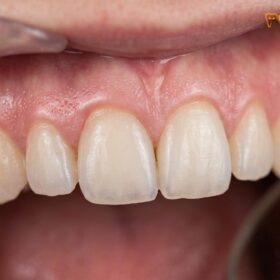
A chipped veneer can sometimes be repaired if it is made of composite resin, but a chipped porcelain veneer typically requires complete replacement. Prompt clinical assessment is essential to determine the extent of the fracture, protect the underlying tooth structure, and restore your smile’s aesthetics and function.
Clinical Summary:
Repairing a chipped veneer depends entirely on the material composition of the restoration. Composite veneers can often be repaired chair-side using a direct composite resin patch, restoring the tooth’s contour in a single visit. However, porcelain veneers—such as those crafted from E.max or Zirconia—lack the chemical properties required to bond reliably with patching materials, necessitating a full laboratory replacement. Advanced digital dentistry, including the use of iTero and Medit intraoral scanners, ensures precise marginal fit and seamless shade matching for replacement units. Furthermore, implementing preventive care strategies, including the use of a custom night guard and meticulous oral hygiene, is crucial to extend the lifespan of all dental restorations and prevent future fractures.
Key Takeaways:
- Composite veneers can often be repaired directly in the clinic using advanced resin bonding techniques.
- Porcelain veneers cannot be permanently patched and require a complete laboratory replacement for structural integrity.
- Immediate clinical assessment is necessary to prevent margin decay and protect the underlying exposed enamel.
- Modern digital scanners provide comfortable, highly accurate 3D impressions for fabricating replacement veneers.
- Wearing a custom nightguard protects restorations from bite force trauma and nocturnal bruxism.
Assessment: Minor Cosmetic Chip vs. Major Structural Fracture
The first step in addressing a damaged restoration is a thorough clinical evaluation to distinguish between a superficial cosmetic chip and a critical structural fracture that compromises the tooth.
When a patient presents with a damaged restoration, the immediate clinical priority is to assess the severity of the fracture and the integrity of the underlying tooth structure. A chipped veneer is not merely an aesthetic inconvenience; it can expose the sensitive dentin or compromise the marginal seal, leading to bacterial microleakage. Dr. Nguyen Van Cuong emphasizes that a meticulous diagnostic approach is required to determine whether the failure is cohesive (within the veneer material itself) or adhesive (at the bonding interface between the tooth and the restoration)[1].
During the initial examination, the prosthodontist will evaluate the biological width and the gingival zenith calibration to ensure that the surrounding periodontal tissues remain healthy. If the chip is minor and confined to the incisal edge of a composite restoration, a simple repair may be indicated. However, if the fracture extends toward the cervical margin or involves a porcelain restoration, a more comprehensive intervention is required to prevent secondary caries and maintain optimal gingival health.
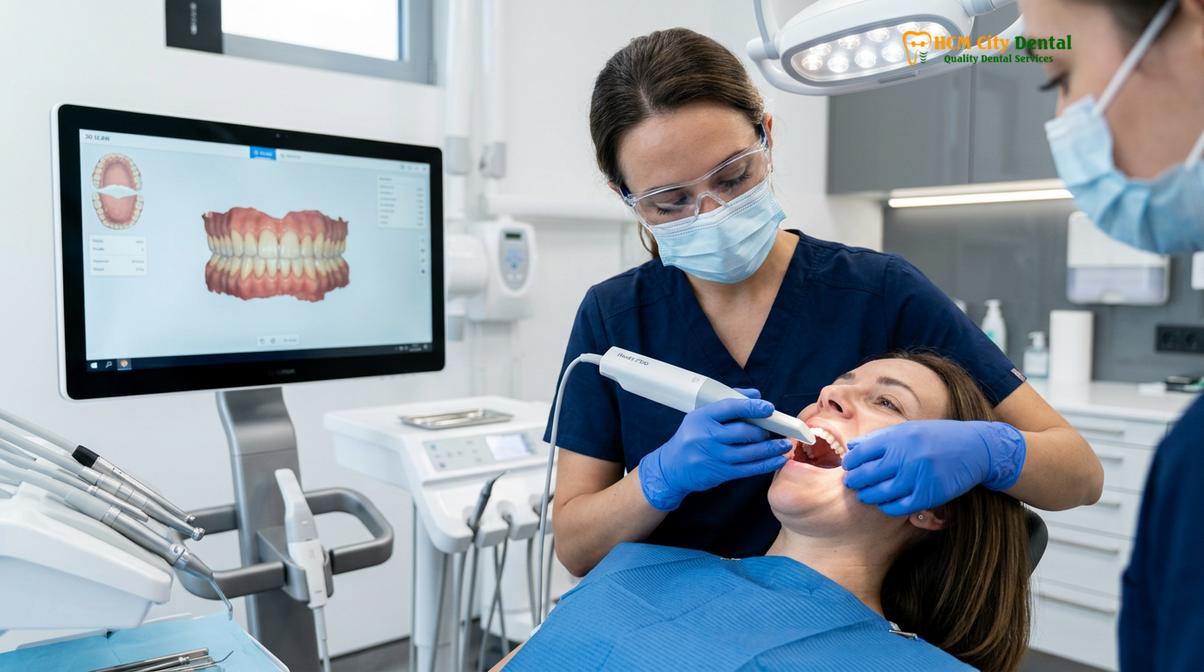
To achieve the highest level of diagnostic accuracy, modern dental practices utilize state-of-the-art digital scanning technology. The integration of iTero Element 5D & Medit i700 Intraoral Scanners has revolutionized the assessment process. These devices eliminate the need for messy, uncomfortable traditional silicone impressions, providing maximum comfort and 3D precision. The digital scans allow the clinician to magnify the damaged area, analyze the patient’s bite occlusion, and plan the exact dimensions required for a replacement or repair. This digital workflow is particularly crucial when planning planning your smile makeover or addressing complex restorative failures.
“The precision of intraoral digital scanning allows us to detect microscopic marginal discrepancies that are invisible to the naked eye, ensuring that any replacement restoration fits flawlessly and respects the natural biological width of the tooth.”
Furthermore, assessing the cause of the fracture is just as important as treating the damage itself. If the chip was caused by an acute trauma, the treatment path is straightforward. However, if the damage is the result of chronic occlusal stress, such as sleep bruxism, the treatment plan must include long-term protective measures. Understanding the biomechanics of the patient’s bite is essential for selecting the appropriate restorative material and ensuring the longevity of the new veneer.
Repairing Composite Veneers: Direct Chair-Side Resin Bonding
Chipped composite veneers can be effectively repaired in a single visit using direct resin bonding, restoring both the shape and shade of the original restoration.
For patients who have previously opted for composite restorations, a chipped composite repair is often a viable and minimally invasive solution. Unlike dental ceramics, composite resin possesses chemical properties that allow new material to bond to the existing restoration. This process, known as a composite resin patch, can be performed directly in the dental chair, offering a rapid resolution to aesthetic emergencies.
The clinical workflow for repairing a composite veneer begins with strict isolation of the operative field, often utilizing a rubber dam to prevent moisture contamination. The fractured surface is then gently roughened using a fine diamond bur or air abrasion to increase the surface area for bonding. A silane coupling agent and a high-quality bonding adhesive are applied to the prepared surface to facilitate a strong micromechanical and chemical bond between the old and new resin layers[2].
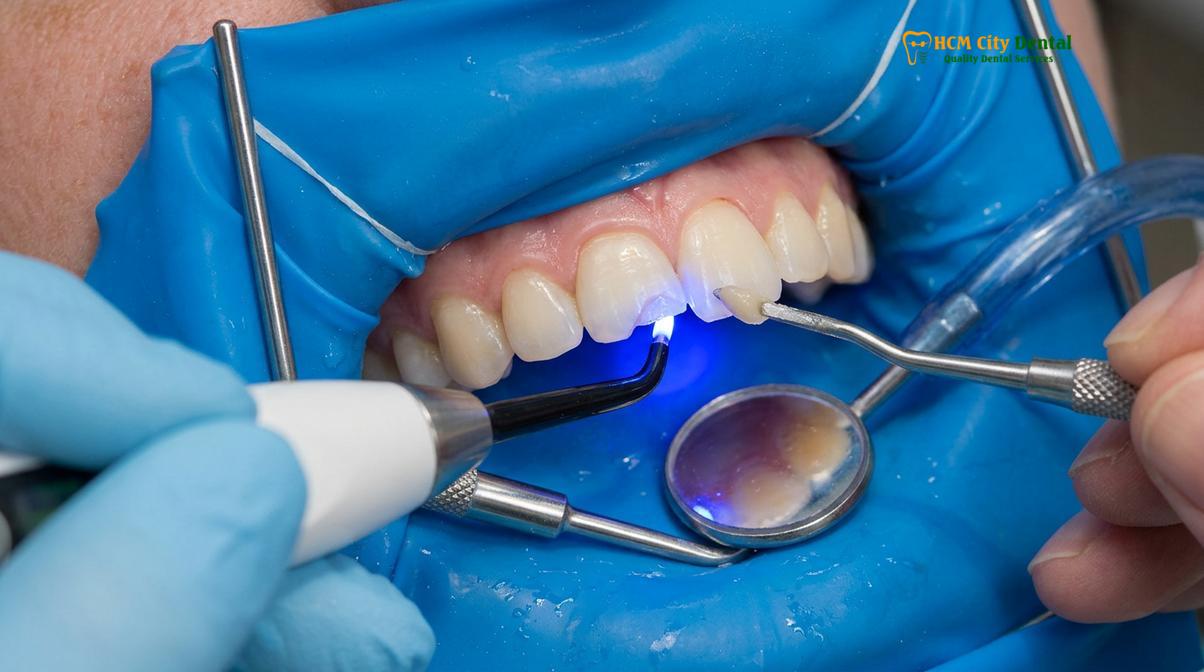
Once the surface is prepared, the clinician meticulously layers the new composite resin. This requires an artistic eye and a deep understanding of material science to ensure perfect shade matching and translucency. The resin is sculpted to recreate the natural contours of the tooth, paying close attention to the incisal edge and the overall symmetry of the smile. The material is then polymerized using a specialized curing light, followed by a comprehensive polishing sequence to achieve a high-gloss finish that mimics natural enamel.
At HCMC Dental Clinic, we prioritize accessibility and transparency in our pricing structure. For patients seeking composite veneer treatments or repairs, we offer highly competitive rates, particularly for those utilizing our digital booking channels. According to our current fee schedule, a chair-side composite veneer is priced at approximately $80 (2.0M VND) for walk-in patients. However, patients who book via WhatsApp receive a 40% pre-arrival discount, bringing the cost to From $48 (1.2M VND). This makes high-quality cosmetic dentistry highly accessible for both local residents and dental tourists.
Why Porcelain Veneers Cannot Be Patched: The Need for Lab Replacement
Due to the monolithic and highly glazed nature of dental ceramics, a chipped porcelain veneer cannot be reliably patched and requires complete replacement to ensure structural integrity.
A common misconception among patients is that a chipped porcelain restoration can be easily patched with composite resin. While a clinician might apply a temporary resin patch in an emergency, this is never a permanent solution. Porcelain veneers, particularly those fabricated from advanced materials like E.max (lithium disilicate) or Zirconia, are monolithic structures that are fired in a high-temperature kiln. Their surfaces are highly glazed to resist staining and plaque accumulation. Consequently, composite resin cannot form a durable chemical bond with the fractured ceramic surface, and any patch will inevitably debond or discolor over time[3].
Therefore, a porcelain veneer replacement is the only clinically sound protocol for a fractured ceramic restoration. This process involves the careful removal of the damaged veneer, ensuring maximum enamel preservation. The tooth is then re-prepared, typically requiring a minimal-prep depth of 0.3mm to 0.7mm, depending on the specific material and the underlying tooth shade. For patients seeking the ultimate in aesthetic realism, we utilize authentic, certified materials from Germany and Liechtenstein. E.max (Ivoclar, Liechtenstein) is renowned for its outstanding lifelike aesthetics and translucency matching, making it ideal for anterior teeth. For high-stress areas or patients with heavy bite forces, Zirconia HT (Cercon HT, Germany) offers unparalleled flexural strength.
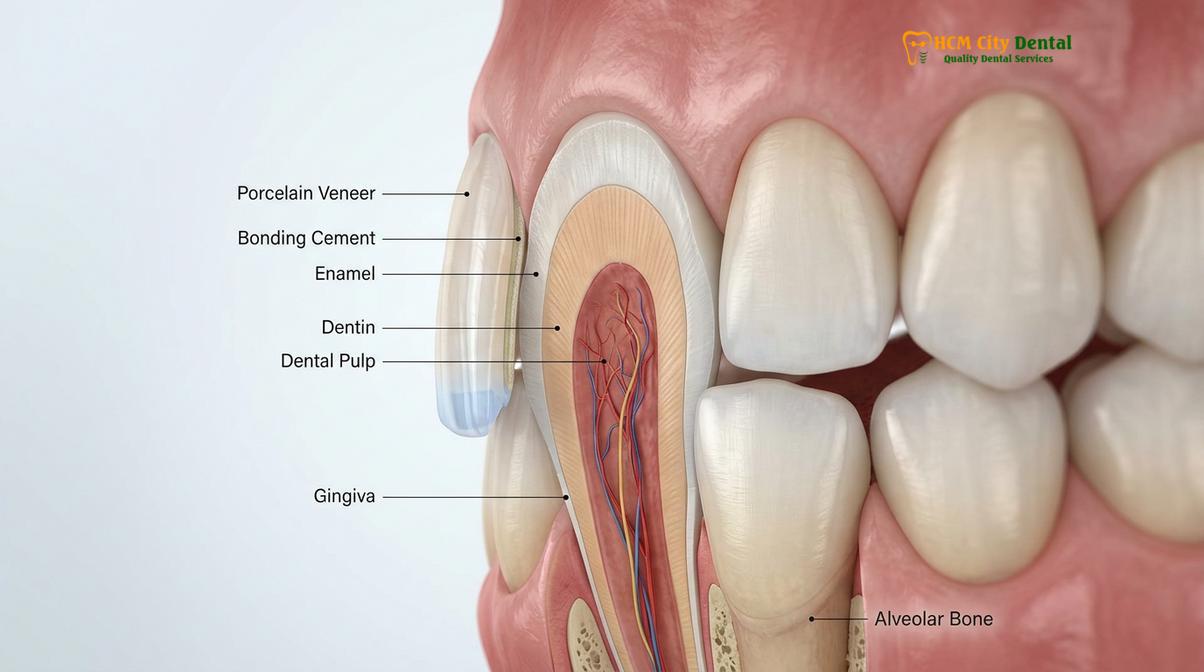
The replacement process relies heavily on our Direct Lab Partnership. By collaborating directly with a leading dental laboratory in Ho Chi Minh City, our prosthodontists maintain complete quality control over the fabrication process. This direct communication ensures precise custom shading, such as achieving a natural VITA BL1 translucent shade, and exact marginal adaptation. For international patients and expats, we offer an Express 3-5 Day Turnaround, allowing a complete smile makeover or a single replacement to be fabricated, characterized, and permanently cemented within a single week.
| Feature | Composite Resin Patch | Porcelain Veneer Replacement |
|---|---|---|
| Material Compatibility | Bonds well to existing composite | Requires complete new ceramic unit |
| Treatment Time | Single visit (Chair-side) | 2 visits (Lab fabrication required) |
| Aesthetic Longevity | Moderate (Prone to staining over time) | Excellent (Highly stain-resistant) |
| Structural Strength | Moderate (Suitable for minor chips) | High (Restores full occlusal integrity) |
| Cost Estimate (WhatsApp Discount) | From $48 (1.2M VND) | E.max: From $192 | Zirconia: From $144 |
When choosing between porcelain and composite materials, patients must weigh the immediate convenience of composite against the long-term durability and unparalleled aesthetics of porcelain. The cementation protocol for a new porcelain veneer is a meticulous process involving try-in pastes to verify the shade, hydrofluoric acid etching of the internal ceramic surface, silane application, and precise light-curing to ensure a permanent, seamless integration with the natural tooth.
Temporary Measures: What to Do While Waiting for Your Dental Appointment
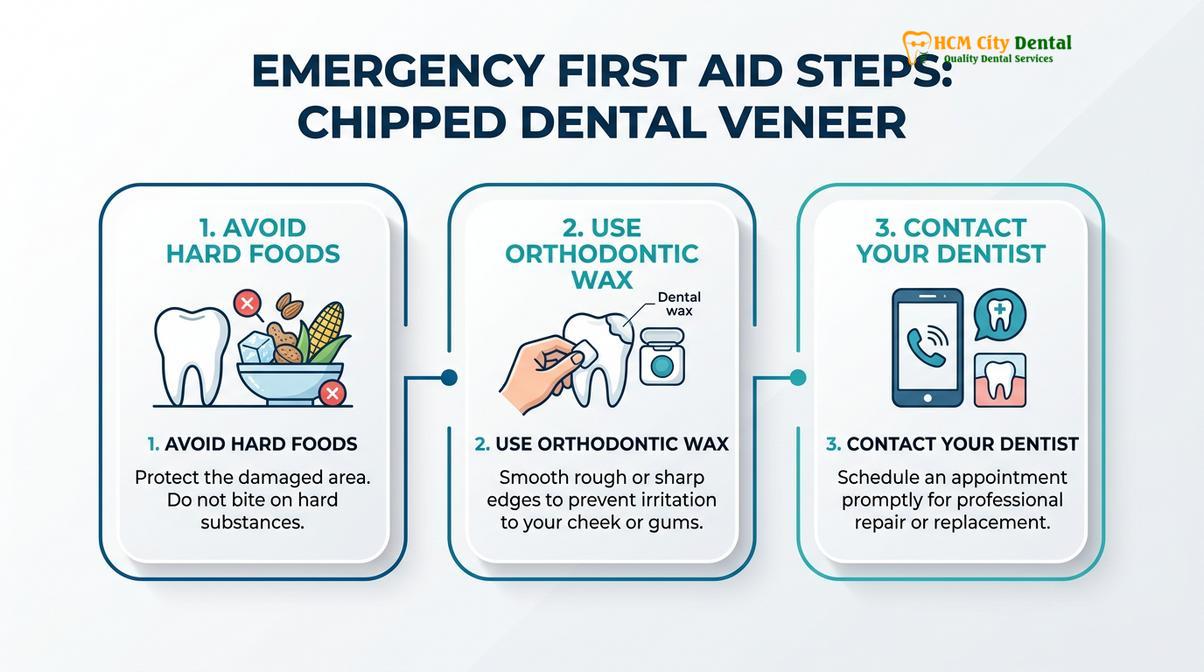
If you experience a chipped veneer, keep the area clean, avoid hard foods, and use orthodontic wax to cover sharp edges until you can see a prosthodontist.
Experiencing a dental fracture can be distressing, especially if it affects your anterior teeth. While waiting for your appointment, it is crucial to take immediate steps to protect the tooth and prevent further damage. First, carefully remove any loose fragments of the veneer from your mouth to avoid accidental ingestion or aspiration. Rinse your mouth gently with warm water or a non alcoholic rinse to keep the area clean and free of debris.
If the remaining edge of the veneer is sharp and irritating your tongue or lips, you can apply a small piece of dental wax (orthodontic wax) over the jagged area. This provides a smooth, temporary barrier that prevents soft tissue lacerations. It is imperative to modify your diet immediately; avoid biting into hard, crunchy, or sticky foods, and chew on the opposite side of your mouth to minimize stress on the compromised tooth.
Clinical Warning: Never attempt to reattach a chipped veneer fragment using household adhesives, superglue, or DIY dental repair kits. These substances are highly toxic, can cause irreversible damage to the tooth’s pulp, and will destroy the surface required for a professional clinical repair.
If the underlying dentin is exposed, you may experience heightened sensitivity to hot, cold, or sweet stimuli. Using a desensitizing toothpaste can provide temporary relief, but you should avoid extreme temperature variations in your food and beverages until the tooth is professionally evaluated and sealed.
Emergency Dental Support at HCMC Dental in District 1
For urgent cosmetic dental issues, our clinic provides rapid assessment, temporary restorations, and expedited lab fabrication to restore your smile without delay.
When a cosmetic dental emergency strikes, timely intervention is critical. For patients seeking an emergency dental saigon solution, HCMC Dental Clinic offers comprehensive support designed to address urgent aesthetic and functional concerns. Our clinical team is equipped to provide immediate stabilization, including the fabrication of a high-quality temporary veneer, ensuring that you do not have to compromise your appearance while waiting for the final laboratory restoration.
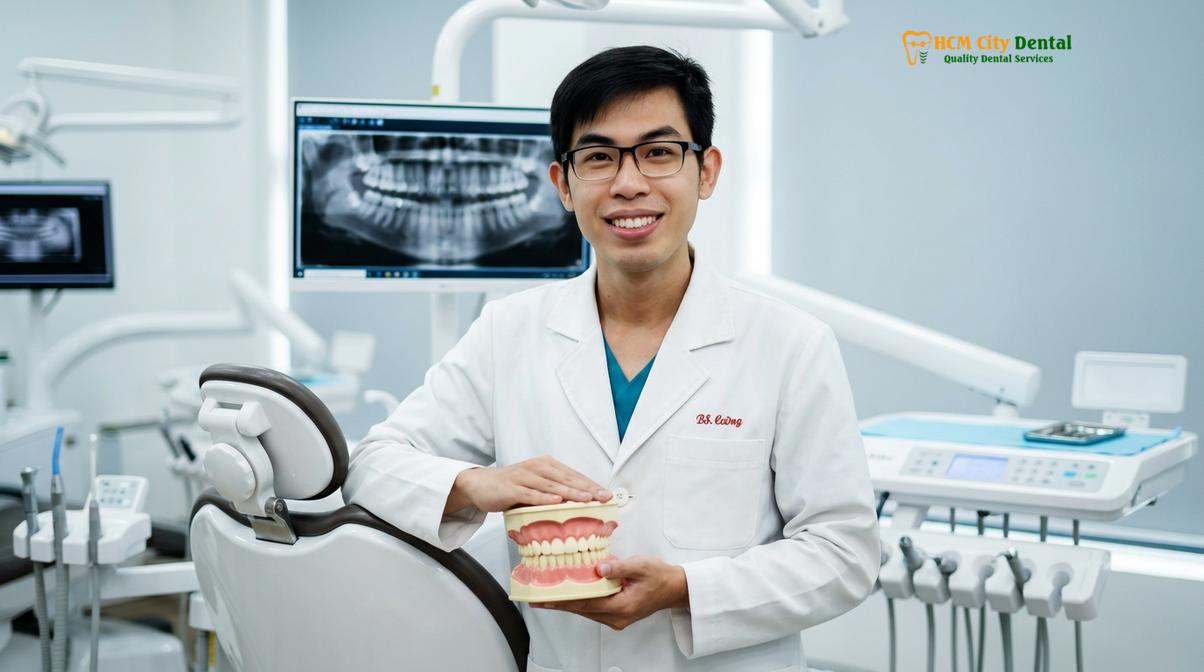
Dr. Cuong and our team of specialists utilize advanced Digital Smile Design (DSD) protocols to ensure that any replacement perfectly matches your existing dentition. We understand that unexpected dental expenses can be a concern, which is why we offer transparent financials, including 0% interest monthly credit card installment plans, making premium care accessible.
Furthermore, we stand behind the quality of our work with robust Warranty & Support protocols. Patients receive global manufacturer warranty cards for certified materials, alongside a 3-year clinic bonding & fit guarantee for E.max and Zirconia restorations, and a 1-year guarantee for Composite work. For our international patients, we provide dedicated remote follow-up support via WhatsApp, utilizing structured photo and video assessment protocols to monitor healing and address any post-operative concerns regardless of your geographic location.
Clinical Case Study: A 34-year-old patient visiting Ho Chi Minh City presented with a fractured E.max veneer on tooth #8 (upper right central incisor) due to accidental trauma. Utilizing the Medit i700 scanner, our team captured a highly accurate digital impression within minutes. A temporary restoration was placed immediately. Thanks to our express lab partnership, a perfectly shade-matched (VITA B1) replacement veneer was fabricated and permanently cemented just four days later, allowing the patient to continue their travels with a fully restored smile.
Long-Term Care and Prevention Strategies
Maximizing the lifespan of your veneers requires meticulous daily hygiene, proper tools, and protection against excessive occlusal forces during sleep.
Once your smile has been restored, proactive maintenance is essential to ensure the lifespan of dental restorations. The longevity of both composite and porcelain veneers is heavily dependent on the patient’s commitment to oral hygiene and preventive care. Margin decay prevention is the primary goal; while the veneer itself cannot decay, the underlying natural tooth structure remains vulnerable at the margins where the restoration meets the enamel.
To maintain optimal gingival health and prevent plaque accumulation, patients must adopt a specific flossing technique veneers require. Instead of snapping the floss down forcefully, which can traumatize the interdental papilla or catch on the margin, the floss should be gently guided between the teeth and pulled through horizontally. Additionally, transitioning to an electric soft toothbrush is highly recommended. The oscillating or sonic action provides superior plaque removal without the abrasive force that can dull composite resin or cause gingival recession[4].
“Preventive dentistry is the foundation of aesthetic longevity. Protecting your investment requires not just good hygiene, but an understanding of how mechanical forces interact with restorative materials over time.”
For patients who exhibit signs of sleep bruxism (teeth grinding or clenching), bite force protection is non-negotiable. The immense pressure generated during nocturnal grinding can easily fracture even the strongest Zirconia restorations. A custom night guard, fabricated from durable acrylic or dual-laminate materials, acts as a shock absorber, distributing occlusal forces evenly and protecting the veneers from catastrophic failure. Regular dental check-ups are also vital, allowing the clinician to monitor the integrity of the bonding cement and perform professional prophylaxis to maintain the high-gloss finish of the restorations.
When to See a Doctor
It is crucial to seek professional dental care immediately if you notice any structural changes to your veneers. While a minor chip might seem insignificant, it can compromise the marginal seal, leading to microleakage and subsequent decay of the underlying tooth structure. You should schedule an urgent consultation if you experience heightened sensitivity to temperature, pain upon biting, or if the veneer feels loose or mobile.
Additionally, if you notice inflammation, bleeding, or a change in the color of the gums around the restoration, this may indicate a violation of the biological width or an allergic response to plaque accumulation at the margin[5]. Early intervention is key to preserving the natural tooth and avoiding more invasive procedures, such as root canal therapy or the need to understand the structural differences between crowns and veneers. A thorough clinical examination will determine the most conservative and effective treatment path to restore your oral health.
If you are experiencing issues with your dental restorations, do not hesitate to contact HCMC Dental Clinic for a comprehensive evaluation. Our team is dedicated to providing evidence-based, aesthetic solutions tailored to your unique clinical needs.
Frequently Asked Questions
Can a chipped porcelain veneer be repaired?
No, a chipped porcelain veneer generally cannot be permanently repaired and requires a complete replacement. Because dental ceramics like E.max and Zirconia are highly glazed and monolithic, patching materials like composite resin cannot form a durable chemical bond with the fractured surface, leading to inevitable failure of the patch. A full replacement ensures structural integrity and seamless aesthetics.
How much does it cost to replace a single chipped veneer?
The cost to replace a single chipped veneer depends on the material selected. At our clinic, a chair-side composite veneer starts from $48 (WhatsApp discount), while a premium E.max porcelain veneer replacement starts from $192, and Zirconia starts from $144, offering significant savings for international patients. We also offer a free 3D Smile Design mock-up if the treatment is performed.
What causes veneers to chip or fall off?
Veneers typically chip due to excessive occlusal trauma, such as biting on hard objects, or underlying issues like sleep bruxism (teeth grinding). Poor cementation protocols, underlying margin decay, or structural failure of the bonding agent can also cause a veneer to detach or fracture over time. Wearing a protective nightguard can significantly reduce these risks.
Does repairing a chipped veneer hurt?
Repairing or replacing a chipped veneer is generally a painless procedure. Because the underlying tooth structure has already been prepared and the nerve is protected, local anesthesia is often not required for a simple composite patch, though it may be used for comfort during a full porcelain replacement. Our digital scanning process also eliminates the discomfort of traditional impressions.
How long does a composite resin patch last?
A composite resin patch on a chipped veneer is considered a temporary to medium-term solution, typically lasting a few months to a few years. Its longevity depends heavily on the location of the chip, the patient’s bite forces, and adherence to proper oral hygiene and dietary precautions. For a permanent solution, especially on high-stress anterior teeth, a full ceramic replacement is recommended.
References
- Journal of Esthetic and Restorative Dentistry. Translucency and fracture resistance of lithium disilicate restorations. (2021).
- International Journal of Prosthodontics. Enamel preservation techniques and composite bond strength. (2020).
- The Journal of Prosthetic Dentistry. Flexural strength and failure modes of porcelain veneers. (2019).
- Clinical Oral Investigations. Diode laser gingival sculpting parameters in aesthetic dentistry. (2022).
- Journal of Clinical Periodontology. Biological width preservation around anterior restorations. (2018).
For customized Digital Smile Design (DSD), material options, or to book a free smile assessment with Dr. Cuong, visit our Porcelain Veneers & Smile Makeover service page at HCMC Dental Clinic in Ho Chi Minh City.