Proper temporary veneers care requires gentle brushing, a modified soft-food diet, and avoiding sticky or hard items that could dislodge the provisional restorations. Maintaining impeccable oral hygiene during this brief transitional phase is critical to ensuring healthy gums and a successful final bonding of your permanent porcelain smile.
Clinical Summary:
Temporary veneers, also known as provisional restorations, serve as a vital biological dressing and aesthetic blueprint between the initial tooth preparation and the final cementation of permanent ceramics. Because they are secured with temporary cement and fabricated from acrylic or bis-acryl resins, they lack the shear strength of final porcelain. Effective temporary veneers care involves managing post-prep dentin sensitivity, adhering to strict dietary modifications (avoiding hard, crunchy, or highly pigmented foods), and utilizing specific hygiene protocols such as the pull-through flossing technique. Maintaining optimal gingival health during this phase is paramount, as inflamed tissue can compromise the moisture control required for the final adhesive bonding protocol. Should a temporary dislodge, immediate clinical communication is advised to protect the underlying dentin.
Key Takeaways:
- Temporary veneers protect exposed dentin and prevent severe thermal sensitivity after tooth preparation.
- Avoid hard, sticky, and highly pigmented foods to prevent dislodgement and staining of the porous acrylic material.
- Brush gently with a soft-bristled toothbrush, but do not pull dental floss upward between splinted temporaries.
- Healthy gums are mandatory for the final bonding phase; plaque accumulation around temporaries can delay your final treatment.
- If a temporary falls off, use denture adhesive as a stopgap and contact your prosthodontist immediately for re-cementation.
Why Temporary Veneers are Necessary for Prepared Teeth
Temporary veneers act as a protective biological barrier for prepared teeth, preventing sensitivity, maintaining gum contours, and providing an aesthetic preview of your final smile.
The journey to a flawless smile via Porcelain Veneers is a meticulously planned clinical process. Once the diagnostic phase and Digital Smile Design (DSD) are complete, the physical transformation begins with tooth preparation. During this appointment, the prosthodontist uses specialized instruments, such as an enamel depth-cutter, to perform a minimally invasive preparation. This process typically removes between 0.3mm and 0.7mm of the outermost enamel layer to create adequate restorative space for the final ceramic material without creating a bulky appearance [1].
While modern dentistry prioritizes enamel preservation, this necessary reduction often approaches or slightly exposes the dentin-enamel junction (DEJ). Because dentin is highly porous and contains microscopic tubules leading directly to the dental pulp (the nerve center of the tooth), leaving the prepared teeth exposed is clinically unacceptable. This is where provisional restorations become absolutely essential.
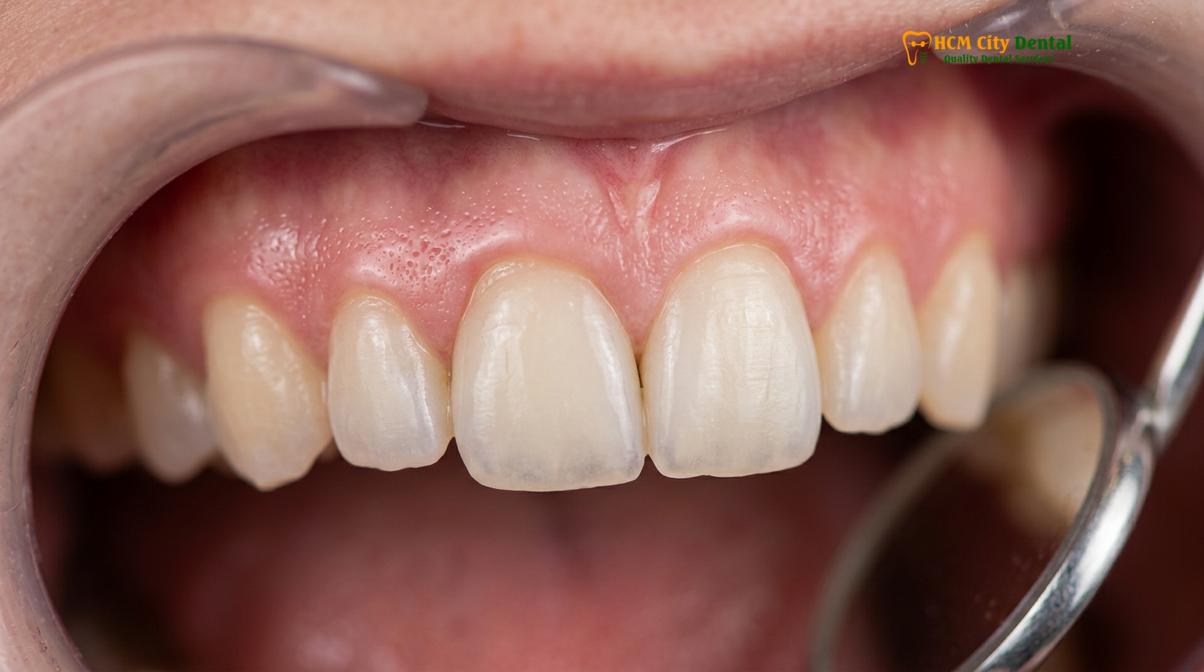
Temporary veneers serve multiple critical functions beyond mere aesthetics. First and foremost, they act as a biological dressing. By sealing the freshly prepared tooth surface, they protect the vulnerable dentin from bacterial ingress, thermal shocks, and chemical irritants present in the oral cavity. Without this protective layer, patients would experience debilitating pain when consuming anything hot, cold, or acidic.
“Provisional restorations are not merely a cosmetic stopgap; they are a critical diagnostic and biological tool. They dictate the healing of the gingival architecture and serve as the physical blueprint for the final ceramic restorations, ensuring that the biological width is respected and the patient’s functional occlusion is harmonized.”
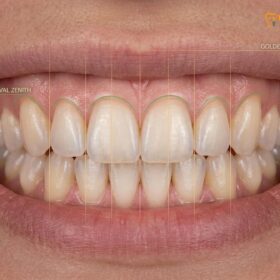
Furthermore, temporary acrylic veneers play a vital role in soft tissue management. The gingival tissues (gums) must remain perfectly healthy and in their correct anatomical position prior to the final cementation. Temporaries support the gingival zenith (the highest point of the gum tissue) and prevent the gums from collapsing over the preparation margins. If the gums become inflamed or overgrown due to poorly contoured temporaries or inadequate temporary veneers care, it can severely complicate the final placement, leading to bleeding that compromises the bonding environment [2].
Lastly, provisional restorations act as a functional and aesthetic trial. They allow the patient to “test drive” the proposed shape, length, and phonetics of their new smile. If a patient feels the temporaries are too long or interfere with their speech, the clinician can make immediate chairside adjustments. These modifications are then communicated to the dental laboratory, ensuring that the final ultra-thin contact lens veneers are fabricated to exact, patient-approved specifications.
Managing Post-Prep Sensitivity to Hot, Cold, and Air
Post-preparation sensitivity is managed by ensuring the temporary veneers completely seal the dentinal tubules and by avoiding extreme temperature fluctuations in your diet.
Even with the most conservative, minimally invasive preparation techniques, it is entirely normal to experience a degree of dentin sensitivity following the initial veneer appointment. To understand why this occurs, one must look at the hydrodynamic theory of tooth sensitivity. When enamel is removed, thousands of microscopic dentinal tubules are exposed. These tubules contain fluid that connects directly to the nerve endings in the dental pulp. When exposed to stimuli—such as cold air, hot coffee, or sweet foods—the fluid inside these tubules shifts rapidly, triggering a sharp pain response [3].
The primary defense against this discomfort is the precise fabrication and placement of provisional restorations. The clinician uses a temporary cement to adhere the acrylic or bis-acryl material to the prepared tooth, effectively plugging the exposed tubules and stabilizing the fluid dynamics within the dentin. However, because temporary cement is designed to be easily removed, the seal is not as hermetic as the final adhesive bonding protocol.
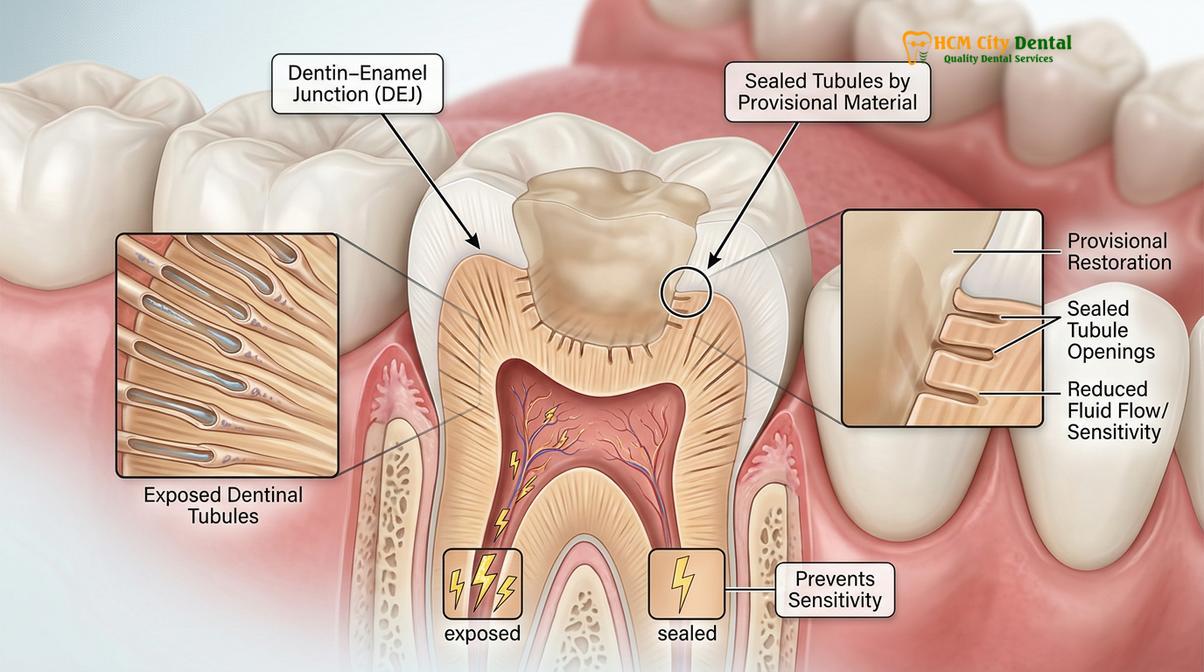
To effectively manage post-prep sensitivity while wearing temporary veneers, patients must adopt specific behavioral modifications. First, avoid extreme temperature variations. Consuming ice-cold beverages or scalding hot soups can penetrate the temporary acrylic material and irritate the underlying nerve. Opt for lukewarm or room-temperature foods and liquids during this transitional phase.
Clinical Warning: While mild to moderate sensitivity to cold and air is a normal physiological response after tooth preparation, spontaneous, throbbing pain that wakes you up at night or lingers for minutes after the stimulus is removed is not normal. This could indicate irreversible pulpitis, and you should contact your dental provider immediately for an evaluation.
Additionally, patients may benefit from using a desensitizing toothpaste containing potassium nitrate. While you should not scrub the temporaries aggressively, gently massaging a small amount of desensitizing paste along the gumline can help calm the nerve endings. Over-the-counter anti-inflammatory medications, such as Ibuprofen, can also be highly effective in the first 24 to 48 hours post-preparation to reduce pulpal inflammation and soft tissue tenderness resulting from the procedure.
It is also crucial to understand that the sensitivity experienced with temporaries is not indicative of how the final restorations will feel. Once the permanent porcelain is bonded using advanced resin cements, the dentinal tubules are permanently sealed, and the sensitivity typically resolves completely, allowing you to enjoy your new smile in total comfort.
Dietary Rules: What to Avoid While Wearing Temporaries
To prevent dislodgement and fracture, patients must adopt a soft-food diet, strictly avoiding hard, crunchy, sticky, and highly pigmented foods while wearing temporary veneers.
The structural integrity of temporary veneers is vastly different from that of final porcelain restorations. Provisional materials, typically bis-acryl composite resins or polymethyl methacrylate (PMMA), possess lower flexural and compressive strength. More importantly, the temporary cement used to hold them in place is intentionally weak. It must provide enough retention to keep the temporaries stable for a few days or weeks, but it must also yield easily when the dentist needs to remove them without damaging the underlying tooth structure [4].
Because of these biomechanical limitations, adhering to strict dietary rules is a non-negotiable aspect of temporary veneers care. The forces of mastication (chewing) can easily exceed the shear bond strength of the temporary cement, leading to dislodgement or fracture of the acrylic material.
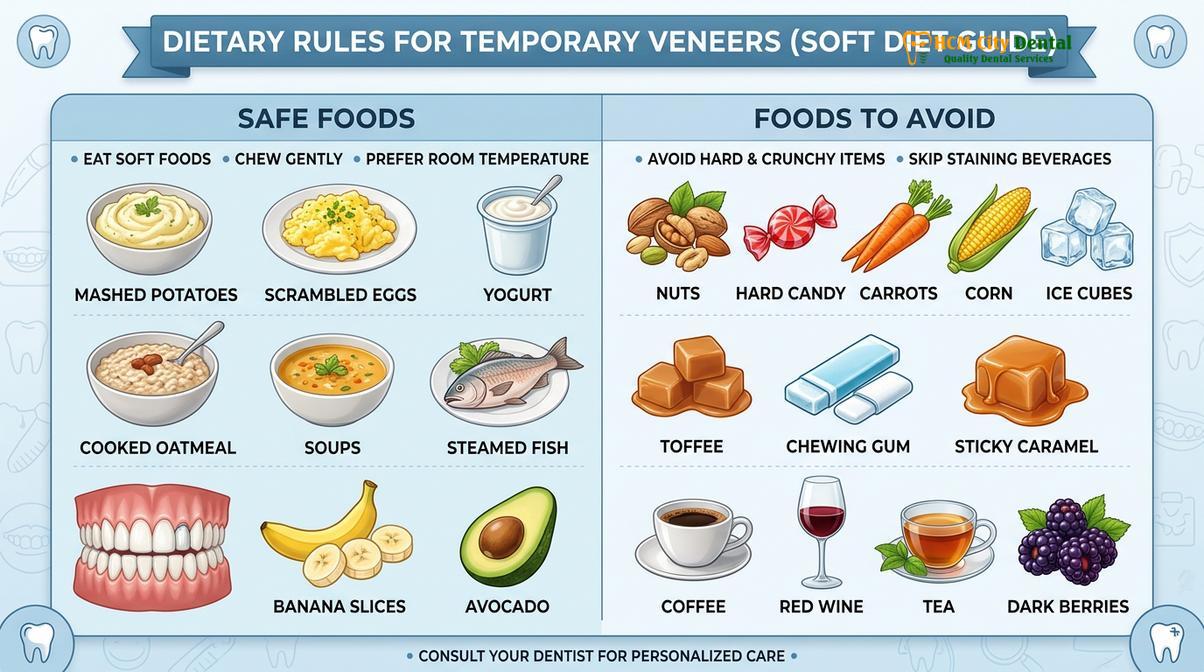
Foods to Strictly Avoid:
- Hard and Crunchy Foods: Items such as ice, hard candies, nuts, popcorn kernels, and crusty breads (like baguettes or pizza crusts) exert excessive localized pressure. Biting into an apple or a raw carrot with your front temporary teeth is a guaranteed way to fracture or dislodge them. All food should be cut into small, bite-sized pieces and chewed with the posterior (back) teeth.
- Sticky and Chewy Foods: Caramel, taffy, chewing gum, gummy candies, and even dense protein bars can create a vacuum effect. As you open your jaw, the sticky substance pulls against the temporary veneer, easily overcoming the weak bond of the temporary cement and pulling the restoration right off the tooth.
- Highly Pigmented Foods and Beverages: Unlike glazed dental porcelain, which is highly resistant to staining, temporary acrylic is porous. It will readily absorb pigments from the diet. To prevent your temporaries from turning yellow or brown, avoid red wine, black coffee, dark teas, turmeric, curry, berries, and tomato-based sauces. If you must drink coffee or tea, do so through a straw to minimize contact with the front teeth.
| Food Category | Safe to Consume (Soft Diet) | Strictly Avoid (High Risk) |
|---|---|---|
| Proteins | Scrambled eggs, flaky fish, tofu, slow-cooked shredded meats | Tough steaks, beef jerky, bone-in meats |
| Carbohydrates | Mashed potatoes, soft pasta, oatmeal, soft bread (no crust) | Crusty baguettes, hard taco shells, pretzels, popcorn |
| Fruits & Veggies | Bananas, applesauce, steamed vegetables, smoothies | Whole raw apples, raw carrots, corn on the cob |
| Snacks & Sweets | Yogurt, pudding, ice cream (no hard mix-ins) | Caramel, chewing gum, hard candies, nuts |
By treating your provisional restorations with care and shifting the workload to your molars, you can ensure that your temporaries remain intact, aesthetic, and functional throughout the waiting period.
Oral Hygiene Protocol: Keeping Temporaries Clean without Dislodging Them
Maintain oral hygiene by brushing gently with a soft toothbrush and using a modified pull-through flossing technique to prevent pulling the splinted temporaries off the teeth.
One of the most common misconceptions among patients is that they should avoid brushing their temporary veneers out of fear of knocking them loose. In reality, meticulous oral hygiene is more critical during the provisional phase than at almost any other time. If plaque is allowed to accumulate around the temporary margins, the gingival tissue will rapidly become inflamed, swollen, and prone to bleeding (gingivitis) [5].
Why is this a critical issue? The final cementation of porcelain veneers requires absolute moisture control. The advanced adhesive bonding protocol used to fuse the ceramic to the enamel and dentin is highly hydrophobic—meaning it repels water and will fail if contaminated by saliva, crevicular fluid, or blood. If your gums are bleeding due to poor hygiene during the temporary phase, the clinician may struggle to achieve proper rubber dam isolation, potentially delaying your final placement or compromising the longevity of the permanent restorations. For a deeper understanding of how long final restorations endure when bonded correctly, review our guide on How Long Do Porcelain Veneers Last? (Honest Guide).
Brushing Protocol:
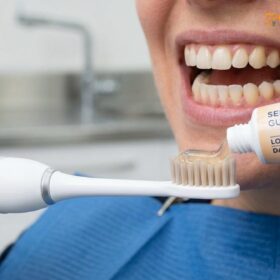
You must continue to brush your teeth at least twice a day. However, technique is paramount. Use an ultra-soft bristled toothbrush and a non-abrasive toothpaste. Position the bristles at a 45-degree angle toward the gumline (the Bass technique) and use gentle, circular micro-vibrations. Do not use aggressive horizontal scrubbing motions, as this can abrade the acrylic material and irritate the healing gingival margins.
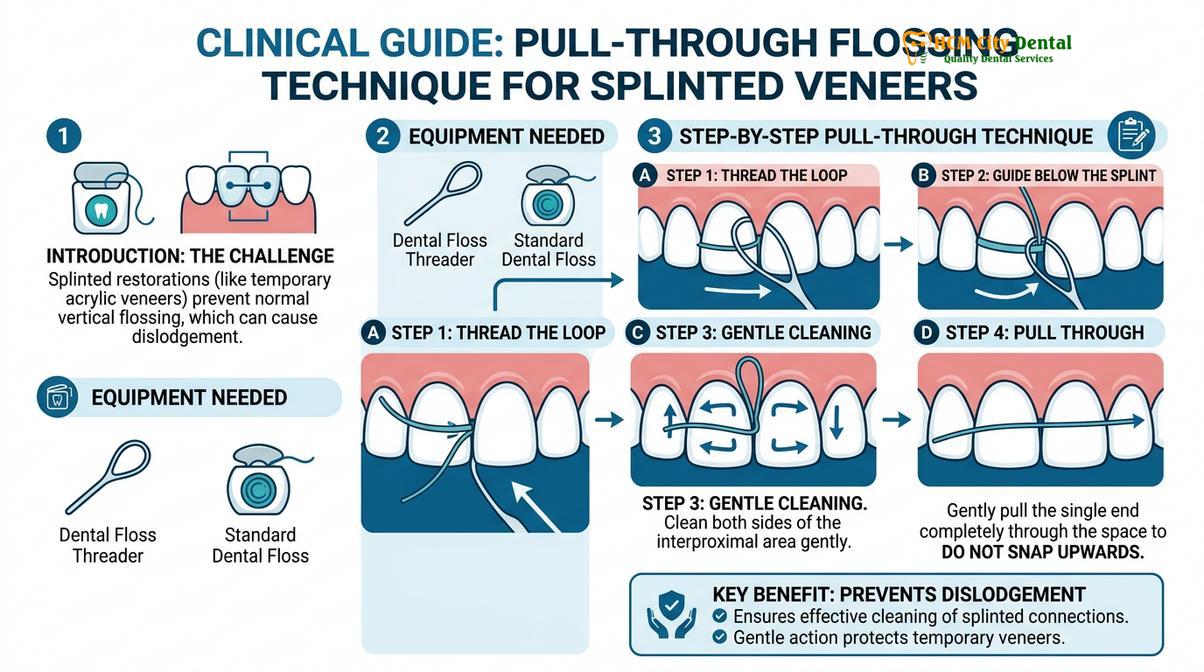
Flossing Protocol (The Pull-Through Method):
Flossing requires a specific modification. In many cases, temporary veneers are fabricated as a single, splinted unit (connected together) for added strength, meaning you cannot pass floss between them. If they are splinted, your dentist will advise you not to floss between the temporaries. If they are individual units, you must use the “pull-through” method. Gently ease the floss down between the teeth to clean the sulcus, but do not pull the floss back up through the contact point. Pulling upward exerts a dislodging force that can easily pop the temporary off. Instead, let go of one end of the floss and pull it horizontally out through the side of the teeth.
Adjunctive Rinses:
To further reduce bacterial load without mechanical trauma, your dentist may prescribe an antimicrobial mouthwash, such as 0.12% Chlorhexidine gluconate, or recommend warm salt water rinses. Swish gently rather than vigorously to avoid creating hydraulic pressure that could loosen the temporary cement.
What to Do If a Temporary Veneer Loose or Falls Off
If a temporary veneer falls off, retrieve it, keep it safe, and contact your dentist immediately for re-cementation; use denture adhesive temporarily if you cannot reach the clinic right away.
Despite the best temporary veneers care and strict adherence to dietary guidelines, it is not uncommon for a provisional restoration to become loose or fall off entirely. The temporary cement is designed to fail under certain loads, and the dynamic environment of the mouth presents constant challenges. If this happens, the most important rule is not to panic.
First, carefully locate and retrieve the dislodged temporary veneer. Rinse it gently with water and place it in a safe container. Do not wrap it in a tissue, as it is easily mistaken for trash and thrown away. Examine your prepared tooth; it will likely feel rough to the tongue and may be highly sensitive to air and temperature.
Clinical Protocol: Managing a Dislodged Temporary
A patient visiting HCMC Dental Clinic in Ho Chi Minh City experienced a dislodged temporary veneer while eating soft bread. Following our protocol, they immediately contacted the clinic via WhatsApp. Because they were in the city, we scheduled them for a 10-minute re-cementation appointment the same morning. The underlying dentin was protected, and the final treatment timeline remained unaffected.
Your immediate next step is to contact your dental provider. If you are a patient at HCMC Dental Clinic, you can utilize our remote follow-up support via WhatsApp for immediate guidance. We will schedule you for a quick re-cementation appointment. It is crucial not to leave the prepared tooth exposed for an extended period, as the adjacent teeth can shift slightly, or the gums can alter their contour, which may affect the fit of the final porcelain veneer.
If you cannot reach the clinic immediately (e.g., it happens late at night or over the weekend), you can temporarily re-seat the veneer yourself to protect the tooth. Clean the inside of the temporary gently. Apply a very small amount of over-the-counter denture adhesive (like Fixodent or Poligrip), petroleum jelly (Vaseline), or even a dab of toothpaste inside the temporary, and carefully slide it back onto the prepared tooth. Bite down gently to ensure it is seated correctly. Never use household glues, superglue, or permanent adhesives under any circumstances, as these are highly toxic to the dental pulp and will permanently ruin the underlying tooth structure.
The Clinical Workflow: From Temporaries to Final Placement
The transition from temporaries to final veneers involves advanced digital scanning, rapid laboratory fabrication, and precise adhesive bonding to deliver a flawless, permanent smile.
Understanding the broader clinical workflow helps contextualize why the provisional phase, though sometimes inconvenient, is so brief and vital. Modern cosmetic dentistry has evolved significantly, moving away from uncomfortable traditional silicone impressions toward highly accurate digital workflows.
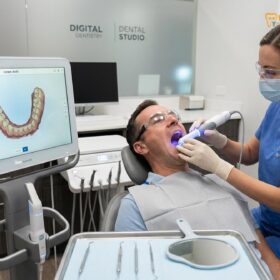
At HCMC Dental Clinic in Ho Chi Minh City, the preparation phase concludes with state-of-the-art digital scanning using the iTero Element 5D or Medit i700 Intraoral Scanners. This technology captures the exact 3D topography of the prepared teeth, the adjacent dentition, and the bite relationship with micron-level precision. This digital file is instantly transmitted to our direct lab partnership facility in Ho Chi Minh City. This seamless communication between the prosthodontist and the master ceramist ensures complete quality control.
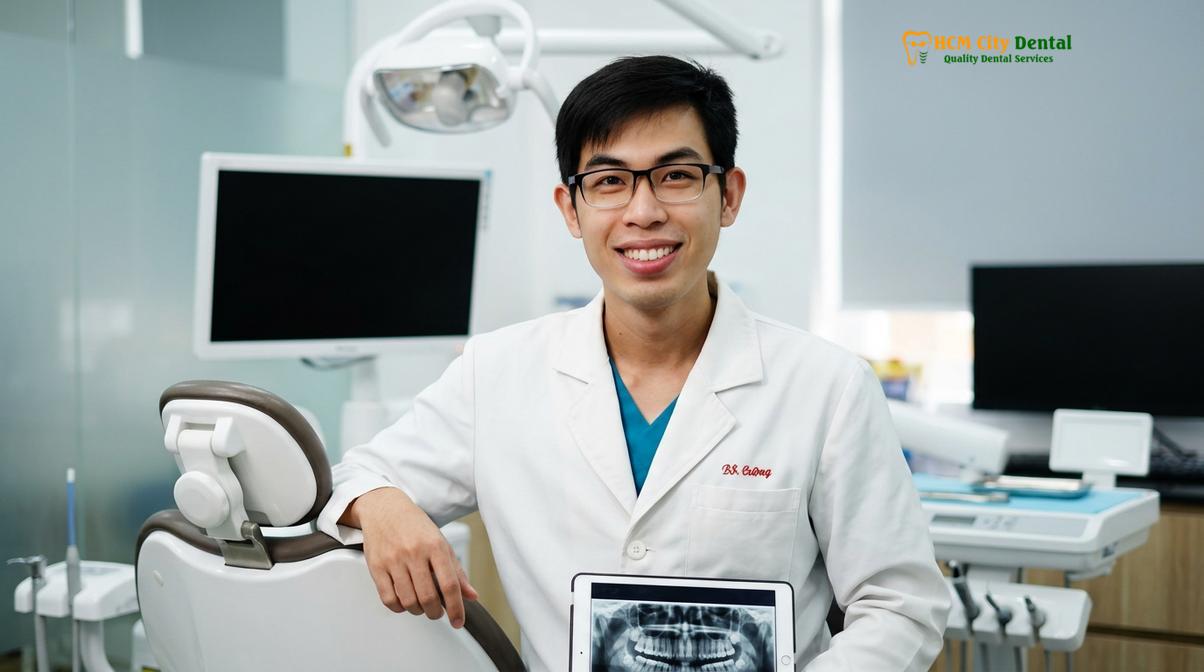
“The integration of digital intraoral scanning eliminates the distortion inherent in traditional impression materials. It allows us to design final restorations that possess an impeccable marginal fit, ensuring long-term periodontal health and aesthetic excellence.” — Dr. Nguyen Van Cuong
For international patients, dental tourists, and expats, time is often of the essence. Through our optimized digital workflow, we offer an express 3-5 day turnaround. This means you will only need to practice temporary veneers care for less than a week before your permanent smile is ready. During this time, the laboratory fabricates your custom veneers using only authentic, certified materials from Germany and Liechtenstein. Depending on your clinical needs, we utilize Zirconia HT (Cercon HT, Germany) for high-stress areas or patients with bruxism, and E.max (Ivoclar, Liechtenstein) lithium disilicate for outstanding lifelike aesthetics, superior translucency matching, and custom shade mapping (such as achieving a natural VITA BL1 shade).
Transparent Pricing and Value:
Understanding the financial investment is as important as understanding the clinical care. According to the latest clinic fee schedule, we offer a highly competitive pricing structure, particularly for patients who book in advance. By utilizing our WhatsApp booking system, patients receive a 40% pre-arrival discount:
- Composite Veneer (Chair-side): Walk-in: ~$80 (2.0M VND) | WhatsApp discount: From $48 (1.2M VND).
- Zirconia Veneer (Cercon HT): Walk-in: ~$240 (6.0M VND) | WhatsApp discount: From $144 (3.6M VND).
- E.max Porcelain Veneer (Ivoclar): Walk-in: ~$320 (8.0M VND) | WhatsApp discount: From $192 (4.8M VND).
- Smile Design 3D Mock-up: Walk-in: ~$200 (5.0M VND) | WhatsApp discount: From $120 (3.0M VND) (Free if treatment is performed).
To further support our patients, we offer 0% interest monthly credit card installment plans. Every final restoration is backed by global manufacturer warranty cards, alongside a 3-year clinic bonding and fit guarantee for E.max/Zirconia, and a 1-year guarantee for Composite. For patients wondering about the differences between restorative options, Dr. Cuong provides detailed insights in our guide on Porcelain Veneers vs Porcelain Crowns: Which Is Right for You?.
When to See a Doctor (Important Clinical Considerations)
While temporary veneers care is generally straightforward, certain clinical signs warrant immediate professional evaluation. You should contact your dental provider if you experience any of the following:
- Severe, Spontaneous Pain: If you experience throbbing pain that is not triggered by hot or cold, or pain that wakes you up at night, this may indicate pulpal inflammation that requires assessment.
- Significant Bite Discrepancy: If your bite feels high or uneven, causing you to strike the temporary veneer prematurely when closing your jaw, it must be adjusted. A high bite can cause trauma to the underlying tooth nerve and lead to fracture of the provisional material.
- Persistent Bleeding or Swelling: While mild gum tenderness is normal for a day or two after preparation, persistent bleeding, severe swelling, or purulent discharge (pus) indicates an infection or severe gingival irritation that must be addressed before final cementation.
- Complete Dislodgement: As discussed, if the temporary falls off and cannot be securely repositioned with denture adhesive, you must see your dentist promptly to protect the prepared dentin.
Always remember that this information serves as a general educational reference. For individualized diagnostic advice and treatment planning, a comprehensive clinical examination by a qualified prosthodontist is mandatory.
Frequently Asked Questions
Can I brush my teeth with temporary veneers?
Yes, you must brush your teeth with temporary veneers to maintain gingival health, but you should use a soft-bristled toothbrush and non-abrasive toothpaste. Gentle, circular motions around the gumline prevent plaque accumulation, which is critical for ensuring the gums are healthy for the final bonding of your permanent porcelain restorations.
What should I do if my temporary veneer falls off?
If a temporary veneer falls off, do not panic; carefully retrieve the piece, rinse it, and contact your dental clinic immediately for re-cementation. In the interim, you can use a small amount of denture adhesive or petroleum jelly to temporarily hold it in place over the prepared tooth to prevent sensitivity.
Why do my temporary veneers look bulky?
Temporary veneers often look slightly bulkier than final restorations because they are fabricated from acrylic or bis-acryl resins and are splinted together for strength. They serve as a protective blueprint rather than a final aesthetic result; your permanent porcelain veneers will be custom-milled to be ultra-thin and perfectly contoured.
How long do I need to wear provisional restorations?
Patients typically wear provisional restorations for a period of 3 to 14 days, depending on the laboratory fabrication time for the final ceramics. For international patients utilizing express services, this duration is often condensed to just 3 to 5 days while the permanent restorations are meticulously crafted.
Will my final porcelain veneers feel like these temporaries?
No, your final porcelain veneers will feel significantly smoother, more natural, and less bulky than the temporary acrylic versions. The permanent restorations are individually bonded, allowing for normal flossing, and are glazed to mimic the exact texture and light-reflecting properties of natural dental enamel.
References
- Journal of Esthetic and Restorative Dentistry. The role of provisional restorations in maintaining gingival architecture. (2021).
- International Journal of Prosthodontics. Dentin hypersensitivity following tooth preparation: Mechanisms and management. (2020).
- The Journal of Prosthetic Dentistry. Shear bond strength of temporary cements on prepared dentin. (2019).
- Clinical Oral Investigations. Plaque accumulation on bis-acryl provisional materials versus glazed porcelain. (2022).
- Journal of Clinical Periodontology. Biological width preservation during the provisionalization phase of fixed prosthodontics. (2018).