A remote dental consultation in Vietnam allows international patients to receive an accurate clinical assessment, custom treatment plan, and all-inclusive quote before traveling. By submitting digital records and smile photos, patients can secure expert prosthodontic triage and significant cosmetic savings without leaving home.
Clinical Summary:
Advancements in teledentistry have revolutionized how international patients plan complex cosmetic procedures like porcelain veneers. A remote dental consultation in Vietnam bridges the geographical gap, allowing specialists at HCMC Dental Clinic to evaluate a patient’s oral anatomy, biological width, and aesthetic goals via digital photographs and panoramic X-rays. Under the guidance of experts like Dr. Nguyen Van Cuong, this digital triage process yields highly accurate preliminary treatment plans. Patients benefit from transparent pricing, material selection (such as E.max lithium disilicate vs. Zirconia HT), and streamlined clinical workflows that enable an express 3-5 day turnaround once they arrive in Ho Chi Minh City.
Key Takeaways:
- Pre-Arrival Savings: Booking via WhatsApp secures a 40% discount, bringing premium E.max veneers down to $192 per tooth.
- Digital Triage: Submitting clear photos and X-rays allows for accurate assessment of enamel thickness and gingival health.
- Express Turnaround: Remote planning enables a streamlined 3-5 day fabrication and fitting process upon arrival.
- Premium Materials: Treatments utilize certified Zirconia HT (Germany) and E.max (Liechtenstein) for optimal aesthetics and durability.
- Global Support: Post-treatment care includes remote WhatsApp follow-ups and a 3-year clinic bonding guarantee.
How Remote Dental Triage Saves Time and Travel Expense
Remote dental triage streamlines your clinical journey by diagnosing aesthetic and structural needs beforehand, minimizing your required stay in Vietnam to just a few days.
The traditional model of seeking dental care abroad often involved traveling blindly, hoping that the clinical reality matched the patient’s expectations and budget. Today, the implementation of a structured remote dental triage protocol has fundamentally shifted this paradigm. By conducting a thorough preliminary evaluation online, prosthodontists can identify potential contraindications—such as insufficient enamel thickness, active periodontal disease, or severe occlusal discrepancies—before the patient ever boards a flight [1].
For individuals exploring dental tourism HCMC, this pre-arrival assessment is invaluable. It allows the clinical team to map out the exact sequence of appointments required. For instance, if a patient requires minor diode laser gum contouring to correct an asymmetrical gingival zenith prior to veneer placement, this can be factored into the timeline. Consequently, the clinic can guarantee an express 3-5 day turnaround for the fabrication and cementation of custom porcelain veneers, a schedule tailored specifically for international travelers and busy expatriates.
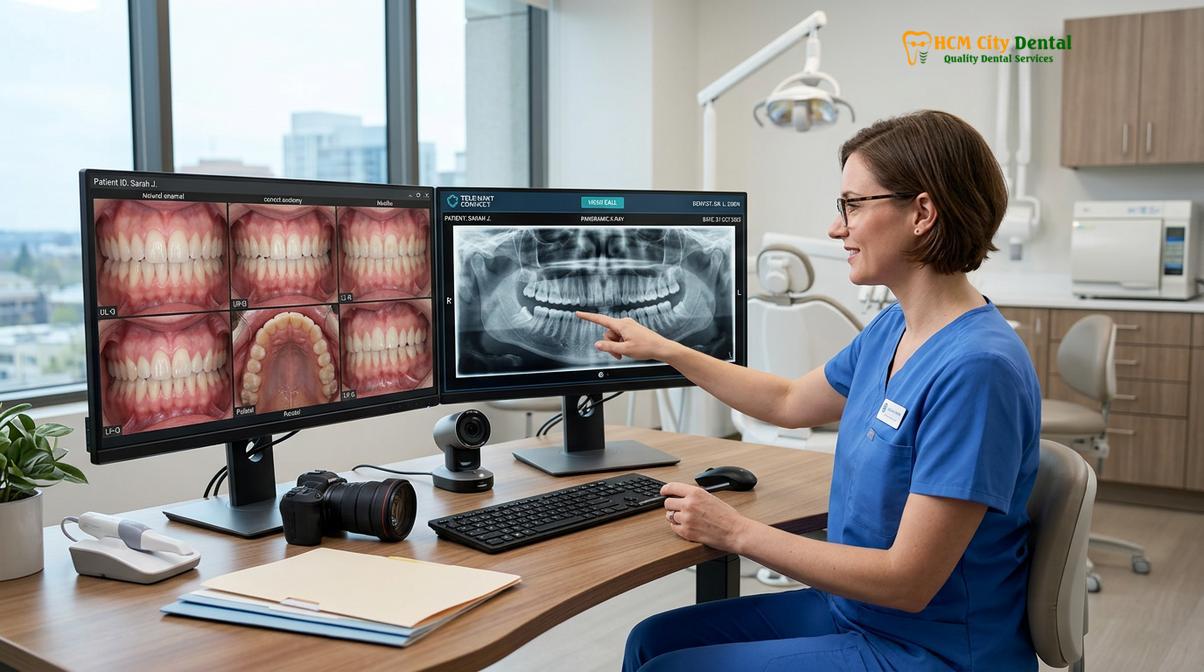
Furthermore, remote triage drastically reduces travel expenses. Patients do not need to make a separate preliminary trip solely for diagnostics and consultation. Instead, they arrive with a clear, medically sound roadmap. This efficiency is achieved through the seamless integration of digital communication tools and advanced clinical foresight, ensuring that the time spent in the chair is focused entirely on active treatment and aesthetic refinement.
Guide: How to Take Clear Smile Photos with Your Phone Camera
High-quality intraoral and facial photographs allow our prosthodontists to evaluate gingival zenith calibration, midline symmetry, and enamel condition prior to your arrival.
The foundation of any successful remote assessment is the quality of the visual data provided. A comprehensive smile photo guide is essential for patients attempting to capture diagnostic-grade images using a standard smartphone. These photographs serve as the baseline for Digital Smile Design (DSD) and help the clinician determine whether a minimal-prep (0.3mm to 0.7mm) or prep-less (0.2mm Lumineers) approach is biologically feasible [2].
To ensure clinical accuracy, patients should enlist the help of a friend or family member to take the photos, utilizing the rear-facing camera for maximum resolution. The flash should be turned on to illuminate the oral cavity and highlight the surface texture and translucency of the existing dentition. The required photographic series includes:
- Full Face (Resting): Captures facial symmetry and the resting lip line.
- Full Face (Maximum Smile): Reveals the dynamic lip line, gingival display (gummy smile), and the buccal corridor (the dark space between the teeth and the corners of the mouth).
- Retracted Frontal View: Using plastic cheek retractors (or spoons if retractors are unavailable), this shot shows the teeth in maximum intercuspation (biting down naturally) to assess the bite classification and midline alignment.
- Retracted Lateral Views (Left and Right): Crucial for evaluating the overjet, overbite, and the relationship of the canine teeth.
- Occlusal Views (Upper and Lower Arch): Taken by tilting the head back or down, showing the biting surfaces to check for arch form, crowding, or wear facets indicative of bruxism.
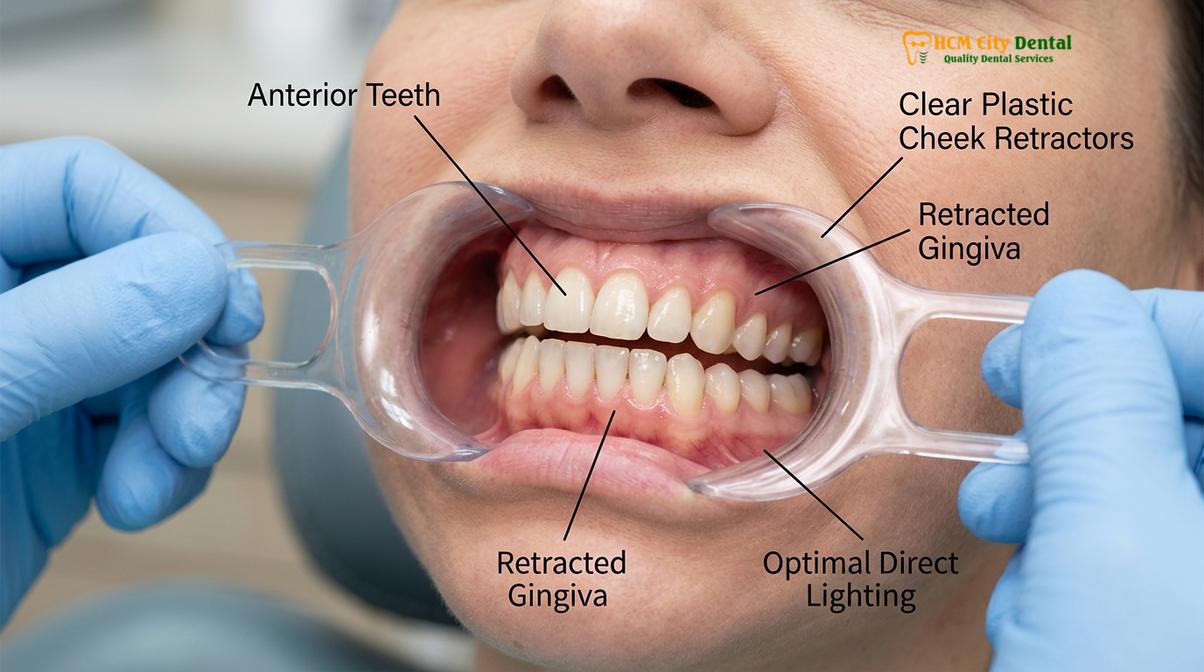
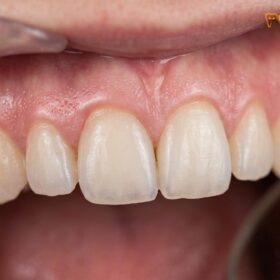
When reviewing these images, Dr. Nguyen Van Cuong meticulously analyzes the proportions of the central incisors, the health of the interdental papillae, and the presence of any diastemas (gaps) or tetracycline stains. This visual analysis is the first step in planning your smile makeover and determining the exact number of restorations required to achieve a harmonious result.
Submitting Panoramic X-Rays and Dental Records digitally
Uploading a recent digital panoramic X-ray enables our clinical team to assess bone levels, root health, and biological width to ensure you are a safe candidate for cosmetic restorations.
While high-resolution photographs provide excellent data regarding the external aesthetics and soft tissue architecture, they cannot reveal what lies beneath the gingiva. Submitting a digital panoramic xray (OPG) is a mandatory step for a comprehensive remote clinical evaluation. This two-dimensional radiographic overview allows the prosthodontist to evaluate the entire maxillofacial complex.
From a clinical perspective, the X-ray is scrutinized for several critical factors. First, the clinician assesses the alveolar bone levels to rule out periodontitis. Placing porcelain veneers on teeth with compromised periodontal support is a strict contraindication, as it can exacerbate bone loss and lead to premature failure of the restorations. Second, the X-ray reveals the presence of periapical radiolucencies (infections at the root tip), impacted wisdom teeth, or failing root canal treatments that must be addressed prior to any cosmetic work [5].
Clinical Requirement: For a remote assessment to be diagnostically valid, any submitted panoramic X-ray or Cone Beam Computed Tomography (CBCT) scan must be less than 6 months old. Outdated radiographs may not accurately reflect current bone levels or recent carious lesions, potentially leading to an inaccurate treatment plan.
In cases where patients are comparing porcelain and composite resin options, the X-ray helps determine the structural integrity of the underlying tooth. If a tooth has extensive existing fillings or significant structural loss, a full-coverage porcelain crown may be indicated instead of a conservative veneer to provide adequate mechanical retention and resistance form.
The Video Consult: Discussing Your Desired Smile with Dr. Cuong
A secure video dental consultation provides a platform to discuss your aesthetic goals, review Digital Smile Design (DSD) simulations, and select appropriate ceramic materials.
Once the clinical data—photos and X-rays—has been analyzed, the next phase is the interactive video dental consultation. This face-to-face digital meeting is where clinical parameters intersect with patient desires. It is a collaborative session designed to align expectations regarding tooth shape, length, surface texture, and color.
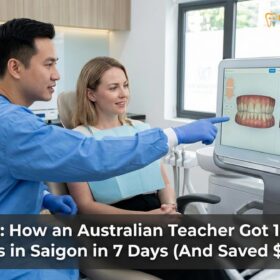
During this consultation, Dr. Nguyen Van Cuong often utilizes screen-sharing technology to walk the patient through their Digital Smile Design (DSD) mock-up. This software overlays ideal geometric proportions onto the patient’s actual facial photograph, providing a highly realistic preview of the final outcome. It is during this discussion that material selection is finalized. Dr. Cuong will explain the biomechanical and optical differences between various ceramics.
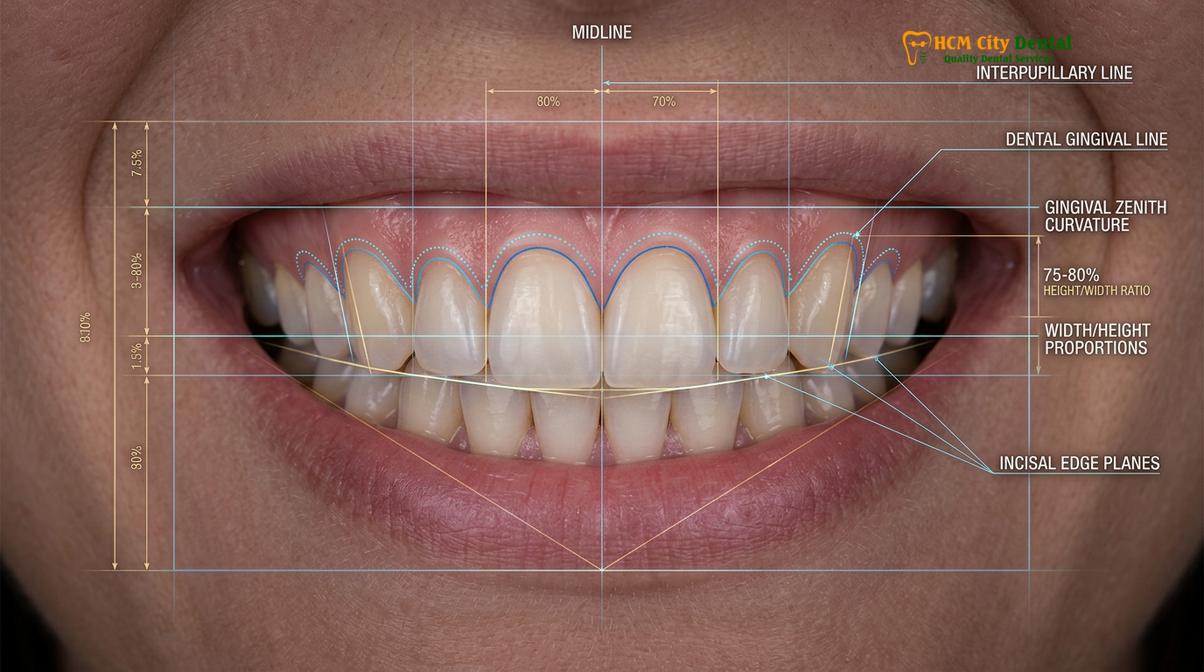
For patients seeking maximum lifelike aesthetics, especially in the anterior (front) region, E.max (lithium disilicate from Ivoclar, Liechtenstein) is often recommended due to its superior translucency and ability to mimic natural enamel light transmission [3]. Conversely, for patients with a heavy bite or those who exhibit signs of bruxism, Zirconia HT (Cercon HT, Germany) might be selected for its exceptional flexural strength. Shade matching is also discussed in detail, navigating the nuances between a natural, bright VITA B1 shade and the ultra-white, Hollywood-style BL1 bleach shade.
“The remote video consultation is not just about quoting a price; it is a vital diagnostic interview. It allows us to understand the patient’s personality, evaluate their dynamic lip mobility during speech, and ensure that the proposed ceramic restorations will function in perfect harmony with their unique stomatognathic system.”
— Dr. Nguyen Van Cuong, Lead Prosthodontist
Receiving Your Treatment Plan Draft and All-Inclusive Pricing Sheet
Following your remote assessment, you will receive a transparent, itemized treatment plan detailing clinical phases, material choices, and exact financial commitments.
Transparency in medical billing is a cornerstone of ethical dental tourism. After the clinical parameters have been established, the patient is provided with a comprehensive treatment plan draft. This document serves as an all-inclusive quote, detailing every aspect of the proposed procedure, from initial prophylaxis and 3D scanning to the final cementation and provision of a custom nightguard for sleep bruxism protection.
To assist patients in financial planning, our team utilizes a cosmetic savings calculator to demonstrate the stark contrast between local Western dental fees and the highly competitive rates available in Vietnam. Furthermore, HCMC Dental Clinic offers a substantial financial incentive for international patients who coordinate their care digitally. By booking the appointment through WhatsApp, patients unlock a 40% pre-arrival discount on all major cosmetic procedures.
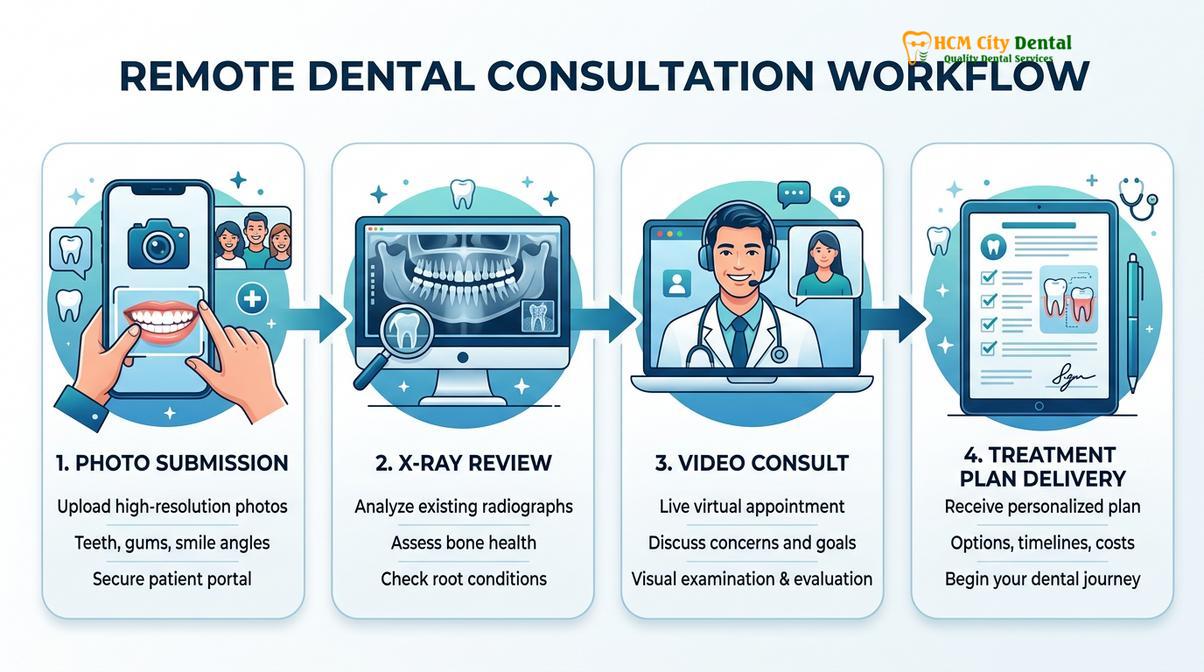
The pricing structure is straightforward, with no hidden fees. We also facilitate 0% interest monthly credit card installment plans and work with direct billing partners (such as Allianz, Bupa, and Cigna) for expatriates and staff of international schools.
| Cosmetic Dental Procedure | Standard Walk-In Rate | WhatsApp Discount Rate (-40%) | Warranty / Guarantee |
|---|---|---|---|
| Composite Veneer (Chair-side) | ~$80 (2.0M VND) | From $48 (1.2M VND) | 1-Year Clinic Guarantee |
| Zirconia Veneer (Cercon HT, Germany) | ~$240 (6.0M VND) | From $144 (3.6M VND) | 3-Year Fit + Global Warranty |
| E.max Porcelain Veneer (Ivoclar) | ~$320 (8.0M VND) | From $192 (4.8M VND) | 3-Year Fit + Global Warranty |
| Smile Design 3D Mock-up | ~$200 (5.0M VND) | From $120 (Free if treated) | Diagnostic Phase |
| Laser Gum Contouring (Diode) | ~$160 (4.0M VND) | From $96 (2.4M VND) per arch | Soft Tissue Management |
| In-Office Teeth Whitening (Laser) | ~$140 (3.5M VND) | From $84 (2.1M VND) | Aesthetic Baseline |
Clinical Workflows: From Arrival to Final Cementation
Upon arrival in Ho Chi Minh City, your pre-planned digital workflow transitions into precise clinical execution using advanced intraoral scanning and direct lab collaboration.
The transition from virtual planning to physical treatment is designed to be entirely frictionless. For international patients, the concierge experience begins the moment they land, with a complimentary airport pickup transfer from Tan Son Nhat SGN directly to their chosen District 1 hotels or the clinic itself. This logistical support ensures that the patient’s focus remains entirely on their clinical care and recovery.
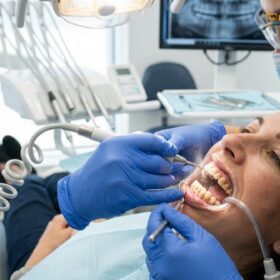
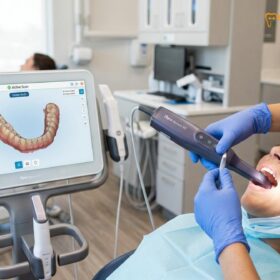
At the clinic, the physical verification of the remote treatment plan commences. Traditional, uncomfortable silicone impressions have been completely replaced by state-of-the-art digital scanning technology. Using the iTero Element 5D and Medit i700 Intraoral Scanners, the clinician captures a highly accurate, full-color 3D model of the patient’s dentition in minutes. This digital impression is immediately transmitted to our Direct Lab Partnership facility located right here in Ho Chi Minh City.
The tooth preparation phase is executed with microscopic precision, adhering strictly to the principle of enamel preservation. Depending on the case, preparation depths are kept between 0.3mm and 0.7mm, ensuring the restoration is bonded primarily to enamel, which yields the highest possible bond strength [2]. Temporary veneers are then fabricated and placed, allowing the patient to “test drive” their new smile’s aesthetics and phonetics while the final ceramics are milled and characterized by the master ceramist.
Clinical Case Study: Remote Planning for Diastema Closure
A 34-year-old patient contacted HCMC Dental Clinic from Australia, seeking to close a prominent 3mm midline diastema and correct mild tetracycline staining. Through remote triage, photos and X-rays were evaluated, and a DSD mock-up was presented via video consult. Upon arrival in Ho Chi Minh City, the physical examination confirmed the remote diagnosis. The patient underwent minimal-prep procedures, and within 4 days, 8 custom E.max lithium disilicate veneers (Shade BL2) were successfully cemented. The express 3-5 day turnaround allowed the patient to enjoy the remainder of their vacation with a fully restored, confident smile.
The final cementation protocol is a meticulous, multi-step process. The internal surface of the E.max veneer is etched with hydrofluoric acid and treated with a silane coupling agent to enhance chemical adhesion. The tooth surface is isolated, etched, and coated with a bonding resin. A light-cured, color-stable resin cement is then used to permanently affix the veneer, ensuring a seamless marginal fit that respects the biological width and promotes long-term gingival health [4]. This rigorous protocol is essential for ensuring the long-term durability of ceramic restorations.
When to See a Doctor (In-Person Clinical Evaluation)
While a remote dental consultation is a powerful tool for triage and financial planning, it cannot replace the necessity of a comprehensive in-person clinical evaluation. Patients must understand that all remote treatment plans are preliminary and subject to physical verification. There are specific clinical scenarios where immediate, in-person intervention is required before any cosmetic work can commence.
If you experience acute dental pain, severe tooth mobility, spontaneous bleeding of the gums, or swelling in the maxillofacial region, you must seek immediate care from a local dentist. These are signs of active infection or advanced periodontal disease, which are absolute contraindications for elective cosmetic procedures like porcelain veneers. Placing restorations over infected tissue will inevitably lead to biological failure.
Furthermore, patients with severe, unmanaged sleep bruxism (chronic teeth grinding) must undergo an in-person occlusal analysis. While strong materials like Zirconia HT can withstand significant forces, the underlying temporomandibular joint (TMJ) and opposing natural teeth must be protected. In such cases, the clinical treatment plan will mandate the fabrication of a custom hard-acrylic nightguard to be worn during sleep, ensuring the longevity of the new restorations and the health of the entire masticatory system.
“Digital dentistry allows us to predict and plan with incredible accuracy, but the final arbiter of treatment is always the physical biological tissue. We never compromise on the in-person tactile assessment of enamel quality and periodontal health before finalizing a preparation.”
— Clinical Protocol, HCMC Dental Clinic
Frequently Asked Questions
Can I get a dental quote in Vietnam without visiting the clinic first?
Yes, you can receive a highly accurate preliminary quote through a remote dental consultation. By submitting clear intraoral photos and a recent panoramic X-ray, our prosthodontists can evaluate your clinical needs, determine material suitability, and provide an itemized treatment plan with exact pricing before you book your flights. This process eliminates financial surprises and allows you to budget effectively for your dental tourism trip.
What photos do I need to send for a remote veneer consult?
You need to provide five specific angles for a comprehensive remote veneer consult. These include a full-face resting photo, a full-face natural smile, a retracted frontal view of your teeth in occlusion (biting down), and retracted lateral views (left and right) to assess the buccal corridor and bite alignment. Using plastic cheek retractors and ensuring adequate lighting will significantly improve the diagnostic value of these images.
How accurate is a remote veneer treatment plan?
A remote veneer treatment plan is highly accurate for estimating aesthetic requirements and financial costs, typically matching the final clinical plan by 90-95%. However, it remains a preliminary assessment; final confirmation of tooth vitality, biological width, and exact preparation depth must be verified through in-person clinical examination and 3D scanning upon your arrival at the clinic.
How do I claim the 40% discount on porcelain veneers?
You can secure the 40% pre-arrival discount by booking your consultation and treatment directly through our official WhatsApp channel. This reduces the cost of premium E.max veneers from ~$320 to just $192 per tooth, making high-end cosmetic dentistry highly accessible for international patients. The discount is applied to the all-inclusive quote provided during your remote triage.
What happens if my veneers need adjustments after I return home?
We provide comprehensive remote follow-up support via WhatsApp, utilizing photo and video assessment protocols to monitor your gingival healing and bite adaptation. Furthermore, all E.max and Zirconia restorations come with a global manufacturer warranty and a 3-year clinic guarantee for bonding and marginal fit. If a minor occlusal adjustment is needed, we can coordinate with a local provider or arrange for a swift resolution during a subsequent visit.
References
- Journal of Esthetic and Restorative Dentistry. Translucency of lithium disilicate and clinical applications in teledentistry. (2021).
- International Journal of Prosthodontics. Enamel preservation, bond strength, and digital treatment planning. (2020).
- The Journal of Prosthetic Dentistry. Flexural strength of porcelain restorations and CAD/CAM workflows. (2019).
- Clinical Oral Investigations. Diode laser gingival sculpting parameters for aesthetic smile design. (2022).
- Journal of Clinical Periodontology. Biological width around restorations and radiographic assessment. (2018).