The cost of wisdom tooth extraction in the USA often ranges from $1,500 to $3,000 for all four teeth, whereas the same clinical procedure in Vietnam costs between $200 and $600. This significant price difference allows American patients to receive high-quality, safe surgical care while saving thousands.
Clinical Summary:
The stark contrast in the wisdom tooth cost vietnam usa is driven by differing clinical overheads, malpractice insurance rates, and healthcare economic structures, rather than a difference in medical quality. American patients facing high out-of-pocket expenses or exhausted insurance maximums are increasingly turning to Ho Chi Minh City for complex oral surgeries. Top-tier Vietnamese dental centers operate under strict international protocols, utilizing advanced 3D Cone Beam CT (CBCT) imaging, ultrasonic Piezotome surgery, and Platelet-Rich Fibrin (PRF) therapy. By combining necessary dental surgery with international travel, patients can achieve a safer, more comfortable extraction experience while retaining substantial financial savings.
Key Takeaways:
- US extraction costs can exceed $3,000 due to separate facility, anesthesia, and specialist fees.
- Vietnamese clinics offer the same surgical procedures for 60% to 80% less than American out-of-pocket prices.
- Premium clinics in Saigon utilize ADA-compliant sterilization, CBCT imaging, and atraumatic Piezotome technology.
- Travel expenses (flights and hotels) are often fully offset by the massive savings on the dental surgery itself.
- Many US PPO dental insurance plans accept out-of-network claims for international dental treatments with proper documentation.
The Rising Cost of Dental Care in the United States
Dental care expenses in the United States continue to climb due to high clinical overhead, complex insurance networks, and separate specialist fees.
For decades, the United States has maintained some of the highest healthcare costs globally, and dentistry is no exception. When a patient requires the removal of their third molars, they are rarely quoted a single, straightforward price. Instead, the American dental billing system relies on a complex series of Current Dental Terminology (CDT) codes. A standard treatment plan might include separate charges for the initial consultation, panoramic X-rays, 3D CBCT scans, the extraction of each individual tooth based on its impaction level, and intravenous (IV) sedation[1].
The primary driver of these high costs is the immense overhead required to operate a specialized oral surgery practice in the US. Maxillofacial surgeons face exorbitant malpractice insurance premiums, high facility lease rates, and significant administrative costs just to manage insurance claims and billing departments. Furthermore, the American dental insurance model often features low annual maximums—typically hovering around $1,000 to $1,500. Because a comprehensive wisdom tooth surgery can easily cost double this amount, patients are frequently left paying the majority of the bill out-of-pocket.
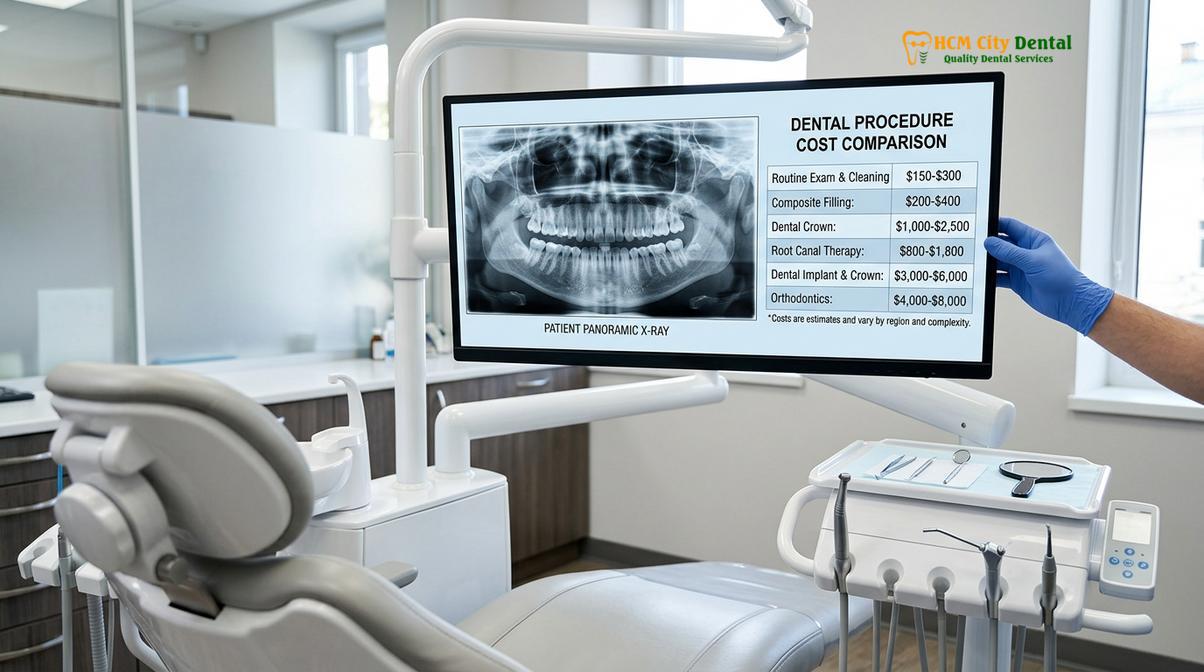
Another factor contributing to the high wisdom tooth price usa vs vietnam is the division of labor in American dentistry. General dentists in the US often refer third molar cases to specialized oral surgeons. This referral automatically shifts the patient into a higher pricing tier, as specialists command premium rates for their expertise and specialized surgical suites. Consequently, patients who simply want to resolve their dental pain are forced to navigate a fragmented, expensive system.
Cost Comparison Table: Vietnam vs. USA (USD)
Comparing exact procedural fees reveals that patients can save up to 80% on surgical extractions by traveling to Southeast Asia.
To truly understand the financial advantage of seeking treatment abroad, it is necessary to compare the specific line items involved in third molar surgery. The table below outlines the estimated out-of-pocket costs for uninsured patients or those who have exhausted their annual maximums. Prices in Vietnam reflect premium, internationally accredited clinics in Ho Chi Minh City.
| Clinical Procedure / Service | Estimated Cost in USA (USD) | Estimated Cost in Vietnam (USD) |
|---|---|---|
| Specialist Consultation & Exam | $100 – $250 | $0 – $30 (Often Free) |
| 3D CBCT Scan (Full Jaw) | $250 – $400 | $20 – $50 (Often Included) |
| Simple Extraction (Erupted Tooth) | $150 – $300 per tooth | $40 – $80 per tooth |
| Surgical Extraction (Soft Tissue Impaction) | $300 – $500 per tooth | $80 – $150 per tooth |
| Complex Surgical (Full Bony Impaction) | $500 – $800+ per tooth | $150 – $250 per tooth |
| IV Sedation / General Anesthesia | $500 – $1,000 (per hour) | $150 – $300 (if requested) |
| Total for 4 Impacted Teeth (Average) | $2,500 – $4,000+ | $400 – $800 |
As the data illustrates, the financial disparity is staggering. An American patient requiring the removal of four bony impacted wisdom teeth could easily face a $3,500 bill at home. In contrast, the same Tooth Extraction performed by a highly skilled surgeon in Vietnam would cost a fraction of that amount. This dramatic difference is what drives the growing trend of the american dental tourist saigon, where patients combine necessary medical care with international travel.
The True Cost of Wisdom Tooth Extraction in the US (Anesthesia & Scans)
American dental bills frequently include separate, high-cost line items for 3D imaging, facility usage, and intravenous sedation.
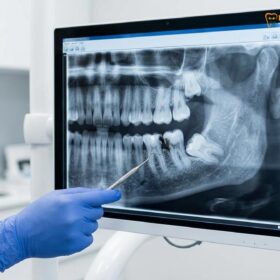
When evaluating the true cost of oral surgery in the United States, patients must look beyond the base price of the extraction itself. The hidden fees associated with diagnostics and pain management often catch patients by surprise. For instance, a 3D Cone Beam Computed Tomography (CBCT) scan is considered the gold standard for evaluating the proximity of the lower wisdom teeth to the inferior alveolar nerve. In the US, this scan is frequently billed as a separate, out-of-pocket expense because many insurance plans classify it as “non-essential” or “investigational,” leaving the patient with an additional $300 to $400 charge.
Anesthesia is another major cost multiplier. Because American oral surgeons frequently utilize deep IV sedation or general anesthesia for third molar removals, patients are billed for the anesthesiologist’s time, the medications used, and the specialized monitoring equipment. These fees are often billed in 15-minute increments and can easily add $800 to the final invoice.
“Transparency in medical billing is a core tenet of ethical patient care. At HCMC Dental Clinic, we believe that essential diagnostics like CBCT scans and advanced healing protocols like PRF should be integrated into the treatment plan, not used as hidden upcharges to inflate the final cost.”
— Dr. Nguyen Van Cuong, Lead Surgeon
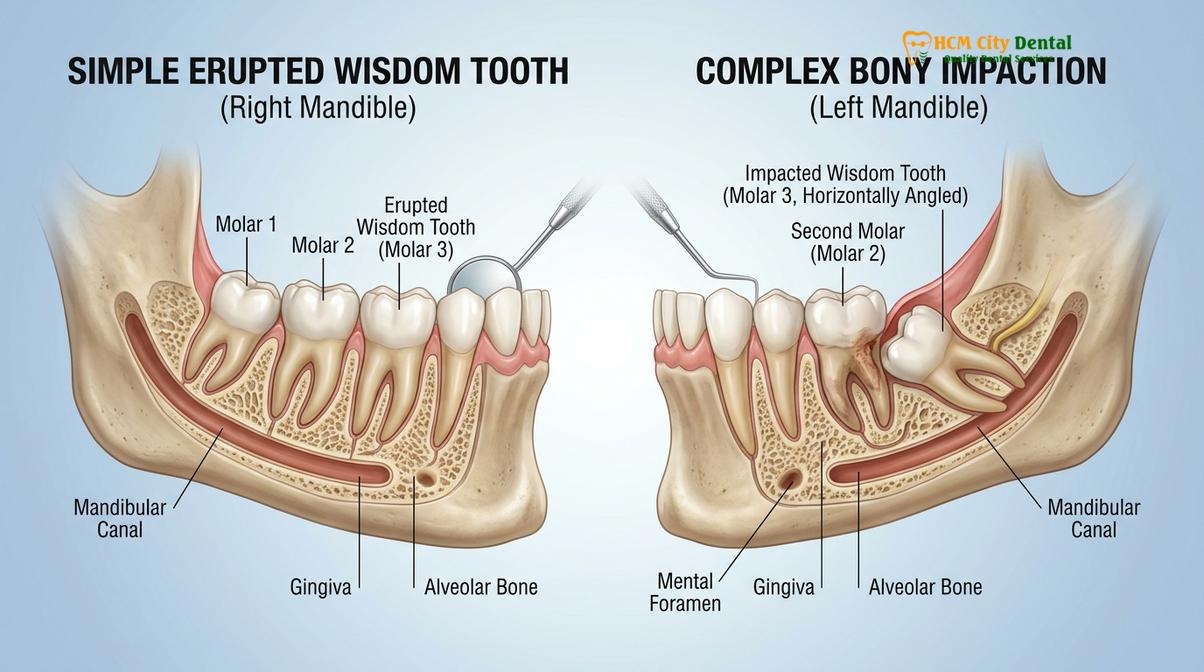
In Vietnam, the pricing model is vastly different. Premium clinics operate on a comprehensive fee structure. The cost quoted for a surgical extraction typically includes the local anesthesia, the surgical procedure, the suturing, and the post-operative medications. Furthermore, many top-tier clinics include the panoramic X-ray or CBCT scan as a complimentary part of the initial consultation to ensure accurate, safe surgical planning without financially penalizing the patient.
Quality Standards: Meeting ADA/CDC Protocols in Saigon
Top-tier clinics in Ho Chi Minh City strictly adhere to ADA and CDC sterilization guidelines, utilizing advanced surgical technologies.
A common misconception among international patients is that lower costs equate to lower clinical standards. When patients search for cheap wisdom teeth removal us, they are often directed to high-volume, low-budget clinics that may compromise on technology or personalized care. However, the premium dental sector in Vietnam operates on a completely different paradigm. The cost savings are a result of macroeconomic factors—such as lower labor costs and favorable real estate overhead—not a reduction in medical quality.
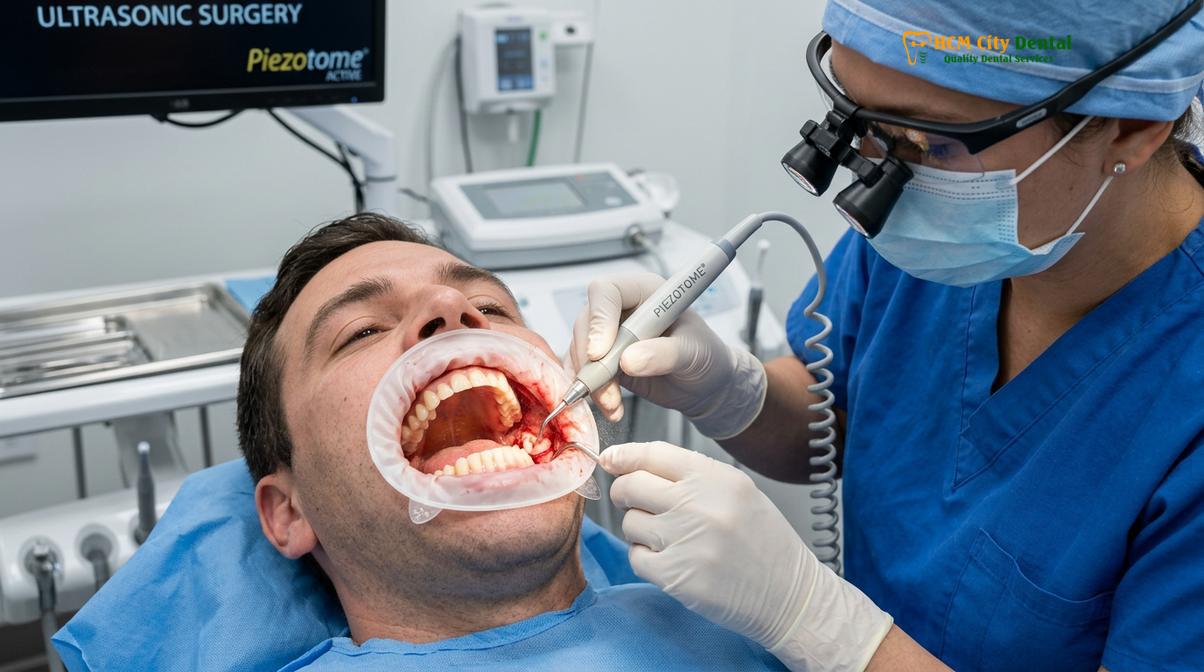
Leading facilities like HCMC Dental Clinic in Ho Chi Minh City are equipped with the exact same technologies found in Beverly Hills or Manhattan. This includes the use of Piezotome ultrasonic surgery. Unlike traditional rotary drills that generate heat and can traumatize surrounding bone, the Piezotome uses high-frequency ultrasonic vibrations to precisely cut hard tissue while leaving soft tissue (such as nerves and blood vessels) completely unharmed[2]. This results in significantly less post-operative swelling and a faster recovery time, which is crucial for patients who are traveling.
Clinical Warning: Never choose a dental clinic based solely on price. Whether in the US or abroad, ensure the facility utilizes Class B autoclaves for sterilization, provides digital CBCT imaging, and employs surgeons with verified credentials in maxillofacial procedures.
Furthermore, advanced biological protocols such as Platelet-Rich Fibrin (PRF) are routinely utilized. PRF involves drawing a small amount of the patient’s blood, centrifuging it to isolate growth factors, and placing the resulting fibrin membrane directly into the extraction socket. This technique accelerates soft tissue healing, promotes bone regeneration, and drastically reduces the risk of developing a painful dry socket[3]. For patients interested in the most comfortable experience possible, exploring painless extraction technologies is highly recommended.
Flight & Hotel Math: Saving Money on a Dental Vacation
Factoring in airfare and accommodation, patients requiring multiple extractions still experience substantial net savings on a dental vacation.
The concept of dental tourism is rooted in simple mathematics. While flying across the Pacific Ocean incurs a cost, the savings generated by the dental procedure often cover the entire trip, effectively resulting in a free vacation. To illustrate this, consider the logistics of a typical trip from the US West Coast (e.g., Los Angeles or San Francisco) to Ho Chi Minh City.
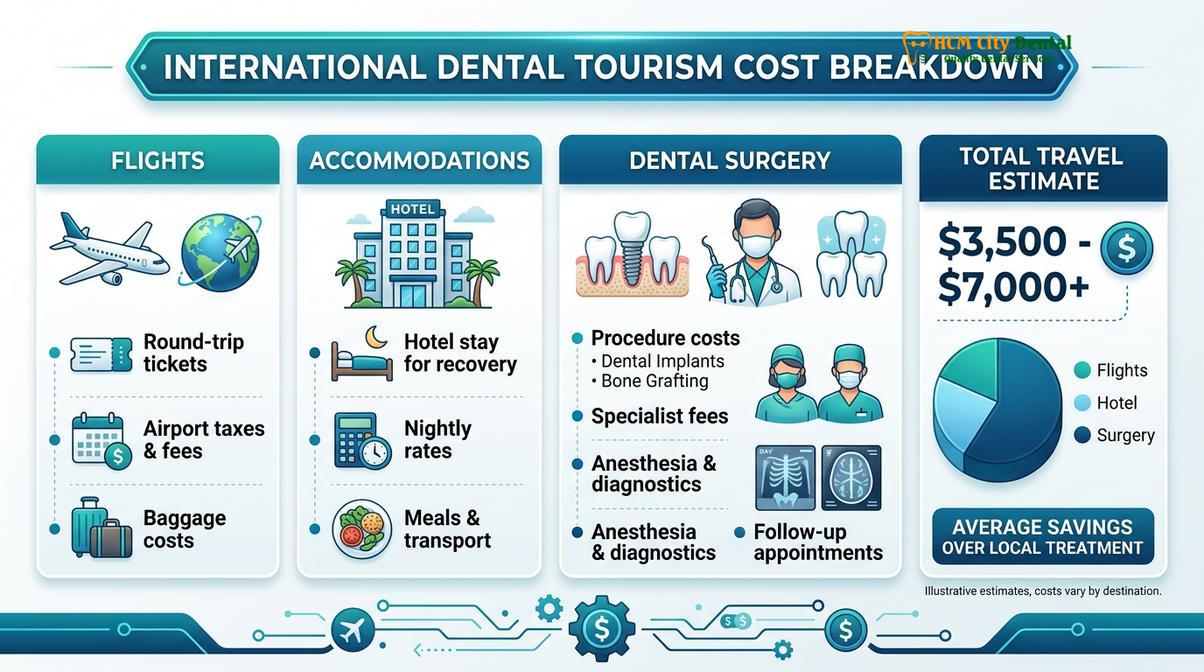
A round-trip economy flight to Vietnam generally costs between $800 and $1,200. Accommodation in a highly-rated, centrally located hotel in District 1 or District 3 of Saigon ranges from $40 to $80 per night. For a standard 7-day medical trip, the total travel and lodging expenses might total $1,500. If the patient saves $2,500 on the extraction of four impacted wisdom teeth, they are still $1,000 ahead financially, while also enjoying the cultural and culinary experiences of Southeast Asia.
Patient Case Study: Michael, a 32-year-old from Seattle, was quoted $3,200 for the removal of four impacted wisdom teeth after his US insurance maxed out. He booked a flight to Ho Chi Minh City for $900 and stayed in a boutique hotel for $350. His surgery at HCMC Dental Clinic cost $600. Total expenditure: $1,850. Net savings: $1,350, plus a week-long vacation in Vietnam.
During the recovery phase, patients can easily navigate the city and enjoy soft, nutritious local cuisine. Vietnamese broths, such as Pho (without the meat initially), rice porridge (Chao), and fresh fruit smoothies are perfect for post-surgical healing. Patients should review clinical guidelines on foods to eat after wisdom teeth removal to ensure they maintain proper nutrition without disturbing the surgical sites.
How to Book and Submit Claims from the USA
Many US dental insurance plans offer out-of-network reimbursement for international treatments when provided with proper itemized documentation.
Navigating the logistics of international dental care is more straightforward than many anticipate. The first step is to contact the clinic digitally. Reputable centers offer virtual consultations where patients can securely email their existing panoramic X-rays or CBCT scans. The clinical team will review the imaging, assess the impaction classifications (e.g., mesioangular, horizontal, or vertical), and provide a transparent, itemized treatment plan and cost estimate before the patient ever books a flight.
Regarding insurance, many American patients are surprised to learn that their PPO dental plans (such as Delta Dental, Cigna, or MetLife) often provide out-of-network coverage for international care[4]. Because the dental travel pricing america is so high, insurance companies are sometimes willing to reimburse patients for cheaper overseas care, provided the correct documentation is submitted.
To successfully file a claim, patients must pay for their treatment upfront in Vietnam. Following the surgery, the clinic’s international coordination team will provide a comprehensive “superbill.” This document includes the clinic’s credentials, the specific CDT codes for the procedures performed, an itemized receipt in USD, and the surgeon’s clinical notes translated into English. Patients then submit this packet directly to their insurance provider for reimbursement. Patients with underlying health conditions should also ensure their US physician clears them for travel, especially if reviewing guidelines on extractions with diabetes or blood thinners.
When to See a Doctor
Impacted wisdom teeth can cause severe infections, cyst formation, and damage to adjacent molars if left untreated.
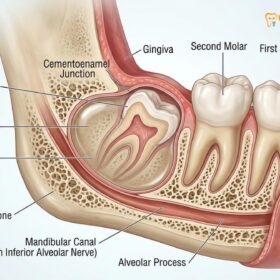
While delaying wisdom tooth extraction due to high costs in the US is common, it is not medically advisable if the patient is experiencing active symptoms. Third molars that are partially erupted or fully impacted beneath the gumline create an ideal environment for bacterial accumulation. This frequently leads to pericoronitis—a painful, localized infection of the gum tissue overlying the tooth. If left untreated, this infection can spread to the fascial spaces of the head and neck, creating a severe medical emergency.
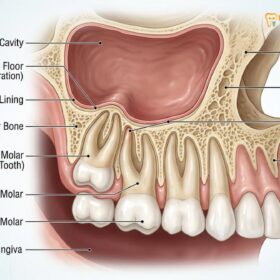
Furthermore, impacted wisdom teeth can exert continuous pressure on the adjacent second molars. Over time, this pressure can cause root resorption, essentially destroying the healthy neighboring tooth. In some cases, fluid-filled cysts or benign tumors can form around the crown of the impacted tooth, leading to the destruction of the surrounding jawbone[5].
“Patients should never ignore persistent jaw pain, swelling, or a limited ability to open their mouth (trismus). These are classic signs of an acute third molar infection that requires immediate clinical evaluation and radiographic imaging to prevent systemic complications.”
— Dr. Nguyen Van Cuong, Lead Surgeon

If you are experiencing throbbing pain in the back of your jaw, swollen or bleeding gums, chronic bad breath, or difficulty chewing, it is imperative to seek a clinical evaluation. Whether you choose to have the surgery in the US or plan a medical trip to HCMC Dental Clinic, obtaining a diagnostic CBCT scan is the critical first step in protecting your long-term oral health. For older patients, understanding the specific risks is vital; reviewing a clinical guide on wisdom teeth removal in your 30s and 40s can provide valuable context.
Frequently Asked Questions
How much does wisdom tooth extraction cost in the USA?
In the USA, wisdom tooth extraction typically costs between $1,500 and $3,000 for all four teeth, depending on impaction severity and anesthesia. This total often includes separate fees for oral surgeon consultations, 3D CBCT imaging, and intravenous sedation, which can quickly exhaust annual dental insurance maximums. Complex bony impactions require more surgical time, further driving up the out-of-pocket expense.
How much can American patients save on dental work in Vietnam?
American patients can generally save between 60% and 80% on complex dental surgeries in Vietnam compared to US out-of-pocket prices. For a full set of impacted wisdom teeth, this often translates to net savings of $1,000 to $2,000, even after factoring in international airfare and local accommodation. The savings are primarily due to lower clinical overhead and transparent, all-inclusive pricing models.
Are dental materials and technologies in HCMC same as USA?
Yes, top-tier clinics in Ho Chi Minh City utilize the exact same international dental technologies found in the USA. This includes advanced 3D Cone Beam CT scanners, Piezotome ultrasonic surgical units, and strict adherence to ADA and CDC sterilization protocols to ensure maximum clinical safety. The materials used for suturing and bone grafting are imported from leading global medical suppliers.
Can I use US dental insurance in Vietnam?
Many US dental insurance PPO plans allow for out-of-network international claims, meaning you can often be reimbursed for treatments in Vietnam. Patients must pay upfront, but reputable clinics will provide an itemized superbill and translated clinical notes in English to submit to your American insurance provider. It is highly recommended to contact your insurance company prior to travel to verify your specific out-of-network benefits.
What is the timeline for US travelers getting wisdom teeth out?
US travelers should plan for a 7 to 10-day stay in Vietnam for wisdom tooth removal. This timeline allows for the initial consultation and 3D imaging on day one, the surgical extraction on day two, and a follow-up examination to remove sutures and check healing before flying home. During the recovery days, patients can safely explore the city while adhering to their post-operative care instructions and socket cleaning protocols.
References
- Journal of Oral and Maxillofacial Surgery. Economic analysis of third molar extractions and insurance burdens. (2021).
- International Journal of Oral and Maxillofacial Surgery. Piezotome versus rotary instruments in impacted third molar surgery. (2019).
- British Dental Journal. The efficacy of Platelet-Rich Fibrin (PRF) in preventing alveolar osteitis. (2020).
- Journal of the American Dental Association. Cross-border dental care: Quality, safety, and economic outcomes. (2022).
- Clinical Oral Investigations. Management of complex mandibular third molar impactions and nerve proximity. (2018).