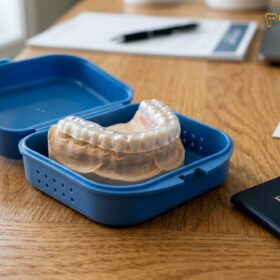
When patients ask about how long night guard last lifespan expectations, the answer typically ranges from six months to five years. A custom hard acrylic guard offers the longest durability for heavy grinders, while soft over-the-counter options degrade rapidly and require frequent replacement to maintain proper dental protection.
Clinical Summary:
The functional lifespan of an occlusal splint is highly variable and depends on material science, patient biomechanics, and daily hygiene protocols. Dr. Nguyen Van Cuong notes that while hard polymethyl methacrylate (PMMA) guards can withstand severe parafunctional forces for years, soft thermoplastic materials often succumb to structural fatigue within months. Understanding the specific factors that influence night guard durability is essential for preventing premature appliance failure and ensuring continuous protection against bruxism-induced dental trauma. Regular clinical evaluations are necessary to verify that the appliance maintains proper retention and occlusal balance over time.
Key Takeaways:
- Custom hard acrylic night guards typically provide 2 to 5 years of reliable clinical protection.
- Soft and over-the-counter (boil-and-bite) guards generally wear out within 3 to 6 months of nightly use.
- Severe bruxism, clenching, and acidic saliva significantly accelerate the degradation of guard materials.
- Proper daily maintenance using non-abrasive cleaners prevents bacterial colonization and material breakdown.
- Visible cracks, a loose fit, or the return of jaw pain are definitive clinical signs that immediate replacement is required.
Average Lifespan by Material Type
The durability of a night guard is primarily dictated by its fabrication material, with custom hard acrylics offering years of robust protection compared to the rapid structural degradation seen in soft, over-the-counter plastics.
When evaluating night guard lifespan, the most critical determining factor is the specific material used in its construction. Dental appliances are subjected to immense biomechanical stress during sleep, with human jaw muscles capable of exerting hundreds of pounds of force per square inch. The ability of a material to absorb, distribute, and withstand this force dictates how long the night guard lasts before structural failure occurs. [1]
Soft Night Guards (Over-the-Counter and Custom)
Soft night guards are typically fabricated from flexible materials such as ethylene vinyl acetate (EVA) or similar thermoplastic polymers. These guards are highly favored for their immediate comfort and ease of adaptation. However, their soft nature makes them highly susceptible to rapid wear and tear. When a patient with severe bruxism uses a soft guard, the material acts almost like a chew toy, sometimes inadvertently stimulating the chewing reflex and increasing muscle activity.
On average, an over-the-counter boil-and-bite soft guard will last between 3 to 6 months. Even custom-fitted soft guards provided by a dentist generally max out at a lifespan of 6 to 12 months. The constant compressive forces cause the material to thin out, eventually leading to perforations where the upper and lower teeth make direct contact, completely negating the protective purpose of the appliance.
Hard Acrylic Night Guards
For patients diagnosed with moderate to severe bruxism, hard acrylic night guards are the clinical gold standard. Fabricated from rigid, cross-linked polymethyl methacrylate (PMMA) or advanced milled resins, these appliances are designed to withstand extreme occlusal forces without deforming. Because they are rigid, they provide a smooth surface that allows the opposing teeth to glide effortlessly, reducing the friction and muscle tension associated with grinding.
The night guard durability of a hard acrylic appliance is exceptional, typically ranging from 2 to 5 years. In cases of mild bruxism coupled with meticulous maintenance, some patients retain their hard guards for even longer. However, because the material is rigid, it requires a highly precise fit. Any changes to the patient’s dental anatomy—such as new crowns or fillings—can alter the fit, necessitating a replacement even if the material itself remains intact.
Dual-Laminate (Hybrid) Night Guards
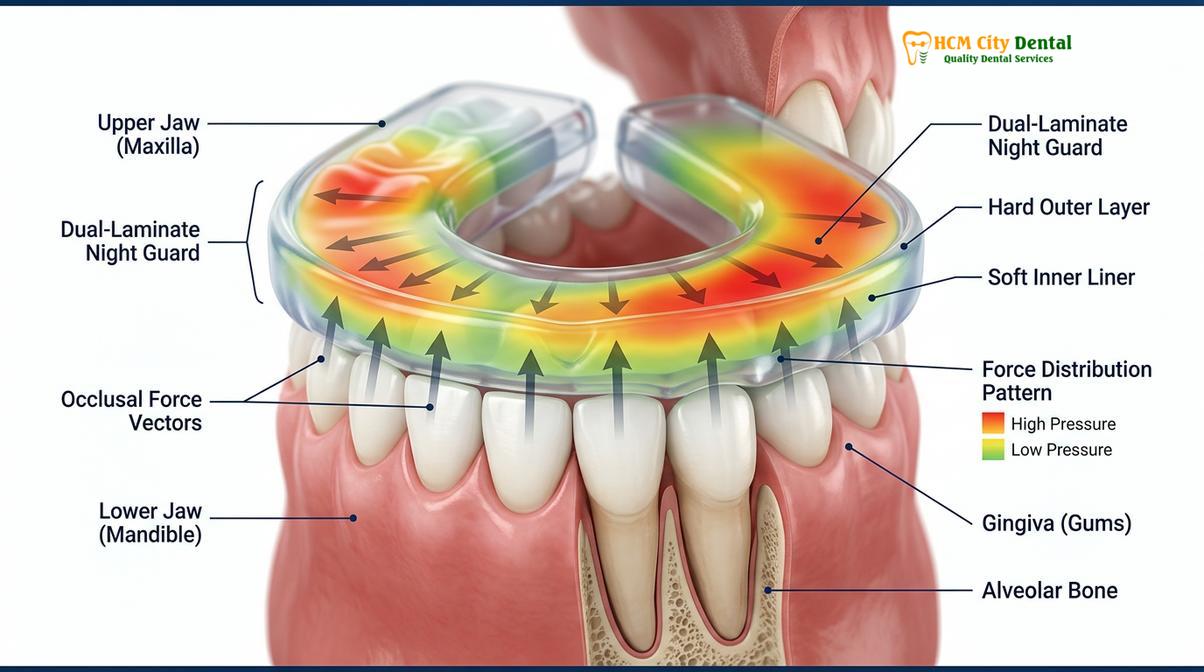
Dual-laminate, or hybrid, night guards represent a sophisticated compromise between comfort and durability. These appliances feature a soft, comfortable inner layer (usually polyurethane) that rests against the teeth and gums, combined with a hard, durable outer layer (often copolyester) that faces the opposing teeth. This design absorbs the shock of clenching while providing a tough barrier against grinding friction.
The expected lifespan of a dual-laminate guard is generally 1 to 3 years. While the hard outer shell resists wear effectively, the soft inner lining can eventually degrade, delaminate, or lose its retentive properties over time. These guards are highly recommended for moderate grinders who find solid acrylic appliances too rigid or uncomfortable for nightly wear.
Daytime Ultra-Thin Guards
Some patients suffer from awake bruxism, unconsciously clenching their teeth during stressful daytime activities. Daytime guards are ultra-thin, highly discreet appliances designed to prevent clenching without interfering with speech. Because they are fabricated from very thin materials (often less than 1mm thick), their lifespan is inherently shorter, usually lasting between 6 to 12 months depending on the frequency and intensity of daytime parafunctional habits.
Factors That Shorten Guard Life
Excessive occlusal force, improper cleaning agents, and changes in your dental anatomy are the primary catalysts that prematurely degrade a night guard and necessitate early replacement.
Even the highest quality custom dental appliances are not immune to the harsh environment of the human mouth. Understanding the specific variables that accelerate wear can help patients take proactive steps to protect their investment. The degradation of a night guard is rarely caused by a single event; rather, it is the cumulative result of mechanical, chemical, and biological factors. [2]
Bruxism Severity: Clenching vs. Grinding
The intensity and specific nature of a patient’s parafunctional habits play a massive role in night guard replacement timelines. Bruxism is generally categorized into two distinct actions: clenching (static vertical force) and grinding (dynamic lateral force).
Patients who exhibit severe lateral grinding subject their night guards to intense frictional wear. This constant sliding motion acts like sandpaper, gradually shaving down the occlusal surface of the guard. Conversely, patients who primarily clench exert massive, concentrated vertical pressure. Over time, this static force can cause micro-fractures within the polymer matrix of hard guards, or deep, permanent indentations in soft guards. The more severe the bruxism, the shorter the appliance’s lifespan.
Poor Maintenance and Chemical Degradation
How a patient cleans and stores their appliance is just as critical as how they use it. Many patients unknowingly destroy their night guards through improper hygiene practices. The use of highly abrasive toothpaste is a common culprit. Toothpaste contains silica and other abrasives designed to polish hard dental enamel; however, when applied to softer acrylics or thermoplastics, it creates thousands of microscopic scratches. These scratches not only weaken the structural integrity of the guard but also create ideal breeding grounds for bacteria and plaque.
Furthermore, chemical degradation can occur if the guard is soaked in harsh solutions containing alcohol, bleach, or strong mouthwashes. These chemicals can leach the plasticizers out of the material, causing it to become brittle, discolored, and prone to snapping under pressure.
Clinical Warning: Never use hot or boiling water to clean or soak your night guard. High temperatures will cause the thermoplastic or acrylic materials to warp, permanently destroying the custom fit and rendering the appliance useless.
Changes in Dental Anatomy
A custom night guard is fabricated based on a precise impression or digital scan of your teeth at a specific moment in time. It is designed to fit that exact dental landscape with micrometer precision. If your dental anatomy changes, the guard will no longer fit correctly. Common reasons for anatomical changes include:
- Placement of new dental crowns, bridges, or large fillings.
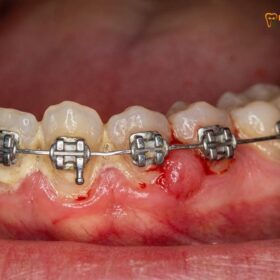
- Orthodontic treatment or natural shifting of teeth over time.
- Tooth extractions or the placement of dental implants.
When the fit is compromised, the guard may place uneven pressure on specific teeth, leading to orthodontic shifting or localized pain. In these scenarios, the guard must be replaced regardless of its physical condition. If you are experiencing issues with retention, reading about a night guard not fitting properly can provide further clinical insights.
Signs of Wear and Replacement
Visible cracks, a loose fit, persistent bacterial odors, or the sudden return of temporomandibular joint pain are clear clinical indicators that your night guard requires immediate replacement.
Patients often wonder how to determine the exact moment their appliance has reached the end of its functional life. Waiting until the guard completely shatters is highly unadvisable, as a compromised guard fails to protect the teeth and can actually exacerbate jaw issues. Regular inspection of the appliance is a critical component of dental self-care. [3]
Structural Compromises: Cracks and Perforations
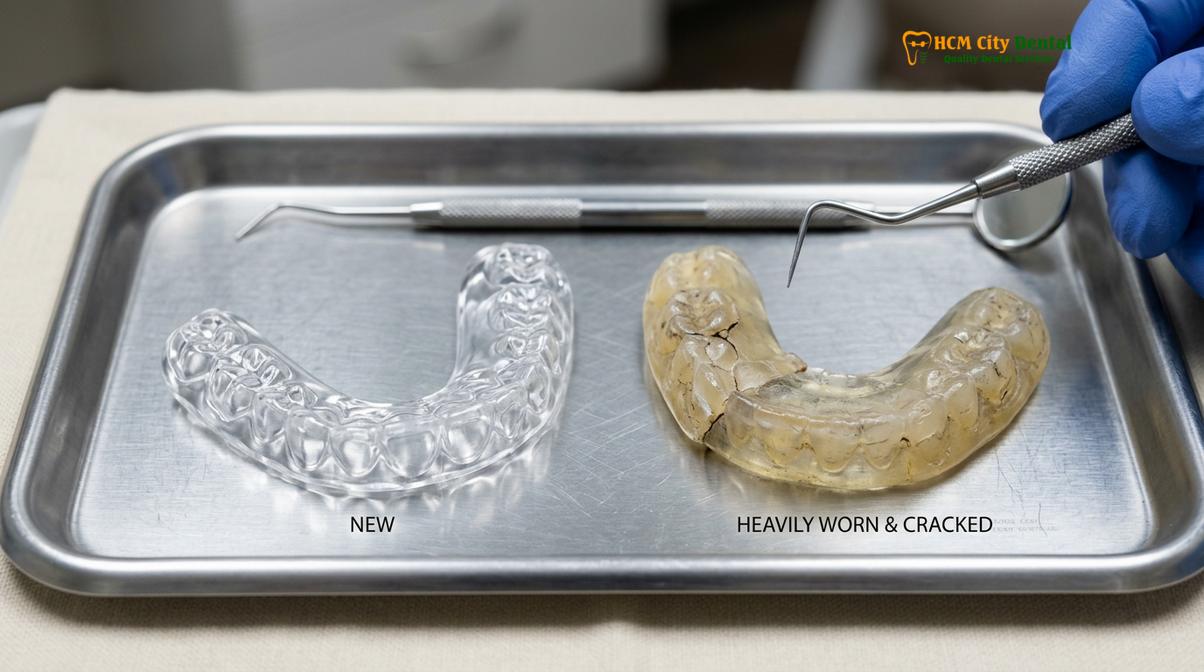
The most obvious signs of failure are visual. Inspect your night guard daily under good lighting. Look for hairline cracks, particularly in the areas where your bite force is heaviest (usually the molar regions). In hard acrylic guards, a small crack can quickly propagate into a complete fracture during a heavy grinding episode.
For soft or dual-laminate guards, look for areas of extreme thinning or actual perforations (holes). If you can see through the material or if your upper and lower teeth can touch through a hole in the guard, the appliance is completely compromised and must be discarded immediately.
Loss of Retention and Fit
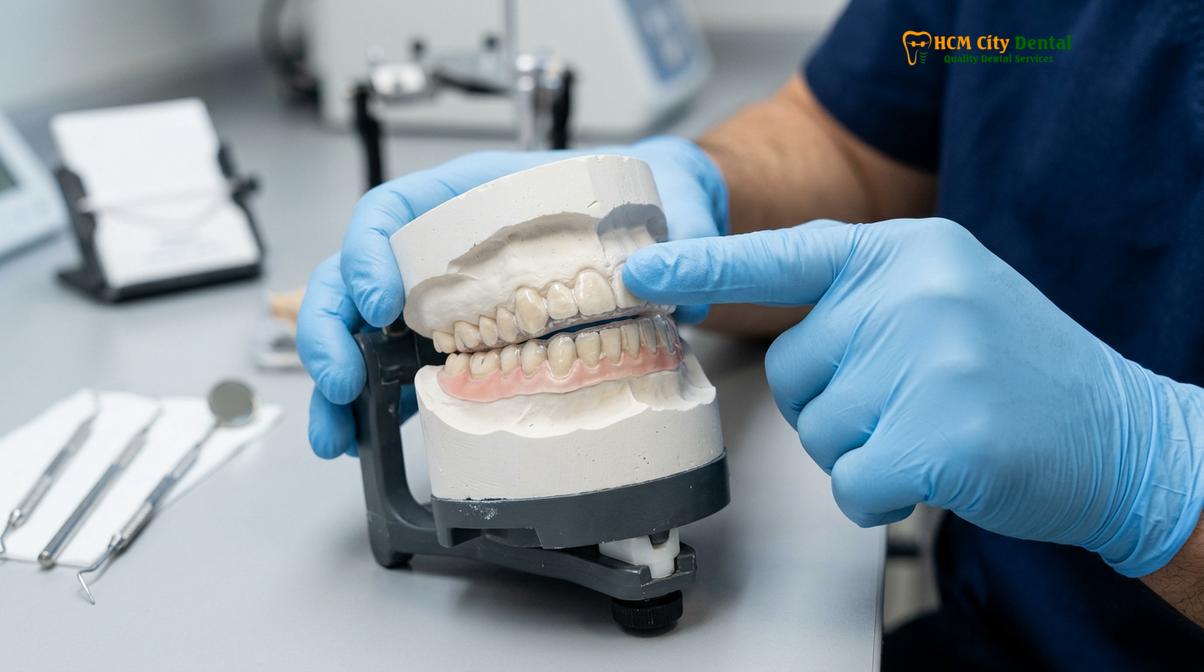
A well-fitting custom night guard should “snap” securely into place and require a deliberate effort to remove. It should not fall out while you are sleeping, nor should it feel loose or wobbly when seated on the dental arch. Over time, the material can fatigue, or the constant pressure of grinding can slightly warp the appliance. If the guard loses its retentive grip, it becomes a choking hazard and fails to provide stable occlusal support.
Clinical Case Study: A 34-year-old patient visited HCMC Dental Clinic in Ho Chi Minh City complaining of returning morning headaches and jaw stiffness. Upon examination, Dr. Nguyen Van Cuong discovered the patient’s two-year-old soft night guard had lost its retention and was shifting during sleep, causing uneven muscle strain. The patient was transitioned to a custom hard acrylic guard, which immediately stabilized the bite and resolved the muscular symptoms.
Biological Indicators: Odor and Discoloration
Dental appliances are porous at a microscopic level. Over time, despite regular cleaning, bacteria, fungi (such as Candida albicans), and mineral deposits from saliva can become deeply embedded in the material matrix. If your night guard develops a persistent foul odor that does not resolve after a thorough cleaning, or if it turns a cloudy yellow or brown color, it is heavily colonized by microbes. Continuing to wear a biologically compromised guard can lead to increased dental decay, gingival inflammation, and bad breath.
Return of Clinical Symptoms
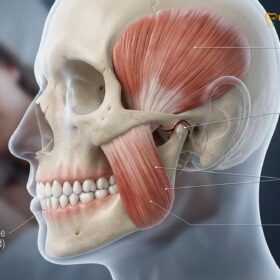
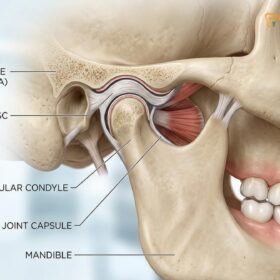
Perhaps the most critical indicator that your night guard lifespan has expired is the return of the clinical symptoms it was designed to prevent. If you begin waking up with dull headaches, facial muscle fatigue, unexplained tooth sensitivity, or if you notice new chips on your dental enamel, your guard is no longer functioning effectively. The appliance may look intact to the naked eye, but microscopic wear may have altered the occlusal balance, failing to protect your temporomandibular joint (TMJ). For patients experiencing complex symptoms, exploring TMJ treatment options is highly recommended.
How to Maximize Guard Longevity
Implementing a strict daily hygiene routine, utilizing proper storage cases, and bringing the appliance to routine dental checkups will significantly extend your night guard’s functional life.
While eventual replacement is inevitable, patients have a significant degree of control over how long their appliance lasts. Maximizing night guard durability requires a commitment to proper daily maintenance and an understanding of what environmental factors to avoid. [4]
Daily Cleaning Protocols
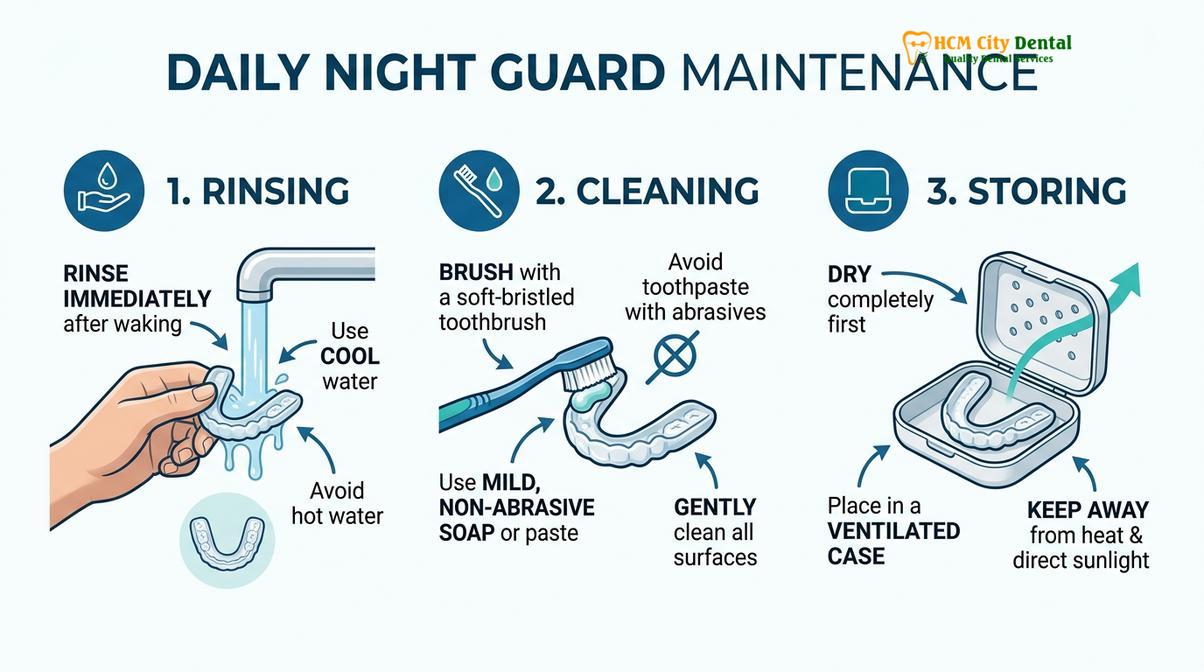
The foundation of appliance longevity is a rigorous, non-abrasive cleaning routine. As soon as you remove the guard in the morning, rinse it immediately with cool or lukewarm water. This prevents saliva and plaque from drying and hardening onto the surface.
Next, use a dedicated soft-bristled toothbrush (separate from the one you use for your teeth) and a mild, non-abrasive liquid soap (such as clear antibacterial hand soap or castile soap) to gently brush all surfaces of the guard. Pay special attention to the deep grooves where the teeth rest, as this is where plaque accumulates most rapidly. Rinse thoroughly to remove all soap residue.
For a deeper clean, you may soak the guard once a week in a specialized dental appliance cleaner or a mixture of water and a small amount of hydrogen peroxide. However, always consult your dentist before using chemical soaks, as certain materials react poorly to specific effervescent cleaners.
“The most common mistake patients make is treating their night guard like their natural teeth. Brushing an acrylic splint with abrasive toothpaste is the fastest way to destroy its surface integrity, leading to rapid bacterial colonization and premature material failure.”
— Dr. Nguyen Van Cuong, Lead Prosthodontist at HCMC Dental Clinic.
Proper Storage Environments
When not in your mouth, your night guard should always be stored in a sturdy, ventilated plastic case. Never wrap the guard in a tissue or napkin, as this is the most common way appliances are accidentally thrown away. The ventilation in the case is crucial; storing a damp guard in an airtight container promotes the rapid growth of mold and bacteria.
Furthermore, keep the storage case away from extreme heat sources, direct sunlight, and out of reach of pets. Dogs, in particular, are highly attracted to the scent of saliva on dental appliances and can destroy a custom night guard in seconds.
Routine Clinical Inspections
Bring your night guard with you to every routine dental checkup and cleaning appointment. Your dentist will professionally clean the appliance in an ultrasonic bath to remove hardened calculus deposits that you cannot remove at home. More importantly, the dentist will evaluate the fit, check for microscopic signs of wear, and adjust the occlusal surface if necessary to ensure it continues to distribute bite forces evenly. If you are unsure about the specific type of appliance you need, understanding the difference between a sports mouthguard and a night guard is a vital first step.
Replacement Cost Considerations
While custom-fabricated guards require a higher initial investment, their extended lifespan and superior protection make them far more cost-effective than frequently replacing over-the-counter alternatives.
When discussing night guard replacement, the financial aspect is a primary concern for many patients. It is essential to view a custom dental appliance not as a recurring expense, but as a long-term investment in the preservation of your natural dentition and restorative dental work.
Custom vs. Over-the-Counter Economics
Over-the-counter (OTC) boil-and-bite guards are undeniably cheaper upfront. However, their poor durability means a heavy grinder might chew through an OTC guard every two months. Over the course of three years, the cumulative cost of constantly replacing these inferior guards often exceeds the one-time cost of a custom appliance.
Furthermore, OTC guards are bulky, uncomfortable, and rarely fit perfectly. This poor fit can lead to orthodontic shifting or exacerbate jaw pain, leading to secondary medical costs. A custom hard acrylic guard, while requiring a higher initial outlay, provides years of precise, comfortable protection.
“From a clinical economics perspective, the cost of a custom occlusal splint is negligible when compared to the financial burden of repairing bruxism-induced damage, which often involves multiple root canals, complex porcelain crowns, or dental implants.”
— Journal of Prosthetic Dentistry, Cost-Benefit Analysis of Preventive Splint Therapy.
The Hidden Cost of Delayed Replacement
Attempting to stretch the lifespan of a worn-out night guard to save money is a dangerous clinical gamble. A compromised guard fails to absorb occlusal shock. The forces of bruxism are then transferred directly to the teeth and the temporomandibular joint. The cost of replacing a single cracked molar with a dental crown is significantly higher than the cost of a new night guard. If you are experiencing secondary symptoms like bruxism ear pain or bruxism headaches, delaying replacement is actively harming your overall quality of life.
Guard Lifespan Comparison Table
This clinical comparison outlines the expected durability, ideal patient profile, and maintenance requirements for the most common types of occlusal splints.
To help patients visualize the differences in appliance durability, the following table summarizes the expected lifespan and clinical applications of various night guard materials based on current dental literature. [5]
| Material Type | Expected Lifespan | Ideal Patient Profile | Primary Advantage | Primary Disadvantage |
|---|---|---|---|---|
| Over-the-Counter (Soft) | 1 to 6 Months | Temporary use, very mild clenching | Low initial cost, immediate availability | Poor fit, rapid degradation, bulky |
| Custom Soft (EVA) | 6 to 12 Months | Light clenchers, sensitive teeth | High comfort, excellent shock absorption | Can stimulate chewing reflex, wears quickly |
| Dual-Laminate (Hybrid) | 1 to 3 Years | Moderate grinders seeking comfort | Combines soft comfort with hard durability | Layers can eventually delaminate over time |
| Custom Hard Acrylic (PMMA) | 2 to 5+ Years | Severe grinders, TMJ disorder patients | Maximum durability, precise occlusal control | Rigid feel requires an adaptation period |
When to See a Doctor
While understanding how long a night guard lasts is important for routine maintenance, certain clinical scenarios require immediate professional intervention. You should schedule an appointment with a qualified dental professional if you experience any of the following:
- Sudden Jaw Locking or Severe Pain: If you wake up unable to fully open or close your mouth, or experience sharp, shooting pain in the TMJ area, your guard may be exacerbating a joint derangement.
- Visible Tooth Damage: If you notice new chips, cracks, or significant flattening of your teeth despite wearing your guard, the appliance is failing to provide adequate protection.
- Appliance Fractures: If your guard cracks or breaks into pieces, do not attempt to repair it with household glues, as these are toxic and the repair will not hold under bite pressure.
- Changes in Bite Alignment: If your teeth feel like they no longer fit together correctly when you take the guard out in the morning, the appliance may be causing unwanted orthodontic movement.
For patients seeking expert evaluation of their current appliance or looking to upgrade to a durable custom solution, the team at HCMC Dental Clinic offers comprehensive diagnostic services. Dr. Cuong and his team utilize advanced digital scanning to ensure your next night guard provides optimal, long-lasting protection. In conjunction with appliance therapy, your dentist may also recommend specific jaw exercises to help relax the masticatory muscles and reduce the frequency of grinding episodes.

Frequently Asked Questions
How often should I replace my night guard?
You should replace a custom hard night guard every 2 to 5 years, while soft over-the-counter guards require replacement every 3 to 6 months. The exact replacement frequency depends heavily on the severity of your bruxism, daily maintenance habits, and any changes to your dental anatomy. Regular dental checkups will help determine the precise time for a replacement.
Can a night guard last 10 years?
While extremely rare, a high-quality hard acrylic night guard can potentially last up to 10 years for patients with very mild bruxism and impeccable maintenance. However, most dental professionals recommend replacing even the best guards within 5 years, as the acrylic material naturally degrades over time and microscopic changes in your bite can render an old guard ineffective.
What wears out a night guard fastest?
Severe nighttime teeth grinding (bruxism) and improper cleaning methods are the primary factors that wear out a night guard the fastest. Using abrasive toothpaste, soaking the appliance in hot water, or chewing on the guard can rapidly degrade the polymer matrix, leading to premature cracks, perforations, and a loss of structural integrity.
Is it cheaper to replace or repair?
It is almost always more cost-effective and clinically safer to replace a worn or broken night guard rather than attempting to repair it. Repairs are typically temporary, and a compromised guard cannot properly distribute occlusal forces, which may lead to expensive dental damage such as cracked teeth or failing restorations.
How do I know my guard is worn out?
Your night guard is worn out if you observe visible cracks, deep indentations, or perforations in the material, or if the appliance feels loose and no longer snaps securely onto your teeth. Additionally, if you begin experiencing returning symptoms like morning jaw pain, headaches, or tooth sensitivity, the guard has likely lost its protective efficacy.
References
- Journal of Prosthetic Dentistry. Wear resistance of occlusal splint materials. (2021).
- American Dental Association. Management of sleep bruxism and parafunctional habits. (2020).
- International Journal of Prosthodontics. Long-term efficacy of hard acrylic vs soft splints. (2019).
- Journal of Clinical Sleep Medicine. Dental sleep medicine and appliance longevity. (2022).
- Journal of Oral Rehabilitation. Microbiological colonization on removable dental appliances. (2018).
For personalized advice regarding your night guard durability or to schedule a fitting for a new custom appliance, explore our comprehensive Nightguards services at HCMC Dental Clinic.