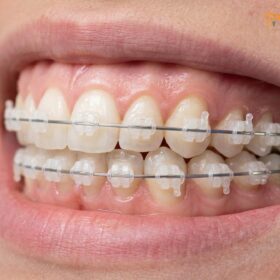
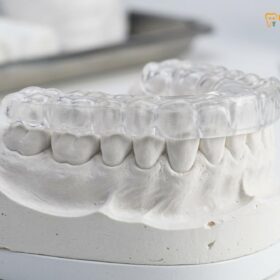
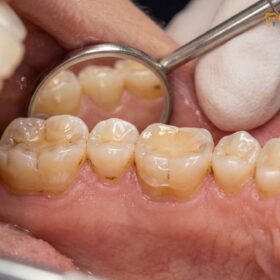
Wearing a mouthguard with braces orthodontics is essential to protect both your teeth and the soft tissues of your mouth from impact. Specialized orthodontic mouthguards are designed to accommodate brackets and wires while allowing teeth to shift safely during treatment.
Clinical Summary:
Integrating a mouthguard with braces orthodontics requires a careful balance between orofacial protection and continuous tooth movement. Standard mouthguards are contraindicated during active orthodontic treatment because they mold too tightly around the brackets, effectively locking the teeth in place and risking bracket avulsion. Instead, patients must utilize specialized orthodontic mouthguards made from medical-grade silicone or custom-fabricated materials that feature a “block-out” channel. This channel provides a protective buffer over the hardware, preventing soft tissue lacerations during impact while allowing the archwires to exert their necessary biomechanical forces. Clinical oversight is highly recommended to ensure the guard adapts to the changing dental arch throughout the treatment phases.
Key Takeaways:
- Standard boil-and-bite guards impede orthodontic tooth movement and can damage brackets.
- Orthodontic mouthguards feature specialized channels to accommodate braces hardware.
- Medical-grade silicone is often preferred for its adaptability to shifting teeth.
- High-impact sports may require bimaxillary (upper and lower) protection.
- A new, custom-fitted guard is mandatory once orthodontic treatment is completed.
Mouthguard Options During Braces
Orthodontic patients can choose between specialized boil-and-bite braces mouthguards, custom-fitted laboratory guards, and instant-fit lip guards, each offering varying levels of protection and adaptability.
When undergoing active Orthodontics, the introduction of brackets, archwires, and ligatures significantly alters the topography of the dental arch. This structural change necessitates specialized protective equipment. Patients seeking a mouthguard with braces orthodontics generally have three primary clinical options, each designed to mitigate the unique risks associated with dental hardware during physical activity [1].
The first option is the over-the-counter (OTC) orthodontic mouthguard. Unlike traditional boil-and-bite guards made from rigid ethylene-vinyl acetate (EVA), these are typically constructed from 100% medical-grade silicone. Silicone is highly flexible and features a pre-formed channel specifically designed to sit over the brackets. Because it does not require boiling and molding, it adapts instantly to the current position of the teeth and continues to fit even as the teeth shift over the weeks of treatment. This makes the instant-fit braces mouthguard a highly convenient option for growing athletes.
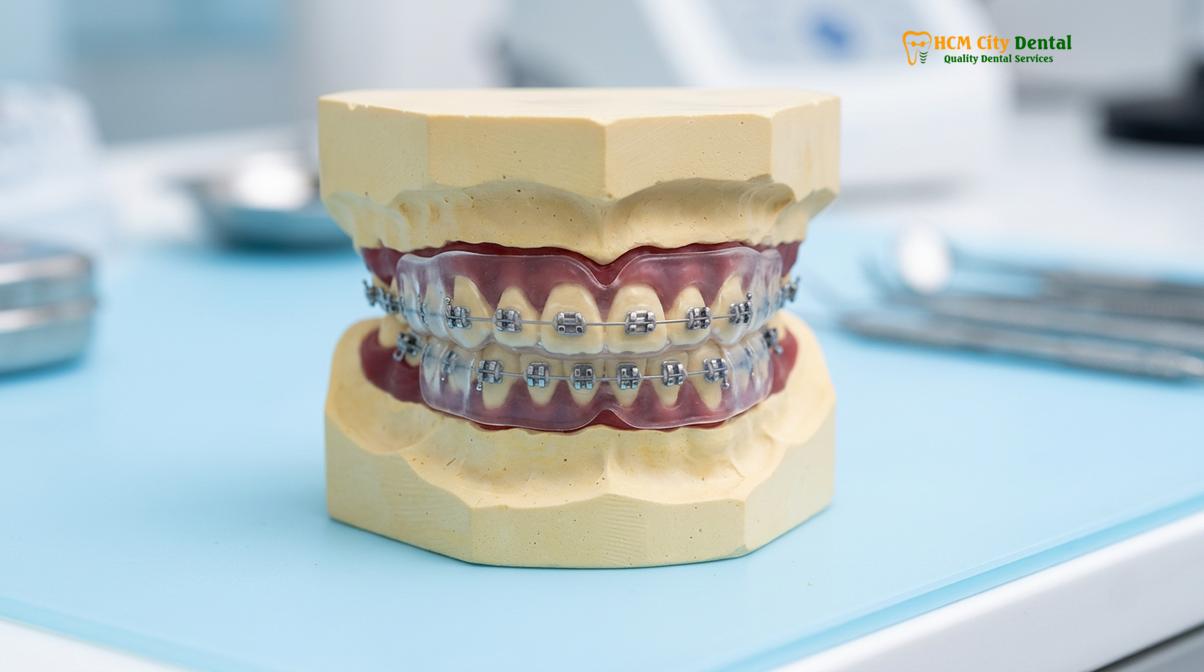
The second option is a specialized boil-and-bite guard designed explicitly for braces. These models use a hybrid approach: a rigid outer exoskeleton for shock absorption and a softer inner lining that can be molded. However, to prevent the material from locking onto the brackets, patients must use a barrier (such as dental wax or a provided plastic strip) over the braces during the molding process. While offering a tighter fit than pure silicone guards, they require careful remolding as the orthodontic treatment progresses.
The third and most clinically sound option is the custom-fabricated orthodontic mouthguard. Created by a dental professional, this guard involves taking precise impressions or digital scans of the patient’s mouth. The dental laboratory then digitally or physically “blocks out” the brackets—adding a layer of virtual wax over the hardware—before thermoforming the protective material. This ensures maximum shock absorption, perfect retention, and zero interference with the archwire’s biomechanical forces. Patients often compare the comfort of these devices when evaluating a Custom vs Store Bought Night Guard, noting the superior fit of laboratory-made appliances.
Why Standard Guards Don’t Work with Braces
Standard mouthguards mold too tightly around brackets, locking teeth in place, preventing necessary orthodontic movement, and risking severe bracket dislodgement upon removal.
A common clinical error among patients is attempting to use a standard, non-orthodontic boil-and-bite mouthguard over their new braces. From a biomechanical perspective, this practice is highly contraindicated and can lead to significant dental complications and treatment delays [2].
Orthodontic treatment relies on the continuous, gentle application of force via the archwire to stimulate osteoclastic and osteoblastic activity in the alveolar bone, allowing the teeth to move through the jaw. When a standard EVA mouthguard is heated and bitten into, the thermoplastic material flows into every undercut of the teeth and, disastrously, into the undercuts of the brackets and wires. Once the material cools and hardens, it creates a rigid splint that completely locks the teeth in their current position.
“Applying a rigid, tightly molded thermoplastic guard over active orthodontic appliances effectively neutralizes the prescribed biomechanical forces, halting tooth movement and potentially causing root resorption due to conflicting pressure vectors.”
Furthermore, the mechanical locking effect poses a severe risk to the integrity of the orthodontic hardware. When the patient attempts to remove the hardened standard guard, the force required to dislodge it is often greater than the shear bond strength of the orthodontic adhesive holding the brackets to the enamel. This frequently results in bracket avulsion (popping off brackets), bent archwires, and emergency visits to the orthodontist for repairs [3].
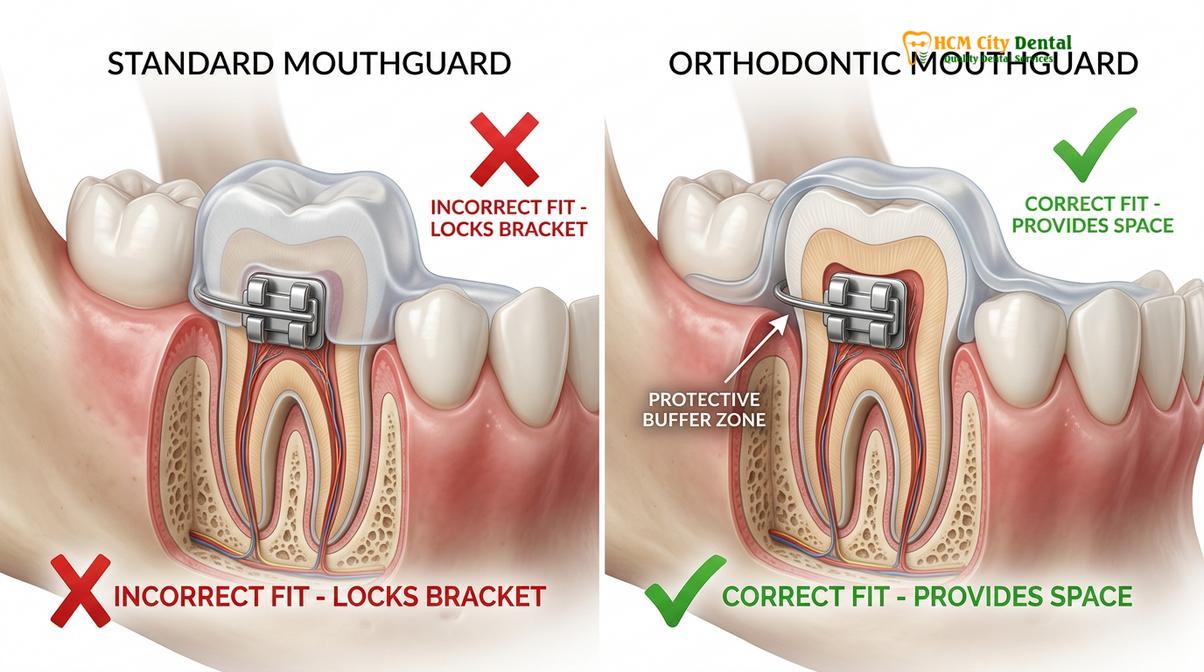
Beyond the hardware risks, standard guards fail to provide adequate soft tissue protection for orthodontic patients. A proper guard for braces must create a sufficient buffer zone between the sharp metallic edges of the brackets and the delicate mucosal lining of the lips and cheeks. Standard guards, lacking the necessary volume and specific channel design, can actually press the lips harder against the braces upon impact, leading to severe lacerations and embedded hardware.
Custom Guards for Orthodontic Patients
Custom orthodontic mouthguards are fabricated in a dental laboratory using precise impressions, ensuring optimal shock absorption without hindering the prescribed tooth movement.
For patients engaged in competitive or high-impact sports, the custom-fabricated orthodontic mouthguard represents the gold standard of orofacial protection. The clinical workflow for creating these devices requires precision and a deep understanding of the patient’s specific treatment phase.
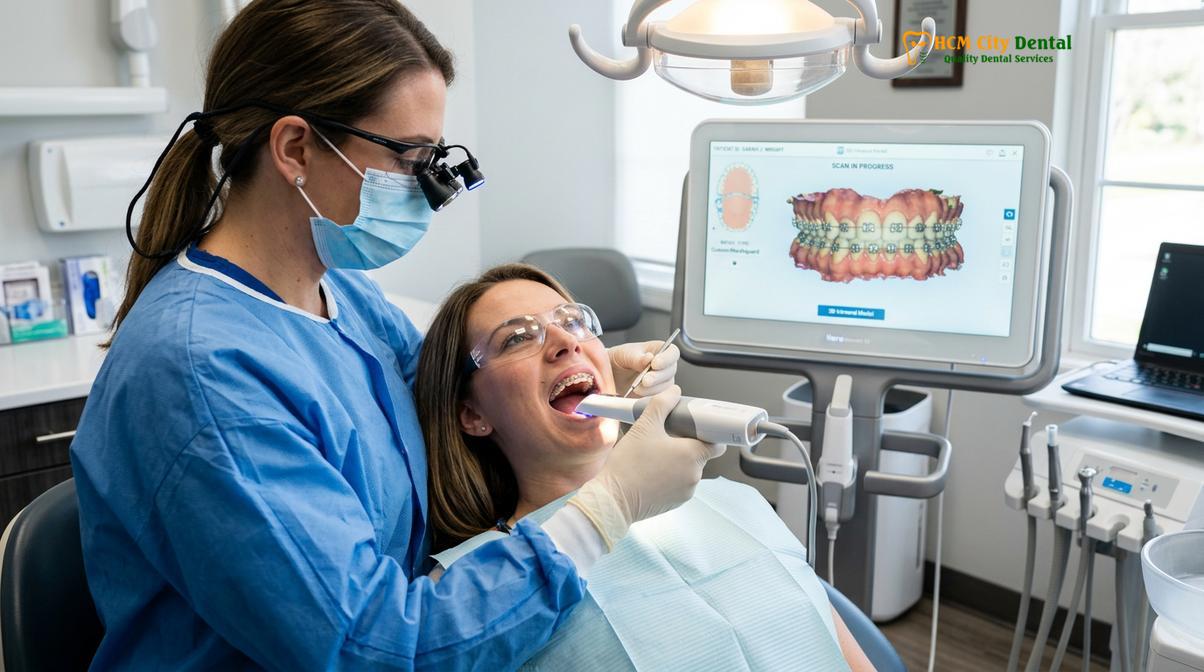
The process begins with capturing the exact topography of the patient’s mouth. Modern clinics often utilize intraoral digital scanners rather than traditional alginate impressions. Digital scanning is particularly advantageous for patients with braces, as alginate can occasionally tear or become lodged under the archwires. The digital scan creates a highly accurate 3D model of the teeth, brackets, and surrounding gingival tissues.
Clinical Case Example:
A 15-year-old competitive rugby player visited HCMC Dental Clinic in Ho Chi Minh City seeking protection for his newly placed upper and lower braces. Standard guards were causing mucosal irritation. Dr. Cuong utilized an intraoral scanner to capture the dentition. The laboratory digitally applied a 1.5mm block-out spacer over the virtual brackets before thermoforming a dual-laminate EVA guard. The resulting custom appliance provided superior retention during matches while allowing unimpeded orthodontic alignment over the subsequent six months.
Once the 3D model is generated, the critical step of “blocking out” occurs. Dental technicians use specialized CAD (Computer-Aided Design) software to add virtual wax over the brackets and wires. This creates a smooth, continuous channel in the final mouthguard. The thickness of this block-out layer is meticulously calculated; it must be spacious enough to allow the teeth to move according to the orthodontist’s plan, yet snug enough against the occlusal (biting) surfaces and the palate to ensure the guard stays firmly in place during athletic exertion [4].
The material selection for custom guards also differs based on the patient’s needs. While evaluating a Hard vs Soft Night Guard for bruxism involves different criteria, sports guards for braces typically utilize a pressure-laminated, multi-layer soft EVA approach. This provides a shock-absorbing outer layer to dissipate kinetic energy from impacts, and a softer inner layer that rests gently against the blocked-out hardware.
Sports Safety with Braces
High-impact sports require specialized bimaxillary or thick maxillary guards to absorb kinetic energy, preventing bracket avulsion and severe lip lacerations.
The intersection of athletics and orthodontics presents unique challenges. The presence of fixed appliances exponentially increases the risk of soft tissue trauma during sports. A blow to the face that might normally cause a mild contusion can result in deep, complex lacerations when the inner lip is driven into the sharp tie-wings of orthodontic brackets.
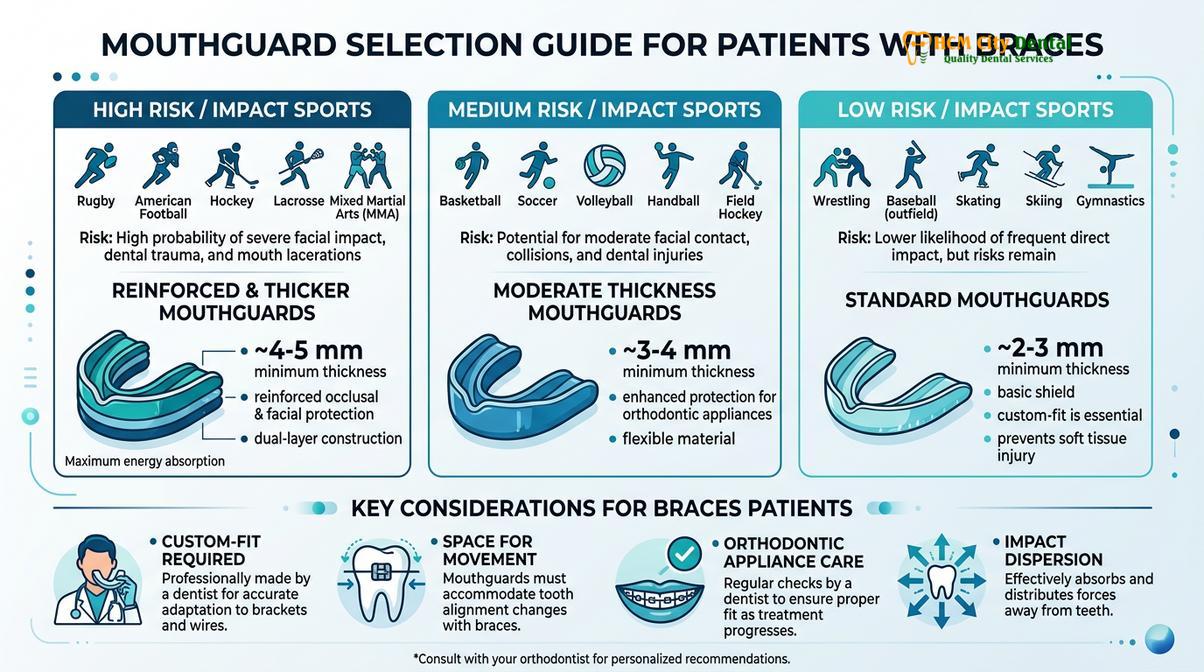
To mitigate these risks, the selection of a mouthguard with braces orthodontics must be tailored to the specific sport’s impact level. Sports are generally categorized into low, medium, and high impact, dictating the required thickness and coverage of the protective device.
| Sport Impact Level | Examples | Recommended Orthodontic Guard Type | Clinical Rationale |
|---|---|---|---|
| Low Impact | Gymnastics, Volleyball | Single Arch (Maxillary) Silicone Guard | Provides basic soft tissue buffering against accidental, low-velocity collisions. |
| Medium Impact | Basketball, Soccer | Custom Blocked-Out Maxillary Guard | Offers enhanced retention and shock absorption for frequent elbow or ball impacts. |
| High Impact | Rugby, Martial Arts, Hockey | Bimaxillary (Upper & Lower) Custom Guard | Secures the mandible, protects both arches of hardware, and prevents jaw dislocation. |
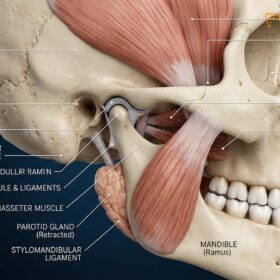
In high-impact sports, a bimaxillary guard—often referred to as a double guard—is frequently recommended if the patient has both upper and lower braces. These guards protect the lower brackets from lacerating the lower lip and help stabilize the temporomandibular joint (TMJ) by locking the jaw into a slightly forward, cushioned position upon impact.
It is also crucial for athletes to maintain strict oral hygiene protocols when using an orthodontic mouthguard. The combination of sweat, saliva, and the retentive nature of brackets creates an ideal environment for bacterial proliferation. Patients must thoroughly brush their teeth and clean the guard with a non-abrasive antimicrobial solution after every use to prevent enamel demineralization (white spot lesions) around the brackets.
Night Guard During Orthodontic Treatment
Patients experiencing bruxism during orthodontics require specialized night guards that protect enamel from grinding forces while accommodating continuous archwire adjustments.
While sports guards protect against sudden, high-velocity impacts, night guards are designed to protect against the chronic, low-velocity forces of bruxism (teeth grinding and clenching). Managing bruxism during active orthodontic treatment is highly complex because the teeth are already experiencing inflammatory responses due to the movement forces.
Patients who suffer from Teeth Grinding in Sleep often find that their grinding exacerbates the soreness typically felt after an orthodontic adjustment. The excessive occlusal forces can also lead to frequent bracket breakages, particularly on the lower anterior teeth or the posterior molars where bite forces are highest.
Clinical Warning: Never use a standard over-the-counter night guard designed for bruxism over your braces. These hard acrylic or rigid thermoplastic guards will lock the teeth, completely arresting your orthodontic progress and potentially causing severe pain as the braces try to move teeth that are splinted in place.
If a patient exhibits severe Bruxism Effects on Teeth while wearing braces, the orthodontist must intervene carefully. Often, a soft, flexible bite plate or a specialized orthodontic night guard is prescribed. These devices provide a flat occlusal plane that allows the opposing teeth to glide smoothly without locking into deep grooves, thereby reducing the strain on the TMJ and protecting the enamel from attrition.
Furthermore, patients who experience Jaw Clenching During Day due to stress or the discomfort of the braces themselves may benefit from behavioral modification techniques or temporary bite turbos (small composite ramps placed on the teeth by the orthodontist) to disocclude the posterior teeth and prevent destructive clenching forces.
Post-Braces Guard Transition
Once braces are removed, patients must transition to a new custom mouthguard or a specialized retainer that fits the final, stable dental alignment.
The day the braces are removed marks the beginning of the retention phase, a critical period where the teeth are highly susceptible to relapse. The periodontal ligaments and alveolar bone require several months to reorganize and stabilize around the teeth’s new positions. During this transition, the old guard for braces becomes entirely obsolete [5].
Because the brackets have been removed, the old orthodontic mouthguard will be excessively loose. The channels that once housed the hardware will now be empty voids, meaning the guard will lack the necessary retention to stay in place during sports, rendering it useless for protection.
“The transition from active orthodontics to retention requires immediate replacement of all protective oral appliances. A poorly fitting sports guard post-treatment not only fails to protect against trauma but can inadvertently apply adverse forces that encourage orthodontic relapse.”
Patients must be fitted for a new, standard custom mouthguard that intimately adapts to their newly straightened teeth. For nighttime protection, the orthodontist will provide retainers—typically clear Essix retainers or wire Hawley retainers. If the patient is an athlete who also grinds their teeth, the clinician must carefully coordinate the use of sports guards during the day and retainers or specialized night guards at night. For comprehensive strategies on managing post-treatment bruxism, patients can explore How to Stop Grinding Teeth: Clinical Guide.
When to See a Doctor
While wearing a mouthguard with braces orthodontics is generally safe and highly recommended, certain clinical signs warrant an immediate consultation with your dental professional. If you experience persistent mucosal ulcerations, bleeding gums, or severe localized pain after wearing your sports guard, it may indicate that the appliance is impinging on the gingival tissues or placing undue pressure on a specific bracket.
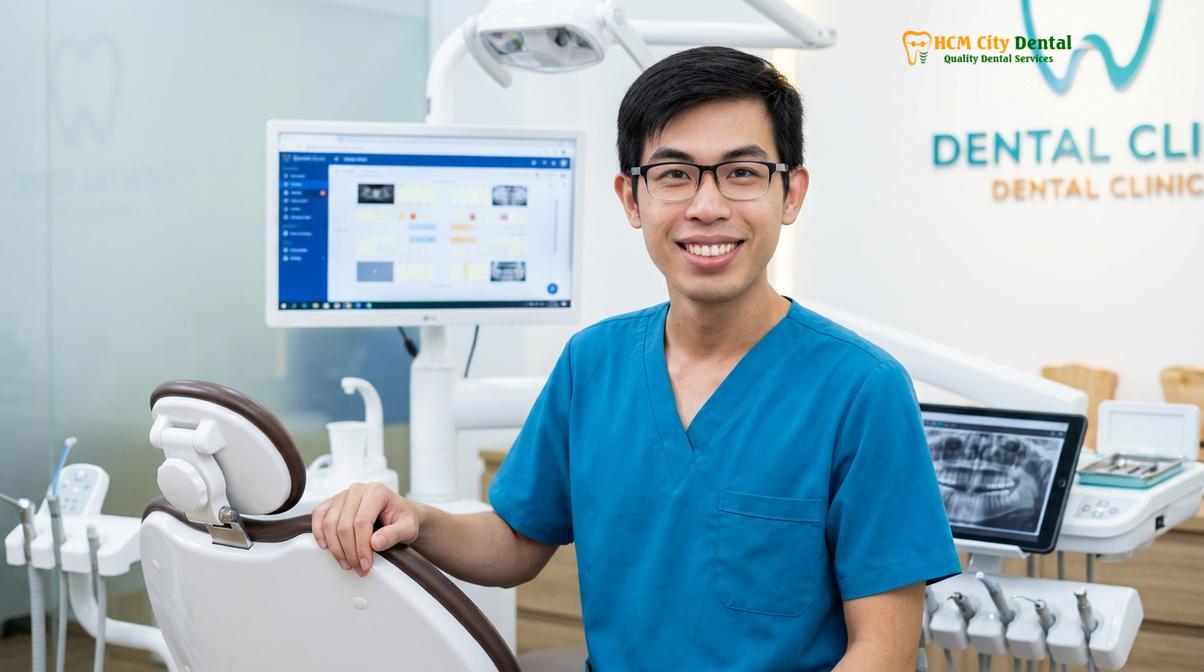
Additionally, if you notice that your teeth feel unusually loose, or if a bracket becomes debonded (detaches from the tooth) immediately after removing the mouthguard, you must seek clinical attention. At HCMC Dental Clinic, Dr. Nguyen Van Cuong emphasizes the importance of routine appliance checks. A guard that fit perfectly in month one of treatment may become restrictive by month six due to significant dental arch expansion or alignment changes. Regular evaluations ensure that your protective gear evolves in tandem with your orthodontic progress, maintaining both safety and treatment efficacy.
Frequently Asked Questions
Can I wear a regular mouthguard with braces?
No, you cannot wear a regular mouthguard with braces. Standard guards mold tightly to the teeth and brackets, which locks the teeth in place, prevents necessary orthodontic movement, and can cause severe damage to the brackets upon removal. You must use a guard specifically designed with channels to accommodate orthodontic hardware.
Do orthodontists provide mouthguards?
Yes, most orthodontists provide or can fabricate specialized mouthguards for their patients. They can take precise digital scans or physical impressions to create a custom guard that accommodates your specific bracket placement and treatment plan, ensuring both safety and continued tooth movement.
How much is a mouthguard for braces?
The cost of a mouthguard for braces ranges from affordable over-the-counter options to premium custom-made devices. Store-bought orthodontic guards are generally inexpensive, while custom laboratory-fabricated guards prescribed by a dentist represent a higher, but more protective, investment tailored to your specific dental anatomy.
Should I get a guard for upper or lower braces?
You should generally get a guard for whichever arch has braces, though upper protection is the most critical. If you have both upper and lower braces and play high-impact sports, a bimaxillary (double) guard offers the most comprehensive protection against lip lacerations and jaw trauma.
Do I need a new guard after braces removal?
Yes, you will absolutely need a new mouthguard after your braces are removed. Your teeth will be in a completely new alignment, and the extra space previously occupied by the brackets will make your old guard loose, unretentive, and entirely ineffective at absorbing impact during sports.
References
- American Journal of Orthodontics and Dentofacial Orthopedics. Orofacial trauma and mouthguard wear among orthodontic patients. (2019).
- Journal of Clinical Orthodontics. Biomechanical considerations for protective mouthguards during active tooth movement. (2020).
- Dental Traumatology. Efficacy of custom vs. prefabricated mouthguards in preventing bracket avulsion. (2021).
- International Journal of Sports Dentistry. Material properties of orthodontic mouthguards: Silicone vs. EVA. (2018).
- Journal of Prosthetic Dentistry. Transitioning from orthodontic retention to athletic protection. (2022).