The primary mouthguard vs night guard difference lies in their clinical purpose and structural design. Sports mouthguards absorb sudden, high-impact forces to prevent acute dental trauma, while night guards provide a durable, thin barrier to protect teeth against the sustained, grinding forces of nocturnal bruxism.
Clinical Summary:
Understanding the mouthguard vs night guard difference is critical for preserving both dental integrity and temporomandibular joint (TMJ) health. Sports mouthguards are fabricated from thick, elastomeric materials designed to dissipate acute kinetic energy from external blows, protecting against tooth avulsion and soft tissue lacerations. Conversely, night guards (occlusal splints) are engineered from rigid or semi-rigid acrylics to withstand the chronic, vertical, and lateral forces of sleep bruxism. Interchanging these devices poses significant clinical risks: wearing a soft sports guard at night can trigger a “chew reflex” that exacerbates muscle hyperactivity, while wearing a rigid night guard during contact sports fails to provide adequate shock absorption, potentially leading to catastrophic dental fractures.
Key Takeaways:
- Distinct Biomechanics: Sports guards absorb sudden external shocks; night guards resist sustained internal grinding forces.
- Material Composition: Athletic guards use soft, compressible thermoplastics (EVA), whereas bruxism splints utilize hard acrylics or dual-laminates.
- Thickness Variation: Sports guards require 3-5mm of thickness for impact dispersion, while night guards are kept thin (1.5-2mm) to maintain proper jaw resting posture.
- Contraindications: Using a sports guard for sleep bruxism can increase masseter muscle tension and worsen TMJ pain.
- Customization: Both appliances achieve maximum clinical efficacy when custom-fabricated based on precise dental impressions or digital scans.
Purpose: Protection vs Grinding Prevention
Sports mouthguards are engineered to dissipate acute traumatic impacts across the dental arch, whereas night guards are designed to withstand chronic, repetitive occlusal forces from teeth grinding.
To fully grasp the mouthguard vs night guard difference, one must first examine the distinct biomechanical threats each appliance is designed to neutralize. The human masticatory system is capable of generating immense force, but the nature of that force dictates the required protective intervention. Dental appliances are not universally interchangeable; their architecture is dictated strictly by their intended clinical application.
Sports mouthguards serve as a critical shock-absorbing buffer against external kinetic energy. When an athlete sustains a blow to the lower face—whether from a hockey puck, a boxing glove, or a collision on the rugby field—the force is sudden, violent, and highly concentrated. Without protection, this impact can drive the lower jaw upward with enough velocity to fracture teeth, cause concussions, or result in severe lacerations to the lips, cheeks, and tongue. A properly fitted sports guard absorbs this kinetic energy, dissipating it across the entire dental arch rather than allowing it to concentrate on a single tooth [1]. Furthermore, it stabilizes the mandible, preventing the violent upward collision of the lower teeth against the upper teeth, which is a common cause of crown fractures and root damage.
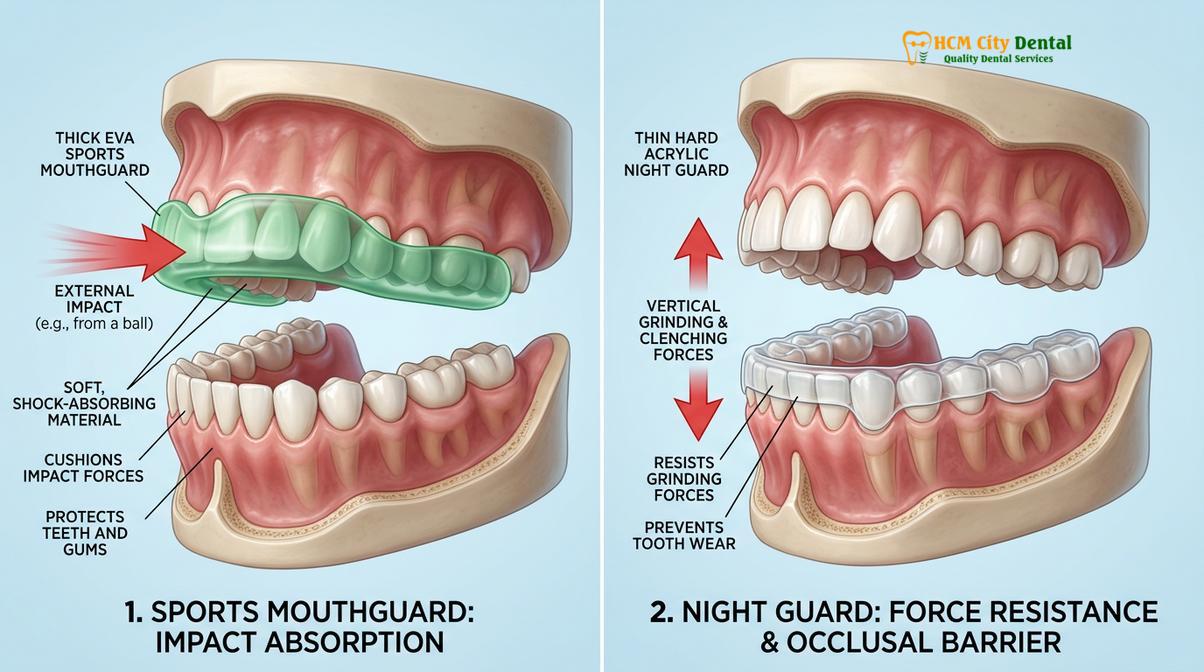
In stark contrast, a night guard (clinically referred to as an occlusal splint or bite guard) is designed to manage internal forces generated by the patient’s own musculature. Sleep bruxism involves the involuntary, rhythmic clenching and grinding of teeth during the sleep cycle. Unlike a sudden sports impact, bruxism forces are sustained, repetitive, and can exert up to 250 pounds of pressure per square inch over several hours. This chronic friction leads to severe enamel attrition, abfraction lesions at the gumline, and profound strain on the temporomandibular joint (TMJ). For a deeper understanding of these destructive forces, patients often review What Is Bruxism Teeth Grinding? Causes & Treatments | HCMC Dental.
According to Dr. Nguyen Van Cuong, understanding the specific force vectors—whether sudden lateral impact or sustained vertical pressure—is crucial for prescribing the correct appliance. “When a patient presents with generalized occlusal wear, prescribing a soft athletic guard is a clinical error. We must provide a rigid surface that allows the opposing teeth to glide smoothly without engaging the proprioceptive triggers that cause muscle clenching,” explains Dr. Cuong. This fundamental difference in purpose dictates every subsequent design choice, from material selection to appliance thickness.
Design and Material Differences
Night guards utilize rigid acrylics or dual-laminates to resist grinding wear, while sports mouthguards rely on softer, thicker elastomeric materials like EVA to absorb shock.
The material science behind dental guard types is highly specialized. The efficacy of any oral appliance depends entirely on how its chemical composition reacts to stress, temperature, and prolonged exposure to the oral environment. The materials chosen for sports guards and night guards are fundamentally opposed in their physical properties.
Sports mouthguards are predominantly fabricated from Ethylene Vinyl Acetate (EVA) or similar thermoplastic elastomers. EVA is favored in sports dentistry because of its exceptional energy-absorbing properties and flexibility. When a high-velocity impact occurs, the EVA material compresses, absorbing the shockwave and delaying the transmission of force to the underlying dental structures [2]. This compressibility is what saves a tooth from avulsion (being knocked out). However, this exact property makes EVA highly unsuitable for bruxism. If a patient grinds their teeth against a soft, rubbery surface, the material does not allow the teeth to slide. Instead, it creates friction and resistance, which the brain interprets as a bolus of food. This triggers the masseter and temporalis muscles to chew harder, inadvertently exacerbating the bruxism.
Night guards, conversely, are constructed from much harder materials designed to resist wear and facilitate smooth movement. The most common materials include heat-cured Polymethyl Methacrylate (PMMA) acrylics, milled polymethyl methacrylate, or advanced dual-laminate materials. A hard acrylic night guard provides a frictionless occlusal surface. When the jaw attempts to grind, the lower teeth simply glide across the smooth acrylic without catching, which helps to disengage the hyperactive jaw muscles and reduce TMJ strain [3]. For patients who find pure hard acrylic too rigid, a dual-laminate guard offers a compromise: a hard, durable outer shell to resist grinding, combined with a softer polyurethane inner lining for comfort against the teeth. To explore these material nuances further, see our guide on Hard vs Soft Night Guard: Clinical Differences | HCMC Dental.
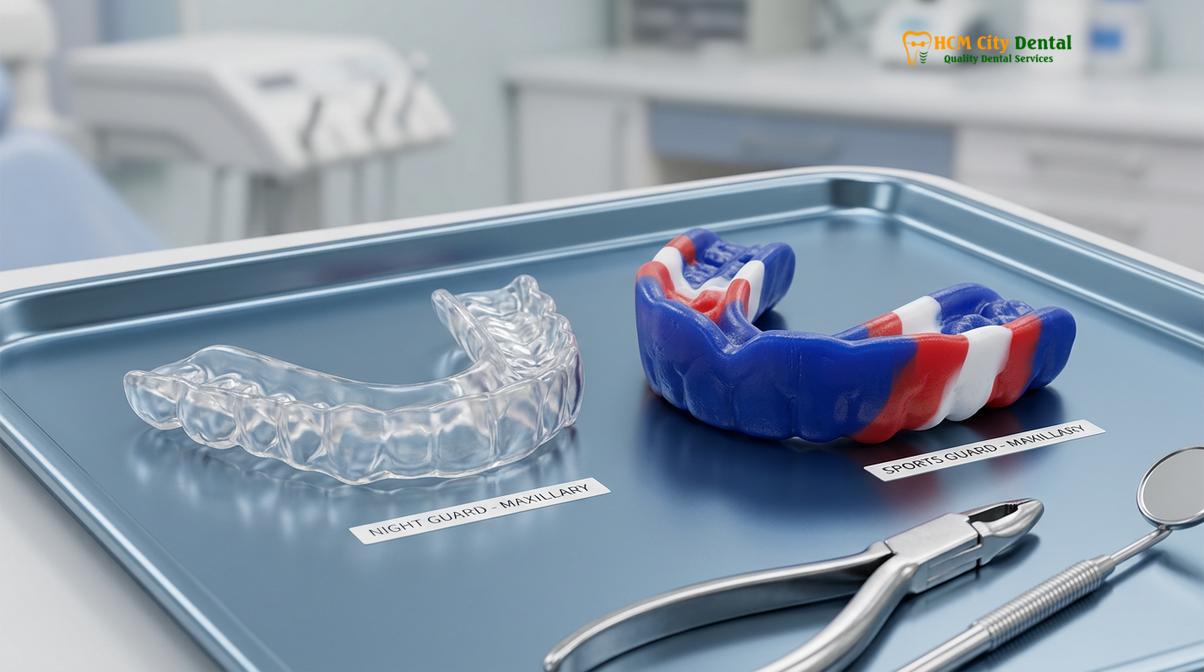
Below is a clinical comparison of the material properties and design features distinguishing these two appliances:
| Clinical Feature | Sports Mouthguard | Bruxism Night Guard |
|---|---|---|
| Primary Material | Ethylene Vinyl Acetate (EVA) / Thermoplastics | Hard Acrylic (PMMA) / Dual-Laminate (PETG/TPU) |
| Material Property | Soft, compressible, shock-absorbing | Rigid, smooth, wear-resistant |
| Occlusal Surface | Indented to lock the bite upon impact | Flat and smooth to allow frictionless gliding |
| Gingival Coverage | Extends high over the gums for root protection | Ends at the gingival margin to prevent irritation |
| Lifespan | 1-2 seasons (degrades with chewing/impact) | 2-5+ years (depending on bruxism severity) |
The design architecture also differs significantly in terms of tissue coverage. A sports guard must extend high into the buccal vestibule (the space between the gums and cheeks) to protect the roots of the teeth and shield the soft tissues from laceration against the teeth. A night guard, however, is designed with a much lower profile, typically ending right at the gingival margin. This minimal coverage is intentional; it prevents unnecessary bulk in the mouth, reduces salivary pooling, and ensures maximum comfort during the 6 to 8 hours of sleep.
Thickness Comparison
Sports mouthguards are significantly thicker (often 3-4mm or more) to cushion blows, whereas night guards are fabricated as thin as 1.5-2mm to ensure comfortable sleep and proper jaw alignment.
When evaluating mouth guard differences, thickness is one of the most critical clinical parameters. The thickness of an oral appliance directly impacts the “occlusal vertical dimension” (OVD)—the distance between the upper and lower jaws when the teeth are in contact. Altering the OVD has profound effects on the muscles of mastication, the TMJ, and even the patient’s airway.
Sports mouthguards are intentionally bulky. To provide adequate shock absorption against a direct blow, the material over the occlusal (biting) surface and the labial (front) surface must be substantial. Clinical guidelines generally recommend a minimum thickness of 3mm to 4mm for standard contact sports, and up to 5mm for high-impact sports like boxing or martial arts. This bulk is necessary to dissipate kinetic energy before it reaches the enamel or the alveolar bone. While this thickness is protective on the field, it forces the jaw into an open position that violates the natural “freeway space” (the natural resting gap between the upper and lower teeth, usually 2-4mm) [4].
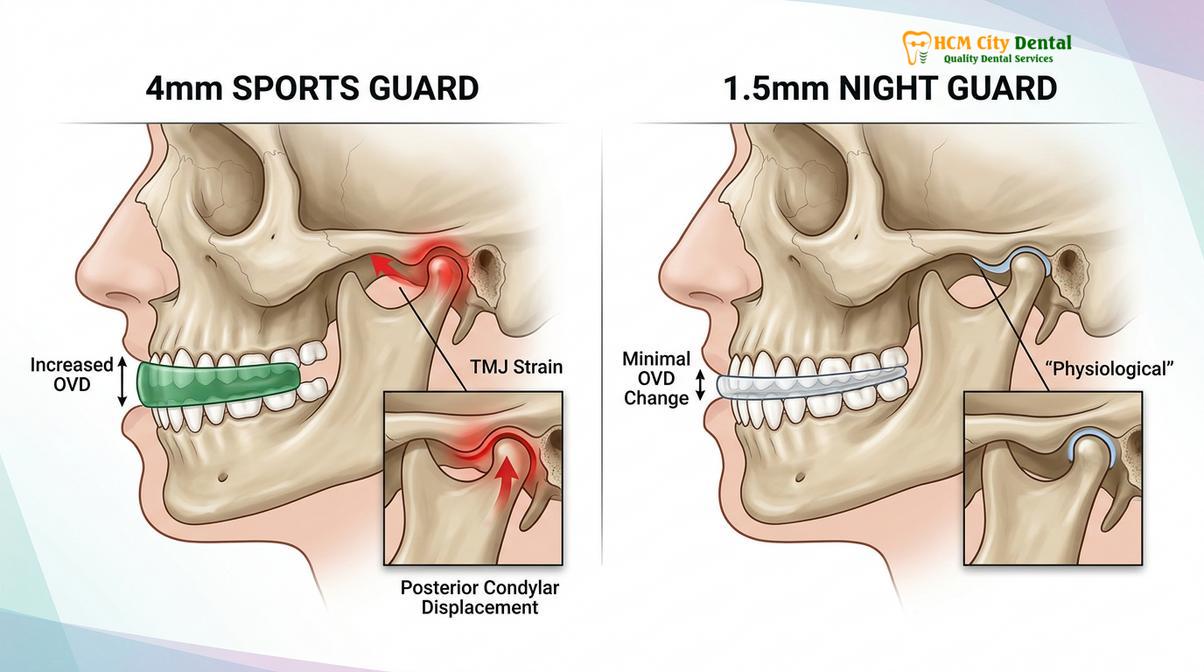
Wearing such a thick appliance is tolerable for the 1 to 2 hours of a sports match, but it is highly detrimental if worn overnight. If a patient attempts to sleep with a 4mm thick sports guard, the jaw muscles are forced into a state of continuous stretch. This sustained elongation activates muscle spindles, leading to severe morning soreness, tension headaches, and potential exacerbation of TMJ disorders. For more information on how jaw positioning affects sleep, review Teeth Grinding in Sleep: Clinical Causes & Treatments | HCMC Dental.
“The preservation of the interocclusal rest space is paramount in splint therapy. An appliance that is too thick will chronically stimulate the elevator muscles of the mandible, converting a protective device into a catalyst for myofascial pain.”
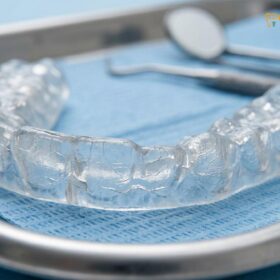
Night guards are meticulously fabricated to be as thin as clinically possible while still providing structural integrity against grinding. A standard hard acrylic night guard is typically milled or printed to a thickness of 1.5mm to 2mm. This precise thickness is sufficient to separate the teeth and prevent enamel-to-enamel wear, yet thin enough to allow the jaw muscles to remain in a relaxed, passive state during sleep. The thin profile also minimizes interference with the tongue space, reducing the risk of triggering the gag reflex or obstructing the airway—a crucial consideration for patients with concurrent sleep apnea or snoring issues.
Can You Use One for Both?
Using a sports guard for bruxism can exacerbate jaw pain and alter your bite, while wearing a night guard during sports provides insufficient shock absorption against facial trauma.
A frequent question in dental clinics is whether a single appliance can serve a dual purpose. Patients often wonder if a sports guard vs bruxism guard distinction is truly necessary, hoping to save time and money by using one device for both scenarios. Clinically, the answer is an unequivocal no. The distinct biomechanical requirements of impact protection versus grinding prevention make interchangeability not only ineffective but potentially harmful.
Attempting to use a sports mouthguard as a night guard is a common, yet dangerous, practice. As previously established, the soft, rubbery nature of a sports guard acts as a chew toy for the subconscious brain during sleep. Instead of allowing the jaw to relax, the compressible EVA material encourages the patient to bite down harder, increasing the intensity of the bruxism. Over time, this can lead to severe hypertrophy of the masseter muscles, chronic TMJ inflammation, and even unwanted orthodontic shifting of the teeth due to the uneven forces applied by a non-rigid surface. Furthermore, store-bought “boil-and-bite” sports guards rarely fit with the precision required for long-term wear, often leading to uneven bite distribution.
Clinical Warning: Never use a soft, over-the-counter sports mouthguard to treat severe sleep bruxism. The compressible material can trigger increased muscle hyperactivity, leading to severe temporomandibular joint (TMJ) dysfunction, chronic facial pain, and potential alteration of your natural bite alignment.
Conversely, using a hard acrylic night guard during a rugby match or a boxing bout is equally contraindicated. Hard acrylic has excellent compressive strength to resist vertical grinding, but it possesses very low tensile strength and zero shock-absorbing capacity. If a patient wearing a rigid night guard sustains a blow to the face, the force is transmitted directly through the hard plastic into the teeth and jawbone. Worse, the rigid acrylic can shatter upon high-velocity impact, creating sharp plastic shards in the mouth that can cause severe lacerations or pose a choking hazard. To understand the risks of improper appliance selection, read our detailed comparison on Custom vs Store Bought Night Guard: Clinical Comparison | HCMC Dental.
When You Need Both
Patients who participate in contact sports and also suffer from nocturnal bruxism require two distinct, custom-fabricated appliances to ensure optimal protection in both scenarios.
It is not uncommon for a patient to require both types of protection. Athletes, particularly those in high-stress competitive environments, frequently exhibit signs of sleep bruxism. The psychological stress of competition, combined with intense physical exertion, often manifests as nocturnal teeth grinding. In these dual-diagnosis scenarios, the clinical protocol is clear: the patient must be equipped with two separate, purpose-built appliances.
Managing a patient who needs both requires a comprehensive approach to oral health. The sports guard is prescribed for active use on the field, court, or mat. It is designed to be worn only during the specific duration of the athletic activity. Once the activity concludes, the sports guard is cleaned and stored. At night, the patient switches to their custom-fabricated rigid or dual-laminate night guard to protect their enamel and relax their jaw musculature during sleep. This dual-appliance strategy ensures that the teeth are protected from acute trauma during the day and chronic wear at night, without compromising the structural integrity of either device.
Clinical Case Study: Managing Dual Dental Risks
A 24-year-old amateur rugby player visited HCMC Dental Clinic in Ho Chi Minh City complaining of severe morning jaw pain and noticeable flattening of his canine teeth. Clinical examination revealed advanced sleep bruxism, likely exacerbated by the stress of his athletic training. The patient admitted to wearing his boil-and-bite rugby mouthguard to bed in an attempt to stop the grinding, which only worsened his TMJ symptoms. Dr. Cuong developed a dual-treatment plan: a custom-fitted, multi-layered EVA sports guard for his rugby matches to provide maximum impact protection, and a thin, hard-acrylic occlusal splint for nighttime use. Within three weeks of using the correct appliances for their intended purposes, the patient reported a complete cessation of morning jaw pain and no further progression of enamel wear.
For athletes experiencing the early signs of tooth wear, understanding the long-term implications is vital. Chronic bruxism not only damages the teeth but can compromise the structural integrity of the jawbone over time. We encourage patients to review Bruxism Effects on Teeth: Clinical Damage & Treatments | HCMC Dental to fully comprehend why proper nighttime protection is just as critical as daytime sports protection.
Choosing the Right Guard
Selecting the appropriate dental guard requires a comprehensive clinical evaluation of your bite, lifestyle risks, and the specific type of dental wear present.
The process of choosing and fabricating the correct dental guard has evolved significantly with the advent of digital dentistry. Whether you require a sports mouthguard or a bruxism night guard, the highest standard of care involves custom fabrication based on precise anatomical data. Over-the-counter options, while accessible, cannot account for the unique occlusal dynamics, arch width, and specific wear patterns of an individual patient.
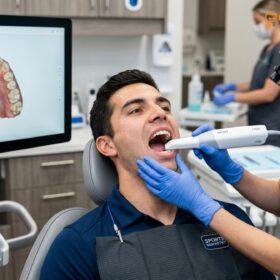
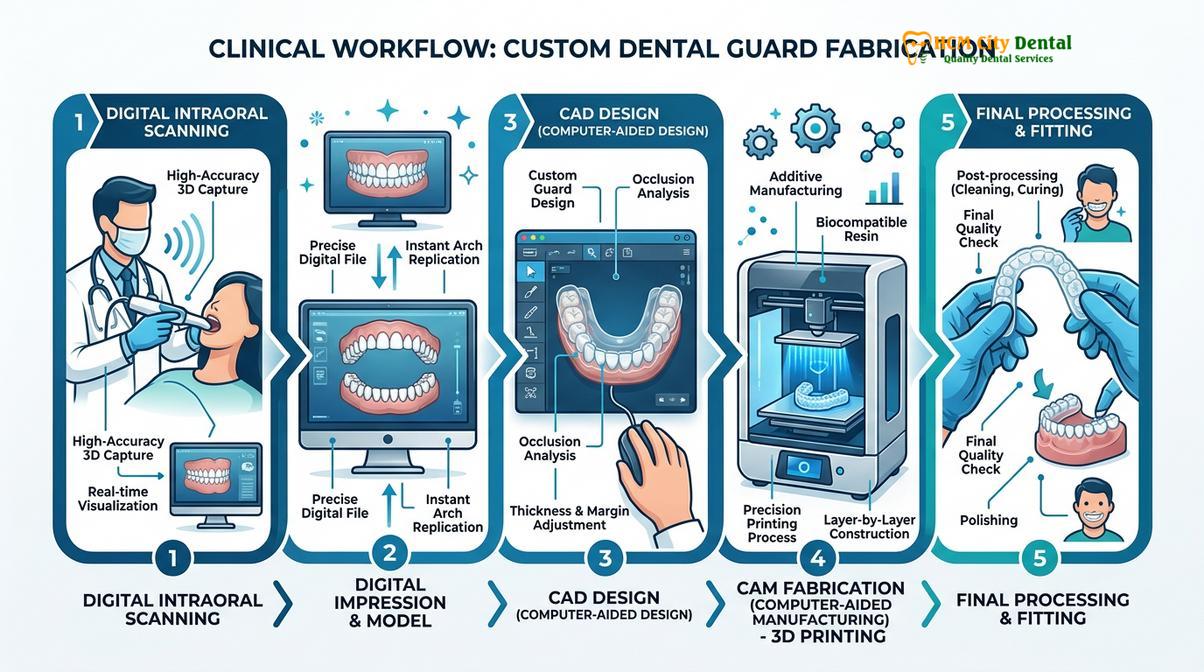
The clinical workflow begins with a thorough diagnostic evaluation. The dentist assesses the TMJ, palpates the muscles of mastication, and examines the dentition for signs of attrition, abfraction, or micro-fractures. If a night guard is indicated, the next step is capturing the exact morphology of the teeth. Modern clinics utilize intraoral digital scanners to create a highly accurate 3D model of the patient’s mouth. This digital impression is far superior to traditional putty, as it eliminates distortion and provides a perfect replica of the occlusal surfaces [5].
“The efficacy of an occlusal appliance is directly proportional to its fit. A discrepancy of even a fraction of a millimeter in a night guard can introduce premature occlusal contacts, shifting the mandible out of its centric relation and perpetuating the cycle of muscle spasm and bruxism.”
Once the digital model is acquired, the appliance is designed using CAD/CAM (Computer-Aided Design and Computer-Aided Manufacturing) software. For a night guard, the software calculates the exact thickness required to disclude the teeth while maintaining the freeway space. The final appliance is then either 3D printed using biocompatible resins or milled from a solid block of PMMA. For a sports guard, the digital model is used to thermoform multiple layers of EVA under high pressure, ensuring a tight, retentive fit that will not dislodge upon impact. For a comprehensive overview of the custom options available, patients can explore our main hub on Nightguards.
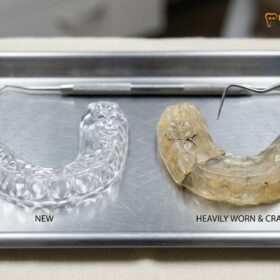
Proper maintenance of whichever guard you choose is essential for longevity and oral hygiene. Both types of guards should be cleaned daily with a non-abrasive cleanser, stored in a ventilated case to prevent bacterial growth, and kept away from extreme heat, which can warp the materials. Regular dental check-ups are also necessary so the dentist can evaluate the appliance for signs of wear and ensure it continues to fit correctly as your dentition naturally shifts over time. For more strategies on managing grinding, see How to Stop Grinding Teeth: Clinical Guide | HCMC Dental.
When to See a Doctor
Determining when to seek professional intervention for dental protection is crucial for preventing irreversible damage. You should schedule a clinical consultation if you experience any of the following symptoms or situations:
- Morning Symptoms: Waking up with a dull, constant headache, sore jaw muscles, or pain that radiates to the temples or ears is a strong indicator of nocturnal bruxism requiring a custom night guard.
- Visible Tooth Damage: If you notice that your teeth are becoming flattened, chipped, or increasingly sensitive to hot and cold temperatures, your enamel is likely being compromised by grinding forces.
- Starting a Contact Sport: Before beginning any sport that carries a risk of facial impact (e.g., martial arts, rugby, hockey, basketball), a custom sports mouthguard should be fabricated to prevent traumatic dental injuries.
- TMJ Clicking or Locking: If your jaw clicks, pops, or temporarily locks when opening or closing, an occlusal evaluation is necessary to determine if a specialized splint is required to stabilize the joint.
- Damage to Existing Dental Work: Frequent fracturing of fillings, crowns, or veneers is a clear sign of excessive occlusal force that must be managed with a protective appliance.

At HCMC Dental Clinic in Ho Chi Minh City, our specialists utilize advanced digital diagnostics to assess your specific biomechanical needs. Whether you require robust protection for athletic endeavors or precise occlusal management for sleep bruxism, a personalized clinical approach ensures the longevity of your natural teeth and the health of your jaw joints. Do not wait for a dental emergency or severe TMJ dysfunction to seek care; proactive protection is the cornerstone of comprehensive dental wellness.
Frequently Asked Questions
Can I use a sports guard as a night guard?
No, you should not use a sports guard as a night guard. Sports guards are made of soft, thick materials that can stimulate the jaw muscles to chew during sleep, potentially worsening bruxism and causing severe temporomandibular joint (TMJ) pain over time. The compressible nature of athletic guards prevents the jaw from finding a relaxed resting position, leading to chronic muscle fatigue and increased grinding intensity.
Is a night guard thinner than a mouthguard?
Yes, a night guard is significantly thinner than a sports mouthguard. Night guards are typically fabricated to be 1.5mm to 2mm thick to maintain a comfortable resting jaw position, whereas sports guards are often 4mm to 5mm thick to absorb heavy impacts. This thin profile in night guards is essential to respect the natural “freeway space” of the mouth, ensuring the jaw muscles remain passive and relaxed during sleep.
Do I need both a night guard and mouthguard?
If you participate in contact sports and also suffer from nocturnal teeth grinding, you will need both appliances. Each device serves a distinct biomechanical purpose, and using one for the other’s intended function compromises your dental safety and jaw health. The sports guard will protect you from acute trauma on the field, while the night guard will protect your enamel from chronic wear while you sleep.
Which is more expensive?
Custom night guards are generally more expensive than standard sports mouthguards. The higher cost reflects the precision required in capturing the exact occlusal relationship, the use of specialized clinical-grade acrylics, and the complex laboratory fabrication process needed to ensure proper bite alignment. While boil-and-bite sports guards are inexpensive, custom-fabricated athletic guards from a dentist represent a moderate investment, though still typically less than a milled acrylic night guard.
Can one guard serve dual purpose?
Clinically, one guard cannot effectively serve a dual purpose. A guard hard enough to withstand nocturnal grinding will shatter under a sports impact, while a guard soft enough to absorb a sports blow will exacerbate jaw muscle tension if worn overnight. Attempting to use a single appliance for both impact protection and bruxism management will inevitably fail at one or both tasks, putting your dental health at significant risk.
References
- Journal of Prosthetic Dentistry. Biomechanical properties of occlusal splint materials. (2021).
- American Dental Association. Athletic mouthguards and dental trauma prevention. (2020).
- International Journal of Sports Dentistry. Shock absorption capabilities of EVA mouthguards. (2019).
- Journal of Clinical Sleep Medicine. Management of sleep bruxism with oral appliances. (2022).
- Cranio: The Journal of Craniomandibular Practice. Effects of soft vs hard splints on TMJ musculature. (2018).