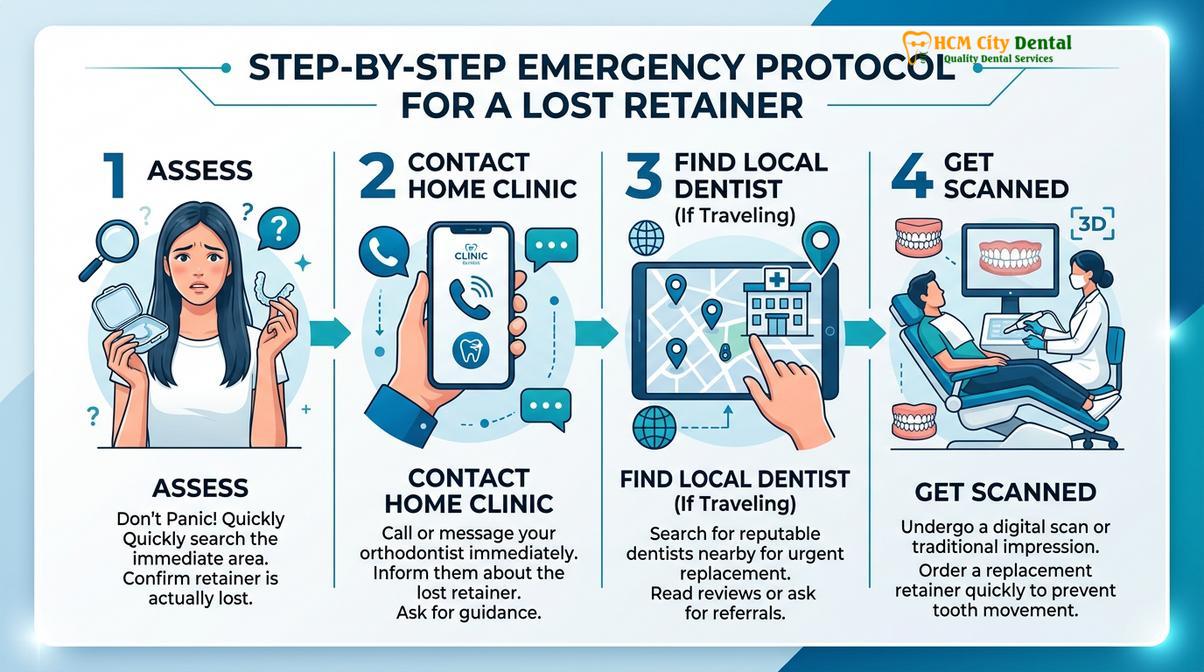
Losing your retainer abroad requires immediate action to prevent orthodontic relapse. First, contact your home orthodontist to check if they have your digital scans on file. If not, visit a local dentist abroad for a temporary replacement or new digital scan to stop your teeth shifting during travel.
Clinical Summary:
A lost retainer abroad is a time-sensitive orthodontic emergency. Without active retention, periodontal ligaments begin pulling teeth back to their original positions within days, a process known as orthodontic relapse. Patients must prioritize contacting their primary orthodontist to verify if existing 3D records can be used for a replacement. If remote fabrication and shipping are unfeasible due to time constraints, securing an emergency Essix retainer from a reputable local clinic is the standard clinical protocol. This immediate intervention helps maintain current dental alignment until the patient returns home for a comprehensive evaluation.
Key Takeaways:
- Teeth can begin shifting within 24 to 48 hours without a retainer, especially post-treatment.
- Your home orthodontist may be able to fabricate a replacement using saved digital STL files.
- Do not attempt DIY fixes or use ill-fitting backup retainers, as these can damage roots.
- Local dental clinics abroad can provide temporary clear aligners to halt unwanted movement.
- Always travel with a backup retainer and store appliances in a hard, brightly colored protective case.
Immediate Clinical Steps for a Retainer Emergency Abroad
If you experience a retainer emergency abroad, immediately retrace your steps to locate the appliance, then contact your primary orthodontist to determine if a replacement can be fabricated from existing digital records.
Discovering that you have a lost retainer abroad can induce significant anxiety, particularly if you have recently completed comprehensive Orthodontics. The immediate realization that your teeth are left unsupported often leads to panic. However, managing a retainer emergency abroad requires a calm, systematic approach based on clinical priorities rather than fear.
The first step is to thoroughly retrace your steps. Retainers are most commonly lost in restaurants when wrapped in napkins, left on hotel nightstands, or misplaced in transit. If the appliance is truly lost, time becomes the most critical factor. You must immediately contact your home orthodontist. Modern orthodontic practices frequently utilize digital intraoral scanners, meaning your dental anatomy may be saved as an STL (Standard Tessellation Language) file in their cloud system[1]. If your teeth have not shifted significantly since your last scan, your orthodontist might be able to 3D print a new model, thermoform a replacement retainer, and ship it to your international location.
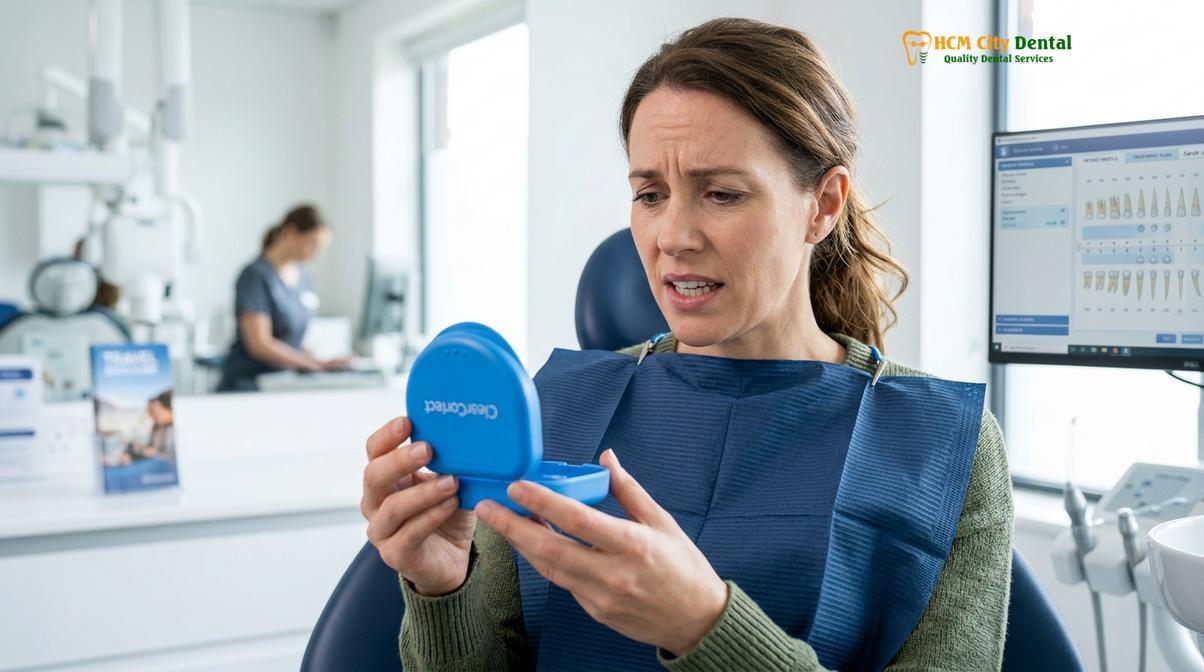
However, international shipping logistics can be unpredictable. Customs delays, remote travel destinations, and courier inefficiencies can extend the delivery time to several weeks. During this waiting period, the risk of orthodontic relapse increases exponentially. Dr. Nguyen Van Cuong emphasizes that the first 48 hours without retention are critical, as the periodontal fibers possess a strong “memory” that actively attempts to pull the teeth back to their pre-treatment positions. If shipping a replacement is not viable, seeking immediate local dental care becomes imperative.
The Biological Reality of Teeth Shifting Travel
Teeth shifting travel occurs because the periodontal ligaments and gingival fibers remain highly elastic for months after braces are removed, causing teeth to drift back toward their original malocclusion within days of losing retention.
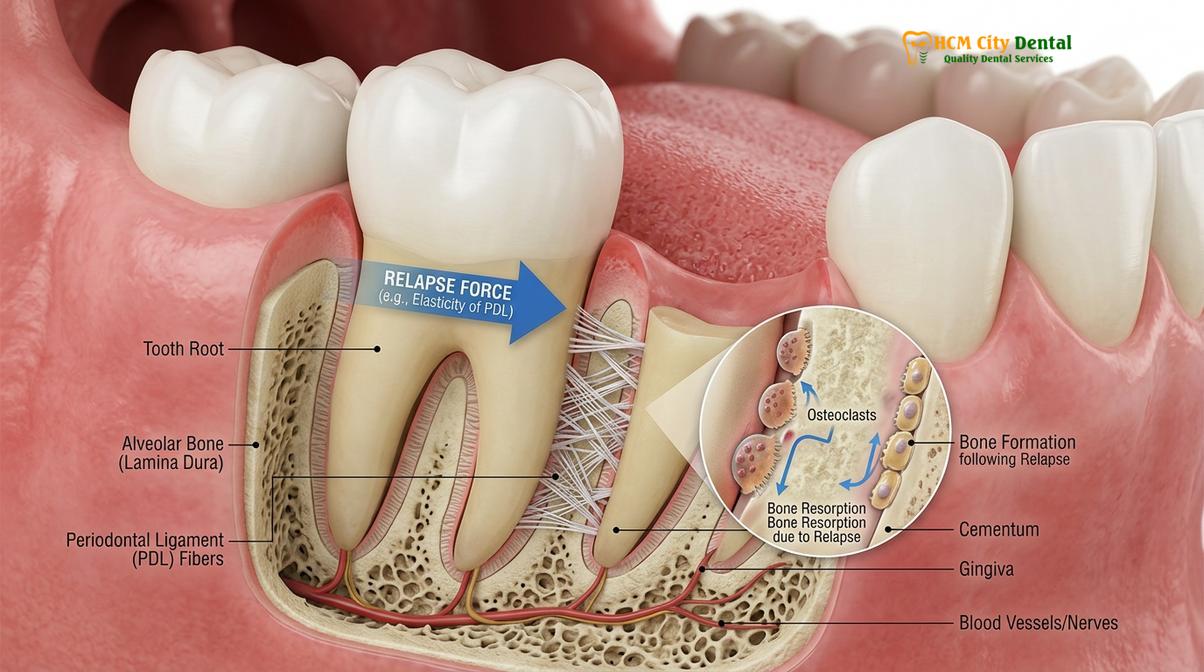
To understand why a lost retainer is a clinical emergency, one must understand the biology of tooth movement. Orthodontic treatment involves the controlled application of force to remodel the alveolar bone. Osteoclasts break down bone on the pressure side of the tooth root, while osteoblasts build new bone on the tension side. When braces or aligners are removed, the bone surrounding the teeth is still relatively soft and uncalcified.
More importantly, the supracrestal and transeptal fibers of the gingiva are highly elastic. These microscopic fibers act like stretched rubber bands. When the active retention is suddenly removed—such as when experiencing teeth shifting travel—these fibers immediately begin contracting, attempting to pull the teeth back to their original, crooked positions[2]. This physiological phenomenon is known as orthodontic relapse.
“Orthodontic relapse is not a failure of treatment, but a natural physiological response of the periodontal fibers attempting to return to their state of equilibrium after the removal of active orthodontic forces.”
The rate of relapse varies depending on several clinical factors, including the original severity of the malocclusion, the patient’s age, and how recently the active orthodontic treatment was completed. Patients who had their braces removed within the last six months are at the highest risk for rapid, severe shifting. Conversely, patients who have been in the retention phase for several years may experience slower relapse, though movement is still inevitable without a retainer.
Below is a clinical estimation of the orthodontic relapse timeline when a retainer is lost:
| Time Without Retainer | Biological Response | Clinical Consequence |
|---|---|---|
| 24 – 48 Hours | Periodontal ligaments begin to contract. Micro-movements occur at the root apex. | Retainer may feel exceptionally tight if found; slight discomfort upon reinsertion. |
| 1 – 2 Weeks | Gingival fibers pull crowns toward original malocclusion. Alveolar bone begins minor remodeling. | Visible shifting, particularly in the lower anterior incisors. Original retainer may no longer fit. |
| 1 – 3 Months | Significant drifting and rotation of teeth. Bite alignment (occlusion) may begin to change. | Requires new orthodontic intervention (e.g., active aligners) to correct the relapse. |
How to Navigate Finding a Dentist Abroad for Retainer Replacement
Locating a reputable dentist abroad for a retainer involves seeking clinics equipped with digital intraoral scanners and in-house laboratories to ensure a rapid, highly accurate fit without relying on messy traditional impressions.
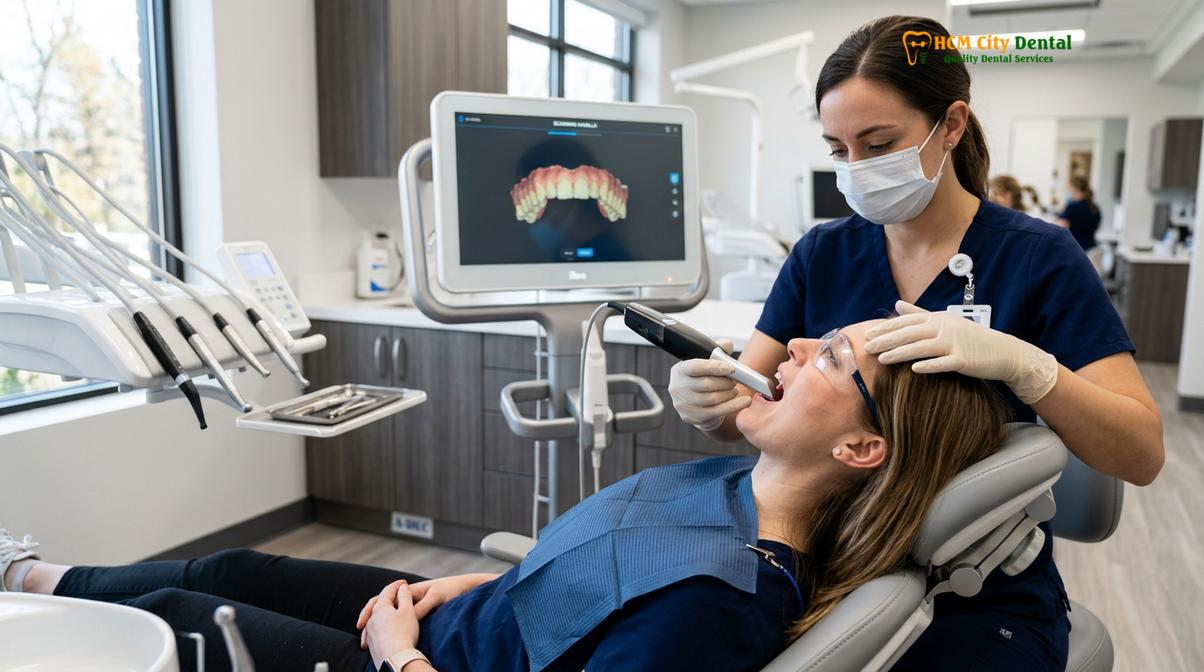
When you are far from home, finding a trustworthy clinician can feel daunting. However, dental tourism and international dental standards have evolved significantly. If you need a dentist abroad retainer replacement, your primary goal is to find a clinic that utilizes modern digital dentistry. Clinics equipped with intraoral scanners (such as iTero, 3Shape TRIOS, or Medit) can capture a highly accurate 3D map of your current dental alignment in minutes, bypassing the need for uncomfortable alginate impressions.
When researching local clinics, look for facilities that explicitly mention “digital orthodontics,” “in-house 3D printing,” or “same-day retainers.” An in-house laboratory is a crucial advantage, as it allows the clinic to fabricate a replacement appliance within 24 to 48 hours, minimizing the window for teeth shifting. For instance, expats and travelers visiting Ho Chi Minh City frequently rely on HCMC Dental Clinic for rapid digital impressions and emergency retention protocols, ensuring their treatment investment is protected while away from home.
Upon visiting the local clinic, the dentist will perform a brief clinical examination to assess your current occlusion and ensure no active periodontal disease or decay is present before scanning. They will then capture the digital impression. It is important to communicate to the foreign dentist that this is a temporary emergency measure to hold the teeth in their current position until you can consult your primary orthodontist.
Retainer Types and Replacement Options on Holiday
When replacing a lost retainer on holiday, patients typically choose between a rapid-fabrication Essix clear retainer or a traditional Hawley wire retainer, depending on the local clinic’s laboratory capabilities and the patient’s clinical needs.
If you find yourself with a lost retainer on holiday, the local clinic will likely offer you a few different options for replacement. The choice depends on the clinic’s technology, your budget, and your specific clinical requirements. Understanding these options helps you make an informed decision during the consultation.
Essix Clear Retainers (Thermoformed Aligners)
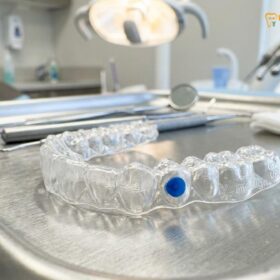
The most common and fastest solution for a travel emergency is the Essix retainer. These are made from transparent, medical-grade thermoplastic materials (such as PETG or polyurethane). After the digital scan is taken, a 3D printer creates a physical resin model of your teeth. The thermoplastic sheet is then heated and vacuum-formed over the model to create a precise, custom-fit appliance[3].
Essix retainers are highly favored for emergencies because they can often be fabricated on the same day. They provide excellent full-arch coverage, holding every tooth securely in place. If you are considering this option, you can review the Essix clear retainer protocols to understand the standard of care. They are virtually invisible, making them ideal for travelers who want to maintain aesthetics in their holiday photos.
Hawley Wire Retainers
The Hawley retainer is the traditional orthodontic appliance, consisting of an acrylic base that sits against the palate (or lingual floor of the mouth) and a metal labial bow that wraps around the anterior teeth. While highly durable and adjustable, Hawley retainers typically require a specialized dental laboratory for fabrication, which may take several days to a week—a timeline that might not suit a fast-paced travel itinerary.
However, if you are staying in one location for an extended period, a Hawley retainer is an excellent, robust option. It allows for minor adjustments by the dentist to close small gaps that may have opened during the time you were without a retainer. For more details on this traditional approach, patients often explore the Hawley wire retainer specifications.
Long-Term Retention Strategies for Frequent Travelers
Frequent travelers should adopt a dual-retention strategy, combining a fixed lingual wire with a removable clear retainer to provide a fail-safe mechanism against accidental loss or breakage while abroad.
For individuals who travel frequently—such as digital nomads, international business professionals, or avid backpackers—relying solely on a single removable retainer is a high-risk strategy. The clinical consensus for highly mobile populations is to implement a dual-retention protocol. This approach provides a built-in backup system, ensuring that even if one appliance is lost, the teeth remain stabilized[4].
The foundation of this strategy is the fixed permanent retainer. This involves bonding a custom-contoured, multistranded stainless steel or titanium wire to the lingual (tongue-facing) surfaces of the anterior teeth—typically from canine to canine. Because it is permanently bonded using dental composite, it cannot be lost, forgotten, or accidentally thrown away in a restaurant napkin. It provides continuous, 24/7 retention for the teeth most prone to shifting.
However, fixed retainers only protect the front teeth; they do not prevent the posterior premolars and molars from shifting, nor do they protect against changes in arch width. Therefore, the fixed wire must be supplemented with a removable Essix or Hawley retainer worn at night. If the removable retainer is lost while traveling, the fixed wire acts as a critical fail-safe, holding the most visible teeth in perfect alignment until a replacement can be sourced. Patients seeking comprehensive protection often consult clinics for custom retainers that incorporate both methods.
“A proactive retention protocol, including traveling with a secondary backup appliance and utilizing fixed lingual wires, is the most effective insurance policy against unexpected orthodontic relapse during international travel.”
Additionally, travelers should always request a secondary backup set of removable retainers from their home orthodontist before embarking on long trips. Systems like Vivera provide multiple sets of retainers precisely for this reason. Keeping one set in your hotel safe and the other in your daily travel bag significantly reduces the risk of a complete retention failure. Understanding the orthodontic retainer price for backup sets is a small investment compared to the cost of retreatment.
When to See a Doctor
While losing a removable retainer is an urgent situation that requires prompt replacement, there are specific clinical scenarios during travel that necessitate immediate, emergency dental intervention. You should seek out a qualified local dentist without delay if you experience any of the following:
- Broken Fixed Retainer: If your bonded lingual wire breaks, debonds from a tooth, or begins poking into your tongue or gums, it can cause severe soft tissue lacerations. A local dentist must either re-bond the wire or safely remove the sharp segment to prevent infection and pain.
- Visible Shifting Causing Pain: If you have been without a retainer for several weeks and notice that your teeth have shifted to the point where your bite feels uneven, causing pain in your jaw joint (TMJ) or difficulty chewing, clinical assessment is required.
- Trauma to the Teeth: If your retainer was lost due to facial trauma (e.g., a sports injury or fall while traveling), you must be evaluated for root fractures, concussed teeth, or alveolar bone damage before a new retainer is fabricated.
- Ill-fitting Backup Retainers: If you attempt to wear an old backup retainer and it causes excruciating pressure, blanching of the gums, or severe throbbing, remove it immediately. Forcing an ill-fitting appliance can cause irreversible root resorption (shortening of the tooth roots) or necrosis of the dental pulp[5].
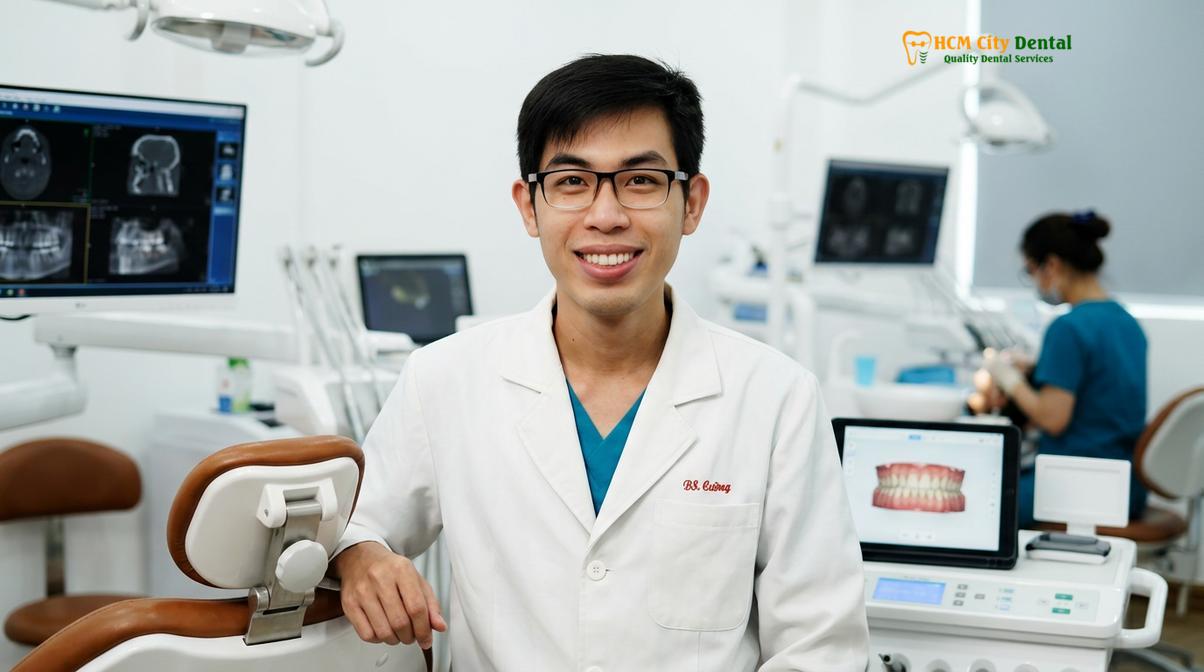
If you are navigating a lost retainer traveling through Vietnam, securing affordable dental retainers with high clinical standards is highly accessible. Clinics equipped with modern digital workflows can seamlessly manage your emergency, ensuring your smile remains perfectly aligned no matter where your travels take you. Always prioritize professional clinical care over temporary DIY solutions to protect your long-term oral health.
Frequently Asked Questions
How fast will my teeth shift if I lose my retainer abroad?
Teeth can begin shifting within 24 to 48 hours without a retainer, especially if your braces were recently removed. The periodontal ligaments remain elastic and will actively attempt to pull the teeth back toward their original malocclusion. The longer you wait, the more pronounced the relapse becomes, potentially requiring active orthodontic retreatment.
Can a foreign dentist make a new retainer without my original molds?
Yes, a qualified foreign dentist can fabricate a new retainer by taking fresh digital scans or physical impressions of your current dental alignment. This creates a new baseline to prevent any further orthodontic relapse during your travels. While it won’t move shifted teeth back to their absolute original position, it effectively halts any ongoing movement.
Should I use a boil-and-bite mouthguard as a temporary retainer?
No, you should never use a boil-and-bite sports mouthguard as a substitute for an orthodontic retainer. These over-the-counter devices lack the precision required to hold teeth in place and can actually induce unwanted tooth movement, bite misalignment, or place excessive stress on the temporomandibular joint (TMJ).
Will my home orthodontist mail a replacement retainer internationally?
Some orthodontists will mail a replacement retainer internationally if they have your recent 3D digital scans on file. However, international shipping can take weeks, during which significant teeth shifting may occur, making a local temporary solution preferable to avoid compromising your treatment results.
How much does it cost to replace a lost retainer while traveling?
The cost varies widely depending on the country and the type of retainer required, typically ranging from moderate fees for a clear Essix retainer to higher costs for custom wire appliances. Contacting a local clinic directly will provide the most accurate estimate based on their specific laboratory capabilities and digital workflows.
References
- American Journal of Orthodontics and Dentofacial Orthopedics. Periodontal tissue response to orthodontic relapse. (2019).
- Journal of Clinical Orthodontics. Digital workflows in emergency retainer fabrication. (2021).
- European Journal of Orthodontics. Comparative efficacy of Essix and Hawley retainers. (2020).
- Australian Dental Journal. Patient compliance and retention protocols in traveling populations. (2018).
- Journal of Prosthodontic Research. Material stability of thermoformed clear aligners. (2022).
Read also: If you lose a denture or damage braces while in Vietnam, consult our guides on lost denture emergency options and broken braces wire repair.