A broken braces wire in Vietnam requires immediate stabilization to prevent oral lacerations, followed by professional clinical repair. While traveling, you can use orthodontic wax for temporary relief, but visiting a qualified local clinic ensures your treatment remains on track without compromising your archwire tension.
Clinical Summary:
Experiencing a broken orthodontic appliance while traveling can be distressing, but it is a highly manageable condition. A fractured archwire or dislodged bracket disrupts the biomechanical forces guiding tooth movement and presents a risk of soft tissue trauma to the cheeks, lips, and tongue. Immediate home care involves isolating the sharp components with dental wax and avoiding DIY wire cutting, which carries a high risk of aspiration. Seeking prompt professional intervention at a reputable facility in Ho Chi Minh City ensures the safe removal of damaged hardware, re-bonding of brackets using standard composite resins, and the restoration of proper archwire tension. Continuity of care is maintained through detailed clinical documentation provided to the patient’s primary orthodontist.
Key Takeaways:
- A broken wire can cause painful mucosal lacerations and requires immediate temporary covering with dental wax.
- Never attempt to cut a broken orthodontic wire yourself due to the severe risk of inhaling or swallowing the metal fragment.
- Floating brackets disrupt treatment progress and must be professionally re-bonded using specialized dental adhesives.
- International dental clinics in Saigon offer affordable, high-quality emergency repairs compatible with Western orthodontic standards.
- Always request clinical documentation of any repairs made abroad to share with your primary orthodontist back home.
Common Braces Emergencies While Traveling
Orthodontic emergencies abroad typically involve broken archwires, loose brackets, or displaced ligatures caused by eating hard foods or minor trauma. Prompt identification helps determine if immediate clinical intervention is necessary.
Traveling exposes individuals to new culinary experiences, which is often the primary catalyst for a braces emergency abroad. Fixed orthodontic appliances, while robust, are engineered to apply specific, controlled forces to the dentition. They are not designed to withstand the sudden, high-impact shear forces generated by biting into hard, crusty breads, unpitted fruits, or sticky local delicacies. When the structural integrity of the appliance is compromised, it typically manifests in one of three ways: a fractured archwire, a debonded bracket, or a displaced molar band[1].
The archwire is the active component of the orthodontic system, typically composed of Nickel-Titanium (NiTi) or Stainless Steel. NiTi wires possess shape-memory properties and are highly flexible, but they can snap if subjected to acute, localized stress. Stainless steel wires are generally used in the later stages of treatment for detailing and space closure; when these break, the resulting sharp ends are particularly rigid and prone to causing deep soft tissue lacerations. Understanding the type of wire currently active in your mouth can help gauge the severity of the breakage.
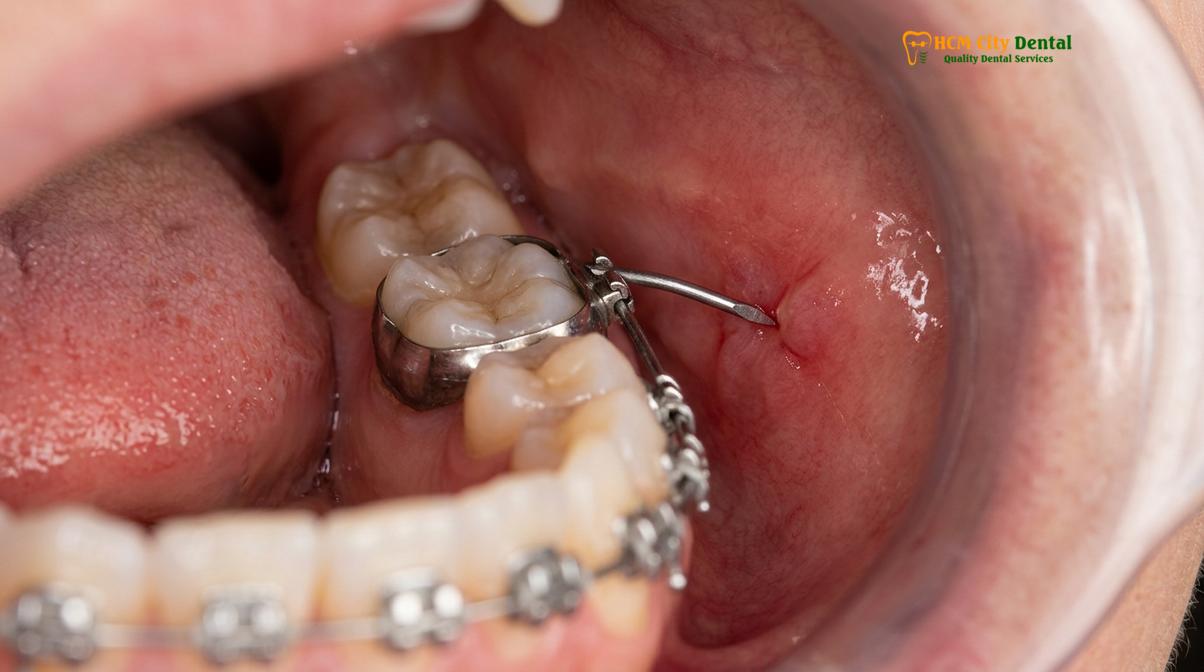
Beyond dietary indiscretions, minor facial trauma—such as a bump to the mouth while navigating crowded streets or participating in recreational activities—can also dislodge orthodontic hardware. In a clinical setting, we classify these incidents based on their impact on the patient’s immediate comfort and the long-term treatment trajectory. A wire that has slipped out of the terminal molar tube, for instance, may not be broken but simply displaced due to the natural movement of the teeth as they align. Regardless of the exact mechanism of failure, the immediate priority is always the protection of the delicate oral mucosa from mechanical irritation[2].
When facing an orthodontic emergency in a foreign country, anxiety is a natural response. However, the principles of orthodontic mechanics are universal. The materials and techniques used by specialists globally adhere to standardized protocols. Therefore, identifying the specific nature of the failure—whether it is a floating bracket, a snapped wire, or a missing ligature—is the first critical step in communicating effectively with a local dental professional and securing the appropriate intervention.
How to Handle a Protruding Wire Safely at Home
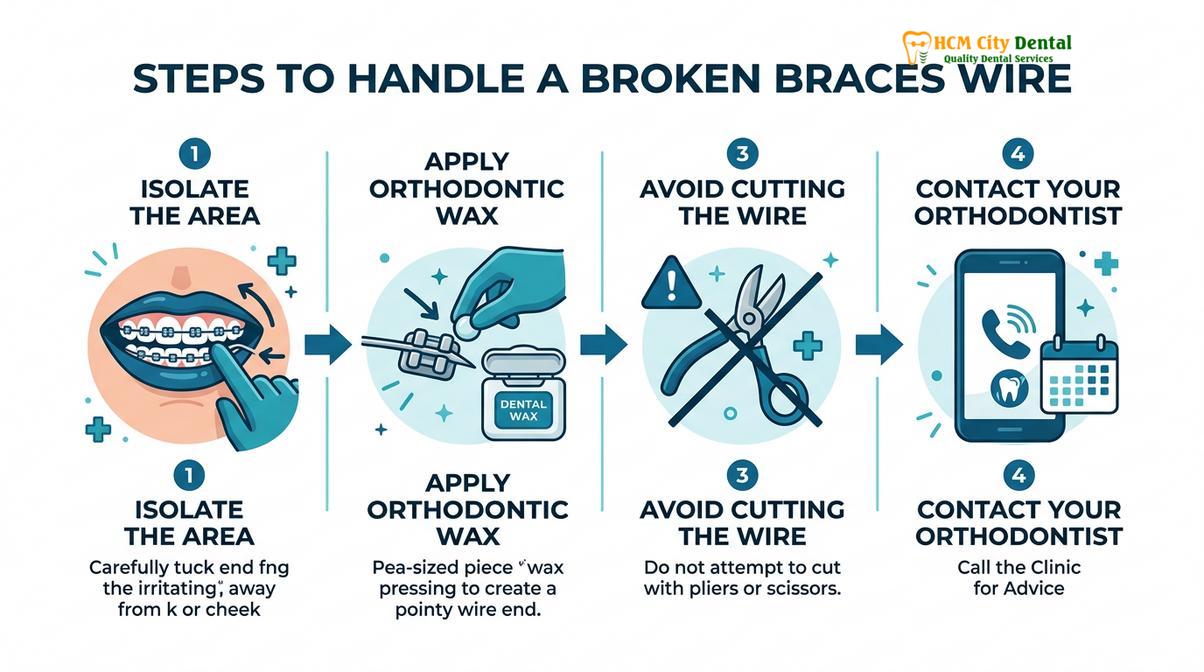
A protruding wire should be covered with dental wax or gently pushed flush against the tooth using a clean cotton swab to prevent soft tissue lacerations. Never attempt to cut the wire yourself, as this risks aspiration or further appliance damage.
A protruding or broken archwire is arguably the most uncomfortable orthodontic complication a patient can experience. The oral mucosa is highly vascular and densely innervated, making it exquisitely sensitive to sharp stimuli. When a wire breaks or slips out of its bracket slot, the terminal end often points directly into the buccal mucosa (the inside of the cheek) or the lips. Left unmanaged, this constant friction during speech and mastication will rapidly lead to painful ulcerations and potential localized infections.
The immediate goal of home management is to neutralize the sharp hazard. The gold standard for this temporary fix is orthodontic wax. Every patient undergoing fixed appliance therapy should travel with a supply of this specialized wax. To apply it effectively, the area must first be dried as much as possible; saliva prevents the wax from adhering to the metal. Use a clean tissue or cotton roll to isolate the area. Pinch off a pea-sized amount of wax, roll it between your fingers to warm and soften it, and then press it firmly over the offending wire and the adjacent bracket. This creates a smooth, protective dome that allows the soft tissues to glide over the area without injury.
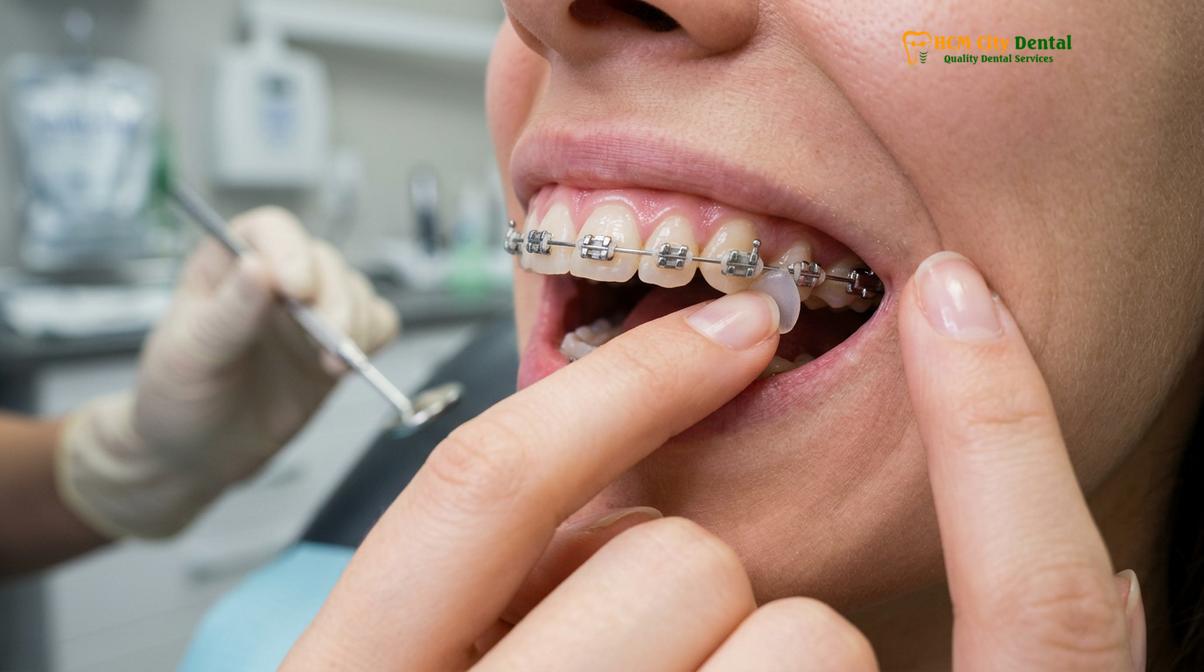
If orthodontic wax is unavailable, a small piece of sugar-free chewing gum can serve as an emergency substitute, though it is less ideal due to its stickiness and potential to entangle with other parts of the appliance. In cases where a thin, flexible NiTi wire has simply slipped out of the last bracket, it may be possible to gently guide it back into place using a pair of sterilized tweezers. However, this requires excellent visibility and a steady hand, and should only be attempted if the wire is easily manipulated.
Clinical Warning: Never attempt to cut a broken braces wire yourself using nail clippers or household scissors. The intraoral environment is highly restricted, and clipping a wire under tension can cause the severed metal fragment to become a high-velocity projectile. This poses a severe risk of aspiration (inhaling the metal into the lungs) or ingestion, which constitutes a life-threatening medical emergency requiring immediate hospital intervention.
If the wire is bent outward but not broken, you may try using the eraser end of a clean pencil or a cotton swab to gently push the wire flush against the surface of the tooth, moving it away from the soft tissue. This is a delicate maneuver and should not involve excessive force, as bending the wire permanently can alter the orthodontic forces being applied to the teeth, potentially causing unwanted tooth movement.
“The most critical mistake patients make during an orthodontic emergency abroad is attempting DIY mechanical repairs. A swallowed piece of clipped wire transforms a simple dental inconvenience into a severe medical crisis. Always prioritize soft tissue protection with wax and seek professional clinical assistance.”
For patients seeking a loose wire braces fix while traveling, these temporary measures are designed solely to provide comfort until you can reach a dental clinic. They do not replace the need for a professional repair. The structural integrity of the archwire must be restored by a qualified clinician to ensure your orthodontic treatment continues safely and effectively.
What to Do About a Loose Bracket
If a bracket detaches from the enamel but remains on the wire, secure it with orthodontic wax to prevent rotation and mucosal irritation. A floating bracket disrupts the applied orthodontic forces and requires professional re-bonding.
Orthodontic brackets are bonded to the enamel surface using a sophisticated, multi-step adhesive protocol designed to withstand the continuous forces of the archwire while allowing for safe removal at the end of treatment. This balance means that brackets are inherently vulnerable to sudden shear forces. When a patient bites down on a hard object, the force can exceed the shear bond strength of the composite resin, causing the bracket to detach from the tooth surface[3].
When a bracket debonds, it typically remains attached to the archwire via the elastomeric ligature or the self-ligating door mechanism. This is commonly referred to as a “floating bracket.” While a floating bracket is generally less painful than a broken wire, it presents a significant clinical issue: the specific tooth is no longer connected to the active orthodontic system. Consequently, that tooth may begin to relapse toward its original position, potentially extending the overall duration of the orthodontic treatment.
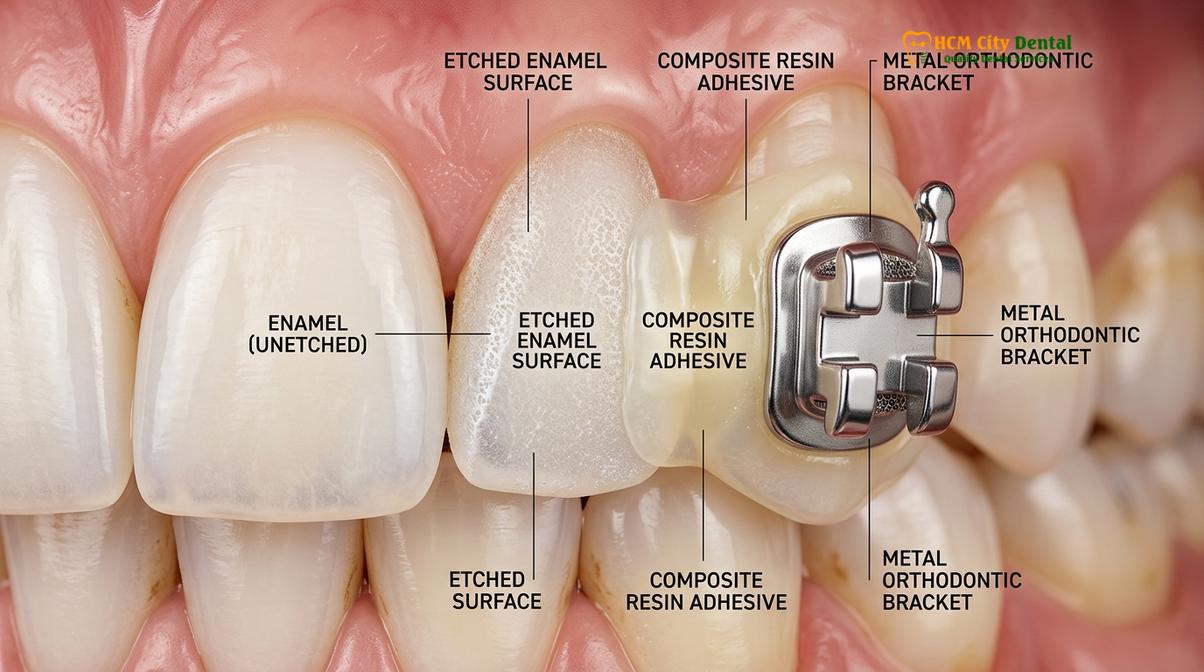
If you experience a broken bracket in HCMC, the immediate home care protocol involves stabilizing the loose hardware. Because the bracket is no longer anchored to the tooth, it can spin freely on the wire. The rough base of the bracket, which still contains remnants of the composite adhesive, can cause severe abrasion to the inner lips and cheeks. To prevent this, dry the area thoroughly and apply a generous amount of orthodontic wax over the loose bracket, anchoring it to the adjacent stable brackets if possible. This prevents rotation and shields the soft tissues.
It is crucial to understand that a debonded bracket cannot be reattached at home. The clinical process of bonding requires strict moisture control, chemical preparation of the enamel, and specialized light-cured adhesives. Attempting to glue a bracket back onto a tooth using household adhesives is highly dangerous; these chemicals are toxic, can cause irreversible damage to the enamel and dental pulp, and will inevitably fail in the moist oral environment.
If the bracket completely detaches from the wire and falls out of the mouth, carefully retrieve it, clean it, and store it in a small container or ziplock bag. Bring the bracket with you to your emergency dental appointment. In some cases, the clinician may be able to clean the base, sterilize the bracket, and re-bond it, though many modern orthodontic protocols dictate the use of a brand-new bracket to ensure optimal bond strength and precise prescription expression.
When to See an Emergency Orthodontist in Saigon
Distinguishing between a minor orthodontic inconvenience and a true clinical emergency is vital, especially when navigating healthcare in a foreign city. While a floating bracket or a slightly poking wire can often be managed temporarily with wax for a few days, certain situations demand immediate professional intervention to prevent severe complications.
You should seek an immediate orthodontic emergency consultation in Saigon if you experience any of the following red-flag symptoms:
- Severe, Unrelenting Pain: While mild discomfort is normal after an adjustment, acute, sharp pain that is not relieved by over-the-counter analgesics indicates a severe biomechanical issue or deep tissue injury.
- Significant Bleeding or Deep Lacerations: If a broken wire has punctured the cheek, tongue, or gums and the bleeding cannot be controlled with gentle pressure, immediate medical or dental attention is required to remove the wire and potentially suture the wound.
- Signs of Infection: Swelling of the face or gums, localized heat, pus discharge, or a sudden fever associated with an oral sore are signs of a developing infection that requires clinical evaluation and possible antibiotic therapy.
- Aspiration or Ingestion of Hardware: If you suspect you have inhaled a piece of wire or a bracket, this is a medical emergency. Go to the nearest hospital emergency room immediately for chest X-rays.
- Trauma to the Teeth: If the orthodontic breakage was caused by a blow to the face and the underlying teeth are loose, displaced, or fractured, comprehensive emergency dental care is required to assess the vitality of the teeth alongside repairing the braces.
Clinical Case Review: Managing an Orthodontic Emergency Abroad
A 22-year-old tourist presented to HCMC Dental Clinic in Ho Chi Minh City with a fractured upper stainless steel archwire. The breakage occurred while eating hard local candy. The distal segment of the wire had punctured the buccal mucosa, causing localized swelling and moderate bleeding. The patient had attempted to cut the wire with nail clippers but failed, exacerbating the tissue trauma. Upon clinical examination, the area was isolated, and the fractured wire segment was safely removed using distal end cutters. The mucosal lesion was irrigated with an antimicrobial rinse, and a new, continuous NiTi archwire was placed to maintain treatment continuity. The patient was provided with a detailed clinical report to present to their home orthodontist, ensuring seamless ongoing care.
For expatriates and tourists, finding a reliable clinic is paramount. Facilities like HCMC Dental Clinic are equipped to handle complex orthodontic emergencies, offering English-speaking specialists who can accurately diagnose the issue, communicate the necessary intervention, and execute the repair using international-standard materials. Promptly addressing soft tissue trauma aligns with the Vietnam Association of Orthodontists (VAO) clinical guidelines for emergency interventions[4], as well as the World Health Organization’s recommendations for managing acute oral lesions to prevent systemic complications[5]. Delaying treatment for a severe issue not only prolongs discomfort but can lead to significant orthodontic relapse, undoing months of expensive treatment.
Emergency Braces Repair Procedure
Clinical repair involves removing the damaged components, isolating the tooth, preparing the enamel surface, and bonding a new bracket or inserting a replacement archwire. This restores the precise biomechanical forces required for continuous tooth movement.
When you present to a clinic for an emergency braces repair, the clinical workflow is highly structured to ensure safety, efficacy, and compatibility with your ongoing treatment plan. The primary objective of the attending dentist or orthodontist is to stabilize the appliance, eliminate any source of soft tissue trauma, and, whenever possible, restore the active orthodontic forces.
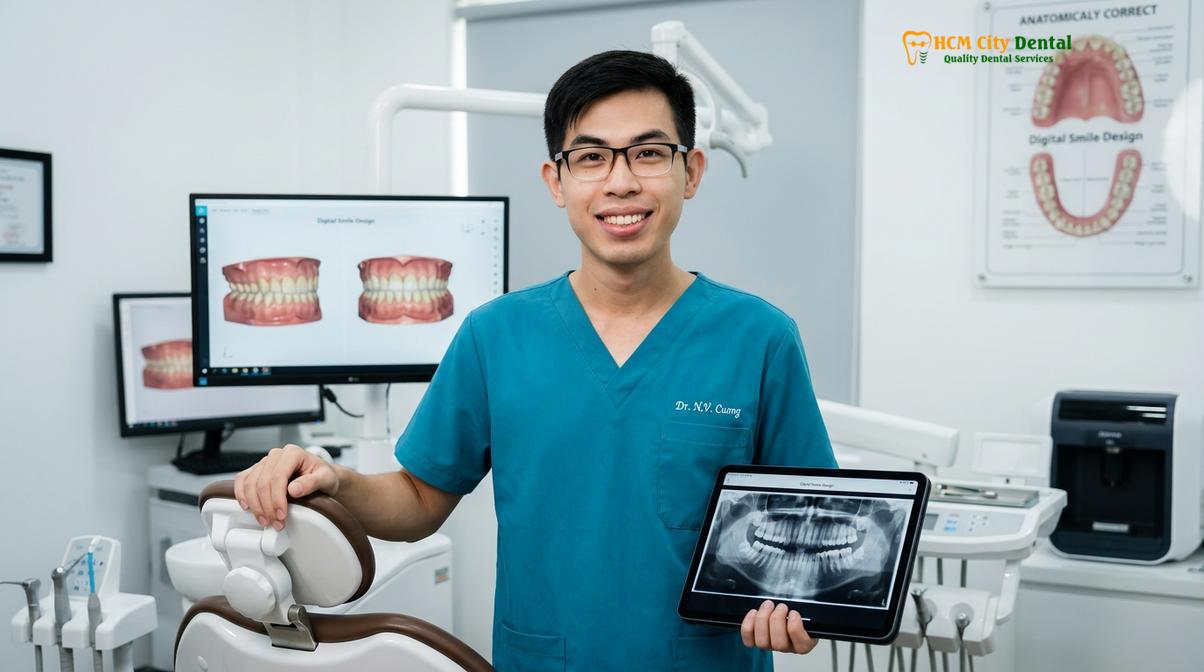
Dr. Nguyen Van Cuong and his dedicated clinical team emphasize that timely intervention is crucial for any orthodontic mishap. By seeking Emergency Dental Care promptly, patients can avoid prolonged discomfort and prevent their treatment timeline from being derailed. Dr. Cuong ensures that all temporary fixes or permanent repairs align with international orthodontic standards, providing peace of mind for traveling patients.
The procedure begins with a comprehensive intraoral examination. The clinician will assess the extent of the damage, evaluate the health of the surrounding hard and soft tissues, and identify the specific type of orthodontic system you are wearing (e.g., traditional twin brackets, self-ligating brackets, ceramic vs. metal). If soft tissue lacerations are present, they are addressed first. The area is irrigated with a chlorhexidine gluconate solution to reduce bacterial load, and any embedded foreign bodies are carefully extracted.
If the emergency involves a broken archwire, the clinician will use specialized orthodontic pliers—specifically, distal end cutters or pin and ligature cutters—to safely section and remove the damaged wire. It is crucial that the wire is held securely during cutting to prevent any pieces from dropping into the oral cavity. Once the broken segments are removed, the clinician must decide whether to place a new, continuous archwire or to leave the segment temporarily wire-free. If a replacement wire is placed, it is typically a light, flexible NiTi wire that provides gentle, continuous force without overwhelming the periodontal ligament.
Re-bonding a loose bracket is a more technique-sensitive procedure. The workflow involves several precise steps:
- Removal of Residual Adhesive: The floating bracket is removed from the wire. The tooth surface is then carefully polished using a slow-speed handpiece and a tungsten carbide bur to remove the old composite resin without damaging the underlying enamel.
- Isolation: The tooth is strictly isolated using cheek retractors, cotton rolls, and a saliva ejector. Moisture contamination is the primary cause of bond failure.
- Enamel Preparation: The enamel surface is etched with 37% phosphoric acid gel for 15-30 seconds. This creates microscopic porosities in the enamel, allowing the adhesive to form a strong mechanical interlock.
- Bonding: A bonding primer is applied, followed by a specialized orthodontic composite resin placed on the base of the new bracket. The bracket is positioned accurately on the tooth according to the required prescription and light-cured to set the adhesive instantly.
- Ligation: Finally, the archwire is re-engaged into the bracket slot and secured with an elastomeric tie or by closing the self-ligating door.
Cost of Orthodontic Repairs in Vietnam
Orthodontic repairs in Vietnam are highly cost-effective compared to Western countries, offering international-standard care at a fraction of the price. Costs vary depending on whether a simple wire clipping or a full bracket re-bonding is required.
One of the primary concerns for travelers experiencing a dental emergency is the unexpected financial burden. Fortunately, Vietnam is renowned for providing exceptional dental care at highly competitive rates. The cost of fixing a broken braces wire or re-bonding a bracket in Ho Chi Minh City is generally very affordable, even at premium, English-speaking clinics that cater to international patients.
| Emergency Type | Estimated Cost (VND) | Clinical Action Required |
|---|---|---|
| Wire Clipping / Removal | 500,000 – 1,000,000 | Sectioning and safely removing the broken archwire segment to relieve pain. |
| Bracket Re-bonding | 800,000 – 1,500,000 | Enamel preparation and bonding of a new or existing bracket using composite resin. |
| New Archwire Placement | 1,000,000 – 2,500,000 | Insertion of a continuous NiTi or Stainless Steel wire to maintain treatment progress. |
It is important to note that these are estimated ranges and the final cost will depend on the complexity of the repair and the specific materials required. For instance, replacing a specialized aesthetic ceramic bracket will typically cost more than a standard metal bracket. Most reputable clinics will provide a clear, transparent cost estimate following the initial clinical examination and before any treatment commences.
“Investing in a professional orthodontic repair while traveling is a small price to pay compared to the potential costs of treating severe oral infections or correcting months of orthodontic relapse caused by neglected hardware.”
Many international travel insurance policies include provisions for emergency dental care aimed at relieving acute pain. If you have travel insurance, inform the clinic staff upon arrival. They can often provide the necessary itemized receipts, clinical notes, and diagnostic X-rays required for you to submit a reimbursement claim to your insurance provider once you return home.
Frequently Asked Questions
Is a broken wire on braces an emergency?
A broken braces wire is considered an urgent dental situation if it causes severe pain, bleeding, or deep soft tissue lacerations. If the wire is simply loose but not causing injury, it requires prompt attention within a few days but is not a life-threatening medical emergency.
Can I use dental wax to fix a protruding wire?
Yes, orthodontic wax is the safest and most effective temporary solution for a protruding wire. By rolling a small piece of wax and pressing it over the sharp end, you create a smooth barrier that protects your oral mucosa until a professional repair can be performed.
What happens if a braces bracket falls off?
If a bracket detaches from the tooth, the specific tooth is no longer subjected to the orthodontic forces required for movement. While not an immediate emergency, leaving a floating bracket for too long can delay your overall treatment timeline and cause localized irritation.
Where can I find an English-speaking orthodontist in HCMC?
You can easily find highly qualified, English-speaking orthodontists at international-standard facilities like HCMC Dental Clinic in Ho Chi Minh City. These clinics cater specifically to expatriates and tourists, ensuring clear communication regarding your orthodontic emergency and treatment plan.
Will my home orthodontist mind if I get repairs in Vietnam?
Most home orthodontists prefer that you seek immediate professional stabilization rather than enduring pain or risking treatment regression while traveling. Reputable clinics in Vietnam will document the repair and provide clinical notes for you to share with your primary orthodontist upon your return.
References
- American Journal of Orthodontics and Dentofacial Orthopedics. Management of orthodontic emergencies.
- Journal of Clinical Orthodontics. Soft tissue lesions associated with fixed orthodontic appliances.
- European Journal of Orthodontics. Shear bond strength of orthodontic brackets: A clinical review.
- Vietnam Association of Orthodontists (VAO). Clinical guidelines for emergency orthodontic interventions.
- World Health Organization. Guidelines for emergency oral health care interventions.
If you are experiencing a broken braces wire or any other orthodontic emergency while traveling, do not wait for the pain to worsen. Contact HCMC Dental Clinic, Ho Chi Minh City today for immediate, professional Emergency Dental Care to keep your smile safe and your treatment on track.
Read also: If you have misplaced your dental appliance, refer to our guide on losing a retainer while traveling abroad.