The Hawley wire retainer price in Vietnam typically ranges from $50 to $150 USD per arch, depending on the clinic’s expertise and materials used. This traditional orthodontic appliance combines durable acrylic and metal wire to maintain precise tooth alignment after braces, offering a highly cost-effective, long-term retention solution.
Clinical Summary:
Hawley retainers remain a gold standard in post-orthodontic retention due to their exceptional durability, clinical adjustability, and proven efficacy in preventing relapse. In Vietnam, patients benefit from world-class Orthodontics at a fraction of Western costs, making it an attractive destination for dental tourism and local care alike. The fabrication process involves precise dental impressions and skilled laboratory work to create a custom polymethyl methacrylate (PMMA) palate and a stainless steel labial bow. Proper maintenance and routine clinical check-ups ensure these retainers can last up to a decade, effectively preserving the patient’s bite alignment and protecting the long-term investment of orthodontic treatment.
Key Takeaways:
- Hawley retainers in Vietnam offer premium durability at an accessible price point, usually between $50 and $150 per arch.
- The appliance features a custom acrylic base and a metal labial bow that allows for minor orthodontic adjustments to correct slight relapse.
- Proper custom wire retainer fitting ensures optimal bite settling and prevents post-treatment tooth migration.
- With diligent daily care and routine clinical evaluations, a well-made Hawley retainer can effectively last 5 to 10 years.
- Patients visiting Ho Chi Minh City can receive rapid, high-quality retainer replacements utilizing advanced dental laboratory technology.
Understanding the Hawley Retainer: Clinical Design and Function
The Hawley retainer is a removable orthodontic appliance engineered with a rigid acrylic base and a metal wire to actively hold teeth in their corrected positions while allowing the bite to settle naturally.
The biological imperative of orthodontic retention cannot be overstated. Following the active phase of braces or clear aligner therapy, the periodontal ligament (PDL) and surrounding alveolar bone require significant time to reorganize and stabilize around the new tooth positions. During this critical vulnerable period, the teeth are highly susceptible to relapse—the tendency to migrate back toward their original, misaligned state. The Hawley retainer, first introduced in the early 20th century, remains one of the most reliable and biomechanically sound appliances to counteract these relapse forces.
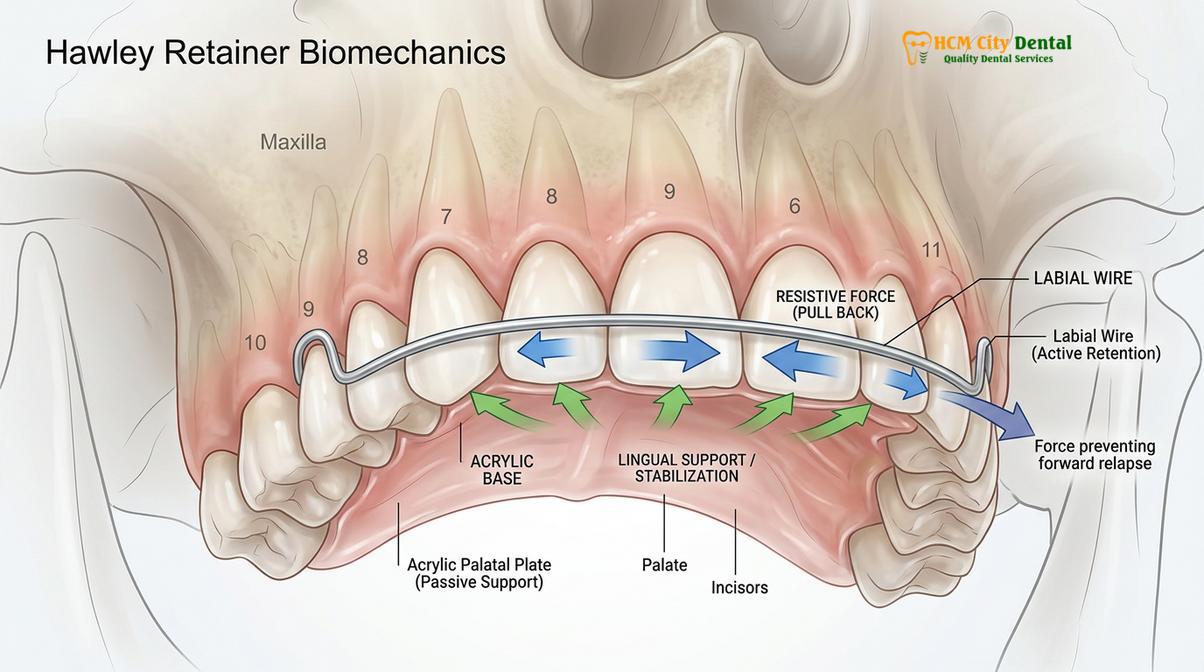
From a structural standpoint, the Hawley retainer consists of two primary components: a custom-molded acrylic base and a complex framework of stainless steel wire. The acrylic base, typically fabricated from heat-cured or cold-cured polymethyl methacrylate (PMMA), is designed to fit intimately against the palate for the upper arch, or along the lingual (tongue) side of the lower teeth. This rigid base provides the necessary anchorage and prevents the posterior teeth from collapsing inward. The metal component features a prominent labial bow—a thick wire that spans across the front of the incisors and canines—anchored into the acrylic via specialized clasps, most commonly Adams clasps or ball clasps, which grip the molars or premolars to ensure the appliance remains securely seated.
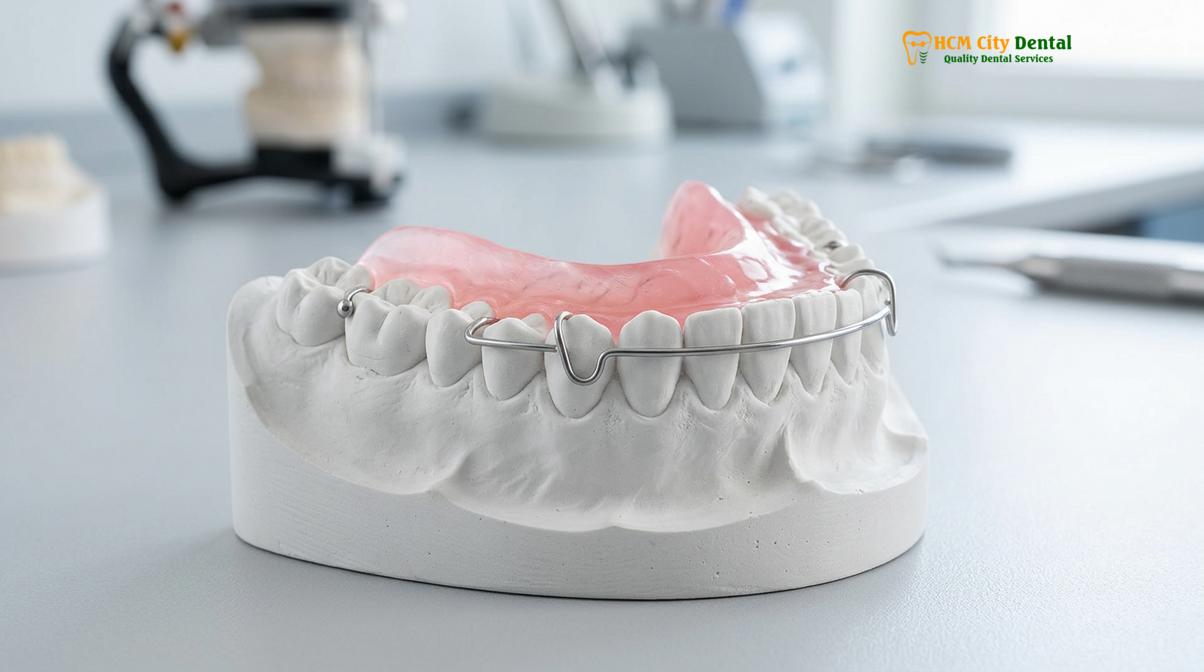
One of the most significant clinical advantages of this design is its capacity for active adjustment. Unlike rigid plastic trays, a meticulous custom wire retainer fitting allows the orthodontist to manipulate the U-loops (the small bends in the wire near the canines). By carefully compressing or expanding these loops, the clinician can increase or decrease the tension on the anterior teeth. This adjustability is invaluable for closing minor spaces that may open post-treatment or for correcting slight rotational relapses without the need to fabricate an entirely new appliance[1]. Furthermore, the Hawley design leaves the occlusal (biting) surfaces of the teeth uncovered. This is a critical biomechanical benefit, as it allows the upper and lower teeth to make natural contact, facilitating “occlusal settling”—a process where the teeth naturally erupt and interlock into a more stable, functional bite over time.
Hawley Wire Retainer Price Vietnam: Cost Breakdown
The cost of a Hawley retainer in Vietnam is highly competitive, driven by efficient local dental laboratory fees and advanced clinical workflows that do not compromise on international quality standards.
For patients seeking high-quality post-orthodontic care, understanding the financial landscape is crucial. The wire and acrylic retainer cost in Western countries such as the United States, Australia, or the United Kingdom can easily range from $250 to $500 per arch. In stark contrast, the orthodontic retainer price HCMC (Ho Chi Minh City) and other major Vietnamese urban centers typically falls between $50 and $150 per arch. This significant price differential is not a reflection of inferior materials or substandard clinical care; rather, it is the result of a highly efficient healthcare ecosystem, lower operational overheads, and highly competitive dental laboratory fees within the region.
When analyzing the cost structure of a Hawley retainer in Vietnam, several factors come into play. The primary expense is the clinical time required for the orthodontist to take precise impressions or digital scans, followed by the delivery and adjustment appointments. The secondary cost is the laboratory fabrication. Vietnamese dental laboratories are equipped with state-of-the-art technology and employ highly skilled technicians who meticulously bend the stainless steel wire and cure the acrylic to exact specifications. Because these dental laboratory fees are significantly lower than their Western counterparts, premier clinics like HCMC Dental Clinic can pass these savings directly to the patient while maintaining strict adherence to international ISO and ADA material standards.
To provide a clear perspective on the economic value, consider the following comparative breakdown of retainer options available in Vietnam:
| Retainer Type | Estimated Price per Arch (Vietnam) | Average Lifespan | Clinical Adjustability |
|---|---|---|---|
| Hawley (Wire & Acrylic) | $50 – $150 USD | 5 – 10 Years | High (Wire can be tightened) |
| Clear (Essix/Vivera) | $40 – $100 USD | 1 – 2 Years | None (Must be replaced) |
| Fixed (Bonded Lingual Wire) | $60 – $120 USD | 5 – 15 Years | None (Requires rebonding if broken) |
When evaluating the long-term investment, the Hawley retainer often proves to be the most cost-effective option. While a clear retainer might have a slightly lower initial price point, its limited lifespan of 1 to 2 years means the patient will incur recurring replacement costs. A well-maintained Hawley retainer, conversely, can last a decade, making the lifetime wire and acrylic retainer cost exceptionally low[2].
The Clinical Workflow for Custom Hawley Retainers
Fabricating a Hawley retainer requires precise digital or physical impressions, expert laboratory construction, and meticulous clinical adjustments to ensure a perfect, comfortable fit that prevents relapse.
The creation of a custom Hawley retainer is a precise, multi-step clinical process that requires seamless collaboration between the orthodontist and the dental laboratory. The workflow begins immediately after the active orthodontic appliances (braces or aligners) are removed. The teeth are thoroughly cleaned and polished to remove any residual composite resin or bonding cement. Once the enamel surfaces are pristine, the clinician must capture an exact replica of the new dental alignment.
Historically, this was achieved using alginate or polyvinyl siloxane (PVS) impression materials. While these traditional methods are still highly effective and widely used, many modern practices, including HCMC Dental Clinic in Ho Chi Minh City, now utilize advanced intraoral 3D scanners. These digital scanners capture highly accurate, micron-level topographical data of the teeth and gingival tissues without the discomfort of traditional impression goop. The digital file or physical mold is then sent to the dental laboratory.
At the laboratory, skilled technicians begin the intricate process of fabrication. First, the stainless steel wire (typically 0.030 to 0.036 inches in diameter) is meticulously bent to follow the exact contours of the patient’s anterior teeth. The Adams clasps or ball clasps are formed to engage the undercuts of the posterior teeth, ensuring maximum retention. Next, the acrylic base is processed. The PMMA material is applied, adapted to the palatal or lingual contours, and then cured under heat and pressure to eliminate porosity and maximize strength. The appliance is then polished to a high shine to prevent soft tissue irritation and minimize plaque accumulation.
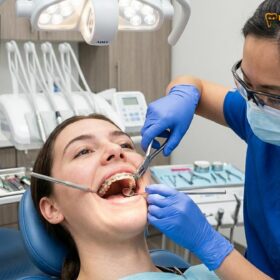
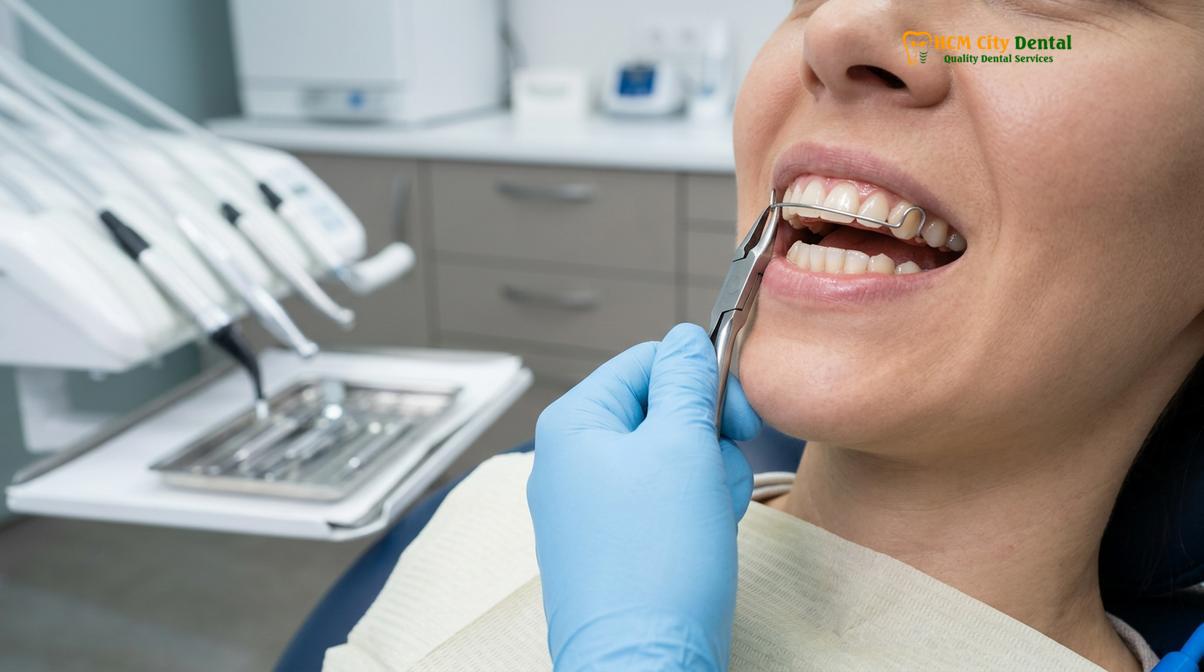
The final and most critical step is the delivery and custom wire retainer fitting appointment. Dr. Nguyen Van Cuong emphasizes that a retainer should never be simply handed to a patient; it must be clinically seated and evaluated. The orthodontist will check the appliance for proper retention, ensuring it clicks securely into place without causing excessive pressure on any single tooth or the underlying gingiva. The labial bow is evaluated to ensure it rests perfectly across the middle third of the incisors. If necessary, the clinician will use specialized orthodontic pliers to make micro-adjustments to the wire, optimizing the retentive forces and ensuring the patient’s bite is not obstructed by the acrylic or wire components[3].
Comparing Hawley Retainers to Clear and Fixed Alternatives
While clear Essix retainers offer superior aesthetics and fixed retainers provide permanent retention, Hawley retainers excel in durability, adjustability, and allowing the posterior teeth to settle into a functional occlusion.
In modern orthodontics, patients are typically presented with three primary retention options: the traditional Hawley retainer, the clear thermoplastic retainer (often referred to as an Essix retainer), and the fixed bonded retainer. Each modality possesses distinct biomechanical advantages and clinical indications, and the choice often depends on the patient’s specific malocclusion history, lifestyle, and compliance levels.
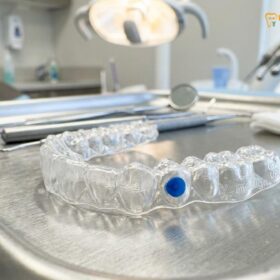
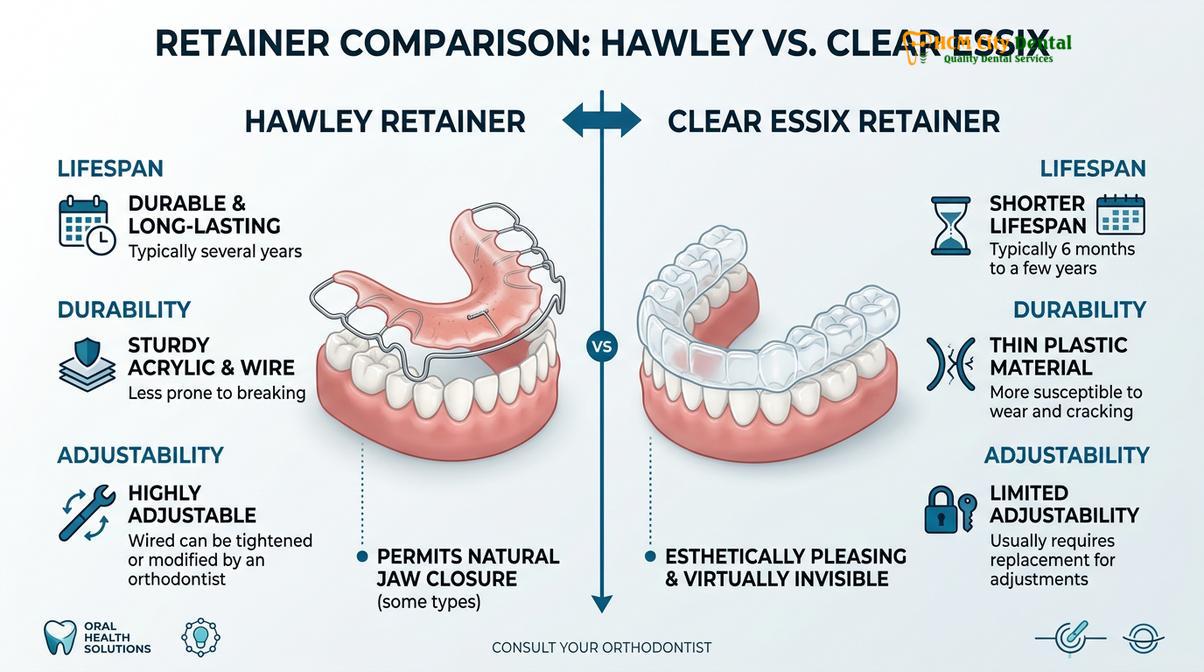
Clear retainers have surged in popularity due to their virtually invisible appearance. Made from thin, transparent polyurethane or copolyester materials, they encase the entire dental arch, providing excellent initial stabilization. However, their primary drawback is their lack of durability. The constant forces of occlusion, especially in patients who exhibit nocturnal bruxism (teeth grinding), can quickly wear through the plastic. For patients struggling with this issue, exploring the Best Retainer for Teeth Grinding: Clinical Guide is highly recommended. Furthermore, clear retainers cover the occlusal surfaces of the teeth, preventing the natural settling of the bite that is often desired post-treatment. If a clear retainer warps or the teeth shift slightly due to non-compliance, the rigid plastic cannot be adjusted to move the teeth back; a new appliance must be fabricated. Patients often wonder, Can Clear Retainers Move Teeth Back?—the clinical reality is that their capacity for active tooth movement is severely limited compared to a Hawley.
“The Hawley retainer remains an indispensable tool in our orthodontic arsenal. Its ability to allow vertical settling of the posterior teeth while maintaining strict anterior alignment makes it biologically superior for many complex extraction cases. Furthermore, its longevity provides unmatched value for the patient.”
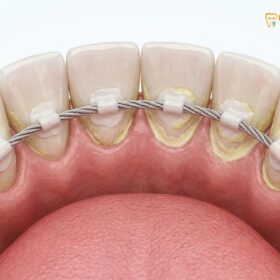
Fixed retainers, consisting of a braided or solid wire bonded to the lingual surfaces of the anterior teeth (usually canine to canine), offer the distinct advantage of being compliance-free. Because they are permanently attached, the patient cannot forget to wear them, making them highly effective at preventing lower incisor crowding—the most common form of orthodontic relapse. However, fixed retainers complicate oral hygiene. Flossing requires the use of threaders or interdental brushes, and failure to maintain meticulous hygiene can lead to rapid calculus accumulation and periodontal inflammation. Additionally, the composite bonding can occasionally fail, requiring an immediate visit to the clinic for repair to prevent rapid tooth shifting.
Clinical Case Example:
A 24-year-old patient presented to HCMC Dental Clinic in Ho Chi Minh City complaining of a broken clear retainer and subsequent minor shifting of her upper central incisors. Rather than fabricating another fragile clear tray, the clinical team recommended a custom Hawley retainer. During the fitting, the orthodontist activated the labial bow to apply gentle, targeted pressure on the shifted incisors. Within four weeks of consistent nighttime wear, the minor relapse was fully corrected, and the patient now enjoys a highly durable retention solution that will last for years.
The Hawley retainer strikes a robust balance between these alternatives. While the metal wire is visible across the front teeth, making it less aesthetically pleasing than clear options, its durability is unmatched. It does not interfere with occlusal settling, it is easier to clean than a fixed retainer, and crucially, it allows the orthodontist to make active adjustments to manage minor relapses[4].
Maintenance, Adjustments, and Longevity
Maximizing the lifespan of a Hawley retainer requires strict daily hygiene protocols, safe storage practices, and periodic clinical adjustments to maintain optimal wire tension and acrylic integrity.
The longevity of a Hawley retainer is heavily dependent on the patient’s commitment to proper maintenance and hygiene. The oral cavity is a harsh environment, constantly exposing the appliance to bacteria, varying pH levels, and occlusal forces. If neglected, the acrylic base can become porous, absorbing odors and harboring pathogenic bacteria, while the stainless steel wire can accumulate hardened calculus (tartar) or become distorted.
Daily cleaning is paramount. The retainer should be removed and brushed every time the patient brushes their teeth. It is crucial to use a soft-bristled toothbrush and a mild, non-abrasive liquid soap. Abrasive toothpastes should be strictly avoided, as the silica particles can create micro-scratches in the PMMA acrylic. These microscopic abrasions dull the finish and create ideal breeding grounds for bacteria, which can lead to foul odors and gingival irritation. For patients dealing with discoloration or odors on other types of appliances, understanding Smelly Clear Retainer Fix: Clinical Guide & Remedies and How to Remove Yellow Stains on Clear Retainer provides valuable insight into the importance of non-abrasive cleaning methods.
In addition to mechanical brushing, chemical disinfection is recommended once or twice a week. Effervescent retainer or denture cleaning tablets dissolved in lukewarm water effectively break down plaque biofilms and eliminate odor-causing bacteria. However, patients must never use hot or boiling water, as high temperatures will irreversibly warp the acrylic base, rendering the custom wire retainer fitting useless and potentially causing damage to the teeth if forced into place.
Clinical Warning:
Never wrap your Hawley retainer in a napkin or tissue while eating. This is the leading cause of lost or accidentally discarded retainers. Always store the appliance in its rigid, ventilated protective case when not in the mouth to prevent physical distortion of the wire or accidental breakage of the acrylic.
Proper storage is just as critical as cleaning. When the retainer is not being worn, it must be kept in a sturdy, ventilated plastic case. Leaving the retainer exposed on a counter invites accidental damage, such as being knocked to the floor or chewed by household pets, who are often attracted to the scent of saliva on the acrylic. For a comprehensive overview of storage protocols, patients should review How to Store Dental Retainer Safely: Clinical Guide.
“A Hawley retainer is a precision medical device. While it is built to withstand the rigors of the oral environment, the wire framework is susceptible to distortion if handled improperly. Patients should always insert and remove the appliance using the acrylic base or the posterior clasps, never by pulling on the front labial wire.”
Finally, routine clinical evaluations are essential. Patients should bring their Hawley retainer to every regular dental check-up. The dentist or orthodontist will inspect the appliance for signs of acrylic fatigue, wire distortion, or calculus buildup. If the retainer feels loose, the clinician can quickly adjust the Adams clasps to restore a secure, retentive fit, ensuring the appliance continues to function optimally for years[5].
When to See an Orthodontist
While a Hawley retainer is designed for long-term stability, certain clinical scenarios require immediate professional intervention to prevent orthodontic relapse or damage to the dentition. Patients must remain vigilant and monitor both the condition of their appliance and the alignment of their teeth.
You should schedule an appointment with an orthodontist if you experience any of the following:
- The retainer feels excessively tight or fails to seat completely: If you have skipped wearing your retainer for several days or weeks, the teeth may have begun to shift. Forcing a retainer onto shifted teeth can cause severe pain and potential damage to the periodontal ligament. If you are wondering Why Is My Retainer Tight in the Morning?, it may indicate nocturnal shifting that requires clinical evaluation.
- Visible cracks or fractures in the acrylic base: Even a hairline fracture compromises the structural integrity of the appliance. Continued use can lead to a complete break, potentially causing a choking hazard or soft tissue laceration.
- Distortion or breakage of the metal wire: If the labial bow is bent out of shape or a clasp breaks off, the retainer will no longer apply the correct retentive forces. The wire must be repaired or the appliance replaced immediately.
- Noticeable tooth movement: If you observe spaces opening between your teeth or incisors beginning to rotate despite wearing the retainer as prescribed, the appliance may have lost its retentive tension and requires professional adjustment.
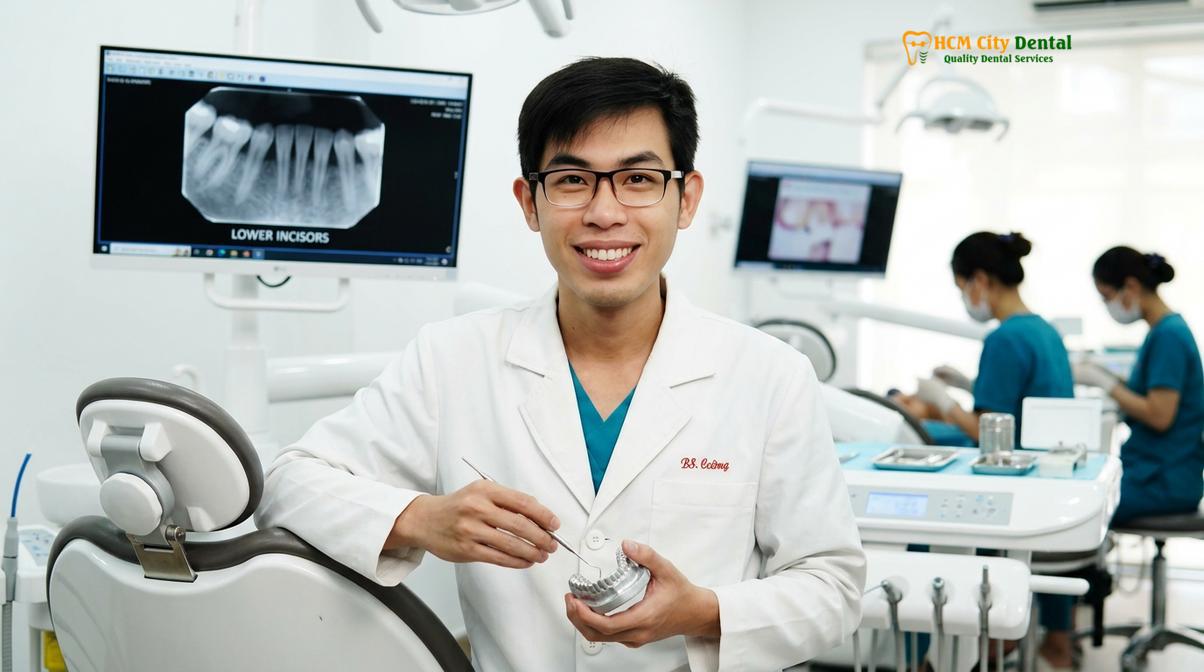
Dr. Nguyen Van Cuong advises that timely intervention is the key to preserving your orthodontic results. Ignoring a damaged or ill-fitting retainer inevitably leads to relapse, which may necessitate a second round of braces or aligner therapy to correct. If you suspect your retainer is no longer functioning correctly, seeking a prompt clinical assessment is the safest and most cost-effective course of action.
Frequently Asked Questions
How much does a Hawley retainer cost in Vietnam?
The Hawley wire retainer price in Vietnam typically ranges from $50 to $150 USD per arch. This cost variation depends on the complexity of the custom wire bending, the quality of the acrylic used, and the specific dental laboratory fees associated with the clinic. Despite the affordable price, the clinical standards and materials used in top Vietnamese clinics meet strict international guidelines.
How long does a Hawley retainer last?
With proper daily maintenance and regular clinical adjustments, a Hawley retainer can last between 5 to 10 years. The durable combination of polymethyl methacrylate (PMMA) and stainless steel wire makes it significantly more resilient than clear plastic alternatives, which typically require replacement every one to two years due to occlusal wear and material fatigue.
Can a Hawley retainer correct minor tooth shifting?
Yes, an orthodontist can make minor adjustments to the labial bow of a Hawley retainer to correct slight orthodontic relapse. By altering the tension in the U-loops, the wire can gently guide mildly shifted anterior teeth back into their proper alignment. However, this is only effective for very minor movements; significant relapse requires active retreatment.
Is it difficult to speak with a Hawley retainer?
Patients may experience a slight lisp for the first few days as the tongue adapts to the acrylic palate. However, normal speech typically returns within a week of consistent wear as the oral musculature adjusts to the appliance. Reading aloud for 10 to 15 minutes a day during the initial adaptation period can significantly speed up this process.
How should I clean my Hawley retainer?
Clean your Hawley retainer daily using a soft-bristled toothbrush and mild, non-abrasive soap or specialized retainer cleaner. Avoid using hot water, harsh chemicals, or abrasive toothpaste, as these can warp the acrylic base or scratch the surface, leading to bacterial buildup, plaque accumulation, and unpleasant odors.
References
- Journal of Prosthodontic Research. Orthodontic retainer wear and stability. (2021).
- American Journal of Orthodontics. Relapse rates and retention protocols. (2019).
- European Journal of Orthodontics. Essix vs Hawley retainers clinical trial. (2020).
- Journal of Clinical Orthodontics. Plaque accumulation on fixed retainers. (2022).
- Australian Dental Journal. Patient compliance with dental retainers. (2018).