Getting custom porcelain veneers in Vietnam within 3 to 5 days is a highly efficient, clinically safe reality driven by advanced digital dentistry. By utilizing state-of-the-art intraoral scanners and in-house milling technology, international patients can achieve a complete, precision-crafted smile makeover without the traditional two-week waiting period.
Clinical Summary:
The express 3-to-5 day veneer workflow leverages CAD/CAM technology and direct laboratory integration to eliminate logistical delays. Utilizing premium certified materials like E.max lithium disilicate and Zirconia HT, prosthodontists can ensure precise marginal fit, optimal biological width preservation, and superior lifelike aesthetics. This streamlined digital approach maintains rigorous clinical standards, allowing for minimal-prep enamel preservation and highly predictable bonding protocols while offering significant logistical advantages for international patients.
Key Takeaways:
- Digital impressions via iTero Element 5D and Medit i700 eliminate the need for messy traditional silicone molds.
- In-house CAD/CAM milling reduces ceramic fabrication time from several weeks to just 48 hours.
- Premium certified materials include E.max (Ivoclar, Liechtenstein) and Zirconia HT (Cercon, Germany).
- Minimal-prep techniques (0.3mm–0.7mm) preserve natural enamel structure for maximum bond strength.
- Global manufacturer warranties and remote WhatsApp support ensure long-term clinical peace of mind.
The Standard Lab Turnaround Problem: Why Veneers Usually Take 2 Weeks
Traditional veneer workflows rely on physical impressions and outsourced laboratories, creating unavoidable logistical delays that extend treatment times to several weeks.
In conventional cosmetic dentistry, the process of fabricating custom porcelain restorations is inherently time-consuming. The traditional workflow begins with the dentist taking physical impressions using polyvinyl siloxane (PVS) putty. These physical molds must then be packaged and shipped to an external dental laboratory. Once received, the lab technicians pour stone models, manually wax up the designs, and press or stack the ceramics—a process that is subject to the laboratory’s existing queue of cases.
This logistical chain introduces significant “dead time.” Shipping the impressions to the lab, waiting for fabrication, and shipping the final veneers back to the clinic typically takes between 10 to 14 days. During this waiting period, patients are fitted with temporary acrylic or composite resin veneers. While temporaries protect the prepared teeth, wearing them for extended periods carries clinical risks. Temporary restorations are prone to microleakage, which can lead to dentinal hypersensitivity, and their bulkier margins can cause localized gingival inflammation, potentially compromising the biological width before the final cementation [1].
Furthermore, if the final veneers return from the external lab with slight discrepancies in marginal fit or shade matching, they must be sent back for adjustments, adding another week to the timeline. For international patients engaging in dental tourism, this prolonged and unpredictable schedule is often unfeasible, necessitating a more integrated clinical approach.
The HCMC Dental Advantage: Direct Lab Connection in District 1
Integrating clinical treatment with an in-house laboratory eliminates transit time, enabling immediate collaboration between the prosthodontist and master ceramist.
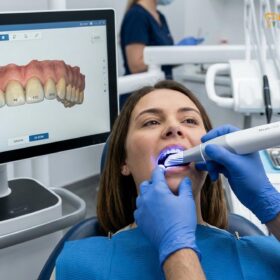
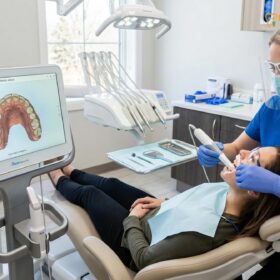
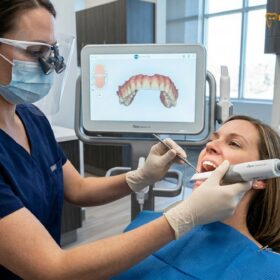
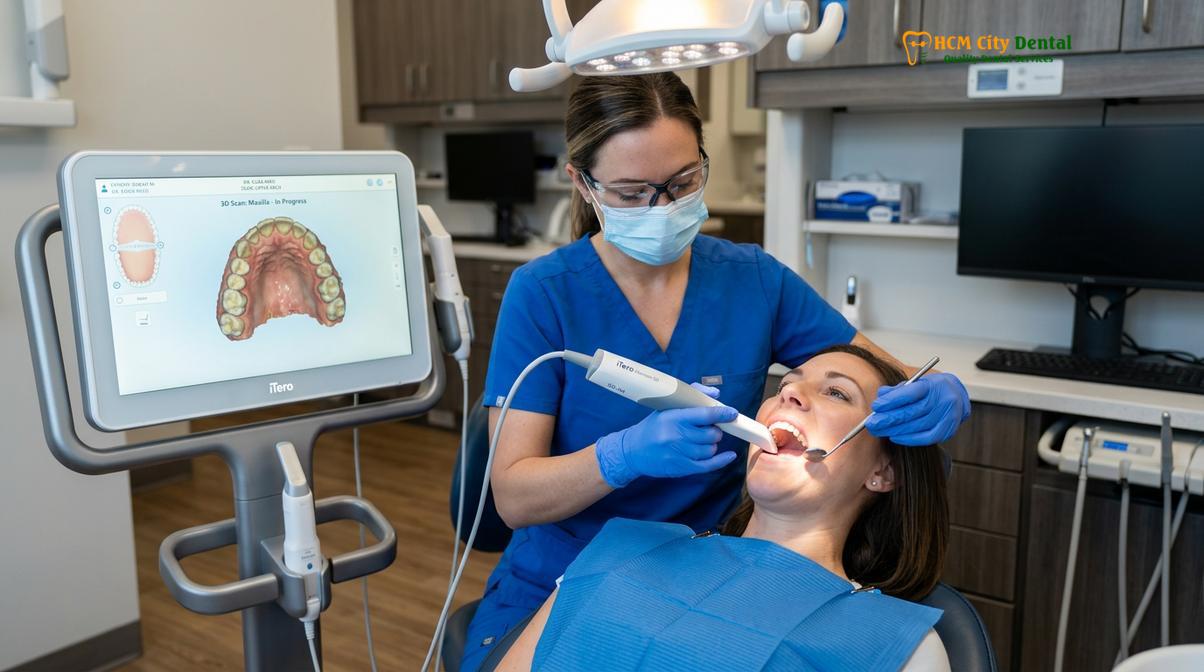
To overcome the limitations of traditional workflows, modern cosmetic centers utilize a fully integrated digital ecosystem. At HCMC Dental Clinic in Ho Chi Minh City, the integration of a direct lab connection fundamentally changes the timeline and quality control of aesthetic restorations. Instead of physical putty, the clinical team utilizes the iTero Element 5D and Medit i700 Intraoral Scanners. These devices capture highly accurate 3D topographical maps of the patient’s dentition in a matter of minutes, providing maximum comfort and eliminating the gag reflex associated with traditional impressions.
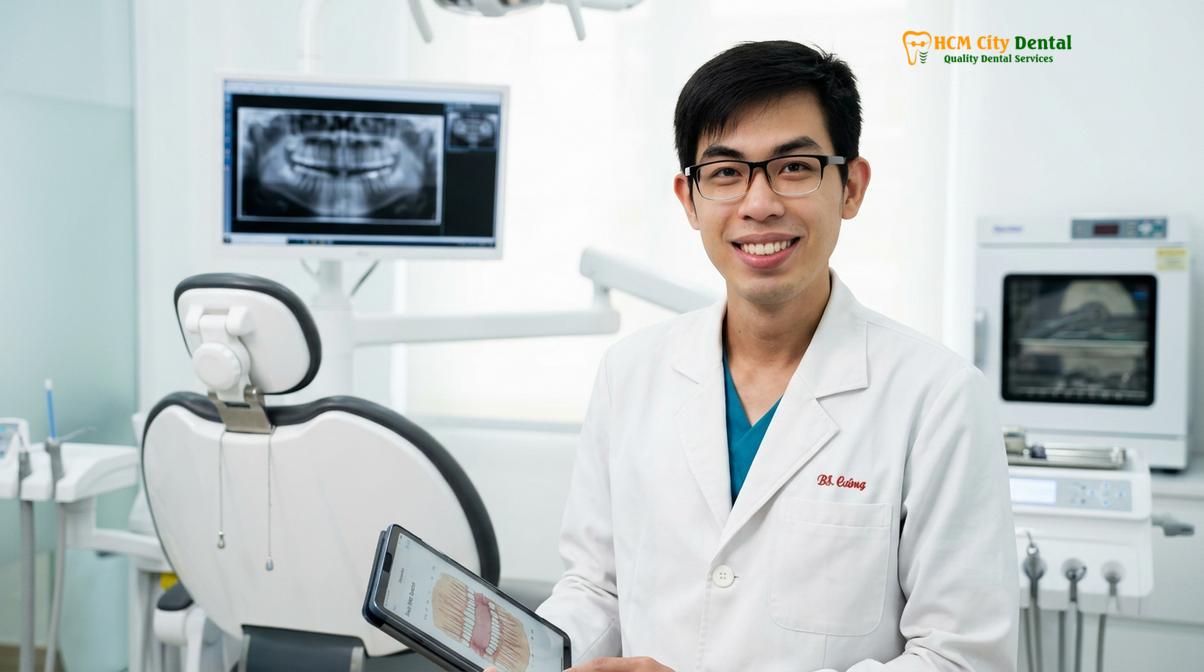
Once the digital scan is complete, the data is instantly transmitted to the adjacent digital laboratory. This immediate data transfer allows the CAD (Computer-Aided Design) technicians to begin designing the smile architecture while the patient is still in the chair. Dr. Nguyen Van Cuong emphasizes that this direct collaboration is the cornerstone of predictable aesthetic outcomes. When the prosthodontist and the master ceramist work in the same facility, they can evaluate the patient’s facial symmetry, lip dynamics, and natural lighting together, ensuring that the final restorations harmonize perfectly with the patient’s unique features.
“The true value of an integrated digital laboratory is not merely speed, but the absolute control it gives the clinical team over marginal integrity and custom shade characterization, eliminating the guesswork of outsourced fabrication.”
This seamless communication allows for real-time adjustments. If a patient desires a slight modification to the translucency or the incisal edge contour, the ceramist can make these micro-adjustments immediately, bypassing the days of shipping delays inherent in traditional models.
Express Workflow: CAD/CAM Milling and Ceramic Staining in 48 Hours
Digital impressions are instantly transmitted to CAD/CAM milling units, where premium ceramic blocks are sculpted and hand-stained within 48 hours.
The ability to deliver a fast-track cosmetic smile relies heavily on advanced manufacturing technology. The express veneer milling process begins with Digital Smile Design (DSD). Using specialized software, the clinical team calibrates the gingival zenith, calculates the ideal golden proportions of the teeth, and creates a 3D mock-up. This allows the patient to preview their new smile before any clinical preparation begins, ensuring alignment with their aesthetic goals.
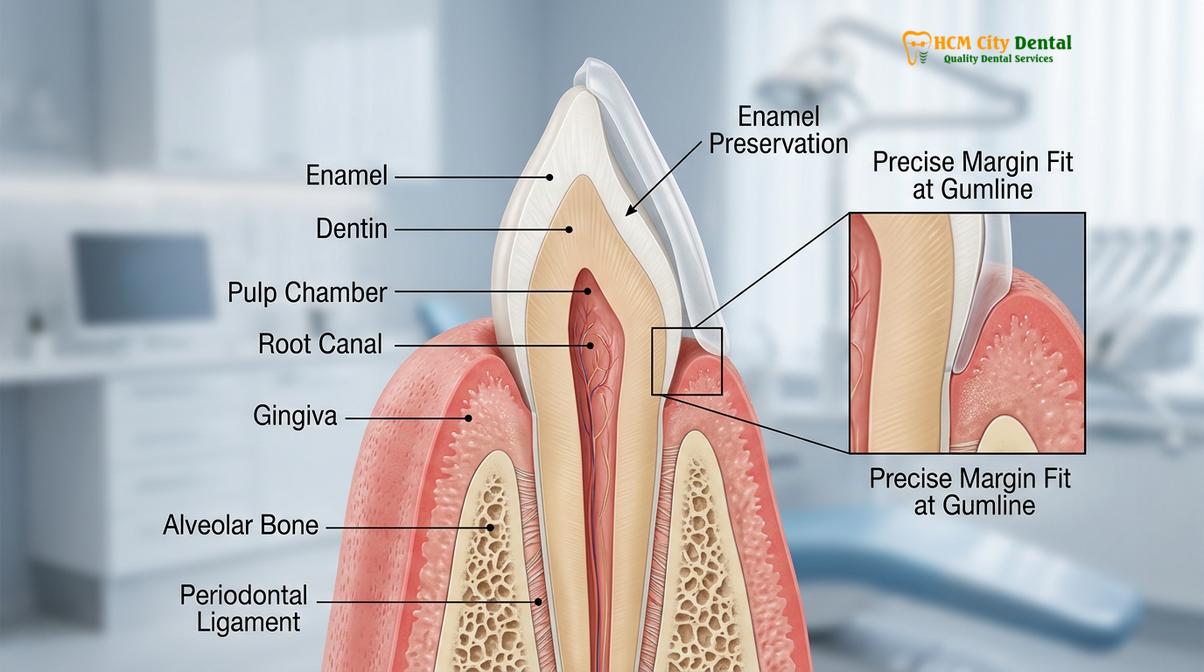
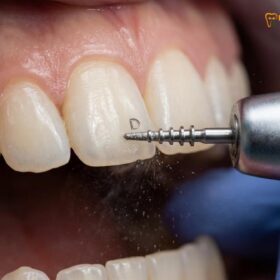
Once the design is approved, the clinical preparation phase commences. Modern protocols prioritize enamel preservation. Depending on the patient’s alignment and the material chosen, tooth preparation depth is kept to a minimal 0.3mm to 0.7mm. In cases involving microdontia or significant spacing, prep-less Lumineers (requiring only 0.2mm or no preparation) may be indicated. Preserving the enamel layer is critical, as bonding porcelain to enamel yields a significantly higher shear bond strength compared to bonding to dentin [2].
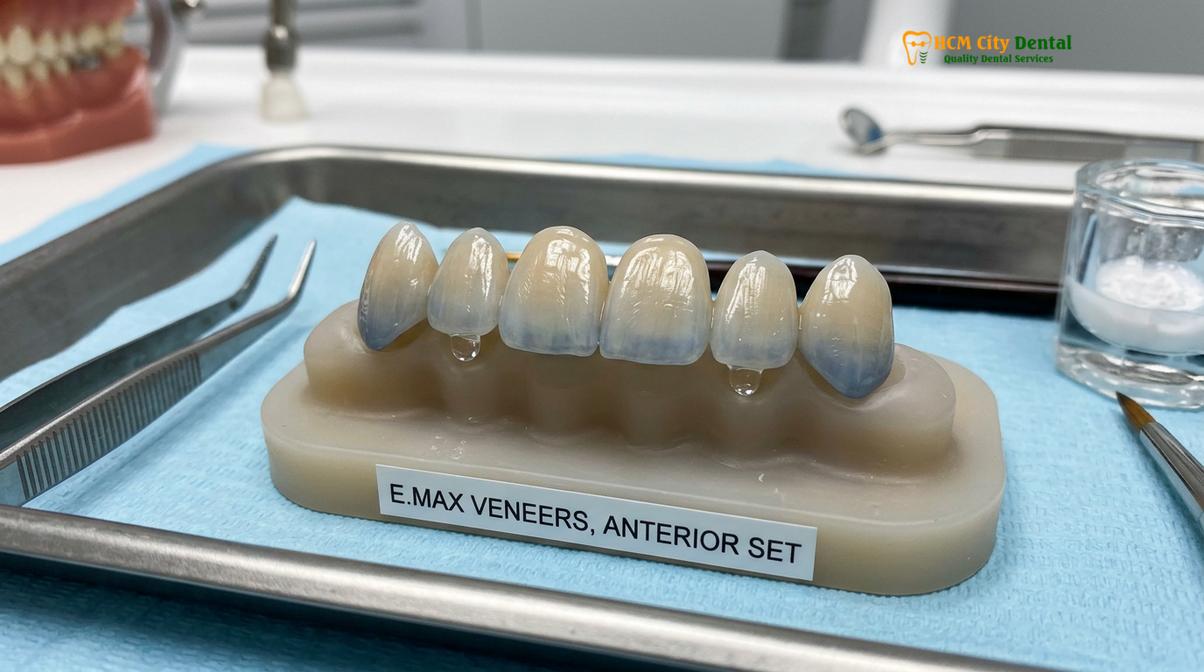
The digital files are then sent to the CAM (Computer-Aided Manufacturing) milling machines. This represents the pinnacle of CAD/CAM dentistry saigon has to offer. Solid blocks of premium certified materials are milled with microscopic precision. The clinic utilizes authentic materials from globally recognized manufacturers:
- E.max (Ivoclar, Liechtenstein): Lithium disilicate glass-ceramic renowned for its outstanding lifelike aesthetics, high translucency, and ability to mimic natural enamel. It is the gold standard for anterior (front) teeth.
- Zirconia HT (Cercon HT, Germany): High-translucency zirconium dioxide offering exceptional flexural strength, ideal for high-stress areas, posterior teeth, or patients with a history of bruxism.
After milling, the raw ceramic restorations undergo a meticulous hand-staining and glazing process. Master ceramists apply custom shading—such as mapping the highly sought-after VITA BL1 natural translucent shade—and bake the veneers in a ceramic furnace to crystallize the material, achieving maximum strength and a flawless, natural luster.
Clinical Safety: Why Speed Does Not Compromise Margin Fit or Durability
Accelerated timelines are achieved through digital efficiency, ensuring that critical clinical steps like enamel preservation and cementation protocols are never rushed.
A common misconception is that a 3-to-5 day turnaround implies a rushed clinical procedure. In reality, the time saved is entirely logistical. The clinical phases—preparation, isolation, and bonding—are executed with the same, if not greater, meticulous precision as a standard two-week workflow. Digital scanning actually enhances clinical safety by providing a hyper-accurate margin line, ensuring that the final veneer fits seamlessly against the tooth structure without overhangs that could trap plaque or violate the biological width [3].
The cementation protocol is the most critical phase for the long-term durability of ceramic restorations. Dr. Nguyen Van Cuong notes that achieving a hermetic seal requires strict moisture control, often utilizing rubber dam isolation. The intaglio (inner) surface of an E.max veneer is etched with hydrofluoric acid and treated with a silane coupling agent to create a micromechanical and chemical bond. Simultaneously, the natural tooth enamel is etched with phosphoric acid and coated with a bonding resin.
A dual-cure or light-cure resin cement is then used to permanently affix the veneer. Excess cement is meticulously removed from the margins before final light curing, preventing future gingival irritation. This rigorous protocol ensures that the restorations can withstand the dynamic forces of mastication for decades when properly maintained.
Important Clinical Consideration: While the fabrication process is rapid, the bonding phase requires absolute precision. Patients must follow post-operative instructions carefully, including avoiding highly pigmented foods for the first 48 hours while the resin cement fully stabilizes.
Ideal Travel Schedules for a 3-to-5 Day Dental Trip
A structured itinerary maximizes clinical chair time while allowing patients to comfortably enjoy their dental tourism experience in the city.
For international patients engaging in dental tourism HCMC, planning the itinerary is crucial. A well-structured schedule ensures that all clinical requirements are met without unnecessary stress. Many clinics facilitate this by offering an all-inclusive quote and assisting with logistics, such as arranging an airport pickup transfer directly from Tan Son Nhat SGN to premium District 1 hotels.
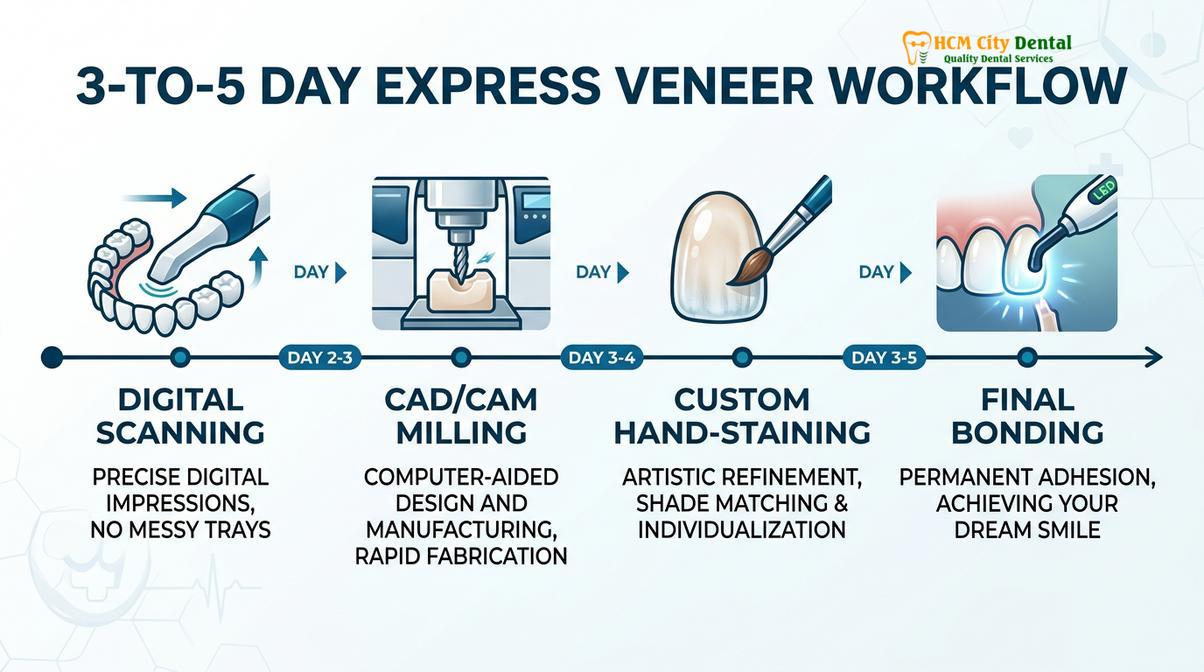
A typical 5-day express itinerary unfolds as follows:
- Day 1: Comprehensive Consultation & Preparation. The patient undergoes a thorough examination, 3D CT scanning, and Digital Smile Design. If approved, the teeth are minimally prepared, digital scans are captured, and temporary veneers are placed.
- Day 2: Laboratory Fabrication. The in-house lab mills and characterizes the veneers. The patient is free to rest or explore the city.
- Day 3: Try-In & Aesthetic Evaluation. The temporary veneers are removed, and the permanent ceramics are tried in using a temporary try-in paste. The patient evaluates the shade, shape, and overall aesthetics under natural light.
- Day 4: Permanent Bonding. Once approved, the strict cementation protocol is performed. The bite is checked and adjusted to ensure occlusal harmony.
- Day 5: Final Review & Nightguard Fitting. A final polish is performed, and impressions are taken for a custom nightguard to protect the new smile from sleep bruxism.
To help patients planning your smile makeover, utilizing a cosmetic savings calculator can clarify the financial advantages. The pricing structure at HCMC Dental Clinic is highly transparent, offering a 40% pre-arrival discount for WhatsApp bookings, making premium dentistry highly accessible.
| Cosmetic Treatment | Standard Walk-in Price | WhatsApp Booking (-40%) |
|---|---|---|
| Composite Veneer (Chair-side) | ~$80 (2.0M VND) | From $48 (1.2M VND) |
| Zirconia Veneer (Cercon HT, Germany) | ~$240 (6.0M VND) | From $144 (3.6M VND) |
| E.max Porcelain Veneer (Ivoclar) | ~$320 (8.0M VND) | From $192 (4.8M VND) |
| Smile Design 3D Mock-up | ~$200 (5.0M VND) | From $120 (Free if treated) |
| Laser Gum Contouring (Diode) | ~$160 (4.0M VND) | From $96 (2.4M VND) per arch |
| In-Office Teeth Whitening (Laser) | ~$140 (3.5M VND) | From $84 (2.1M VND) |
Beyond the initial savings, patients benefit from global manufacturer warranty cards, a 3-year clinic bonding and fit guarantee for E.max and Zirconia, and remote follow-up support via WhatsApp, ensuring continuous care long after returning home.
Patient Case Study: An international patient traveled to Ho Chi Minh City seeking to correct severe tetracycline staining and mild diastemas (gaps). Utilizing the express workflow, the clinical team designed and bonded 10 E.max lithium disilicate veneers in just 4 days. By combining the treatment with diode laser gum contouring to correct an uneven gingival zenith, the patient achieved a perfectly symmetrical, bright BL1 smile while saving over 65% compared to domestic costs.
When to See a Doctor
A comprehensive clinical evaluation is mandatory to determine candidacy for rapid cosmetic restorations and to rule out underlying dental pathologies. While porcelain veneers are highly versatile, they are not suitable for every clinical scenario. You should consult a prosthodontist if you experience:
- Active Periodontal Disease: Gums that are red, swollen, or bleeding must be treated and stabilized before any cosmetic restorations can be placed, as healthy gingival tissue is essential for accurate margin placement [4].
- Severe Sleep Bruxism: Unmanaged teeth grinding can exert excessive force on ceramic materials, leading to fractures. A clinical assessment will determine if a nightguard or alternative materials like full-coverage Zirconia crowns are required.
- Insufficient Enamel: Patients with severe acid erosion or over-prepared teeth from previous dental work may lack the necessary enamel for predictable veneer bonding, making them better candidates for comparing composite resin options or full crowns.
- Significant Malocclusion: Severe crowding or bite misalignment should ideally be corrected with orthodontic treatment (such as clear aligners) prior to veneer placement to ensure functional harmony and long-term stability [5].
Frequently Asked Questions
Can I really get a full set of veneers in 3 to 5 days?
Yes, a complete set of custom porcelain veneers can be fabricated and bonded within 3 to 5 days. This is achieved through digital intraoral scanning, in-house CAD/CAM milling, and a direct laboratory partnership that eliminates transit delays. The clinical steps remain thorough and uncompromised.
How does the direct lab connection speed up the veneer process?
A direct lab connection removes the need to ship physical impressions to an external facility. Digital files are instantly transmitted to the ceramist, allowing fabrication to begin immediately and enabling real-time shade adjustments chairside, drastically reducing the traditional two-week waiting period.
Are fast-turnaround veneers lower in quality?
No, the speed comes from logistical efficiency, not clinical shortcuts. The express workflow utilizes the exact same premium materials, such as E.max lithium disilicate, and follows strict minimal-prep and cementation protocols to ensure long-term durability and exceptional aesthetic outcomes.
Do I need a nightguard after getting veneers?
Yes, wearing a custom nightguard is highly recommended to protect your new restorations. It prevents excessive occlusal forces from sleep bruxism (teeth grinding) from chipping or fracturing the ceramic material over time, thereby maximizing the long-term durability of ceramic veneers.
How do I maintain my new porcelain veneers?
Maintain porcelain veneers by brushing twice daily with a non-abrasive toothpaste, flossing regularly, and attending routine dental cleanings. Avoid using your teeth as tools to open packaging or biting into extremely hard objects like ice, which can damage both natural teeth and ceramic restorations.
“The integration of digital scanning and in-house milling has revolutionized dental tourism, allowing international patients to receive world-class aesthetic restorations without the burden of extended travel times.”
References
- Journal of Esthetic and Restorative Dentistry. Translucency of lithium disilicate and zirconia restorations. (2021).
- International Journal of Prosthodontics. Enamel preservation and bond strength in minimal-prep veneers. (2020).
- The Journal of Prosthetic Dentistry. Flexural strength and marginal adaptation of CAD/CAM porcelain restorations. (2019).
- Clinical Oral Investigations. Diode laser gingival sculpting parameters for aesthetic dentistry. (2022).
- Journal of Clinical Periodontology. Biological width preservation around anterior ceramic restorations. (2018).