Digital smile design veneers combine advanced 3D imaging with ultra-thin ceramic restorations to create a highly predictable, customized smile makeover. By analyzing facial dynamics and utilizing precise digital mock-ups, prosthodontists can ensure optimal aesthetics, minimal enamel preparation, and a precise fit tailored to your unique facial structure.
Clinical Summary:
Digital Smile Design (DSD) is an advanced prosthodontic workflow that utilizes intraoral scanners, high-resolution photography, and CAD/CAM technology to plan and execute aesthetic dental treatments. This evidence-based approach allows clinicians to analyze facial symmetry, calibrate the gingival zenith, and preserve biological width with exceptional accuracy. Patients benefit from a tridimensional “test drive” of their new smile via a digital wax-up and physical mock-up before any irreversible tooth preparation occurs. By selecting premium materials with high flexural strength and superior optical translucency, DSD ensures predictable, long-lasting, and biologically harmonious cosmetic outcomes.
Key Takeaways:
- DSD utilizes 3D intraoral scanning to eliminate messy traditional impressions and enhance patient comfort.
- Patients can preview their final results using a physical cosmetic mock-up before any tooth preparation begins.
- Minimal-prep techniques preserve healthy enamel while ensuring optimal bond strength for the final restorations.
- Premium ceramic materials offer exceptional lifelike aesthetics and high fracture resistance for long-term durability.
- Direct laboratory partnerships enable rapid turnaround times, allowing for complete smile makeovers in just a few days.
What is Digital Smile Design (DSD) Technology?
Digital Smile Design is a comprehensive digital workflow that uses 3D imaging and specialized software to plan, visualize, and execute highly precise cosmetic dental restorations.
The evolution of aesthetic dentistry has moved rapidly from subjective, analog methods to highly objective, data-driven digital workflows. At the core of this transformation is Digital Smile Design (DSD), a conceptual protocol that integrates multiple digital diagnostic tools to create a comprehensive treatment plan. Unlike traditional approaches where the final outcome is largely dependent on the ceramist’s interpretation of a physical impression, DSD places the restorative dentist in complete control of the architectural design of the smile from the very first consultation.
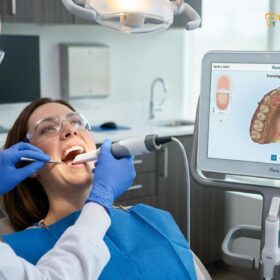
The process begins with the acquisition of highly accurate digital impressions. State-of-the-art devices such as the iTero Element 5D and Medit i700 Intraoral Scanners have revolutionized this phase. These scanners capture thousands of images per second, stitching them together to create a flawless 3D topographical map of the patient’s oral cavity. This technology completely eliminates the need for uncomfortable, messy traditional silicone impressions, providing maximum comfort and unparalleled 3D precision for custom Porcelain Veneers. The digital files are instantly available for analysis, allowing the clinician to evaluate occlusal relationships, interdental spacing, and existing tooth morphology with microscopic accuracy.[1]
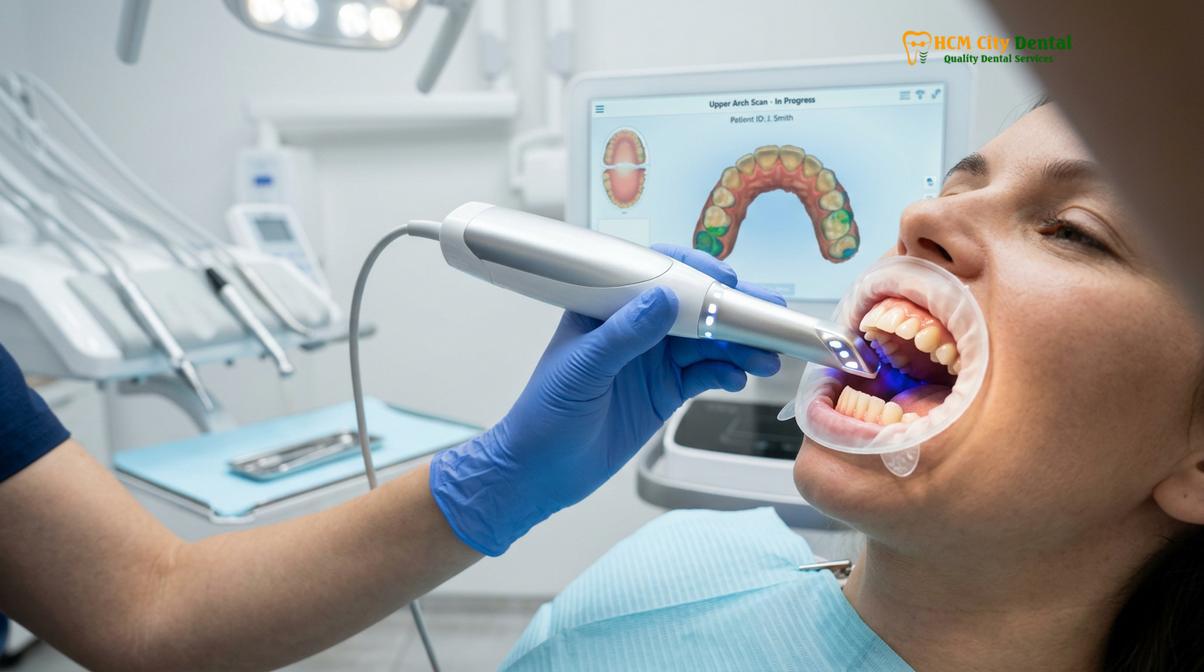
Once the digital impression is captured, the data is imported into specialized CAD/CAM (Computer-Aided Design and Computer-Aided Manufacturing) software. Here, the clinician can manipulate the digital models, adjusting the length, width, and contour of each individual tooth. While some patients may opt for a more economical nano-hybrid composite resin restoration, the DSD workflow is particularly beneficial when planning for premium ceramic materials, as it allows for the precise calculation of the required restorative space. This digital wax-up serves as the foundational blueprint for the entire treatment, ensuring that every subsequent step is guided by a meticulously calculated design rather than clinical guesswork.
Photo and Video Protocols: Analyzing Facial Dynamics and Symmetry
Dynamic photo and video analysis allows prosthodontists to evaluate lip movement, speech patterns, and facial symmetry to design veneers that harmonize with the patient’s natural expressions.
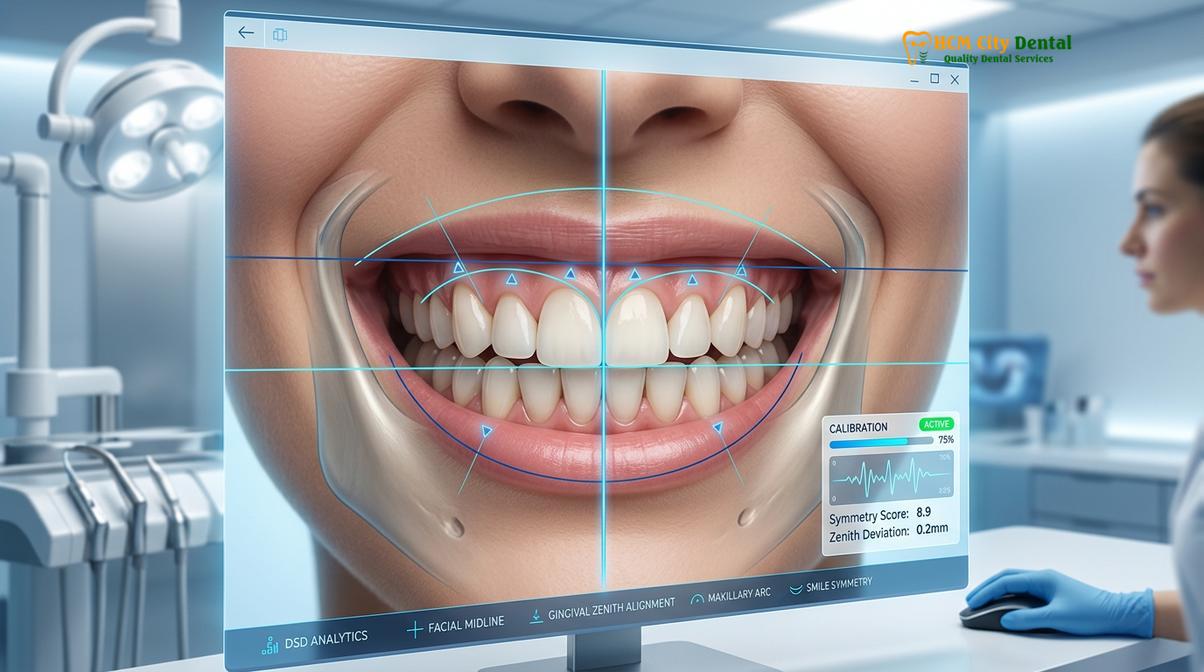
A beautiful smile is not merely a collection of perfectly shaped teeth; it is a dynamic feature that must integrate seamlessly with the patient’s overall facial architecture. To achieve this harmony, the DSD protocol relies heavily on comprehensive photo and video documentation. Static photographs, while useful, only capture a fraction of the necessary diagnostic information. Video analysis is critical for observing the teeth in motion—during speech, laughter, and natural repose. This dynamic assessment helps the clinician evaluate the display of the incisal edges, the curvature of the lower lip, and the presence of any muscular asymmetries.
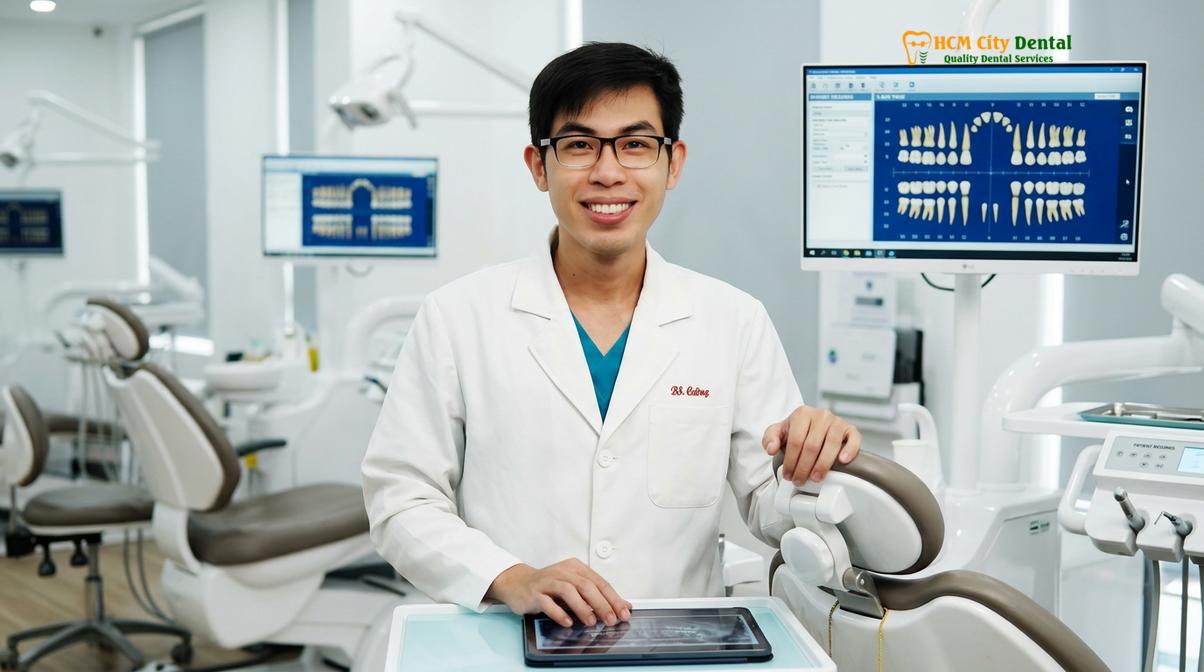
During the analysis phase, the clinician establishes critical reference points, known as facial flow lines. The interpupillary line (the line connecting the pupils) and the facial midline serve as the primary horizontal and vertical axes. The dental midline is then evaluated in relation to the facial midline, and the occlusal plane is assessed to ensure it is parallel to the horizon. Dr. Nguyen Van Cuong emphasizes that this meticulous attention to facial dynamics is what separates a generic set of veneers from a truly bespoke smile makeover. By calibrating the gingival zenith—the most apical point of the gingival tissue—the clinician ensures that the pink aesthetics (the gums) perfectly frame the white aesthetics (the teeth).
Furthermore, this digital analysis is essential for respecting the biological width—the natural dimension of the soft tissue attached to the portion of the tooth above the alveolar bone. Violating this space during tooth preparation or restoration placement can lead to chronic gingival inflammation and unpredictable tissue recession.[2] By mapping these biological parameters digitally, the clinician can plan restorations that are not only visually stunning but also biologically sound, promoting long-term periodontal health.
Creating the 3D Digital Mock-Up (Wax-up)
The 3D digital mock-up translates diagnostic data into a precise virtual model, guiding the fabrication of temporary restorations and determining the exact dimensions of the final veneers.
The synthesis of the intraoral scans and the facial dynamic analysis culminates in the creation of the 3D digital mock-up. This virtual model is where the art and science of dentistry truly intersect. The clinician uses the software to select the ideal tooth shapes from an extensive digital library, customizing the morphology to suit the patient’s gender, age, and personality traits. This 3D smile preview allows for precise adjustments to the length-to-width ratio of the central incisors, the dominance of the canines, and the overall curvature of the dental arch.
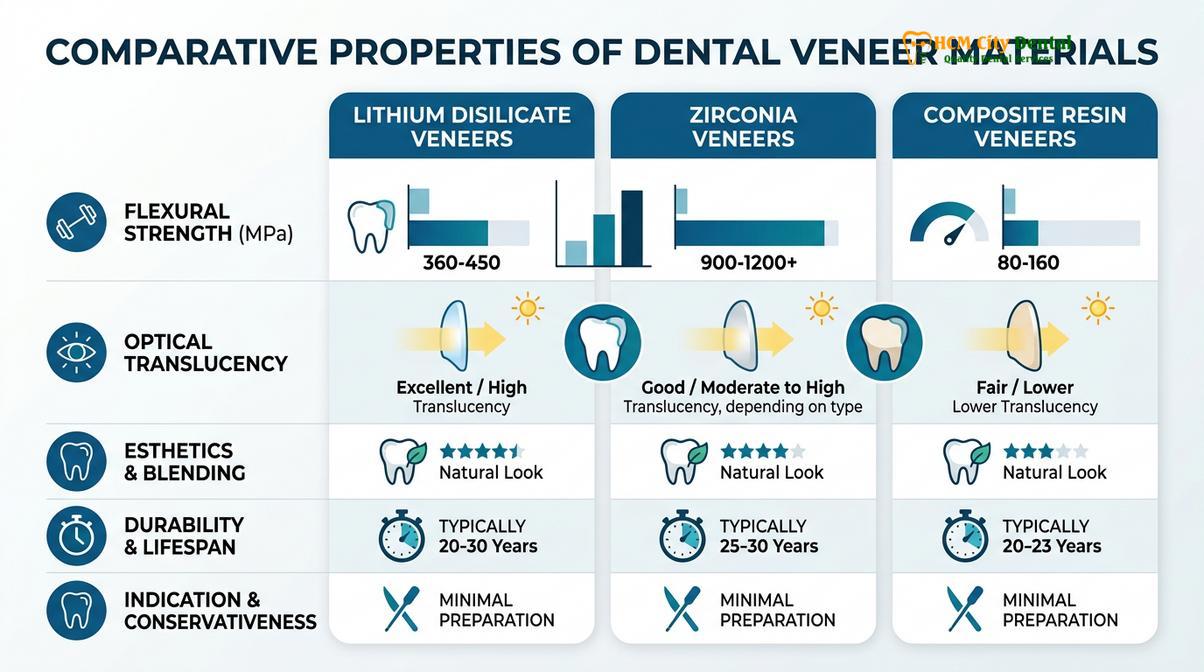
Material selection is a critical component of this planning phase. The choice of ceramic dictates the optical and mechanical properties of the final restorations. For patients requiring maximum aesthetic vitality, a feldspathic porcelain may be considered due to its exceptional glass-like qualities. However, modern dentistry heavily favors stronger glass-ceramics. A prime example is lithium disilicate (such as IPS e.max), which offers an outstanding balance of lifelike optical translucency and robust mechanical strength. When the digital design is finalized, the data can be sent to a milling unit where a solid ceramic ingot is precisely machined into the final veneer shape.[3]
“The digital wax-up is the architectural blueprint of cosmetic dentistry. It removes the unpredictability from the restorative process, allowing both the clinician and the patient to visualize the exact functional and aesthetic outcome long before a single tooth is touched.”
For patients with heavy occlusal forces or those who exhibit signs of bruxism, zirconium dioxide (Zirconia HT) may be selected for specific high-stress areas. Zirconia is renowned for its exceptional flexural strength MPa, making it highly resistant to fracture. The digital mock-up software allows the clinician to specify the exact thickness required for the chosen material, ensuring that the final restorations possess both the necessary structural integrity and the desired aesthetic brilliance. This meticulous planning is essential when determining how many veneers are needed to achieve a seamless, broad smile.
The “Test Drive”: Trying Your New Smile in the Mirror Before Prep
The physical mock-up phase allows patients to wear a temporary version of their designed smile, providing an opportunity to evaluate aesthetics and function before any enamel is modified.
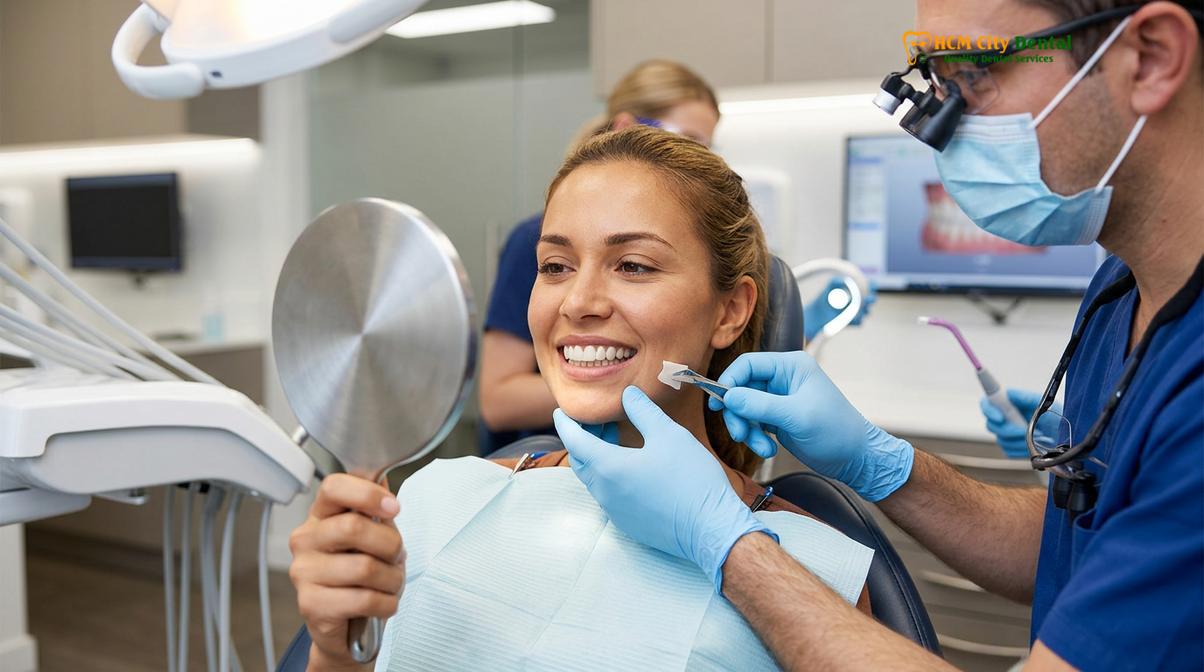
One of the most profound advantages of the Digital Smile Design workflow is the ability to perform a clinical “test drive” of the proposed restorations. Once the digital wax-up is approved on the computer screen, it is translated into a physical model using a 3D printer. From this printed model, a silicone matrix is fabricated. During the clinical appointment, this matrix is filled with a temporary bis-acryl resin and placed over the patient’s unprepared natural teeth. Within minutes, the material sets, and the matrix is removed, revealing a highly accurate physical cosmetic mock up of the final design.
This temporary veneer phase is a powerful communication tool. It allows the patient to look in the mirror and see their new smile in three dimensions, in the context of their own face. They can evaluate the color, shape, and length of the teeth, and assess how the new design affects their speech and lip support. If the patient desires any modifications—perhaps slightly shorter central incisors or more rounded canines—these changes can be made instantly to the mock-up chairside. Once the patient is completely satisfied, the modified mock-up is scanned, and this new data becomes the definitive guide for the final ceramic restorations.
Clinical Case Study: The Power of the Mock-Up
A 32-year-old patient visited HCMC Dental Clinic in Ho Chi Minh City seeking to correct a gummy smile and disproportionate anterior teeth. Through the DSD protocol, a digital design was created and transferred to the mouth via a physical mock-up. Upon seeing the mock-up, the patient realized that the proposed incisal length was slightly too dominant for her facial profile. Dr. Cuong adjusted the temporary resin chairside, reducing the length by 0.5mm. The patient immediately approved the revised look. Because this adjustment was made during the mock-up phase, the final porcelain veneers were fabricated perfectly to her revised specifications, resulting in absolute patient satisfaction and zero need for post-cementation remakes.
How DSD Ensures Predictable, High-Satisfaction Cosmetic Outcomes
By integrating digital planning with conservative preparation techniques, DSD maximizes enamel preservation and ensures a precise marginal fit for long-lasting, lifelike restorations.
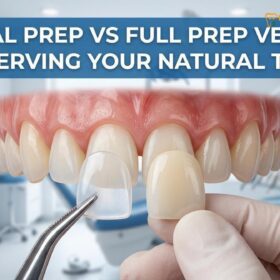
The predictability of the DSD workflow extends far beyond aesthetics; it fundamentally improves the biological safety and longevity of the treatment. Because the final volume of the restorations is known before treatment begins, the clinician can employ highly conservative tooth preparation techniques. Using the physical mock-up as a depth guide, the dentist only removes the exact amount of tooth structure necessary to accommodate the ceramic material. This minimal-prep approach typically requires only 0.3mm to 0.7mm of reduction, and in some cases, prep-less Lumineers (requiring as little as 0.2mm of space) can be utilized.
Strict enamel preservation is the cornerstone of long-term veneer success. Dental adhesives bond significantly stronger to the highly mineralized enamel layer than to the underlying, porous dentin. By keeping the preparation entirely within the enamel, the clinician ensures maximum bond strength and virtually eliminates the risk of postoperative sensitivity.[4] The precision of the CAD/CAM milling process also guarantees an impeccable marginal fit, preventing microleakage and recurrent decay at the junction where the ceramic meets the natural tooth.
“The true elegance of modern veneer therapy lies in its conservatism. By utilizing digital depth-reduction guides, we can preserve the maximum amount of healthy enamel, ensuring that the restorations are not only beautiful but structurally integrated with the natural dentition.”
The final phase of the workflow is the delivery of the restorations. The internal surfaces of the ceramic veneers are treated with hydrofluoric acid and a silane coupling agent, while the tooth surface is etched and primed. The restorations are then bonded into place using a specialized adhesive cementation protocol. While a resin-modified glass ionomer might be used for certain types of full-coverage crowns, true porcelain veneers rely on light-cured or dual-cured resin cements to achieve an unbreakable chemical and micromechanical bond, ensuring the smile remains vibrant and secure for decades.[5]
Material Selection and Clinical Pricing Parameters
Selecting the appropriate ceramic material and understanding the associated costs are crucial steps in planning a successful and transparent smile makeover journey.
At HCMC Dental Clinic, we believe in complete transparency regarding material selection and treatment costs. We utilize only authentic, certified materials from industry-leading manufacturers in Germany and Liechtenstein. For patients requiring maximum durability, particularly those who exhibit heavy grinding habits, Zirconia HT (Cercon HT, Germany) provides exceptional strength. For those prioritizing outstanding lifelike aesthetics, E.max (Ivoclar, Liechtenstein) lithium disilicate is the gold standard, offering superior shade mapping capabilities—allowing patients to choose between a natural translucent shade like B1 or a brilliant Hollywood white like VITA BL1.
Our direct lab partnership in Ho Chi Minh City enables complete quality control and direct collaboration between the prosthodontist and the master ceramist. This synergy allows us to offer an express 3-5 day turnaround, tailored specifically for dental tourists and expats who require a complete smile makeover within a single week. To assist with financial planning, we offer 0% interest monthly credit card installment plans and a transparent pricing structure.
Below is an overview of the pricing parameters, highlighting the significant 40% pre-arrival discount available for patients who book their consultation via WhatsApp prior to arrival:
| Treatment / Material | Standard Walk-in Fee (Estimated) | WhatsApp Booking Discount (-40%) |
|---|---|---|
| Composite Veneer (Chair-side) | ~$80 (2.0M VND) | From $48 (1.2M VND) |
| Zirconia Veneer (Cercon HT, Germany) | ~$240 (6.0M VND) | From $144 (3.6M VND) |
| E.max Porcelain Veneer (Ivoclar) | ~$320 (8.0M VND) | From $192 (4.8M VND) |
| Smile Design 3D Mock-up | ~$200 (5.0M VND) | From $120 (3.0M VND) *Free if treatment is performed |
| Laser Gum Contouring (Diode) | ~$160 (4.0M VND) per arch | From $96 (2.4M VND) per arch |
| In-Office Teeth Whitening (Laser) | ~$140 (3.5M VND) | From $84 (2.1M VND) |
To ensure absolute peace of mind, all premium ceramic restorations come with global manufacturer warranty cards. Furthermore, our clinic provides a 3-year clinic bonding and fit guarantee for E.max and Zirconia restorations, and a 1-year guarantee for Composite work. We also offer comprehensive remote follow-up support via WhatsApp, utilizing specific photo and video assessment protocols to monitor your oral health long after you have returned home.
When to See a Doctor for Digital Smile Design Veneers
While digital smile design veneers offer a transformative solution for many aesthetic concerns, they are a medical procedure that requires careful clinical evaluation. You should schedule a consultation with a qualified prosthodontist if you are looking to address specific structural or cosmetic issues, such as diastema closure (closing gaps between teeth), masking severe intrinsic discoloration like tetracycline stains, or restoring teeth that are worn, chipped, or slightly misaligned.
Important Clinical Consideration: Cosmetic dentistry should only be performed on a foundation of optimal oral health. If you are experiencing active periodontal disease, untreated dental caries, or severe malocclusion, these underlying issues must be resolved before veneer placement. Placing restorations over active disease can lead to rapid failure and severe complications.
It is also crucial to discuss any parafunctional habits with your dentist. If you suffer from sleep bruxism (chronic teeth grinding or clenching), you may still be a candidate for veneers, but your treatment plan must include the fabrication of a custom nightguard to protect the ceramic restorations from excessive occlusal forces during sleep. A comprehensive clinical examination, including digital imaging and periodontal probing, is the only way to determine your true candidacy for this alternative for veneers or full smile makeover.
Frequently Asked Questions
What is Digital Smile Design?
Digital Smile Design (DSD) is an advanced prosthodontic planning protocol that uses 3D imaging, photography, and specialized software to create a highly predictable, customized cosmetic dental treatment plan. By analyzing facial dynamics and dental proportions, clinicians can design restorations that perfectly harmonize with your natural facial features before any physical treatment begins.
Can I see my veneers before they are placed?
Yes, you can physically see and test your new smile before any permanent changes are made to your teeth. Through a process called a clinical mock-up, a temporary bis-acryl resin version of your digital design is placed over your natural teeth, allowing you to evaluate the aesthetics, phonetics, and overall facial harmony.
How much does Digital Smile Design cost?
The cost of a 3D Smile Design mock-up is typically around $200 (5.0M VND) for walk-in patients, but it is reduced to $120 (3.0M VND) with a WhatsApp booking discount, and is often waived entirely if you proceed with the full veneer treatment. The total cost will depend on the number of restorations and the specific ceramic materials chosen.
How long does the DSD veneer process take?
With direct laboratory partnerships, the entire digital smile design and veneer fabrication process can be completed in an express 3 to 5-day turnaround. This accelerated timeline is ideal for international patients, allowing for comprehensive consultation, digital scanning, mock-up approval, and final cementation within a single week.
Are digital smile design veneers painful?
The procedure is generally highly comfortable and minimally invasive, often requiring little to no local anesthesia. Because the digital planning allows for ultra-conservative tooth preparation—sometimes as little as 0.2mm to 0.3mm—the underlying sensitive dentin is rarely exposed, resulting in a virtually pain-free experience and minimal postoperative sensitivity.
References
- Journal of Esthetic and Restorative Dentistry. Translucency and optical properties of lithium disilicate restorations. (2021).
- International Journal of Periodontics & Restorative Dentistry. Biological width preservation in anterior aesthetic restorations. (2020).
- The Journal of Prosthetic Dentistry. Flexural strength and fracture resistance of modern ceramic materials. (2019).
- Clinical Oral Investigations. Accuracy of intraoral scanners in full-arch digital impressions. (2022).
- Journal of Dentistry. Adhesive cementation protocols for ultra-thin porcelain laminate veneers. (2018).