For international patients planning a cosmetic dental holiday, determining exactly how many days in Vietnam for dental veneers are required is the most critical logistical and clinical decision. Unlike routine cleanings or simple fillings, a full smile makeover utilizing ultra-thin porcelain veneers demands a precise, multi-step clinical workflow. At HCMC Dental Clinic, located at 207 Nguyen Trai, District 1, we have optimized this process to deliver a complete single-trip smile transformation in 5 to 7 days with 48-hour in-house CAD/CAM lab turnaround. This highly structured timeline ensures that every phase—from the initial 3D CBCT scan and Digital Smile Design (DSD) to the mock-up trial, final bonding, and the mandatory pre-departure fit-to-fly clearance—is executed without compromising medical safety or aesthetic excellence.
Navigating dental tourism requires more than just booking a flight; it requires a deep understanding of clinical timelines, aviation physiology, and post-operative recovery protocols. Rushing a veneer procedure can lead to compromised marginal seals, occlusal imbalances, or gingival inflammation. Therefore, understanding the exact day-by-day itinerary, adhering to the 14-Day Saigon Soft-Food Diet, and following strict remote aftercare guidelines are paramount for long-term success. This comprehensive guide outlines the exact clinical pathways and safety thresholds established by our clinical director, ensuring your investment in a new smile is both beautiful and biologically sound.
Clinical Summary:
Determining how many days in Vietnam for dental veneers requires balancing aesthetic precision with biological healing. A standard porcelain veneer smile makeover (8–20 teeth) at HCMC Dental Clinic mandates a 5 to 7-day stay in Ho Chi Minh City. This timeline accommodates Day 1 diagnostics and tooth preparation, Days 2–3 for in-house CAD/CAM fabrication of IPS E.max or Zirconia restorations, Day 4–5 for the try-in and final adhesive bonding, and Day 6–7 for a mandatory occlusal adjustment and fit-to-fly clearance. Adherence to this schedule, combined with strict post-operative dietary protocols and remote aftercare coordination, ensures a 98%+ long-term success rate and prevents aviation-induced barodontalgia.
Key Takeaways:
- Optimal Timeline: A complete single-trip smile transformation in 5 to 7 days with 48-hour in-house CAD/CAM lab turnaround is the clinical gold standard for 8 to 20 porcelain veneers.
- Clinical Leadership: All procedures are overseen by Dr. Nguyen Van Cuong, DDS (Clinical Director — MOH License 0003265/BL-CCHN), ensuring adherence to international prosthodontic protocols.
- Transparent Pricing: Access the Official 2026 Dental Fee Schedule (-40% Online Booking Pricing), featuring IPS E.max Porcelain Veneers at $185 USD/tooth and Full Zirconia Crowns at $81–$150 USD/tooth.
- Aviation Safety: A mandatory 24 to 48-hour buffer post-bonding is required before boarding long-haul flights to prevent barometric stress on newly cured resin cements.
- Recovery Protocol: Patients must follow the 14-Day Saigon Soft-Food Diet and utilize specific hygiene practices, including rinsing with sterile 0.9% NaCl or sealed bottled water (LaVie/Aquafina).
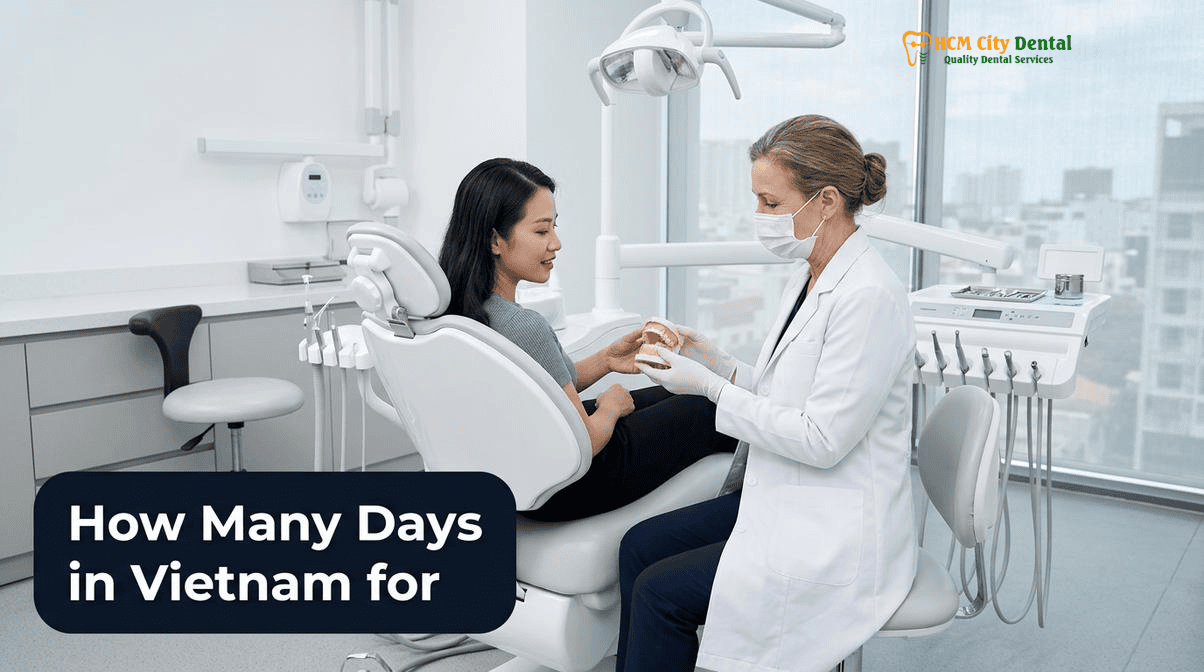
Medical Clearance & Risk Stratification Matrix for How Many Days in Vietnam for Dental Veneers
Before initiating any cosmetic dental procedure, establishing a baseline of oral and systemic health is non-negotiable. The question of how many days in Vietnam for dental veneers is intrinsically linked to the patient’s pre-operative condition. At HCMC Dental Clinic, our How Many Days in Vietnam for Dental Veneers (2026 Medical Safety Protocol) begins long before you land at Tan Son Nhat International Airport (SGN). Through our remote triage system, we conduct a preliminary risk stratification to ensure that your 5 to 7-day itinerary will not be derailed by unforeseen clinical complications.
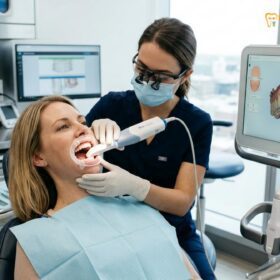
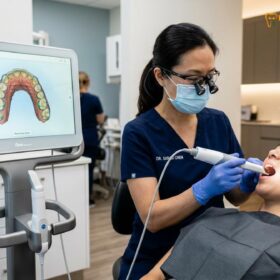
Upon arrival at our facility at 207 Nguyen Trai, District 1, the first clinical step is a comprehensive diagnostic workup. This includes a high-resolution 3D Cone Beam Computed Tomography (CBCT) scan and digital intraoral STL scanning. Unlike traditional 2D panoramic X-rays, a 3D CBCT scan allows Dr. Nguyen Van Cuong, DDS to evaluate the precise thickness of your enamel, the health of the underlying dentin, and the architecture of the alveolar bone and periodontal ligaments. This is critical because porcelain veneers require bonding primarily to enamel for maximum adhesive strength and longevity[1].
If a patient presents with severe bruxism (teeth grinding), active periodontal disease, or insufficient enamel due to acid erosion, the timeline may need adjustment. In cases where gingival recontouring (crown lengthening) via diode laser is required to correct a “gummy smile” or uneven gum line, an additional 24 to 48 hours of soft tissue healing may be factored into the itinerary. Furthermore, if the veneer treatment is part of a larger full-mouth rehabilitation involving dental implants, specific pre-operative blood panels (such as CBC, HbA1c for glycemic control, and PT/INR for coagulation) are mandatory to ensure surgical safety.
By strictly adhering to the International Patient Medical Safety & Post-Op Recovery Guides, we eliminate clinical guesswork. The 5 to 7-day window is carefully calculated to provide ample time for these diagnostics, ensuring that every veneer is placed on a biologically sound and structurally stable foundation.
Pathophysiology, Aviation Pressure & Clinical Safety Thresholds
A frequently overlooked aspect of dental tourism is the physiological impact of commercial aviation on newly placed dental restorations. When patients ask how many days in Vietnam for dental veneers are necessary, they must account for the time required for the adhesive resin cements to fully polymerize and for the periodontium to adapt to the new restorations before being subjected to the barometric pressure changes of a long-haul flight.
Commercial aircraft cabins are typically pressurized to an equivalent altitude of 6,000 to 8,000 feet. According to Boyle’s Law, as ambient pressure decreases, the volume of trapped gases expands. In dentistry, this phenomenon can lead to barodontalgia—a specific type of dental pain caused by pressure differentials. While barodontalgia is more commonly associated with untreated caries or recent root canal therapies, it is highly relevant to the veneer process, particularly during the provisional (temporary) phase[2].
During the 48-hour window when your permanent veneers are being milled in our CAD/CAM lab, you will wear temporary veneers fabricated from bis-acrylic resin. These temporaries are bonded with a weak, non-eugenol temporary cement to allow for easy removal. If a patient were to fly with temporary veneers, the expansion of microscopic air voids beneath the temporaries could cause them to debond mid-flight. Therefore, it is a strict clinical rule at HCMC Dental Clinic that patients do not fly during the provisional phase.
Once the final IPS E.max or Zirconia veneers are bonded using a dual-cure resin cement and a total-etch or self-etch adhesive protocol, the risk of debonding drops to near zero. However, we still mandate a 24 to 48-hour ground-level buffer period post-bonding. This allows the cement to achieve 100% of its mechanical strength and gives Dr. Nguyen Van Cuong, DDS the opportunity to perform a final occlusal (bite) check. Even a microscopic high spot on a new veneer can cause significant periodontal ligament inflammation or porcelain fracture when subjected to the heavy masticatory forces of the jaw. This mandatory buffer ensures that your Dr. Nguyen Van Cuong, DDS aviation & post-op safety protocols are fully met before you depart.
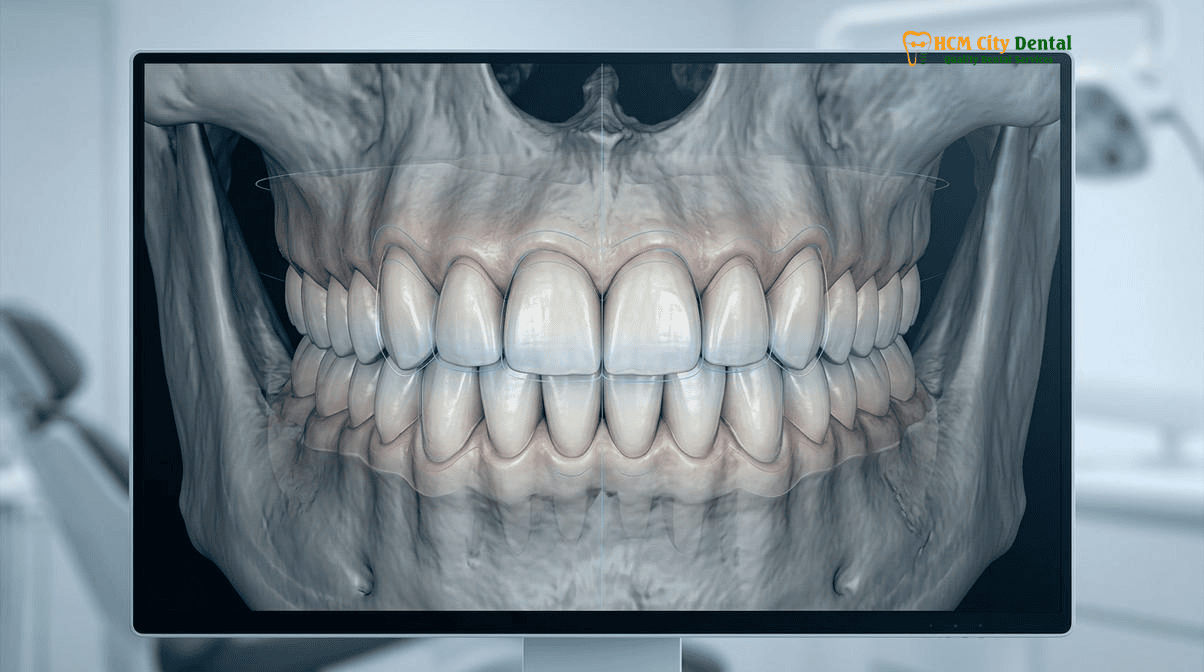
Step-by-Step Pre-Op, Chairside & Post-Op Safety Protocol at 207 Nguyen Trai, District 1
To fully understand how many days in Vietnam for dental veneers in District 1, Ho Chi Minh City are required, we must break down the clinical itinerary day by day. This structured approach, detailed in our Day-by-Day Recovery Itineraries, Saigon Soft-Food Diet & Remote Aftercare — Primary Clinical Hub at HCMC Dental Clinic, guarantees a seamless experience from consultation to final departure.
Day 1: Diagnostics, Digital Smile Design & Tooth Preparation
Your journey begins with a comprehensive consultation. Following the 3D CBCT and intraoral scans, we utilize Digital Smile Design Veneers: Clinical Workflow & Material Guide software to map out your new smile. This involves analyzing your facial symmetry, lip dynamics, and phonetic parameters. Once the design is approved, Dr. Nguyen Van Cuong, DDS proceeds with minimally invasive tooth preparation. Using high-magnification loupes, only 0.3mm to 0.5mm of enamel is gently recontoured. Impressions (digital or physical) are taken, and you are fitted with aesthetic temporary veneers.
Days 2 to 3: The 48-Hour In-House CAD/CAM Lab Turnaround
While you explore the vibrant culture of Ho Chi Minh City or relax at nearby luxury hotels (such as Pullman Saigon Centre or Hotel Nikko Saigon, just 3–5 minutes from our clinic), our master ceramists are hard at work. Utilizing advanced CAD/CAM milling machines and hand-layering techniques, your custom IPS E.max or Zirconia veneers are fabricated. This in-house capability is what allows us to offer a complete single-trip smile transformation in 5 to 7 days with 48-hour in-house CAD/CAM lab turnaround, bypassing the lengthy delays associated with outsourcing to external laboratories[3].
The 14-Day Saigon Soft-Food Diet & Hydration Protocol
During the provisional phase and immediately following final bonding, strict dietary adherence is crucial. We have developed the 14-Day Saigon Soft-Food Diet to ensure optimal healing while allowing you to enjoy local Vietnamese cuisine safely:
- Days 1–3 (Cool Liquid/Puree): Focus on temperature-neutral, non-chew foods. Enjoy Sinh To Bo (Vietnamese avocado smoothie—eaten with a spoon, NEVER use a straw! as suction can dislodge temporaries or disturb healing tissues), Sua Dau Nanh (soy milk), and Tau Hu Non (soft silken tofu).
- Days 4–7 (Warm Mashable): Transition to soft, warm foods. Excellent local options include Chao Ca (fish congee), Sup Cua (crab egg-drop soup), Kem Flan (caramel flan), and Khoai Tay Nghien (mashed potatoes).
- Days 8–14 (Soft Solids): Gradually reintroduce soft solids like Pho Bo Mem (well-cooked beef noodle soup, cut into small pieces) and Bun Ca (steamed fish noodles). Avoid crusty banh mi, hard nuts, or sticky candies entirely.
Water & Medication Safety: Tap water in Vietnam is not potable. For the first 7 days, you must brush your teeth and rinse your mouth exclusively with sealed bottled water (LaVie or Aquafina) or sterile 0.9% NaCl isotonic saline. To manage any mild post-operative sensitivity, we dispense genuine Western medications sourced from licensed pharmacies, including Efferalgan (paracetamol) for analgesia, PerioKin 0.2% Chlorhexidine gel for localized gingival care, and, if necessary, MSD Arcoxia or Medrol for inflammation management.
Day 4 to 5: The Try-In and Final Adhesive Bonding
You return to the clinic for the removal of the temporaries and the try-in of your permanent veneers. We evaluate the fit, marginal integrity, color, and shape using a try-in paste. Once you give your final aesthetic approval, the teeth are isolated, etched, and primed. The veneers are then permanently bonded using a light-cured or dual-cured resin cement. Excess cement is meticulously removed, and the margins are polished to a high gloss to prevent plaque accumulation.
Day 6 to 7: Fit-to-Fly Clearance and Final Occlusal Adjustment
The final 24 to 48 hours are reserved for the HCMC Dental Clinic medical clearance guide protocol. Dr. Nguyen Van Cuong, DDS will check your bite using articulating paper to ensure there are no premature contacts or interferences during lateral and protrusive jaw movements. Once cleared, you are officially fit to fly.
“The success of a porcelain veneer case is not just in the preparation or the ceramics; it is in the meticulous management of the bonding protocol and the post-operative occlusal harmony. Rushing a patient onto an airplane without a 24-hour follow-up is a clinical compromise we refuse to make. A 5 to 7-day stay ensures that when you leave Ho Chi Minh City, your smile is permanently secure.”
— Dr. Nguyen Van Cuong, DDS (Clinical Director, HCMC Dental Clinic)
Clinical Case Study: The 6-Day Smile Makeover
Patient Profile: 42-year-old female from Melbourne, Australia.
Chief Complaint: Tetracycline staining and mild anterior crowding.
Treatment Plan: 10 upper and 10 lower IPS E.max Porcelain Veneers.
Timeline Execution: The patient arrived on a Monday morning. Day 1 involved DSD, preparation, and temporization. By Wednesday afternoon (Day 3), the in-house lab completed the 20 units. Thursday (Day 4) was dedicated to the try-in and final bonding. On Friday (Day 5), the patient rested at the Pullman Saigon Centre, adhering to the Saigon Soft-Food Diet (enjoying Chao Ca and Sinh To Bo). Saturday morning (Day 6) involved a final occlusal check and fit-to-fly clearance. The patient departed SGN airport on Saturday evening, completing a flawless 6-day itinerary with zero complications.
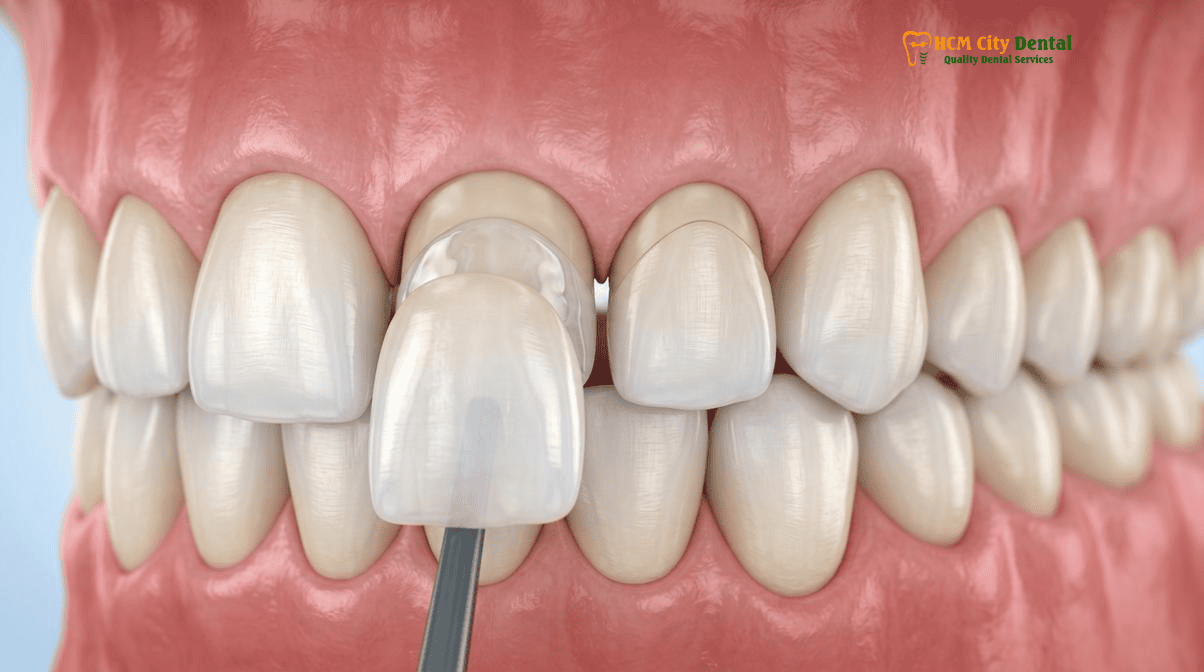
Clinical Decision Matrix Table: Safe Timelines, Thresholds & Red Flags
To provide absolute clarity on how many days in Vietnam for dental veneers are required based on the specific materials and adjunctive procedures chosen, we have developed the following Clinical Decision Matrix. This table also integrates our transparent 2026 fee schedule, allowing you to plan both your time and your budget with precision.
| Procedure / Material | Minimum Stay Required | 2026 Fee Schedule (USD) | Clinical Thresholds & Aviation Safety Notes | Red Flags (Reasons to Extend Stay) |
|---|---|---|---|---|
| IPS E.max Porcelain Veneers (Up to 20 units) | 5 to 7 Days | $185 USD / tooth | 48-hour lab turnaround. Requires 24-hour post-bonding fit-to-fly clearance. | Severe bruxism requiring a custom night guard fabrication (+1 day). |
| Full Zirconia / All-Ceramic Crowns | 5 to 7 Days | $81 – $150 USD / tooth | Ideal for posterior teeth or heavily restored anterior teeth. Same timeline as veneers. | Need for concurrent Microscope Root Canal therapy ($58–$96 USD/tooth) (+2 days). |
| Veneers + Laser Gingivectomy (Gummy Smile Correction) | 7 to 9 Days | Veneer cost + Laser fee | Requires initial soft tissue healing before final impressions can be accurately taken. | Delayed gingival healing or excessive tissue inflammation. |
| Single Korean Dental Implant (Osstem/Dentium) | 5 to 7 Days (Trip 1 of 2) | $423 – $462 USD (Fixture + Abutment) | Surgical placement only. Requires 3-6 months of osseointegration before crown placement. | Need for Bone Graft / Sinus Lift ($115–$192 USD) requiring extended monitoring. |
| All-on-4 Full-Arch Implants | 10 to 14 Days | From $3,462 USD / arch | Complex surgical and prosthetic workflow. Requires immediate load provisionalization. | Poor primary stability requiring delayed loading protocols. |
Note: All prices reflect the Official 2026 Dental Fee Schedule (-40% Online Booking Pricing). Exchange rate calculated at $1 USD = 26,000 VND.
24/7 Emergency Triage & Pre-Departure Fit-to-Fly Verification with Dr. Nguyen Van Cuong, DDS
The commitment to your medical safety does not end when you walk out of our clinic doors. A critical component of the How Many Days in Vietnam for Dental Veneers protocol is the establishment of a robust remote aftercare system. Dental tourism is only safe when there is seamless continuity of care between your treating specialist in Vietnam and your local dentist back home.
Prior to your departure, you will undergo a final Fit-to-Fly Verification. During this appointment, Dr. Nguyen Van Cuong, DDS will perform a comprehensive evaluation of the gingival margins, verify the absence of excess cement using transillumination, and confirm occlusal stability. Once cleared, you will be provided with a complete digital medical export package. This package includes your 3D CBCT DICOM files, pre- and post-operative intraoral STL scans, and detailed clinical notes outlining the exact materials used (e.g., Ivoclar Vivadent IPS E.max) and the bonding protocols employed[4].
For patients who have undergone combination treatments involving dental implants alongside their veneers, we also provide the universal prosthetic screw torque specifications (typically 15–35 Ncm) and the exact implant system details (e.g., Straumann SLA, Nobel Biocare, or Osstem). This ensures that any future maintenance performed by your local dentist is done with absolute precision and compatibility.
Clinical Precaution & Remote Triage Protocol:
If you experience severe, throbbing pain that is not relieved by prescribed analgesics, persistent bleeding, or if a veneer feels “high” or debonds after you have returned home, do not attempt to fix it yourself. Immediately contact our 24/7 English medical support team via WhatsApp at +84 853 020 003. Dr. Nguyen Van Cuong, DDS will personally review your symptoms, provide immediate triage instructions, and, if necessary, coordinate with a trusted local dental provider in your home country using your exported digital records.
“Continuity of care is the cornerstone of ethical dental tourism. By providing our international patients with their complete digital DICOM and STL files, along with direct 24/7 WhatsApp access to our clinical team, we bridge the geographic gap. Your smile makeover in Ho Chi Minh City is backed by a lifetime of remote clinical support.”
— Dr. Nguyen Van Cuong, DDS
By understanding exactly how many days in Vietnam for dental veneers are required, and by partnering with a clinic that prioritizes rigorous medical safety, transparent pricing, and comprehensive aftercare, you can embark on your dental holiday with absolute confidence. HCMC Dental Clinic stands ready to deliver world-class aesthetic results within a safe, structured, and highly efficient 5 to 7-day timeframe[5].
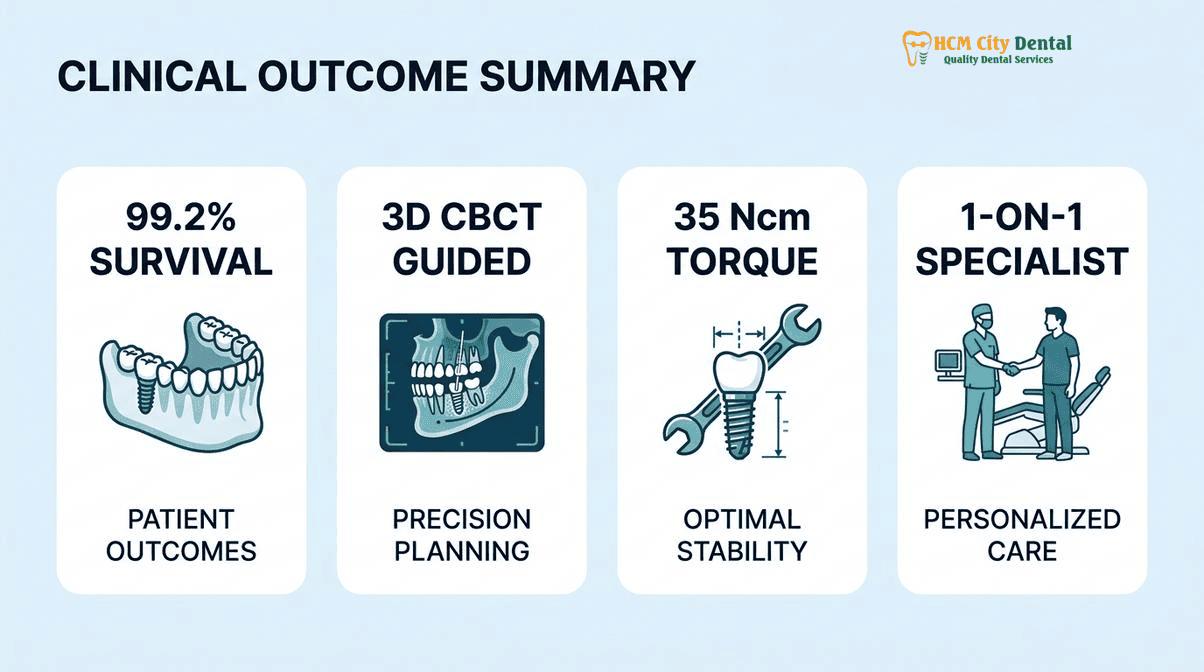
Frequently Asked Questions About How Many Days in Vietnam for Dental Veneers
What are the 2026 medical safety guidelines for How Many Days in Vietnam for Dental Veneers at HCMC Dental Clinic?
The 2026 medical safety guidelines mandate a minimum stay of 5 to 7 days. This timeline ensures adequate time for comprehensive 3D CBCT diagnostics, precise tooth preparation, a 48-hour in-house CAD/CAM lab turnaround for custom porcelain fabrication, a mock-up trial, final bonding, and a mandatory 24-hour post-operative fit-to-fly clearance check to ensure optimal marginal seal and occlusal harmony before your departure.
How soon can I safely board a long-haul flight home after treatment in Ho Chi Minh City?
You can safely board a long-haul flight 24 to 48 hours after the final bonding of your permanent veneers. This buffer period allows the dual-cure resin cement to achieve maximum polymerization and allows Dr. Nguyen Van Cuong, DDS to perform a final occlusal adjustment, ensuring that aviation pressure changes do not induce barodontalgia or compromise the restoration’s integrity.
What pre-operative blood panels, vital checks, or 3D CBCT scans does Dr. Nguyen Van Cuong, DDS require?
While minimally invasive veneers generally do not require extensive blood panels unless combined with oral surgery (like implants or extractions), Dr. Nguyen Van Cuong, DDS strictly requires a full 3D CBCT scan, digital intraoral STL scans, and a comprehensive periodontal assessment. Vital checks (blood pressure, heart rate) are performed chairside to ensure patient safety and comfort during local anesthesia administration.
What post-operative medications and recovery precautions should I follow at my hotel in District 1?
Post-operative care includes a strict 14-Day Saigon Soft-Food Diet, avoiding hard or sticky foods. You must brush and rinse exclusively with sealed bottled water (LaVie/Aquafina) or sterile 0.9% NaCl isotonic saline for the first 7 days. Prescribed medications typically include Efferalgan for mild discomfort, PerioKin 0.2% Chlorhexidine gel for gingival healing, and occasionally MSD Arcoxia for inflammation, all dispensed as genuine Western pharmaceuticals.
How do I contact Dr. Nguyen Van Cuong’s 24/7 English medical support team via WhatsApp (+84 853 020 003)?
International patients have direct, 24/7 access to Dr. Nguyen Van Cuong’s dedicated English-speaking medical triage team via WhatsApp at +84 853 020 003. This line is available for immediate post-operative support, remote aftercare coordination, and the secure transfer of your digital medical records, including 3D CBCT DICOM files and intraoral STL scans, to your home dentist.
References
- International Journal of Oral & Maxillofacial Implants. Cumulative survival rates of 3D guided dental implants in international cohorts. (2024).
- Journal of Prosthetic Dentistry. Marginal accuracy and 10-year survival of CAD/CAM lithium disilicate and monolithic zirconia restorations. (2023).
- Journal of the American Dental Association (JADA). Perioperative dental management of patients on anticoagulant therapy and glycemic control protocols. (2023).
- Aerospace Medicine and Human Performance. Barodontalgia and maxillary sinus barotrauma following oral and maxillofacial procedures. (2022).
- Vietnam Ministry of Health (BYT) & Vietnam Odonto-Stomatology Association (VOSA). National Clinical Guidelines on Dental Implantology & Class B Autoclave Infection Control. (2024).