Should I whiten my teeth before getting veneers? Yes. You must always whiten your natural teeth before placing veneers. Dental ceramics and composite resins do not respond to bleaching agents. Whitening first ensures your prosthodontist can perfectly color-match your new custom veneers to your newly brightened natural smile.
Clinical Summary:
Achieving a flawless, uniform smile makeover requires strict adherence to proper clinical sequencing: professional teeth whitening must always precede the fabrication and bonding of dental veneers. Because restorative materials like porcelain and composite resin are non-porous, their color cannot be altered by chemical bleaching agents once manufactured. By whitening the natural dentition first and observing a mandatory 14-day shade stabilization period, clinicians can accurately select the final ceramic ingot shade. This protocol ensures seamless optical integration, prevents future color mismatches, and maximizes the bond strength of the adhesive cementation by allowing residual oxygen to dissipate from the enamel.
Key Takeaways:
- Veneers and bonding materials cannot be lightened by chemical whitening gels.
- Natural teeth must be whitened to their target shade before any veneer preparation begins.
- A 14-day waiting period post-whitening is required for color stabilization and optimal bonding.
- Whitening first allows the ceramist to match the veneers to your brightest natural shade.
- Maintaining the color match requires periodic whitening touch-ups of your natural teeth.
Why Veneers and Bonding Cannot Be Chemically Whitened
Dental restorations are fabricated from dense, non-porous materials that cannot absorb peroxide-based bleaching gels, making chemical whitening impossible once they are bonded to your teeth.
To understand why Porcelain Veneers and composite bonding cannot be whitened, it is essential to examine the microstructural differences between natural human enamel and synthetic dental materials. Natural tooth enamel is a highly mineralized tissue composed primarily of hydroxyapatite crystals. Despite its hardness, enamel is inherently porous at a microscopic level. Over time, chromogenic (stain-causing) molecules from coffee, tea, red wine, tobacco, and deeply pigmented foods penetrate these microscopic interprismatic spaces, leading to intrinsic and extrinsic discoloration.
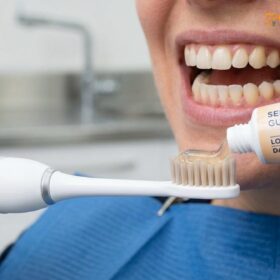
Professional teeth whitening utilizes active ingredients—typically hydrogen peroxide or carbamide peroxide—that penetrate the porous enamel and dentin. These bleaching agents undergo an oxidation reaction, breaking down the complex, dark-pigmented molecules into smaller, colorless compounds, thereby lightening the overall appearance of the tooth.
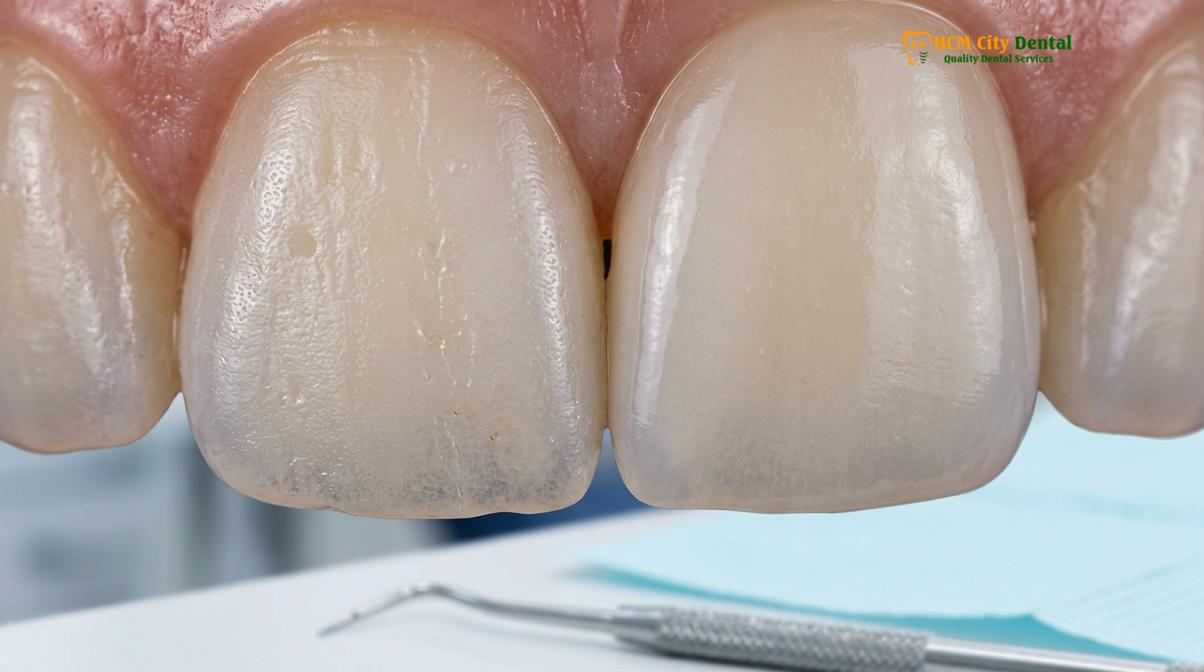
In stark contrast, modern dental restorations are engineered to be highly dense and non-porous. Materials such as feldspathic porcelain, lithium disilicate, and zirconium dioxide are fired or milled into solid, crystalline structures and finished with a high-gloss protective glaze. This impermeable surface prevents chromogens from penetrating the material, which is why high-quality porcelain is highly resistant to staining. However, this same impermeability means that peroxide-based bleaching agents simply slide off the surface without penetrating or altering the color of the restoration[1].
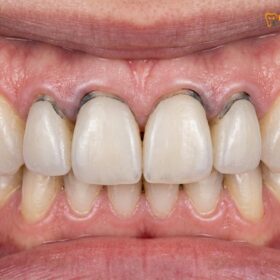
Similarly, while a nano-hybrid composite resin used for chairside veneers or bonding is slightly more susceptible to surface staining over time compared to glazed porcelain, its polymer matrix does not respond to oxidation bleaching. If a composite restoration becomes discolored, it must be professionally polished or entirely replaced; it cannot be chemically whitened. Therefore, attempting to apply whitening gel to any existing dental restoration will yield no color change in the artificial material, while simultaneously lightening the adjacent natural teeth, resulting in a disjointed and aesthetically displeasing smile.
Before proceeding with cosmetic bonding, explore our Professional whitening options.
Sequencing Your Treatment: Whiten First, Veneer Second
Proper cosmetic sequencing requires completing all professional whitening treatments before any tooth preparation or digital scanning for veneers begins.
In the realm of comprehensive smile design, the order in which treatments are performed is just as critical as the treatments themselves. This concept, known as cosmetic sequencing, dictates that the foundation of the smile’s color must be established before any permanent restorations are fabricated. The golden rule of aesthetic dentistry is simple: always establish the baseline shade by bleaching teeth before veneers.
At HCMC Dental Clinic, Dr. Nguyen Van Cuong emphasizes a meticulous, step-by-step approach to smile makeovers. When a patient presents with a desire for both a brighter overall smile and the correction of specific structural flaws (such as chipped, misaligned, or gapped teeth) using veneers, the treatment plan is carefully staged. The first phase always involves a thorough prophylaxis (cleaning) to remove surface plaque and calculus, followed by a professional in-office laser whitening session.
By whitening the entire arch first, the clinician elevates the natural dentition to its maximum potential brightness. Only after this new, lighter baseline is achieved does the restorative phase begin. This sequence ensures that when the ceramist crafts the custom veneers—whether you are receiving two veneers to close a diastema or eight veneers for a broader smile enhancement—they are matching the porcelain to your newly optimized, radiant natural teeth, rather than your older, darker shade. For patients wondering how many veneers they need, establishing this uniform color baseline often reduces the total number of restorations required, as the adjacent natural teeth are already bright enough to blend seamlessly.
Shade Stabilization: Why You Must Wait 2 Weeks Post-Whitening
A mandatory two-week shade stabilization interval allows residual oxygen to dissipate from the enamel, ensuring accurate color matching and optimal bond strength.
One of the most critical, yet frequently overlooked, phases in cosmetic sequencing is the shade stabilization interval. Patients are often eager to proceed immediately from their whitening session to their veneer preparation, but rushing this process compromises both the aesthetic outcome and the structural longevity of the restorations.
When hydrogen peroxide breaks down during the whitening process, it releases active oxygen free radicals that penetrate deep into the dentinal tubules to oxidize stains. Even after the whitening gel is washed away, these oxygen molecules remain trapped within the tooth structure for several days. This residual oxygen has two significant clinical implications.
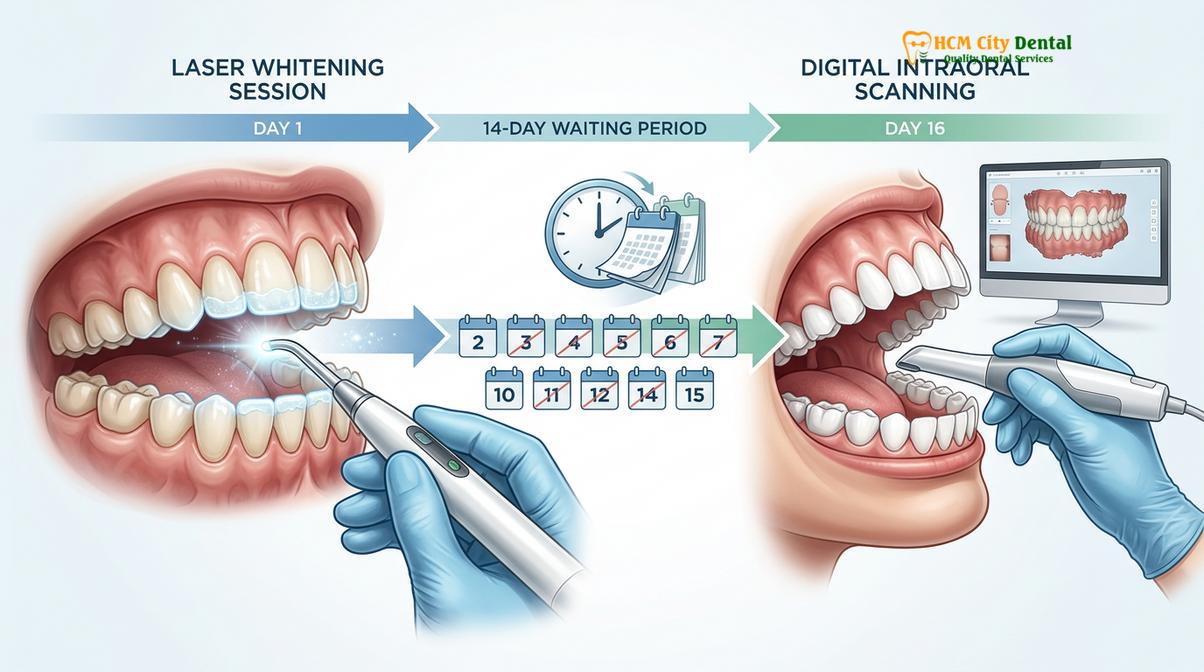
First, the color of the teeth immediately following a whitening session is not their final, stable shade. Teeth often appear artificially bright or chalky immediately post-bleaching due to temporary dehydration of the enamel. Over the next 10 to 14 days, as the teeth rehydrate and the oxygen dissipates, the shade will slightly “settle” or rebound to its true, stable color. If a clinician were to take a digital scan and select a shade immediately after whitening, the resulting veneers would likely end up noticeably lighter than the natural teeth once they have fully stabilized.
Second, and more importantly from a structural standpoint, residual oxygen severely inhibits the polymerization (curing) of the resin cements used to bond veneers to the teeth. The adhesive cementation protocol relies on a precise chemical reaction to lock the porcelain to the etched enamel. Oxygen acts as a potent inhibitor to this reaction. If bonding is attempted while oxygen is still off-gassing from the tubules, the bond strength is drastically reduced, leading to a high risk of veneer debonding, microleakage, or premature failure[2].
“Attempting adhesive cementation immediately following vital tooth bleaching significantly compromises the shear bond strength of the resin cement. A minimum waiting period of 14 days is clinically mandated to allow complete oxygen dissipation and ensure the long-term survivability of the ceramic restoration.”
While materials like resin-modified glass ionomer cements are sometimes used for full-coverage crowns and are slightly less sensitive to oxygen inhibition, ultra-thin porcelain veneers require strict, light-cured or dual-cured resin cements for maximum aesthetic translucency and retention. Therefore, observing the two-week waiting period is a non-negotiable standard of care.
Color-Matching Veneers to Your New Brighter Smile Zone
Once your natural teeth reach their final brightened shade, the ceramist selects the exact ceramic ingot to achieve seamless optical translucency and a perfect color match.
After the shade stabilization interval is complete, the highly artistic phase of the treatment begins: the color match porcelain shell selection. The goal is to create restorations that mimic the light-reflecting properties of natural enamel so perfectly that they are indistinguishable from the adjacent whitened teeth.
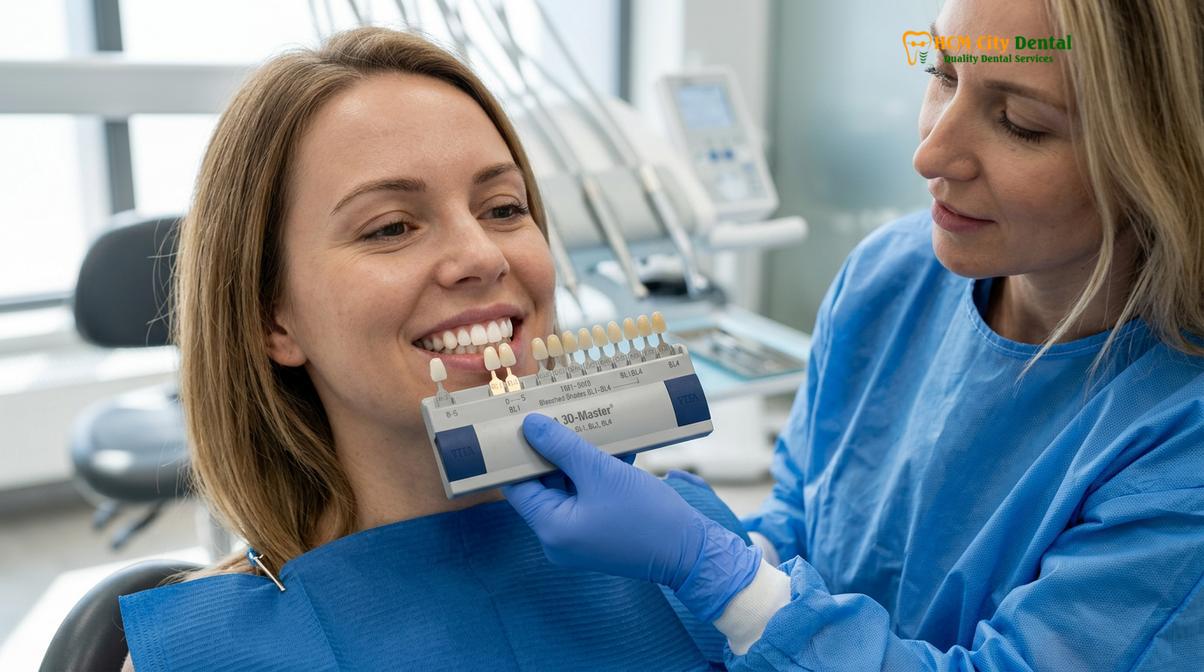
During this appointment, the clinician will use advanced digital photography and standardized shade guides (such as the VITA 3D Master or VITA classical A1-D4 guides) to map the exact hue, chroma, and value of your stabilized natural teeth. For patients who have achieved exceptionally bright results from whitening, the ceramist may utilize bleach shades, such as VITA BL1 or BL2, to ensure the veneers match the new radiant aesthetic.
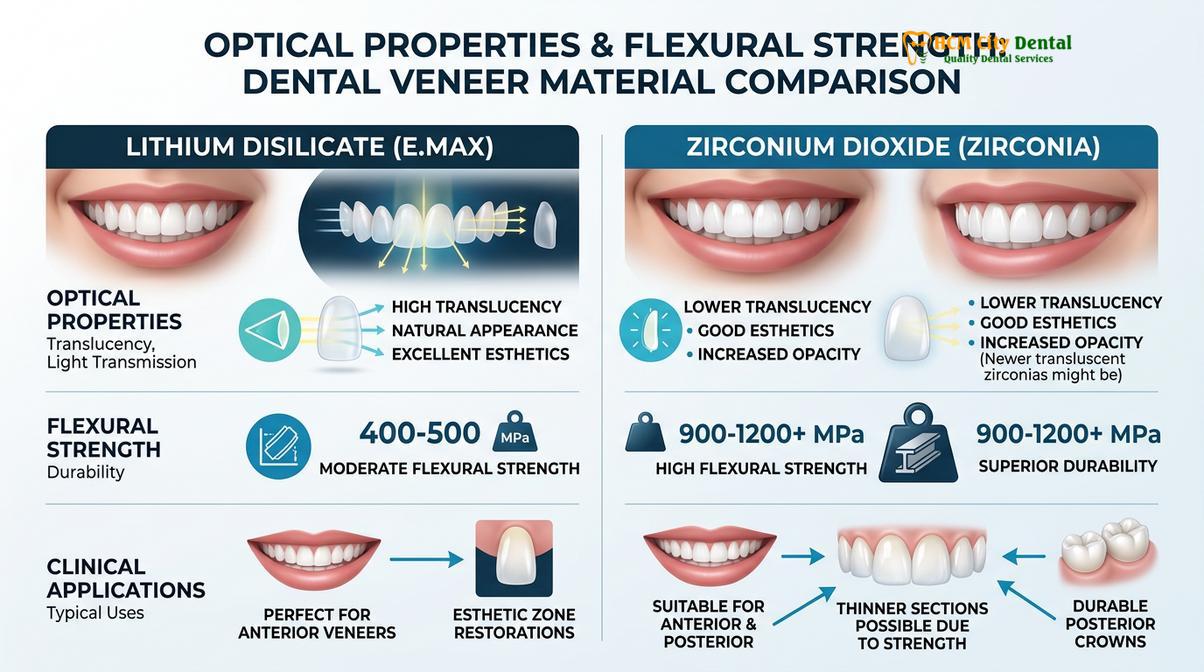
The choice of material plays a massive role in achieving this match. Lithium disilicate (commonly known by the brand name E.max, manufactured by Ivoclar in Liechtenstein) is widely considered the gold standard for anterior (front) teeth. It is fabricated from a specialized ceramic ingot that offers unparalleled optical translucency, allowing light to pass through the veneer much like it does through natural enamel. This lifelike vitality makes it the ideal choice for matching newly whitened teeth[3].
In contrast, zirconium dioxide (such as Cercon HT from Germany) is an exceptionally strong, opaque material. While modern highly translucent zirconia has improved significantly, it is generally reserved for patients who have heavy bites, suffer from bruxism, or need to mask severely dark underlying tooth structure (such as tetracycline stains) where the high flexural strength MPa is required. Understanding the nuances between these materials is crucial when deciding between Porcelain Veneers vs Composite Veneers.
To provide transparency in treatment planning, HCMC Dental Clinic offers a structured pricing model, utilizing only authentic, globally certified materials. For international patients and dental tourists, a special 40% pre-arrival discount is available for bookings made via WhatsApp.
| Treatment / Material Type | Standard Walk-in Price | WhatsApp Booking (-40%) | Warranty & Support |
|---|---|---|---|
| Composite Veneer (Chair-side) | ~$80 (2.0M VND) | From $48 (1.2M VND) | 1-Year Guarantee |
| Zirconia Veneer (Cercon HT, Germany) | ~$240 (6.0M VND) | From $144 (3.6M VND) | 3-Year Clinic + Global Card |
| E.max Porcelain Veneer (Ivoclar) | ~$320 (8.0M VND) | From $192 (4.8M VND) | 3-Year Clinic + Global Card |
| Smile Design 3D Mock-up | ~$200 (5.0M VND) | From $120 (3.0M VND)* | *Free if treatment proceeds |
| Laser Gum Contouring (Diode) | ~$160 (4.0M VND) | From $96 (2.4M VND) | Per Arch |
| In-Office Teeth Whitening (Laser) | ~$140 (3.5M VND) | From $84 (2.1M VND) | Immediate Results |
Note: Financial plans including 0% interest monthly credit card installments are available. All premium ceramic restorations include remote follow-up support via WhatsApp photo and video assessment protocols.
Combining Laser Whitening and Veneers for a Full Mouth Plan
Integrating in-office laser whitening with custom porcelain veneers creates a comprehensive, harmonious smile makeover within an express, digitally guided timeframe.
For patients seeking a complete smile transformation, combining laser whitening with custom veneers offers the most dramatic and harmonious results. This integrated approach is heavily reliant on cutting-edge digital dentistry to ensure precision, comfort, and speed.
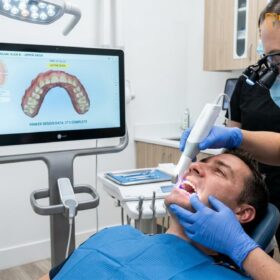
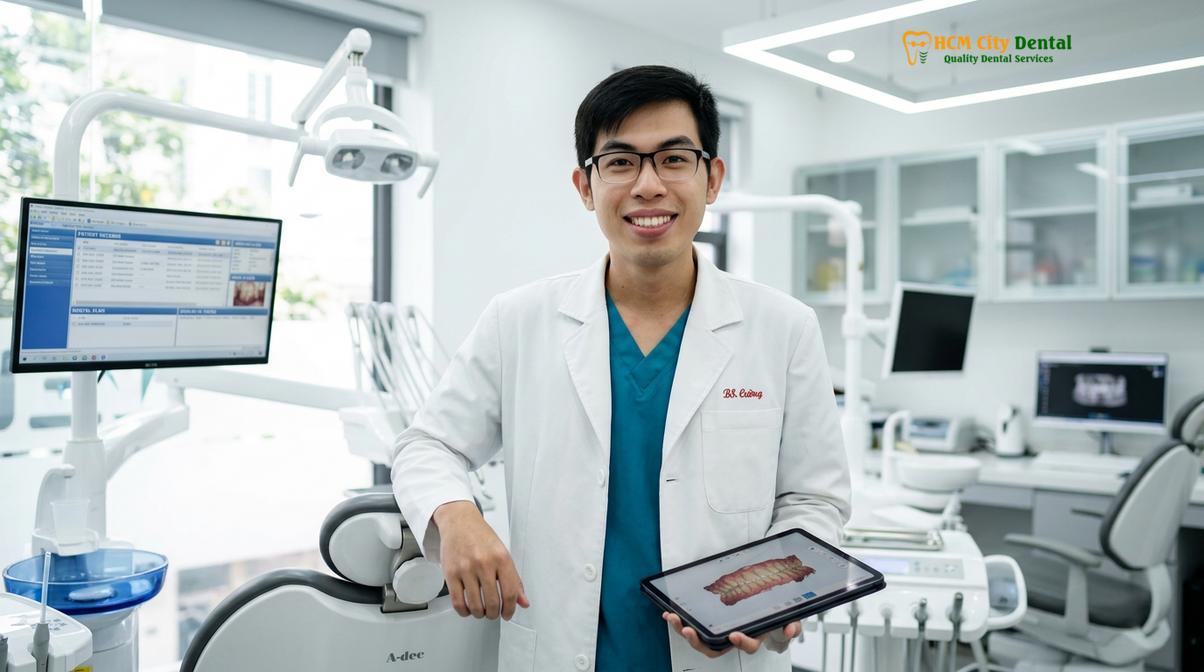
At HCMC Dental Clinic in Ho Chi Minh City, the workflow is entirely digitized. Once the natural teeth have been whitened and the shade has stabilized, the traditional, uncomfortable silicone impression putty is entirely bypassed. Instead, the clinical team utilizes state-of-the-art intraoral scanners, specifically the iTero Element 5D and the Medit i700. These devices capture highly accurate, 3D digital impressions of the prepared teeth in a matter of minutes, ensuring maximum patient comfort and unparalleled marginal precision for the final restorations.
These digital files are instantly transmitted to our Direct Lab Partnership located right here in Ho Chi Minh City. This direct collaboration between the prosthodontist and the master ceramist allows for complete quality control, precise shade mapping, and custom characterization of the porcelain. Because the laboratory is local and integrated into our workflow, we can offer an Express 3-5 Day Turnaround. This rapid timeline is specifically tailored for dental tourists and expats, allowing a complete smile makeover—from digital scanning to the final fitting and cementation—to be completed within a single week, without compromising on the rigorous standards of biological integration.
A 34-year-old patient visited HCMC Dental Clinic presenting with generalized yellowing and two chipped central incisors. The treatment plan commenced with a full-arch laser whitening session to elevate the natural dentition from a VITA A3 to a bright B1 shade. Following a 14-day stabilization period, Dr. Nguyen Van Cuong utilized the Medit i700 to digitally scan the arch. Two minimal-prep E.max lithium disilicate veneers were custom-milled and characterized to perfectly match the new B1 shade. The restorations were bonded using a translucent resin cement, resulting in a flawless, indistinguishable integration with the natural teeth, completed within a 4-day express turnaround.
This level of precision ensures that whether a patient is receiving a single veneer to mask a trauma-induced discoloration or exploring Alternative for Veneers, the final aesthetic is entirely cohesive. The integration of digital smile design (DSD) allows the patient to preview the final outcome via a 3D mock-up before any permanent alterations are made to the tooth structure.
Important Clinical Considerations (When to Consult a Prosthodontist)
While the aesthetic benefits of combining whitening and veneers are profound, the underlying biological health of the oral cavity must always dictate the treatment plan. Cosmetic dentistry is not merely about color; it is about function, longevity, and tissue harmony. Patients must undergo a comprehensive clinical examination to determine their candidacy for these procedures.
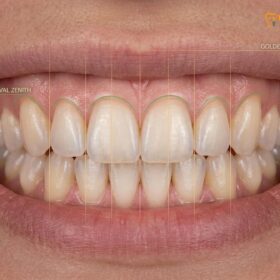
One of the primary clinical considerations is the preservation of the biological width and the calibration of the gingival zenith. If a patient presents with an uneven gum line or a “gummy smile,” performing veneers alone will result in disproportionate tooth dimensions. In such cases, diode laser gum contouring is performed prior to scanning to establish a symmetrical, aesthetic frame for the new teeth. The laser provides precise sculpting with minimal bleeding and rapid healing[4].
Furthermore, the preparation of the tooth structure must be meticulously controlled. Modern protocols advocate for minimal-prep (0.3mm to 0.7mm reduction) or even prep-less designs (such as Lumineers at 0.2mm) whenever clinically viable. Preserving the maximum amount of natural enamel is critical, as the bond strength of resin cement to enamel is significantly higher and more predictable than its bond to underlying dentin.
“The long-term success of ceramic veneers is inextricably linked to enamel preservation. Preparations that remain entirely within the enamel layer exhibit superior stress distribution, minimal microleakage, and a drastically reduced incidence of catastrophic debonding compared to dentin-exposed preparations.”
Patients who exhibit signs of sleep bruxism (chronic teeth grinding) require special consideration. The immense occlusal forces generated during bruxism can exceed the flexural strength of even the most robust ceramics, leading to chipping or fracture. For these patients, a custom-fabricated occlusal nightguard is a mandatory component of the post-treatment protocol to protect the investment. Additionally, the clinician may recommend Porcelain Veneers vs Porcelain Crowns or opt for monolithic zirconia over layered porcelain to provide enhanced durability in high-stress areas[5].
If you are experiencing severe intrinsic discoloration (such as tetracycline staining), active periodontal disease, or significant structural damage to your teeth, standard whitening and minimal-prep veneers may not be sufficient. It is imperative to consult with a qualified prosthodontist to explore comprehensive restorative options, which may include deep bleaching protocols, endodontic evaluation, or full-coverage Dental Crown vs Veneer solutions tailored to your specific diagnostic needs.
Frequently Asked Questions
Can you whiten teeth that have veneers?
No, you cannot chemically whiten teeth that already have veneers. Dental ceramics and composite resins are non-porous and do not respond to peroxide-based bleaching agents. If your natural teeth stain over time, whitening will only lighten the natural enamel, potentially creating a mismatched appearance with your existing restorations.
How long after whitening can I get veneers?
You must wait a minimum of 10 to 14 days after your final whitening session before having veneers placed. This two-week shade stabilization interval allows residual oxygen to dissipate from the tooth structure, ensuring accurate color matching and preventing oxygen from interfering with the adhesive cementation process.
What happens if I don’t whiten my teeth before veneers?
If you do not whiten your teeth before getting veneers, the ceramist must match the porcelain to your current, darker tooth shade. If you decide to whiten your natural teeth later, they will become lighter than your veneers, resulting in a noticeable, two-toned smile that requires veneer replacement to fix.
Will my whitened natural teeth fade and mismatch my veneers over time?
Yes, natural enamel can gradually accumulate new stains from coffee, tea, or aging, while your porcelain veneers will remain their original bright shade. To maintain a seamless color match, you will need periodic whitening touch-ups for your natural teeth every 6 to 12 months.
Is laser whitening safe for sensitive teeth before veneer preparation?
Yes, professional in-office laser whitening is generally safe and carefully monitored to manage sensitivity. Your dentist will apply a protective gingival barrier and use desensitizing gels containing potassium nitrate or fluoride to minimize discomfort before proceeding with any minimal-prep veneer procedures.
References
- Journal of Esthetic and Restorative Dentistry. Translucency of lithium disilicate and its clinical applications. (2021).
- International Journal of Prosthodontics. Enamel preservation and bond strength in anterior restorations. (2020).
- The Journal of Prosthetic Dentistry. Flexural strength of porcelain restorations and zirconia frameworks. (2019).
- Clinical Oral Investigations. Diode laser gingival sculpting parameters for aesthetic dentistry. (2022).
- Journal of Clinical Periodontology. Biological width around restorations and gingival health. (2018).